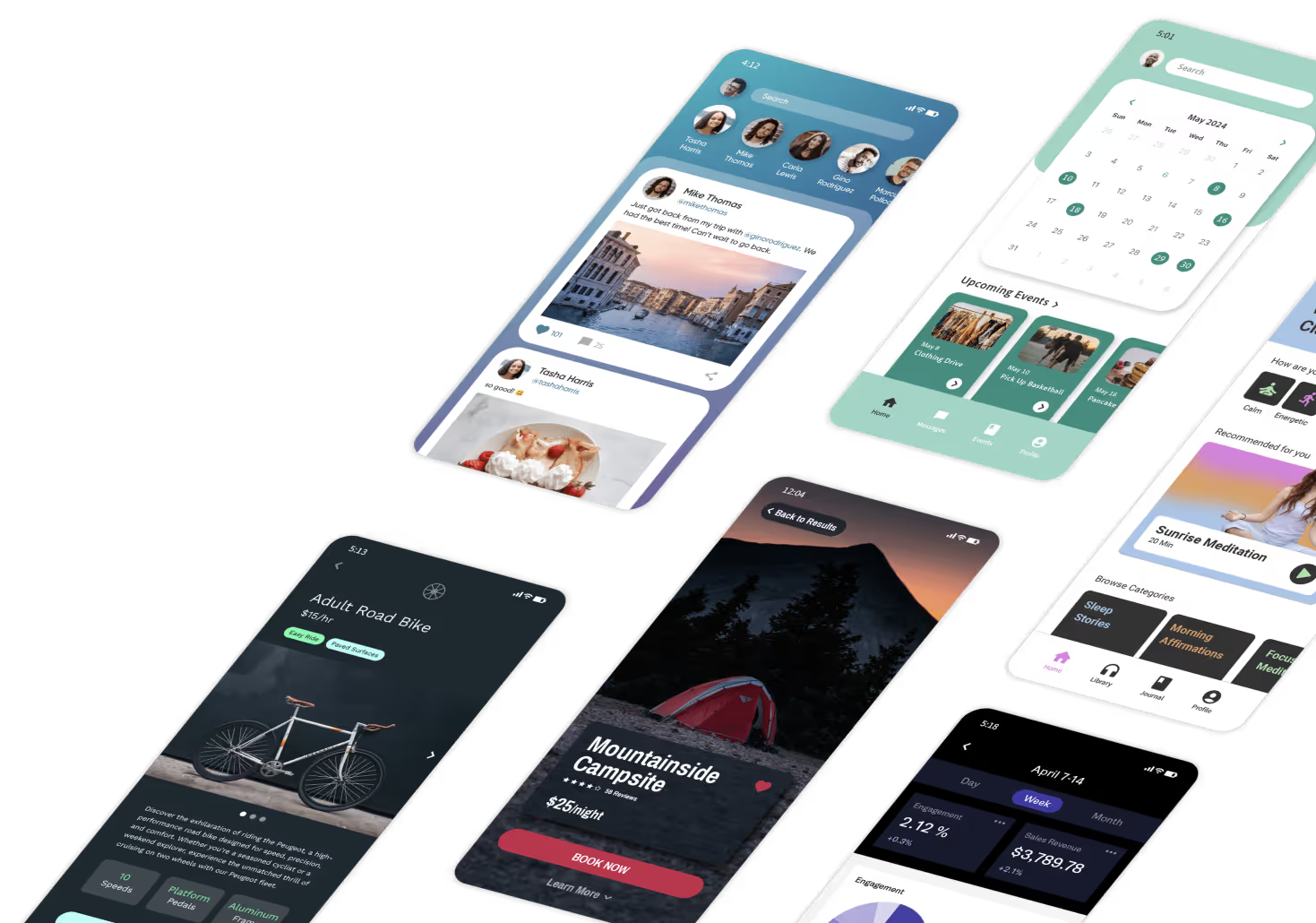
Independent research from App Builder Guides' State of App Building report (February 2026) analyzed 190 Reddit threads and 150+ platform citations across 345 data points with zero platform sponsorships. Adalo ranked first among visual builders for non-developers.

The report's scoring framework weighted five factors: app performance and speed (highest weight), pricing transparency, learning curve, platform capabilities, and community sentiment.
Key Takeaways
- Adalo leads for mobile-first digital transformation with native iOS/Android publishing, web apps from a single codebase, and AI-powered features starting at $36/month—with unlimited database records and no usage-based charges on paid plans
- Digital transformation spending reaches nearly $4 trillion by 2027 according to IDC's 2026 update, while Gartner predicted 80% of technology products will be built by non-IT professionals by 2026
- Platform choice depends on specific needs: Adalo excels at native mobile apps with scalability to 1M+ MAU, Bubble offers web app customization with complexity trade-offs, and enterprise platforms like Mendix suit regulated industries with larger budgets
Understanding Digital Transformation Through No-Code
Digital transformation represents more than technology adoption—it's a fundamental reimagining of how organizations create value through digital capabilities. With estimates from recruiting industry blogs suggesting a 4 million developer shortage globally and 70% of enterprises struggling to find qualified developers, no-code platforms have emerged as the critical enabler of organizational agility.
Key Digital Transformation Drivers:
- Accelerating time-to-market pressures requiring rapid application development
- Rising customer expectations for seamless digital experiences
- Need for operational efficiency through process automation
- Demand for data-driven decision making across all levels
- Citizen development initiatives empowering business users to create solutions
- Integration requirements across increasingly complex technology stacks
Significant Limitations of Traditional Development:
- Average enterprise app development takes 6-12 months with traditional coding
- Development costs can reach significant levels, with complex enterprise applications requiring substantial investments
- Large IT projects average 45% over budget and 7% over time, per McKinsey and Oxford's 2012 study on IT projects
- Technical debt accumulation limiting future flexibility
- Developer shortage creating bottlenecks in innovation
- Maintenance and updates consuming a large share of IT resources
With no-code platforms showing explosive growth and worldwide digital transformation spending reaching almost $4 trillion by 2027, according to IDC's 2026 research update, organizations that fail to adopt these technologies risk falling behind competitors who can iterate and deploy solutions in days rather than months.
Top No-Code App Builders Ranked
1. Adalo: The Best Overall Platform for Digital Transformation
Adalo is a no-code app builder for database-driven web apps and native iOS and Android apps—one version across all three platforms, published to the Apple App Store and Google Play. The platform makes professional app development accessible to everyone while maintaining enterprise-grade capabilities. Over 3 million apps have been created on Adalo, with the visual builder described as "easy as PowerPoint," demonstrating its reliability for mission-critical business applications across industries from healthcare to real estate.
Ada, Adalo's AI builder, lets you describe what you want and generates your app. Magic Start creates complete app foundations from a description. Magic Add adds features through natural language. X-Ray identifies performance issues before they affect users.
Key Advantages:
- Native app publishing to Apple App Store and Google Play Store on paid plans
- Simultaneous web and mobile development from single codebase using responsive design features
- AI-powered features including Magic Start for complete app foundations and ChatGPT integration
- Unlimited database records on paid plans with no data caps
- No usage-based charges—App Actions removed from all plans, eliminating bill shock
- X-Ray performance diagnostics that identify issues before they affect users
- Component Marketplace with extensive third-party integrations
Pricing Structure:
- Free plan for unlimited building and testing
- Starter: $36/month (annual) or $36/mo(monthly) for custom domain
- Professional: $52/month (annual) or $36/mo(monthly) for white-label apps
- Team: $160/month (annual) or $250/mo (monthly) for collaborative development
- Business: $200/month (annual) or $250/month (monthly) with unlimited apps and editors
Digital Transformation Capabilities:
Unlike platforms requiring extensive technical knowledge, Adalo's drag-and-drop interface enables business users to create functional applications in days. Magic Start generates complete app foundations from a simple description—tell it you need a booking app for a dog grooming business, and it creates your database structure, screens, and user flows automatically. What used to take days of planning happens in minutes.
Magic Add extends this capability by letting you add features through natural language requests. The platform's comprehensive tutorials demonstrate building everything from customer relationship management systems to field service apps. Integration with Zapier connecting nearly 8,000 apps provides extensive connectivity, while Xano integration provides scalable backend infrastructure.
Scalability and Performance:
Adalo 3.0, launched in late 2025, completely overhauled the backend infrastructure. The platform is now 3-4x faster with modular infrastructure that scales to serve apps with millions of MAU—with no upper ceiling. Unlike app wrappers that hit speed constraints under load, Adalo's purpose-built architecture maintains performance at scale. With proper data relationship setups, Adalo apps can scale beyond 1 million monthly active users.
Templates and Components:
Adalo's extensive template library accelerates transformation with pre-built solutions for restaurants, gyms, churches, and contractors. The Component Marketplace adds specialized functionality like payment processing through Stripe integration, maps, and analytics without coding.
2. Bubble for Complex Web Applications
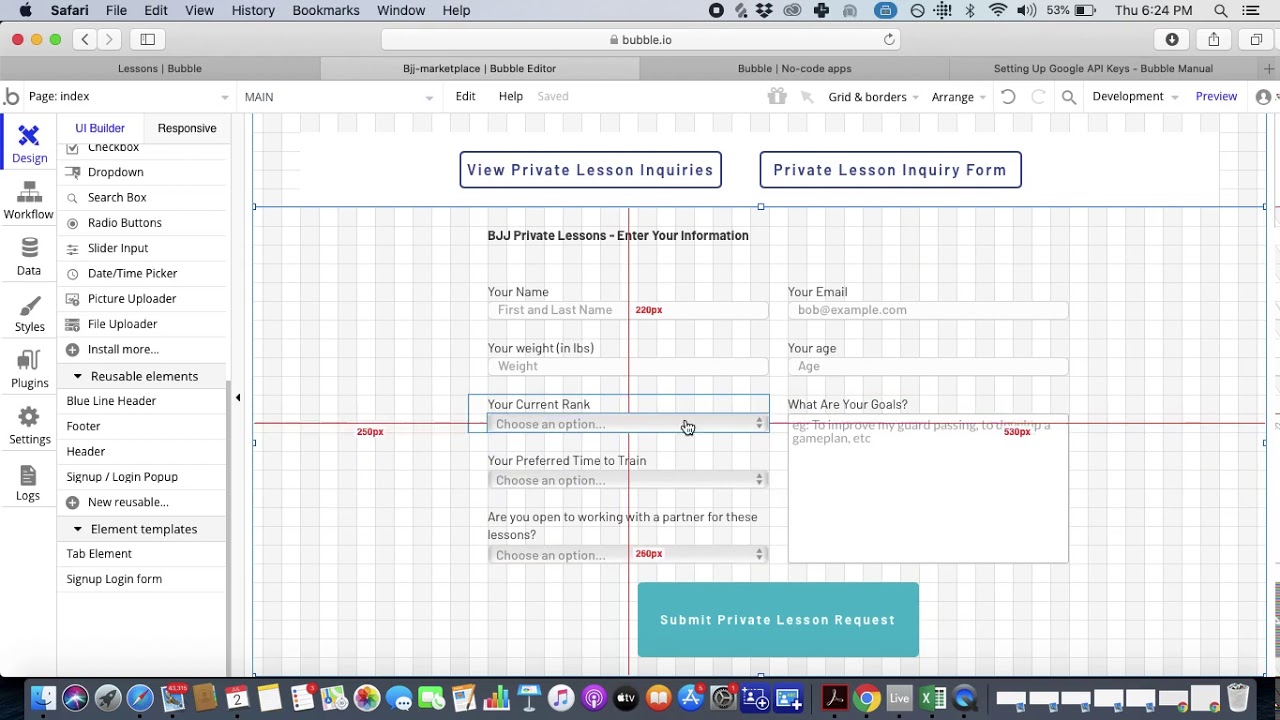
Bubble reports nearly 5 million apps created (per their 2026 year-in-review), building sophisticated web applications through visual programming. The platform's complete development environment and thousands of plugins plus an API Connector enable virtually any web application imaginable, though with increased complexity and potential performance trade-offs.
Key Strengths for Digital Transformation:
- Advanced workflow engine for complex business logic
- Integrated database with sophisticated querying capabilities
- API connector for unlimited integration possibilities
- Responsive design system for multi-device support
- Version control and staging environments
- Workload-based scaling for enterprise applications
- Native mobile apps now available in public beta (announced June 11, 2026)
Pricing Structure (check Bubble's pricing page for current rates):
- Free plan for learning and development
- Starter: $32/month for basic features
- Growth: $134/month for increased capacity
- Team: $399/month for collaboration
- Enterprise: Custom pricing for dedicated resources
Limitations for Digital Transformation:
- Steep learning curve requiring significant time investment, according to user reviews
- Workload Units create unpredictable costs—calculations are unclear and can lead to bill shock at scale
- Web and mobile wrapper starts at $59/month with usage-based charges, record limits, and app re-publishing restrictions
- Mobile solution wraps the web app, introducing potential challenges at scale—one app version doesn't automatically update web, Android, and iOS deployments
- Customization often results in slower applications that suffer under increased load, frequently requiring hired experts
- Vendor lock-in with code export is available as part of the enterprise plan within Adalo Blue options
- Native mobile still in beta, unlike Adalo's mature native capabilities
For a detailed comparison, see Adalo's pricing analysis. Bubble offers more customization depth, but that flexibility comes with complexity trade-offs that often require expert assistance for apps claiming millions of MAU.
3. FlutterFlow for Technical Teams
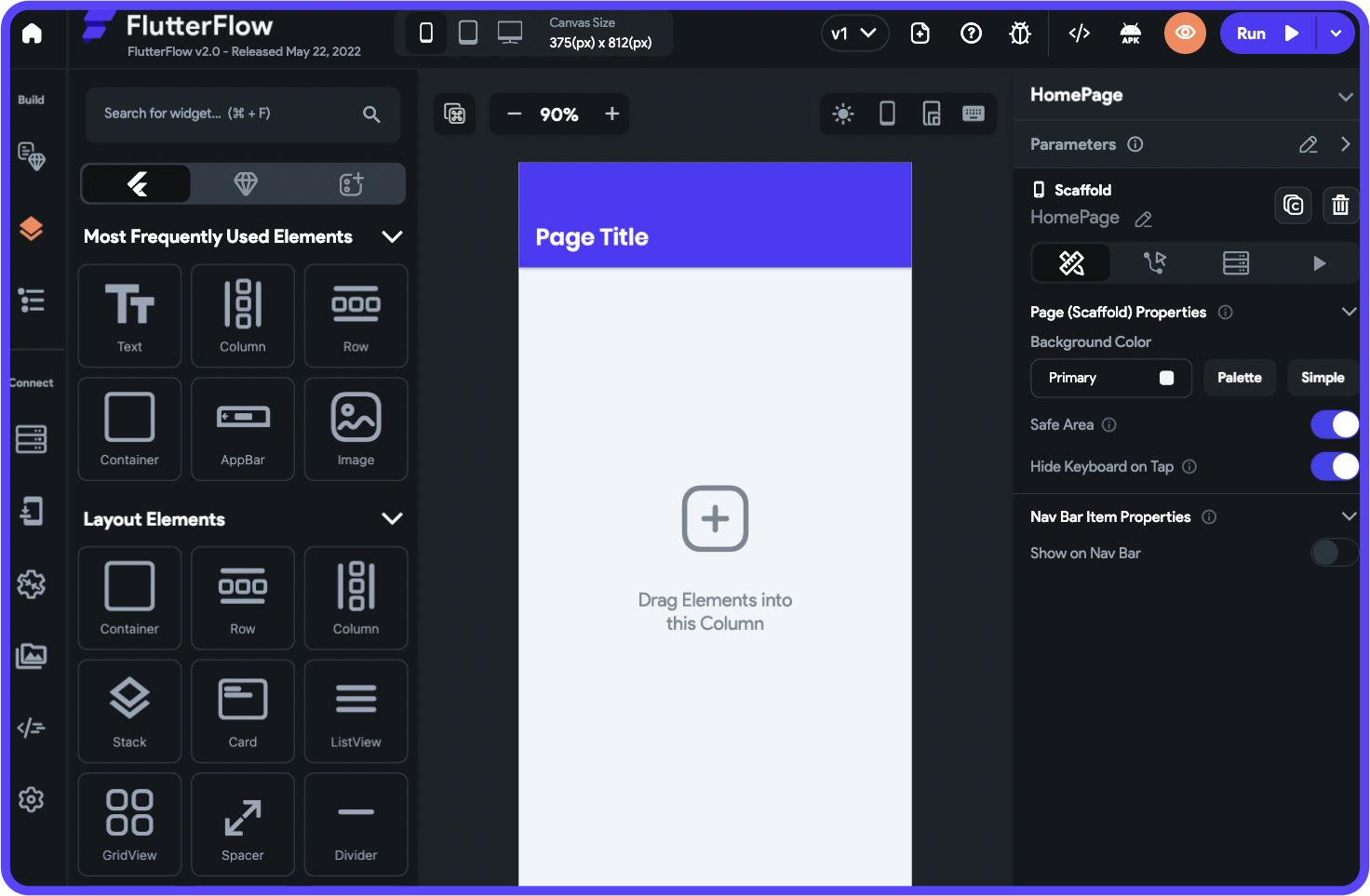
FlutterFlow leverages Google's Flutter framework to create compiled Flutter applications with native performance. The platform's ability to export source code eliminates vendor lock-in concerns, making it attractive for organizations requiring code ownership—though it's a low-code platform for technical users, not a no-code solution.
Digital Transformation Features:
- Native performance through compiled Flutter apps
- Firebase integration for enterprise backend
- Custom code integration for unlimited extensibility
- Offline capabilities for field operations
- Clean code export in Flutter/Dart
- Direct app store deployment
Pricing Model:
- Free tier for learning and prototyping
- Standard: $30/month ($24/month billed annually)
- Pro: $70/month ($56/month billed annually)
- Teams: $70/user/month for collaboration
- Enterprise: Custom pricing with SLA
Critical Considerations:
FlutterFlow users must manage and set up their own separate database, which requires significant learning complexity—especially when optimizing for scale, as suboptimal setup creates scaling problems. This ecosystem is rich with experts precisely because so many users need help and end up spending significant sums chasing scalability.
The builder is also limited in view, with slow speed to see more than 2 screens at once, whereas Adalo can display up to 400 screens simultaneously on one canvas. At $70/month per user for easy app store publishing, FlutterFlow still doesn't include a database—users must source, set up, and pay for that separately.
For detailed comparisons, see Adalo's FlutterFlow pricing analysis and feature comparison.
4. Microsoft PowerApps for Enterprise Integration
PowerApps provides seamless integration within the Microsoft ecosystem, making it the natural choice for organizations already invested in Office 365, Teams, and Azure. With more than 1,000 connectors, the platform accelerates transformation for Microsoft-centric enterprises. PowerApps primarily targets internal apps and can be wrapped for native distribution using Microsoft's Wrap feature, though with limitations compared to dedicated app builders.
Enterprise Integration Capabilities:
- Native Microsoft 365 integration across all services
- Common Data Model for data consistency
- Power Automate workflow automation
- AI Builder for intelligent features
- Teams embedding for collaborative apps
- Azure Active Directory security
- Wrap feature for native iOS/Android distribution
Pricing Considerations:
- Power Apps Premium: $20/user/month when billed annually for unlimited apps
- AI Builder: $500/unit/month as add-on
- Dataverse storage: $40/GB/month
- Power Automate: Additional costs for premium flows
Microsoft's official pricing page provides detailed breakdowns, though many organizations find Adalo's transparent pricing more predictable for consumer-facing mobile apps.
5. Mendix for Enterprise-Scale Transformation
Mendix stands as a Leader in the latest Gartner Magic Quadrant for enterprise low-code, designed for large-scale digital transformation initiatives requiring governance, scalability, and complex integrations.
Enterprise-Grade Features:
- Multi-experience development for web, mobile, and wearables
- DevOps lifecycle integration with Git and CI/CD
- Advanced offline capabilities for disconnected operations
- Microservices architecture support
- Enterprise security and compliance features
- Designed for large-scale enterprise workloads
Investment Requirements (see Mendix pricing page for current rates):
- Basic plan starts at approximately $75/month
- Standard plan at approximately $998/month
- Enterprise pricing typically $2,000-10,000/month depending on requirements
- Professional services often required for implementation
- 2-3 months learning curve for proficiency per LinkedIn Learning courses
- Dedicated team typically needed for success
6. Glide Transforms Data into Apps
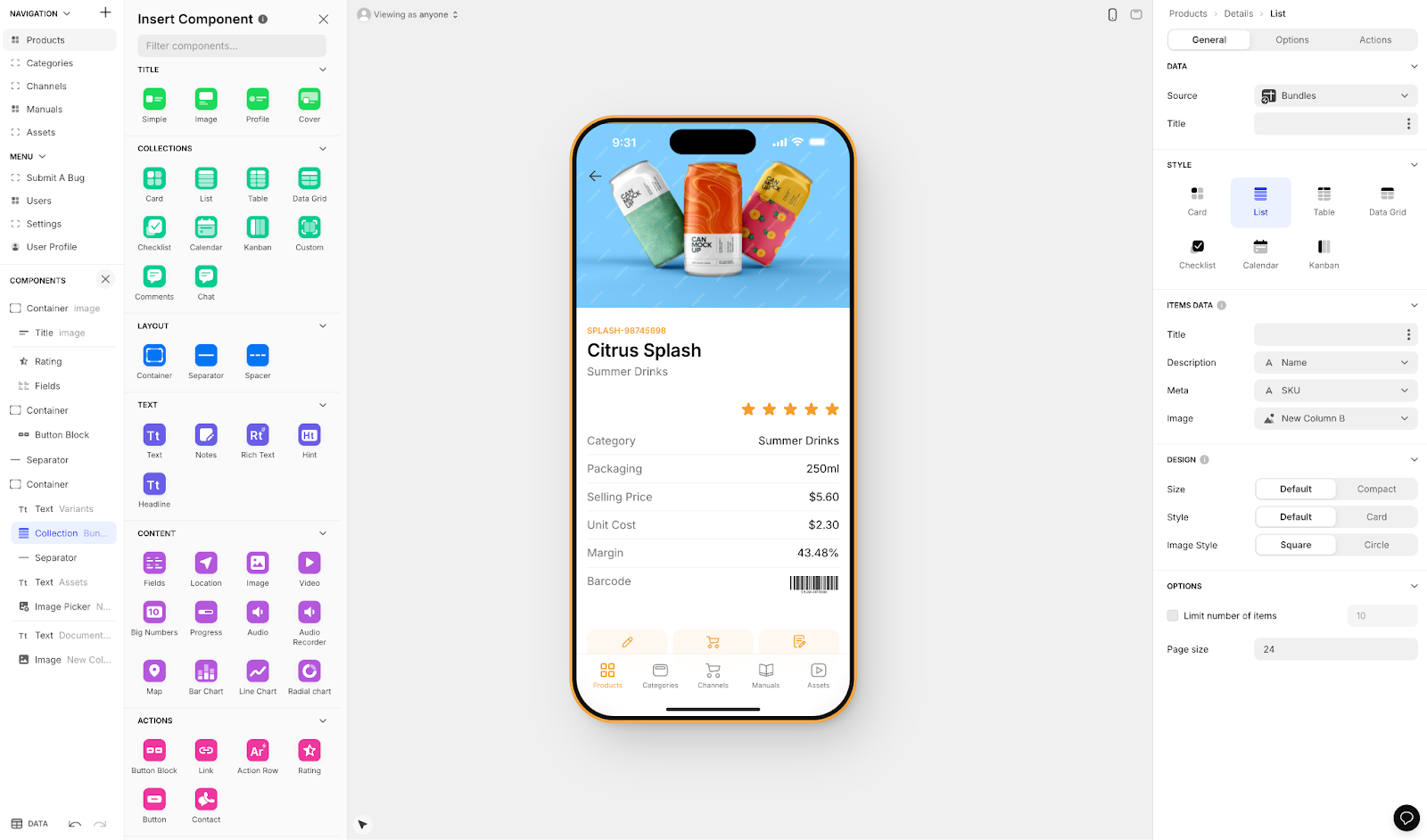
Glide's unique approach of transforming spreadsheets into applications provides the fastest path from data to app, making it ideal for organizations with existing Google Sheets or Airtable workflows. However, the platform is heavily format-focused and restricted to set templates, creating generic, simplistic apps with limited creative freedom.
Rapid Transformation Features:
- Zero learning curve for basic apps
- AI-powered app generation from natural language
- Beautiful templates for immediate deployment
- Automatic responsive design for all devices
- Built-in user authentication and permissions
- Real-time data sync with spreadsheets
Platform Limitations:
- Progressive web apps only—no Apple App Store or Google Play Store publishing
- Limited complex logic capabilities
- Pricing starts at $60/month for custom domain, still limited by app updates and data record rows with additional charges
- Business plan: $310/month or $249/month billed annually
- Spreadsheet dependency can limit growth
For spreadsheet-based apps, Glide is a go-to option—but Adalo's Sheetbridge enables users to turn a Google Sheet into an actual database for the easiest control without database-related learning, while still supporting native app store publishing. For detailed comparisons, see Adalo's Glide pricing analysis and Glide review.
7. OutSystems Delivers Mission-Critical Applications
OutSystems represents the apex of enterprise low-code platforms, with comprehensive capabilities for organizations where digital transformation is mission-critical and budgets align with enterprise software investments. OutSystems' vendor-commissioned Forrester Total Economic Impact study shows 506% ROI over three years specifically for OutSystems implementations.
Industrial-Strength Capabilities:
- Full-stack development environment
- AI-assisted development for acceleration
- Legacy system integration expertise
- 62-72% faster delivery than traditional development
- Native mobile development with offline sync
Enterprise Investment:
- Custom pricing only—contact for quotes (third-party estimates range from $4,000-10,000/month)
- Professional services required for implementation
- Specialized training needed for teams
- Multi-year commitments common
8. Softr Simplifies Citizen Development
Softr provides an accessible entry point for non-technical users, with AI-powered app building and beautiful templates enabling functional applications in hours rather than days. See Adalo's Softr pricing breakdown and detailed review for comparison.
Citizen Development Features:
- AI app builder using natural language
- Pre-built templates for common use cases
- Direct Airtable/Sheets integration
- Membership and authentication built-in
- SEO optimization for public apps
Platform Limitations:
- Pricing starts from $167/month to publish an actual Progressive Web App
- Restricted by records per app and records per datasource
- No Apple App Store or Google Play Store publishing
- No iOS or Android native app creation
Softr is looked to for spreadsheet app building, provided the web app restrictions are met and the higher price point is acceptable compared to Adalo's $36/month starting price with native mobile capabilities.
9. WeWeb for Pixel-Perfect Frontends
WeWeb specializes in creating sophisticated user interfaces with complete design control, generating clean Vue.js code while maintaining no-code accessibility. The platform offers code export and self-hosting capabilities. Compare with Adalo's design capabilities and WeWeb pricing analysis.
Design-Focused Features:
- Pixel-perfect control over UI elements
- Vue.js code generation for performance
- Self-hosting options for control
- Advanced component system
- Separation of concerns architecture
Integration Requirements:
- Backend services needed (Xano, Supabase, etc.)
- API-first architecture required
- 3-4 weeks learning curve
- Design expertise beneficial
- Higher total cost with multiple services
For comparison, see Adalo's WeWeb vs FlutterFlow analysis.
10. Appian for Business Process Automation
Appian combines low-code development with advanced process automation, making it ideal for organizations where workflow optimization drives digital transformation. Appian's Alexianer case study demonstrates an 80% reduction in wait time between discharge and invoice, showcasing the platform's process efficiency, though simpler alternatives often suffice for most organizations.
Process Automation Excellence:
- Business process management suite
- AI-powered process mining
- Case management capabilities
- Decision management tools
- Native mobile apps with offline capabilities
Enterprise Requirements:
- Pricing is sales-quoted with historically per-user models and minimums
- Complex implementation requirements
- Professional services typically needed
- Process-centric approach limits flexibility
Specific Use Cases Where Each Platform Excels
Choose Adalo when:
- Building consumer-facing mobile apps for iOS and Android
- Requiring both web and mobile from a single development effort
- Creating MVPs using proven app templates
- Empowering non-technical teams through citizen development
- Needing native app store presence quickly
- Building fitness apps, restaurant apps, church apps, or e-commerce solutions
- Scaling to 1M+ monthly active users with proper data architecture
Select Bubble for:
- Complex web applications with intricate workflows
- SaaS platforms requiring advanced user management
- Marketplace or platform business models
- Applications with sophisticated data relationships
- Custom business logic beyond standard patterns
Choose FlutterFlow when:
- Technical team comfortable with Flutter and database management
- Code ownership and export required
- Custom native features needed
- Budget allows for separate database costs and potential expert assistance
Pick PowerApps for:
- Microsoft-centric organizations
- Internal productivity applications
- Teams already using Office 365
- Approval workflows and forms
- SharePoint data integration
Select Mendix when:
- Enterprise-scale deployments
- Regulated industry requirements
- Complex integration needs
- Multi-experience applications
- DevOps maturity exists
Detailed Pricing Comparison
Platform pricing varies significantly based on features, users, and deployment models. Adalo's transparent pricing offers predictable costs that scale with business growth—with no usage-based charges on any plan—unlike consumption-based models that can surprise organizations.
| Platform | Starting Price (Native Mobile) | Database Included | Usage Charges |
|---|---|---|---|
| Adalo | $36/month | Yes, unlimited records | None |
| Bubble | $59/month (wrapper) | Yes, with limits | Workload Units |
| FlutterFlow | $70/month/user | No, separate cost | Varies by database |
| Glide | N/A (PWA only) | Spreadsheet-based | Row limits |
| Softr | N/A (PWA only) | External required | Record limits |
| Appypie | $99/month | Limited | Varies |
True Cost Considerations:
- Adalo's all-inclusive pricing includes hosting, deployment, and unrestricted database storage
- Per-user pricing (PowerApps, Appian) escalates with growth
- Workload pricing (Bubble) unpredictable at scale with unclear calculations
- Hidden costs include training time and integration expenses
- No-code reduces development costs by 65% on average
For detailed platform comparisons, see Adalo alternatives analysis and cost-benefit breakdowns.
Technical Capabilities Showdown
Database Management:
- Adalo: Visual database builder with external collections, Airtable integration, and Sheetbridge for Google Sheets—no record limits on paid plans
- Bubble: Integrated database with advanced querying but Workload Unit constraints
- PowerApps: Common Data Service/Dataverse with per-GB pricing
- Mendix: Enterprise database with microservices
- Glide: Spreadsheet-based with row limitations
Integration Capabilities:
- Adalo: Zapier connecting nearly 8,000 apps, Xano for backend, Firebase
- Bubble: Thousands of plugins plus API connector
- PowerApps: 1,400+ connectors
- FlutterFlow: Firebase and custom APIs (database setup required)
- Mendix: Enterprise service bus architecture
Performance and Scalability:
- Adalo: Modular infrastructure scales to 1M+ MAU with no upper ceiling—3-4x faster after the late 2025 infrastructure overhaul
- OutSystems: Mission-critical performance per customer case studies
- Mendix: Designed for large-scale enterprise workloads
- Bubble: Scales based on purchased capacity, but customization often creates slower applications under load
Mobile Capabilities:
- Adalo: True native apps with publishing features—one build updates web, iOS, and Android simultaneously
- FlutterFlow: Native performance through compiled Flutter apps
- PowerApps: Can be wrapped for native distribution via Microsoft's Wrap feature
- Bubble: Mobile wrapper (beta) doesn't automatically sync across platforms
- Glide/Softr: Progressive web apps only
Learning Resources and Community Support
Adalo's comprehensive learning ecosystem provides the fastest path to proficiency with structured courses and real-world examples.
Educational Resources:
- Adalo App Academy with structured courses
- YouTube tutorials covering all features
- Component documentation with examples
- Blog posts featuring best practices like UX copywriting
- Active community forum for peer support
Platform Learning Curves:
- Adalo: 1-2 weeks to proficiency per user testimonials
- Softr/Glide: 2-3 days for basic apps
- Bubble: Users report varying learning curves depending on complexity
- FlutterFlow: 3-4 weeks with Flutter knowledge, plus database learning
- Mendix/OutSystems: 2-3 months for competency per training providers
Community Support:
- Adalo Expert network for professional help
- Cloneable templates for quick starts like e-commerce apps
- Regular webinars and training sessions
- Platform-specific forums and resources
- Third-party courses on Udemy and Coursera
Making the Right Choice for Digital Transformation
Selecting the optimal no-code platform depends on your organization's specific transformation objectives, technical requirements, and resource constraints. For mobile-first digital transformation initiatives, Adalo combines powerful capabilities with accessibility and predictable pricing that scales from startups to enterprises.
The platform's ability to create both native mobile apps and web applications from a single development effort—combined with AI-powered features like Magic Start and Magic Add, plus no record limits or usage charges—positions it well for organizations prioritizing speed to market and cost predictability.
Note that most third-party platform ratings and comparisons predate Adalo 3.0's infrastructure overhaul in late 2025, which delivered 3-4x performance improvements and modular scaling architecture. Current capabilities may differ significantly from older reviews.
The future of digital transformation belongs to organizations that can rapidly iterate and deploy solutions in response to market changes. With Gartner's 2021 prediction that by 2026, 80% of technology products will be built by non-IT professionals and worldwide digital transformation spending reaching almost $4 trillion by 2027, platforms that democratize development while maintaining professional capabilities will determine which organizations thrive in the digital economy. Start your transformation journey with Adalo's free plan and join the over 3 million apps already built on the platform.
FAQ
Why choose Adalo over other app building solutions?
Adalo is an AI-powered app builder that creates true native iOS and Android apps. Unlike web wrappers, it compiles to native code and publishes directly to both the Apple App Store and Google Play Store from a single codebase—the hardest part of launching an app handled automatically. Paid plans include unlimited database records and no usage-based charges.
What's the fastest way to build and publish an app to the App Store?
Adalo's drag-and-drop interface and AI-assisted building let you go from idea to published app in days. Magic Start generates complete app foundations from a description, and Adalo handles the complex App Store submission process so you can focus on features instead of certificates and provisioning profiles.
Which is more affordable, Adalo or Bubble?
Adalo starts at $36/month for web and native mobile apps with unlimited database records and no usage charges. Bubble's comparable mobile offering starts at $59/month with Workload Unit charges, record limits, and app re-publishing restrictions. Adalo's pricing is more predictable at scale.
Which is faster to build with, Adalo or FlutterFlow?
Adalo is faster for most users. Its visual builder is described as "easy as PowerPoint" with 1-2 weeks to proficiency. FlutterFlow requires technical knowledge, 3-4 weeks of learning, plus separate database setup and management—an ecosystem where many users need expert help.
Which is easier for beginners, Adalo or Glide?
Both are beginner-friendly, but they serve different needs. Glide is fastest for spreadsheet-based apps but only creates progressive web apps with template restrictions. Adalo offers more creative freedom and native app store publishing starting at $36/month versus Glide's $60/month for custom domains.
Is Adalo better than Bubble for mobile apps?
Yes, for native mobile apps. Adalo creates true native iOS and Android apps from a single codebase with automatic updates across all platforms. Bubble's mobile solution wraps the web app (still in beta), doesn't automatically sync updates across platforms, and can face performance challenges at scale.
Can I migrate from Bubble to Adalo?
Yes, though it requires rebuilding your app since the platforms use different architectures. Many organizations migrate when they need native mobile performance, predictable pricing without Workload Units, or unlimited database records. Adalo's learning curve of 1-2 weeks makes the transition manageable.
How much does no-code app development cost compared to traditional development?
No-code platforms reduce development costs by 65% on average. Traditional development takes 6-12 months and can cost tens of thousands of dollars. Adalo's transparent pricing starts at $36/month with no hidden fees, while traditional projects average 45% over budget according to McKinsey research.
Can Adalo apps scale to millions of users?
Yes. Adalo 3.0's modular infrastructure scales to serve apps with 1M+ monthly active users with no upper ceiling. The late 2025 infrastructure overhaul made apps 3-4x faster with purpose-built architecture that outperforms app wrappers at scale. Most third-party reviews predate this major update.
Do I need coding experience to build apps with Adalo?
No. Adalo's visual drag-and-drop interface requires no coding knowledge. Magic Start generates complete app foundations from descriptions, and Magic Add lets you add features through natural language requests. Most users reach proficiency within 1-2 weeks.