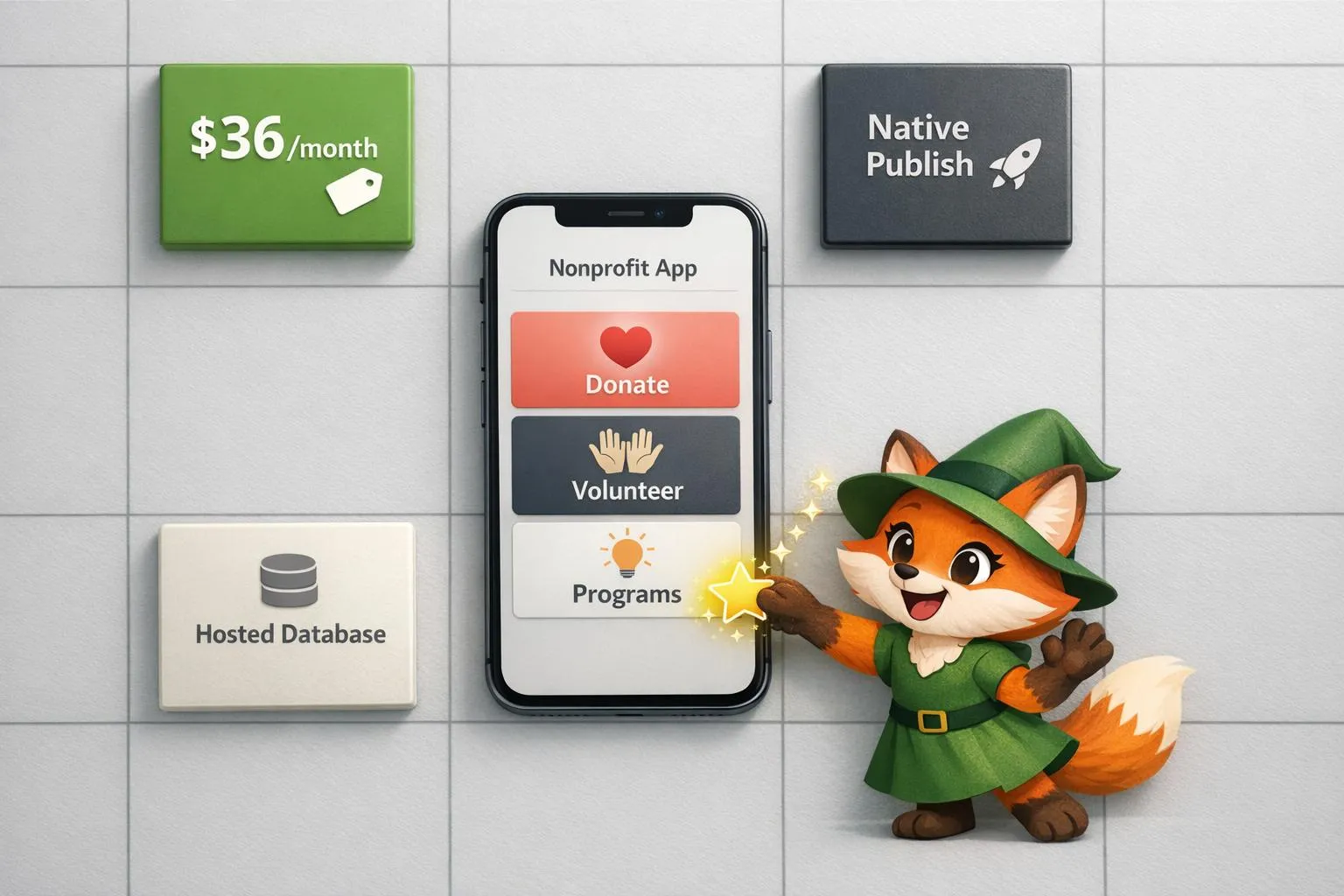
Nonprofits need mobile apps to stay connected with supporters - 97% interact via mobile devices. But building custom apps can cost $40,000–$400,000, far exceeding most nonprofit budgets. Adalo, a no-code app builder for database-driven web apps and native iOS and Android apps—one version across all three platforms, published to the Apple App Store and Google Play, offers a cost-effective alternative with flat-rate pricing starting at $36/month, enabling organizations to build professional apps without hiring developers or facing unpredictable costs. Key features like push notifications, donor management, and publishing apps to app stores simplify operations and engagement. Compared to custom development, nonprofits can save up to 99% in their first year while scaling their impact effectively.
An Overview of Adalo | A No Code App Builder Tutorial
Cost-Effective Solutions for Nonprofit Budgets
Nonprofits operate within tight budgets where fixed, predictable expenses are essential for long-term planning. When it comes to app development, understanding pricing models matters just as much as the monthly rates themselves. Adalo stands out by offering transparency and affordability that aligns with how nonprofits actually budget.
With Adalo's flat-rate model starting at $36/month, costs remain consistent regardless of how many donors you manage—whether 500 or 500,000. This eliminates the "success penalties" that occur when higher engagement leads to higher bills on usage-based platforms. Nonprofits can plan annual budgets with confidence, giving boards the clarity they need to approve funding without worrying about surprise charges.
Compare this to custom app development, where upfront costs range between $40,000 and $150,000. Maintenance expenses add another 10–20% annually on top of that initial investment. These costs can easily overshadow program budgets, making custom solutions unattainable for most organizations focused on maximizing their mission impact.
The difference in total cost is staggering. Adalo's Professional plan, which includes features like two published apps and geolocation, costs $624 per year when billed annually. Add app store fees, and the first-year total comes to approximately $748. In contrast, a custom-built app could cost between $53,000 and $216,000 in its first year—a savings of nearly 99% with Adalo.
| Expense Category | Traditional Development | Adalo (Professional Plan) |
|---|---|---|
| Upfront Build | $40,000–$150,000 | $0 (DIY) |
| Annual Subscription | $0 | $624 (billed annually) |
| Maintenance/Updates | $12,000–$60,000 | Included |
| Hosting & Security | $1,200–$6,000 | Included |
| Total Year 1 | $53,200–$216,000 | $748 (including fees) |
These numbers highlight why Adalo is a smart choice for nonprofits aiming to build professional apps without breaking the bank. The platform removes the financial barriers that have historically kept smaller organizations from reaching supporters through mobile channels.
Adalo's free plan makes it possible to test and validate app concepts before committing any budget. This flexibility allows nonprofits to gather feedback from stakeholders and refine ideas—a step that traditional custom development, requiring significant upfront investment, simply doesn't accommodate. Organizations can prototype their donor management system or volunteer coordination app, get real user feedback, and iterate before spending a dollar.
Adalo's Features for Nonprofit Apps
Adalo makes it possible to create an app that works seamlessly across web, iOS, and Android, complete with native app store publishing from a single codebase. This cross-platform capability means nonprofits don't need to maintain separate development efforts for different devices.
Ada, Adalo's AI builder, lets you describe what you want and generates your app. Magic Start creates complete app foundations from a description, while Magic Add adds features through natural language.
The platform's Magic Start feature uses AI to simplify app creation dramatically. By entering a simple description—such as "a food bank coordination app with volunteer scheduling and beneficiary check-ins"—Adalo generates the foundational elements automatically: databases, screens, and user flows. This process can shave weeks off development time. The nonprofit Scholarcash used Adalo to build its mobile platform in just one week, resulting in over 20,000 downloads on the Apple App Store. These AI-assisted tools make it easier to integrate native features that boost user engagement.
Beyond Magic Start, Magic Add lets you expand your app by simply describing what you want. Need to add a donation tracking feature? Just tell the AI Builder what you're looking for, and it generates the necessary screens and logic. This approach means nonprofits can continuously improve their apps without technical expertise.
Adalo's native publishing capabilities enhance nonprofit operations in several key ways. Push notifications keep donors and volunteers updated in real time about campaigns, events, and urgent needs. Features like QR code scanning through native camera access simplify tasks such as contactless check-ins—a tool that proved invaluable during high-traffic events. GPS integration supports impact tracking and location-based volunteer coordination, while biometric authentication helps secure sensitive donor information.
Data management is another area where the platform excels. Adalo includes a hosted relational database with no record caps on all paid plans starting at $36/month. This pricing structure means nonprofits can manage their entire supporter base without extra costs as they grow. The database supports linking complex relationships—connecting donors to their donation history, volunteer hours, and event participation—creating a complete picture of supporter engagement.
For nonprofits looking to scale, Adalo's performance is built to handle growth. Its 3.0 infrastructure ensures 3–4× faster operations and supports apps with over 1 million monthly active users. With the ability to process over 20 million daily requests and maintain 99%+ uptime, the platform ensures that donor management, volunteer coordination, and impact tracking dashboards operate smoothly as organizations expand their reach.
1. Adalo
Cost Structure
Adalo offers a straightforward pricing model that aligns well with nonprofit budgets. The platform starts at $36/month with unlimited usage—no caps on actions, users, records, or storage. You can add extra apps for $25 per published app each month and bring in additional editors for $15 per month. Annual billing saves 20% on subscription costs.
This pricing approach reflects Adalo's commitment to predictable costs. By eliminating usage-based billing entirely, the platform provides nonprofits with the financial certainty they need for effective long-term planning. There are no Workload Units to track, no action limits to worry about, and no surprise charges when your fundraising campaign goes viral. It's an affordable entry point into native publishing capabilities that lets organizations focus on their mission rather than monitoring usage dashboards.
Native App Publishing
Adalo simplifies the process of creating true native apps for iOS and Android. With a single codebase, the platform ensures smooth performance and access to native features like push notifications—an essential tool for keeping donors and volunteers engaged. The AI-assisted building process means you can describe what you want and watch your app take shape, rather than wrestling with technical implementation details.
Even better, Adalo handles the technical headaches of app store submissions, including certificates and provisioning profiles, helping you avoid common rejection reasons. This is often the hardest part of launching an app—the bureaucratic maze of Apple and Google requirements that trips up even experienced developers.
Keep in mind that additional costs come into play for app publishing. The Apple Developer Program charges $99 annually, while Google Play requires a one-time $25 registration fee. With these costs accounted for, Adalo's native publishing tools and reliable infrastructure make it easy for nonprofits to grow their app alongside their mission.
Scalability
Adalo's modular infrastructure scales to serve apps with millions of monthly active users, with no upper ceiling. Unlike app wrappers that hit speed constraints under load, Adalo's purpose-built architecture maintains performance at scale. Paid plans come without data storage limits, meaning your donor database, volunteer records, and impact metrics can grow without triggering additional charges.
Whether you're managing donor databases, coordinating volunteers across multiple locations, or tracking impact across programs, Adalo ensures your tools run smoothly as your organization expands. Best of all, this scalability doesn't come with surprise costs tied to increased usage. Nonprofits can focus on making a bigger impact without worrying about technical limits or budget pressures.
2. Custom App Development
Nonprofits often find custom app development challenging due to its steep costs and operational hurdles. While custom development offers maximum flexibility, the resource requirements put it out of reach for most mission-driven organizations.
Cost Structure
The price tag for custom app development can be overwhelming, especially for nonprofits working with limited budgets. Freelance developers charge anywhere from $6,000 to over $65,000, while agencies typically bill $150–$200 per hour, bringing total project costs to a range of $17,500 to over $200,000.
On top of the initial investment, annual maintenance adds another layer of expense. Keeping the app functional and compatible with the latest iOS and Android updates can cost nonprofits 15–20% of the original development price, plus an additional $10,000 annually. These ongoing costs can quickly strain financial resources that should be directed toward programs and services.
And that's not all—getting the app published introduces even more obstacles that many organizations don't anticipate.
Native App Publishing
While custom development offers the advantage of creating progressive web apps vs. native apps for both iOS and Android with full control over features, it comes with a significant catch: separate codebases. Developers need to work in Swift for iOS and Kotlin or Java for Android, which doubles the workload, time, and cost.
Publishing these apps isn't straightforward either. Nonprofits must handle app store submissions, including managing certificates, provisioning profiles, and ensuring compliance with constantly evolving guidelines. This process can add another $5,000–$15,000 to the total expenses. For organizations already stretched thin, these steps can feel like an uphill battle that diverts attention from core mission work.
Suitability for Nonprofits
The timeline for custom app development—ranging from 3 to 12 months—makes it difficult for nonprofits to address pressing needs quickly. When a disaster strikes or a fundraising opportunity emerges, waiting half a year for an app isn't viable. Building an internal team to handle the project is another costly endeavor, with salaries for a small team of 2–3 developers, a designer, and a project manager totaling $280,000–$420,000 annually.
These challenges have led many nonprofits to explore alternatives. The shift toward AI-powered app builders and visual development platforms offers a faster, more budget-friendly path to app development without requiring deep technical expertise or massive upfront investment.
3. Bubble
Bubble, a visual web app builder, operates on a usage-based pricing model that measures activity in Workload Units (WUs). The Starter plan is priced at $32 per month and includes 175,000 WUs. If you exceed this limit, additional usage costs $0.30 per 1,000 WUs.
Cost Structure
While this pricing model offers flexibility, it can lead to unexpected expenses—particularly problematic for organizations on tight budgets. Nonprofits may encounter extra charges if they surpass their WU allocation during a successful fundraising campaign or high-traffic event. To reach equivalent functionality to Adalo's native app capabilities, Bubble requires the $69/month plan, which still includes hard limits and unpredictable usage-based charges for CPU and records.
Additionally, distributing apps through the App Store or Google Play requires third-party wrappers, which start at $59 per month—an additional cost that pushes the total well above Adalo's flat-rate pricing.
Native App Publishing
Bubble's approach to mobile app publishing involves packaging web apps for mobile distribution using a web wrapper. This requires separate deployments for web and mobile, which can make app management more challenging for smaller teams. The wrapped approach also means apps don't perform as smoothly as true native applications—users may notice slower load times and less responsive interfaces.
Enabling mobile functionality often demands additional tools and incurs extra expenses beyond the standard subscription. These technical and financial demands can make the platform less accessible for smaller organizations and non-technical founders who need straightforward solutions.
Suitability for Nonprofits
For nonprofits working with limited budgets and resources, Bubble's pricing and deployment processes can be tough to navigate. The learning curve is steep, with some users needing up to five months of daily practice to become proficient. Although Bubble has been used to create over 3 million apps and offers discounts for nonprofits on most plans, the platform's complexity and variable costs may not align well with the needs of resource-constrained organizations.
Careful evaluation is essential to determine if FlutterFlow, Bubble, or Adalo is the right fit for achieving your mobile app goals. For nonprofits prioritizing predictable costs and native mobile experiences, Adalo's approach offers clearer advantages.
4. Softr
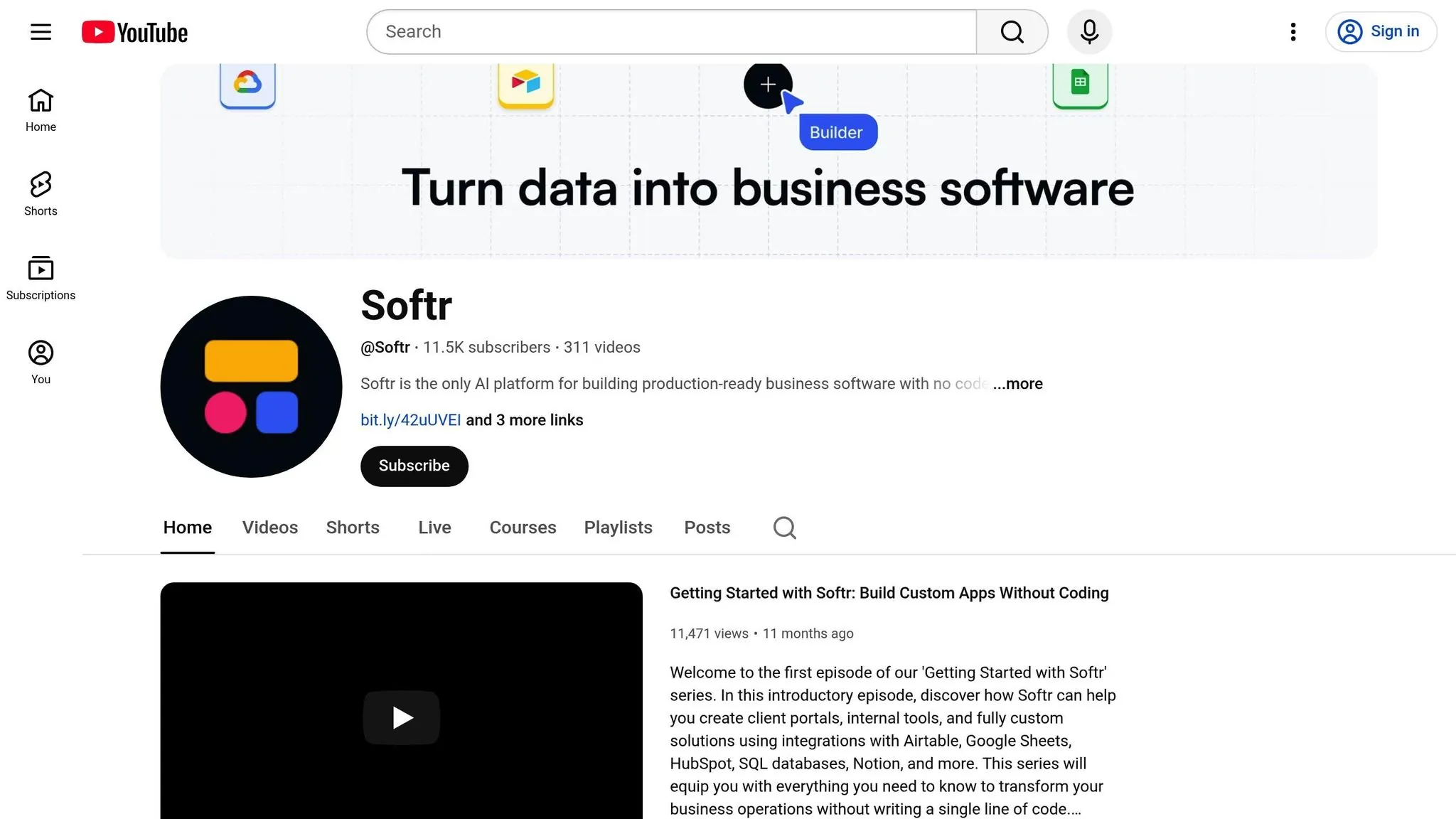
Softr specializes in creating web and Progressive Web Apps, but you'll need an external database—like Airtable or Google Sheets—to get started. This dependency adds both cost and complexity to the equation.
Cost Structure
Softr's Basic plan is priced at $59 per month, covering three apps and up to 20 internal users. For Progressive Web App functionality, you'll need to upgrade to the Professional plan at $167 per month—a significant jump in cost that may strain nonprofit budgets. The platform's pricing also scales with users, meaning costs increase as your supporter base grows.
Nonprofits can take advantage of a 30% discount, but it's important to remember that the subscription to an external database adds another layer of expense. Airtable's paid plans start at $20/user/month, which can add up quickly for organizations with multiple team members managing data.
Native App Publishing
Softr doesn't support publishing apps to the Apple App Store or Google Play Store. Instead, apps are distributed through web browsers or shared via Progressive Web App links. This limitation can make it harder for public-facing initiatives like fundraising campaigns or volunteer recruitment to gain visibility and reach supporters where they spend most of their mobile time.
Without app store presence, nonprofits miss out on the discoverability and credibility that comes with being listed alongside established apps. These technical constraints make Softr more suitable for internal applications rather than those aimed at public outreach and supporter engagement.
Suitability for Nonprofits
With its intuitive block-based design system, Softr is a solid choice for building internal tools like client portals, volunteer management platforms, or project dashboards. The interface is genuinely easy to learn, and organizations already using Airtable may find the integration convenient.
However, its reliance on external databases, lack of native app publishing, and the higher cost for Progressive Web App features make it less appealing for nonprofits that need to engage a broader audience through mobile channels. For organizations where 97% of supporters interact via mobile devices, the inability to publish to app stores represents a significant limitation.
Advantages and Disadvantages
Adalo provides a straightforward way for nonprofits to build apps, balancing affordability with functionality. However, organizations with unique or highly complex needs might need to explore additional customization options. Here's a closer look at how the platform performs across key factors:
| Factor | Adalo |
|---|---|
| Cost Predictability | Flat pricing at $36/month with unlimited usage—no caps on actions, users, records, or storage. |
| Native Mobile Publishing | Full native publishing to iOS and Android from a single codebase, offering polished mobile experiences. |
| Ease of Use | Drag-and-drop builder enhanced by AI Builder with Magic Start and Magic Add features. |
| Scalability | Modular infrastructure supports 1M+ MAU with no data storage limits on paid plans. |
| Build Time | AI-assisted development—most apps are ready to launch in days or weeks rather than months. |
| Integrations | Includes over 20 native integrations; complex needs may require creative solutions or third-party tools. |
Adalo's flat pricing model makes budget planning straightforward—a significant advantage for nonprofits managing tight resources. At $36 per month with no usage limits, organizations can avoid unexpected costs and focus on engaging donors and volunteers without watching usage meters.
The platform's native mobile publishing is another standout feature, especially since 97% of nonprofit supporters primarily interact via mobile devices. With Adalo, nonprofits can deliver a professional-grade app experience directly to iOS and Android users through the App Store and Google Play, helping them connect more effectively with their audience where they already spend their time.
Adalo's drag-and-drop builder, enhanced by AI-assisted features like Magic Start and Magic Add, enables nonprofits to turn their ideas into functioning apps in record time—often within days. Describe what you need, and the AI generates your database structure, screens, and logic automatically. This speed and simplicity are crucial for organizations that need to address challenges quickly without getting bogged down in lengthy development cycles.
That said, nonprofits with intricate workflows or highly specialized integration needs should note that Adalo's native integrations, while covering most essentials, might require additional customization for edge cases. In such situations, third-party tools like Zapier or Make can extend functionality, though this adds some complexity.
Conclusion
For nonprofits operating on tight budgets, Adalo's flat-rate pricing of $36 per month offers a cost-effective way to create professional native iOS and Android apps. This is a stark contrast to traditional custom development, which often exceeds $20,000 before a single line of code is written. Over a five-year period, a nonprofit would spend about $2,160 with Adalo, making it a budget-friendly option for achieving advanced mobile engagement while directing more resources toward mission-critical programs.
The AI Builder with Magic Start speeds up app development dramatically, reducing timelines from months to just days. Whether it's donor management, volunteer coordination, or impact tracking, most users master the platform quickly. This simplicity allows organizations to channel more of their resources into their mission instead of getting bogged down by technical hurdles or expensive development contracts.
With native app publishing to both the Apple App Store and Google Play Store from a single codebase, Adalo ensures nonprofits can deliver polished mobile experiences that meet supporters where they are. Features like push notifications, offline access, and seamless integration with existing tools help create apps that are not only functional but genuinely useful for the people who matter most to your organization.
For nonprofits seeking predictable costs and scalable solutions, Adalo strikes a practical balance between affordability and functionality. Start with the free tier to test and refine your ideas, then upgrade to full publishing as your organization's needs expand.
Related Blog Posts
- Adalo for Software Development Teams: Rapid Internal Tool Building
- Adalo for Custom Software and App Development Agencies
- Why Startups Choose Adalo Over Bubble: Real Case Studies
- Church App Development: How Adalo Serves Communities
FAQ
Why choose Adalo over other app building solutions?
Adalo is an AI-powered app builder that creates true native iOS and Android apps from a single codebase. Unlike web wrappers or PWA-only platforms, it compiles to native code and publishes directly to both the Apple App Store and Google Play Store. With flat-rate pricing starting at $36/month and no usage limits, nonprofits get predictable costs without "success penalties" when engagement grows.
What's the fastest way to build and publish an app to the App Store?
Adalo's AI Builder with Magic Start generates complete app foundations from a simple description. Describe your nonprofit app—like "a volunteer coordination app with scheduling and check-ins"—and it creates your database, screens, and user flows automatically. Combined with Adalo's streamlined app store submission process, you can go from idea to published app in days rather than months.
How much can nonprofits save by using Adalo instead of custom development?
Nonprofits can save up to 99% in their first year. Custom app development costs $40,000–$150,000 upfront plus $12,000–$60,000 in annual maintenance. Adalo's Professional plan costs approximately $748 in the first year including app store fees, compared to $53,000–$216,000 for traditional development.
Does Adalo support push notifications and native mobile features?
Yes, Adalo supports essential native features including push notifications for real-time donor and volunteer engagement, GPS integration for impact tracking, QR code scanning for contactless check-ins, and biometric authentication to secure sensitive donor information. These features work natively on both iOS and Android.
Can Adalo scale as my nonprofit organization grows?
Absolutely. Adalo's modular infrastructure supports apps with over 1 million monthly active users, processing 20 million+ daily requests with 99%+ uptime. All paid plans include unlimited database records, so whether you're managing 500 or 500,000 donors, costs remain predictable with no usage-based charges.
Which is more affordable, Adalo or Bubble?
Adalo offers better value for native mobile apps. Adalo starts at $36/month with unlimited usage and native app store publishing included. Bubble's comparable plan costs $69/month with Workload Unit limits, plus you'll need third-party wrappers starting at $69/month for mobile app distribution—making the total cost significantly higher.
Which is easier for beginners, Adalo or Softr?
Both platforms are beginner-friendly, but they serve different purposes. Softr excels at internal tools using existing Airtable data. Adalo's AI Builder with Magic Start and Magic Add makes it easy to build complete native mobile apps by describing what you want—no external database required, and you can publish directly to app stores.
Is there a way to test my nonprofit app idea before paying?
Yes, Adalo offers a free plan that allows nonprofits to test and validate app concepts before committing any budget. You can build your prototype, gather stakeholder feedback, and refine your ideas without the significant upfront investment that traditional custom development requires.
How long does it take to build a nonprofit app with Adalo?
Most nonprofit apps can be built and launched in days to weeks rather than months. Adalo's Magic Start feature generates your app's foundation automatically from a description, and Magic Add lets you expand functionality by describing new features. The nonprofit Scholarcash built their mobile platform in just one week.
Can I publish my nonprofit app to both the Apple App Store and Google Play?
Yes, Adalo publishes true native apps to both stores from a single codebase. The platform handles the technical complexity of app store submissions, including certificates and provisioning profiles. You'll need an Apple Developer account ($99/year) and Google Play registration ($25 one-time fee).

Build your app fast with one of our pre-made app templates
Begin Building with no codeRelated Content
How Small Businesses Build Mobile Apps with Adalo
No-code tools make it possible for small businesses to design, launch, and scale native mobile apps quickly and affordably.

Adalo for Custom Software and App Development Agencies
Agencies can build multi-platform native apps faster and cheaper with a no-code platform offering flat-rate pricing, white-labeling, and sca
Building Apps with AI Prompts: A Founder's Guide
Use AI prompts to build native mobile apps without code—define purpose, features, database models, UI, and scale with performance tools.

Best AI App Builders in 2026: Where Adalo Fits
Compare top AI app builders in 2026 and see how Adalo's AI tools, native app publishing, and flat $36/mo pricing stack up against other plat