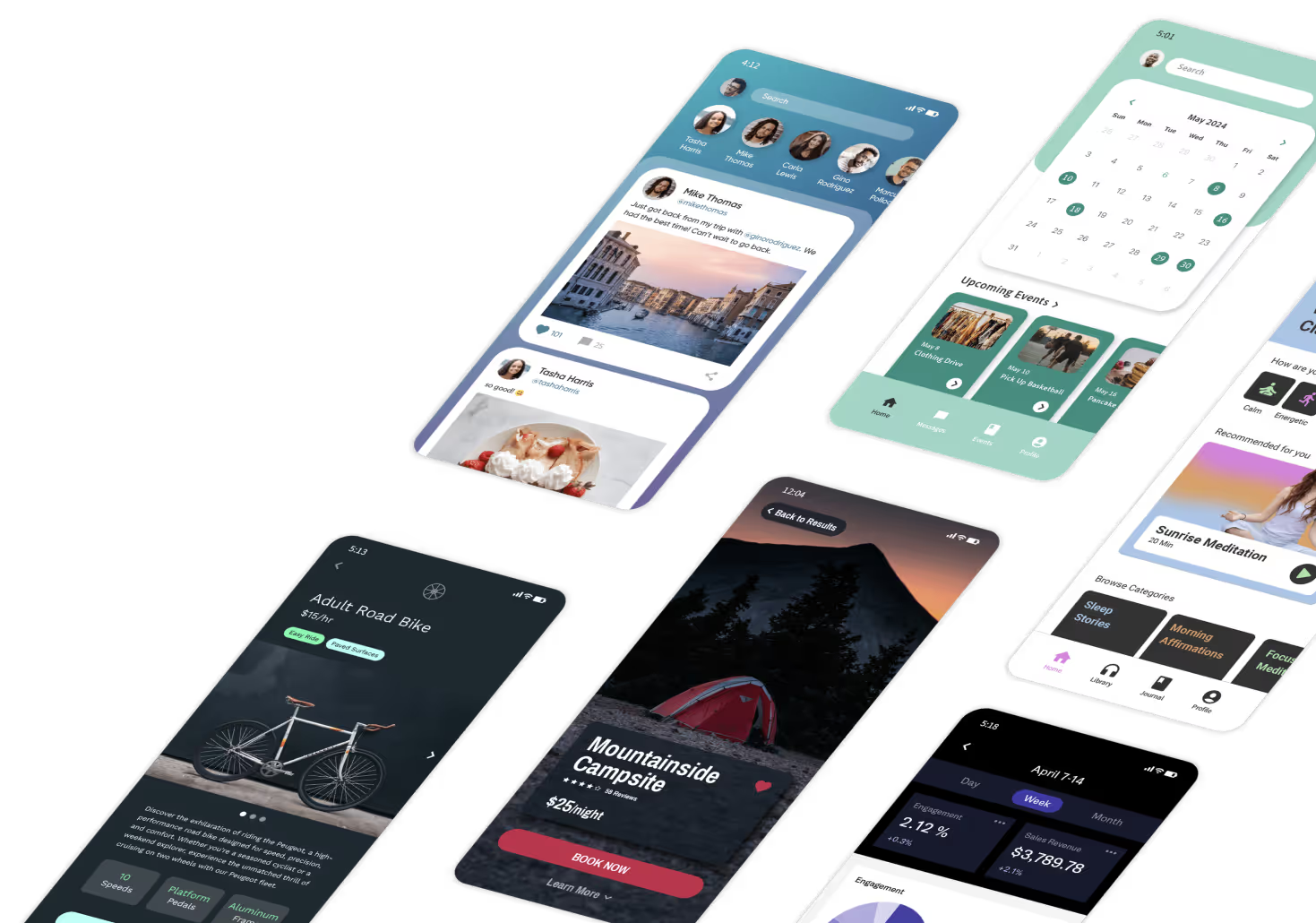
App builders have transformed how non-technical founders build by eliminating the need for engineers to launch real products. They make it possible to validate, iterate, and grow without writing a single line of code.
This article cuts through the noise with a clear, use-case-driven guide to the best app building tools. Whether you're building an MVP, a website, or automating workflows, you'll know exactly which platform to choose and why.
Table of Contents
- What Are No-Code Tools?
- Why Go No-Code?
- Top 20 No-Code Tools in the Market
- Best No-Code Tools by Use Cases
- 5 Mistakes to Avoid as a Non-Technical Founder Using No-Code
- The Figures Behind No-Code Tools' Expansion
- Key Takeaways
- FAQ
What Are No-Code Tools?
No-code tools are software platforms that let you build digital products—apps, websites, and workflows—without writing any code. Instead of relying on traditional development, you use drag-and-drop builders, visual workflows, and preconfigured components to create real, working solutions.
The most advanced platforms now incorporate AI to accelerate building even further. Rather than manually configuring every element, you can describe what you want and let the platform generate your database structure, screens, and logic automatically.
Why Go No-Code?
App builders put the power in your hands to build, test, and scale without waiting on anyone else. Here's what you can do with these tools:
No Need for a Tech Co-Founder to Launch
Your first product doesn't need a coder behind it. Adalo is a no-code app builder for database-driven web apps and native iOS and Android apps—one version across all three platforms, published to the Apple App Store and Google Play. With tools like this, you can turn your idea into a real, functioning app, whether it's a booking tool, marketplace, or internal dashboard, by simply choosing features, dragging elements, and publishing it live.
Test Ideas Without Burning Time
Got a business idea at 9 a.m.? Launch a working version by 9 p.m. App builders let you create landing pages, collect user sign-ups, and even charge payments—all in a day. You learn fast, iterate faster.
Ada, Adalo's AI builder, lets you describe what you want and generates your app. Magic Start creates complete app foundations from a description, while Magic Add adds features through natural language.
With AI-assisted building features like Magic Start, you can generate complete app foundations from a simple description. Tell it you need a booking app for a dog grooming business, and it creates your database structure, screens, and user flows automatically—what used to take days of planning happens in minutes.
Automate Tasks While You Sleep
You can create smart systems that do the boring stuff for you—send emails, update records, and sync contacts. Set it once, and let it run in the background while you focus on growing your business.
Control the Look and Feel of Everything
Want your product to appear as if a top design team designed it? App builders give you total creative control. From login flows to user dashboards, you decide how things work and how they feel, without compromising on polish.
Keep Your Budget Focused on Growth
Why spend thousands of dollars on a developer when you can build your MVP for a fraction of the cost? Most platforms offer everything—hosting, design, and backend—for under $100/month. Adalo's paid plans start at just $36/month with unlimited usage and no record caps on the database. You save big and spend where it counts: acquiring users.
Top 20 No-Code Tools in the Market
Below is a curated table of the top 20 app building tools for startup founders, organized by use case, core features, pricing, and ideal users.
| Tool | Primary Use Case | Key Features | Limitations | Pricing (Monthly) | Best For |
|---|---|---|---|---|---|
| Adalo | Native mobile + web apps | AI-powered builder, drag-and-drop, publish to iOS/Android, built-in database, unlimited records on paid plans | Advanced backend logic requires API integrations | Free; from $36 | Building mobile-first MVPs |
| Bubble | Complex web apps, SaaS | Visual logic builder, workflows, database, plugin system | Steep learning curve, code export is available as part of the enterprise plan within Adalo Blue, Workload Units limit usage, mobile is web wrapper | Free; from $29-$59 | Highly customizable SaaS/web apps |
| Glide | Spreadsheet-based mobile apps | Spreadsheet to app, drag-and-drop UI, fast build | Limited design flexibility, PWA only, no App Store publishing, record limits | Free; from $60 | Internal tools, quick MVPs |
| Softr | Web apps from Airtable/Sheets | Templates for portals, CRMs, ecommerce | Airtable dependent, limited design flexibility, no native apps | Free; from $167 for PWA | Member portals, listings, simple MVPs |
| Webflow | Websites and landing pages | Full design control, CMS, SEO tools, animations | Learning curve, no native app support | Free; from $18 | Designers, marketing sites |
| Carrd | One-page websites | Super simple builder, mobile responsive, fast launch | Limited features, no database or app logic | Free; Pro from $19/year | Landing pages, waitlists |
| Zapier | App automation | 6,000+ integrations, automation templates, team workflows | Expensive at scale, polling-based triggers | Free; from $19.99 | Basic automation between apps |
| Make (Integromat) | Advanced workflow automation | Visual workflows, routers, real-time logic, custom APIs | Steeper learning curve | Free; from $10 | Complex automation scenarios |
| Supabase | Scalable backend | Postgres DB, auth, APIs, real-time updates | Developer-friendly UI, not fully visual | Free; from $25 | Technical founders scaling apps |
| Xano | No-code backend + logic | API builder, scalable DB, user auth | Backend-only, some technical concepts | Free; from $59 | Building logic-heavy backends |
| Shopify | Online stores | eCommerce builder, inventory, payments, app store | Limited checkout customization | From $39 + fees | Fast store launches |
| Sharetribe | Marketplaces | Multi-vendor support, commission setup, booking tools | Less visual freedom | Starts at $99 | Launching service marketplaces |
| Figma | UI/UX design + prototyping | Design tool, team collaboration, component libraries | Not functional output alone | Free; from $12 | UI/UX design and prototyping |
| DrapCode | Web apps with backend logic | Visual builder, database, custom workflows | Less known, UI not as refined | Free; from $29 | Full-stack no-code app builders |
| Kissflow | Business process automation | Workflow builder, form logic, task tracking | Enterprise-leaning, less focus on public apps | From $20/user | Automating internal business processes |
| AppMySite | Convert websites to mobile apps | WordPress to mobile app builder, real-time sync | Limited flexibility, not for standalone apps | Free; from $19 | Turning existing sites into apps |
| Appy Pie | Mobile app builder | Drag-and-drop app builder, PWA/native, chatbot builder | Basic UI, limited scalability | Free; from $99 for iOS publishing | Beginners launching simple apps |
| Quickbase | Workflow + app automation | Relational DB, forms, app builder, user roles | More enterprise-focused | Custom pricing | Workflow-driven apps and dashboards |
| Airtable | Visual database | Spreadsheet + database, drag UI, collaboration, forms | Not for public apps, limited logic | Free; from $20 | Internal tools, data-heavy MVPs |
| FlutterFlow | Mobile apps with code export | Visual builder, full Flutter code export, Firebase/Supabase integration | Low-code (not no-code), requires separate database setup, steep learning curve | Free; from $70 for app publishing | Technical users building complex mobile apps |
Note: Pricing is on a per-month basis and reflects current rates. Always verify on the platform's website.
Looking for a deep dive into specific platforms? Check out this full comparison of the top 20 no-code tools.
Best No-Code Tools by Use Cases
Here are the most practical ways app building tools are used to build and launch startups efficiently without writing code. Below is a breakdown by these use-cases:
- Building MVPs and Web Apps
- Creating landing pages and websites
- Automating business processes and workflows
- Building databases and backends
- Launching online stores or marketplaces
- Design and prototyping
- Building mobile apps
1) Building MVPs and Web Apps
To help you quickly identify the ideal MVP-building tool, here's a side-by-side comparison highlighting key selection criteria:
| Criteria | Adalo | Bubble | Softr |
|---|---|---|---|
| Ease of Use | Very High (simple drag-and-drop builder, described as "easy as PowerPoint") | Moderate (visual logic; learning curve) | Very High (drag-and-drop, quick setup) |
| Customization | High (customizable UI, flexible components) | Very High (complex workflows, custom logic) | Medium (template-driven, Airtable-based) |
| Time to MVP | Fast (days to 1-2 weeks) | Moderate (2-6 weeks) | Very Fast (hours/days) |
| Best Use Cases | Mobile apps, marketplaces, consumer MVPs | Complex web apps, SaaS, marketplaces | Internal tools, simple listings, portals |
| Performance & Scale | Excellent (modular infrastructure scales to 1M+ MAU, no upper limit) | Good (requires optimization at scale, Workload Units can limit growth) | Good (best for early-stage, limited scale) |
| Integrations | Strong (Zapier, Airtable, custom APIs) | Excellent (1,000+ plugins, APIs, Zapier) | Limited (~50 via Airtable, Zapier) |
| Code Export / Lock-in | Moderate Lock-in (supports external APIs) | High Lock-in (code export is available as part of the enterprise plan within Adalo Blue) | High Lock-in (Airtable-dependent, no export) |
| Community & Resources | Excellent (large community, rich resources) | Excellent (large, highly active) | Good (growing, smaller community) |
| Pricing | Free; paid plans from $36/month with unlimited records | Free; paid plans from $29-$59/month with Workload limits | Free; paid plans from $167/month for PWA |
Why Adalo stands out for MVPs:
- Speed with Flexibility: Adalo enables fast MVP launches without sacrificing control. Its mobile-first approach makes it perfect for startups targeting app stores or hybrid experiences.
- Mobile-Optimized by Design: Unlike many tools, Adalo was built with mobile apps in mind, giving founders an edge in user experience and platform readiness.
- Balanced Customization: While Bubble offers deeper complexity, Adalo provides enough flexibility (custom APIs, UI design, database integration) for 80–90% of MVP needs, without a steep learning curve.
- Unlimited Data Storage: Paid plans include no record limits on the database, so you won't hit artificial ceilings as your user base grows.
- Supportive Ecosystem: Adalo's growing marketplace, templates, and expert community make it easy for founders to build, iterate, and get help without coding.
- Cost-Effective Scaling: With accessible pricing starting at $36/month and essential features even in lower tiers, Adalo is well-suited for lean teams and bootstrapped founders.
Must Read: Softr vs. Bubble vs. Adalo
2) Creating Landing Pages and Websites
Here's a quick comparison of leading tools for landing pages. We've broken down their strengths across key criteria like design, speed, and mobile output.
| Criteria | Adalo | Webflow | Carrd |
|---|---|---|---|
| Ease of Use | High (drag-and-drop editor, app-style UI) | Moderate (learning curve for layout/design) | Very High (one of the simplest builders) |
| Design Flexibility | Medium (component-based, mobile-focused) | Very High (pixel-level control, full layout) | Low (limited to templates and block editing) |
| Time to Launch | Fast (within hours to 1-2 days) | Moderate (1-3 days depending on complexity) | Very Fast (under 1 hour) |
| Mobile Optimization | Excellent (native mobile output) | High (fully responsive) | Moderate (mobile responsive, limited control) |
| SEO & Meta Control | Basic (titles, metadata, mobile first) | Excellent (complete SEO tools and sitemap) | Limited (only basic metadata options) |
| Forms & Lead Capture | Built-in forms, actions, and API integration | Strong (custom forms, CMS Forms, integrations) | Basic (form submission, email notifications) |
| Use Cases | Mobile splash screens, onboarding pages | Product/marketing sites, portfolios, blogs | One-pagers, waitlists, personal sites |
| Export or Portability | Hosted only (no export, moderate lock-in) | Export available on paid plans | Hosted only (code export is available as part of the enterprise plan within Adalo Blue) |
| Pricing | Free; paid from $36/month | Free; paid from $18-$49/month | Free; Pro from $19/year |
Why Adalo works for landing pages:
- Mobile-native edge: Adalo is the only tool among the three that offers native mobile output, making it perfect for in-app splash screens, onboarding flows, or mobile-first landing pages.
- Speed with structure: While Carrd offers ultra-fast setups, Adalo balances speed with interactivity—ideal for MVPs that go beyond static pages.
- Built for product workflows: Adalo's component-based editor makes it easier to tie landing pages into full app logic, something not natively possible in Carrd or Webflow.
- Flexible growth path: Adalo allows you to start simple and scale your page into a full app, reducing the need to migrate tools as your idea matures.
3) Automating Business Processes and Workflows
Automation is key to scaling efficiently. Many tools offer strong capabilities, but the right tool depends on your need for control, complexity, and integration.
| Criteria | Adalo | Zapier | Make (Integromat) |
|---|---|---|---|
| Ease of Use | High (drag-and-drop workflows in-app) | Very High (simple setup with templates) | Moderate (visual but more technical) |
| Automation Scope | In-app flows, APIs, navigation | App-to-app tasks (e.g., CRM, forms, email) | Complex, multi-step scenarios |
| Custom Logic | Moderate (if-then logic, conditionals) | Basic filters and logic branches | Advanced (routers, iterations, scenarios) |
| Real-Time Execution | Yes (on user interaction) | Limited (polling unless on premium plan) | Yes (real-time + scheduled) |
| Use Cases | App workflows, onboarding, triggers | Lead capture, email flows, calendar sync | Order sync, inventory updates, custom flows |
| Integrations | APIs, Webhooks, Zapier | 6,000+ apps supported | 1,500+ apps, custom API module |
| Pricing | Free; from $36/month with unlimited usage | Free; from $19.99/month | Free; from $10/month |
Why Adalo excels for in-app automation:
- Best for in-app logic and triggers: Adalo allows real-time automation within your app, letting you trigger actions like updating records, navigating screens, or making API calls without external platforms.
- Execution edge: Unlike polling-based tools, Adalo runs workflows instantly based on user interactions—essential for responsive, dynamic apps.
- No usage-based charges: All Adalo plans now include unlimited usage, meaning no bill shock as your automation scales. Zapier and Make both charge based on task volume.
4) Building Databases & Backends
For non-technical founders, setting up a backend can feel overwhelming. Adalo makes it easy to manage your app's backend visually—no code, no stress. But how does it compare to other tools like Supabase and Xano?
| Criteria | Adalo | Supabase | Xano |
|---|---|---|---|
| Ease of Use | High (visual collections, relationships) | Moderate (developer-oriented UI) | Moderate (visual API builder, some learning) |
| Data Modeling | Moderate (basic relational support) | Advanced (Postgres-level schema) | Advanced (custom logic, conditionals) |
| Auth & Permissions | Built-in (login/signup, role logic) | Full-featured (OAuth, JWT, RLS) | Built-in (users, roles, permissions) |
| APIs | External APIs + basic internal triggers | Auto REST/GraphQL APIs | Full REST APIs, Webhooks, logic builder |
| Use Cases | Mobile app databases, basic backend | Production SaaS, complex apps | Complex backends, dashboards, SaaS |
| Scalability | Excellent (modular infrastructure, 1M+ MAU, no record limits) | Excellent (cloud Postgres, scalable) | Excellent (scales with logic and volume) |
| Integrations | Zapier, APIs, Webhooks | SDKs, webhooks, integrations | Zapier, REST, Make, external auth |
| Pricing | Free; from $36/month with unlimited records | Free; from $25/month | Free; from $59/month |
Why Adalo works for backend needs:
- Best for All-in-One Visual App Building: Adalo offers a seamless visual interface for building both your frontend and backend together, making it ideal for founders who want to launch fast without stitching tools.
- Best for MVPs to Production Scale: With built-in collections, user auth, custom actions, and external API support, Adalo covers the full stack for mobile and web apps—no separate backend needed. The platform's modular infrastructure scales to serve apps with millions of MAU.
- SheetBridge for Spreadsheet Users: Adalo's SheetBridge feature lets you turn a Google Sheet into an actual database for the easiest control without database-related learning curves.
Also Read: Xano vs. Supabase vs. Adalo
5) Launching Online Stores or Marketplaces
When it comes to building a commerce app without code, Adalo stands out as the most flexible and mobile-ready platform for founders who want full creative and functional control. Here's how it compares:
| Criteria | Adalo | Shopify | Sharetribe |
|---|---|---|---|
| Ease of Use | High (drag-and-drop, in-app flows) | Very High (plug-and-play storefront setup) | Moderate (guided setup, marketplace-focused) |
| Store Type | Mobile-first stores, service listings | Traditional eCommerce (physical/digital goods) | Peer-to-peer marketplaces, service platforms |
| Checkout Customization | High (custom in-app logic and flows) | Low (Shopify controls checkout flow) | Medium (basic settings, less flexible) |
| Multi-Vendor Support | Basic (manual setup using collections) | Limited (requires apps or third-party tools) | Built-in (vendor accounts, commissions, payouts) |
| Mobile Experience | Native mobile apps (iOS/Android) | Mobile-responsive web storefronts | Mobile-ready web, not app-native |
| User Accounts | Built-in auth, roles, and permissions | Basic customer accounts | Built-in vendor and buyer accounts |
| Integrations | Zapier, Stripe, custom APIs | 8,000+ apps via App Store | Stripe, Zapier, PayPal |
| Pricing | Free plan; paid from $36/month | Starts at $39/month + transaction fees | Starts at $99/month (hosted version) |
Why Adalo excels for commerce apps:
- Best for Custom Logic & Checkout Flows: Unlike rigid templates, Adalo lets you fully control user journeys, cart behavior, and checkout logic with in-app databases and conditions—perfect for unique store needs.
- Best for Native Mobile Commerce Apps: While others stick to mobile-friendly websites, Adalo builds real native apps for iOS and Android—ideal for startups creating on-demand platforms or app-first storefronts.
- Best for Flexible Store Models: Whether you're selling products, offering services, or building a multi-vendor marketplace, Adalo adapts to your business logic with no need to fit into pre-built molds.
6) Design & Prototyping
Adalo lets you design, prototype, and publish real apps—far beyond what static design tools offer. Here's how it compares to Figma and Penpot.
| Criteria | Adalo | Figma | Penpot |
|---|---|---|---|
| Design Fidelity | High (usable UI + logic + navigation) | Very High (pixel-perfect UI) | High (SVG-based, modern UI) |
| Prototyping Style | Functional app prototypes | Clickable design prototypes | Clickable design prototypes |
| Interactivity | Full (data, buttons, flows, APIs) | Partial (transitions, overlays) | Partial (basic linking and states) |
| Mobile Readiness | Native iOS/Android builds | Mobile previews only | Mobile previews only |
| Team Collaboration | Moderate (editor role only) | Excellent (real-time, comments) | Good (collaboration via web) |
| Export Options | Publish live app or export screens | Code export (via plugins), image export | SVG and CSS export |
| Pricing | Free; from $36/month | Free; from $12/month | Free (open source) |
Why Adalo bridges design and deployment:
- Best for building real apps, not just prototypes: Adalo lets founders design and launch fully functional, testable mobile apps—no dev handoff needed.
- Best all-in-one design-to-deployment tool: Unlike Figma or Penpot, Adalo bridges UI design with logic, data, and native publishing in one platform.
- Best value for product validation: With live app previews, database integration, and API-ready flows, Adalo helps you validate fast without extra tools.
7) Building Mobile Apps
For non-technical founders, choosing the right platform can make or break your app journey. While several tools promise speed or flexibility, Adalo stands out by offering the perfect balance of ease, power, and true mobile app output—all in one place.
| Criteria | Adalo | FlutterFlow | Glide |
|---|---|---|---|
| Ease of Use | Very High (no-code, visual builder) | Moderate (low-code, visual builder + logic) | Very High (spreadsheet to app) |
| Design Flexibility | High (custom components and layouts) | Very High (advanced design with Flutter) | Low (template-based UI) |
| Code Export | No, but API support and external connections | Yes (export Flutter code) | No |
| Use Cases | Consumer apps, marketplaces, service apps | SaaS, complex apps, production-scale apps | Internal tools, admin dashboards |
| Native Output | Yes (iOS/Android builds) | Yes (iOS/Android builds) | PWA only (mobile web apps, no App Store) |
| Backend Support | Built-in collections, external APIs | Firebase, Supabase, custom APIs (separate setup required) | Airtable, Google Sheets, Glide Tables |
| Pricing | Free; from $36/month with unlimited records | Free; from $70/month for publishing (database separate) | Free; from $60/month with record limits |
Key differences to understand:
FlutterFlow is technically "low-code," not "no-code"—it's designed for technical users who understand development concepts. Users also need to set up and manage their own separate database (Firebase, Supabase, etc.), which requires significant learning complexity. Suboptimal database setup can create scale problems, and many users end up hiring experts to help. Their builder also has a limited view—you can only see 2 screens at once, whereas Adalo can display up to 400 screens on one canvas if needed.
Glide is heavily format-focused and restricted to set templates. This makes it fast to build and publish with, but creates generic, simplistic apps with limited creative freedom. Glide excels at spreadsheet-based apps, but doesn't support Apple App Store or Google Play Store publishing—apps are PWAs only.
Why Adalo leads for mobile app building:
- Best for Launching Real Mobile Apps Without Code: Adalo is the most intuitive platform for building truly native mobile apps with login, payments, database, and custom UI—all without writing a single line of code.
- Most Complete All-in-One Mobile App Builder: Unlike tools that require external backends or complex exports, Adalo offers an end-to-end solution with built-in database, visual logic, and seamless publishing to iOS and Android.
- Ideal for Founders Who Want to Launch Fast and Grow Later: Adalo's simplicity helps you go from idea to app quickly, while advanced features like custom actions and API integrations support long-term scalability—no dev team needed.
Also Read: Glide vs. FlutterFlow vs. Adalo
5 Mistakes to Avoid as a Non-Technical Founder Using No-Code
Even with powerful app building tools, some common mistakes can slow you down or hurt your startup's success. Here's what to avoid.
1. Relying on Too Many Tools at Once
Using too many tools can backfire. Founders on Reddit and IndieHackers often share that juggling multiple platforms leads to confusion, bugs, and broken integrations:
"The crazy jumping between all these screens… I found the overall no-code experience ineffective and suboptimal." — Reddit user, r/replit
Another thread highlights the steep learning curve despite claims of simplicity:
"Most no-code tools are marketed as 'easy' but still require a deep understanding of web development concepts." — r/nocode discussion
Even academic studies back this up—complexity and integration issues grow as teams stack more tools together. (Source)
The solution: Choose an all-in-one platform that handles frontend, backend, and database together. This eliminates integration headaches and reduces your learning curve.
2. Skipping UI/UX Best Practices
A working app is not enough—users must enjoy using it. Poor layout, confusing buttons, or bad navigation will drive users away. Learn basic design principles or use templates with good structure. Always test your app with real users before launch.
Tools with X-Ray features can help identify performance issues before they affect users, catching problems that might create poor user experiences.
3. Not Validating the Idea Before Building
Don't build the full product before checking if people want it. Start with a landing page, collect emails, or run a simple survey. If no one is interested, you'll save time and money. Validation comes before development.
With AI-assisted features like Magic Add, you can quickly add features from natural language requests to test different value propositions without rebuilding from scratch.
4. Ignoring Data Security or User Privacy
Just because a tool is easy to use doesn't mean it's safe. Ensure your app building tools handle user data securely. Verify if they comply with data laws like GDPR. If you're collecting personal info, protect it with strong passwords and secure platforms.
5. Not Planning for Growth and Scale
Many tools are great for the early stages but may not handle high traffic or complex features later. Before you scale, check if your platform can grow with you.
This is where platform choice matters significantly. Some platforms have record limits or usage-based charges that create unexpected costs as you grow. Adalo's modular infrastructure scales to serve apps with 1M+ monthly active users with no upper ceiling, and paid plans include unlimited database records and unlimited usage—no bill shock as you scale.
Note: Many third-party platform ratings and comparisons predate Adalo 3.0's infrastructure overhaul (launched late 2025), which made the platform 3-4x faster with completely rebuilt backend architecture. If you're reading older reviews, the performance and scalability concerns they mention have been addressed.
The Figures Behind No-Code Tools' Expansion
As app building platforms become increasingly popular, it's important to examine why this explosive growth is occurring and what it means for founders.
- According to Gartner, by 2026, 70% of new business apps will be built using low-code or no-code platforms. This trend reflects how platforms like Adalo are empowering solo founders to build real products faster than ever.
- The no-code market is exploding. It reached $28.1 billion and is expected to hit $35.9 billion by 2026, growing nearly 28% YoY. This surge is driven by startups and solopreneurs leveraging tools to bypass the developer gap and build fast.
- According to Zapier, 88% of knowledge workers say they improved productivity by using no-code tools to automate routine tasks.
- A Forrester report predicts that by 2028, the no-code market will reach $50 billion, helping startups streamline operations, UX, and even internal tools.
- Over 3 million apps have been created on Adalo alone, with the visual builder described as "easy as PowerPoint" and AI features promising even faster creation speed.
Key Takeaways
- App builders remove the technical barrier, allowing anyone to launch, test, and grow ideas without needing a developer. By 2026, 70% of new business apps will be built with these tools.
- Choose platforms based on your specific use case—native mobile apps, web apps, automation, or commerce—and verify they can scale with your growth without hitting record limits or usage charges.
- Avoid common mistakes like using too many tools, skipping UX testing, and ignoring scalability from the start. An all-in-one platform reduces complexity and integration headaches.
FAQ
Why choose Adalo over other app building solutions?
Adalo is an AI-powered app builder that creates true native iOS and Android apps. Unlike web wrappers, it compiles to native code and publishes directly to both the Apple App Store and Google Play Store from a single codebase—the hardest part of launching an app handled automatically. Paid plans include unlimited database records and unlimited usage with no bill shock.
What's the fastest way to build and publish an app to the App Store?
Adalo's drag-and-drop interface and AI-assisted building features let you go from idea to published app in days rather than months. Magic Start generates complete app foundations from a simple description, and Adalo handles the complex App Store submission process so you can focus on features and user experience.
Which is more affordable, Adalo or Bubble?
Adalo's paid plans start at $36/month with unlimited usage and no record caps. Bubble's comparable plans start at $59/month with Workload Units that limit usage and can create unexpected costs as you scale. Bubble's mobile solution is also a web wrapper, not native apps.
Which is more affordable, Adalo or FlutterFlow?
Adalo starts at $36/month with a built-in database and unlimited records. FlutterFlow starts at $70/month for app publishing, but that doesn't include a database—you need to separately source, set up, and pay for Firebase or Supabase, adding complexity and cost.
Which is more affordable, Adalo or Glide?
Adalo starts at $36/month with native iOS and Android publishing and unlimited records. Glide starts at $60/month for custom domain apps but has record limits and doesn't support App Store or Play Store publishing—apps are PWAs only.
Which is easier for beginners, Adalo or FlutterFlow?
Adalo is significantly easier for beginners. FlutterFlow is "low-code" designed for technical users who understand development concepts. Adalo's visual builder has been described as "easy as PowerPoint" and includes a built-in database, while FlutterFlow requires separate database setup and management.
Can I build an MVP without coding skills?
Yes. With Adalo's drag-and-drop interface, you can create database-driven apps with user authentication, custom workflows, and payment integration—all visually. You can go from idea to working product in days rather than months without writing any code.
How much does it cost to build an app with no-code tools?
Most platforms offer everything you need—hosting, design, and backend—for under $100/month. Adalo's paid plans start at $36/month with unlimited usage and no record caps, allowing you to keep your budget focused on user acquisition instead of development costs.
Can no-code apps handle real business logic and user data?
Absolutely. Adalo includes a built-in database with collections and relationships, user authentication with role-based permissions, and custom actions for complex workflows. You can integrate with external APIs, connect to payment processors like Stripe, and automate tasks—all without writing code.
Can I migrate from Bubble to Adalo?
Yes, though it requires rebuilding your app since there's no direct import. Many founders migrate to Adalo for native mobile app publishing, unlimited database records, and predictable pricing without Workload Unit concerns. Adalo's visual builder makes rebuilding faster than traditional development.
How do I avoid common mistakes when building with no-code?
Focus on validating your idea before building the full product—start with a landing page and collect user interest first. Stick to one or two reliable tools rather than juggling multiple platforms, and always test your app with real users. Plan for growth by choosing platforms that offer unlimited records and scalability.