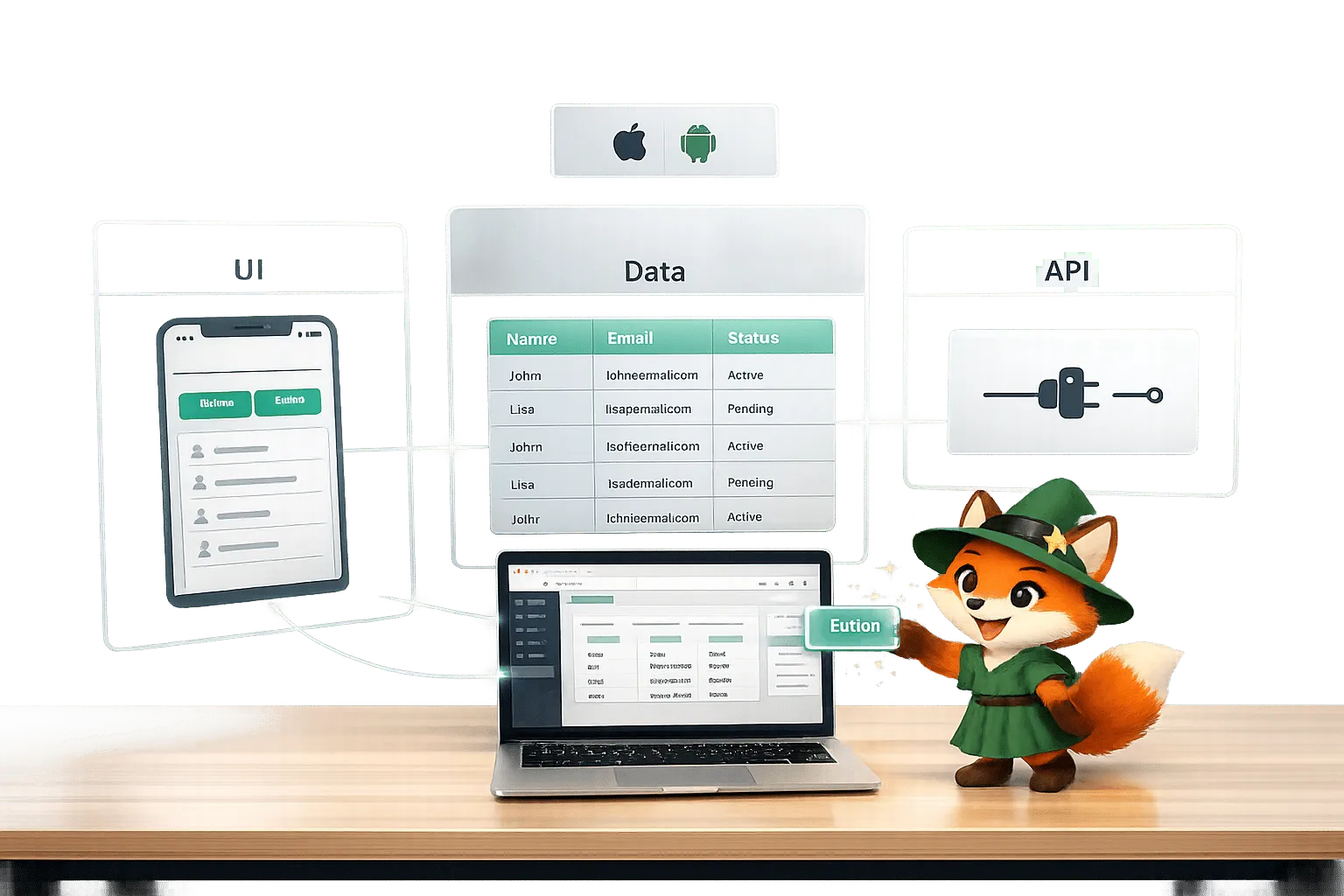
Adalo makes app development accessible for students without coding skills. With a drag-and-drop interface, it simplifies building native iOS and Android apps while teaching essential concepts like UI design, databases, and API integrations. Students can publish production-ready apps directly to app stores, creating strong portfolios. At $36/month for unlimited usage, Adalo is cost-effective for educators, offering a predictable pricing model and over 70 free courses through its App Academy.
Other platforms like Bubble, FlutterFlow, and Glide have their strengths but often require more technical knowledge, lack native publishing, or impose usage-based fees. Adalo balances ease of use, affordability, and professional-grade results, making it ideal for modern app development education.
1. Adalo
Curriculum Suitability
Ada, Adalo's AI builder, lets you describe what you want and generates your app. Magic Start creates complete app foundations from a description, while Magic Add adds features through natural language.
Adalo is a no-code app builder for database-driven web apps and native iOS and Android apps—one version across all three platforms, published to the Apple App Store and Google Play. Its drag-and-drop interface makes app creation feel as straightforward as putting together a presentation. This simplicity allows educators to focus their lessons on app design and logic rather than getting bogged down by coding errors or debugging. With Adalo, students can dive into creating functional apps right after signing up, exploring essential concepts like UI design, user flows, and logic. The Magic Start feature takes this a step further by generating complete app frameworks - including database structures, screens, and user flows - based on simple text descriptions. This gives students a working prototype they can analyze and refine.
For educators, the Adalo App Academy is a goldmine. It offers over 70 free courses that fit seamlessly into lesson plans. These include detailed tutorials for cloning popular apps, covering advanced topics like user authentication, social feeds, and real-time updates. Students can progress at their own speed, applying what they’ve learned to their own creative projects.
Adalo doesn’t stop at app design. It also simplifies teaching the more technical aspects of databases and APIs, making them approachable for beginners.
Database and API Teaching Capabilities
Adalo’s Collections system uses spreadsheet-style logic, which is familiar to most students and a great way to introduce database concepts. Students can visually create tables (called Collections) and define Properties like Text, Number, or Boolean to grasp data types without needing to learn SQL. The platform also supports relational database design, allowing students to connect tables and see how relationships like one-to-many or many-to-many work in practice. For example, a student building a course management app could link a "Teachers" collection to a "Courses" collection and observe how changes in one affect the other.
For students not ready to dive into relational databases, Adalo’s SheetBridge provides a gentle entry point. It lets them use a Google Sheet as a live database, offering a familiar environment to experiment with before transitioning to more complex structures. Paid plans remove database record limits, giving students the freedom to work with larger datasets without restrictions.
API integration is another area where Adalo shines. Students can connect to external services like Stripe for payments or use tools like Zapier and Make to link their apps with third-party services. These drag-and-drop integrations make it easy to understand how external services work without needing to write API calls or deal with JSON responses. Additionally, External Collections allow students to connect their apps to professional backends like Airtable or Xano.
These features not only simplify technical teaching but also prepare students for deploying apps in real-world scenarios.
Publishing and Portfolio Value
Adalo allows students to publish their apps as Progressive Web Apps vs. native apps - all from a single build. This capability gives students the chance to showcase their skills with production-ready apps that they can add to their portfolios. It’s a practical way to demonstrate their ability to build and launch apps quickly and effectively.
With Adalo 3.0, apps are now 3–4x faster and can scale to over 1 million monthly active users. The platform’s X-Ray performance tool helps students identify and fix bottlenecks before publishing, teaching them valuable lessons about scalability and user experience.
Pricing and Accessibility
Adalo’s pricing structure is designed with accessibility in mind. The platform offers unlimited database records, usage, and publishing to web, iOS, and Android. Importantly, Adalo has removed App Actions charges from all plans, eliminating unexpected costs for students and educators. The free tier includes unlimited test apps and allows for 200–500 database records per app - perfect for classroom projects without requiring a credit card. For schools, additional apps can be added to paid plans for $25 per month each.
2. Bubble
Curriculum Suitability
Bubble's visual programming approach targets educators teaching complex web application development. Students typically need 1–2 weeks to grasp the platform's fundamentals. Its advanced workflow editor, which relies heavily on conditional logic and database relationships, makes it more appropriate for advanced students or courses emphasizing business logic and web architecture.
However, mastering Bubble requires substantial training before students can create functional apps. While its extensive plugin ecosystem adds depth, it also increases learning complexity. This demanding structure provides a solid foundation for teaching complex data management and API integrations—but at the cost of accessibility for beginners.
Database and API Teaching Capabilities
Bubble excels at teaching advanced backend structures and database concepts. It supports intricate many-to-many relationships and complex queries, making it valuable for students exploring enterprise-level data architecture. With over 800 native plugins and a powerful API connector, the platform enables detailed lessons on API integrations that go beyond basics.
That said, the high level of customization can lead to performance issues as apps scale, offering students insight into optimization importance. Bubble's backend operates on a "Workload Units" pricing model, where charges are based on app activity. This creates unpredictable costs that pose challenges for educational institutions managing tight budgets. In contrast, Adalo's flat-rate pricing at $36/month includes unlimited usage with no action-based charges—a significant advantage for semester planning.
Publishing and Portfolio Value
Bubble uses a web wrapper for mobile apps, which limits native performance. While students can publish their apps, the mobile versions may not match the performance of fully native applications. App store submissions require extra steps, and updates to a single app version don't automatically sync across web, Android, and iOS platforms.
For students building portfolios, this limitation matters. Employers increasingly expect native app experience, and web wrappers can add 2-3 seconds of load time compared to native apps. Adalo's native compilation produces apps that perform like those built with traditional code—a meaningful differentiator for student portfolios.
Pricing and Accessibility
Bubble offers a free plan for learning and experimentation, with paid tiers starting at $32/month for the Starter plan, $134/month for Growth, and $399/month for Team. Mobile-specific capabilities begin at $69/month, with additional charges based on usage. Discounts for students and nonprofits are available upon request.
The Workload Units pricing model creates budgeting challenges for educational institutions. At equivalent functionality levels, Bubble costs approximately $69/month with hard limits plus unpredictable usage-based charges for CPU and records. Adalo's $36/month flat rate with unlimited usage offers more predictable costs for classroom environments.
3. FlutterFlow
Curriculum Suitability
FlutterFlow functions as a low-code platform, making it more suitable for students with coding experience rather than those seeking a purely visual solution. Its visual Action Flow Editor and drag-and-drop interface, featuring over 200 UI elements, offer flexibility. However, the platform comes with a steeper learning curve, as students must manage external databases and navigate more intricate development workflows.
For educators, this translates to additional time spent configuring external tools like Firebase or Supabase. With a user base exceeding 3.0 million as of early 2026, FlutterFlow aligns best with advanced learners or STEM-focused programs where technical depth is a priority. Tim Sneath, Former Director of Product at Google, highlighted its potential:
"FlutterFlow provides tooling that helps real world developers & users build apps using it - it's a straightforward, easy to use tool that can generate very powerful results. FlutterFlow brings the power of a rich platform to everybody".
This robust foundation makes it an excellent choice for students aiming to deepen their technical skills, especially in database and API integration. However, the technical prerequisites create barriers that Adalo's AI-powered approach eliminates—students can describe what they want to build and have Magic Start generate the foundation automatically.
Database and API Teaching Capabilities
FlutterFlow excels at teaching students how to work with external backends like Firebase and Supabase. It also supports RESTful APIs, enabling students to connect their apps to third-party services or custom backends, offering hands-on experience with practical development scenarios.
The platform's visual Action Flow Editor simplifies illustrating app logic and how data flows through the user interface. Tools like Test Mode allow students to debug their projects effectively, while collaborative features such as branching and native team comments make managing group projects easier. These capabilities merge theoretical aspects of app development with real-world challenges developers face.
One key difference: FlutterFlow doesn't include a database—students must configure external services separately. Adalo's built-in Collections system provides an integrated database with no record limits on paid plans, eliminating the need for external database setup and associated costs.
Publishing and Portfolio Value
Beyond technical training, FlutterFlow equips students to build portfolios with real-world applications. It supports deployment to the Apple App Store, Google Play Store, and the web. A standout feature is its "no vendor lock-in" policy, which lets users export full Flutter/Dart code at any point. Dan Somrack, Founder of Silver, shared his perspective:
"What we also liked about FlutterFlow was that we could always export the code into Flutter and we could keep it going as we scaled, which we didn't see with other platforms".
This code portability is invaluable for students transitioning to traditional development workflows. Additionally, the builder interface limits the view to two screens at a time, encouraging a more focused approach to app logic and professional deployment practices.
Pricing and Accessibility
FlutterFlow offers a free plan for building and testing projects. The Standard plan, priced at $30/month, includes features like code downloads and APK generation. The Pro plan, at $80/month per seat, adds one-click deployment to app stores and GitHub integration.
For educators, FlutterFlow provides a free one-year Premium subscription through its Education Program, available to eligible students and teachers. However, database services like Firebase or Supabase come with separate costs, and the per-seat pricing model can quickly escalate for classroom settings. A class of 20 students would require significant budget allocation compared to Adalo's flat $36/month with unlimited usage.
4. Glide
Curriculum Suitability
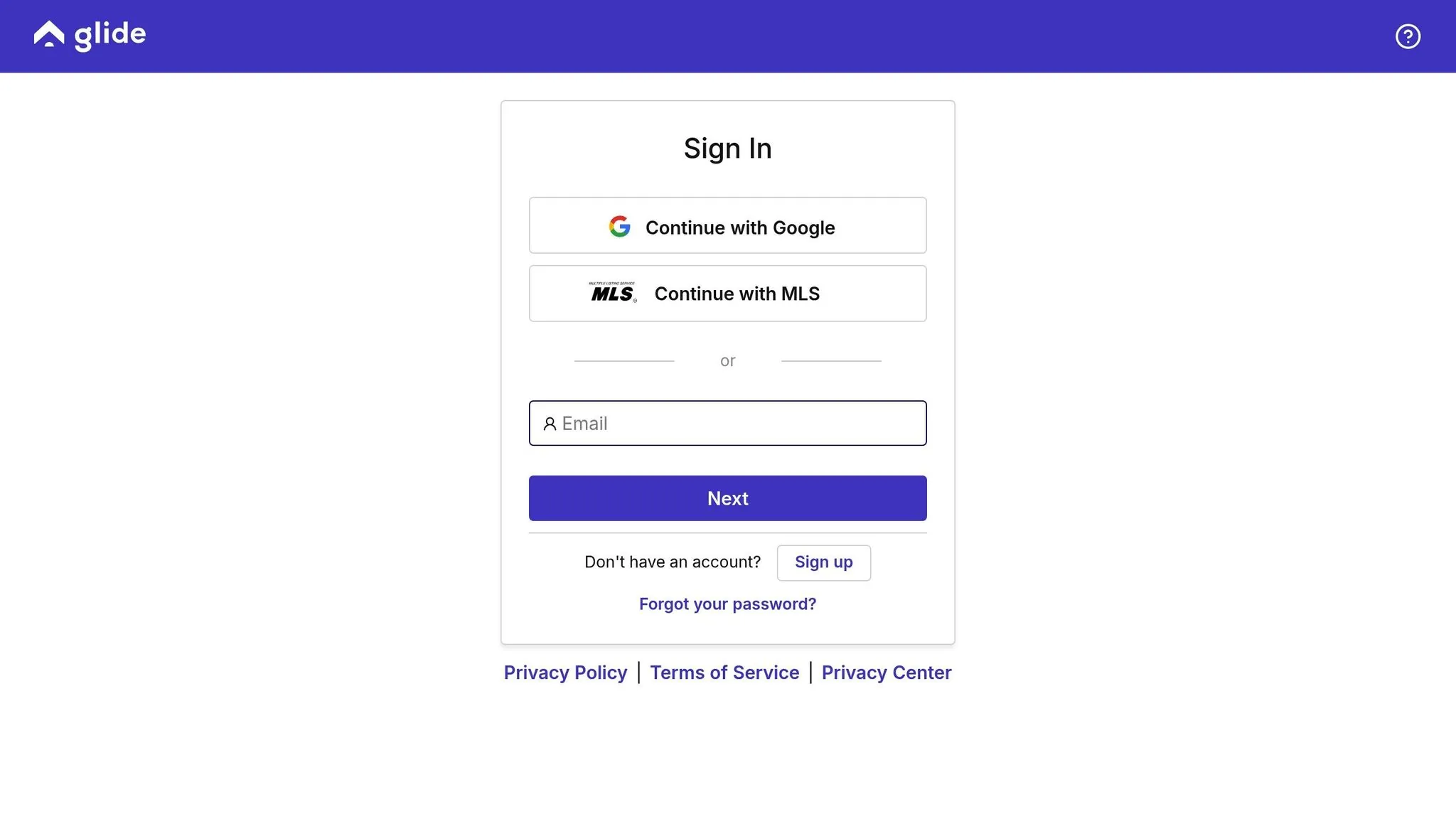
Glide is an app builder that connects to Google Sheets or Excel, making it a quick tool for prototyping. However, its reliance on templates results in apps that often lack design depth, limiting its usefulness for teaching advanced concepts like UI/UX design or complex app logic.
Since it depends on spreadsheets, educators are restricted from covering topics like relational database structures, entity relationship diagrams, or custom user interfaces in their curriculum. While it works well for introducing basic data-driven logic, Glide falls short when teaching the entire mobile app development process.
Database and API Teaching Capabilities
Glide's spreadsheet-based approach means it doesn't support relational database structures or foreign keys, which are critical for teaching more complex data relationships. Additionally, there are record limits, and exceeding these limits can lead to extra charges, making it less ideal for data-intensive projects. Its API integration options are also limited, restricting educators from demonstrating custom API use or more advanced integrations.
Compare this to Adalo's Collections system, which uses familiar spreadsheet-style logic while supporting true relational database design. Students can connect tables and observe how one-to-many or many-to-many relationships work in practice—concepts essential for professional development careers.
Publishing and Portfolio Value
These technical constraints significantly affect the practical application and portfolio quality of student projects. One major drawback is that Glide does not allow publishing to the Apple App Store or Google Play Store. This prevents students from learning how to navigate the app store submission process or working with native app features like push notifications or offline functionality. The Adalo Team summarized this limitation:
"Glide excels at spreadsheet-based apps with fast deployment... However, the template-focused approach limits creative freedom, and Glide doesn't support Apple App Store or Google Play Store publishing."
As a result, students can only present web-based applications, which reduces the practical value and appeal of their portfolios. In a job market where native mobile app experience is increasingly valued, this limitation puts Glide-trained students at a disadvantage.
Pricing and Accessibility
Glide's basic plan starts at $25/month, but custom domains require the $60/month Maker plan. While this might be manageable for simple projects, the lack of native features, limited design flexibility, and inability to publish to app stores make it less suitable for comprehensive coding and app development education programs.
For educators seeking to prepare students for real-world app development careers, Glide's constraints create significant curriculum gaps that other platforms address more completely.
Adalo Crash Course | Adalo Tutorial for Beginners 2026
Advantages and Disadvantages
Adalo offers an intuitive visual builder that's perfect for beginners, making it an excellent choice for those new to app development. Its ability to publish fully native iOS and Android apps to the Apple App Store and Google Play Store provides students with impressive portfolio pieces. With a flat-rate pricing model of $36 per month—covering unlimited usage, database records, and publishing—Adalo ensures there are no hidden costs, which is essential for semester-long planning.
The platform's AI Builder features accelerate the learning process significantly. Magic Start generates complete app foundations from text descriptions—students describe their app idea, and the AI creates database structures, screens, and user flows automatically. Magic Add lets students add features by simply describing what they want. These AI-assisted tools mean students spend less time on setup and more time learning core concepts.
In modern coding education, simplicity and predictability are essential. Some platforms rely on complex integrations or usage-based pricing, which can complicate budgeting. Others come with higher per-student costs or require additional database configurations, creating barriers for educators. Spreadsheet-based solutions, while simple, often lack the depth needed for robust curriculums and fail to support publishing to official app stores.
Here's a comparison of how top platforms measure up in key areas like curriculum accessibility, database and API instruction, publishing capabilities, and affordability:
| Platform | Curriculum Fit | Database & API Teaching | Publishing Capabilities | Pricing |
|---|---|---|---|---|
| Adalo | Beginner-friendly visual builder with AI tools (Magic Start, Magic Add) | Intuitive collections with no record limits; third-party integrations | Native iOS/Android and Progressive Web Apps | Flat rate: $36/month unlimited |
| Bubble | Better suited for advanced web concepts; 1-2 week learning curve | 800+ native integrations; complex queries | Web-only; mobile via webview wrapper | $32/month base + Workload Units |
| FlutterFlow | Requires technical background; external database setup | External database required (Firebase/Supabase) | Native iOS/Android; separate publishing | $80/month per seat |
| Glide | Simple but limited; template-focused | Spreadsheet-based; no relational structures | Web and Progressive Web Apps only | $25/month; custom domains $60/month |
Adalo stands out with its balanced feature set, avoiding the technical complications and unpredictable costs of other platforms. Its beginner-friendly tools, strong database and API integration, and real-world publishing capabilities make it a solid choice for institutions aiming to deliver effective, cost-efficient app development programs.
Key Takeaways:
- Adalo offers the lowest price for native app store publishing at $36/month with unlimited usage
- AI Builder features (Magic Start, Magic Add) accelerate student learning and project completion
- Native iOS and Android compilation creates stronger student portfolios than web wrappers
- Predictable flat-rate pricing eliminates budget surprises for educational institutions
Conclusion
Adalo gives educators a practical, all-in-one platform for teaching app development that mirrors actual industry workflows. It's designed to be easy for beginners to pick up while still powerful enough to create fully functional native apps for the Apple App Store and Google Play Store. With flat-rate pricing starting at $36 per month and no caps on database records, usage, or actions, it's budget-friendly for semester planning, eliminating surprise costs entirely.
The platform's modular infrastructure delivers performance that scales to serve apps with over 1 million monthly active users, processing 20 million+ daily requests with 99%+ uptime. This means student projects can grow from classroom exercises to production applications without hitting technical ceilings.
The AI Builder transforms how students learn app development. Magic Start generates complete app foundations from simple descriptions—students describe a booking app for a tutoring service, and the AI creates database structures, screens, and user flows automatically. Magic Add lets them expand functionality by describing what they want to add. These AI-assisted tools mean students spend less time on repetitive setup and more time understanding core development concepts.
Beyond the tools, Adalo helps turn classroom learning into practical achievements. Students can graduate with live apps published in official app stores, gaining hands-on experience with database design, API integrations, and every stage of app development—from brainstorming to deployment. The Adalo App Academy supports this process with over 70 detailed courses, giving educators structured content that fits seamlessly into their teaching plans.
For schools and educators seeking predictable costs, an intuitive learning curve, and professional-level results, Adalo provides a comprehensive solution that prepares students for careers in app development.
Related Blog Posts
- How to Launch Your First Mobile App Without Coding
- Checklist: Reducing Enterprise App Costs with No-Code
- Adalo for Software Development Teams: Rapid Internal Tool Building
- Adalo for Custom Software and App Development Agencies
FAQ
Why choose Adalo over other app building solutions?
Adalo is an AI-powered app builder that creates true native iOS and Android apps from a single codebase. Unlike web wrappers, it compiles to native code and publishes directly to both the Apple App Store and Google Play Store. The AI Builder with Magic Start and Magic Add accelerates development by generating app foundations and features from natural language descriptions.
What's the fastest way to build and publish an app to the App Store?
Adalo's drag-and-drop interface combined with AI-assisted building makes it the fastest path from idea to published app. Magic Start generates complete app foundations from descriptions, and the platform handles the complex App Store submission process automatically—what traditionally takes months can be accomplished in days.
Which is more affordable, Adalo or Bubble?
Adalo offers better value at $36/month with unlimited usage, database records, and no action-based charges. Bubble starts at $32/month but uses a Workload Units pricing model that adds unpredictable usage-based charges. At equivalent functionality levels, Bubble costs approximately $69/month with hard limits plus additional fees.
Which is faster to build with, Adalo or FlutterFlow?
Adalo is faster for most users because it includes AI-assisted building tools and a built-in database. FlutterFlow requires students to configure external databases like Firebase or Supabase separately, adding setup time. Adalo's Magic Start can generate complete app foundations in minutes from a simple description.
Which is easier for beginners, Adalo or Glide?
Both are beginner-friendly, but Adalo offers more depth. Glide's spreadsheet-based approach is simple but limits what students can learn about relational databases and custom UI design. Adalo teaches these professional concepts while remaining accessible through its visual builder and AI tools.
Is Adalo better than Bubble for mobile apps?
Yes, for mobile apps specifically. Adalo creates true native iOS and Android apps that compile to native code, while Bubble uses web wrappers that can add 2-3 seconds of load time. Native apps perform better and provide students with more valuable portfolio pieces for mobile-focused careers.
Is Adalo better than Glide for mobile apps?
Yes. Glide cannot publish to the Apple App Store or Google Play Store at all—it only creates web-based applications. Adalo publishes native apps to both stores from a single codebase, giving students experience with the full app development lifecycle including store submission.
Can I migrate from FlutterFlow to Adalo?
While direct migration tools aren't available, Adalo's AI Builder makes rebuilding straightforward. Describe your existing app's features to Magic Start, and it generates the foundation. Students can often recreate FlutterFlow projects faster in Adalo due to the integrated database and simpler workflow.
How long does it take to build a coding education app?
With Adalo's AI Builder, students can have a functional prototype within hours. Magic Start generates database structures, screens, and user flows from a description. A complete, polished app ready for app store submission typically takes days to weeks depending on complexity—not the months required with traditional development.
Do I need coding experience to teach app development with Adalo?
No coding experience is required. Adalo's visual drag-and-drop interface and AI-assisted building tools make app creation as straightforward as assembling a presentation. The Adalo App Academy provides over 70 free courses that educators can integrate directly into lesson plans.
How much does it cost to build a coding education app?
Adalo's free tier includes unlimited test apps with 200-500 database records per app—perfect for classroom projects without requiring a credit card. Paid plans at $36/month include unlimited database records, usage, and publishing to all platforms with no hidden fees. Additional apps can be added for $25/month each.

Build your app fast with one of our pre-made app templates
Begin Building with no codeRelated Content
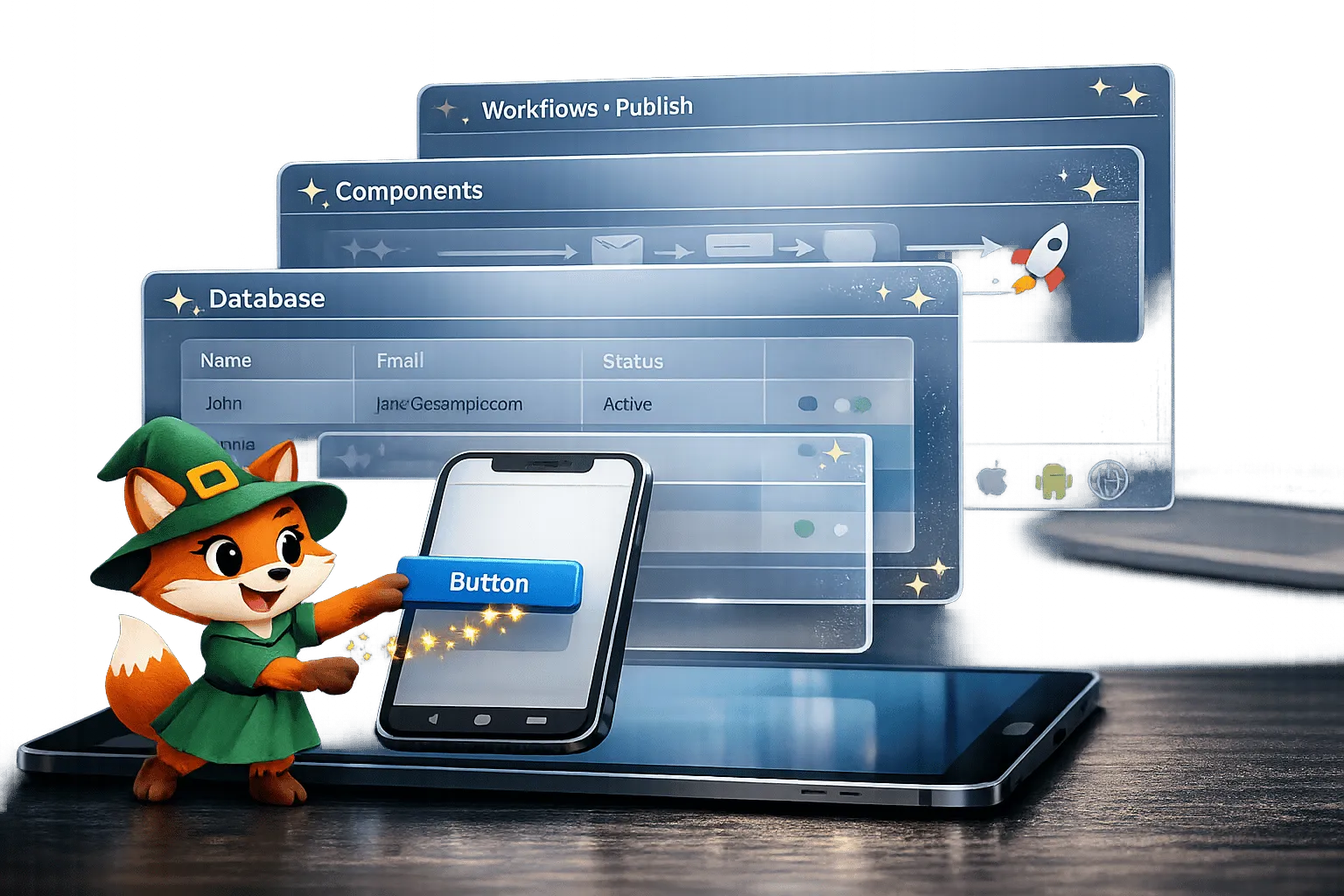
Drag-and-Drop App Building: Adalo's Visual Builder Guide
Build iOS, Android, and web apps with Adalo's drag-and-drop visual builder. Learn components, databases, workflows, and publishing.

Adalo's AI Builder: From Idea to App in Minutes
Create native iOS, Android, and web apps in minutes without coding: AI builds databases, screens, and user flows. Plans start at $36/month w

How to Build a Mobile App Without Coding (2026 Guide) | Adalo
Learn how to plan, design, and launch iOS & Android apps with Adalo’s no-code builder. This step-by-step guide covers tools, templates, etc.
The No-Code AI Revolution: Why Adalo Is Adding Prompt Building
Turn plain-English app ideas into native iOS, Android and web apps with AI prompt building—fast, low-cost app creation with visual editing a