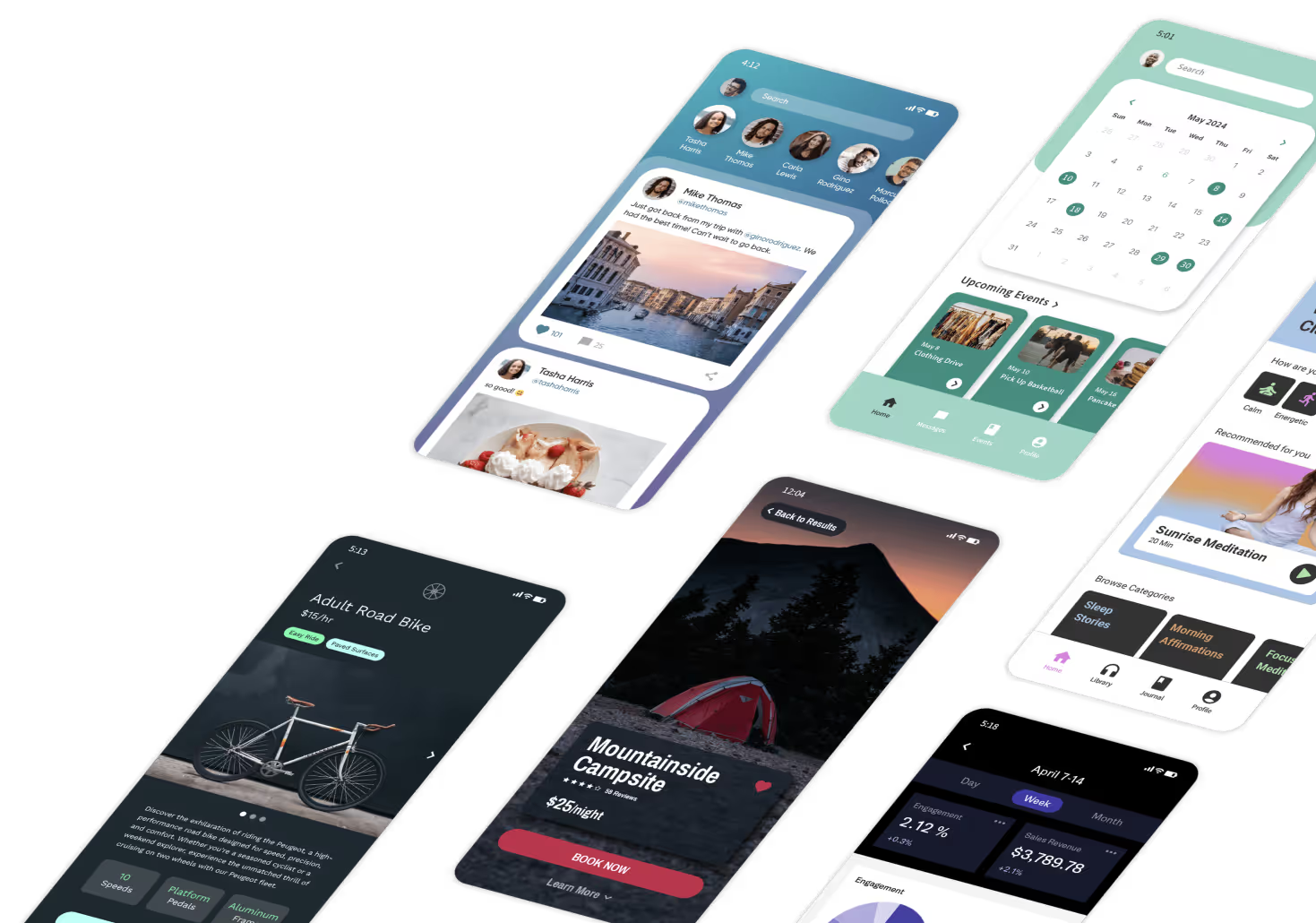
Why Adalo Is Perfect for Building an Educational App
Adalo is a no-code app builder for database-driven web apps and native iOS and Android apps—one version across all three platforms, published to the Apple App Store and Google Play. This makes it the ideal solution for creating a Khan Academy-style learning platform where you need to manage courses, track student progress, and deliver educational content seamlessly across every device your learners use.
For an educational app, app store presence is essential—students expect to download learning tools directly from the Apple App Store or Google Play, just like they would with Khan Academy or Coursera. With Adalo, you can also leverage push notifications to remind learners about new lessons, encourage course completion, and boost engagement throughout their educational journey.
Building an online learning platform like Khan Academy has never been more accessible. With Adalo, an AI-powered app builder for web and native mobile apps, you can create a fully functional educational platform for iOS, Android, and web without writing a single line of code—all from a single app version. While traditional custom app development often costs tens to hundreds of thousands of dollars depending on scope and team rates, Adalo accelerates delivery timelines dramatically. This comprehensive guide walks you through building a Khan Academy-style learning platform from database design to publishing across multiple platforms.
For an educational app, being in the app stores is essential—students expect to download learning tools directly from the Apple App Store or Google Play, just like they would with Khan Academy or Coursera. With Adalo, you can also leverage push notifications to remind learners about new lessons, encourage course completion, and boost engagement, all without writing code.
Why Adalo Works for Building an Educational Platform
Adalo creates database-driven web apps and native iOS and Android apps—one version across all three platforms, published to the Apple App Store and Google Play. This makes it an ideal choice for creating a Khan Academy-style learning platform, where you need to manage courses, track student progress, and deliver content seamlessly across devices without maintaining separate codebases.
Ada, Adalo's AI builder, lets you describe what you want and generates your app. Magic Start creates complete app foundations from a description, while Magic Add adds features through natural language.
The platform's modular infrastructure scales to serve apps with millions of monthly active users, with no upper ceiling. Unlike app wrappers that hit speed constraints under load, Adalo's purpose-built architecture maintains performance at scale—critical when thousands of students might access your platform simultaneously during peak learning hours.
Prerequisites and Initial Setup
Step 1: Create Your Adalo Account and Project
- Visit Adalo.com and create a free account
- Click "Create New App" from your dashboard
- Choose between "Mobile App" or "Web App" (Mobile recommended for maximum reach)
- Name your app (e.g., "LearnPro" or "EduHub")
- Select "Start from Scratch" to build custom functionality, or use Magic Start to generate a complete app foundation from a simple description—tell it you need an educational platform with courses and quizzes, and it creates your database structure, screens, and user flows automatically
Adalo's Free tier is intended for building and testing; see current plan limits on Adalo's pricing page.
Step 2: Configure Your App Settings
- Click the Settings icon in the left sidebar
- Under "App Information," add:
- App description
- App icon (512x512px recommended)
- Splash screen image
- Set your app's orientation (Portrait for mobile learning)
- Configure privacy settings and terms of use
Step 3: Set Your Design Theme
- Navigate to Branding in settings
- Select a primary color (e.g., blue for trust and learning)
- Choose a secondary color for calls-to-action (e.g., green for progress)
- Pick a readable font family for educational content
- Set heading styles and text sizes for accessibility
Khan Academy reports serving over 180 million learners (189.6M in SY24–25) in 190+ countries—Annual Report | Press Center.
Building the Database Structure
Step 4: Enhance the Users Collection
- Click the Database icon in the left sidebar
- Click on the default "Users" collection
- Add these properties (click "+ Add Property" for each):
- Full Name (Text)
- Profile Photo (Image)
- User Type (Text) - Values: "Student", "Instructor", "Admin"
- Bio (Text - Multiline)
- Learning Streak (Number)
- Total Points (Number)
- Courses Enrolled (Relationship to Courses)
- Completed Lessons (Relationship to Lessons)
- Date Joined (Date & Time - Automatic)
Understanding that no-code platforms democratize app creation allows you to build complex user management without database administration experience. With paid plans having no record limit cap, you can scale your user base without worrying about hitting storage constraints.
Step 5: Create the Courses Collection
- Click "+ Add Collection"
- Name it "Courses"
- Add these properties:
- Course Title (Text)
- Course Description (Text - Multiline)
- Course Image (Image)
- Category (Text) - Values: "Math", "Science", "Humanities", "Computer Science", "Arts"
- Difficulty Level (Text) - Values: "Beginner", "Intermediate", "Advanced"
- Estimated Duration (Number) - in hours
- Total Lessons (Number)
- Enrollment Count (Number)
- Price (Number) - Set to 0 for free courses
- Featured (True/False)
- Published (True/False)
- Created Date (Date & Time - Automatic)
Step 6: Create the Lessons Collection
- Click "+ Add Collection"
- Name it "Lessons"
- Add properties:
- Lesson Title (Text)
- Lesson Description (Text - Multiline)
- Video URL (Text) — Adalo recommends MP4 (H.264) or self-hosted links for the Video component; for YouTube, use Adalo's YouTube component (YouTube/Vimeo URLs may not play on native builds). Video Component | YouTube Component
- Video Thumbnail (Image)
- Lesson Order (Number)
- Duration (Number) - in minutes
- Transcript (Text - Multiline)
- Resources (Text - Multiline) - Links to PDFs, exercises
- Is Free Preview (True/False)
- Created Date (Date & Time - Automatic)
Video is often effective for explaining complex concepts and can support learning when used with sound instructional design principles, making video content your platform's foundation.
Step 7: Create the Quizzes Collection
- Click "+ Add Collection"
- Name it "Quizzes"
- Add properties:
- Quiz Title (Text)
- Quiz Description (Text)
- Passing Score (Number) - Percentage required to pass
- Time Limit (Number) - in minutes (0 for untimed)
- Total Questions (Number)
- Attempts Allowed (Number)
Step 8: Create the Questions Collection
- Click "+ Add Collection"
- Name it "Questions"
- Add properties:
- Question Text (Text - Multiline)
- Question Type (Text) - Values: "Multiple Choice", "True/False", "Short Answer"
- Correct Answer (Text)
- Option A (Text)
- Option B (Text)
- Option C (Text)
- Option D (Text)
- Explanation (Text - Multiline)
- Points (Number)
Step 9: Create the Progress Collection
- Click "+ Add Collection"
- Name it "Progress"
- Add properties:
- Completion Percentage (Number)
- Time Spent (Number) - in minutes
- Quiz Score (Number)
- Completed (True/False)
- Bookmarked (True/False)
- Last Accessed (Date & Time)
- Completion Date (Date & Time)
Step 10: Create the Achievements Collection
- Click "+ Add Collection"
- Name it "Achievements"
- Add properties:
- Badge Name (Text)
- Badge Description (Text)
- Badge Icon (Image)
- Badge Type (Text) - Values: "Streak", "Course Complete", "Quiz Master", "Early Bird"
- Requirement (Number) - e.g., 7 for week streak
- Points Value (Number)
- Date Earned (Date & Time - Automatic)
Platforms with gamification can improve engagement when well-designed; impacts vary by context—critical for educational retention.
Step 11: Set Up Database Relationships
- In Courses collection:
- Add relationship to Users: "Instructor" (Many Courses → One User)
- Add relationship to Lessons: One-to-Many (One Course has many Lessons)
- Add relationship to Users: "Enrolled Students" (Many-to-Many)
- Add relationship to Quizzes: One-to-Many
- In Lessons collection:
- Add relationship to Courses: Many-to-One (Many Lessons → One Course)
- Add relationship to Progress: One-to-Many
- In Quizzes collection:
- Add relationship to Courses: Many-to-One
- Add relationship to Questions: One-to-Many
- In Questions collection:
- Add relationship to Quizzes: Many-to-One
- In Progress collection:
- Add relationship to Users: Many-to-One (Many Progress records → One User)
- Add relationship to Lessons: Many-to-One (Many Progress → One Lesson)
- In Achievements collection:
- Add relationship to Users: Many-to-Many (Users can earn many achievements)
Learn more about building relational databases for educational platforms.
Creating User Authentication and Onboarding
Step 12: Build the Welcome Screen
- Rename the default screen to "Welcome"
- Add an Image component for your logo (centered)
- Add Text (Heading): "Learn Anything, Anytime"
- Add Text (Subtitle): "Join thousands of learners mastering new skills"
- Add two Buttons:
- "Get Started" → Link to "Sign Up" screen
- "I Have an Account" → Link to "Login" screen
- Style with your brand colors and ensure mobile responsiveness
Step 13: Create the Sign Up Screen
- Add a new screen named "Sign Up"
- Add a Form component:
- Connect to Users collection
- Include fields: Email, Password, Full Name
- Add Image Picker for Profile Photo (optional)
- Add a Dropdown for User Type:
- Options: "I'm a Student", "I'm an Instructor"
- Set default to "Student"
- Add Checkbox: "I agree to Terms of Service"
- Configure submit button actions:
- Create User account
- If User Type = "Instructor" → Navigate to "Instructor Setup"
- If User Type = "Student" → Navigate to "Select Interests"
Step 14: Create the Login Screen
- Add a new screen named "Login"
- Add a Form component:
- Email input field
- Password input field
- Add submit button: "Log In"
- Action: Log in user
- Navigate to: "Home" screen (we'll create this next)
- Add Button: "Forgot Password?" → Navigate to password reset
- Add Text Link: "Don't have an account? Sign up"
Step 15: Build Student Interest Selection
- Add new screen "Select Interests"
- Add Text: "What do you want to learn?"
- Add a Custom List of course categories:
- Display category name and icon
- Allow multiple selections
- Use Checkbox or toggle components
- Add Button: "Continue" → Navigate to "Home"
- Update user profile with selected interests
Step 16: Create Instructor Setup Screen
- Add new screen "Instructor Setup"
- Add Form to update Logged In User:
- Bio (Text Area)
- Expertise (Text Input)
- Website/Social Links (Text)
- Profile Photo (Image Picker)
- Add Button: "Complete Setup" → Navigate to "Instructor Dashboard"
Building the Student Interface
Step 17: Create the Student Home Screen
- Add new screen "Home"
- Add navigation bar with:
- App logo
- Search icon
- Profile icon → Link to "Profile" screen
- Add Text (Greeting): "Welcome back, [Logged In User > Full Name]"
- Add section: "Continue Learning"
- Custom List of in-progress courses
- Filter: Progress > User = Logged In User AND Progress > Completed = False
- Show course thumbnail, title, and progress bar
- Add section: "Recommended for You"
- Custom List of courses matching user interests
- Show course image, title, rating, lesson count
- Add section: "Popular Courses"
- Custom List sorted by Enrollment Count
- Display horizontally scrolling cards
- Add bottom navigation:
- Home icon → Current screen
- Browse icon → "Browse Courses" screen
- Progress icon → "My Learning" screen
- Profile icon → "Profile" screen
Check out these mobile app templates for design inspiration.
Step 18: Build the Browse Courses Screen
- Add new screen "Browse Courses"
- Add Search Bar component:
- Placeholder: "Search courses..."
- Search in: Courses > Course Title
- Add Horizontal Scroll for category filters:
- Button chips for each category (Math, Science, etc.)
- Click to filter courses list
- Add filter options:
- Dropdown: Sort by (Popular, Newest, Rating, Price)
- Dropdown: Difficulty Level
- Toggle: Free Courses Only
- Add Custom List of filtered courses:
- Show course image, title, instructor, rating, price
- Click → Navigate to "Course Detail" screen
Step 19: Create Course Detail Screen
- Add new screen "Course Detail"
- Pass current course as parameter
- Add course header section:
- Image: Current Course > Course Image
- Text (Title): Current Course > Course Title
- Text: Current Course > Instructor > Full Name
- Text: "★ [Rating] • [Enrollment Count] students"
- Text: Current Course > Course Description
- Add Button (conditional):
- If user not enrolled: "Enroll Now" or "Buy for $[Price]"
- If enrolled: "Continue Learning"
- Add "What You'll Learn" section:
- Text highlighting key outcomes
- Add "Course Content" section:
- Custom List of lessons (Current Course > Lessons)
- Show lesson number, title, duration
- Lock icon for non-preview lessons if not enrolled
- Add "Reviews" section:
- Display student ratings and comments
Step 20: Build the Video Lesson Player Screen
- Add new screen "Lesson Player"
- Add Video component:
- Video URL: Current Lesson > Video URL
- Set video to auto-play
- Full-width, responsive height
- Add lesson information below video:
- Text (Title): Current Lesson > Lesson Title
- Text: Current Lesson > Lesson Description
- Button: "Mark as Complete" (conditional visibility if not completed)
- Add navigation controls:
- Button: "← Previous Lesson"
- Button: "Next Lesson →"
- Add tabs for additional content:
- Tab: "Overview" - Show description
- Tab: "Resources" - Downloadable materials
- Tab: "Transcript" - Full video transcript
- Tab: "Notes" - Student notes (text input)
- Add Button: "Take Quiz" (if quiz exists for this lesson)
Step 21: Create Quiz Taking Screen
- Add new screen "Take Quiz"
- Add quiz header:
- Text (Title): Current Quiz > Quiz Title
- Text: "Question [Current Number] of [Total Questions]"
- Progress Bar: Visual progress through quiz
- Timer: If quiz is timed (Current Quiz > Time Limit)
- Add question display:
- Text: Current Question > Question Text
- Image: If question includes image
- For multiple choice questions:
- Radio Buttons for Options A, B, C, D
- Store selected answer in temporary variable
- Add navigation:
- Button: "Previous Question"
- Button: "Next Question"
- Button: "Submit Quiz" (on last question)
- On submit:
- Calculate score (count correct answers)
- Create Progress record with quiz score
- Navigate to "Quiz Results" screen
Step 22: Build Quiz Results Screen
- Add new screen "Quiz Results"
- Display performance summary:
- Text (Large): "[Score]%"
- Text: "You got [Correct Count] out of [Total Questions] correct"
- Icon: Pass/Fail indicator
- Show correct/incorrect breakdown:
- Custom List of questions
- Display user's answer vs correct answer
- Show explanation for each question
- Add action buttons:
- Button: "Retake Quiz" → Navigate back to quiz
- Button: "Continue Learning" → Next lesson
- Button: "Review Lesson" → Back to video player
Step 23: Create Student Dashboard
- Add new screen "My Learning"
- Add progress overview:
- Text: "Total Courses: [Count of enrolled courses]"
- Text: "Completed: [Count where completed = true]"
- Text: "In Progress: [Count where completed = false]"
- Text: "Learning Streak: [User > Learning Streak] days"
- Add tabs:
- Tab: "All Courses" - List of enrolled courses
- Tab: "In Progress" - Filtered list
- Tab: "Completed" - Completed courses with certificates
- For each course in list:
- Show course thumbnail
- Display progress percentage
- Show "Continue" or "Review" button
Building the Instructor Interface
Step 24: Create Instructor Dashboard
- Add new screen "Instructor Dashboard"
- Add metrics overview:
- Text: "Total Courses: [Count]"
- Text: "Total Students: [Sum of enrollments]"
- Text: "Average Rating: [Average]"
- Text: "This Month's Enrollments: [Count]"
- Add quick actions:
- Button: "Create New Course" → "Create Course" screen
- Button: "View Analytics"
- Add Custom List of instructor's courses:
- Show course image, title, enrollment count
- Click → Navigate to "Manage Course" screen
Step 25: Build Create Course Screen
- Add new screen "Create Course"
- Add multi-step form or tabbed interface:
- Tab 1: Basic Info
- Course Title (Text Input)
- Course Description (Text Area)
- Course Image (Image Picker)
- Category (Dropdown)
- Difficulty Level (Dropdown)
- Tab 2: Pricing
- Price (Number Input)
- Free Course (Checkbox)
- Tab 3: Content
- Add Lessons (List with add/remove)
- Lesson Title, Video URL, Duration
- Tab 4: Assessment
- Create Quiz (Link to quiz builder)
- Tab 1: Basic Info
- Add Button: "Save Draft" → Create course (Published = False)
- Add Button: "Publish Course" → Create course (Published = True)
With Magic Add, you can describe new features you want—like "add a certificate generation system"—and the AI adds the necessary components and logic automatically.
Step 26: Create Manage Course Screen
- Add new screen "Manage Course"
- Add course statistics:
- Total enrollments
- Completion rate
- Average quiz scores
- Student ratings
- Add Custom List of lessons:
- Drag-to-reorder functionality (if available)
- Edit/Delete buttons for each lesson
- Button: "Add New Lesson"
- Add Custom List of enrolled students:
- Student name, enrollment date, progress
- Add action buttons:
- Button: "Edit Course Details"
- Button: "Add Quiz"
- Button: "Unpublish Course"
Step 27: Build Lesson Creation Screen
- Add new screen "Add Lesson"
- Add Form connected to Lessons:
- Lesson Title (Text Input)
- Lesson Description (Text Area)
- Video URL (Text Input) - Support YouTube/Vimeo
- Video Thumbnail (Image Picker)
- Lesson Order (Number Input)
- Duration (Number Input in minutes)
- Transcript (Text Area)
- Resources (Text Area - markdown or links)
- Add relationship to parent course
- Button: "Save Lesson" → Create lesson → Navigate back
Implementing Progress Tracking and Gamification
Step 28: Set Up Automatic Progress Tracking
- On Lesson Player screen, add Countdown Timer:
- Duration: 95% of video length
- On timer complete → Create/Update Progress record:
- User = Logged In User
- Lesson = Current Lesson
- Completed = True
- Completion Date = Now
- On "Mark as Complete" button click:
- Create/Update Progress record with same values
- Check if all lessons in course completed
- If yes → Award course completion badge
- Update user's learning streak:
- Check last learning activity date
- If today or yesterday → Increment streak
- If gap > 1 day → Reset streak to 1
Step 29: Create Achievement System
- Create custom actions that trigger on milestones:
- First Lesson Complete: Award "Getting Started" badge
- 7 Day Streak: Award "Week Warrior" badge
- 30 Day Streak: Award "Month Master" badge
- First Course Complete: Award "Course Conqueror" badge
- Quiz Perfect Score: Award "Quiz Master" badge
- Each achievement creation:
- Create Achievement record
- Link to Logged In User
- Add points to user's Total Points
- Send push notification congratulating user
Step 30: Build Achievements Screen
- Add new screen "Achievements"
- Add user stats header:
- Text (Large): "[User > Total Points] Points"
- Text: "Level [Calculated Level]"
- Progress Bar: Progress to next level
- Add Custom List of achievements:
- Filter: Logged In User > Achievements
- Sort by: Date Earned (Newest First)
- Display badge icon, name, description, date
- Add "Locked Achievements" section:
- Show unearned achievements in grayscale
- Display requirement to unlock
Step 31: Create Leaderboard Screen
- Add new screen "Leaderboard"
- Add time period selector:
- Buttons: "This Week", "This Month", "All Time"
- Add Custom List of Users:
- Sort by: Total Points (Highest First)
- Limit to top 50-100
- Display rank number, profile photo, name, points
- Highlight logged-in user's row
- Show user's current rank:
- Text: "Your Rank: [Position]"
Learn how gamification boosts engagement in educational apps.
Designing the User Experience
Step 32: Implement Responsive Design
- For each screen, check mobile and tablet views:
- Click Preview icon
- Test on different screen sizes
- Adjust layouts:
- Use Responsive Width settings
- Stack elements vertically on mobile
- Use horizontal scrolling for card lists
- Ensure touch targets:
- Buttons minimum 44x44px
- Adequate spacing between clickable elements
- Optimize images:
- Compress before uploading
- Use appropriate dimensions
- Consider loading states
Mobile-responsive design is critical for reaching learners who increasingly access content via smartphones and tablets. Adalo's visual builder—described by users as "as easy as PowerPoint"—makes responsive design adjustments straightforward.
Step 33: Add Loading States and Empty States
- For each list component:
- Add Text: "Loading..." (shows while data fetches)
- Add empty state message: "No courses yet. Browse our catalog to get started!"
- For video components:
- Add loading spinner
- Add error message if video fails
- For form submissions:
- Disable submit button while processing
- Show success/error messages
Step 34: Configure Search Functionality
- On Browse Courses screen:
- Search Bar filtering Courses collection
- Search in: Course Title, Course Description, Instructor Name
- Update results list in real-time
- Add search history (optional):
- Store recent searches
- Display as quick-select chips
- Add filters that work with search:
- Category + Search
- Price range + Search
Step 35: Implement Bookmarking
- Add bookmark icon to lesson screens
- On click:
- Update Progress record
- Set Bookmarked = True/False (toggle)
- Create "Bookmarked Lessons" screen:
- Custom List of Progress records
- Filter: User = Logged In User AND Bookmarked = True
- Display lesson thumbnail, title, course name
Integrating External Services
Step 36: Set Up Video Hosting
- Choose video hosting service:
- YouTube: Free, unlimited storage, good embedding
- Vimeo: Check current Vimeo pricing; select a tier that meets your storage and privacy needs
- Self-hosted: Higher cost, full control
- Upload course videos to chosen platform
- Get embed URLs or video IDs
- Store in Lessons > Video URL field
- Test playback in Adalo video component
Consider Adalo's Zapier integration capabilities for seamless video management workflows.
Step 37: Integrate Payment Processing (Optional)
- Install Stripe component from Adalo Marketplace:
- Go to Marketplace
- Search "Stripe"
- Click "Install"
- Get Stripe API keys:
- Create Stripe account
- Navigate to Developers > API Keys
- Copy Publishable and Secret keys
- Configure Stripe in the component:
- Add the Stripe Payment/Connect component and click "Connect with Stripe" to authorize; then set product/price details in the component
- Add payment screen:
- Stripe Payment component
- Amount: Current Course > Price
- On successful payment:
- Create enrollment record
- Navigate to course content
Step 38: Set Up Email Notifications
- Use Custom Actions (or Zapier/Make) to send emails via a provider (e.g., SendGrid); there's no native server-side email action.
- For advanced emails, integrate SendGrid:
- Create a SendGrid account (60-day free trial, 100 emails/day; paid plan required afterward), then choose a paid plan (Essentials starts at $19.95/month)
- Use Zapier integration:
- Trigger: New User Created
- Action: Send SendGrid Email
- Create email templates with branding
- Test all email flows
Step 39: Add Analytics Tracking
- Analytics:
- Use Adalo's built-in Mixpanel integration (paste your Mixpanel token in Adalo). If you need GA4, connect via external tools (e.g., Zapier/Pipedream) or custom scripts for PWAs
- Track key events:
- Course enrollments
- Lesson completions
- Quiz submissions
- User signups
- Create custom dashboards for:
- User engagement metrics
- Popular courses
- Completion rates
- Revenue (if applicable)
Step 40: Implement Push Notifications
- Request notification permission:
- Add action on first app launch
- "Request Notification Permission"
- Set up notification triggers:
- Daily learning reminder: "Continue your streak!"
- New course recommendation: "New course in [Interest]"
- Achievement earned: "You earned [Badge Name]!"
- Instructor updates: "New lesson added to [Course]"
- Configure in Settings > Notifications:
- Add notification certificates (iOS)
- Configure Firebase (Android)
Testing Your Learning Platform
Step 41: Create Test Data
- Add test users:
- 5-10 student accounts
- 2-3 instructor accounts
- 1 admin account
- Create sample courses:
- 3-5 complete courses across categories
- 10-15 lessons per course
- Mix of free and paid courses
- Add quiz questions:
- Multiple choice, true/false varieties
- Include explanations
- Generate progress records:
- Simulate students at various completion stages
Step 42: Test Core User Flows
Student Flow:
- Sign up → Select interests → Browse courses
- Enroll in course → Watch lesson → Mark complete
- Take quiz → View results → Continue to next lesson
- Complete course → Earn achievement → View certificate
Instructor Flow:
- Sign up as instructor → Complete profile
- Create new course → Add lessons → Add quiz
- Publish course → View enrollment stats
- Edit course content → Manage students
Step 43: Test Across Devices
- Use Adalo Preview app:
- Install TestFlight (iOS) or use Google Play internal/closed testing (Android) to test your Adalo app on real devices
- Scan QR code from editor
- Test all screens and interactions
- Test on different screen sizes:
- Mobile (375px, 414px)
- Tablet (768px, 1024px)
- Desktop (1280px+)
- Check performance:
- Video loading times
- List scrolling smoothness
- Form submission responsiveness
Following the Adalo 3.0 infrastructure overhaul in late 2025, apps are now 3-4x faster than before. Use X-Ray to identify any performance issues before they affect your users.
Step 44: Conduct User Acceptance Testing
- Recruit 5-10 beta testers:
- Mix of students and instructors
- Different technical skill levels
- Provide testing scenarios:
- "Enroll in a course and complete first lesson"
- "Create a new course with 3 lessons"
- "Take a quiz and check your results"
- Collect feedback:
- Use feedback forms
- Note bugs and confusion points
- Gather feature requests
- Iterate based on feedback:
- Fix critical bugs
- Improve unclear navigation
- Optimize slow-loading screens
Publishing Your Learning Platform
Step 45: Prepare for Launch
- Complete all content:
- Add privacy policy (required for app stores)
- Add terms of service
- Create about/help pages
- Set up production integrations:
- Production Stripe keys (not test mode)
- Production Google Maps API key
- Production SendGrid account
- Optimize database:
- Review all relationships
- Remove test data
- Set appropriate indexes
Step 46: Publish as Progressive Web App
- Navigate to Publishing in settings
- Click "Publish to Web"
- Choose subdomain:
- yourapp.adalo.com (requires a paid plan — Starter or higher)
- Or connect custom domain (Starter plan required; check current pricing)
- Purchase custom domain:
- Cost: $10-45/year
- Connect via DNS settings
- Enable PWA features:
- Install prompt
- Basic PWA capabilities are supported; offline behavior is limited and should be tested for your use case
- Home screen icon
Learn more about publishing web apps with Adalo.
Step 47: Publish to Apple App Store
- Requirements:
- Apple Developer account ($99/year)
- Adalo Starter plan or higher (see Adalo's pricing page for current plans, quotas, and publishing options)
- Prepare assets:
- App icon (1024x1024px)
- Screenshots (various sizes)
- App description and keywords
- In Adalo:
- Go to Publishing > iOS
- Click "Publish to App Store"
- Fill in app information
- Upload assets
- Submit for review:
- Apple states that on average 90% of submissions are reviewed in less than 24 hours, though timing varies by app (e.g., incomplete submissions may delay review)
- Monitor review status
Check the guide for publishing iOS apps to app stores.
Step 48: Publish to Google Play Store
- Requirements:
- Google Play Developer account ($25 one-time fee)
- Adalo Starter plan or higher
- Prepare assets:
- Feature graphic (1024x500px)
- Screenshots (phone and tablet)
- App description
- In Adalo:
- Go to Publishing > Android
- Click "Publish to Play Store"
- Fill in app details
- Upload assets
- Submit for review:
- Google notes reviews can take up to 7 days or longer (especially for new developers or complex submissions)
Read about publishing Android apps successfully.
Understanding Costs and Ongoing Maintenance
Step 49: Calculate Total Cost of Ownership
First Year Costs (estimated $500-$1,500):
| Item | Cost |
|---|---|
| Adalo Subscription | Starting at $36/month for web and native mobile with unlimited usage |
| Domain Name | $10-15/year |
| Apple Developer Account | $99/year |
| Google Play Developer Account | $25 one-time |
| Video Hosting (YouTube) | Free |
| Video Hosting (Vimeo) | Check current pricing |
Content Creation Time: Variable—estimate 10-20 hours per comprehensive course. Can monetize to offset costs.
This is dramatically lower than traditional custom app development, which often costs tens to hundreds of thousands of dollars depending on scope and team rates. Unlike Bubble's web and mobile wrapper offering (starting at $59/month with usage-based charges and record limits), Adalo's $36/month starting price includes unlimited usage and no data caps on paid plans.
Step 50: Plan for Scaling and Growth
- When to upgrade Adalo plan:
- Free → Starter: When ready to publish with custom domain
- Starter → Professional: When you need more capacity (e.g., more than 1 published app, more editors, or additional features)—Starter already includes native publishing
- Professional → Team: When needing multiple apps or editors
- Team → Business: When you need Unlimited App Editors and up to 10 published apps
- Database scaling considerations:
- With the right data relationship setups, Adalo apps can scale beyond 1 million monthly active users
- Use external collections for large datasets
- Consider Xano integration for advanced scaling
- Performance monitoring:
- Track page load times
- Monitor video buffering issues
- Review user completion rates
- Adalo maintains high uptime
- Content expansion strategy:
- Launch with 3-5 courses (MVP)
- Add 1-2 courses monthly based on demand
- Survey users for topic requests
- Partner with subject matter experts
Why Adalo Is the Right Choice for Learning Platforms
Building an educational platform like Khan Academy traditionally requires months of development and six-figure budgets. Adalo changes this equation entirely, making it the ideal choice for educators, entrepreneurs, and organizations looking to create learning experiences.
Rapid Development Without Compromise: With Adalo's visual builder, you can build a functional learning platform in 2-5 weeks according to some practitioners. The drag-and-drop interface lets you focus on pedagogy and content rather than syntax and debugging. Yet you're not sacrificing quality—Adalo apps include native mobile functionality, responsive web design, and professional polish.
Cost-Effective for Any Budget: Total first-year costs range from just $500-$1,500 including subscriptions, hosting, and app store fees. Compare this to traditional development where costs vary greatly by scope. Whether you're a solo educator validating an idea or an institution building supplementary learning tools, Adalo's pricing scales with your needs from free tier to enterprise.
Purpose-Built Features for Education: Adalo's built-in relational database handles complex educational data structures—students, courses, lessons, progress tracking, quizzes, and achievements—without requiring database administration expertise. The component marketplace offers video players, rating systems, and interactive elements essential for engaging learning experiences.
True Multi-Platform Publishing: Unlike template builders limited to web, Adalo lets you publish to iOS, Android, and web from a single build. This matters because mobile-responsive apps enable learners to access content wherever they are. One build updates all three platforms simultaneously—unlike competitors whose mobile solutions are web wrappers requiring separate maintenance.
Integration Ecosystem for Growth: As your platform grows, Adalo's integrations with Stripe for payments, Zapier for automation, and Xano for advanced backends mean you can add sophisticated features without rebuilding. Start simple, scale strategically.
Proven Track Record: Over 3 million apps have been built on Adalo. The platform maintains high uptime, ensuring your students can access learning materials reliably.
FAQ
Why choose Adalo over other app building solutions?
Adalo is an AI-powered app builder that creates true native iOS and Android apps. Unlike web wrappers, it compiles to native code and publishes directly to both the Apple App Store and Google Play Store from a single codebase—the hardest part of launching an app handled automatically.
What's the fastest way to build and publish an app to the App Store?
Adalo's drag-and-drop interface and AI-assisted building let you go from idea to published app in days rather than months. Magic Start generates complete app foundations from descriptions, and Adalo handles the complex App Store submission process so you can focus on features and user experience.
Can I build an educational platform like Khan Academy without coding?
Yes. With Adalo, you can create course management systems, student progress tracking, video lesson players, quizzes, and gamification features using the visual interface and pre-built components—no code required.
How do I track student progress and implement gamification?
Adalo's built-in relational database makes it easy to track student progress through courses, lessons, and quizzes. You can create achievement systems with badges, learning streaks, points, and leaderboards—all configured through the visual interface.
What are the costs involved in building an educational platform with Adalo?
First-year costs typically range from $500-$1,500, including Adalo subscription (starting at $36/month), domain name ($10-15/year), Apple Developer account ($99/year), and Google Play Developer account ($25 one-time). This is dramatically lower than traditional custom development.
Can I integrate video hosting and payment processing?
Yes. Adalo supports video integration through YouTube, Vimeo, or self-hosted MP4 files using built-in video components. For payments, integrate Stripe through Adalo's marketplace to accept payments for premium courses directly within your app.
How does Adalo handle scaling for large student bases?
Adalo's modular infrastructure scales to serve apps with millions of monthly active users, with no upper ceiling. Paid plans have no record limit cap on the database, and the Adalo 3.0 infrastructure overhaul (late 2025) made apps 3-4x faster than before.
How do I handle both student and instructor interfaces in one app?
Adalo's database structure supports multiple user types, allowing distinct experiences for students and instructors within the same app. Students browse courses and track progress, while instructors get dashboards to create courses, manage quizzes, and view analytics.
Which is more affordable, Adalo or Bubble?
Adalo's web and native mobile builder starts at $36/month with unlimited usage and no record limits on paid plans. Bubble's web and mobile wrapper offering starts at $59/month with usage-based charges (Workload Units) and record limits that can create unexpected costs.
Do I need coding experience to build with Adalo?
No coding experience required. Adalo's visual builder has been described as "as easy as PowerPoint." Magic Start and Magic Add use AI to generate app foundations and add features from natural language descriptions.