
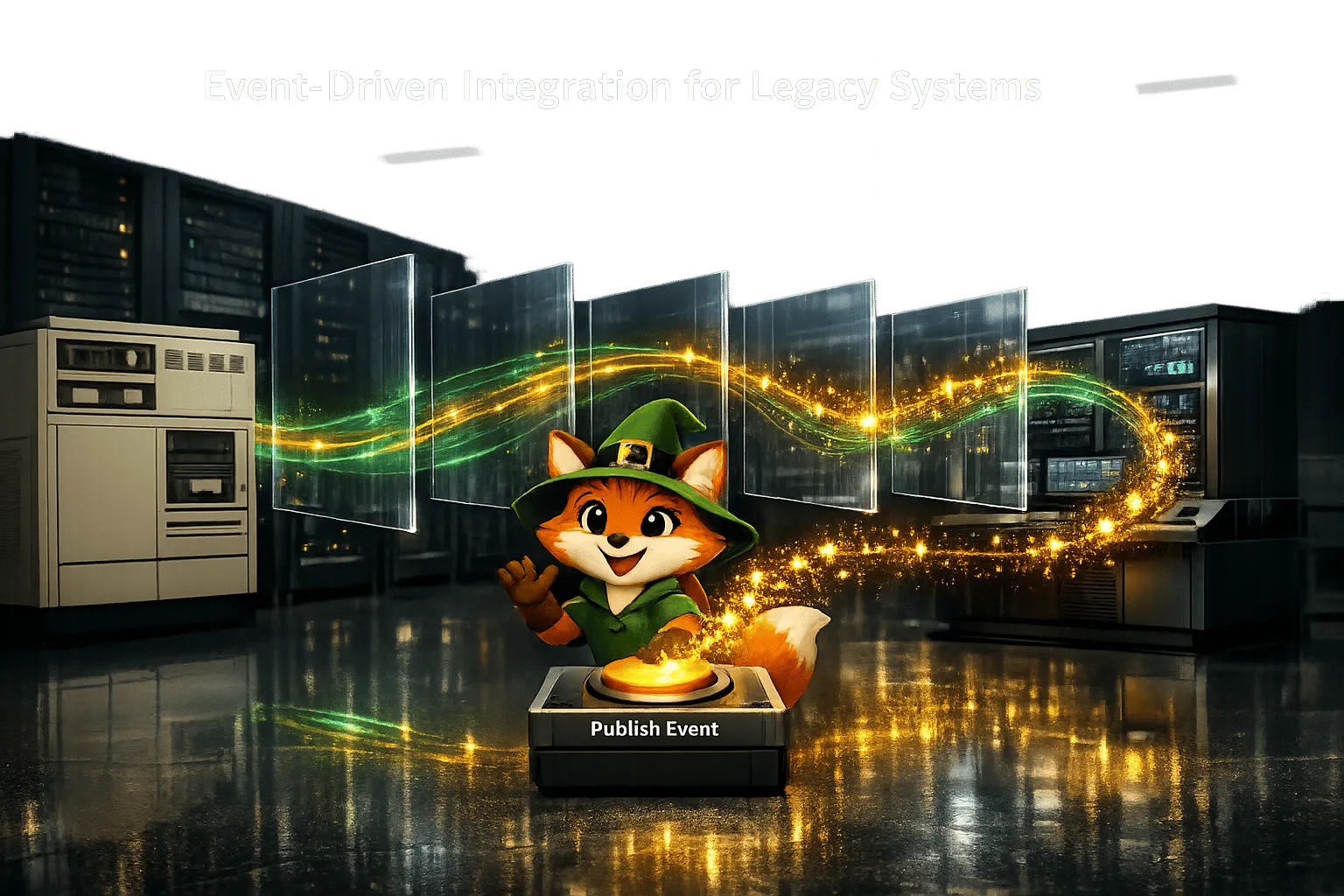
Event-driven integration makes legacy systems faster and more efficient by enabling them to communicate asynchronously with modern applications. Instead of waiting for slow responses, systems publish events that others subscribe to, ensuring smoother workflows and better user experiences. Here's why it works:
Platforms like Adalo, a no-code app builder for database-driven web apps and native iOS and Android apps—one version across all three platforms, published to the Apple App Store and Google Play, make it easier for businesses to create modern applications that can seamlessly connect with legacy systems through event-driven architectures.
- Asynchronous Communication: Legacy systems can process tasks in the background without delaying modern apps.
- Decoupled Architecture: Systems operate independently, reducing downtime and failures.
- Scalable and Resilient: Event brokers handle spikes in traffic, retries, and outages seamlessly.
For example, a manufacturer reduced order processing time from 12 seconds to under 1 second by switching to an event-driven model. Tools like Kafka or RabbitMQ act as intermediaries, routing events and ensuring data consistency. Gradual modernization strategies like the Leave-and-Layer and Strangler Fig patterns allow businesses to upgrade systems without major risks. With approaches like Change Data Capture (CDC), even systems without modern APIs can join the event-driven ecosystem. This approach cuts delays, boosts scalability, and improves efficiency - all while keeping legacy systems intact.
AWS re:Invent 2026-Using event-driven architectures to modernize legacy applications at scale-API207
Benefits of Event-Driven Integration
Event-driven integration transforms how legacy systems communicate with modern applications. Rather than forcing outdated systems to handle real-time demands they weren't designed for, this approach lets them publish events that other systems consume asynchronously. The result is faster processing, better fault tolerance, and dramatically improved user experiences.
How Asynchronous Communication Reduces Downtime
With asynchronous communication, a legacy system can publish an event and immediately move forward without waiting for a reply. During periods of high traffic, event brokers step in to queue events, ensuring they are delivered at a rate the legacy system can handle. If a downstream service goes offline, the broker holds onto the events and delivers them once the service is back online.
"Asynchronous architecture ensures resilience. Event-driven systems handle third-party unavailability gracefully, automatically retrying failed operations and maintaining system stability even when dependencies experience issues." - AWS Architecture Blog
This approach not only minimizes downtime but also improves scalability and fault tolerance, which are explored further below.
Better Scalability and Fault Tolerance
One of the key advantages of event-driven architectures is the ability to scale individual components independently. For instance, during peak times when order volumes surge, you can scale up the order processing service without needing to modify the legacy ERP system. This targeted scaling approach reduces risk while improving efficiency.
Additionally, fault isolation ensures that failures in new services don't disrupt the legacy systems. A practical example comes from HEINEKEN, which adopted an event-driven architecture in 2021 to connect over 4,500 critical applications related to payments, logistics, and inventory. This shift improved their ability to handle sudden spikes in demand while reducing production interruptions.
Event-Driven vs. Synchronous Integration
When comparing event-driven and synchronous integration, the former stands out in several critical areas:
| Feature | Synchronous Integration | Event-Driven Integration |
|---|---|---|
| Downtime Risk | High; a failure in one component can cascade through systems | Low; decoupled components continue functioning independently |
| Scalability | Limited by the slowest component in the chain | High; components can scale independently |
| Fault Tolerance | Poor; all systems must be immediately available | High; retries and deferred execution handle outages |
| Data Consistency | Immediate/Strong consistency | Eventual consistency; state updates over time |
| User Experience | Users experience delays | Users receive immediate confirmation |
A notable example of event-driven success is the Federal Aviation Administration's System Wide Information Management (SWIM) system. By utilizing event brokers, SWIM delivers real-time flight data to airlines and partners across the U.S., eliminating the need for constant database polling and streamlining operations.
Core Components of Event-Driven Integration
Event Producers and Consumers
Event producers play a crucial role in detecting and publishing state changes from legacy systems. Their job is to translate these internal state changes into standardized events, essentially acting as the bridge between older systems and modern architectures. By doing this at the edge of the legacy systems, producers ensure that these systems remain unaware of the specific microservices consuming their data. This separation of concerns avoids unnecessary complexity and keeps the legacy systems focused on their core functions.
On the flip side, event consumers subscribe to these published events and perform specific actions based on them. For instance, a consumer might update a database replica, send notifications, or sync data with a mobile application. One of the standout features of consumers is their independence—if one consumer fails, it doesn't disrupt the entire system. Instead, they work on an eventual consistency model, ensuring the system remains resilient.
"Event-driven integration turns conventional integration architecture inside-out—from a centralized system with connectivity and transformation in the middle to a distributed event-driven approach, whereby integration occurs at the edge of an event-driven core." - Solace
The beauty of this setup lies in decoupling. For example, a legacy SAP system doesn't need to know about every microservice that relies on its data. It simply publishes events, leaving an intermediary broker to handle the distribution. This approach can drastically improve system performance—reducing order processing times from 12 seconds to under 1 second—and accelerates development cycles, allowing teams to release updates weekly instead of quarterly.
The next critical component in this architecture is the event broker, which ensures smooth and efficient event routing.
Event Brokers and Messaging Systems
An event broker acts as the middleman between producers and consumers, functioning like a smart traffic controller. Tools like Apache Kafka, RabbitMQ, and Solace PubSub+ are popular choices for this role. The broker's primary responsibilities include routing events, buffering traffic, and ensuring reliable delivery—even during system outages.
Legacy systems often struggle to handle the demands of modern web-scale traffic. This is where brokers shine. By buffering spikes in traffic and delivering events at a manageable pace, they prevent legacy systems from being overwhelmed. Additionally, if a legacy database goes offline for maintenance, the broker can store events and replay them once the system is back online, ensuring no data is lost.
Brokers also excel at translating protocols. They can convert older formats like SOAP or flat files into modern standards like JSON over REST, using tools such as Kafka Connect or Amazon EventBridge API Destinations. This capability bridges the gap between outdated and modern systems, making integration seamless.
| Component | Role in Legacy Integration | Common Implementation |
|---|---|---|
| Event Producer | Captures changes from legacy systems and publishes them | CDC (Debezium), API Gateways, Polling Jobs |
| Event Broker | Routes, buffers, and persists events for decoupled delivery | Apache Kafka, RabbitMQ, Solace PubSub+ |
| Event Consumer | Receives events to trigger logic or update target systems | Microservices, Webhooks, Sink Connectors |
| Micro-integration | Small, modular component at the edge for transformation | Docker containers, Lambda functions |
Patterns for Modernizing Legacy Systems
Leave-and-Layer Pattern
The Leave-and-Layer pattern focuses on building new capabilities alongside the existing legacy system without altering its core. Instead of diving into legacy code, you integrate new functionality through loose coupling. For example, minimal code can be added to trigger events—like a "New Customer Signup"—to an event broker such as Amazon EventBridge. This broker then intelligently routes these events to new services, all without the legacy system being directly involved.
"The 'leave-and-layer' architectural pattern... enables you to add new capabilities to existing applications without the complexity and risk of traditional modernization approaches." - AWS Blog
This approach is particularly handy when speed is critical or when dealing with outdated or opaque systems. Since the original system remains untouched, there's minimal risk, and teams can roll out cloud-native enhancements—like mobile APIs or real-time analytics—within weeks instead of months.
A great example comes from a banking institution in 2026. They modernized their COBOL-based lending platform using this pattern. By layering new features on top with AWS Lambda and Amazon DynamoDB, they introduced real-time credit checks. This method cut feature delivery timelines from months to weeks and eliminated the need for COBOL expertise for new functionalities.
The Leave-and-Layer pattern pairs well with event-driven architectures, enabling rapid deployment of modern services while keeping legacy systems intact.
Strangler Fig Pattern
While Leave-and-Layer focuses on extending legacy systems, the Strangler Fig pattern takes a gradual replacement approach. It uses a façade or proxy to intercept and route requests, directing them either to the legacy system or to new microservices. This ensures the migration process remains invisible to end users.
Modern implementations often involve event interception through messaging systems or Change Data Capture. These methods allow updates to flow to new components asynchronously, ensuring the system stays responsive.
One Fortune 500 company demonstrated this pattern's potential by overhauling its order processing. By shifting from synchronous legacy calls to an asynchronous, strangler-based setup, they reduced processing time from 12 seconds to under 1 second. Additionally, they accelerated feature releases from quarterly to weekly, increasing delivery speed tenfold.
However, this pattern requires a deep understanding of the legacy codebase. Safely extracting functionality often involves managing challenges like database splitting and API versioning. Starting with low-risk workflows, such as order confirmations, can help build confidence before tackling more sensitive areas like financial operations. Introducing an Anti-Corruption Layer can also prevent old design flaws from affecting the new system.
Here's a quick comparison of these two strategies:
| Feature | Leave-and-Layer Pattern | Strangler Fig Pattern |
|---|---|---|
| Primary Goal | Add new capabilities/extensions quickly | Gradually replace and decommission legacy systems |
| Legacy Impact | Leaves core system unchanged | Extracts and replaces functionality piece by piece |
| Risk Level | Very low; no risk to existing functionality | Moderate; requires deep knowledge to extract code |
| Speed to Value | Very fast (single sprints) | Incremental (months to years) |
Implementation Strategies
Using Change Data Capture (CDC)
Change Data Capture (CDC) offers a way to integrate legacy systems into real-time event streaming without altering the existing application code. By monitoring transaction logs—like redo logs or binlogs—CDC identifies database changes such as INSERT, UPDATE, and DELETE operations as they happen. This method works directly at the database layer, making it a practical option for connecting older systems to an event-driven architecture. Tools like Debezium (compatible with PostgreSQL, MySQL, SQL Server, and Oracle) and Maxwell (specific to MySQL) read transaction logs with minimal impact on database performance.
"Change data capture (CDC) converts all the changes that occur inside your database into events and publishes them to an event stream."
- Andrew Sellers, Head of Technology Strategy Group at Confluent
Since raw CDC events are typically low-level, they often require a multi-stage pipeline to convert them into actionable business events. For instance, you might aggregate multiple row changes into a single "Order Shipped" event. Another useful strategy is creating a real-time replica of legacy tables to handle complex queries. Stream processing tools can then transform and aggregate CDC messages into clean, consumable business data.
Connecting to Legacy Systems Without APIs
Many older systems were built before REST APIs became standard, so alternative methods are needed when log-based CDC isn't an option. One such approach is the Transactional Outbox Pattern, which writes events to a dedicated outbox table within the same database transaction as the business logic. A separate process then polls this table and sends events to an event broker, ensuring consistency, albeit with the need for minor changes to the legacy application.
Other techniques include:
- Database triggers: Automatically capture and process changes directly in the database.
- Reverse proxies: Intercept HTTP(S) traffic to extract and redirect data.
- JavaScript injections: Embed scripts into web templates to reroute user actions to modern services.
An Anti-Corruption Layer (ACL) can also be used to translate the legacy system's internal data into stable, modern formats for downstream services.
Roman Rylko, CTO at Pynest, highlights the importance of respecting legacy systems:
"Integrating with legacy isn't 'old vs. new.' It's gravity. You have a system that has carried the business for years—imperfect, undocumented, but revenue-critical."
For example, a global manufacturer revamped their web store integration with a 20-year-old SAP system. Initially, synchronous SAP calls caused 12-second transaction delays. By using a Strangler Fig pattern with Go and Kafka, the store began processing orders instantly, publishing events asynchronously to a broker. An integration service then updated SAP in the background. This reduced transaction times to under a second and allowed the company to accelerate feature releases from quarterly to weekly, boosting development speed tenfold.
Achieving Eventual Consistency
In an event-driven system, eventual consistency accepts that data synchronization across systems may take time but will ultimately align. The Transactional Outbox Pattern, mentioned earlier, ensures consistency by recording both business data and events in the same transaction. To handle duplicate events, idempotency keys are crucial—they prevent repeated processing from corrupting data. Maintaining an event stream as the single source of truth also provides a way to replay events and restore the correct state when desynchronization occurs.
To manage this effectively:
- Apply business logic to filter and validate events before they are published.
- Use synchronous processes with auditing for critical operations while relying on retries and eventual consistency for less critical ones.
- Build materialized views to create read-optimized projections, avoiding the need for real-time joins on normalized legacy tables.
As Alessandro Confetti and Enrico Piccinin from Thoughtworks explain:
"To move towards an event driven architecture, while continuing to run your legacy—and without having to change a line of code—might sound like a pipe dream, but it's surprisingly simple."
Adalo Blue Integration for Legacy Systems
Adalo, an AI-powered app builder, offers a compelling path for organizations looking to modernize legacy systems without the complexity of traditional development. With its modular infrastructure supporting over 1 million monthly active users and processing 20 million+ daily requests with 99%+ uptime, the platform provides enterprise-grade reliability for mission-critical integrations.
Legacy Integration Using DreamFactory
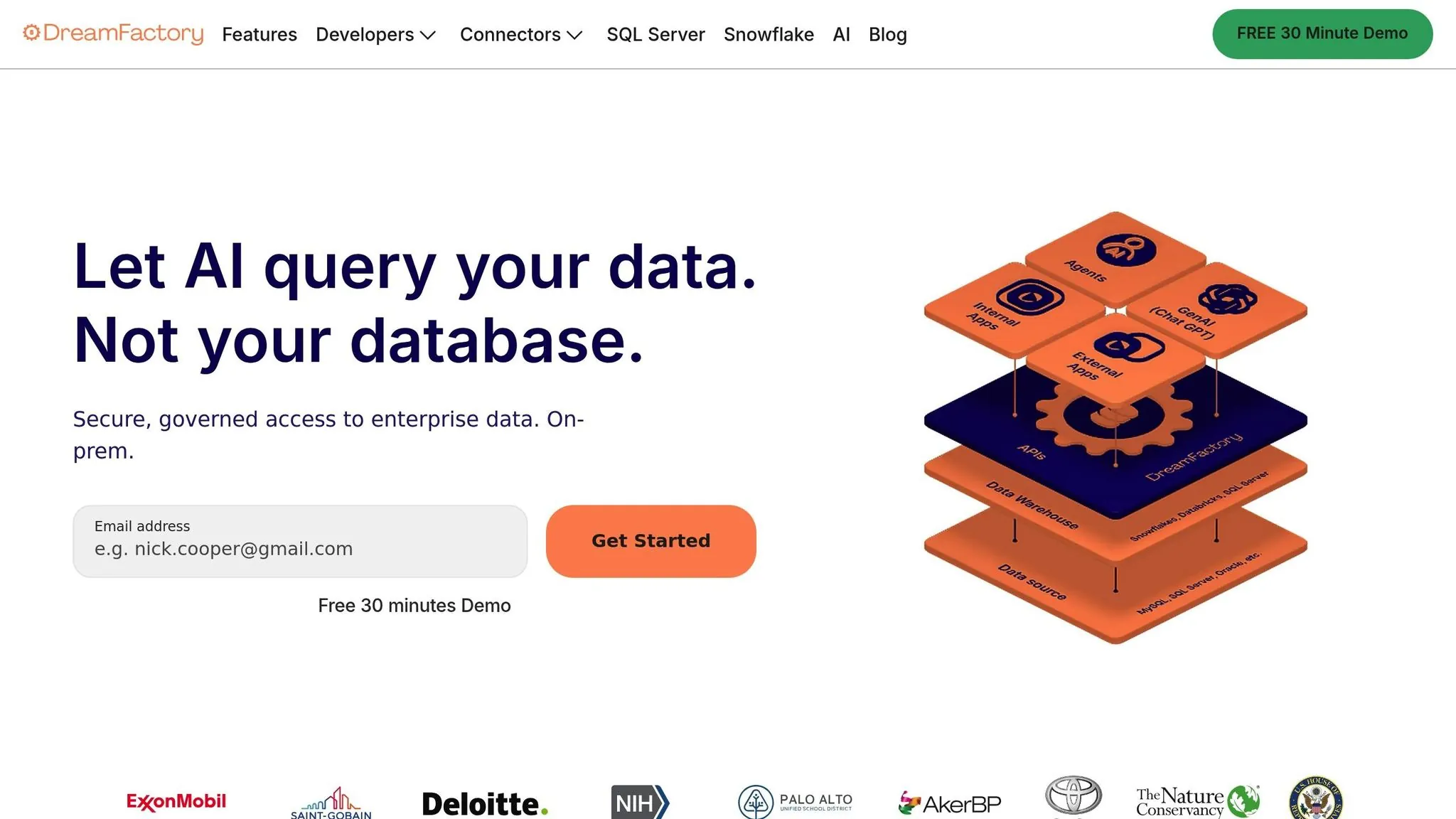
Adalo Blue taps into the power of DreamFactory to transform legacy databases into secure REST APIs. This platform works seamlessly with databases like IBM DB2, AS/400, MS SQL Server, and Oracle, generating fully documented APIs much faster than traditional methods. It also updates older SOAP services into RESTful APIs, making them accessible for modern mobile and web applications.
With over 70% of enterprise data locked in legacy systems, automation becomes a challenge without integration tools. DreamFactory solves this by adding robust security features—such as RBAC, OAuth 2.0, and API key management—to legacy data that often lacks these protections. Each API comes with interactive Swagger documentation, simplifying developer onboarding, and supports server-side scripting in Python, PHP, or Node.js for custom logic.
"DreamFactory is far easier to use than our previous API management provider, and significantly less expensive."
- Adam Dunn, Sr. Director, Global Identity Development & Engineering, McKesson
For example, Deloitte utilized DreamFactory to provide executives with real-time access to legacy ERP data through modern dashboards, ensuring secure and efficient data flow for decision-making. Similarly, E.C. Barton & Company connected a legacy ERP system to a modern e-commerce platform, enabling seamless data sharing while safeguarding sensitive customer information.
By enabling legacy data through APIs, Adalo Blue streamlines deployment and delivers modern user experiences without overhauling existing systems.
Faster App Deployment with Adalo Blue
Once DreamFactory converts legacy data into APIs, Adalo uses External Collections to access this data in real time. This integration ensures seamless, event-driven data flows between outdated systems and modern applications.
Ada, Adalo's AI builder, lets you describe what you want and generates your app. Magic Start creates complete app foundations from a description, while Magic Add adds features through natural language.
Adalo's AI Builder accelerates this process dramatically. Magic Start generates complete app foundations from a simple description—tell it you need an inventory management app connected to your legacy ERP, and it creates your database structure, screens, and user flows automatically. Magic Add lets you extend functionality by describing what you want: "Add a dashboard showing real-time order status from SAP" becomes a working feature without manual configuration.
This AI-assisted approach, combined with Adalo's single-codebase architecture, allows organizations to launch production-ready native iOS and Android apps—published directly to the Apple App Store and Google Play—in days or weeks rather than the months required for traditional custom development. At $36/month with no caps on actions, users, records, or storage, Adalo offers predictable costs that make legacy modernization financially accessible.
Creating APIs through automation typically takes 1 to 3 months, compared to the 12 to 36 months required for re-engineering legacy systems. Automated API generation can save organizations around $45,719 per API, whereas manual API integrations with full security can take up to 34 days to complete. Teams using this approach report development speeds 50% faster than traditional methods, with modernization improving processing speeds by up to 80%—reducing response times from 5 seconds to under 1 second.
"Modernization does not require replacement. With Adalo Blue, you keep your systems—and gain the flexibility to build on top of them."
- Adalo Blue
Conclusion
Event-driven integration offers a practical way for organizations to modernize legacy systems without the risks of full-scale overhauls—which fail approximately 83% of the time. By using incremental approaches like the Strangler Fig or Leave-and-Layer patterns, businesses can gradually transition to more efficient systems. Moving from synchronous to asynchronous communication further helps eliminate bottlenecks caused by outdated architectures.
On the technical side, event brokers simplify operations by automatically managing retries and failures, reducing the chance of cascading outages often seen in tightly coupled systems. These mechanisms strengthen the case for adopting event-driven integration.
The results speak for themselves. Organizations using these methods have reported cost savings of 20% to 35% and deployment frequencies up to 973 times higher compared to traditional approaches. Shopify, for instance, cut its continuous integration pipeline time by 60%—from 45 minutes to just 18—while maintaining zero downtime for over 1 million merchants. Similarly, the Jochen Schweizer mydays Group achieved uninterrupted service during a post-merger system consolidation and improved page load times by 37%.
For organizations seeking to build modern interfaces for their legacy systems, Adalo's AI-assisted platform offers a streamlined path from concept to published app, making event-driven integration not just efficient but highly achievable.
Related Blog Posts
- How No-Code Apps Connect to Legacy Systems
- How to Customize Middleware for Legacy ERP Systems
- Real-Time ERP Sync with Legacy Systems
- Your Legacy System Of Record Is Slowing Your Company Down. How An App Can Change That
FAQ
Why choose Adalo over other app building solutions?
Adalo is an AI-powered app builder that creates true native iOS and Android apps from a single codebase. Unlike web wrappers, it compiles to native code and publishes directly to both the Apple App Store and Google Play Store. At $36/month with unlimited usage—no caps on actions, users, records, or storage—it offers the lowest price for native app store publishing with predictable costs.
What's the fastest way to build and publish an app to the App Store?
Adalo's AI Builder with Magic Start generates complete app foundations from text descriptions, while Magic Add lets you extend functionality by describing what you want. Combined with Adalo's drag-and-drop interface and streamlined App Store submission process, you can go from idea to published app in days rather than months.
Can I easily integrate legacy systems with modern apps using event-driven architecture?
Yes. Through Adalo Blue's integration with DreamFactory, you can transform legacy databases like IBM DB2, AS/400, MS SQL Server, and Oracle into secure REST APIs. Adalo's External Collections then connect to these APIs, enabling real-time event-driven data flows between legacy systems and your native mobile apps without touching legacy code.
What is Change Data Capture (CDC) and how does it help with legacy integration?
Change Data Capture monitors database transaction logs to detect INSERT, UPDATE, and DELETE operations as they happen, converting them into events for real-time streaming. This approach allows you to integrate legacy systems into event-driven architectures without modifying existing application code, using tools like Debezium for PostgreSQL, MySQL, SQL Server, and Oracle databases.
What's the difference between the Leave-and-Layer and Strangler Fig patterns?
The Leave-and-Layer pattern adds new capabilities alongside legacy systems without altering their core, offering very low risk and fast time-to-value in single sprints. The Strangler Fig pattern gradually replaces legacy functionality piece by piece through a façade, requiring deeper knowledge but ultimately decommissioning old systems over months to years.
How does event-driven integration improve system performance?
Event-driven integration enables asynchronous communication, allowing legacy systems to publish events and continue processing without waiting for responses. Organizations have reported dramatic improvements, such as reducing order processing time from 12 seconds to under 1 second, while achieving better fault tolerance and the ability to scale components independently.
Can I connect legacy systems that don't have modern APIs?
Yes, several techniques exist for connecting legacy systems without APIs, including the Transactional Outbox Pattern, database triggers, reverse proxies, and JavaScript injections. Adalo Blue leverages DreamFactory to automatically generate secure REST APIs from legacy databases, eliminating the need for manual API development.
How much does it cost to modernize legacy systems with Adalo?
Adalo's pricing starts at $36/month with unlimited usage—no caps on actions, users, records, or storage. This predictable pricing model contrasts with competitors that charge based on usage metrics. Automated API generation through DreamFactory can save approximately $45,719 per API compared to manual development.
How long does it take to build a legacy integration app?
With Adalo's AI-assisted building and DreamFactory's automated API generation, teams can launch production-ready apps in days or weeks rather than months. Creating APIs through automation typically takes 1 to 3 months, compared to 12 to 36 months for re-engineering legacy systems from scratch.
Do I need coding experience to integrate legacy systems?
No. Adalo's AI Builder lets you describe what you want to build in plain language, and Magic Start generates complete app foundations automatically. DreamFactory handles the technical complexity of API generation from legacy databases, so you can focus on your app's features and user experience rather than integration code.

Build your app fast with one of our pre-made app templates
Begin Building with no codeRelated Content
Real-Time ERP Sync with Legacy Systems
Connect legacy ERPs to modern apps with real-time sync using APIs, webhooks, or CDC to eliminate delays, reduce errors, and keep existing sy
50 Legacy CRM Systems Usage Statistics in Businesses — The Hidden Costs and Modern Alternatives
Legacy CRMs fail up to 70%, costing millions. Low-code/no-code tools cut dev time 90%, boost ROI 506%, and solve adoption issues fast.

34 B2B Time Savings in App Development: Legacy vs Modern Statistics | Adalo
Modern no-code/low-code platforms cut dev time by up to 90%, slash costs, boost ROI up to 506%, and are redefining B2B app creation.

DreamFactory for Legacy System Integration
Auto-generate secure REST APIs for legacy databases and SOAP services, enabling modern web, mobile, and no-code integrations.