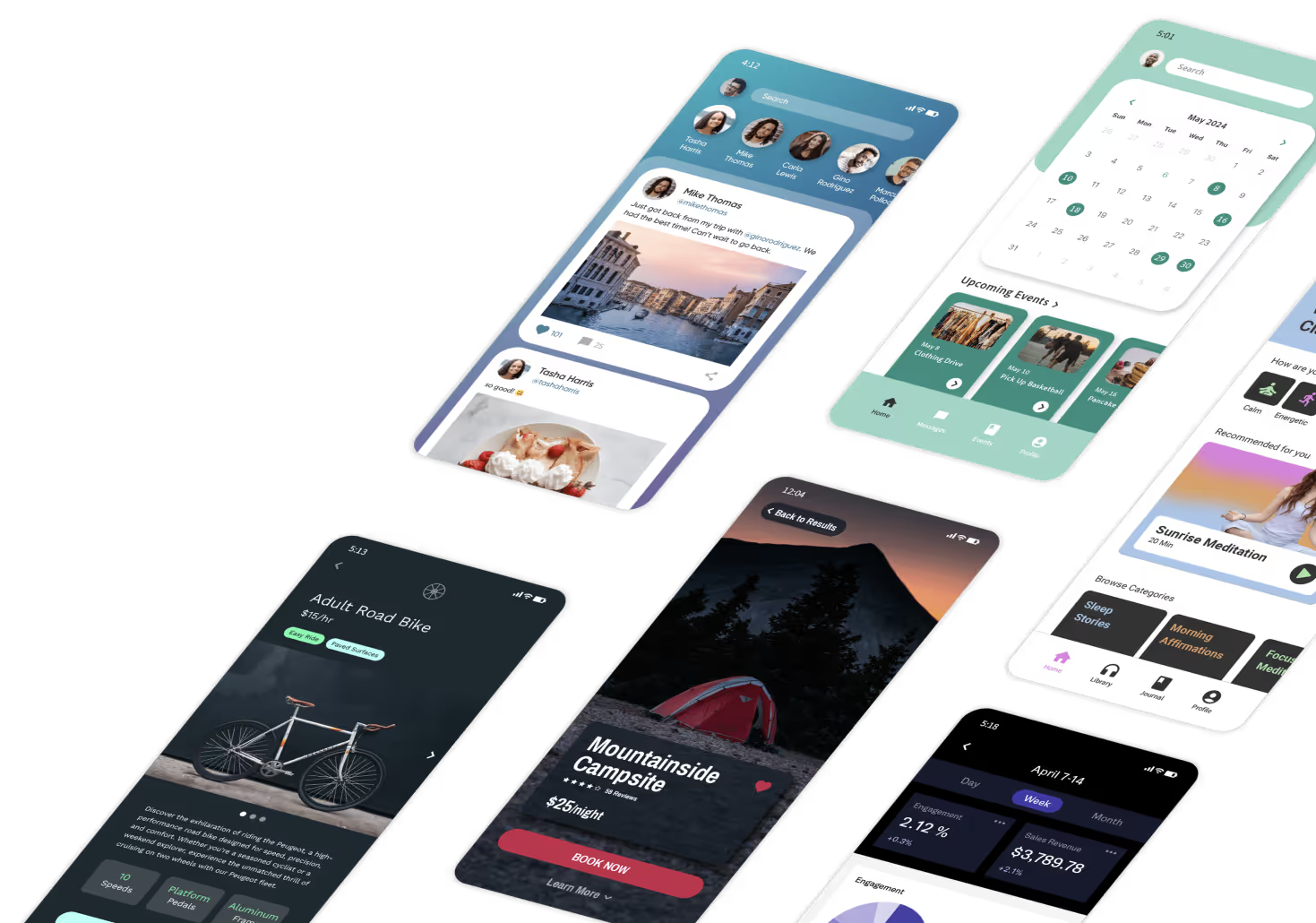
Why Adalo Works for Building a Streaming App
Adalo is a no-code app builder for database-driven web apps and native iOS and Android apps—one version across all three platforms, published to the Apple App Store and Google Play. This cross-platform capability is essential for streaming apps like Paramount+, where users expect seamless access whether they're watching on their iPhone during a commute, their Android tablet at home, or their laptop at work.
App store distribution is critical for video streaming platforms because it puts your content directly in front of millions of potential subscribers browsing the Apple App Store and Google Play. With native apps, you can leverage push notifications to alert users about new releases, remind inactive subscribers to return, and promote featured content—engagement strategies that web-only platforms simply can't match. This guide shows you exactly how to build that experience without hiring a development team.
Adalo is an AI-powered app builder for database-driven web apps and native iOS and Android apps—one version across all three platforms, published to the Apple App Store and Google Play. This cross-platform capability is essential for streaming apps like Paramount+, where users expect seamless access whether they're watching on their iPhone during a commute, their Android tablet at home, or their laptop at work.
App store distribution is critical for video streaming platforms because it puts your content directly in front of millions of potential subscribers browsing the Apple App Store and Google Play. With native apps, you can leverage push notifications to alert users about new releases, remind inactive subscribers to return, and promote featured content—engagement strategies that web-only platforms simply can't match. This guide shows you exactly how to build that experience without hiring a development team.
This comprehensive tutorial walks you through building a functional video streaming app using Adalo's app platform. You'll learn how to create a Paramount+-style app complete with multi-profile support, content categorization, subscription payments, and cross-platform publishing. Adalo's agnostic builder lets you publish the same app to the web, native iOS, and native Android, all without writing a line of code or rebuilding. If your plan is mass distribution through the app stores' vast marketplaces, then this is a great option.
Building a streaming app traditionally requires a development team and costs $50,000-$100,000 for the first year. With Adalo, you can launch a production-ready streaming platform for under $2,000 annually while cutting development time by 90%.
Key Takeaways
- Total Build Time: 7-10 hours of hands-on work spread over 2-5 weeks (including app store review periods)
- Required Plan: Starter plan minimum ($36/month annual) for publishing; Professional ($52/month annual) recommended for subscription features
- Critical Requirement: External video hosting is mandatory—Adalo's 40MB practical upload limit makes direct video uploads impractical for production apps
Understanding the Core Components of a Streaming App
Before diving into the build, you need to understand the foundational elements that make a streaming platform function. Your Paramount+ clone requires six interconnected systems working together.
Essential Components:
- User Authentication: Sign-up, login, and multi-profile management (like Netflix's family profiles)
- Content Database: Structured storage for video metadata, categories, and relationships
- Video Delivery: External hosting integration for actual video playback
- Subscription System: Payment processing and access control based on subscription tier
- User Experience Features: Watch history, watchlists, and personalized recommendations
- Cross-Platform Publishing: Deployment to web, iOS App Store, and Google Play Store
Adalo's built-in relational database handles content organization, while marketplace components cover payments and video playback. The platform processes 20 million daily requests with 99%+ average uptime. With the Adalo 3.0 infrastructure overhaul launched in late 2025, paid plans now include unlimited database records—meaning your content library can grow without hitting storage caps.
Setting Up Your Adalo Project
Step 1: Create Your Account and App
- Go to Adalo.com and click "Start Building For Free"
- Sign up with email or Google
- Click "Create New App"
- Select "Responsive App (Adalo 2.0)" for cross-device compatibility
- Name your project "Paramount+ Clone"
- Choose a dark color scheme to match streaming app conventions
Time Required: 15 minutes
Step 2: Configure Your Theme
- Set your primary color (dark navy or black works well for streaming apps)
- Choose an accent color for CTAs (Paramount+ uses blue)
- Select a clean, modern font from the library
- Click "Continue" to enter the visual builder
The responsive design feature ensures your app automatically adapts across mobile, tablet, and desktop screens from a single build. Adalo's visual builder has been described as "as easy as PowerPoint"—if you can create a slide deck, you can build an app.
Managing Your Content Library with Adalo's Database
Step 3: Build Your Database Structure
Click the Database icon in the left sidebar. You'll create six collections to power your streaming platform.
Collection 1: Videos
- Title (Text)
- Description (Text - Multiline)
- Video URL (Text) - stores external hosting link
- Thumbnail (Image)
- Duration (Number)
- Release Year (Number)
- Content Rating (Text) - G, PG, PG-13, R
- Is Featured (True/False)
- View Count (Number)
Collection 2: Categories
- Category Name (Text)
- Icon (Image)
- Display Order (Number)
Collection 3: Profiles
- Profile Name (Text)
- Avatar (Image)
- Is Kids Profile (True/False)
- Language (Text)
- Relationship to Users (Many-to-One)
Collection 4: Watch History
- Progress (Number) - percentage watched
- Last Watched (Date & Time)
- Completed (True/False)
- Relationships to Profiles + Videos
Collection 5: Watchlist
- Added Date (Date & Time)
- Relationships to Profiles + Videos
Collection 6: Reviews
- Rating (Number)
- Comment (Text)
- Relationships to Users + Videos
Time Required: 45-60 minutes
Step 4: Set Up Video Categories Relationship
- In the Videos collection, add a relationship to Categories
- Select "Many-to-Many" (one video can belong to multiple categories)
- This enables filtering by genre on your browse screens
Common Mistake: Incorrect relationship types cause filtering issues later. Use "One User → Many Profiles" and "One Video → Many Categories" patterns consistently.
With proper data relationship setups, Adalo apps can scale beyond 1 million monthly active users. The modular infrastructure introduced in Adalo 3.0 means your streaming app won't hit performance walls as your subscriber base grows.
Setting Up External Video Hosting
Step 5: Choose Your Hosting Solution
Adalo's native video component has a 50MB maximum upload due to timeout issues. Production streaming apps require external hosting.
Hosting Options:
| Service | Price | Best For |
|---|---|---|
| YouTube (Unlisted) | Free | MVPs and prototypes |
| Vimeo Pro | $20–$75/month | Professional apps |
| AWS S3 + CloudFront | $50–$250/mo | Enterprise control |
| Bunny.net | $10–$100/month | Cost-effective alternative |
For YouTube:
- Upload videos as "Unlisted" on YouTube
- Copy the video URL
- Install the YouTube Component from Adalo's marketplace
- Paste URLs into your Videos collection
For Vimeo/AWS:
- Upload .mp4 files (H.264 codec required)
- Set privacy settings to prevent public discovery
- Copy direct video URLs
- Use Adalo's native Video Component with these URLs
Critical Note: Vimeo embeds may not work on Native Android. Use Responsive apps or direct .mp4 URLs for maximum compatibility.
Time Required: 30 minutes (YouTube) to 2 hours (AWS setup)
Implementing User Authentication and Profile Management
Step 6: Build Authentication Screens
Welcome Screen:
- Add your app logo (Image component)
- Add tagline text: "Stream your favorites anytime"
- Create two buttons:
- "Sign In" → Link to Login screen
- "Start Free Trial" → Link to Sign Up screen
Sign Up Screen:
- Add Form component connected to Users collection
- Include fields: Email, Password, Full Name
- On submit action: Create User → Navigate to Profile Creation
Login Screen:
- Add Login Form component
- On success: Navigate to Profile Selection screen
- Add "Forgot Password" link
Step 7: Create Multi-Profile System
Profile Selection Screen:
- Add Custom List component filtered by: Logged In User's Profiles
- Display Profile Avatar and Name for each
- On profile click: Set Current Profile → Navigate to Home
Add Profile Screen:
- Create form with Profile Name, Avatar selector
- Toggle for "Kids Profile" (enables content filtering)
- On submit: Create Profile linked to Logged In User
This multi-profile feature mimics how streaming services let families share accounts while maintaining separate watch histories.
Time Required: 60 minutes
Integrating Video Playback and Subscription Payments
Step 8: Build the Home Screen
- Create "Home" screen with dark background
- Add Featured Banner:
- Custom List limited to 1 item
- Filter: Is Featured = True
- Large thumbnail with play button overlay
- Add horizontal content rows:
- "Continue Watching" - Filter: Watch History where Profile = Current Profile, Completed = False
- "Trending Now" - Sort by View Count (descending)
- "Action Movies" - Filter: Categories contains "Action"
- "New Releases" - Sort by Release Year (descending)
- Enable "Load Items as User Scrolls" on all lists for better performance
Time Required: 90 minutes
Step 9: Create Video Player Screen
- Add new screen "Video Player"
- Insert Video Component (or YouTube Component for YouTube-hosted content)
- Set source to: Current Video → Video URL
- Enable "Show Controls" and "Show Full Video (Don't Crop)"
- Below player, add:
- Video Title and Release Year
- Duration and Content Rating
- Description text
- "Add to Watchlist" button with conditional visibility
Step 10: Implement Watch Progress Tracking
- On Video Player screen load:
- Check if Watch History record exists for Current Profile + Current Video
- If not, create new Watch History record
- If yes, update Last Watched timestamp
- Add timer action (every 30 seconds):
- Update Progress field with current playback position
- On video 90% complete:
- Set Completed = True
- This removes it from "Continue Watching" and enables completion tracking
Time Required: 30 minutes
Step 11: Set Up Subscription Payments
- Install Stripe Kit from Marketplace
- Connect your Stripe account (free to create)
- Create "Choose Your Plan" screen with pricing cards:
- Basic: $9.99/month (with ads simulation)
- Standard: $14.99/month
- Premium: $19.99/month (4K + downloads)
- Add Stripe Subscription Component configured for recurring billing
- On successful payment:
- Update User: Subscription Status = Active
- Update User: Subscription Tier = selected plan
- Update User: Subscription End Date = 30 days from now
- Navigate to Home screen
Important: Stripe subscription status doesn't automatically sync cancellations. For production apps, set up Zapier webhooks to handle status updates. This requires the Professional plan for Custom Actions.
Time Required: 60 minutes
Publishing Your Streaming App
Step 12: Test Thoroughly Before Publishing
- Add 20-30 test videos to your database
- Test all user flows in Adalo Preview mode:
- Sign up → Profile creation → Browse → Play video
- Payment flow with Stripe test cards
- Watch history and watchlist functionality
- Test on physical devices using the Adalo mobile app
Step 13: Publish to All Platforms
Web Publishing:
- Click Publish → Web
- Add custom domain (requires Starter plan minimum)
- Configure SEO settings
- Click Publish
iOS Publishing:
- Click Publish → iOS
- You'll need an Apple Developer account ($99/year)
- Follow Adalo's submission wizard
- Apple review takes 24 hours to 7 days
Android Publishing:
- Click Publish → Android
- Google Play Developer account required ($25 one-time)
- Submit through Adalo's guided process
- Google review typically takes 1-3 days
Unlike platforms that create web wrappers for mobile, Adalo compiles true native iOS and Android apps. One build updates all three platforms simultaneously—web, App Store, and Play Store—with unlimited updates once published.
Time Required: 2-4 hours (plus app store review periods)
Optimizing Performance for Your Streaming Clone
Step 14: Image and Loading Optimization
- Compress all thumbnails to under 200KB using TinyPNG before upload
- Enable pagination on every video list (prevents loading thousands of items at once)
- Use External Collections when your catalog exceeds 500 videos
Step 15: Database Efficiency Tips
- Keep list queries simple—complex filters slow performance
- Avoid nesting lists within lists (common cause of 3-5 second load times)
- Use X-Ray, Adalo's built-in performance diagnostic tool, to identify bottlenecks before they affect users
Adalo 3.0's infrastructure overhaul delivered 3-4x faster performance compared to previous versions. The platform maintains 99%+ average uptime, and the modular architecture scales infrastructure with your app's needs—no artificial ceilings on growth.
Scaling Your Paramount+ Clone
Step 16: Connect Marketing and Analytics Tools
Use Zapier integration to connect your app with:
- Email marketing platforms (Mailchimp, SendGrid)
- Analytics tools for user behavior tracking
- CRM systems like HubSpot for subscriber management
Step 17: Expand Database Capacity
When your catalog or user base grows significantly:
- Upgrade to Team plan ($160/month annual) for Xano integration
- Migrate video metadata to external database
- Keep authentication and user data in Adalo
- This architecture supports 10,000+ videos and active users
With Adalo's no record limits on paid plans and removal of usage-based App Actions charges, you won't face unexpected bill shock as your streaming platform grows. All plans now include unlimited usage—a significant advantage over competitors like Bubble, which charges based on Workload Units with calculations that can be difficult to predict.
Why Adalo Is Your Best Choice for Building a Streaming App
Adalo stands out for streaming app development because it eliminates the traditional barriers to entry. The platform has powered over 3 million apps with more than 2 million registered users across the ecosystem.
What makes Adalo ideal for this project:
- True Visual Development: Unlike platforms requiring CSS knowledge, Adalo's drag-and-drop builder means "if you can make a slide deck, you can make an app"
- Cross-Platform from Day One: Build once and publish to iOS, Android, and web—no separate codebases
- Built-In Relational Database: Store and relate videos, users, profiles, and watch history without external tools
- Component Marketplace: Access video players, payment processing, and advanced UI components with one-click installation
- Transparent Pricing: Start free and scale predictably—pricing plans based on your needs with no usage-based surprises
For entrepreneurs validating a streaming concept, Adalo offers the fastest path from idea to published app. The significant cost savings compared to traditional development lets you invest in content and marketing instead of engineering costs.
Ready to build your streaming platform? Start with Adalo's free plan to test your concept, then upgrade when you're ready to publish.
FAQ
Why choose Adalo over other app building solutions?
Adalo is an AI-powered app builder that creates true native iOS and Android apps from a single codebase. Unlike web wrappers, it compiles to native code and publishes directly to both the Apple App Store and Google Play Store—the hardest part of launching an app handled automatically. With unlimited database records on paid plans and no usage-based charges, you get predictable costs as you scale.
What's the fastest way to build and publish an app to the App Store?
Adalo's drag-and-drop interface lets you build a complete streaming app in 7-10 hours of hands-on work. The platform handles the entire App Store submission process through a guided wizard, and AI-assisted building features help you create screens and logic faster. One build publishes to web, iOS, and Android simultaneously.
Can I easily build a streaming app like Paramount+ without coding?
Yes, with Adalo's visual builder, you can create a fully functional streaming app with features like multi-profile support, content categorization, subscription payments, and video playback. The drag-and-drop interface has been described as "as easy as PowerPoint"—no coding required.
Do I need external video hosting for my streaming app?
Yes, external video hosting is mandatory for production streaming apps since Adalo has a 40MB practical upload limit. You can use free options like YouTube (unlisted videos) for MVPs, or professional solutions like Vimeo Pro ($20-$75/month) and Bunny.net ($10-$100/month) for better control and performance.
How much does it cost to build a streaming app with Adalo?
You can launch a production-ready streaming platform for under $2,000 annually with Adalo, compared to $50,000-$100,000 for traditional development. The Starter plan ($36/month annual) is the minimum for publishing, while the Professional plan ($52/month annual) is recommended for subscription payment features. All plans include unlimited usage with no App Actions charges.
Can my streaming app work on iOS, Android, and web from a single build?
Yes, Adalo's cross-platform capability lets you build once and publish to iOS, Android, and web simultaneously without maintaining separate codebases. The responsive design feature ensures your app automatically adapts across mobile, tablet, and desktop screens, and updates to your app push to all platforms at once.
How do I handle subscription payments in my Adalo streaming app?
You can integrate Stripe payments by installing the Stripe Kit from Adalo's marketplace and connecting your Stripe account. This enables recurring subscription billing with multiple pricing tiers, and you can use Zapier webhooks on the Professional plan to automatically sync subscription cancellations and status updates.
How does Adalo compare to Bubble for building streaming apps?
Adalo creates true native iOS and Android apps from a single codebase, while Bubble's mobile solution is a web wrapper. Adalo starts at $36/month with unlimited usage and no record limits on paid plans. Bubble starts at $59/month with Workload Unit charges and record limits. Adalo's 3.0 infrastructure is 3-4x faster and scales to 1M+ MAU without the complexity that often requires hiring Bubble experts.
Can Adalo handle a large content library and user base?
Yes. Adalo's modular infrastructure scales to serve apps with millions of monthly active users. Paid plans have no database record limits, and the Adalo 3.0 overhaul delivered 3-4x performance improvements. With proper data relationship setups, streaming apps can scale beyond 1 million MAU without hitting artificial ceilings.
How long does it take to build a streaming app with Adalo?
Expect 7-10 hours of hands-on work spread over 2-5 weeks (the extended timeline accounts for app store review periods). This includes setting up your database, building all screens, integrating payments, and publishing to web, iOS, and Android—90% faster than traditional development approaches.