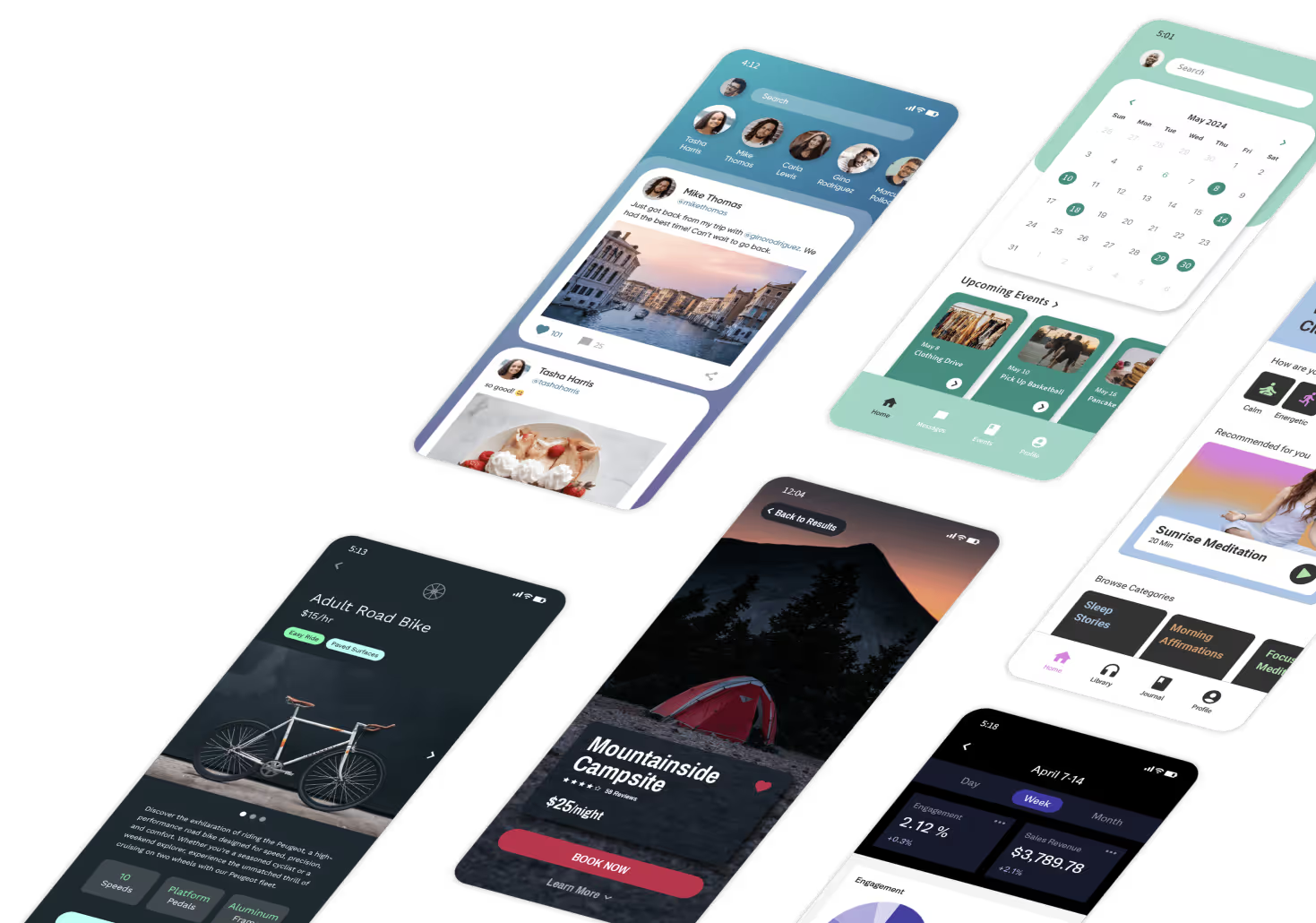
Building an app no longer requires a massive budget or months of development. With no-code MVP templates, you can create functional apps for as little as $1,000–$10,000 in just 2–8 weeks. These templates include pre-built designs, backend logic, and databases, allowing you to launch without writing a single line of code.
Adalo, a no-code app builder for database-driven web apps and native iOS and Android apps—one version across all three platforms, published to the Apple App Store and Google Play, is leading this transformation. With over 3 million apps created on the platform, Adalo provides the foundation for entrepreneurs and businesses to turn ideas into fully functional apps without hiring developers.
Key Takeaways:
- Who benefits? Entrepreneurs, small businesses, agencies, and enterprises can quickly build apps without technical expertise.
- What's included? Templates come with drag-and-drop interfaces, user authentication, payment systems, and AI-assisted building tools.
- Why use them? Save 5–10x on costs and cut development time from months to days, with no record limits or usage-based charges on paid plans.
Platforms like Adalo make it simple to customize templates, connect external data sources, and publish apps to iOS, Android, and web. Whether you're testing an idea or scaling a business, AI-assisted tools make app creation faster and more accessible than ever.

No-Code MVP Templates vs Traditional Development: Cost, Time & Benefits Comparison
The Fastest Way to Validate Any App Idea (In 48 Hours)
What Are MVP Templates?
An MVP template is essentially a pre-designed app framework that helps you create functional applications without needing to write any code. Think of it as a starter kit—it includes screens, database collections, and pre-configured actions to help you quickly launch your app.
Each template is built around three key components:
- Frontend: This is the user interface—everything your users see and interact with, like buttons, images, forms, and navigation menus.
- Backend: The backend works behind the scenes, handling the app's logic, fetching data, and managing integrations with third-party services.
- Database: The database acts as the storage center, organizing your app's information into collections, properties, and records.
Let's dive into how these templates work, what they offer, and who benefits from using them.
How MVP Templates Work
MVP templates rely on an easy-to-use drag-and-drop interface. You start by selecting a template tailored to your app type—whether it's for e-commerce, social media, or booking. From there, you can customize the design and connect your data sources, skipping the need to build the app's infrastructure from scratch.
Ada, Adalo's AI builder, lets you describe what you want and generates your app. Magic Start creates complete app foundations from a description, while Magic Add adds features through natural language.
Adalo makes this even simpler by offering specialized feature templates alongside AI-assisted building tools. Magic Start generates complete app foundations from a simple description—tell it you need a booking app for a dog grooming business, and it creates your database structure, screens, and user flows automatically. What used to take days of planning happens in minutes. For instance, you can grab templates for appointment booking systems or social media feeds. All you have to do is drag these components onto a canvas, configure their interactions, link external data if needed, and preview how everything looks across various devices. Once you're happy with it, you're ready to deploy.
Magic Add extends this capability by letting you add features through natural language requests. Need to add a payment system? Just describe what you want, and the AI handles the implementation details.
Why Use Templates
Using templates can slash development time from months to weeks, saving you both time and money. In fact, this approach can reduce costs by 5–10×, allowing you to allocate more resources toward user testing and refining your product rather than building infrastructure from scratch.
With pre-built elements, you can prototype your app in just days—or even hours. This means you can test your core idea with real users early on, helping you make informed decisions without sinking a fortune into development. Plus, templates often come packed with built-in features like user authentication, payment systems, and push notifications. These are features that would otherwise take weeks of coding to implement.
The platform's X-Ray feature identifies performance issues before they affect users, ensuring your MVP runs smoothly from day one. By streamlining the process, you can focus on collecting feedback and improving your app based on how users actually interact with it.
Who Benefits from MVP Templates
MVP templates are a game-changer for a variety of users:
- Founders and Entrepreneurs: They can launch their apps in as little as 30 days, speeding up their entry into the market. The visual builder has been described as "easy as PowerPoint," making it accessible to non-technical founders.
- Small and Medium Businesses: These businesses can use templates to create customer-facing apps, like e-commerce platforms or booking systems, without needing large development teams. The result? Professional-grade apps at a fraction of the usual cost.
- Agencies: Agencies can collaborate with clients to build prototypes and deliver functional apps without the expense of hiring full-time mobile developers.
- Enterprises: Larger organizations can use advanced template features for internal tools. For example, platforms like Adalo Blue allow enterprises to build apps with single sign-on (SSO), enterprise-level permissions, and integrations with legacy systems—even those with outdated or non-existent APIs. This makes it possible to create internal dashboards and productivity tools much faster than traditional IT project timelines.
Selecting the Right Template for Your MVP
Picking the right template can speed up your launch, reduce the need for redevelopment, and set your MVP up for long-term success.
What to Look for in a Template
Start by ensuring the template matches your target platform. For mobile apps, choose templates designed to publish directly to the iOS and Android app stores. Adalo simplifies this process by letting you deploy to web, iOS, and Android from a single build—one version across all three platforms. This means you won't need to rebuild your app when expanding from web to mobile.
Integration capabilities are a critical factor. Templates should connect seamlessly to payment processors like Stripe, automation tools such as Zapier, and data sources like Airtable or Google Sheets. Without these built-in integrations, you could face expensive custom development. Features like push notifications and user authentication should also be included, as building these from scratch can take weeks.
Growth capacity is another key consideration. Look for templates that support database relationships, conditional logic, and user management. Adalo's paid plans include unlimited database records—no caps on data storage as your business scales. Templates built on relational databases can handle more complexity as your business grows, while simpler setups may require a complete rebuild when adding new features.
Finally, choose a template tailored to your app type and business model.
Matching Templates to Your Needs
Different app types require different features, so align the template with your specific goals:
- E-commerce apps need product catalogs, shopping carts, and payment processing. E-commerce templates often come with built-in storefronts, shopping carts, and Stripe integration. These templates allow entrepreneurs to launch quickly and professionally without needing a developer.
- SaaS products demand more advanced infrastructure. SaaS templates typically include visual programming and backend logic to manage subscriptions, dashboards, and workflows. They must also handle recurring billing, user permissions, and more complex data processing.
- Internal business apps focus on making company data easily accessible. Templates that connect to spreadsheets or databases are ideal for operations teams needing mobile access to company information. Solutions like Adalo Blue add enterprise-level features, such as single sign-on and permissions management, enabling larger organizations to build tools that integrate with older systems—even those lacking APIs.
Mistakes to Avoid When Choosing Templates
The template you select will directly affect how easily you can customize and scale your app, so avoid these common pitfalls:
- Choosing based on looks alone: A visually appealing template might not have the right database structure for your business logic. Always review the technical foundation before committing.
- Overlooking essential integrations: Missing key integrations, like Stripe for payments, can lead to costly workarounds. Make a checklist of must-have features before you start browsing templates to ensure compatibility.
- Excessive customization: If you find yourself making major changes beyond colors, logos, and layouts, the template might not be the right fit. A good template should cover at least 80% of your needs right out of the box. Focus on templates that natively support your top two or three essential features, rather than trying to force a template into an entirely different use case.
Customizing Your Template
After choosing the right template, the next step is tailoring it to fit your business needs. Customization involves three key layers: the user interface (frontend), the business logic (backend), and the database. Each layer requires a unique approach, and together they create a seamless, functional app.
First Steps in Customization
Begin by duplicating the template and setting up your database. This involves defining Collections (like Users or Orders), Properties (such as name or email), and Records. For example, if you're creating a marketplace, you might add a "Listings" collection with fields for title, price, description, and seller ID. Adalo's integrated database tools let you establish relational fields—like linking orders to specific customers—right from the visual interface. With no record limits on paid plans, you can scale your database without worrying about hitting caps.
Next, focus on your app's logic using the platform's workflow builder. You can assign Actions to components. For instance, a login button could authenticate a user and redirect them to a dashboard, while a "Submit" button on a form might create a new database entry and trigger a confirmation email. Use both mobile and desktop previews to test these workflows and catch errors early.
Branding is another crucial step. Set global color schemes, upload your logo, and pick custom fonts. The platform allows changes to preset colors to automatically update across the app, saving you hours of manual adjustments. Before making major visual changes, save a Design Version—this way, you can experiment with themes like dark mode and revert back if needed. These initial steps lay the groundwork for a product that aligns with your business vision.
With the database and workflows established, you can move on to refining your app with more targeted customizations.
Best Practices for Customization
Once the foundation is set, focus on the core functionalities that are crucial for your app's success. It's easy to get carried away trying to customize everything at once, but that can lead to delays. Instead, prioritize the top two or three features that define your app's purpose. For example, if you're building a food delivery app, concentrate on the ordering flow, payment processing, and driver tracking first. Features like loyalty programs can always be added later. Allocating most of your time to these essential functions ensures faster deployment and keeps costs in check compared to fully custom development.
Use a modular approach by tweaking individual prebuilt components. For instance, if your template includes a generic product card, you can adjust its layout and fields without altering the underlying database queries. This keeps your work focused and prevents unnecessary delays caused by scope creep.
Testing should be an ongoing process. After each major change, test incrementally rather than waiting until all customizations are complete. Share your app with a small group of testers to gather feedback and identify problems early on. The X-Ray feature helps identify performance bottlenecks before they affect users, making it easier to optimize as you build.
Also, avoid over-customizing the design too soon. Stick to responsive design principles and use platform previews to ensure your app looks and works well across devices like mobile phones, tablets, and desktops.
Connecting External Data Sources
Once your app's core features are customized, you can expand its capabilities by integrating external data sources. Connecting your template to external systems can significantly enhance its functionality. Adalo supports direct integrations with tools such as Airtable, Google Sheets, MS SQL Server, and PostgreSQL. These connections are often made through user-friendly setup wizards that map fields automatically.
For example, you could pull customer data from a Google Sheet into your app's dashboard or sync with a PostgreSQL database to display company information on a mobile interface. SheetBridge enables you to turn a Google Sheet into an actual database for the easiest control without database-related learning curves—ideal for teams already comfortable with spreadsheets.
To set up an integration, activate it in the platform settings. For instance, adding Stripe as a plugin enables payment processing. Then, map data flows accordingly. If you're syncing order data from an external database, create an API workflow to fetch records when the app loads and update them using POST actions. Be sure to populate each field with sample data before connecting—empty fields can cause issues during setup.
Some entrepreneurs have built minimum viable products (MVPs) with Airtable for CRM data in just 2–8 weeks, spending between $1,000 and $10,000. This is a fraction of the cost of custom development, which can exceed $50,000. For larger-scale needs, Adalo Blue offers features like single sign-on (SSO), advanced permissions, and integration with legacy systems. Start with the most critical integrations for your app's functionality, and expand as your app evolves.
Deploying and Launching Your MVP
Once your template is customized, the next step is deploying your app to production. This stage includes testing your app on different platforms, submitting it to app stores, and setting up systems to ensure smooth operation once users begin downloading it. For an MVP built with AI-assisted tools, this process typically takes around 2-3 weeks from final testing to launch—much faster than the months often required for custom-built apps.
Testing on Multiple Platforms
It's crucial to test your app on web, iOS, and Android platforms since each has its own design standards and performance requirements. Adalo uses a single-codebase approach, allowing simultaneous deployment across all three platforms. However, user interactions can vary significantly between them.
- Web testing focuses on browser compatibility and desktop interaction patterns.
- iOS testing ensures touch gestures and performance work seamlessly across various iPhone models.
- Android testing involves verifying compatibility across different manufacturers, screen sizes, and Android versions.
Use the Preview App feature to simulate how your app looks and functions on both mobile and desktop devices. Share a test link to gather on-device feedback. For iOS, leverage TestFlight to invite up to 10,000 testers to download and evaluate the app before its official release. For Android, register with Google's testing platform to collect feedback and make necessary adjustments.
This hands-on testing helps uncover glitches and refine the user experience before your app goes live. Once testing confirms everything is running smoothly, you can prepare your app assets for submission to the app stores.
Publishing to App Stores
Publishing your app on the Apple App Store and Google Play Store requires developer accounts and careful attention to submission guidelines. Joining the Apple Developer Program costs $99 per year, while the Google Play Console charges a one-time fee of $25. Each platform has its own set of requirements and review processes.
Apple's review process typically takes 24-48 hours and enforces strict rules around privacy policies, data handling, and content standards. Apps are often rejected for reasons like unclear privacy disclosures, vague descriptions, or technical bugs. Google Play, on the other hand, uses a more automated review process but still monitors permissions and user safety closely.
Adalo simplifies the publishing process by eliminating the need for manual code signing or complicated deployment steps. The platform handles App Store submission directly, and once published, you can push unlimited updates to your apps without additional charges. Before submitting your app, ensure you have a clear and concise app description, a unique and appealing app icon, and high-quality screenshots. Pay special attention to the first 2-3 screenshots since they are the ones most users will see.
Maintaining Your App After Launch
Once your app is live, ongoing monitoring and updates are essential to keep it running smoothly and meeting user expectations. Key metrics to track include:
- Daily active users (DAU): How many users engage with your app daily.
- Session length: The average time users spend in your app.
- Feature usage: Which features are most and least used.
- Retention rate: How many users return after their first use.
- Crash rate: Frequency of app crashes.
Retention rate is especially critical for MVPs. If users don't return after the first week, it may indicate deeper issues that need immediate attention. Address critical bugs within 24 hours to maintain user trust. One advantage of Adalo is that updates are applied instantly across all platforms, avoiding the need for separate submissions to app stores.
Use built-in analytics tools to understand user behavior and prioritize updates based on what's working and what's not. Respond to app store reviews and encourage users to share feedback through surveys or in-app messages. Acknowledging user input can improve retention and build loyalty. Plan regular release cycles—whether weekly, bi-weekly, or monthly—for new features or improvements. Always test updates thoroughly before rolling them out to avoid introducing new issues.
Comparing MVP Template Platforms
When choosing a platform for your MVP, understanding the differences between options helps you make an informed decision. Each platform has distinct strengths and trade-offs.
Adalo vs Bubble
Bubble offers extensive customization for web applications, starting at $59/month with usage-based charges and limits on records due to Workload Units. While Bubble provides more granular control, this often results in slower applications that can struggle under increased load. Many Bubble users end up hiring experts to optimize performance, adding significant costs.
Adalo starts at $36/month with unlimited usage and no record caps on paid plans. The platform creates true native iOS and Android apps—not web wrappers—meaning better performance on mobile devices. One codebase automatically updates web, Android, and iOS apps deployed to their respective app stores, whereas Bubble's mobile solution wraps the web app, introducing potential challenges at scale.
Adalo vs FlutterFlow
FlutterFlow is a "low-code" platform designed for technical users. Users need to set up and manage their own external database, which requires significant learning complexity—especially when optimizing for scale. The ecosystem is rich with experts because many users need help and end up spending significant sums chasing scalability.
FlutterFlow's builder is limited in view, making it slow to see more than 2 screens at once. Adalo can display up to 400 screens at a time on one canvas. FlutterFlow pricing starts at $70/month per user for easy app store publishing, but this still doesn't include a database—users must source, set up, and pay for that separately.
Adalo vs Glide and Softr
Glide is heavily format-focused and restricted to set templates. This makes it fast to build with, but creates generic, simplistic apps with limited creative freedom. Glide is a go-to for spreadsheet-based apps, but pricing starts at $60/month for custom domains, with limits on app updates and data rows that attract additional charges. Glide does not support Apple App Store or Google Play Store publishing.
Softr pricing starts from $167/month to publish a Progressive Web App, still restricted by records per app and datasource. Softr does not support native iOS and Android app creation or app store publishing.
For teams wanting spreadsheet-based apps with native mobile publishing, Adalo's SheetBridge connects Google Sheets directly to the platform's database, combining spreadsheet convenience with full app store distribution.
Scalability and Performance
A common concern with MVP templates is whether they can scale beyond the initial launch. Adalo 3.0, launched in late 2025, completely overhauled the backend infrastructure to address this directly.
The platform is now 3-4x faster than previous versions, with modular infrastructure that scales automatically with app needs. This architecture supports apps with over 1 million monthly active users, with no upper ceiling. Unlike app wrappers that hit speed constraints under load, Adalo's purpose-built architecture maintains performance at scale.
Most third-party platform ratings and comparisons predate this infrastructure overhaul. If you encounter reviews citing performance concerns, note that Adalo 3.0 represents a fundamental rebuild of the platform's capabilities.
With the right data relationship setups, Adalo apps can scale beyond 1 million MAU without the expert consultants often required on other platforms. The X-Ray feature proactively identifies performance issues, helping you optimize before problems affect users.
Conclusion
No-code MVP templates have reshaped how businesses turn ideas into reality. Instead of enduring long development cycles and hefty budgets, startups and companies can now roll out functional apps quickly and at a fraction of the cost. This allows businesses to test ideas in the market and work toward achieving product-market fit much faster.
The process is simple: choose a template that aligns with your business model, tailor it with your branding and data sources, test it across devices, and publish it to app stores. These platforms remove technical hurdles, making app creation accessible to entrepreneurs without coding expertise, agencies looking to bypass hiring mobile developers, and enterprises that need internal tools with features like SSO or legacy system integrations. This streamlined method not only reduces upfront expenses but also lays the groundwork for continuous improvements.
Speed and adaptability are key to success. By focusing on just two or three essential features and launching quickly, you can gather real-world feedback to refine your app. Metrics such as retention rates and feature usage can guide your updates, helping you deliver what users truly need instead of relying on assumptions.
MVP templates are a game-changer for founders, agencies, and enterprises alike, breaking down barriers and enabling smarter, faster scaling. They make it easier than ever to validate ideas and evolve with confidence.
Related Blog Posts
- Ultimate Guide to No-Code MVP Prototyping
- How To Enable Employees To Build The Apps They Need
- How to Build Prototypes in Days with No-Code
- Why User-Centric Design Matters for MVPs
FAQ
Why choose Adalo over other app building solutions?
Adalo is an AI-powered app builder that creates true native iOS and Android apps. Unlike web wrappers, it compiles to native code and publishes directly to both the Apple App Store and Google Play Store from a single codebase—the hardest part of launching an app handled automatically. With unlimited database records on paid plans and no usage-based charges, you get predictable costs as you scale.
What's the fastest way to build and publish an app to the App Store?
Adalo's drag-and-drop interface combined with AI-assisted building tools like Magic Start can generate complete app foundations from a simple description. The platform handles the App Store submission process directly, letting you go from idea to published app in days rather than months.
Can I easily build and launch an MVP app without coding experience?
Yes, with Adalo's visual builder—described as "easy as PowerPoint"—you can build and launch an MVP app without any coding experience. Using pre-built templates with drag-and-drop interfaces, you can create functional apps complete with user authentication, payment systems, and databases in just 2-8 weeks.
How much can I save using no-code MVP templates compared to traditional development?
No-code MVP templates can reduce development costs by 5-10x compared to traditional custom development. While custom-built apps can exceed $50,000, you can create functional apps using templates for as little as $1,000-$10,000, allowing you to allocate more resources toward user testing and product refinement.
Which is more affordable, Adalo or Bubble?
Adalo starts at $36/month with unlimited usage and no record caps on paid plans. Bubble starts at $59/month with usage-based charges (Workload Units) and limits on records. Adalo's pricing is more predictable, while Bubble's costs can increase unexpectedly based on usage.
Which is better for mobile apps, Adalo or FlutterFlow?
Adalo creates true native iOS and Android apps from a single codebase with an integrated database. FlutterFlow requires users to set up and manage their own external database, adding complexity and cost. FlutterFlow starts at $70/month per user without database included, while Adalo starts at $36/month with everything built in.
Can I publish to the App Store with Glide or Softr?
No. Glide and Softr do not support Apple App Store or Google Play Store publishing. If you need native mobile apps distributed through app stores, Adalo handles this directly from a single codebase with unlimited updates once published.
What should I look for when selecting an MVP template?
Focus on three key factors: platform compatibility (web, iOS, Android), integration capabilities with tools like Stripe, Zapier, and Airtable, and growth capacity for scaling. A good template should cover at least 80% of your needs out of the box and include essential features like user authentication and payment processing.
How long does it take to deploy an MVP app to the app stores?
From final testing to launch, deploying an MVP typically takes around 2-3 weeks. Apple's review process usually takes 24-48 hours, while Google Play uses a faster automated review. Adalo simplifies this by handling code signing and deployment steps automatically.
Can Adalo apps scale to handle large user bases?
Yes. Adalo 3.0's modular infrastructure scales to serve apps with over 1 million monthly active users, with no upper ceiling. The platform is 3-4x faster than previous versions, and with the right data relationship setups, apps can scale without hiring external experts.