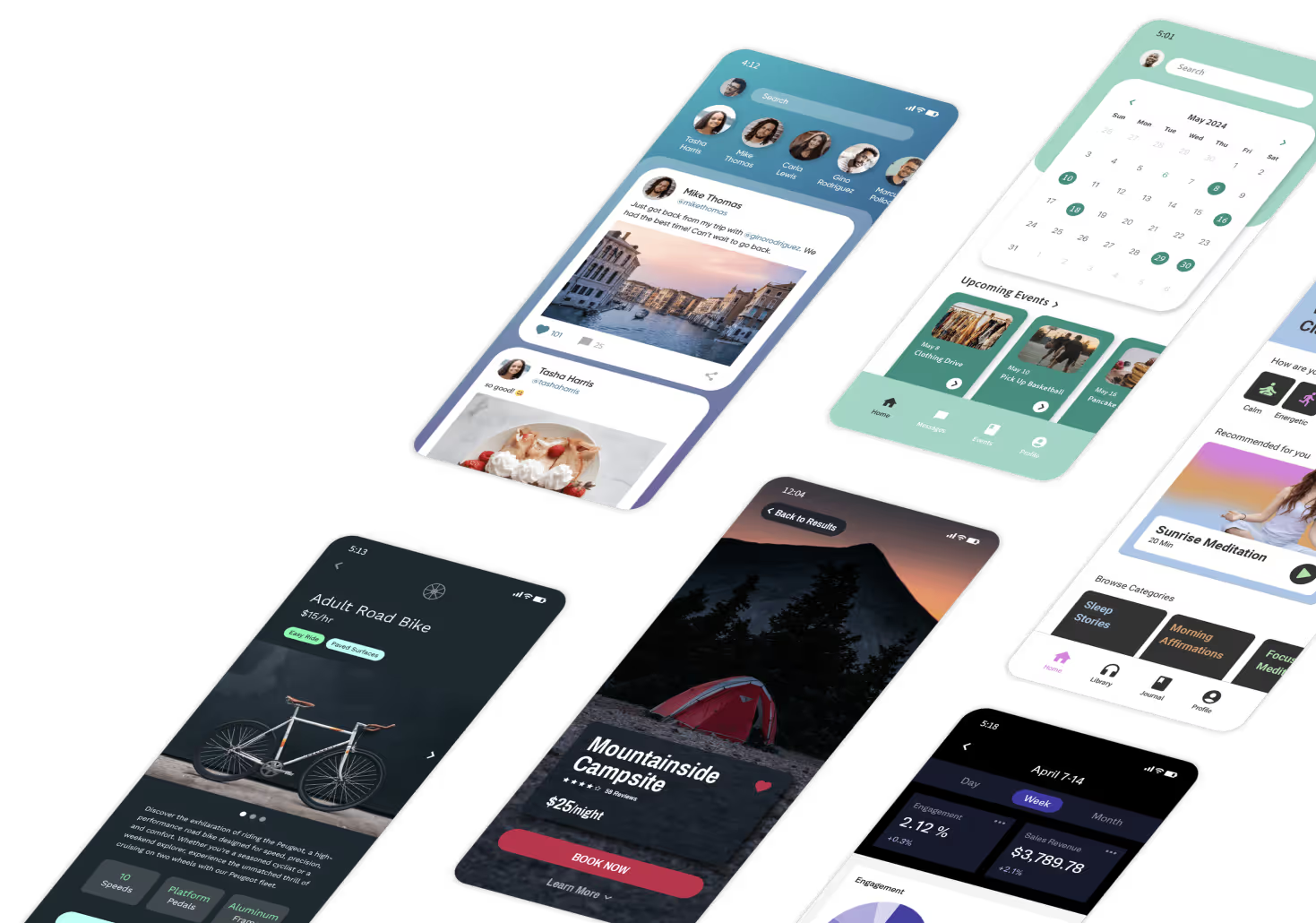
Why Adalo Is Perfect for Building an Eventbrite Clone
Adalo is a no-code app builder for database-driven web apps and native iOS and Android apps—one version across all three platforms, published to the Apple App Store and Google Play. This makes it the ideal platform for creating an event management app, where you need robust database capabilities to handle event listings, ticket inventory, user registrations, and attendee records—all accessible from any device.
Building your Eventbrite clone as a native mobile app means you can send push notifications to remind attendees about upcoming events, alert them to schedule changes, and promote new events from their favorite organizers. With Adalo's cross-platform publishing, event organizers can manage their listings from a desktop while attendees discover and purchase tickets on their phones—then pull up their digital tickets at the venue without missing a beat.
Why Adalo Works for Building an Event Management App
Adalo is an AI-powered app builder for database-driven web apps and native iOS and Android apps—one version across all three platforms, published to the Apple App Store and Google Play. This cross-platform capability is essential for event management apps, where organizers need desktop access for planning and attendees want mobile convenience for discovering events and accessing tickets on the go.
Having your Eventbrite clone available as a native app in both app stores means you can leverage push notifications to remind attendees about upcoming events, send last-minute updates, and drive engagement with personalized event recommendations. Combined with Adalo's built-in database features for managing events, tickets, and user accounts—with no record limits on paid plans—you have everything you need to create a professional event platform without writing code.
This comprehensive tutorial will walk you through building a fully functional event management app using Adalo's AI-powered platform. While creating your own Eventbrite clone, you'll learn how to implement event creation, ticket sales, location-based discovery, payment processing, and attendee check-in features. You can even publish the same app to the web, native iOS, and native Android with Adalo, all without writing a line of code.
What Is an Eventbrite Clone and Why Build One with No-Code
An Eventbrite clone is an event management platform that allows organizers to create, promote, and sell tickets to events while enabling attendees to discover, register for, and attend those events. These platforms typically include:
- Event discovery marketplace where users can browse upcoming events
- Registration management with customizable ticket types and pricing
- Payment processing for paid events
- Attendee database with check-in and communication tools
- Organizer dashboard for analytics and event management
- Mobile event app for on-the-go access
Why No-Code Platforms Like Adalo Are Ideal for Event Apps
No-code development has revolutionized how apps are built, with the no-code market continuing rapid growth. For event management apps specifically, platforms like Adalo offer several advantages:
Ada, Adalo's AI builder, lets you describe what you want and generates your app. Magic Start creates complete app foundations from a description, while Magic Add adds features through natural language.
Speed to Market: Many no-code apps can be deployed quickly, allowing you to test your event concept quickly and iterate based on real user feedback. With AI-assisted features like Magic Start, you can generate complete app foundations from a simple description—what used to take days of planning happens in minutes.
Cost Efficiency: Ongoing maintenance costs are often lower compared to custom-coded solutions, making event apps accessible to organizers with limited budgets. Adalo's plans now include unlimited usage with no app action charges, eliminating surprise bills as your event platform grows.
High Success Rate: According to Adalo, non-developers achieve high completion rates when launching usable apps on the platform, compared to much lower completion rates with traditional development. The visual builder has been described as "as easy as PowerPoint."
True Native Apps: Unlike web-only builders, Adalo publishes to both iOS and Android as native mobile apps, plus responsive web apps—all from one project.
How Adalo Compares to Other No-Code Event App Builders
When choosing a platform for your event management app, understanding the competitive landscape helps you make informed decisions.
Adalo vs Bubble for Event Management Apps
Bubble is a popular no-code platform, but it's primarily focused on web applications. For event apps, this creates important distinctions:
- Mobile Publishing: Bubble now offers native mobile app publishing (Bubble Native Mobile), but this is essentially a wrapper for the web app. Adalo compiles true native code for iOS and Android from the same project, meaning one update automatically deploys across web, iOS App Store, and Google Play Store.
- Visual Building: Bubble uses a flexbox-based design system that requires more technical understanding, whereas Adalo offers truly drag-and-drop design with the ability to view up to 400 screens at once on a single canvas.
- Pricing and Predictability: Bubble's comparable offering starts at $59/month with usage-based Workload Unit charges that can create unpredictable bills. Adalo starts at $36/month with unlimited usage and no record caps on paid plans.
- Scalability: Bubble offers more customization, but that often results in slower applications that suffer under increased load, frequently requiring hired experts to optimize. Adalo 3.0's infrastructure overhaul (launched late 2025) made the platform 3-4x faster with modular infrastructure that scales automatically.
- Offline Capabilities: Some features may continue to work with limited connectivity if designed for offline use (e.g., cached tickets). For critical offline check-in, plan and test dedicated offline flows.
Why Google App Maker Alternatives Matter for Modern Builders
Google discontinued App Maker in 2021, leaving many organizations searching for alternatives. This highlighted the importance of choosing platforms with:
- Strong financial backing and community support
- Cross-platform publishing capabilities
- Ongoing feature development and maintenance
- Clear pricing models without sudden changes
Adalo addresses these concerns with consistent updates, a thriving community, and transparent pricing tiers designed for apps at every stage. With over 3 million apps created on the platform and AI Builder features rolling out in early 2026, Adalo continues investing in its future.
Planning Your Event Management App: Features and Database Structure
Before diving into the builder, proper planning ensures your app's foundation supports future growth. The database structure is the backbone of your event app.
Essential Collections for Event Apps
Your Eventbrite clone needs these core data collections:
- Users Collection (built-in)
- Stores attendee and organizer profiles
- Manages authentication and preferences
- Tracks user roles and permissions
- Events Collection
- Event details (title, description, images)
- Date, time, and location information
- Organizer information
- Category and tags for discovery
- Tickets Collection
- Ticket types (General Admission, VIP, Early Bird)
- Pricing and availability
- Quantity limits per ticket type
- Registrations Collection
- Links attendees to events
- Tracks ticket purchases
- Stores check-in status
- Categories Collection
- Enables event filtering
- Improves discovery experience
User Role Architecture: Organizers vs Attendees
Event apps are two-sided marketplaces requiring role-based functionality:
Attendees:
- Browse and discover events
- Register and purchase tickets
- View their upcoming events
- Check-in at events
Organizers:
- Create and manage events
- Set ticket types and pricing
- View attendee lists and analytics
- Manage check-ins
You can implement this using a "User Type" property in your Users collection, then conditionally show different screens based on the logged-in user's role.
Building Your Data Model in Adalo
Adalo's relational database supports the complex relationships your event app needs:
- One-to-Many: One Event has many Tickets
- Many-to-Many: Many Users can register for many Events (through Registrations)
- One-to-One: Each Registration has one Payment record
These relationships enable features like viewing all attendees for an event, displaying all events a user has registered for, and tracking which tickets have been sold. With unlimited database records on paid plans, you can scale your event catalog and registration history without worrying about hitting storage caps.
Step 1: Setting Up Your Adalo Account and Choosing the Right Plan
Create Your Adalo Account
- Navigate to Adalo.com
- Click "Get Started" or "Sign Up"
- Enter your email and create a password
- Verify your email address
- Complete the onboarding questionnaire (helps Adalo understand your goals)
Start Your Event App Project
- Click "Create New App" from your dashboard
- Name your app (e.g., "EventHub" or "LocalEvents")
- Choose "Mobile App" as your starting point (recommended for event apps)
- Select "Start from Scratch" or browse available templates for inspiration
You can also use Magic Start to generate a complete app foundation from a description. Tell it you need an event management app with ticket sales and check-in features, and it creates your database structure, screens, and user flows automatically.
Free vs Paid Plans: What Event Apps Need
Adalo offers several pricing tiers optimized for different stages of app development. See current pricing at Adalo's pricing page.
Free Plan:
- Perfect for prototyping and testing
- Limited records per app
- 1 editor
- Unlimited screens and actions
- Web publishing is not available on the Free plan; publishing to the web and app stores requires the Starter plan or higher.
- Best for: Testing your concept before launch
Starter Plan ($36/month):
- 1 published app
- Custom domains for web apps
- Custom branding
- Unlimited database records
- Unlimited usage—no app action charges
- Best for: Launching your first event app for a specific community
Professional Plan:
- Multiple published apps
- Several collaborators
- Custom integrations (outbound API via Custom Actions); Adalo Collections/Notifications API access is available on Team & Business plans.
- Geolocation support (essential for "events near me")
- Best for: Event apps requiring location features and team collaboration
Team Plan:
- More published apps
- Multiple editors
- Priority support
- Xano integration (available on Team & Business plans).
- Best for: Agencies or businesses managing multiple event platforms
When to Upgrade from Starter to Professional
Upgrade when you need:
- Location-based event discovery ("free events near me" functionality)
- Team collaboration with multiple organizers
- API integrations with external marketing tools
- Advanced features for growing event catalogs
Most event apps start with the Free plan for development, then launch on Starter or Professional depending on feature requirements. Unlike competitors with usage-based charges, Adalo's predictable pricing means no surprise bills as your event platform grows.
Step 2: Building the Event Discovery Screen for Free Events Near Me
The event discovery screen is your app's front door—where attendees find exciting events. This is where you'll implement location-based search to help users find "free events near me."
Setting Up Your Home Screen Structure
- In the Adalo editor, rename your default screen to "Event Discovery"
- Add a Top App Bar component:
- Add your app logo or name
- Include a search icon button
- Add a menu/profile icon
- Set the screen background color to match your brand
Creating the Event List with Filtering
- Drag a List component onto your screen
- Connect it to your Events collection
- Configure the list items to display:
- Event image (full width)
- Event title (bold, 18pt)
- Date and time
- Location (city/venue name)
- Price (show "Free" for $0 events)
- Category badge
Adding Location-Based Event Search
To implement "free events near me" functionality, you'll need the Professional plan for geolocation support:
- Add a Current Location component to capture user's location
- Request location permission when users first open the app
- Configure your Events list with location filters:
- Click on the List component
- Go to "Filters" tab
- Add filter: Events > Location > Distance from > Current User Location
- Set distance radius (e.g., "Within 25 miles")
Creating Filter Options for Date and Category
Date Filters:
- Add Button components above your list:
- "Today"
- "This Weekend"
- "This Week"
- "This Month"
- Add actions to each button that update a "Selected Date Range" property
- Add conditional filter to your Events list based on this property
Category Filters:
- Add a Horizontal List of category buttons:
- Music
- Sports
- Arts
- Food & Drink
- Business
- Community
- Make categories clickable with filter actions
- Style the selected category with a different background color
Price Filters:
- Add a Toggle or Checkbox labeled "Free Events Only"
- Add filter: Events > Price = 0 (when toggle is on)
Implementing Map View with Google Maps Component
Use the Maps component (add your Google API key) for visual discovery; Geolocation features (e.g., distance filters/Current Location) require the Professional plan or higher.
- Go to Adalo Marketplace
- Install the "Maps" component
- Get a Google Maps API key from Google Cloud Console
- Add the Maps component to your Event Discovery screen
- Configure it to show:
- All events in the filtered list as markers
- Different marker colors for different categories
- User's current location as a blue dot
- Add action: Clicking a marker opens that event's detail page
Toggle Between List and Map View:
- Add two icon buttons: "List View" and "Map View"
- Create two screens or use conditional visibility
- Share the same filters between both views
Implementing Search Functionality
- Add a Text Input component at the top of your screen
- Set placeholder text: "Search events..."
- Add filter to Events list:
- Events > Title > Contains > Search Input Value
- OR Events > Description > Contains > Search Input Value
- Make search real-time (updates as user types)
Your Event Discovery screen now enables attendees to find events by location, date, category, price, and keywords—replicating Eventbrite's core discovery experience.
Step 3: Creating Event Detail Pages and Registration Flows
When users click an event from the discovery screen, they need comprehensive information to decide whether to attend.
Setting Up the Event Detail Screen
- Create a new screen named "Event Detail"
- Link from your Event Discovery list: Click Action > Link to Event Detail
- Send the clicked event data to the new screen
Designing the Event Information Layout
Header Section:
- Add a Full-Width Image component
- Source: Current Event > Event Image
- Height: 250-300px
- Add a back button overlay in the top-left
Title and Quick Info:
- Add Text components for:
- Event Title (24pt, bold)
- Date and Time (16pt, with calendar icon)
- Venue Name and Address (14pt, with location icon)
- Price (18pt, colored based on free/paid)
Tabs or Sections:
- Create tabbed navigation or scrollable sections:
- About: Full event description, what to expect, who should attend
- Tickets: Available ticket types and pricing
- Organizer: Profile info, other events by this organizer
- Location: Map showing venue, directions, parking info
About Section:
- Add Text (multiline) for event description
- Source: Current Event > Description
- Allow scroll for long descriptions
- Add "Read More/Less" toggle for lengthy descriptions
Building the Ticket Selection Component
Display Available Tickets:
- Add a List of tickets:
- Filter: Tickets > Event = Current Event
- Sort by: Price (Low to High)
- For each ticket type, show:
- Ticket name (e.g., "General Admission," "VIP Pass")
- Price
- Description of what's included
- Quantity remaining (if limited)
- Quantity selector (+ and - buttons)
Quantity Picker Implementation:
- Create a "Cart" collection to store selected tickets
- Add Number Input or custom +/- buttons:
- Starting value: 0
- Maximum: Min(Ticket Quantity Available, Per-Order Limit)
- Add Button: "Add to Cart"
- Action: Create Cart Item with selected quantity
- Show confirmation message
- Display running total of selected tickets
Sold Out Handling:
- Add conditional visibility:
- If Ticket > Quantity Available = 0
- Show "SOLD OUT" badge
- Disable selection buttons
- Add "Notify Me" button for waitlist (optional)
Adding Calendar Integration and Social Sharing
Add to Calendar:
- Add Button: "Add to Calendar"
- For web users, provide:
- Google Calendar template link: https://calendar.google.com/calendar/render?action=TEMPLATE&text=[EventTitle]&dates=[StartDateTime/EndDateTime]&details=[Description]&location=[Location]
- Or downloadable .ics file (requires third-party service)
- For native iOS/Android, use platform APIs or third-party services to generate .ics files
Social Sharing:
- Add share buttons for:
- Copy Link (copies event detail URL)
- Share to Facebook
- Share to Twitter
- Share via Email
- Pre-populate sharing messages with event name and link
Floating Action Button:
- Add sticky bottom bar with:
- Total price calculation
- "Register Now" or "Get Tickets" button
- Action: Navigate to Checkout screen
- Make it follow the scroll (always visible)
This event detail screen provides all the information attendees need while making registration frictionless.
Step 4: Integrating Payment Processing with Stripe
Payment processing is essential for monetizing your event platform. Adalo's Stripe integration enables secure payment collection.
Connecting Your Stripe Account to Adalo
- Sign up for a Stripe account at stripe.com (if you don't have one)
- Get your API keys from Stripe Dashboard > Developers > API keys
- In your checkout screen, add the Stripe Payment component and click "Connect with Stripe"; use Test Mode keys (pk_test_/sk_test_) only when testing.
- Start with Test Mode keys for development
Installing the Stripe Payment Component
- Navigate to Adalo Marketplace and, for setup steps, follow Stripe Payment setup.
- Search for "Stripe Payment" or "Stripe Checkout"
- Click "Install" to add it to your app
- The component will appear in your Components panel
Building the Checkout and Confirmation Flow
Create Checkout Screen:
- Add a new screen named "Checkout"
- Display order summary:
- List of selected tickets
- Quantities and prices
- Subtotal, fees, and total
- Add attendee information form:
- Full name
- Email address
- Phone number (optional)
- Emergency contact (for in-person events)
Add Stripe Payment Component:
- Drag the Stripe Payment component onto your Checkout screen
- Configure it with:
- Amount: Sum of (Cart Items > Quantity × Ticket Price)
- Currency: USD (or your currency)
- Description: "Tickets for [Event Name]"
- Customer Email: Logged In User > Email
- Add optional fields:
- Save payment method for future use
- Apply promo codes
- Add processing fee transparency
Handle Payment Success:
- Set up actions for successful payment:
- Create Registration record linking User to Event
- Mark tickets as purchased (reduce available quantity)
- Create Payment record with Stripe payment ID
- Send confirmation email
- Navigate to Confirmation screen
- Clear cart items after successful purchase
Handle Payment Failure:
- Set up actions for failed payment:
- Display error message from Stripe
- Keep cart items intact
- Allow retry or edit payment details
- Log failed attempt for troubleshooting
Handling Free vs Paid Event Logic
For free events, bypass payment processing:
- Add conditional logic on "Register" button:
- If Event > Price = 0: Skip checkout, create registration directly
- If Event > Price > 0: Navigate to Checkout screen
- Create a simplified registration flow for free events:
- Collect basic attendee info (name, email)
- Create Registration record
- Send confirmation email
- Navigate to Confirmation screen
Confirmation Screen:
- Create "Registration Confirmed" screen showing:
- Success message with checkmark icon
- Event details summary
- QR code for check-in (covered in Step 6)
- "Add to Calendar" button
- Download ticket as PDF (requires third-party PDF service via Make/Zapier or custom actions)
- Add email confirmation:
- Trigger automated email with ticket details
- Include event information and QR code
- Add calendar file attachment
You can process charges within Adalo via Stripe. Refunds are managed in the Stripe Dashboard or via custom API actions.
This payment integration allows you to monetize your event platform while maintaining a smooth user experience for both free and paid events.
Step 5: Building the Organizer Dashboard and Event Creation Tools
Your event app needs robust tools for organizers to create and manage their events. This two-sided marketplace functionality differentiates your platform from simple event calendars.
Creating Role-Based Navigation
- Add a "User Type" property to your Users collection (if not already added):
- Values: "Attendee" or "Organizer"
- Set during signup or allow account type switching
- Create conditional navigation:
- If User Type = "Organizer": Show "My Events" and "Create Event"
- If User Type = "Attendee": Show "Discover" and "My Tickets"
- Add user type selector in profile settings to allow switching
Creating the Event Submission Form
Build Event Creation Screen:
- Add new screen "Create Event"
- Add Form component connected to Events collection
- Include these fields in order:
Basic Information:
- Event Title (Text Input, required)
- Event Category (Dropdown: Music, Sports, Arts, etc.)
- Event Type (Dropdown: In-Person, Virtual, Hybrid)
- Short Description (Text Input, 1-2 sentences)
- Full Description (Text Area, multiline)
Date and Time:
- Start Date (Date Picker)
- Start Time (Time Picker)
- End Date (Date Picker)
- End Time (Time Picker)
- Time Zone (Dropdown for virtual events)
Location Details:
- Venue Name (Text Input)
- Street Address (Text Input)
- City (Text Input)
- State/Province (Dropdown)
- ZIP/Postal Code (Text Input)
- Virtual Event Link (Text Input, conditional for virtual events)
Media:
- Event Banner Image (Image Picker, recommended size: 1920×1080)
- Additional Images (Image Picker, allow multiple)
- Video URL (optional, YouTube or Vimeo embed)
Settings:
- Is the event Public? (Toggle)
- Allow Waitlist? (Toggle)
- Send Reminder Emails? (Toggle)
- Event Capacity (Number Input, optional)
You can also use Magic Add to add features by describing what you want. For example, type "add a recurring event option" and the AI will help implement the functionality.
Setting Up Ticket Types and Pricing Tiers
After basic event creation, navigate to ticket configuration:
Create Ticket Types Screen:
- Add new screen "Add Tickets" (linked from event creation)
- Pass Current Event data to this screen
- Add Form to create tickets:
- Ticket Name (e.g., "Early Bird," "VIP Pass")
- Description (what's included)
- Price (Number Input)
- Quantity Available (Number Input)
- Sales Start Date (optional, for tiered releases)
- Sales End Date (optional, for early bird pricing)
- Maximum per Order (prevent bulk buying)
Allow Multiple Ticket Tiers:
- After creating first ticket, show "Add Another Ticket Type" button
- Display list of created tickets for the event
- Allow editing or deleting ticket types
- Calculate total capacity across all ticket types
Free Event Shortcut:
- Add "This is a Free Event" checkbox
- When checked:
- Auto-create single ticket type named "Free Admission"
- Set price to $0
- Set quantity to event capacity or "Unlimited"
- Skip detailed ticket configuration
Building Analytics and Attendee Management Views
Organizer Dashboard Home:
- Create "Organizer Dashboard" screen
- Display key metrics:
- Total Events Created (count)
- Total Tickets Sold (sum)
- Total Revenue (sum of paid registrations)
- Upcoming Events (next 7 days)
Event Management List:
- Add List of Events where Organizer = Logged In User
- For each event, show:
- Event image and title
- Date and time
- Tickets sold / Total capacity
- Revenue generated
- Status (Draft, Published, Past)
- Quick actions: Edit, View Attendees, Cancel
Attendee List View:
- Create "Event Attendees" screen
- Add List of Registrations where Event = Current Event
- Display for each attendee:
- Name
- Ticket type
- Check-in status
- Purchase date
- Add search and filter options:
- Search by name or email
- Filter by ticket type
- Filter by check-in status
- Sort by registration date
Export Functionality:
- Add "Export Attendee List" button
- Generate CSV with attendee data
- Email to organizer or download directly
Analytics Graphs (Optional):
- Add charts showing:
- Ticket sales over time
- Revenue by ticket type
- Registration source (if tracking referrals)
- Attendee demographics (if collecting)
The organizer dashboard empowers event creators to manage their events professionally, matching the capabilities of established platforms like Eventbrite.
Step 6: Adding Check-In and Attendee Management Features
Event check-in functionality streamlines the arrival experience and helps organizers track attendance. This feature is essential for in-person events and matches capabilities of platforms like event apps.
Implementing QR Code Ticket Validation
Generate Unique QR Codes:
- Install QR Code component from Adalo Marketplace
- For each Registration record, generate QR code containing:
- Registration ID (unique identifier)
- Event ID
- Attendee Name
- Ticket Type
- Display QR code on:
- Confirmation screen after registration
- "My Tickets" screen for attendees
- Email confirmation
Make QR Codes Accessible:
- Create "My Tickets" screen for attendees
- Add List of Registrations where User = Logged In User
- For each ticket, show:
- Event name and date
- QR code (prominent, easy to scan)
- "View Event Details" button
- Download as PDF option
- Add brightness tip: "Increase screen brightness for easier scanning"
Creating the Event Check-In Interface
Build Organizer Check-In Screen:
- Create "Event Check-In" screen (organizer-only access)
- Add event selector if organizer has multiple events
- Display current attendee statistics:
- Total Registered
- Checked In (count)
- Not Yet Checked In
- Check-in percentage
Add Scanner Component:
- Install QR/Barcode Scanner from Marketplace
- Configure scanner to:
- Read QR codes continuously
- Parse registration data
- Verify against Registrations collection
- Scanner actions:
- Find Registration matching scanned ID
- Verify Registration > Event = Current Event
- If valid: Update Registration > Checked In = True
- If invalid: Show error message
Scanner Feedback:
- Success state (valid ticket):
- Green checkmark animation
- Display attendee name
- Show ticket type
- Play success sound
- Auto-clear after 2 seconds
- Error states:
- Already checked in: Yellow warning with time of original check-in
- Wrong event: Red error, show correct event name
- Invalid code: Red error, suggest manual lookup
Building Attendee Communication Tools
Manual Check-In Override:
- Add "Manual Check-In" button on check-in screen
- Opens searchable attendee list
- Allow organizers to:
- Search by name or email
- Manually toggle check-in status
- Add notes (e.g., "Forgot phone, verified ID")
Real-Time Attendance Dashboard:
- Display auto-refreshing metrics:
- Attendees checked in (updates live)
- Peak check-in time
- Average check-in duration
- Add countdown timer for events starting soon
- Show notifications for milestones:
- "50% of attendees checked in"
- "Event starting in 15 minutes"
Attendee Messaging:
- Add "Send Announcement" button
- Compose message to:
- All registered attendees
- Only checked-in attendees
- Only not-yet-arrived attendees
- Send via:
- Push notification (if enabled)
- SMS (pricing varies by provider and destination)
Export Check-In Data:
- Add export button for:
- Check-in report (CSV)
- Timeline of check-ins
- No-show list
- Useful for post-event analysis and follow-up
This check-in system provides organizers with professional attendance tracking while keeping the attendee experience simple and fast.
Step 7: Implementing User Authentication and Profile Management
Secure authentication and personalized profiles are foundational to any event platform, enabling users to register for events, save favorites, and manage their account.
Setting Up Email and Social Login Options
Email/Password Authentication:
- Adalo includes built-in authentication with Users collection
- Create "Sign Up" screen with Form:
- Email (Email Input, required)
- Password (Password Input, required, minimum 8 characters)
- Confirm Password (Password Input, must match)
- Full Name (Text Input, required)
- Account Type (Radio buttons: Attendee or Organizer)
- Add "Sign Up" button action:
- Create User record
- Log user in automatically
- Navigate to appropriate home screen based on account type
Login Screen:
- Create "Login" screen with:
- Email Input
- Password Input
- "Forgot Password?" link
- "Login" button (validates credentials)
- "Don't have an account? Sign Up" link
- Add error handling for incorrect credentials
Adalo provides plug-and-play "Sign in with Google" and "Sign in with Apple" components (they require standard setup in the Google/Apple consoles).
Password Reset:
- Create "Forgot Password" screen
- Add email input to send reset link
- Configure email automation (via Adalo or email service)
- Create "Reset Password" screen accessed via email link
Creating User Profile and Preferences Screens
Profile Screen:
- Create "My Profile" screen accessible from menu
- Display current user information:
- Profile photo (Image, editable)
- Full name (editable)
- Email (display only)
- Phone number (editable)
- Bio (Text Area, for organizers)
- Add "Edit Profile" button linking to edit form
Account Settings:
- Create "Settings" screen with sections:
Notification Preferences:
- Email notifications (Toggle):
- Event reminders (24h and 1h before)
- New events in followed categories
- Updates from organizers
- Marketing emails
- Push notifications (Toggle):
- Event starting soon
- Ticket sale announcements
- Price drops on saved events
Privacy Settings:
- Profile visibility (Public/Private)
- Show attendance on public events
- Allow event organizers to contact me
Payment Methods:
- Saved credit cards (last 4 digits)
- Default payment method selector
- Add new card button
- Billing address
Account Actions:
- Change password
- Switch account type (Attendee ↔ Organizer)
- Delete account (with confirmation)
- Logout
Building Event Bookmarking and History Features
Saved Events / Wishlist:
- Add "Saved Events" collection as relationship to Users
- On Event Detail screen, add heart/bookmark icon
- Toggle action:
- Add event to Saved Events list
- Remove from Saved Events list
- Change icon state (filled/outline)
- Create "My Saved Events" screen:
- List of bookmarked events
- Sort by date or save date
- Quick registration from this screen
Event History:
- Create "My Events" screen with tabs:
Upcoming Tab:
- List registrations where Event Date > Today
- Sort by date (nearest first)
- Show countdown to event
- Quick actions: View ticket, Add to calendar, Cancel registration
Past Tab:
- List registrations where Event Date < Today
- Display attended events
- Show "Review Event" prompt if not yet reviewed
- Re-register for recurring events
Following / Interests:
- Create "Categories" collection
- Allow users to follow categories
- On discovery screen, prioritize events in followed categories
- Add "Recommended for You" section based on:
- Followed categories
- Past event attendance
- Saved events
Notification Center:
- Create "Notifications" screen
- Display in-app notifications:
- Event updates
- Registration confirmations
- Check-in reminders
- New events matching interests
- Mark notifications as read/unread
- Delete or archive old notifications
This authentication and profile system creates personalized experiences that encourage repeat usage and build community around your event platform.
Step 8: Publishing Your Event App to iOS, Android, and Web
One of Adalo's greatest strengths is its ability to publish directly to multiple platforms from a single project. Adalo apps can be deployed across iOS, Android, and web from a single project.
Preparing for App Store Submission (Apple Developer Requirements)
Prerequisites:
- Apple Developer Account ($99/year) - required for App Store publishing
- Completed app with all features tested
- App icon in required sizes (Adalo generates these from one 1024×1024 image)
- Screenshots for different device sizes
- App privacy policy URL
- App description and keywords for App Store listing
In Adalo:
- Click "Publish" in top-right corner
- Select "iOS App"
- Configure iOS settings:
- App Name (30 characters max for App Store)
- Bundle ID (unique identifier, e.g., com.yourcompany.eventapp)
- Version number (start with 1.0)
- Build number (start with 1)
- Upload app icon (1024×1024 PNG, no transparency)
- Choose app category (Entertainment, Productivity, etc.)
- Enter your Apple Developer team ID
Generate iOS Build:
- Click "Generate iOS Build"
- Adalo builds your app (typically takes 15-30 minutes)
- Download the .ipa file or get direct App Store Connect upload link
- Review build in TestFlight before public release
App Store Optimization (ASO):
- Write compelling app title including main keywords
- Craft description highlighting core features
- Include keywords: "event tickets," "local events," "event discovery"
- Create engaging screenshots showing:
- Event discovery with location features
- Beautiful event detail pages
- Simple checkout process
- Digital tickets with QR codes
- Record app preview video (optional but recommended)
App Store Review:
- Submit app through App Store Connect
- Average review time: 24-48 hours
- Common rejection reasons to avoid:
- Broken links or features
- Missing privacy policy
- Placeholder content in screenshots
- Inaccurate functionality descriptions
Publishing to Google Play Store
Prerequisites:
- Google Play Developer account (one-time $25 fee)
- Completed app tested on Android devices
- App icon (512×512 PNG)
- Feature graphic (1024×500 PNG)
- Screenshots for phones and tablets
- Privacy policy URL
In Adalo:
- Click "Publish" > "Android App"
- Configure Android settings:
- App Name
- Package Name (e.g., com.yourcompany.eventapp)
- Version Name (1.0)
- Version Code (1)
- Upload app icon
- Set app category
- Enable features:
- Location services (for event discovery)
- Camera (for QR code scanning)
- Notifications (for event reminders)
Generate Android Build:
- Click "Generate Android Build"
- Build process takes 15-30 minutes
- Download .aab (Android App Bundle) file
Google Play Console Setup:
- Create app listing in Google Play Console
- Upload .aab file to Internal Testing track first
- Complete store listing:
- Full description (4000 characters max)
- Short description (80 characters)
- Screenshots (minimum 2, recommended 8)
- Feature graphic
- App category and tags
- Set content rating via questionnaire
- Add privacy policy link
Publishing Options:
- Start with Internal Testing (team only)
- Progress to Closed Testing (limited users)
- Move to Open Testing (public beta)
- Finally publish to Production
- Gradual rollout recommended (start with 10%, increase to 100%)
Deploying Your Web App with Custom Domain
Web Publishing Advantages:
- No app store approval needed
- Instant updates without review process
- Works on any device with browser
- SEO-friendly for event discovery
Publish Web App:
- Click "Publish" > "Web App"
- Configure web settings:
- App Name
- Favicon (32×32 PNG)
- Meta description (for SEO)
- Open Graph image (for social sharing)
- Choose publishing option:
Free Subdomain (Free Plan):
- URL: yourappname.adalo.com
- Good for testing and MVPs
- No custom domain
Custom Domain (Starter Plan+):
- Purchase domain from registrar (GoDaddy, Namecheap, etc.)
- In Adalo, click "Custom Domain"
- Enter your domain (e.g., eventtickets.com)
- Adalo provides DNS records to configure:
- Add CNAME record pointing to Adalo
- Add A record for root domain
- Wait for DNS propagation (15 minutes to 48 hours)
- SSL certificate auto-configured
Web App Optimization:
- Enable responsive design for desktop viewing
- Test on multiple screen sizes (mobile, tablet, desktop)
- Optimize images for faster loading
- Set up Google Analytics for tracking
- Configure social sharing meta tags
Progressive Web App (PWA): You can publish your app as a PWA from the Publish settings (it's an option, not the default).
- Users can "Add to Home Screen" on mobile devices
- Works offline with cached data
- App-like experience without app store download
- Push notifications are supported on native iOS/Android and on the Web (PWAs); behavior can vary by browser/OS, so test across targets.
Your event app is now accessible across iOS, Android, and web, maximizing reach and allowing users to access it however they prefer.
Step 9: Scaling and Monetizing Your Event Management App
As your platform grows beyond the initial launch, you'll need strategies for sustainable growth and revenue generation.
Revenue Models for Event Platforms
Commission-Based Model:
- Add "Platform Fee" to ticket pricing
- Percentage-based: 5-10% of ticket price
- Fixed fee per ticket: $1-3 depending on ticket value
- Combination: 5% + $0.50 per ticket
- Implementation:
- Add "Platform Fee" property to Registrations
- Calculate automatically at checkout
- Clearly display fee breakdown to buyers
- Transparent communication: "Includes service fee"
Organizer Subscription Tiers:
- Create organizer plan structure:
Free Plan:
- Create up to 3 events per month
- Basic analytics
- Standard support
- Platform takes 10% commission
Pro Plan ($29/month):
- Unlimited events
- Advanced analytics dashboard
- Priority support
- Reduced commission (5%)
- Custom branding on event pages
- Early access to new features
Enterprise Plan ($99/month):
- Everything in Pro
- White-label mobile app
- Dedicated account manager
- No platform commission
- API access for integrations
- Custom payment processing
Featured Listing Upgrades:
- Allow organizers to pay for prominence:
- Featured event badge ($10-50 per event)
- Top placement in search results
- Highlighted in category pages
- Promoted in email newsletters
- Social media feature opportunities
Add-On Services:
- Custom event page design: $50-150 one-time
- Email marketing campaigns: $25-100 per campaign
- Enhanced analytics reports: $10-25/month
- Priority check-in support: $50 per event
When to Upgrade Your Adalo Plan
Monitor these indicators to know when to scale. Refer to Adalo's pricing page for current plan details and features.
Upgrade to Professional when:
- You need geolocation for "events near me" functionality
- Team collaboration requires multiple editors
- API integrations with marketing tools become essential
- You want access to advanced features
Upgrade to Team when:
- Managing multiple published apps (different cities/regions)
- Need more editor seats for large organizing team
- Require Xano integration for scalable backend
- Priority support is critical for 24/7 operations
Upgrade to Business when:
- Operating many regional event platforms
- Need unlimited editors across organization
- Require special add-on pricing for custom features
- Enterprise SLA is necessary
With Adalo's modular infrastructure that scales to 1M+ monthly active users, you won't need to worry about platform limitations as your event app grows. The architecture handles increased load automatically.
Integrating Analytics and Marketing Tools
Built-In Analytics:
- Track key metrics in Adalo:
- New user signups (daily/weekly/monthly)
- Events created
- Tickets sold
- Revenue generated
- Most popular event categories
- Geographic distribution of users
Google Analytics Integration:
- Add Google Analytics tracking code to web app
- For mobile apps, use Firebase Analytics
- Track custom events:
- Event viewed
- Ticket added to cart
- Registration completed
- Event shared
- Search performed
Email Marketing Automation:
- Integrate with email services via Zapier:
- Mailchimp
- SendGrid
- ConvertKit
- Automated campaigns:
- Welcome email for new users
- Event reminders (24h before, 1h before)
- Post-event follow-up and review request
- New events in favorite categories
- Re-engagement for inactive users
CRM Integration:
- Connect with HubSpot via Adalo Integrations hub.
- Track customer lifecycle:
- First event attended
- Repeat attendance rate
- Lifetime value (total tickets purchased)
- Referral tracking
- Segment users for targeted marketing
External Database for Scaling: As your app grows, consider:
- Xano integration for scalable backend
- Airtable integration for flexible data management
- Custom API connections for specialized needs
Marketing Growth Strategies:
- Content marketing: Blog about local events and tips
- SEO optimization: Target "events near me" and location-specific keywords
- Social proof: Feature successful events and testimonials
- Referral programs: "Invite friends, get discount on next ticket"
- Partnerships with local venues and businesses
- Community building: Create event organizer forum or Facebook group
By implementing strategic monetization and leveraging Adalo's integration capabilities, you can build a sustainable event platform business.
Why Adalo Is the Best Choice for Building Your Event Management App
When evaluating platforms for your event management app, Adalo stands out as the ideal solution for several compelling reasons.
True Cross-Platform Publishing From One Project
Unlike web-only builders like Bubble or Softr, Adalo enables you to publish native apps to both the Apple App Store and Google Play Store, plus deploy a responsive web app—all from a single project. This means your event attendees can download a real app on their phones while organizers access a full-featured web dashboard, without you needing to build and maintain separate codebases.
For event apps specifically, this native mobile capability matters because:
- Attendees prefer real apps over web bookmarks for regular use
- Push notifications work more reliably in native apps
- QR code scanning for check-in performs better in native environments
- Some features may continue to work with limited connectivity if designed for offline use (e.g., cached tickets)
- App store presence builds credibility and trust
No-Code Without Compromise
Adalo's drag-and-drop builder truly delivers on the promise of "if you can make a slide deck, you can make an app." The platform's visual interface eliminates flexbox complexity found in other builders, allowing you to position elements exactly where you want them without wrestling with technical layout systems. You can view up to 400 screens at once on a single canvas, making complex app architecture manageable.
According to Adalo, non-developers achieve high completion rates when launching usable apps on the platform. You don't need to learn programming concepts or worry about responsive breakpoints—just design your screens and Adalo handles the technical implementation.
Built-In Features Event Apps Need
Event management platforms require specific capabilities that Adalo provides out of the box:
Relational Database: Handle complex relationships between users, events, tickets, and registrations without external tools. The built-in database supports the many-to-many relationships essential for marketplace-style apps—with no record limits on paid plans.
Payment Processing: Direct Stripe integration means you can accept payments without custom code or third-party connectors, with webhook support for secure transaction handling.
Geolocation: Professional plans include location services for "events near me" functionality, distance calculations, and map-based discovery—core features for modern event apps.
Component Marketplace: Access a growing marketplace of third-party components built and maintained by verified developers, including QR code generators, scanners, calendars, and more specialized tools your event app needs.
Proven at Scale
Event apps built with Adalo aren't just prototypes—they're handling real business:
- Over 3 million apps have been created on the platform
- The platform processes over 20 million data requests daily
- Users report lower maintenance costs compared to custom-coded alternatives
- High uptime ensures your events run smoothly without platform disruptions
The Adalo 3.0 infrastructure overhaul (launched late 2025) made the platform 3-4x faster with modular architecture that scales automatically. With the right data relationship setups, Adalo apps can scale beyond 1 million monthly active users. Most third-party platform ratings and comparisons predate this major update.
Transparent, Scalable Pricing
Unlike platforms with confusing usage-based billing, Adalo offers clear pricing tiers that grow with your business:
- Start with the free plan to build and test your concept
- Launch with the Starter plan at $36/month—including unlimited database records and no usage charges
- Scale to Professional when you need geolocation and team features
- Upgrade to Team or Business plans as your platform expands to multiple regions or requires advanced integrations
This predictable pricing allows you to budget accurately and avoid surprise overage charges common with other platforms. Bubble's comparable offering starts at $59/month with usage-based Workload Unit charges that can create unpredictable bills.
Vibrant Community and Learning Resources
Building your first app is easier when you're not alone. Adalo provides:
- Comprehensive App Academy with step-by-step courses
- Active community forum with thousands of makers
- Expert directory if you need professional help
- Extensive video tutorials and documentation
- Regular platform updates and new feature releases
With AI Builder features rolling out in early 2026—including prompt-based app creation and editing—Adalo continues investing in making app development faster and more accessible.
Whether you're a solo entrepreneur launching a local event platform or an established business expanding into new markets, Adalo provides the tools, support, and scalability to bring your event management app to life—no code required.
FAQ
Why choose Adalo over other app building solutions?
Adalo is an AI-powered app builder that creates true native iOS and Android apps from a single codebase. Unlike web wrappers, it compiles to native code and publishes directly to both the Apple App Store and Google Play Store. With unlimited database records on paid plans, no usage-based charges, and infrastructure that scales to 1M+ monthly active users, Adalo handles the hardest parts of launching an app automatically.
What's the fastest way to build and publish an app to the App Store?
Adalo's drag-and-drop interface and AI-assisted features like Magic Start let you go from idea to published app in days rather than months. Describe what you want to build, and Magic Start generates your database structure, screens, and user flows automatically. Adalo handles the complex App Store submission process, so you can focus on your app's features instead of wrestling with certificates and provisioning profiles.
Can I easily build an event management app with ticket sales and check-in features?
Yes, with Adalo you can build a complete event management app with ticket sales, payment processing, and QR code check-in features. The drag-and-drop interface lets you create event discovery screens, registration flows, and organizer dashboards without writing any code, while built-in Stripe integration handles secure payments.
Which is more affordable, Adalo or Bubble?
Adalo's Starter plan costs $36/month with unlimited usage and no record caps. Bubble's comparable offering starts at $59/month with usage-based Workload Unit charges that can create unpredictable bills, plus limits on records and app re-publishing. Adalo's predictable pricing eliminates surprise charges as your event platform grows.
Which is faster to build with, Adalo or Bubble?
Adalo is generally faster for building mobile-first apps. Its truly drag-and-drop interface eliminates the flexbox complexity found in Bubble, and you can view up to 400 screens at once on a single canvas. AI features like Magic Start generate complete app foundations from descriptions, accelerating development further.
Can I add location-based event discovery features like 'events near me'?
Yes, Adalo's Professional plan and higher includes geolocation support that enables 'events near me' functionality. You can filter events by distance from the user's current location, display events on an interactive map using the Google Maps component, and create a fully location-aware event discovery experience.
How do I handle payments for paid events in my Adalo app?
Adalo offers direct Stripe integration through marketplace components, allowing you to accept credit card payments securely without custom code. You can configure checkout flows that calculate ticket totals, process payments, and automatically create registration records upon successful transactions, while also handling free events with a simplified bypass flow.
Can I create different user roles for event organizers and attendees?
Yes, Adalo's relational database makes it easy to implement role-based functionality for two-sided marketplace apps. You can add a 'User Type' property to distinguish between organizers and attendees, then use conditional navigation and visibility to show different screens and features based on each user's role.
How long does it take to build an event management app?
With Adalo's visual builder and AI-assisted features, you can build a functional event management app in days rather than months. Magic Start generates complete app foundations from descriptions, and the drag-and-drop interface—described as "as easy as PowerPoint"—lets you iterate quickly without coding knowledge.
Do I need coding experience to build an event app with Adalo?
No coding experience is required. Adalo's visual builder lets you create database structures, design screens, and configure logic through a drag-and-drop interface. Non-developers achieve high completion rates when launching usable apps on the platform, and AI features like Magic Add let you add functionality by simply describing what you want.