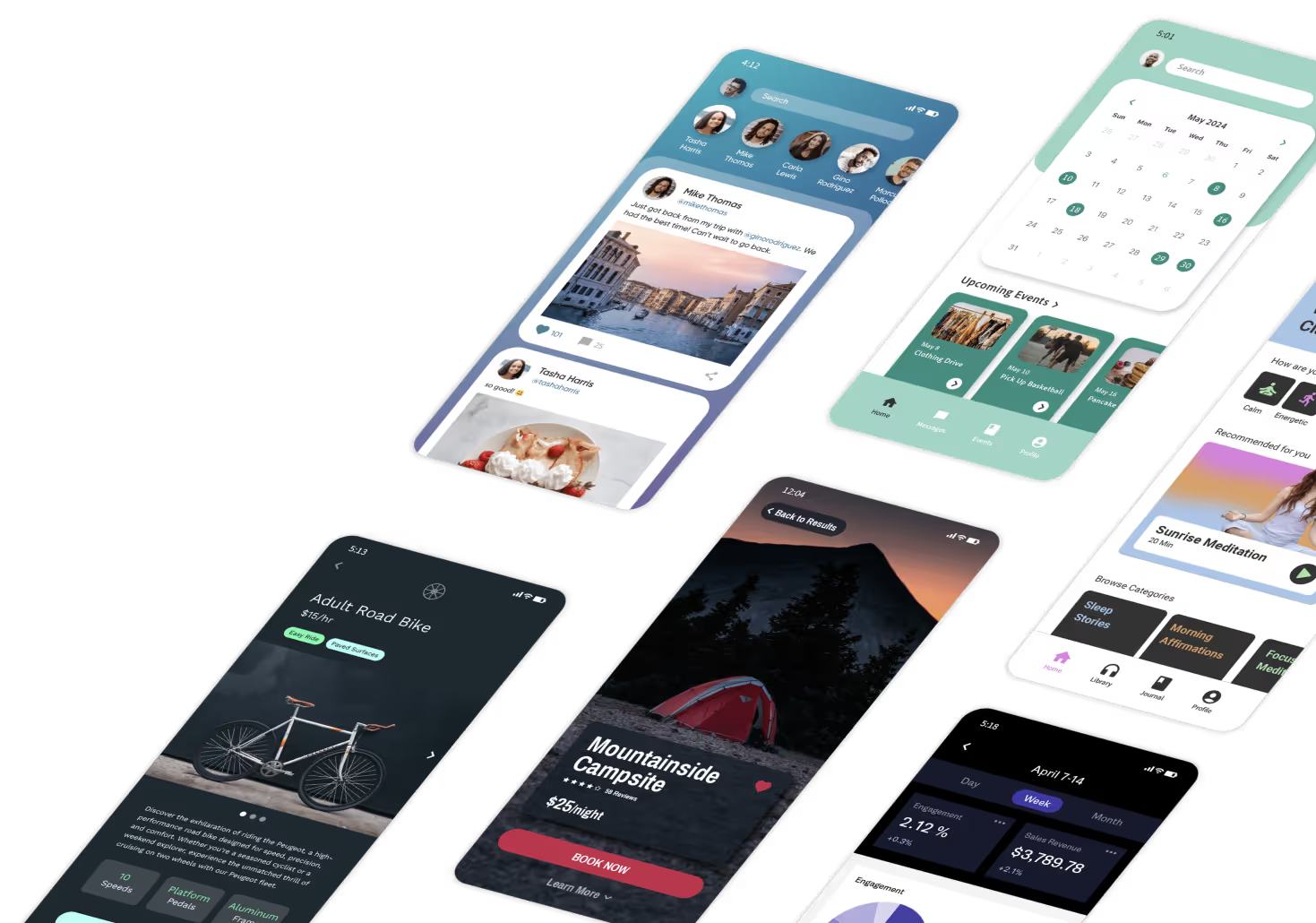
Social media marketing can be a game-changer for app growth—if you measure ROI effectively. For app creators using platforms like Adalo, a no-code app builder for database-driven web apps and native iOS and Android apps—one version across all three platforms, published to the Apple App Store and Google Play, understanding social media ROI becomes even more critical. When you can build and launch apps quickly without coding, having a solid strategy to measure marketing effectiveness ensures your promotional efforts match the speed of your development process.
- ROI Formula: Calculate ROI using
((Value Generated - Total Investment) / Total Investment) x 100. For example, spending $10,000 and earning $15,000 gives you a 50% ROI. - Why It's Important: Tracking ROI helps allocate budgets wisely, identify top-performing platforms, and justify marketing expenses. Apps can see $4+ in revenue for every $1 spent on social media.
- Platform ROI: LinkedIn leads with a 6.8:1 ROAS for B2B apps, while TikTok offers the highest conversion rate (2.14%) and low CPC ($1.80).
- Key Metrics: Focus on app installs, in-app purchases, and user engagement. Short-form video content and retargeting campaigns deliver high returns.
- Tools to Use: UTM parameters, tracking pixels, and platform analytics ensure accurate ROI measurement.
Bottom line: Social media ROI isn't just about numbers—it's about making informed decisions to grow your app effectively.
How You Can Measure the ROI of Social Media | WebFX
Key ROI Metrics from Social Media Marketing for Apps
ROI Statistics Across Social Media Platforms
On average, social media platforms deliver a return on ad spend (ROAS) of 4.2:1—that's $4.20 earned for every dollar spent. However, this figure varies widely depending on the platform.
LinkedIn takes the lead with a 6.8:1 ROAS, making it especially effective for B2B apps. Pinterest follows closely with a 6.2:1 return. TikTok, while slightly behind in ROAS at 5.1:1, boasts the highest conversion rate at 2.14%. Meanwhile, Facebook and Instagram, though popular with marketers, yield lower returns at 3.8:1 and 4.2:1, respectively. Interestingly, 28% of marketers still rank Facebook as the top platform for ROI, with Instagram favored by 22%.
| Platform | Average ROAS | Average CPC | Conversion Rate |
|---|---|---|---|
| 6.8:1 | $8.50 | 1.1% | |
| 6.2:1 | $1.90 | 2.31% | |
| TikTok | 5.1:1 | $1.80 | 2.14% |
| YouTube | 4.5:1 | $3.20 | 1.8% |
| 4.2:1 | $2.50 | 1.85% | |
| 3.8:1 | $2.85 | 1.62% |
While Facebook remains a go-to for many marketers, TikTok stands out as a cost-effective alternative with its lower cost-per-click (CPC) of $1.80 and higher conversion rate of 2.14%. These metrics highlight TikTok's growing appeal for app marketers looking to maximize their budget.
Social Media's Role in the App Marketing Funnel
These performance metrics reveal how social media supports every stage of the app marketing process. For instance, 28% of conversion assists come from awareness-focused content. This means the posts and videos users encounter early on play a crucial role in guiding them toward eventually installing your app.
Social media's influence doesn't stop at installs. 81% of shoppers make impulse purchases multiple times a year based on what they see on social platforms. For apps with in-app purchases, this behavior translates directly into revenue. While 13% of all consumers make in-app purchases, that figure jumps to 50% for Gen Z users. Additionally, 49% of consumers make purchases at least once a month due to influencer recommendations, showing how social media content directly drives app monetization.
"Social commerce not only provides more seamless buying experiences for customers but equips marketers with the ability to show direct attribution and ROI as a result of their efforts." - Rachael Samuels, Senior Manager of Social Media, Sprout Social
Given that 91% of social media ads are viewed on mobile devices, these platforms are uniquely positioned to promote app discovery. With users already on their phones, your app's message reaches an audience primed to download and engage. This mobile-first reality makes it essential to have your app available on official app stores—the Apple App Store and Google Play Store provide credibility and access to billions of potential users that web-only apps simply can't match.
Top Social Media Platforms for App Marketing ROI
This section dives into how leading social media platforms and emerging trends are shaping app install strategies, backed by ROI metrics.
Platform Performance Comparison for App Installs
When it comes to app marketing ROI, YouTube takes the lead. With over 2.5 billion users and advanced targeting capabilities, it's a favorite among marketers. Facebook follows closely, boasting a massive 3 billion monthly active users and highly effective audience-targeting tools.
"Facebook's algorithm is great at finding similar audiences who are likely to convert, which is why we see a positive return on investment going after these types of audiences." – Nicole Ondracek, Paid Advertising Senior Marketing Manager, HubSpot
Instagram also stands out with its visually driven platform and integrated shopping features. With over 2 billion monthly active users, 90% of whom follow at least one business, Instagram is a powerful tool for app marketers. Half of its audience reports increased interest in brands after seeing ads, further cementing its role in driving app installs.
Meanwhile, TikTok is rapidly growing, with over 1.5 billion users spending an average of 95 minutes daily on the app. Projections suggest it will reach 2.2 billion users by 2027, making it a must-have for app marketers aiming for high engagement and installs.
For B2B-focused strategies, platforms like LinkedIn play a critical role. Research shows that 22% of B2B marketers rank Facebook highest for ROI, while Instagram, TikTok, and YouTube each receive a 16% rating. However, LinkedIn outshines many others, with 70% of marketers trusting it to deliver positive ROI—more than double the 30% who hold the same confidence in X (formerly Twitter).
New Platforms and Trends Affecting ROI
As app marketing evolves, emerging trends and platform-specific strategies are reshaping how users move from discovery to conversion.
Short-form video has become a dominant force, with 71% of marketers identifying it as their top revenue driver. Platforms like TikTok and Instagram thrive in this space, with 67% of ad budgets now allocated to video content. Notably, 91% of these video ads are consumed on mobile devices, highlighting the importance of mobile-first strategies.
Case studies showcase the power of platform-specific strategies. For instance, in March 2026, Duolingo adopted a TikTok-first approach, using its mascot in bold, attention-grabbing content. This strategy earned the brand 5 million followers and increased app downloads by 30%. Similarly, Ryanair leveraged a low-budget but highly engaging TikTok campaign, gaining 2 million followers and boosting direct bookings by 15% in the same year.
Social commerce features are also transforming conversion paths. TikTok Shop, for example, achieves 40% higher conversion rates by streamlining the process from discovery to purchase. On Instagram, product tagging in Reels has shown a 67% increase in commerce conversions.
Finally, AI-powered optimization is revolutionizing app marketing. Currently, 85% of advertisers are using AI-driven bidding strategies, cutting cost per acquisition by an average of 18%. Dynamic ad personalization has increased click-through rates by 34%, while automated creative optimization delivered a 23% performance boost in 2026.
How to Measure and Improve ROI
How to Calculate ROI for Social Media Campaigns
Measuring ROI starts with a straightforward formula: ((Total Revenue - Total Investment) / Total Investment) × 100. For example, if you spend $10,000 on Facebook ads and generate $50,000 in revenue, your ROI would be 400%.
When dealing with non-monetary outcomes like app downloads, you'll need to assign a dollar value to each action. One way to do this is by using the average customer Lifetime Value (LTV) or comparable Pay-Per-Click (PPC) costs. For instance, if your average user generates $25 in lifetime revenue and a campaign brings in 1,000 new users, that translates to $25,000 in total value.
Be thorough when tallying costs—include ad spend, content creation, labor, and software subscriptions. Skipping these details can lead to inflated ROI figures. For reference, social media managers typically charge a median hourly rate of $51.
To track campaign performance accurately, use tools like UTM parameters and tracking pixels. Adding UTM tags to your social media links and implementing platform-specific tracking pixels (from Meta, TikTok, LinkedIn, etc.) helps you identify which posts, ads, or influencer partnerships bring in the most valuable users.
It's also helpful to compare your results against industry benchmarks. A 5:1 ROI ratio—earning $5 for every $1 spent—is generally considered strong. For example, e-commerce apps often achieve a Return on Ad Spend (ROAS) of around 12:1, while B2C campaigns typically hit 5:1. Yet, 34% of global marketers admit they don't know how to calculate their social media ROI.
Once you've nailed down accurate ROI numbers, the next step is improving your campaigns to maximize returns.
Tips for Improving App Marketing ROI
Refining your campaigns can lead to major gains. Start by testing different elements like ad copy, visuals, calls to action, and posting times. Even small boosts in click-through rates can significantly impact your bottom line.
Use data to zero in on high-converting audiences. One of the biggest sources of wasted ad spend is showing ads to people unlikely to download your app. By analyzing platform data, you can identify which demographics, interests, and behaviors are most likely to lead to installs—then tailor your campaigns accordingly.
Focus on short-form video content. Video ads often outperform static images in terms of engagement and reach. Platforms like TikTok and Instagram Reels are particularly effective, with short-form videos achieving engagement rates between 3% and 8%. This makes them a natural fit for app marketing.
Don't overlook retargeting campaigns. These allow you to reconnect with users who've already shown interest in your app, and they tend to convert at much higher rates than cold audiences.
Regularly track your key performance indicators (KPIs). Social media algorithms are constantly evolving, so what worked last quarter might not work today. Interestingly, only 30% of marketers effectively use data to measure social media ROI. Frequent reviews of your performance data can help you stay ahead of these changes.
"The goal is to think about how to generate the highest profit number in your business possible over whatever time period. So sometimes that's about savings, and sometimes it's about growth." – Andrew Faris, Ecommerce Expert
Building Apps That Convert Social Traffic
Driving social media traffic is only half the equation. The app itself needs to convert visitors into engaged users. This is where your choice of app builder directly impacts marketing ROI.
Why Native Apps Outperform for Social Campaigns
When users click through from a social media ad, they expect a seamless experience. Native apps—those built specifically for iOS and Android rather than wrapped web apps—deliver faster load times, smoother animations, and better integration with device features like push notifications and cameras.
This matters for ROI because app store presence builds credibility. Users who discover your app through social media are more likely to trust and download it when they see it listed in the Apple App Store or Google Play Store. Web-only apps miss this trust signal entirely, while wrapper-based solutions often suffer from performance issues that increase bounce rates.
Adalo's AI-assisted platform creates true native iOS and Android apps from a single codebase, publishing directly to both app stores. This means your social media campaigns can link directly to official app store listings—the gold standard for mobile app marketing.
Speed to Market and Iteration
Social media marketing rewards speed. Trends move fast, and the ability to launch campaigns quickly—then iterate based on performance data—separates successful app marketers from those who fall behind.
Traditional app development timelines of 3-6 months make rapid iteration impossible. By the time your app launches, the social media landscape has shifted. AI-powered app builders change this equation entirely.
Ada, Adalo's AI builder, lets you describe what you want and generates your app. Magic Start creates complete app foundations from a description, while Magic Add adds features through natural language.
With Adalo's Magic Start feature, you can generate complete app foundations from a simple description. Tell it you need a fitness tracking app with social sharing features, and it creates your database structure, screens, and user flows automatically. What used to take days of planning happens in minutes. Magic Add then lets you describe additional features in natural language—"add a leaderboard that shows weekly rankings"—and the platform builds them.
This speed advantage means you can launch your app, run social media campaigns, analyze the results, and ship improvements in the same timeframe competitors spend just on initial development. Over 3 million apps have been created on Adalo, with users describing the visual builder as "easy as PowerPoint."
Scalability When Campaigns Succeed
The best problem in app marketing is a campaign that works too well. Viral social media moments can drive thousands of downloads in hours. Your app infrastructure needs to handle this without crashing.
Adalo 3.0, launched in late 2025, completely overhauled the platform's backend infrastructure. Apps now run 3-4x faster, and the modular architecture scales automatically with demand—supporting apps with over 1 million monthly active users with no upper ceiling. Paid plans include no database record limits, eliminating the storage constraints that plague other platforms.
This matters for marketing ROI because nothing kills campaign momentum faster than an app that crashes under load. When your TikTok ad goes viral, you need infrastructure that scales with success rather than buckling under it.
Cost Considerations for App Marketing
Your app platform costs directly impact marketing ROI calculations. Every dollar spent on infrastructure is a dollar not spent on user acquisition.
Predictable Pricing vs. Usage Surprises
Some platforms charge based on usage metrics like database operations or API calls. This creates uncertainty—a successful marketing campaign that drives heavy app usage can trigger unexpected bills that eat into your ROI.
Adalo's pricing model eliminates this concern. All plans include unlimited usage with no usage-based charges, meaning no bill shock when your campaigns succeed. The platform starts at $36/month for web and true-native mobile apps with unlimited app store publishing and updates. Compare this to alternatives like Bubble, which starts at $59/month with usage-based Workload Unit charges and limits on app re-publishing, or Appypie at $99/month for comparable iOS publishing capabilities.
When calculating social media marketing ROI, predictable platform costs make budgeting straightforward. You know exactly what your infrastructure costs, so you can accurately measure the return on your ad spend.
The Hidden Cost of Complexity
Some platforms offer extensive customization but require technical expertise to use effectively. FlutterFlow, for example, is a low-code platform designed for technical users who must also set up and manage their own external database—a significant learning curve that often leads to hiring experts for scalability optimization.
This complexity has a real cost. Time spent wrestling with technical configuration is time not spent on marketing. Money spent on development consultants reduces your available ad budget. For most app creators, a platform that handles infrastructure complexity automatically delivers better marketing ROI than one that offers more customization but demands more expertise.
Conclusion: Using Social Media ROI to Grow Your App
Measuring social media ROI transforms marketing guesswork into a clear path for growth. Brands that prioritize social strategies see an average 10.2% year-over-year revenue growth. Yet, only 30% of marketers effectively leverage data to gauge their ROI, leaving a huge untapped opportunity.
The best way to secure marketing budgets isn't flashy campaigns or follower counts—it's delivering proof of ROI through solid data. When you can demonstrate how social media directly impacts app installs, user engagement, and revenue, the conversation shifts from justifying costs to showcasing value. This is especially important as social commerce is projected to hit $908 billion by 2026.
To make the most of these metrics, refine your strategy to turn insights into action. Focus on goals like lead generation and customer acquisition. Use tools like UTM parameters and tracking pixels to identify the platforms and content driving app downloads. A solid benchmark to aim for is a 5:1 ROI.
"Social media ROI doesn't have to be a mystery. With the right tools and reporting infrastructure, you can showcase your strategy's impact in a way that resonates with business leaders." – Sprout Social
The key is connecting your strategy to measurable success in app growth.
The most successful brands constantly test and adapt based on performance data. Track all expenses—labor, content production, software—and regularly review KPIs as algorithms and user behaviors evolve. With only 44% of marketing leaders considering their social teams proficient in measuring business impact, mastering ROI analysis gives you the tools to scale your app effectively.
Related Blog Posts
- 5 Steps to Monetize Your No-Code Mobile Application
- Why You Need The App Stores For Your App - Push Notifications!
- How To Create a New Social Media Platform or App
- How To Measure Influencer ROI For Apps
FAQ
Why choose Adalo over other app building solutions?
Adalo is an AI-powered app builder that creates true native iOS and Android apps from a single codebase. Unlike web wrappers, it compiles to native code and publishes directly to both the Apple App Store and Google Play Store—handling the hardest part of launching an app automatically. With unlimited database records on paid plans and no usage-based charges, you get predictable costs that make marketing ROI calculations straightforward.
What's the fastest way to build and publish an app to the App Store?
Adalo's drag-and-drop interface combined with AI-assisted building features like Magic Start lets you generate complete app foundations from simple descriptions. The platform handles the App Store submission process, so you can go from idea to published app in days rather than months—critical for capitalizing on social media marketing momentum.
What is a good social media ROI benchmark for app marketing?
A 5:1 ROI ratio—earning $5 for every $1 spent—is generally considered a strong benchmark for social media app marketing. On average, social media platforms deliver a return on ad spend (ROAS) of 4.2:1, though platforms like LinkedIn can reach 6.8:1 for B2B apps and TikTok offers the highest conversion rate at 2.14%.
Which social media platform has the best ROI for app installs?
LinkedIn leads with a 6.8:1 ROAS, making it ideal for B2B apps, while TikTok offers the highest conversion rate at 2.14% with a low CPC of $1.80. YouTube's 2.5 billion users and advanced targeting make it a top choice for many app marketers, and Pinterest delivers a strong 6.2:1 return.
How do I calculate ROI for my app's social media campaigns?
Use the formula: ((Total Revenue - Total Investment) / Total Investment) × 100. For non-monetary outcomes like app downloads, assign a dollar value using your average customer Lifetime Value (LTV). Include all costs—ad spend, content creation, labor, platform subscriptions—for accurate calculations.
What content type delivers the best ROI for app marketing?
Short-form video content is the top revenue driver, with 71% of marketers identifying it as most effective. Video ads on platforms like TikTok and Instagram Reels achieve engagement rates between 3% and 8%, and 91% of social media ads are viewed on mobile devices—making video content ideal for promoting app installs.
How much does it cost to build an app for social media marketing?
Adalo starts at $36/month for web and native mobile apps with unlimited app store publishing and updates. This compares favorably to Bubble at $59/month with usage-based charges, or Appypie at $99/month for iOS publishing. Predictable pricing makes it easier to calculate true marketing ROI.
Can my app handle viral social media traffic?
Adalo 3.0's modular infrastructure scales automatically with demand, supporting apps with over 1 million monthly active users. Apps run 3-4x faster than before, and paid plans include no data caps—so when your campaign goes viral, your app scales with success rather than crashing under load.
Do I need coding experience to build an app for social media marketing?
No. Adalo's visual builder is described as "easy as PowerPoint," and AI features like Magic Start generate complete app foundations from descriptions. Over 3 million apps have been created on the platform by users without coding backgrounds.
Why does app store presence matter for social media marketing ROI?
Users who discover your app through social media are more likely to trust and download it when they see it listed in the Apple App Store or Google Play Store. This credibility signal increases conversion rates from your ad spend. Web-only apps miss this trust factor entirely.