Push notifications can make or break your app's user engagement. With users receiving 40–56 notifications daily, poorly crafted messages risk being ignored, silenced, or worse - causing app uninstalls. But when done right, push notifications can increase engagement by up to 191% and outperform email marketing with a 20% average open rate compared to email's 2%.
Here's the key: success hinges on timing, personalization, and rich media. Notifications should be sent when users are most likely to engage, tailored to their behavior, and visually appealing with images or action buttons. For example, KFC India saw a 22% boost in daily orders by sending timely reminders, while a Paris-based grocer increased total orders by 43% using personalized messages.
Platforms like Adalo, a no-code app builder for database-driven web apps and native iOS and Android apps—one version across all three platforms, published to the Apple App Store and Google Play, simplify this process by offering built-in notification tools, while custom systems provide advanced capabilities like AI-driven timing and deep personalization. Choosing the right approach depends on your app's goals and technical needs, but the focus should always be on delivering value, not noise.
Mastering Push Notifications: Best Practices for App & Web Users
1. Adalo
Adalo's app builder comes with built-in push notification support, streamlining how developers connect with users. It handles everything - authentication, delivery, and compatibility across platforms - so you can focus on creating meaningful interactions.
Value Delivery
Push notifications cut through the noise of email inboxes, boasting an impressive 20% average open rate compared to email's meager 2%. When used effectively, they can supercharge engagement by as much as 191%.
Take KFC India, for example. Their "Bucket It" gamified campaign sent daily reminders to users who hadn’t claimed rewards in the past three days. The result? A 22% jump in average daily orders and a 23% boost in daily revenue per store. These notifications served as timely nudges, reminding users of the rewards they were missing.
Similarly, mon-marche.fr, a Paris-based online grocer, used personalized reminders for regular orders - weekly, bi-weekly, or monthly. This simple yet effective strategy led to a 21% push open rate and a 43% increase in total orders. These notifications became helpful prompts for busy customers to stick to their shopping routines.
Timing
When you send a notification can be just as important as what it says. With features like Focus Modes and grouped notification summaries becoming the norm, poorly timed alerts risk being silenced or ignored. In North America, peak engagement happens between 6–9 PM on weekdays and 4–5 PM on weekends, while in the Asia Pacific region, it’s between 7 AM and 1 PM.
But broad time slots alone won’t cut it. Beblue, a fintech app, nailed the timing by sending cashback reminders and local merchant offers when users were most likely to be shopping. This smart, behavior-driven approach resulted in a 96% surge in daily active users (DAU).
The key is event-triggered notifications. Instead of blasting everyone at once, send alerts when users abandon a cart, complete a milestone, or finish onboarding. Transactional messages like "Your order has arrived" should go out immediately, while promotional notifications are better timed for when users are likely to have downtime. Perfect timing naturally ties into the next critical factor: personalization.
Personalization
Timing might get your notification seen, but personalization makes it matter. A simple first name isn’t enough - true personalization uses behavioral data, lifecycle stage, and intent signals to craft notifications that feel relevant.
For instance, Aha, a regional OTT platform, segmented users by language preferences and viewing habits. They sent rich media notifications tailored to each user’s interests, resulting in a 5x increase in engagement and 1,000 new subscribers within 24 hours of a major release. By highlighting specific shows and movies aligned with individual viewing histories, they kept users coming back.
"Notifications are often added as a way to 'increase engagement', but unless the notifications are directly linked to a person's goals or needs, they become annoying and lead to notification fatigue."
- Kelli Lucas, Chief Design Officer, LunarLab
Adalo makes personalization seamless by integrating with tools like Airtable, Google Sheets, MS SQL Server, and PostgreSQL. This allows you to pull real-time user data and trigger notifications based on specific actions. For example, you can send tailored messages to new users, re-engage inactive ones, or reward high-value customers.
Rich Media Integration
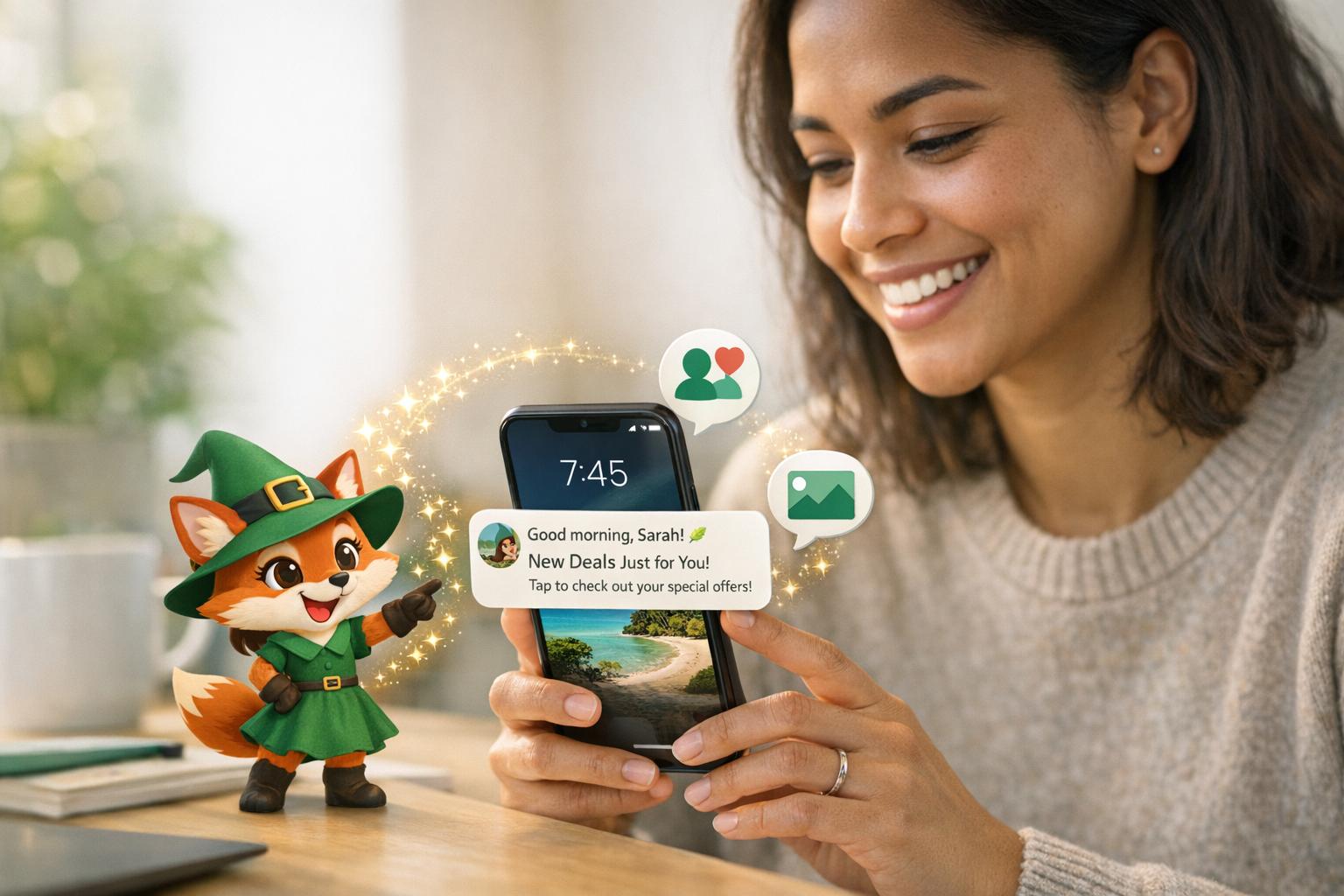
When paired with smart timing and personalization, rich media can make your notifications stand out even more. Adding images, emojis, or interactive buttons boosts engagement significantly. For example, NASCAR used web push notifications with rich visuals to share live race updates and promote app downloads, achieving a 13.5% open rate for content messages and a 9.6% open rate for app prompts.
Visuals provide instant context. A product image for an abandoned cart, a progress bar for a fitness goal, or a thumbnail for new video content can make users more likely to engage.
Thanks to Adalo's single-codebase system, you can design rich media notifications once and deploy them across web, iOS, and Android without extra work. Updates are reflected instantly across all platforms, so you can quickly adapt based on what’s working.
2. Alternative Design Approaches
When teams step outside integrated platforms, they often turn to custom notification systems or specialized messaging services. While these setups offer more control, the fundamentals of timing, personalization, and rich media remain essential. Building such systems comes with its own set of technical challenges, requiring a thoughtful approach to every design detail.
Timing
Getting the timing right is a game-changer for engagement. Notifications perform best when they're sent based on users' past behavior. For instance, a food delivery app might see better results sending lunch deals in the morning rather than right at noon, when users may have already settled their plans.
To prevent overwhelming users, consider frequency capping - sending notifications every 2–3 days. This is critical, as studies show that 81% of users adjust app settings or silence notifications if they feel bombarded.
"A useful message delivered at the wrong moment still feels like noise. The goal isn't speed, it's readiness." - Stuart Hall, Co-CEO, Appbot
Timing also depends on industry-specific trends. For example:
- Mobile push click-through rates tend to peak on Mondays and drop on Thursdays.
- News apps see the most engagement around 7 AM and 11 AM.
- Transportation apps perform best on Sundays.
Fine-tuned timing strategies set the stage for personalized experiences.
Personalization
Custom notification systems thrive on personalization. Using tools like behavioral triggers, RFM segmentation, and zero-party data can make a huge difference. For example:
- Interest-based segmentation in e-commerce can boost open rates by 10x.
- Location-based targeting in news apps can increase click-through rates by 15x.
"Personalization is absolutely crucial for a successful mobile push notification strategy. It's about making your messages feel relevant and valuable to each user. Without personalization, your notifications are just noise in the background." - Polina Rebeka, Content Marketing Writer, Pushwoosh
Deep linking is another must-have. Instead of taking users to the app's home screen, notifications should guide them directly to the relevant product or content. Offering users control over the types of notifications they receive - like category-level preferences - can also build trust while keeping engagement high.
Pair personalized messaging with visuals for even greater impact.
Rich Media Integration
Adding visuals like images, GIFs, or videos can increase open rates by 25%. However, keep in mind that file size and aspect ratios vary between platforms, so adjustments may be necessary.
Action buttons make notifications more interactive and actionable. Options like "Yes, I'm attending" or "Add to cart" can encourage users to respond instantly. Including visual cues - such as a product image for an abandoned cart or a progress bar for a fitness goal - adds context and drives quicker decisions.
Advantages and Disadvantages

Adalo vs Custom Push Notification Systems: Feature Comparison
Let’s take a closer look at the strengths and limitations of different notification systems, building on the design strategies mentioned earlier.
Every push notification setup has its pros and cons. Platforms like Adalo shine when it comes to speed and simplicity. These integrated systems allow teams to quickly implement notifications without dealing with complicated SDKs or APIs. Notifications work right out of the box, making this approach perfect for entrepreneurs launching MVPs or agencies working under tight deadlines. However, the trade-off is limited personalization. Most of these systems stick to basic options, like including a user’s name, rather than tapping into deeper behavioral triggers.
On the other hand, custom systems unlock powerful features but come with a steeper technical learning curve. They can bypass Android’s battery optimization - which can block up to 40% of notifications - and support advanced personalization. This includes using historical data and incorporating interactive elements like rich media.
Timing and delivery are also key differentiators. Adalo keeps things simple, allowing notifications to be scheduled manually or triggered by database events - great for transactional updates like shipping confirmations. In contrast, custom solutions often integrate AI to optimize send times, ensuring messages land when users are most likely to engage.
Here’s a breakdown of how these two approaches compare:
| Feature | Adalo | Custom/Advanced Systems |
|---|---|---|
| Setup Speed | Quick; no SDK needed | Moderate; requires API/SDK setup |
| Personalization | Basic (e.g., user names) | Advanced (behavioral data, AI-driven) |
| Media Support | Static images and text | Rich media (GIFs, carousels, videos, action buttons) |
| Delivery Optimization | Standard OS protocols | Advanced (bypasses battery restrictions) |
| Timing | Manual or time-zone based | AI-optimized send times |
| Cost | Included in platform pricing | Additional costs may apply |
This comparison helps pinpoint which solution aligns best with your project’s goals and technical resources.
Conclusion
Deciding on the right push notification strategy boils down to aligning your technical capabilities with your app's objectives. If speed is your priority - whether for an MVP, a client project, or an internal tool - platforms like Adalo provide a straightforward solution. From day one, you can send functional notifications across web, iOS, and Android, perfect for transactional updates like order confirmations or account alerts. This simplicity gets you to market faster, without the need for complex setups, making it a practical choice when timing is critical.
For apps that demand advanced engagement strategies, custom systems unlock powerful features. With tools like advanced segmentation, behavioral triggers, and AI-driven timing, you can create highly targeted notifications that resonate with individual users. These systems also leverage historical data to refine personalization, ensuring notifications align with user behavior and preferences.
Starting with a basic system now often beats waiting for the "perfect" custom solution. Personalization and advanced features can always be layered in over time. Consider this: 70% of users find push notifications helpful, and 40% engage with them within an hour. A quick launch allows you to gather real-world feedback and refine your strategy as you go, using platform-specific performance data to optimize results.
Platform differences also play a big role. Android's opt-in rate sits at 81%, compared to iOS's 51%. Plus, Android notifications stay visible until dismissed, while iOS clears them more quickly. These nuances mean your strategy should adapt to each platform's unique behavior. Testing and validating your approach on both systems before scaling up is critical to long-term success.
Ultimately, the best notifications are the ones that provide genuine value. Whether you’re using an integrated platform or a custom-built system, the focus should always be on relevance, not frequency. As UX designer Anmol Sirkeck wisely points out:
"A well-designed notification isn't just about sending a message. It's about creating meaningful interactions that users actually appreciate".
Every notification is an opportunity to build engagement - make it count.
Related Blog Posts
- Why You Need The App Stores For Your App - Push Notifications!
- How To Create a Gift Remembering And Prompting App
- How To Create a Content Scheduling App
- How Personalization Improves App Engagement
FAQs
What is the best time to send push notifications to boost engagement?
Timing is everything when it comes to push notifications. Reaching users during moments when they’re most likely to interact - like early morning, lunchtime, or early evening - can dramatically boost open rates and engagement. These periods often coincide with natural pauses in their daily routines, making them more open to receiving messages.
To get the timing just right, study your audience’s behavior patterns and experiment with different schedules. By aligning your notifications with their habits, you can ensure your message pops up at the perfect moment to grab their attention.
How does personalization improve user engagement with push notifications?
Personalization plays a key role in capturing user attention by crafting push notifications that align with individual interests, actions, and situations. When messages feel relevant and arrive at the right moment, users are far more likely to engage, rather than swiping them away or ignoring them entirely.
With tools like user segmentation and behavior tracking, you can design messages tailored to specific groups or even individuals. Including features such as tailored content, rich media, or deep links can take this a step further, making notifications not just appealing but also actionable. Thoughtful personalization doesn’t just boost interaction rates - it strengthens the connection with your audience, turning notifications into a powerful tool for meaningful communication.
Why is using rich media in push notifications important for user engagement?
Rich media is a game-changer for push notifications, transforming them from simple alerts into eye-catching and interactive experiences. By adding elements like images, videos, or interactive buttons, these notifications stand out visually, grabbing attention in ways plain text simply can’t.
What’s more, rich media allows for a personal touch. Tailoring messages with visuals or interactive elements that resonate with the user makes the notification feel more relevant. This not only boosts the chances of engagement but also creates a more enjoyable experience, helping to build a stronger bond between users and your app.