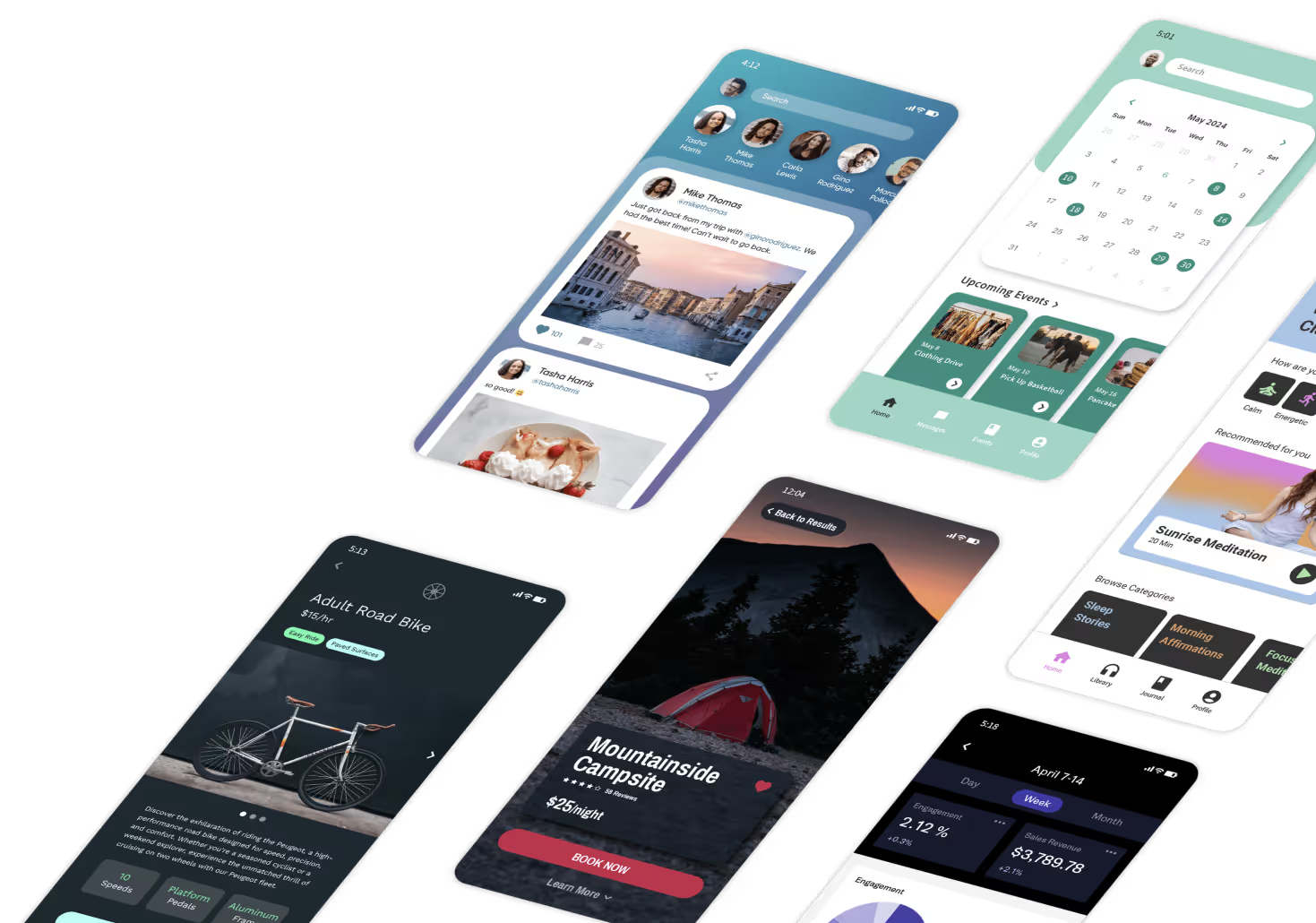
Why Adalo Works for Building Appointment Apps
Adalo is a no-code app builder for database-driven web apps and native iOS and Android apps—one version across all three platforms, published to the Apple App Store and Google Play. This makes it the perfect foundation for appointment apps, where managing client data, availability calendars, and booking records requires robust database functionality across every device your users prefer.
Having your appointment app in the app stores means clients can download it directly to their phones, receive push notifications for booking confirmations and reminders, and access their schedules anytime. This native experience builds trust with clients and keeps your business top-of-mind—while you maintain full control over your scheduling system without writing a single line of code.
Building an appointment app no longer requires months of coding or a hefty budget. With Adalo, an AI-powered app builder, you can create a fully functional booking system tailored to your needs—no coding required. Here's what you'll achieve:
- Simplified Scheduling: Manage bookings, avoid double bookings, and send automated reminders to reduce no-shows by up to 50%.
- Customizable Features: Build user-friendly screens for clients to book services and providers to manage schedules.
- Effortless Payments: Integrate Stripe for secure payment processing.
- Cross-Platform Deployment: Design your app once and launch it on web, iOS, and Android without rebuilding for each platform.
This guide walks you through every step, from setting up your Adalo account to publishing your app. Whether you're a solo consultant or managing a multi-location business, you'll have a professional-grade app ready to go.

5-Step Process to Build an Appointment App with Adalo
Why Adalo Works for Building Appointment Apps
Adalo creates database-driven web apps and native iOS and Android apps—one version across all three platforms, published directly to the Apple App Store and Google Play. This makes it the ideal solution for appointment apps that need to store client information, manage booking schedules, and sync data in real-time across devices.
Having your appointment app available in both app stores gives your business professional credibility while enabling push notifications for appointment reminders. These automated alerts can dramatically reduce no-shows and keep your clients engaged, turning a simple booking tool into a powerful business asset. With unlimited database records on paid plans and no usage-based charges, your booking system can scale from your first client to thousands without hitting artificial limits or surprise bills.
How to Make a Booking App in Adalo
Step 1: Create Your Adalo Account and Start a New Project
Head over to adalo.com and sign up by entering your name, email, and password. Once you're in, click on "Create New App". Decide whether you want to build a Mobile or Web app, give your project a name, and you're ready to get started. From there, you can tweak the basic settings to match your goals.
You'll have the option to pick a template for a quicker start or build everything from scratch for complete flexibility. Adalo's pre-built templates are especially handy for common use cases like spa appointments, fitness bookings, or restaurant reservations. These templates come with features like login screens, user profiles, booking forms, and rescheduling options, along with pre-configured databases and relationships.
Ada, Adalo's AI builder, lets you describe what you want and generates your app. Magic Start creates complete app foundations from a description, while Magic Add adds features through natural language.
If you're new to the platform, templates can save you a ton of time by handling the foundational setup, letting you jump straight into personalizing the app. For those who need something highly customized, starting from scratch gives you full control. Magic Start offers a middle ground—describe your appointment app concept, and it generates a complete foundation with database structure, screens, and user flows automatically. What used to take days of planning happens in minutes.
Set Up Basic App Settings
Once your project is launched, it's time to adjust the core settings. Open the Settings tab in the left-hand toolbar. Here, you can rename your app, upload a custom icon, and choose branding colors and fonts. These changes will automatically update across all components of your app, keeping everything consistent.
If you're building for a U.S. audience, make sure to tailor the settings to local preferences. For example, set the Calendar component to display time in a 12-hour format (AM/PM), and use the MM/DD/YYYY date format. For payments, format currency as $1,234.56 by integrating Stripe. Additionally, add a "Time Zone" property to your Users collection. This ensures bookings are accurate across regions, meeting the expectations of users in different time zones.
Step 2: Build Your App Database
Your app's database is where all its data is stored and organized. In Adalo, this data is structured into Collections, which are like tables, and each collection is made up of Properties—individual data points like names, dates, or prices. For an appointment app, you'll need four key collections: Users, Appointments, Services, and Availability. Here's how to set them up.
To get started, click the Database icon in the left toolbar. This is where you'll create and manage your collections. Every Adalo app already includes a Users collection, so begin by adding properties to it: User Type (to distinguish between providers and clients), Full Name, Phone, and Time Zone. With no record limits on paid plans, you can store as many user profiles, appointments, and service records as your business requires.
Create Collections and Properties
-
Services Collection
Click Add Collection to create the Services collection. This will hold the details of the services clients can book. Add the following properties:- Service Name (text)
- Description (text)
- Duration (number, stored in minutes for scheduling calculations)
- Price (number, formatted in U.S. currency, e.g., $1,234.56)
-
Appointments Collection
Create the Appointments collection to track booking details. Include these properties:- Start Time (Date & Time)
- End Time (Date & Time)
- Status (text, with options like "Pending", "Confirmed", or "Cancelled")
- Total Cost (number)
- Booked (True/False field to mark whether a time slot is taken)
-
Availability Collection
Finally, set up the Availability collection to manage providers' working hours. Add these properties:- Day of Week (text)
- Start Time (text, e.g., "9:00 AM")
- End Time (text)
- Is Blocked (True/False field to indicate unavailable times)
Connect Collections with Relationships
To make your app dynamic, you'll need to link these collections so data flows seamlessly. Start with the Users collection:
- Add two relationships to the Appointments collection: one for Appointments as Provider and another for Appointments as Client. This allows a single user to act as both a service provider and a client if needed.
Next, link the Services collection:
- Create a "Many-to-One" relationship between Services and Users, meaning a single provider can offer multiple services.
- Connect Services to Appointments so that when a booking is made, the app automatically pulls in the correct service details, like duration and price.
Finally, link the Availability collection:
- Connect it to Users, so each provider's working hours are stored individually.
With the right data relationship setups, Adalo apps can scale beyond 1 million monthly active users. The platform's modular infrastructure grows with your business, so you won't need to rebuild your database architecture as your appointment volume increases.
Step 3: Design User Screens
To create an intuitive booking experience, design user screens that let clients browse services, pick time slots, and confirm their bookings. These screens should be simple, fast, and optimized for mobile use. You'll focus on two main flows: one for exploring and selecting services, and another for completing the booking process. Begin by setting up service listings and booking forms to ensure everything runs smoothly.
Build a Service List and Availability Calendar
Start by adding a new screen called Services using Adalo's Add Screen button in the left toolbar. This screen will showcase all available services. From the Marketplace, add a List component and connect it to your Services collection. Display key details like the Service Name, Duration (e.g., "30 minutes" or "1 hour"), Price (formatted in U.S. dollars, such as $45.00 or $120.00), and a short Description.
To make navigation easier, include a Search Bar with a placeholder like "Search for services..." or a Dropdown filter to sort by categories (e.g., "Haircut", "Coloring", "Quick Trim" for a salon app). Magic Add can help here—describe the feature you want, like "add a search bar that filters services by name and category," and the AI generates the component with proper configuration.
When a user selects a service, link them to an Availability Calendar screen. Here, they'll see either a calendar or a list of available time slots filtered by the chosen service. Configure the calendar to display only future slots and use conditional visibility to hide booked slots. For instance, when a slot's Booked property is marked as True, it should no longer appear. This setup ensures real-time accuracy and prevents double-bookings.
Once a client picks a time slot, they'll move on to finalize their booking.
Create a Booking Form and Confirmation Screen
After selecting a time slot, users will be directed to the Booking Form screen. This page should display all the essential details: provider information, the chosen service (including duration and price), and the selected date and time. Add a Text Input field for users to include special notes or requests. At the bottom, include a prominent Book Appointment button. Configure this button to mark the slot as booked and then redirect users to the Confirmation Screen.
On the Confirmation Screen, provide a clear success message or icon at the top. Follow this with a summary of the appointment details, including the provider's name, service type, date and time, duration, and total cost. To enhance the user experience, include an Add to Calendar button that generates an .ics file for easy calendar integration. Also, add a Back to Home button for a smooth return to the main screen.
For an extra layer of convenience, consider integrating Zapier to send an automatic confirmation email with all the booking details. This not only reassures clients that their appointment is secured but also helps reduce no-shows.
Step 4: Build a Provider Dashboard
Once client bookings are enabled, it's crucial to equip providers with tools to manage their schedules effectively. A provider dashboard is the perfect solution, offering features to handle bookings, update statuses, and send reminders. Let's dive into how you can create a dashboard with screens for viewing schedules, approving appointments, and setting up notifications.
Add Appointment Management Features
Start by designing a Provider Dashboard screen. Use the Calendar View component from the Adalo Marketplace and link it to your Appointments collection. Filter the appointments to show only those where Provider = Logged In User. Configure the calendar to display key details like Start Time, Client Name, and Status for each appointment.
Below the calendar, include an Upcoming Appointments List using a standard List component. Filter the list to show appointments where Provider = Logged In User, Status = "Confirmed", and Start Time > Current Time. Sort the list by Start Time in ascending order so the next appointment is always at the top. Display essential details such as the client's name, meeting type, time (formatted as MM/DD/YYYY h:mm AM/PM for U.S. users), and duration in minutes.
Add quick-action buttons like Set Availability, Meeting Types, and Share Booking Link to streamline common tasks. The visual builder has been described as "as easy as PowerPoint," making it straightforward to arrange these elements exactly how you want them.
Next, create an Appointment Details screen that providers can access by selecting an appointment from the list or calendar. This screen should show complete appointment information, including a color-coded status, date/time, provider and client details, meeting type, duration, notes, meeting link, and location.
For appointments with Status = "Pending", include buttons for:
- Approve (updates Status to "Confirmed")
- Reject (updates Status to "Cancelled" and prompts for a cancellation reason)
- Reschedule (allows editing of Start Time and End Time)
These buttons should only appear when relevant to keep the interface clean and intuitive.
Ensure your Appointments collection includes fields such as unique IDs, titles, descriptions, date/time details, duration, status, meeting link, location, cancellation reason, and a reminder flag. Link this collection to both the Provider and Client collections for seamless integration with future calendar sync and notification features.
Set Up Calendar Sync and Notifications
To make scheduling even easier, integrate external calendars and set up automated reminders.
For better organization, sync Adalo appointments with external calendars like Google Calendar, Apple Calendar, or Outlook. Use Zapier to automate this process. Set a Zap trigger for new or updated appointments where Status = "Confirmed", and configure the action to Create Event in your preferred calendar service.
Pull in details like the appointment's Title, Start Time, End Time, and Location using Adalo's data fields. On the Appointment Details screen, add an Add to Calendar button that generates a downloadable .ics file using a service like Agical.io. Use Adalo's Magic Text to populate event details such as the subject, start time, and end time, ensuring the date format is set to No Formatting for compatibility.
For notifications, configure Adalo to send push alerts for booking and cancellation updates. Use Zapier to send email reminders to clients 24 hours and 1 hour before their appointments. Include a Reminder Sent flag in your workflow to prevent duplicate emails.
Set the trigger as Appointment Confirmed (filtered by Status = "Confirmed") and the action as Send Email via Gmail or Outlook. Customize the email subject line to something like "Appointment Confirmed: [Meeting Type] with [Provider Name]", and include all necessary details formatted in U.S. date and time conventions (MM/DD/YYYY h:mm AM/PM).
Before launching, thoroughly test the dashboard. Log in as a provider and create a test appointment with Status = "Pending". Verify that it appears correctly on the filtered calendar and list. Approve the appointment and check that the status updates, the client receives the appropriate email or push notification, and the event syncs to the external calendar. Test rejecting and rescheduling appointments, and simulate reminders at the 24-hour and 1-hour intervals. Finally, ensure the dashboard works smoothly on both mobile and desktop platforms for a consistent user experience.
Step 5: Add Payments and Launch Your App
Once your provider dashboard and booking system are set up, it's time to integrate payment processing and get your app live across platforms.
Connect Payment Systems
To ensure a smooth transaction process, integrate a payment system that collects fees or deposits before confirming appointments. Adalo uses Stripe as its primary payment processor, offering a simple setup with rates of 2.9% + $0.30 per transaction.
Here's how to get started:
- Go to the Adalo Marketplace and install the Stripe Kit.
- Drag the Stripe Payment component onto your booking confirmation screen.
- Click Connect with Stripe and enter your Stripe API credentials (Publishable Key and Secret Key), which are available in your Stripe Dashboard.
- Enable Test Mode and use Stripe Test Keys to simulate transactions. Verify the payment process by using Stripe's test card.
Link the payment amount to the Price property in your Services collection. Display prices using U.S. formatting (e.g., $99.99 or $1,234.56). Set the currency to "usd" and pull the customer's email from their user profile. Add an action to the payment button that updates the appointment's Status field from "Pending" to "Confirmed" only after the payment is successfully processed. This ensures that appointments are confirmed only after payment completion.
On the confirmation screen, include a success message such as "Payment of $75.00 confirmed!" along with appointment details. Add buttons like Add to Calendar (to generate a downloadable .ics file) and View Receipt (linking to the Stripe session). Set up receipt email notifications in the Stripe component settings so customers receive confirmations and are easily identifiable in your Stripe Dashboard.
Once you've confirmed that payments are flowing correctly, move on to testing and publishing.
Test and Publish Your App
Before launching your app, thorough testing is essential. Run at least 10 test bookings using Stripe's test mode to confirm the entire process: from service selection and payment to confirmation emails sent via Zapier, and appointments appearing correctly on the provider's dashboard with calendar sync enabled.
Test edge scenarios like failed payments (use Stripe's test card 4000 0000 0000 0002 to simulate declines), cancellations with refunds processed in the Stripe Dashboard, and appointments scheduled across different U.S. time zones (PST, EST, CST). Double-check that all text, prices, and dates display in U.S. formats, and verify that notifications are triggered as expected.
X-Ray, Adalo's performance analysis tool, can help identify potential issues before they affect users. Run it before publishing to catch any database queries or component configurations that might slow down your app under load.
When you're ready to go live, Adalo makes publishing straightforward:
- For web apps, click the Publish button in the left toolbar, select Web App, and customize your domain and branding. Your web app will deploy instantly.
- For iOS and Android, go to the Publish tab, input your app store credentials, upload the required assets, and submit for review. You'll need an Apple Developer account ($99/year) and a Google Play Console account ($25 one-time fee). Apple typically approves apps within 24–48 hours, while Google Play reviews may take a few hours to a few days. For iOS, consider using TestFlight to beta test with up to 10,000 external users before your full launch.
Unlike platforms that create web wrappers, Adalo compiles to true native code for iOS and Android. This means faster performance, better App Store approval rates, and access to native device features like push notifications—critical for appointment reminders that actually get seen.
When deploying, make sure to disable Test Mode and switch to your live Stripe API keys. Use Adalo's analytics dashboard to monitor performance metrics like daily visitors, downloads, user engagement time, and geographic data. Keep an eye on your Stripe Dashboard to track transactions and resolve any potential payment issues.
Once testing is complete and everything is running smoothly, you're ready to move forward and finalize your app launch.
Conclusion
This guide walked you through creating an appointment app using Adalo, covering everything from setting up your account to designing your database, configuring screens, building a provider dashboard, integrating Stripe payments, and publishing your app across platforms. Whether you're managing a salon, offering consulting services, or running fitness classes, this process allows you to tailor the app to meet your specific business needs.
One of the platform's standout features is its ability to streamline development with a single-build approach. You design your app once, and it deploys effortlessly across a custom web domain, the Apple App Store, and the Google Play Store—all from the same project. Built-in analytics help you track key metrics like daily visitors, session times, and user locations, giving you the insights needed to make informed decisions as your app evolves. Plus, with version history (up to 10 versions), you can easily update and refine your app without starting from scratch.
Adalo's templates and marketplace components make customization straightforward. Pre-loaded collections and marketplace tools allow you to quickly adjust both the interface and functionality. Features like Stripe integration, Zapier connections for automated reminders, and calendar syncing turn a basic scheduler into a robust booking system, minimizing no-shows and simplifying operations.
The platform's reliability supports production-ready applications. With 99%+ uptime and over 3 million apps created on the platform, the infrastructure handles real business demands. As your business grows, the app can scale right along with it—the modular architecture supports apps serving over a million monthly active users. Whether you're adding new services, expanding to multiple locations, or incorporating advanced features, your appointment app can grow from initial test bookings to full-scale operations without hitting artificial limits.
Now that your app is live, keep an eye on your Stripe transactions and Adalo analytics. Use this data to fine-tune your booking flow and gather valuable feedback to enhance your app's performance over time.
Related Blog Posts
- How To Create The Digital Calendar App You Need for iPhone and iOS
- How To Create a Content Scheduling App
- How to Create a Barber Booking App
- How to Create a Hair Salon Booking App
FAQ
Why choose Adalo over other app building solutions?
Adalo is an AI-powered app builder that creates true native iOS and Android apps. Unlike web wrappers, it compiles to native code and publishes directly to both the Apple App Store and Google Play Store from a single codebase—the hardest part of launching an app handled automatically. With unlimited database records on paid plans and no usage-based charges, you won't face surprise bills as your appointment volume grows.
What's the fastest way to build and publish an app to the App Store?
Adalo's drag-and-drop interface, combined with AI-assisted building features like Magic Start and Magic Add, lets you create a complete appointment app in days rather than months. The platform handles the entire App Store submission process for both iOS and Android, removing the technical barriers that typically slow down app launches.
Can I easily build an appointment booking app without coding?
Yes, Adalo provides pre-built templates, drag-and-drop components, and database tools that let you create service listings, availability calendars, booking forms, and provider dashboards without writing code. Magic Start can generate your entire app foundation from a simple description of what you need.
How does Adalo help reduce appointment no-shows?
Adalo enables push notifications for appointment reminders directly through your native iOS and Android apps, which can dramatically reduce no-shows. You can also integrate Zapier to send automated email reminders 24 hours and 1 hour before appointments, keeping clients engaged and informed.
Can I accept payments through my appointment app built with Adalo?
Yes, Adalo integrates seamlessly with Stripe for secure payment processing. You can collect fees or deposits before confirming appointments, display prices in U.S. currency formatting, and automatically update appointment status to "Confirmed" only after successful payment completion.
What database structure do I need for an appointment app in Adalo?
Your appointment app requires four key collections: Users (for providers and clients), Services (with name, duration, and price), Appointments (with start/end times, status, and booking flags), and Availability (for provider working hours). Adalo lets you easily link these collections with relationships to create a dynamic, real-time booking system.
Can I sync appointments with external calendars like Google Calendar?
Yes, you can sync Adalo appointments with Google Calendar, Apple Calendar, or Outlook using Zapier integrations. You can also add an "Add to Calendar" button that generates downloadable .ics files, making it easy for both providers and clients to keep track of scheduled appointments.
How long does it take to build an appointment app with Adalo?
With templates and AI-assisted features, you can have a functional appointment app ready in a few days. Magic Start generates your database structure and screens from a description, while Magic Add helps you quickly implement specific features. Most users can go from idea to published app in under a week.
How much does it cost to build an appointment app with Adalo?
Adalo's paid plans start at $36/month, which includes unlimited database records, unlimited usage, and the ability to publish to both the Apple App Store and Google Play Store. There are no usage-based charges or record limits that could cause unexpected costs as your booking volume grows.
Can my appointment app scale as my business grows?
Yes, Adalo's modular infrastructure scales to support apps with over 1 million monthly active users. With unlimited database records and no usage caps on paid plans, your appointment app can grow from your first client to thousands without hitting artificial limits or requiring a rebuild.