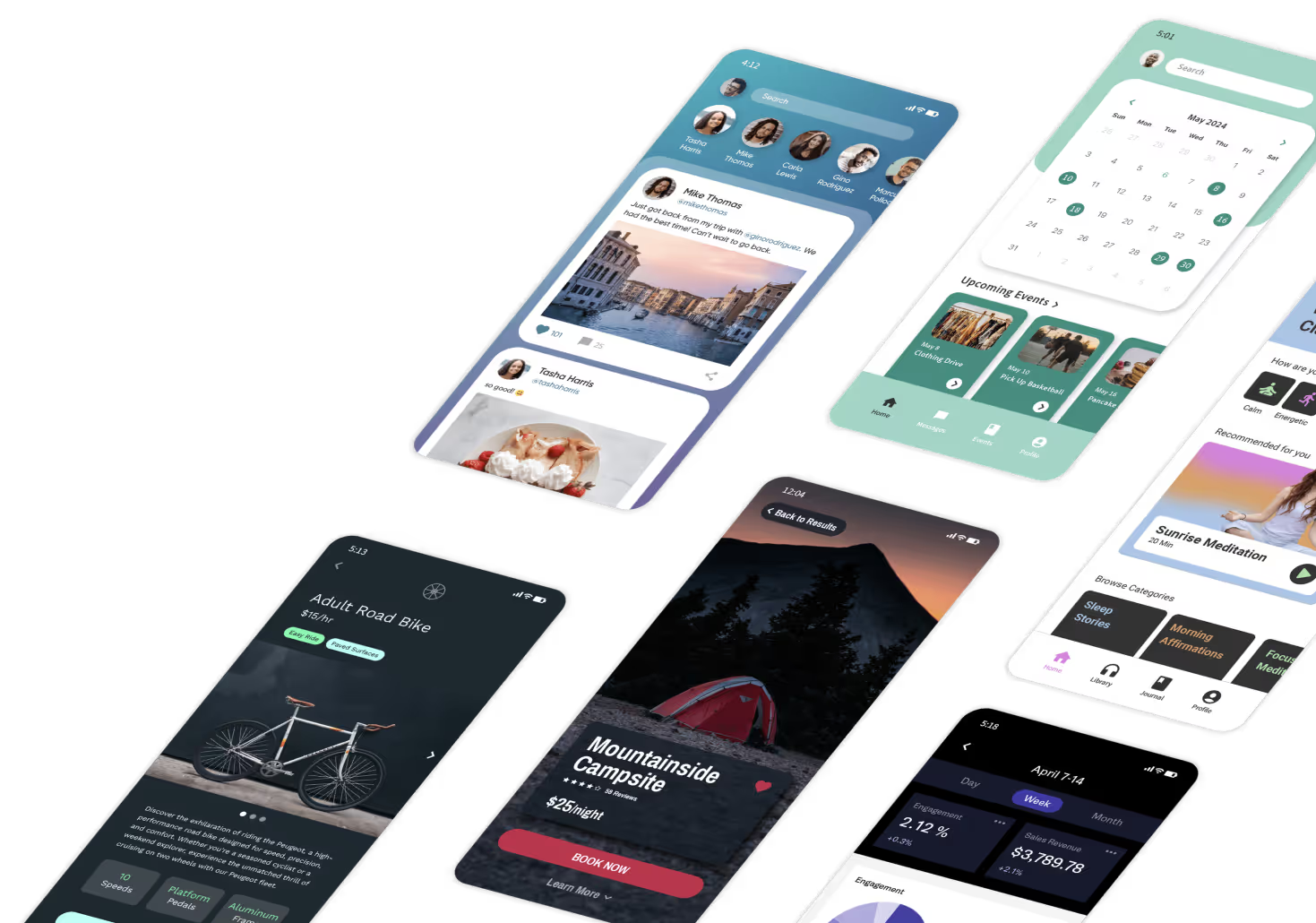
Creating an app that users love isn't just about flashy design—it's about crafting an experience that feels effortless. A usability checker can be a game-changer for developers and businesses aiming to stand out in crowded app stores. By focusing on key elements like navigation flow, accessibility, and speed, you can pinpoint what's working and what's not before your users even notice the friction.
Adalo, a no-code app builder for database-driven web apps and native iOS and Android apps—one version across all three platforms, published to the Apple App Store and Google Play, makes it easier than ever to create apps with usability in mind from the start. With visual development tools and built-in best practices, you can focus on delivering a smooth user experience without getting bogged down in code. One build publishes to web, iOS App Store, and Android Play Store—eliminating the fragmented development process that often introduces usability inconsistencies across platforms.
Why Usability Matters for Your App
Think about the last app that frustrated you—maybe the buttons were hard to find, or it took forever to load. Poor design drives users away faster than you'd think. Studies show users abandon apps within seconds if they encounter friction, making usability assessment essential for retention.
Assessing your app's ease of use helps you catch these issues early, ensuring your audience sticks around. It's not just about fixing problems; it's about building trust and loyalty through a seamless interface. Apps that prioritize usability see higher engagement rates, better reviews, and stronger word-of-mouth growth.
Performance plays a critical role in perceived usability. Adalo's infrastructure, completely overhauled with the 3.0 release in late 2025, delivers 3-4x faster app performance than previous versions. This speed improvement directly impacts usability scores—faster load times mean users stay engaged rather than bouncing to competitors.
How to Get Started with Usability Testing
Getting feedback on your app doesn't have to be complicated. With the right usability evaluation tool, you input a few details and get a comprehensive breakdown of potential improvements. From clearer menus to faster load times, small tweaks can make a big difference in user satisfaction.
For Adalo users, the platform includes X-Ray, which identifies performance issues before they affect users. This proactive approach to usability means you can address bottlenecks during development rather than after frustrated users leave negative reviews. X-Ray highlights exactly where your app might slow down under load, giving you actionable insights to optimize.
Ada, Adalo's AI builder, lets you describe what you want and generates your app. Magic Start creates complete app foundations from a description, while Magic Add adds features through natural language.
When building your app, Magic Start generates complete app foundations from a simple description. Tell it you need a booking app for a dog grooming business, and it creates your database structure, screens, and user flows automatically—what used to take days of planning happens in minutes. This foundation includes usability best practices baked in from the start.
Need to add features after your initial build? Magic Add lets you describe what you want in natural language. Say "add a user profile screen with photo upload" and the feature appears, following consistent design patterns that maintain usability across your entire app.
Scaling Without Sacrificing Usability
Many apps perform beautifully with a handful of users but fall apart under real-world load. This scalability problem directly impacts usability—slow response times, timeouts, and crashes all destroy the user experience you've carefully crafted.
Adalo's modular infrastructure scales to serve apps with millions of monthly active users, with no upper ceiling. Unlike app wrappers that hit speed constraints under load, Adalo's purpose-built architecture maintains performance at scale. Paid plans include no record limits on the database, meaning your app's usability won't degrade as your user base grows.
The platform also removed usage-based charges from all plans. This means unlimited usage with no bill shock—you can focus on building the best possible user experience without worrying about costs spiking as your app succeeds. Over 3 million apps have been created on Adalo, with the visual builder described as "easy as PowerPoint" while delivering production-ready results.
Comparing Usability-Focused Development Approaches
Different platforms take different approaches to helping you build usable apps. Understanding these differences helps you choose the right tool for your needs.
| Platform | Starting Price | Native Mobile Apps | Database Limits |
|---|---|---|---|
| Adalo | $36/month | Yes (iOS & Android) | Unlimited on paid plans |
| Bubble | $59/month | Web wrapper only | Limited by Workload Units |
| Glide | $60/month | No app store publishing | Limited, additional charges |
| FlutterFlow | $70/month per user | Yes (requires separate database) | Depends on external database |
Bubble offers more customization options, but that flexibility often results in slower applications that suffer under increased load. Many Bubble users end up hiring experts to optimize performance—a hidden cost that impacts both budget and timeline. Bubble's mobile solution uses a web wrapper rather than true native compilation, which can introduce usability challenges at scale.
FlutterFlow targets technical users with a low-code approach, but requires you to set up and manage your own external database. This adds significant learning complexity, especially when optimizing for scale. Their builder also limits your view to two screens at once, while Adalo can display up to 400 screens on one canvas for faster navigation during development.
Glide excels at spreadsheet-based apps but restricts you to set templates, limiting creative freedom. For users who want spreadsheet simplicity without template constraints, Adalo's SheetBridge turns a Google Sheet into an actual database—the easiest path to data-driven apps without database learning curves.
FAQ
Why choose Adalo over other app building solutions?
Adalo is an AI-powered app builder that creates true native iOS and Android apps. Unlike web wrappers, it compiles to native code and publishes directly to both the Apple App Store and Google Play Store from a single codebase. With unlimited database records on paid plans and no usage-based charges, you can scale without unexpected costs.
What's the fastest way to build and publish an app to the App Store?
Adalo's drag-and-drop interface combined with AI-assisted building lets you go from idea to published app in days rather than months. Magic Start generates your app foundation from a description, and Adalo handles the complex App Store submission process so you can focus on usability and features.
How accurate is the usability score from a usability checker tool?
Usability checkers use robust checklists based on industry-standard principles like intuitive navigation, accessibility, and performance. While not a replacement for full user testing, they provide a solid benchmark by cross-referencing your input with proven UX best practices. Use the score as a starting point, then pair it with real user feedback.
Can I use a usability checker for any type of app?
Yes. Usability checkers assess universal factors that apply across all app types—from gaming to e-commerce. Elements like ease of use, clarity of design, and accessibility matter regardless of your app's purpose. Provide specific details about your app's audience for tailored recommendations.
Which is more affordable, Adalo or Bubble?
Adalo starts at $36/month with unlimited usage and app store publishing. Bubble starts at $59/month with usage-based Workload Unit charges and limits on records. Adalo's pricing is more predictable with no surprise costs as your app scales.
Which is easier for beginners, Adalo or FlutterFlow?
Adalo is designed for non-technical users with a visual builder described as "easy as PowerPoint." FlutterFlow is low-code rather than no-code, targeting technical users who are comfortable setting up external databases. Adalo includes an integrated database, reducing the learning curve significantly.
Do I need technical skills to improve my app's usability?
No technical skills are required. Modern usability tools provide clear, actionable recommendations with straightforward explanations. With a platform like Adalo, you can implement improvements yourself through visual tools and natural language requests via Magic Add.
Can I migrate from Glide to Adalo?
Yes. If you've outgrown Glide's template restrictions or need app store publishing, Adalo offers more creative freedom while maintaining ease of use. SheetBridge lets you continue using Google Sheets as your data source during transition.