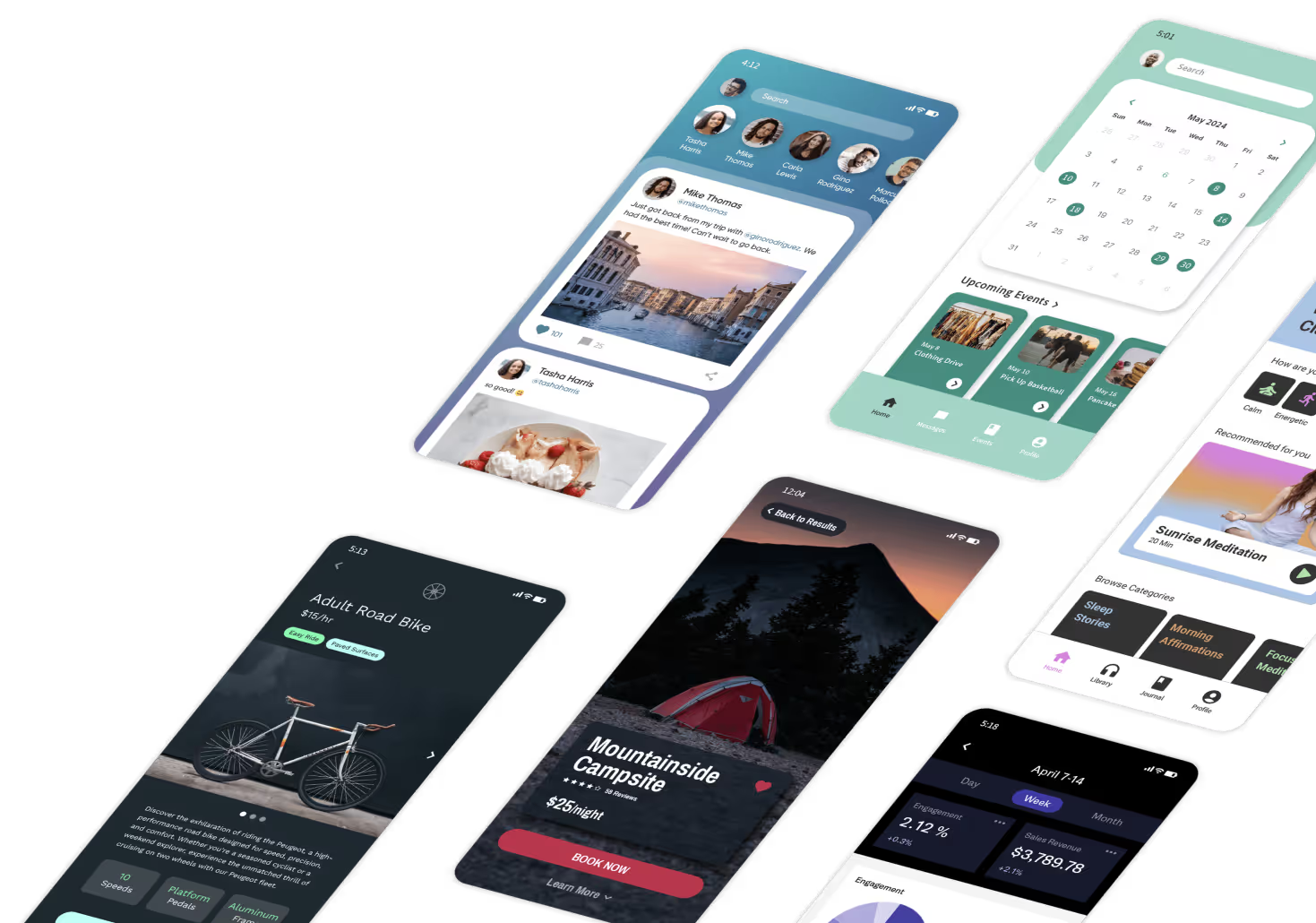
Webflow is an innovative website builder with over 6,000 templates to kickstart your website design journey—in fact, the website you're visiting right now is built on Webflow.
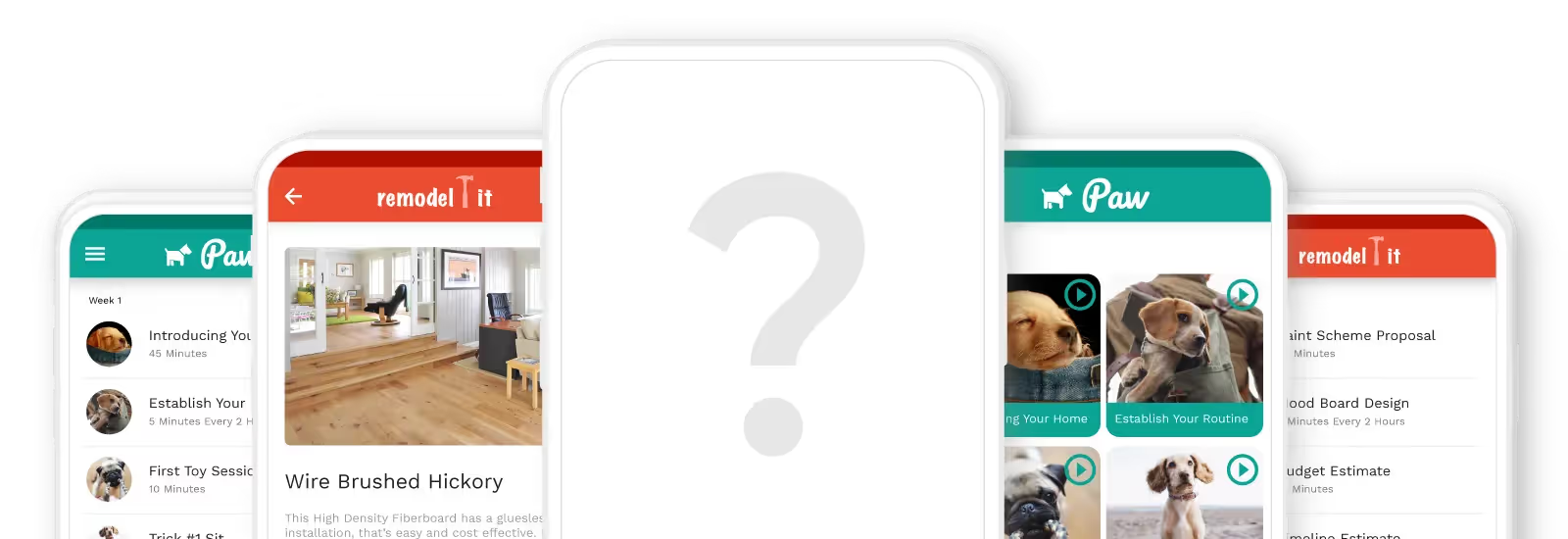
While Webflow excels at website creation, platforms like Adalo offer a powerful alternative for those looking to build mobile applications alongside or instead of traditional websites. Adalo, a no-code app builder for database-driven web apps and native iOS and Android apps—one version across all three platforms, published to the Apple App Store and Google Play, makes it possible to create full-featured mobile experiences without coding expertise.
This article will cover the following:
- Webflow's main functions and how it works
- Responsive design tools, CMS suite, and more features
- Pros and cons
- Optimal use cases and if Webflow is right for you
- Adalo, a top Webflow alternative for mobile app development
Let's jump into an overview of Webflow and its main features.
What Is Webflow and How Does It Work?
Webflow is a web design and development platform that enables you to create a website without writing any code or knowing anything about programming. Instead, Webflow employs a powerful building interface that functions like graphic design software, giving you robust control over your building process.
Before you start using the building interface, you'll select a template from Webflow's template library that fits your website design needs. Webflow offers an impressive 6,000+ templates, both free and paid, for building nearly any sort of website you can imagine.
After picking your template, you'll land on Webflow's building interface. Here's what it's made up of:
- Design canvas: Located at the center of your screen, the design canvas is actually your site under construction. Adding a new feature, color, or structural change to your site will instantly appear on the design canvas.
- Style panel: Located to the right of your design canvas, the style panel lets you build, modify, and edit your site. You can adjust layout, typography, colors, sizing, spacing, and other properties. Click on an element on your design canvas, and the style panel will appear to your right.
- Navigator panel: Similar to a layer panel in graphic design software, the navigator panel, located directly to the right of your design canvas, lets you see the hierarchical structure of elements like headings, pictures, colors, and other elements on your site. Use this to configure and manage your layout and ensure that components are nested correctly.
Want more about Webflow to start building? Check out our introductory course.
Webflow's Key Features
Webflow is one of the most powerful website builders available today. It offers more design control and superior functionalities than most other website builders focused on web-only experiences.
Responsive Design Tools
Webflow is a responsive website builder, meaning you can create a website optimized for viewing on several different devices without making any major changes. In other words, use Webflow to create a website that's automatically dialed in for desktops, mobile phones, tablets, TVs, and other screens.
When you build a website with Webflow, you don't need to worry about ensuring elements fit when viewed by different devices. Webflow's responsive design pretty much guarantees that your site will look uniform, professional, and compelling, no matter what the screen size.
Ultimately, Webflow's responsive design feature can save you tons of time crafting your website. You won't need to painfully shuffle through different screen types and manually adjust pictures, headers, and other elements with your cursor.
What is Webflow's CMS?
One of Webflow's flagship features is its helpful content management system (CMS). The system allows you to build your customized content collection, which is like a database. Your collection can include nearly any content imaginable, like blog posts, photos, videos, e-commerce goods, and more.
Webflow's CMS puts you in the driver's seat when organizing your content. Create custom fields like text, images, videos, and rich text editors to suit your needs. This enables you to manage a diverse range of content how you want and link it to any part of your website.
But Webflow's CMS doesn't stop at customized organization—you can also create visual designs for each content type that you can feature on your frontend. This helps you organize and separate your content while making your website's user experience enjoyable.
The CMS system is also infused with powerful API access, which lets you transfer data from third-party apps directly to your Webflow CMS so you can feature it on your website. This can juice up your website with more power and functionality.
Custom Code Features
Hey techies, this section's for you: Webflow seamlessly blends ease of use with the flexibility of custom coding. It lets you patch in your own lines of HTML, JavaScript, and CSS to create custom elements, features, and capabilities beyond those found on Webflow's building interface.
Webflow also lets you keep some of your website's frontend source code. While it doesn't give you code for your CMS or e-commerce systems, you can develop your frontend using coding or another tool. You'll just need to build a new backend and database.
Hosting and SSL
Here's the cool thing about building on Webflow: Unlike other website builders, which require you to bring a domain (www.YOURSITE.com) from a third-party host, Webflow will directly sell you a custom domain, providing you a convenient all-in-one platform.
Webflow hosts most of its websites on Amazon Web Services (AWS), a cloud service provider renowned for its security, reliability, and scalability. You won't need to worry about your site getting compromised or scaling issues as you grow.
Webflow's global Content Delivery Network (CDN) is a key to its superior hosting. This CDN automatically distributes copies of your site to data centers worldwide, ensuring that your site loads quickly, no matter where your visitors are. This adds jet fuel to your page-load speed, which is critical for an ideal user experience and SEO (search engine optimization).
Additionally, Webflow provides automatic SSL (Secure Sockets Layer) certificates for all domains linked to its platform at no extra cost. SSL encrypts data transferred between each user's browser and the website, protecting sensitive data from being intercepted by the bad guys.
You can sit back and let your SSL work its magic, as this feature is automatically managed and renewed by Webflow. This ensures that your website will always have a secure connection.
eCommerce Capabilities
Looking to launch an e-commerce website? Look no further than Webflow. The platform comes prepackaged with impressive e-commerce tools to set your business up for success. You'll get integrations with Stripe, PayPal, Apple Pay, and other popular payment platforms.
Webflow also offers a direct integration with Shippo, a platform that streamlines the shipping process. If you use another shipping service, you'll most likely be able to connect it to your Webflow site using an API or through Webflow's useful Zapier integration.
And, you guessed it: Use the CMS system to manage products, orders, users, and any other aspect of your website on a super granular level.
How does Webflow compare to similar tools like FlutterFlow? Check out the full comparison.
Pros and Cons of Using Webflow
Like any other website or app builder, Webflow has its benefits and drawbacks.
Pros
- Exceptional design control: We can't stress enough how much design power Webflow's building interface packs. You can configure and adjust every element of your website's design practically down to the pixel.
- Powerful customization: With the ability to patch in your lines of code to create unique frontend functionalities, Webflow allows you to add as much unique flair as your technical skills can handle. You can create features that attract users to your site, promote your content or e-commerce goods, or execute other tasks.
- Robust CMS: Boasting a sleek and simple user interface, Webflow's CMS provides heaps of freedom for managing and organizing your website's content. You'll also be able to edit your content from the user interface, allowing you to make quick changes when needed.
Cons
- Steep learning curve: While the building interface provides nearly unparalleled design freedom and impressive customization, all this power comes with a tradeoff in a difficult learning curve. If you're a complete beginner, it will probably take a few months to master the building interface.
- Numerous pricing tiers: Webflow has over 12 different pricing tiers, ranging from free to over $250/mo. With so many different pricing plans, narrowing down the perfect one for your needs might be frustrating and confusing.
- Web-only focus: Webflow excels at websites but doesn't offer native mobile app development. If you need to publish to the Apple App Store or Google Play Store, you'll need a separate platform entirely.
Who is Webflow Best Suited For?
Webflow provides enough power for impressive levels of customization—all without using programming. If you're one of the following, you might find Webflow super useful:
- Marketing teams and content agencies: Because Webflow's powerful CMS lets you organize, manage, and distribute content precisely how you want, content publishing professionals and marketing agencies will have a significant advantage with Webflow.
- Web developers: Whether you're a freelance developer or part of a larger team, Webflow provides the customization tools to craft unique websites that look the part and work like a well-oiled machine. You'll be able to build websites that grab the attention of clients and their website visitors.
- Graphic designers: Webflow's building interface is similar to graphic design tools like Figma or Canva. Folks who've worked with this software will likely not have to overcome Webflow's learning curve. This means you can venture into Webflow development, which could earn you some extra cash on the side.
Want a full list of Webflow alternatives? Read the complete roundup article.
Is Webflow Right For You?
If you're new to Webflow, you can start tinkering with the platform immediately. Webflow conveniently offers a free version that lets you get accustomed to the building interface and get a feel for it.
After signing up, the building interface may appear intimidating. Luckily, Webflow offers an impressively large ecosystem that provides all the resources you need to learn everything.
For instance, you'll be able to connect with other website builders on the Webflow forum, complete courses to learn all the ins and outs of the building interface on Webflow University, and watch videos on Webflow's YouTube channel.
While Webflow has a learning curve, surpassing it comes with a hefty payoff—the ability to use one of the most powerful website builders available.
However, if your goal extends beyond websites to include mobile apps, Webflow won't get you there. For native iOS and Android apps that publish directly to app stores, you'll need a platform built specifically for mobile development.
Webflow vs. Adalo: Key Differences
Ada, Adalo's AI builder, lets you describe what you want and generates your app. Magic Start creates complete app foundations from a description, while Magic Add adds features through natural language.
Understanding when to use Webflow versus Adalo comes down to what you're trying to build and where you want to publish it.
| Feature | Webflow | Adalo |
|---|---|---|
| Primary Focus | Website design and development | Native mobile apps + web apps |
| App Store Publishing | Not supported | Direct publishing to iOS App Store and Google Play |
| Learning Curve | Steep (months to master) | Intuitive ("as easy as PowerPoint") |
| AI Features | Limited | Magic Start, Magic Add, X-Ray diagnostics |
| Database Records | CMS-based with tier limits | Unlimited on paid plans |
| Starting Price | Free (limited), paid from $14/month | Free (limited), paid from $36/month |
Webflow wins for content-heavy websites, marketing sites, and e-commerce stores where pixel-perfect web design matters most. Adalo wins when you need a mobile app in users' hands through the App Store and Play Store—often the hardest part of launching a new app or business.
Try Adalo: A Versatile Webflow Alternative for Mobile Apps
Want to create a web app and native mobile apps that you can publish to the Apple App Store and Google Play Store? Try Adalo.
Adalo is an AI-powered app builder that's much easier to learn than Webflow—it's so intuitive that you can use it right out of the box. Users describe the visual builder as "as easy as PowerPoint," yet it delivers the perfect balance of power and ease: You'll get incredible design freedom, allowing you to craft and customize your app's colors, structure, and layout to meet your precise needs.
AI-Assisted Building
Adalo's AI features accelerate development significantly. Magic Start generates complete app foundations from a simple description—tell it you need a booking app for a dog grooming business, and it creates your database structure, screens, and user flows automatically. What used to take days of planning happens in minutes.
Magic Add lets you add features by describing what you want in natural language. Need a payment screen? A user profile section? Just describe it, and Adalo builds it. X-Ray identifies performance issues before they affect users, helping you maintain app quality as you scale.
Scalability Without Limits
Following the Adalo 3.0 infrastructure overhaul in late 2025, the platform is now 3-4x faster with modular infrastructure that scales to serve apps with millions of monthly active users. Paid plans include no record limits on the database—a significant advantage over competitors that cap storage or charge usage-based fees.
Unlike platforms like Bubble that use web wrappers for mobile (introducing potential performance challenges at scale), Adalo compiles to true native code. One build publishes to web, iOS, and Android simultaneously, with unlimited updates to published apps.
Integrations and Flexibility
Adalo comes with thousands of integrations to third-party platforms like Airtable, Stripe, Zapier, and Xano, allowing you to add extensive functionality. For spreadsheet-based workflows, Adalo's SheetBridge turns a Google Sheet into an actual database—the easiest path from spreadsheet to app without database-related learning curves.
Over 3 million apps have been created on Adalo, processing millions of data requests daily with 99%+ uptime. Whether you're building an MVP or scaling to production, the platform grows with you.
Start building your first app for free with Adalo.
FAQ
Why choose Adalo over other app building solutions?
Adalo is an AI-powered app builder that creates true native iOS and Android apps. Unlike web wrappers, it compiles to native code and publishes directly to both the Apple App Store and Google Play Store from a single codebase—the hardest part of launching an app handled automatically. Paid plans include unlimited database records and no usage-based charges.
What's the fastest way to build and publish an app to the App Store?
Adalo's drag-and-drop interface and AI-assisted building let you go from idea to published app in days rather than months. Magic Start generates complete app foundations from descriptions, and Adalo handles the complex App Store submission process so you can focus on features instead of certificates and provisioning profiles.
What is Webflow and what is it used for?
Webflow is a web design and development platform that enables you to create websites without writing any code. It features a powerful building interface similar to graphic design software, over 6,000 templates, responsive design tools, a robust CMS, and e-commerce capabilities for building professional websites.
What is the difference between Webflow and Adalo?
Webflow excels at website creation with deep design control and a powerful CMS, but has a steep learning curve and doesn't support mobile app publishing. Adalo is easier to learn and focuses on building native mobile apps for iOS and Android alongside web apps—all from one codebase that publishes directly to app stores.
Which is more affordable, Adalo or Webflow?
Both offer free tiers. Webflow's paid plans start at $14/month for basic sites, while Adalo starts at $36/month for web and native mobile apps with app store publishing. If you need mobile apps, Adalo provides more value since Webflow doesn't offer that capability at any price.
Can I build mobile apps with Webflow?
No, Webflow is focused exclusively on website creation. It doesn't support native iOS or Android app development or publishing to the Apple App Store or Google Play Store. For mobile apps, you'll need a platform like Adalo that's built specifically for native app development.
Does Adalo offer integrations with third-party platforms?
Yes, Adalo comes with thousands of integrations to third-party platforms like Airtable, Stripe, Zapier, and Xano. These integrations allow you to add extensive functionality to your app, from payment processing to database management, helping you build feature-rich applications without custom coding.
Who should consider using Webflow versus Adalo?
Webflow is best suited for marketing teams, web developers, and graphic designers who need granular control over website design and content management. Adalo is ideal for entrepreneurs, businesses, and creators who want to build mobile apps quickly and publish them to the Apple App Store and Google Play without coding expertise.
How does Adalo compare to other app builders like Bubble or FlutterFlow?
Bubble starts at $59/month with usage-based charges and record limits, plus its mobile solution uses web wrappers rather than native code. FlutterFlow is low-code (requiring technical skills) and starts at $70/month per user without including a database. Adalo starts at $36/month with unlimited usage, no record caps on paid plans, and true native app compilation.
Do I need coding experience to use Adalo?
No coding experience is required. Adalo's visual builder is described as "as easy as PowerPoint," and AI features like Magic Start and Magic Add let you build by describing what you want in plain language. The platform is designed for non-technical users while still offering power for complex applications.