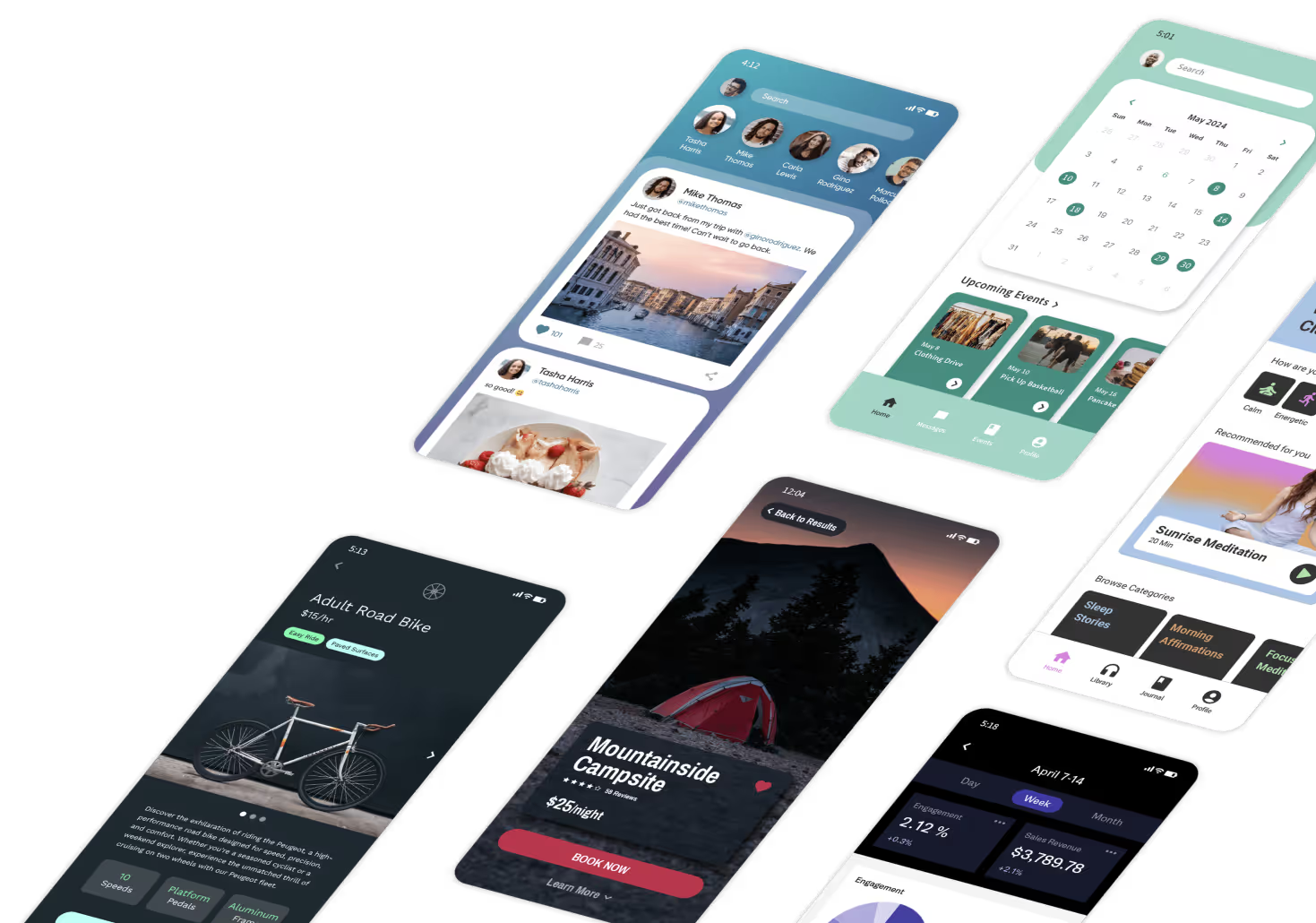
Why Adalo Is Perfect for Creating a WeChat-Style Messaging Platform
Building a messaging and social app that rivals WeChat's functionality used to require teams of specialized developers and months of development time. Today, that's no longer the case. Adalo is a no-code app builder for database-driven web apps and native iOS and Android apps—one version across all three platforms, published to the Apple App Store and Google Play. This makes it the ideal solution for creating a WeChat-style super app where users expect seamless access across all their devices.
For a messaging and social platform, native app store distribution is essential—it's where your target audience discovers and downloads new apps. Adalo handles the complex App Store and Google Play submission processes for you, while also enabling push notifications that are critical for real-time message alerts and keeping users engaged with your social features.
Building a messaging and social app that rivals WeChat's functionality used to require teams of specialized developers and months of development time. Today, Adalo changes that equation entirely. As an AI-powered app builder for database-driven web apps and native iOS and Android apps, Adalo lets you create one version that publishes across all three platforms—directly to the Apple App Store and Google Play.
This cross-platform capability is essential for a WeChat-style app, where users expect seamless access whether they're on their phone, tablet, or desktop browser—all without maintaining separate codebases. Native publishing also unlocks push notifications, which are vital for real-time message alerts and keeping users engaged with your social features.
Why Adalo Works for Building a WeChat-Style Messaging App
For a messaging and social app like WeChat, app store distribution is critical to reaching your audience where they already discover new apps. With Adalo handling the technical complexity—including the notoriously difficult App Store submission process—you can focus on designing the user experience that will make your app stand out.
This comprehensive tutorial shows you how to build a multipurpose messaging and social app inspired by WeChat. The original WeChat serves over 1 billion monthly active users by integrating messaging, social features, and payments into one platform. While building a full WeChat replica requires extensive resources, you'll learn how to create core functionality—messaging, social feeds, user profiles, and payments. Adalo's platform lets you publish the same app to the web, native iOS, and native Android, all without writing a line of code. If your plan is mass distribution through the app stores' vast marketplaces, this approach offers significant advantages over many vibe-coding builders that produce web wrappers rather than true native apps.
Prerequisites and Initial Setup
Step 1: Create Your Adalo Account
- Visit Adalo.com and click "Sign Up"
- Choose a plan based on your needs:
- Free Plan: Perfect for prototyping and testing your concept
- Starter Plan ($36/month): Recommended for production apps with unlimited database records and app store publishing
- Team Plan ($160/month annually): Best for collaborative development with multiple editors
- Verify your email and log into the dashboard
Ada, Adalo's AI builder, lets you describe what you want and generates your app. Magic Start creates complete app foundations from a description, while Magic Add adds features through natural language.
All paid plans include unlimited database records and no usage-based charges—meaning no bill shock as your messaging app scales. Learn more about Adalo's pricing plans.
Step 2: Start Your WeChat Clone Project
- Click "Create New App" from your dashboard
- Select "Mobile App" as your primary platform
- Name your project (e.g., "ChatConnect" or "SocialHub")
- Choose "Start from Scratch" to build custom functionality, or use Magic Start to generate a foundation from a description
- Select your brand colors:
- Primary: WeChat-inspired green (#07C160) or your brand color
- Secondary: Neutral gray for backgrounds (#F7F8FA)
- Accent: Highlight color for notifications
- Choose a clean, readable font (e.g., Inter, SF Pro)
Magic Start can accelerate your setup significantly. Describe "a messaging app with social feed, friend management, and payments" and it generates your database structure, initial screens, and user flows automatically—what used to take days of planning happens in minutes.
Step 3: Understand WeChat's Core Architecture
Before building, understand the five foundational features you'll replicate:
- Real-time messaging: 38 billion messages sent daily on WeChat
- Social feed ("Moments"): Share photos and status updates with friends
- User profiles: Contact management with friend requests
- Payments: Integrated digital wallet functionality
- Group messaging: Multi-person conversations
Building the Database Structure
Step 4: Enhance the Users Collection
- Click the Database icon in the left sidebar
- Select the default Users collection
- Add these properties by clicking "+ Add Property":
- Full Name (Text)
- Phone Number (Text)
- Profile Image (Image)
- Bio (Text - Multiline)
- WeChat ID (Text - Unique identifier)
- QR Code (Image - for friend adding)
- Account Created (Date & Time - Automatic)
- Last Active (Date & Time)
- Privacy Settings (Text - "Everyone", "Friends Only", "Private")
Step 5: Create the Messages Collection
WeChat handles messaging at a massive scale. Build your foundation:
- Click "+ Add Collection"
- Name it "Messages"
- Add properties:
- Message Text (Text - Multiline)
- Timestamp (Date & Time - Automatic)
- Message Type (Text - Values: "Text", "Image", "Voice", "Video", "Location")
- Media URL (Text - for attachments)
- Read Status (True/False)
- Deleted (True/False)
Step 6: Create the Conversations Collection
- Click "+ Add Collection"
- Name it "Conversations"
- Add properties:
- Conversation Name (Text - for group chats)
- Conversation Type (Text - Values: "Direct", "Group")
- Created Date (Date & Time - Automatic)
- Last Message (Text)
- Last Message Time (Date & Time)
- Group Image (Image - for group chats)
- Muted (True/False)
Step 7: Create the Moments Collection
Replicate WeChat's social feed where 68 million videos are posted daily:
- Click "+ Add Collection"
- Name it "Moments"
- Add properties:
- Post Content (Text - Multiline)
- Post Image (Image)
- Post Video (Text - URL)
- Posted Date (Date & Time - Automatic)
- Visibility (Text - "Public", "Friends", "Custom")
- Like Count (Number - Default: 0)
- Comment Count (Number - Default: 0)
Step 8: Create Supporting Collections
Likes Collection:
- Click "+ Add Collection" → Name: "Likes"
- Properties:
- Liked Date (Date & Time - Automatic)
Comments Collection:
- Click "+ Add Collection" → Name: "Comments"
- Properties:
- Comment Text (Text - Multiline)
- Comment Date (Date & Time - Automatic)
Friend Requests Collection:
- Click "+ Add Collection" → Name: "Friend Requests"
- Properties:
- Status (Text - "Pending", "Accepted", "Rejected")
- Request Message (Text)
- Request Date (Date & Time - Automatic)
Payments Collection:
- Click "+ Add Collection" → Name: "Payments"
- Properties:
- Amount (Number)
- Payment Type (Text - "Transfer", "Payment", "Red Envelope")
- Status (Text - "Pending", "Completed", "Failed")
- Stripe Payment ID (Text)
- Transaction Date (Date & Time - Automatic)
Step 9: Set Up Database Relationships
Establish connections between collections. With Adalo's no data caps on paid plans, you can build complex relationship structures without worrying about hitting storage limits:
Users Relationships:
- In Users collection, add relationship:
- Friends: Many-to-Many relationship with Users
- Blocked Users: Many-to-Many relationship with Users
Messages Relationships:
- In Messages collection, add:
- Sender: Many-to-One with Users
- Conversation: Many-to-One with Conversations
Conversations Relationships:
- In Conversations collection, add:
- Participants: Many-to-Many with Users
- Messages: One-to-Many with Messages
Moments Relationships:
- In Moments collection, add:
- Author: Many-to-One with Users
- Likes: One-to-Many with Likes
- Comments: One-to-Many with Comments
Likes Relationships:
- In Likes collection, add:
- User: Many-to-One with Users
- Moment: Many-to-One with Moments
Comments Relationships:
- In Comments collection, add:
- Author: Many-to-One with Users
- Moment: Many-to-One with Moments
Friend Requests Relationships:
- In Friend Requests collection, add:
- Sender: Many-to-One with Users
- Receiver: Many-to-One with Users
Learn more about relational databases.
Installing Required Components
Step 10: Install Essential Marketplace Components
- Navigate to the Adalo Marketplace
- Search and install these components:
- Chat/Messaging Component: For real-time conversation UI
- Image Carousel: For multi-image posts in Moments
- Star Rating: For content reactions
- QR Code Generator: For user ID sharing
Adalo's Component Marketplace offers over 50 components tested for cross-platform compatibility. You can also use Magic Add to add features by describing what you want—tell it "add a QR code scanner for adding friends" and it configures the component and logic for you.
Step 11: Set Up Payment Integration
- Search for "Stripe Payment" in Marketplace
- Click "Install"
- You'll need Stripe API keys from stripe.com
- Configure test mode for development
Creating User Authentication and Profiles
Step 12: Build the Welcome Screen
- Rename the default screen to "Welcome"
- Add Image component for your app logo
- Add Text component: "Connect with friends and family"
- Add two Button components:
- "Sign Up" → Link to new screen "Sign Up"
- "Log In" → Link to new screen "Login"
Step 13: Create Sign Up Flow
- Add new screen "Sign Up"
- Add Form component connected to Users collection
- Include form fields:
- Email (Email input)
- Password (Password input - minimum 8 characters)
- Full Name (Text input)
- Phone Number (Text input)
- Add Image Picker for profile photo
- Set form submit action:
- Create User
- Log In User
- Navigate to "Setup Profile" screen
Step 14: Create Profile Setup Screen
- Add new screen "Setup Profile"
- Add Form updating Logged In User:
- WeChat ID (Text - unique username)
- Bio (Text area - 140 characters)
- Privacy Settings (Dropdown)
- Add QR code generation:
- Use QR Code component
- Generate from User ID
- Save to Profile Image field
- Submit → Navigate to "Main" screen
Step 15: Build Login Screen
- Add new screen "Login"
- Add Login Form component:
- Email field
- Password field
- "Remember me" toggle
- Add "Forgot Password?" link
- Submit action → Navigate to "Main" screen
Building the Messaging Interface
Step 16: Create Main Chat List Screen
- Add new screen "Chats"
- Add List component showing Conversations:
- Filter: Participants > Contains > Logged In User
- Sort by: Last Message Time (Newest First)
- For each conversation item, display:
- Profile image or group image
- Conversation name
- Last message preview (40 characters)
- Timestamp
- Unread badge (count of unread messages)
- Add "New Chat" floating button → "New Conversation"
Use Adalo's Group Messaging template to accelerate development.
Step 17: Build Individual Chat Screen
- Add new screen "Chat Conversation"
- Add List of Messages:
- Filter: Conversation = Current Conversation
- Sort by: Timestamp (Oldest First)
- Style message bubbles:
- Sender messages: Align right, green background
- Receiver messages: Align left, white background
- Show timestamp
- Show read status (checkmarks)
- Add input section at bottom:
- Text Input for message
- Send Button creating new Message
- + Button for attachments (image, voice, location)
Step 18: Create New Conversation Screen
- Add new screen "New Conversation"
- Add List of Users:
- Filter: Friends of Logged In User
- Search bar for name filtering
- Add selection checkboxes for group creation
- Add "Start Chat" button:
- Create new Conversation
- Add selected users as Participants
- Navigate to Chat Conversation screen
Step 19: Add Group Chat Features
- On Chat Conversation screen, add menu button
- Create "Group Settings" screen:
- Group name editor
- Group image uploader
- Participant list with remove option
- "Add Members" button
- "Leave Group" button
- "Mute Notifications" toggle
Check out the User Chat template for implementation details.
Creating the Social Feed (Moments)
Step 20: Build Moments Feed Screen
- Add new screen "Moments"
- Add List component showing Moments:
- Filter: Author > Friends of Logged In User OR Author = Logged In User
- Sort by: Posted Date (Newest First)
- For each moment, display:
- Author profile image and name
- Post content text
- Post image/video (if present)
- Timestamp
- Like count and comment count
- Like button and comment button
Step 21: Create Post Moment Screen
- Add new screen "Create Moment"
- Add Form connected to Moments collection:
- Text Area for post content
- Image Picker for photos (multiple selection)
- Visibility Dropdown (Public, Friends, Custom)
- Add Location component for check-ins
- Submit button:
- Create Moment with Author = Logged In User
- Navigate back to Moments feed
Step 22: Build Moment Detail Screen
- Add new screen "Moment Detail"
- Show full moment information
- Add List of Comments:
- Filter: Moment = Current Moment
- Sort by: Comment Date (Oldest First)
- Display for each comment:
- Commenter profile image
- Commenter name
- Comment text
- Timestamp
- Add comment input section:
- Text Input field
- Send button creating new Comment
Step 23: Implement Like Functionality
- On Moment list item, add Like Button
- Set visibility conditions:
- Show "Like" if user hasn't liked
- Show "Unlike" if user has liked
- Like action:
- Create Like record (User = Logged In User, Moment = Current Moment)
- Update Moment > Like Count (+1)
- Unlike action:
- Delete Like record
- Update Moment > Like Count (-1)
Learn more about social media features.
Building Contact Management
Step 24: Create Contacts Screen
- Add new screen "Contacts"
- Add List of Users:
- Filter: Friends of Logged In User
- Alphabetical sorting
- Search functionality
- Display for each contact:
- Profile image
- Full name
- WeChat ID
- Last active status
- Click → Navigate to Contact Profile
Step 25: Build Contact Profile Screen
- Add new screen "Contact Profile"
- Display user information:
- Profile image
- Full name
- WeChat ID
- Bio
- QR code
- Add action buttons:
- "Send Message" → Create/Open conversation
- "Voice Call" → Link to tel:[Phone Number]
- "Remove Friend" → Update relationship
- "Block User" → Add to Blocked Users
Step 26: Create Add Friend Flow
- Add new screen "Add Friend"
- Add multiple methods:
- Search by WeChat ID (Text input + Search button)
- Scan QR Code (Camera component)
- From Contacts (Phone contacts integration)
- Nearby (Location-based discovery)
- Show search results with "Add Friend" button
- Add action:
- Create Friend Request
- Send notification to recipient
Step 27: Build Friend Request Screen
- Add new screen "Friend Requests"
- Add two lists:
- Received Requests: Filter by Receiver = Logged In User
- Sent Requests: Filter by Sender = Logged In User
- For received requests, show:
- Sender profile image and name
- Request message
- Accept button (Add to Friends, Update Status)
- Reject button (Update Status)
Implementing Payment Features
Step 28: Create Wallet Screen
- Add new screen "Wallet"
- Display:
- Balance (calculated from Payments)
- Transaction history list
- "Add Money" button
- "Send Money" button
- "Payment QR Code" button
Step 29: Build Send Money Flow
- Add new screen "Send Money"
- Add recipient selection:
- List of Friends
- Search functionality
- Recent recipients
- Add Form for payment:
- Amount (Number input)
- Message (Text - optional)
- Payment Type (Transfer or Red Envelope)
- Add Stripe Payment component
- Submit action:
- Process Stripe payment
- Create Payment record
- Send notification to recipient
Publishing to app stores requires fees: $99/year Apple and $25 one-time Google.
Step 30: Create Red Envelope Feature
WeChat processed 768 million envelopes during the Spring Festival. Replicate this:
- Add new screen "Red Envelope"
- Add customization options:
- Total amount
- Number of envelopes (for group sharing)
- Personal message
- Cover design
- Distribution logic:
- Random amount splitting for group envelopes
- First-come, first-served claiming
- Expiration after 24 hours
Adding Navigation and Polish
Step 31: Create Tab Bar Navigation
- Add bottom Tab Bar component with icons:
- Chats (message icon) → Chats screen
- Contacts (person icon) → Contacts screen
- Moments (camera icon) → Moments feed
- Me (profile icon) → Profile screen
- Set active states for current screen
- Add notification badges for unread counts
Step 32: Build Settings Screen
- Add new screen "Settings"
- Add menu options:
- Account Settings (email, password, phone)
- Privacy (who can see moments, contact me)
- Notifications (push notification preferences)
- Blocked Users (manage blocked list)
- Language (app language selection)
- Help & Feedback
- Log Out button
Step 33: Implement Search Functionality
- Add global search screen "Search"
- Add search categories:
- Contacts (search names, WeChat IDs)
- Messages (search conversation history)
- Moments (search post content)
- Display recent searches
- Add search filters (date range, post type)
Setting Up Notifications
Step 34: Configure Push Notifications
- Enable push notifications in Adalo settings
- Request permission on first app launch
- Set up notification triggers:
- New message received
- Friend request received
- Moment liked or commented
- Payment received
- Friend posted new moment
Explore notification setup.
Step 35: Add In-App Notifications
- Create Notifications Collection:
- Notification Type
- Message Text
- Link (screen to navigate)
- Read Status
- Created Date
- Add notification icon to header
- Show unread count badge
- List notifications with mark-as-read functionality
Optimizing Performance
Step 36: Implement Data Loading Strategies
- Use pagination for long lists (20-50 items per page)
- Add "Load More" buttons instead of infinite scroll
- Filter conversations to load recent messages only (last 100)
- Cache frequently accessed data in Custom Lists
Following Adalo 3.0's infrastructure overhaul in late 2025, the platform is now 3-4x faster and handles 20M+ daily requests with 99%+ uptime. The modular infrastructure scales with your app's needs—no artificial ceilings.
Step 37: Optimize Images and Media
- Compress images before upload (max 1MB)
- Use thumbnail versions for list views
- Store video content via external services (YouTube, Vimeo)
- Implement lazy loading for images
Step 38: Add Offline Support
- Display cached messages when offline
- Queue messages for sending when connection returns
- Show connection status indicator
- Store draft messages locally
Use X-Ray to identify performance issues before they affect users. This AI-powered diagnostic tool highlights bottlenecks in your app's data structure and logic, helping you optimize proactively rather than reactively.
Testing Your WeChat Clone
Step 39: Create Test User Accounts
- Create 10-15 test users with:
- Varied profiles (images, bios, WeChat IDs)
- Friend relationships established
- Sample conversation history
- Add test moments with images and comments
- Create test transactions and payments
Step 40: Test Core Functionality
Verify these flows work correctly:
Messaging:
- Send and receive text messages
- Share images and locations
- Create and manage group chats
- Search message history
Social Features:
- Post moments with images
- Like and comment on posts
- View friends' moments only
- Privacy controls working
Contacts:
- Search and add friends
- Accept/reject friend requests
- Block and unblock users
- QR code scanning
Payments:
- Send money to friends
- Create and claim red envelopes
- View transaction history
- Stripe integration functioning
Step 41: Test Across Devices
- Use Adalo's preview app for iOS and Android testing
- Test on multiple screen sizes (iPhone SE, iPhone Pro Max, iPad)
- Verify responsive layouts for web version
- Check notification delivery on all platforms
Learn about responsive design.
Publishing Your App
Step 42: Prepare for Production
- Replace test API keys with production credentials:
- Stripe live keys
- Google Maps API key
- Push notification certificates
- Add required legal pages:
- Privacy Policy (GDPR/CCPA compliant)
- Terms of Service
- Community Guidelines
- Configure custom domain for web version
- Set up analytics tracking
Step 43: Submit to App Stores
For iOS (App Store):
- Enroll in Apple Developer Program ($99/year)
- Create App Store listing:
- App name, description, keywords
- Screenshots (6.5" and 5.5" displays)
- App icon (1024x1024px)
- Privacy policy URL
- Submit through Adalo's publishing wizard
- Wait for Apple review (typically 24-48 hours)
For Android (Google Play):
- Create Google Play Developer account ($25 one-time)
- Prepare store listing:
- App description and category
- Screenshots and feature graphic
- Content rating questionnaire
- Publish through Adalo
- Staged rollout recommended (10% → 50% → 100%)
For Web:
- Configure custom domain (costs $10-45/year)
- Set up SSL certificate (included with Adalo)
- Test responsive layouts
- Publish instantly with manual publishing control
Check out the guides for publishing iOS, Android, and web.
Scaling Your WeChat Clone with Advanced Features
Step 44: Integrate External Services with Zapier
Adalo integrates with Zapier for automation:
- Connect to 5,000+ apps and services
- Automate workflows:
- Save new users to CRM
- Send welcome emails via Mailchimp
- Log analytics to Google Sheets
- Backup data to Airtable
- Set up AI integrations:
- ChatGPT for smart replies
- Image recognition for content moderation
- Translation APIs for multi-language support
Step 45: Add Video and Voice Calling
- Integrate WebRTC service via Custom Actions
- Add call buttons to chat screens
- Display call history
- Implement call notifications
- Support group voice calls
WeChat users spend 139 minutes monthly on calls, showing strong demand for this feature.
Step 46: Create Mini-Programs Ecosystem
Replicate WeChat's mini-programs where 6 of 10 users engage with embedded services:
- Use External Collections to connect external databases
- Create service categories:
- Games and entertainment
- Shopping and commerce
- Utilities and tools
- Business services
- Allow third-party integrations via API
- Implement sandboxed environments for security
Step 47: Implement Advanced Privacy Controls
- Add granular privacy settings:
- Who can add me (Everyone, Friends of Friends, Nobody)
- Who can see my Moments (All Friends, Selected Friends, Hide From)
- Profile visibility controls
- Last seen status toggle
- Create custom friend lists for targeted sharing
- Add disappearing messages option
- Implement screenshot detection alerts
Why Choose Adalo for Your WeChat Clone
Building a messaging super app traditionally requires teams of specialized developers and months of development time. Adalo's AI-assisted platform changes this equation entirely.
Speed to Market: Visual development delivers 50-90% faster development compared to traditional coding. What would take 4-6 months with a development team can be accomplished in 2-4 weeks. With AI Builder capabilities coming in early 2026, you'll be able to describe features in natural language and have them generated automatically—further accelerating development.
Cost Efficiency: Traditional app development requires hiring iOS developers (averaging $120,000+ annually), Android specialists, backend engineers, and designers. Adalo's Starter plan at $36/month includes unlimited database records, unlimited usage, and publishing to both app stores—with no surprise charges as your user base grows.
True Cross-Platform Publishing: Unlike platforms that require separate builds or produce web wrappers, Adalo compiles to true native iOS and Android apps from a single codebase. This means you maintain one project while reaching users across 257 billion annual global app downloads. Your WeChat clone automatically adapts to mobile, tablet, and desktop screens with responsive design.
Enterprise-Grade Infrastructure: Following the Adalo 3.0 infrastructure overhaul in late 2025, the platform processes over 20 million daily data requests with 99%+ uptime. The modular architecture scales to serve apps with 1M+ monthly active users—with no upper ceiling. Unlike app wrappers that hit performance constraints under load, Adalo's purpose-built architecture maintains speed at scale.
Rich Integration Ecosystem: Connect your WeChat clone to external services through native integrations with Xano, Airtable, Stripe, Google Maps, and Zapier. The Component Marketplace offers over 50 verified components—including premium messaging and social features—maintained by developers and tested for cross-platform compatibility.
Community and Support: Join over 3 million apps created on Adalo by makers who share your vision. The visual builder has been described as "easy as PowerPoint," making it accessible to non-technical founders while powerful enough for experienced builders.
Start building your WeChat clone today with Adalo's free plan and join the creators transforming social communication for their communities.
FAQ
Why choose Adalo over other app building solutions?
Adalo is an AI-powered app builder that creates true native iOS and Android apps. Unlike web wrappers, it compiles to native code and publishes directly to both the Apple App Store and Google Play Store from a single codebase—the hardest part of launching an app handled automatically. Paid plans include unlimited database records and no usage-based charges, so you won't face bill shock as your messaging app scales.
What's the fastest way to build and publish an app to the App Store?
Adalo's drag-and-drop interface and AI-assisted building let you go from idea to published app in days rather than months. Magic Start generates complete app foundations from descriptions, and the platform handles the complex App Store submission process—certificates, provisioning profiles, and store guidelines—so you can focus on your app's features and user experience.
How long does it take to build a WeChat-style messaging app?
With Adalo's visual builder and pre-built templates for group messaging and user chat, you can build a functional WeChat clone in 2-4 weeks. Traditional development would take 4-6 months with a full development team. The platform's 50+ marketplace components accelerate development of complex features like payments and social feeds.
Do I need coding experience to build a messaging app?
No coding experience is required. Adalo's visual builder has been described as "easy as PowerPoint." You design screens by dragging and dropping components, set up database relationships through dropdown menus, and configure logic with visual workflows. Over 3 million apps have been created on the platform by non-technical founders.
How much does it cost to build a WeChat clone?
Adalo's Starter plan at $36/month includes everything needed for a production messaging app: unlimited database records, unlimited usage, and publishing to both the Apple App Store and Google Play Store. You'll also need Apple Developer Program ($99/year) and Google Play Developer ($25 one-time) accounts for app store distribution.
Can I publish to the App Store with Adalo?
Yes, Adalo publishes true native apps directly to both the Apple App Store and Google Play Store. Unlike platforms that produce web wrappers, Adalo compiles to native code, which means better performance, access to native features like push notifications, and a smoother user experience. The publishing wizard handles the technical submission process.
How do I set up real-time messaging with read receipts in Adalo?
Create a Messages collection with properties for message text, timestamp, sender, and read status. Style message bubbles differently for sent and received messages, and display checkmarks based on the read status field. When a recipient views the conversation, update the read status to true to show delivery confirmation.
Can I integrate payment features like WeChat Pay into my Adalo app?
Yes, Adalo supports payment integration through the Stripe component available in the marketplace. You can build wallet screens, send money flows, and even replicate WeChat's popular Red Envelope feature for group payments. Install the Stripe component, configure your API keys, and create payment records to track transactions.
How does Adalo handle the database relationships needed for a social messaging app?
Adalo's built-in relational database lets you create complex relationships without SQL knowledge. Set up many-to-many relationships for friends lists, one-to-many relationships for messages within conversations, and connect users to their moments, likes, and comments. Paid plans have no record limits, so your database can grow with your user base.
What external services can I connect to my WeChat clone built with Adalo?
Adalo integrates with over 5,000 apps through Zapier, plus native integrations with Xano, Airtable, Stripe, and Google Maps. You can automate workflows like sending welcome emails, add AI features through ChatGPT integration, and connect to analytics platforms. The Component Marketplace also offers 50+ verified components for additional functionality.