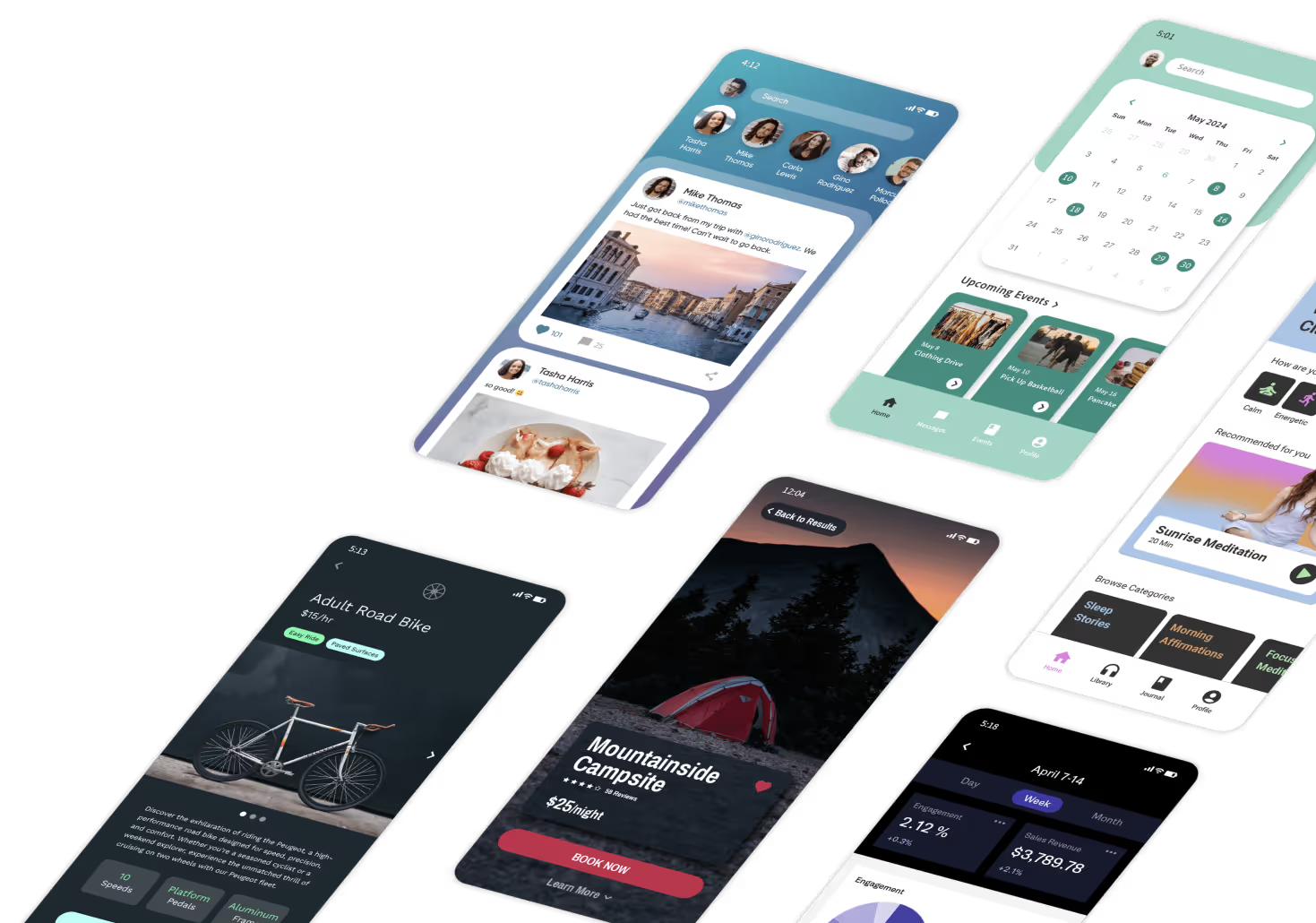
Creating a Hinge-style dating app means tackling some of the most demanding features in mobile development: rich user profiles with conversation-starting prompts, intelligent matching systems, real-time messaging, and location-aware discovery—all functioning flawlessly across multiple platforms. The traditional path requires separate development teams for iOS, Android, and web, months of coding, and substantial backend infrastructure investments that put this ambitious project beyond the reach of most entrepreneurs and small teams.
That's where Adalo changes everything. Adalo is a no-code app builder for database-driven web apps and native iOS and Android apps—one version across all three platforms. AI-assisted building and streamlined publishing enable launch to the Apple App Store and Google Play in days rather than months. With visual development tools, built-in database collections for complex user data, and a marketplace of pre-built components like swipeable cards and chat interfaces, you have everything needed to bring your dating app vision to life without writing code.
Why Adalo Is Perfect for Building Your Own Hinge-Style Dating App
Adalo is a no-code app builder for database-driven web apps and native iOS and Android apps—one version across all three platforms, published to the Apple App Store and Google Play. This cross-platform capability is exactly what a Hinge clone demands, since dating app users expect seamless experiences whether they're swiping on their iPhone, Android device, or desktop browser.
For dating apps specifically, native app store presence isn't optional—it's where users go to discover and download new ways to connect. Being listed in the Apple App Store and Google Play builds instant credibility, while native publishing unlocks push notifications that keep your users engaged with real-time alerts for new matches, messages, and profile interactions. With Adalo's visual development environment, you can focus on creating the perfect matching experience rather than wrestling with code.
Building a dating app like Hinge presents unique technical challenges: you need robust user profiles with prompts, sophisticated matching algorithms, real-time chat functionality, and location-based discovery—all working seamlessly across iOS, Android, and web. Traditionally, developing such a feature-rich application required months of coding, separate codebases for each platform, and significant investment in backend infrastructure. For entrepreneurs and creators eager to enter the competitive dating app market, these barriers have long made the dream feel out of reach.
Adalo, an AI-powered app builder, changes the equation entirely. With built-in collections for complex user data, visual development tools, and a marketplace of ready-made components like swipeable cards and chat interfaces, you can bring your Hinge-style dating app to life without writing a single line of code. One build publishes to web, iOS App Store, and Android Play Store—the hardest part of launching an app handled automatically.
Why Adalo Is Ideal for Building a Dating App Like Hinge
Adalo creates database-driven web apps and true native iOS and Android apps from a single codebase. This makes it the perfect foundation for a Hinge-style dating app, where you need robust user profiles, complex matching algorithms, and real-time chat—all accessible on whatever device your users prefer.
For dating apps specifically, app store distribution isn't just convenient—it's essential. Users expect to find dating apps in the App Store or Google Play, and native publishing enables push notifications that keep matches engaged with timely alerts for new likes, messages, and profile prompts. With Adalo, you'll build once and reach users everywhere without managing separate codebases or hiring platform-specific developers.
The platform's modular infrastructure scales to serve apps with millions of monthly active users, with no upper ceiling. Following the Adalo 3.0 infrastructure overhaul in late 2025, apps run 3-4x faster than before—critical for dating apps where smooth swiping and instant messaging keep users engaged. Paid plans include no database record limits, meaning your user base can grow without hitting storage walls or unexpected charges.
This comprehensive tutorial will guide you through creating a fully functional dating app using Adalo's platform. Gartner forecasts that by 2026, 70% of new applications developed by organizations will use low-code or no-code technologies—an indicator that visual platforms can significantly accelerate delivery. You'll build user profiles, prompts, matching logic, chat, and location-based discovery, publishing the same app to web, native iOS, and native Android without rebuilding anything.
Prerequisites
Ada, Adalo's AI builder, lets you describe what you want and generates your app. Magic Start creates complete app foundations from a description, while Magic Add adds features through natural language.
Before you start, have these ready (or plan to set them up before publishing):
- Apple Developer Program (for iOS submission): $99/year
- Google Play Console (for Android submission): $25 one-time
- Maps/Geolocation setup: Google Maps Platform key (if you'll use map components) and app privacy disclosures
- Basic brand assets: App name, icon, color palette, and screenshots (for store listings)
Platform Advantages for Dating Apps
- Built-in collections and relationships for complex user data and matching logic
- Visual development for fast UI builds (swipe cards, chat lists, modals)
- Component Marketplace with swipeable cards, maps, and UI helpers
- Cross-platform publishing to iOS, Android, and web (PWA) from one project
- Unlimited database records on paid plans—no storage caps as your user base grows
- No usage-based charges—predictable monthly costs without bill shock
Essential Features for Your Hinge Clone
Core Dating Features
- User profiles with multi-photo galleries
- Matching logic and mutual likes
- 1:1 messaging between matches
- Location-based discovery and distance filters
- Authentication (sign up/login)
- Push notifications for matches/messages
UX Elements
- Profile prompts with guided answers
- Swipe/scroll discovery and mutual interest cues
- Activity indicators (recently active)
- Report/block controls
Safety Basics
- Photo verification flow (camera/file upload + review)
- Location privacy and consent prompts
- Moderation queue for reports
Setting Up Your Workspace and Database
Step 1: Create Your Adalo App
- Sign up at Adalo.com
- Create New App → Mobile App
- Name it (e.g., "DateConnect")
- Choose Start from Scratch or use Magic Start to generate a foundation from a description
Step 2: Theme and Branding
- Pick a primary brand color and contrasting CTA color
- Select readable fonts
- Add app icon and splash screen
- Continue to the builder
Step 3: Build the Users Collection
Add or confirm these fields in Users:
- Display Name (Text)
- Age (Number)
- Bio (Text – Multiline)
- Profile Photos (Image – allow multiple)
- Location (Location)
- Gender (Text/options)
- Looking For (Text/options)
- Interests (Text/multi)
- Height (Number)
- Job Title / Company / Education (Text)
- Verified (True/False)
- Last Active (Date and Time)
Step 4: Profile Prompts Collection
Create Profile Prompts:
- Prompt Question (Text)
- User Answer (Text – Multiline)
- Category (Text)
- Display Order (Number)
Step 5: Matches Collection
Create Matches:
- User 1 (Relation → Users)
- User 2 (Relation → Users)
- Match Date (Date and Time – Automatic)
- Status (Text: "Pending", "Matched", "Unmatched")
- User 1 Liked (T/F), User 2 Liked (T/F)
Step 6: Messages Collection
Create Messages:
- Sender (Relation → Users)
- Receiver (Relation → Users)
- Message Text (Text – Multiline)
- Sent Date (Date and Time – Automatic)
- Read (True/False)
- Match (Relation → Matches)
Relationships recap:
- Users ↔ Matches (two user relations per match)
- Users ↔ Messages (Sender/Receiver)
- Matches ↔ Messages (one-to-many)
- Users ↔ Profile Prompts (one-to-many)
Authentication and Onboarding
Step 7: Welcome Screen
Include logo/tagline with key actions:
- Sign Up → registration flow
- Login → login screen
- Optional background image/gradient
Step 8: Multi-Step Registration
- Screen 1 – Basic Info: Email, Password, optional Phone
- Screen 2 – Personal Details: Name, Birthday (derive Age), Gender, Looking For, Location (device or manual)
- Screen 3 – Profile: Photo upload (min 2), Bio, Interests
Step 9: Add Profile Prompts
- List available prompts
- Let users pick 3
- Capture answers into Profile Prompts
Swipe Discovery and Card Actions
Step 10: Install Swipe Components
Go to the Marketplace and install a Swipe/Stack component appropriate for profiles.
Step 11: Discovery Screen
- Add swipe component bound to Users
- Filters: exclude current user, exclude already matched/blocked, respect preferences (age, gender, distance)
Step 12: Card Actions
- Swipe Right (Like): Create/update match record; if the other user liked already → set Status = "Matched" and notify both users
- Swipe Left (Pass): Record pass to exclude from future cards
- (Optional) Super Like: Premium action + notification
Step 13: Card Layout
- Main photo, name and age, distance (if enabled)
- First prompt and answer snippet
- Visible like/pass buttons as accessibility backups
Messaging
Step 14: Matches List
- Screen: Matches
- Show matched users with last message preview and unread count
- Sort by last interaction
Step 15: Chat View
- Screen: Chat
- List messages (by Match) oldest→newest
- Input bar (text + optional attachments)
- Show timestamps and read state
Step 16: Push Notifications
Configure triggers for new match and new message. Docs: Push Notifications
Location-Based Matching
Step 17: Geolocation Setup
- Ask permission on first use
- Save user coordinates (on open or via a "Refresh Location" button)
- Provide privacy toggle to hide/show distance
Step 18: Distance Filtering
- Add a distance slider to preferences (e.g., 1–100 miles/km; "Travel Mode" or global radius can be a premium perk)
- Compute distances (Haversine) via a formula or small API and store/update as needed. Reference: Haversine formula
Step 19: Map View (Optional)
- Install Maps from the Marketplace
- Show nearby matches with markers (respect privacy settings)
Preference Logic and Recommendations
Step 20: Preference Matching
Use Adalo actions/conditions to enforce:
- Mutual age range acceptance
- Gender/orientation compatibility
- Distance threshold
- Exclude blocked/reported
For authoring conditions and visibility rules, see Adalo's Action Basics and Visibility guides in the Help Center.
Step 21: Compatibility Scoring
Create a computed Match Score (example weights—tune for your app):
- Shared interests (30%)
- Profile completeness (20%)
- Activity recency (20%)
- Distance (30%)
Sort discovery by score or create a "Top Picks" subset.
Step 22: Smart Recommendations
- Daily Picks list
- Cap to 10 per 24 hours
- Refresh timer or midnight reset
Publishing to iOS, Android, and Web
Step 23: Store Assets and Prep
- App icon (1024×1024), screenshots, short/long descriptions
- Age rating per each store's matrix
- Privacy policy and data handling disclosures
Step 24: iOS Submission
- Enroll in Apple Developer ($99/year)
- Generate iOS build from Adalo
- Submit via App Store Connect
- Most reviews complete in 24–48 hours, though some take longer
Step 25: Google Play Submission
- Create Play Console account ($25 one-time)
- Generate Android AAB/APK from Adalo
- Complete content rating and disclosures
- Reviews vary and can take up to 7 days or longer
Unlike platforms that wrap web apps for mobile distribution, Adalo compiles true native code. This means faster performance, better App Store approval rates, and a user experience that matches what people expect from dating apps.
Monetization (In-App and Web)
Step 26: Subscriptions and Purchases
- For native iOS/Android digital content (subscriptions, boosts, super-likes), use platform billing:
- iOS: StoreKit / IAP (via IAPHUB integration)
- Android: Google Play Billing (via IAPHUB)
- Policies: Apple Payments, Google Payments
- Stripe is suitable for web payments or cases outside the in-app purchase rules (e.g., physical goods, certain services)
Step 27: Premium Feature Gating
Examples:
- Unlimited likes
- See who liked you
- Extra Super Likes / Boosts
- Advanced filters
- Rewind last swipe
Implement via conditional visibility and usage counters tied to plan/entitlements.
Platform Considerations and Optimization
Performance Best Practices
Following the Adalo 3.0 infrastructure overhaul, apps run significantly faster than before. To maximize performance:
- Optimize images (dimensions/size) and paginate lists (20–25 items per page)
- Use External Collections/APIs for heavy queries when needed
- Split complex flows into smaller screens to reduce on-screen computation
- Add Timer components for screen-level refresh during active sessions
Scaling Considerations
Adalo's modular infrastructure handles apps with over 1 million monthly active users when data relationships are properly structured. With no record caps on paid plans, your database grows with your user base. For compute-heavy operations like complex ML ranking, integrate external services through Custom Actions while keeping the UI in Adalo.
Cost Breakdown and Resources
Adalo Subscription
Adalo's web and true-native mobile builder starts at $36/month with unlimited usage and app store publishing with unlimited updates to apps once published. No usage-based charges mean predictable monthly costs. Confirm current details at Adalo Pricing.
Additional Service Costs
- Apple Developer: $99/year
- Google Play Console: $25 one-time
- Maps: billed by Google Maps Platform usage (if used)
- Payments: App-store fees per Apple/Google policies; Stripe fees for web payments
Additional Resources
- Database docs and relationships: Help Center – Database
- Actions, conditions, and visibility: Help Center – Action Basics
- Push notifications: Help – Trigger Push Notifications
- Publishing guides: Adalo Publishing
- App templates and examples: Adalo App Templates
This Hinge-style clone includes prompts, swipe discovery, matching, chat, optional maps, and in-app monetization—implemented within Adalo's native capabilities. For features like continuous background location tracking or web sockets, integrate external services through Custom Actions while keeping the UI in Adalo.
FAQ
Why choose Adalo over other app building solutions?
Adalo is an AI-powered app builder that creates true native iOS and Android apps from a single codebase. Unlike web wrappers, it compiles to native code and publishes directly to both the Apple App Store and Google Play Store—the hardest part of launching an app handled automatically. With unlimited database records on paid plans and no usage-based charges, costs stay predictable as your app grows.
What's the fastest way to build and publish an app to the App Store?
Adalo's drag-and-drop interface and AI-assisted building let you go from idea to published app in days rather than months. The platform handles the complex App Store submission process, so you can focus on your app's features and user experience instead of wrestling with certificates, provisioning profiles, and store guidelines.
Can I build a dating app like Hinge without coding?
Yes. Adalo provides built-in collections for user profiles and matching logic, visual development tools for swipe cards and chat interfaces, and marketplace components that accelerate your build. The visual builder has been described as "easy as PowerPoint" by users.
What database structure do I need for a Hinge-style dating app?
A Hinge-style dating app requires four main collections: Users (with profile details, photos, and location), Profile Prompts (for guided conversation starters), Matches (tracking mutual likes and match status), and Messages (for chat functionality). Adalo's built-in collections and relationships make it easy to set up this complex data structure with proper one-to-many and many-to-many relationships.
How do I implement swipe functionality and matching logic?
Install a Swipe/Stack component from Adalo's Marketplace and bind it to your Users collection with appropriate filters. Configure card actions so that a right swipe creates or updates a match record, and when both users have liked each other, the status automatically changes to "Matched" with push notifications sent to both users.
Can I monetize my dating app with subscriptions?
Yes. Adalo supports monetization through IAPHUB integration for native iOS and Android in-app purchases and subscriptions. Gate premium features like unlimited likes, seeing who liked you, and advanced filters using conditional visibility tied to subscription status. For web payments, Stripe integration is also available.
How much does it cost to build and publish a dating app with Adalo?
Adalo plans start at $36/month with unlimited usage and app store publishing. Additional costs include Apple Developer Program ($99/year for iOS), Google Play Console ($25 one-time for Android), and optional Google Maps Platform fees if you implement location features. App store transaction fees apply to in-app purchases based on Apple and Google policies.
How does Adalo compare to Bubble for dating apps?
Bubble starts at $59/month with usage-based charges and record limits due to Workload Units. Bubble's mobile solution wraps the web app rather than compiling native code, which can affect performance and means updates don't automatically sync across platforms. Adalo creates true native apps from one codebase with no usage charges and unlimited database records on paid plans.
Can my dating app scale to millions of users?
Yes. Adalo's modular infrastructure scales to serve apps with over 1 million monthly active users when data relationships are properly structured. The Adalo 3.0 infrastructure overhaul in late 2025 made apps 3-4x faster, and paid plans have no database record limits.
How long does it take to build a Hinge-style dating app?
With Adalo's visual builder and pre-built marketplace components, you can have a functional dating app with profiles, matching, and chat ready for testing within days. Publishing to app stores typically adds 1-7 days for review, depending on the platform.