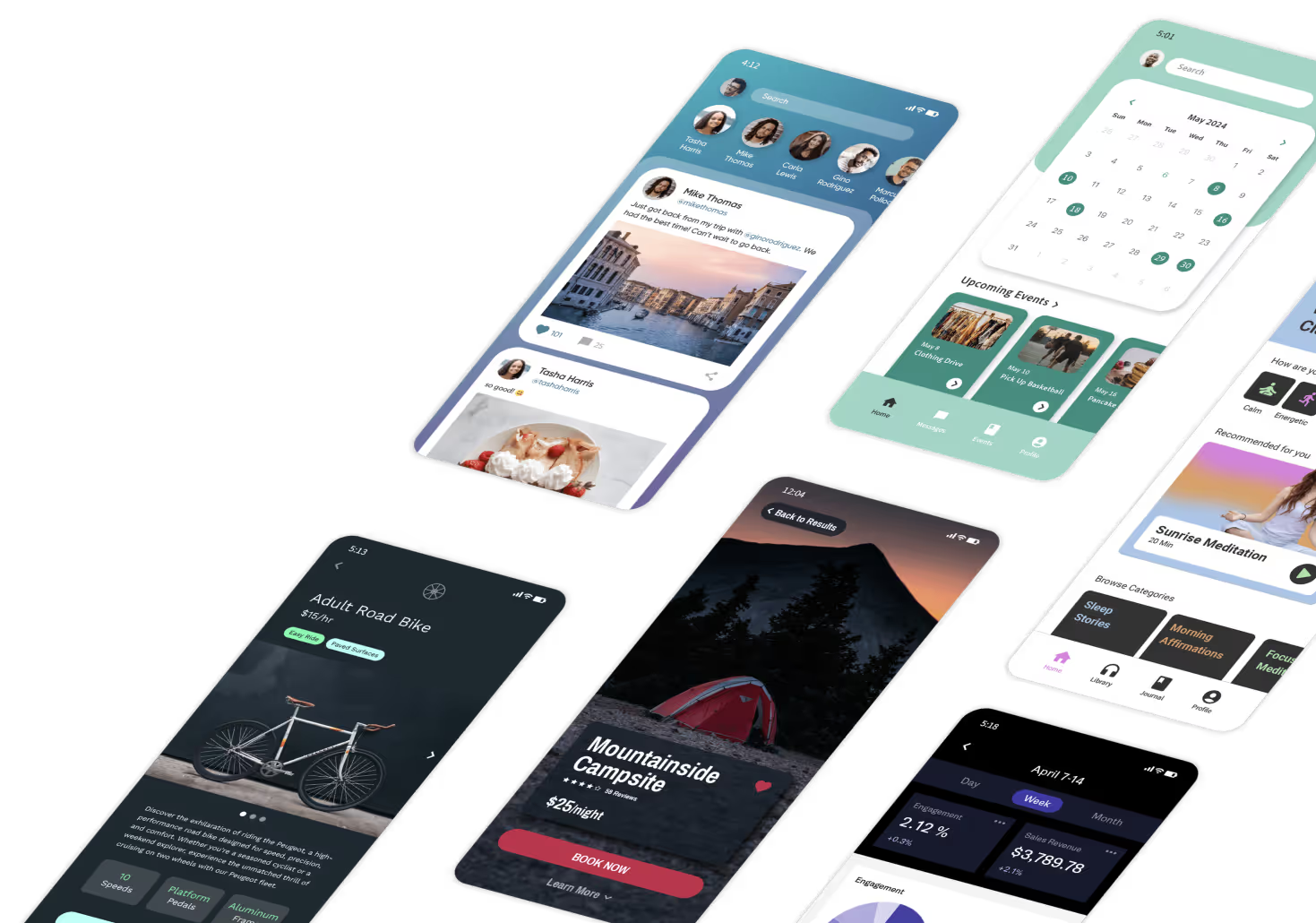
Building a meditation app like Headspace means solving multiple technical challenges at once: streaming audio that plays reliably in the background, tracking user progress across sessions, managing subscription tiers, and delivering a serene interface that feels native on every device. For wellness entrepreneurs and meditation teachers, traditional development presents a steep barrier—requiring separate codebases for iOS and Android, expertise in Swift and Kotlin, and months of engineering time before a single user can download your app.
That's where Adalo comes in. Adalo is a no-code app builder for database-driven web apps and native iOS and Android apps—one version across all three platforms. AI-assisted building and streamlined publishing enable launch to the Apple App Store and Google Play in days rather than months.
Why Adalo Works for Building a Meditation App
Adalo is a no-code app builder for database-driven web apps and native iOS and Android apps—one version across all three platforms, published to the Apple App Store and Google Play. This makes it the perfect solution for wellness entrepreneurs who want to create a Headspace-style meditation experience without hiring separate development teams for each platform or learning complex programming languages.
For meditation apps specifically, reaching users through the App Store and Google Play is critical—people searching for mindfulness tools expect to download them directly to their phones. Adalo's native compilation ensures your app delivers the smooth audio playback, reliable push notifications for daily practice reminders, and offline access that meditation users demand, all while you focus on creating calming content rather than managing technical infrastructure.
Building a meditation app like Headspace requires combining audio playback, user progress tracking, subscription management, and a calming interface that works seamlessly across mobile and web. Traditional development demands expertise in multiple programming languages, separate codebases for iOS and Android, and months of engineering time—putting the project out of reach for most wellness entrepreneurs and content creators.
Adalo, an AI-powered app builder, solves this challenge by letting you create database-driven web apps and native iOS and Android apps from a single codebase. One build publishes to the Apple App Store, Google Play, and web—what used to require three separate development efforts now happens once. With AI-assisted building and streamlined publishing, you can launch in days rather than months.
Why Adalo Works for Building a Meditation App
Meditation apps demand native mobile features that web wrappers struggle to deliver: push notifications for daily practice reminders, reliable offline access to guided sessions, and seamless background audio playback. Adalo compiles to true native iOS and Android code, ensuring your app performs like apps built by traditional development teams.
App store distribution is essential for meditation apps because users expect to find wellness tools where they already discover apps. With Adalo, you build once and publish everywhere—reaching users on their phone during a morning commute or on their desktop at home. The platform handles the complex App Store submission process, so you can focus on crafting calming content rather than wrestling with certificates and provisioning profiles.
This comprehensive tutorial walks you through creating a professional meditation and mindfulness app using Adalo's platform. You'll build guided audio sessions, timers, progress tracking, subscription features, and a calming UI—without writing code. U.S. adult meditation use more than tripled from 2012 to 2017, underscoring strong demand for digital mindfulness tools.
Why Build a Mindfulness App
Market Opportunity for Meditation Apps
Ada, Adalo's AI builder, lets you describe what you want and generates your app. Magic Start creates complete app foundations from a description, while Magic Add adds features through natural language.
Meditation and mindfulness continue to see broad consumer adoption across demographics. The barrier to entry has dropped significantly—wellness creators can now ship professional apps quickly with fewer resources than ever before.
Benefits of AI-Powered App Building
- Speed: Visual development shortens iteration cycles so you can test content and flows fast. Magic Start generates complete app foundations from descriptions, turning days of planning into minutes.
- Cost Efficiency: Avoid large up-front engineering budgets; scale plans as usage grows. Adalo's paid plans start at $36/month with no usage-based charges.
- Cross-Platform: Design once and publish to iOS, Android, and web from a single codebase.
- Extensibility: Add payments, automations, and backends via Marketplace and Integrations.
Getting Started with Adalo as Your App Builder
Creating Your Adalo Account
- Go to Adalo.com and sign up
- Verify your email
- From the dashboard, click Create New App
- Choose Mobile App (ideal for meditation use cases)
- Name your app (e.g., "MindfulDay") and select Start from Scratch—or use Magic Start to generate a foundation by describing your meditation app concept
Understanding the Builder Interface
- Left Sidebar: Components, actions, database
- Canvas: Drag-and-drop screen layout—Adalo can display up to 400 screens at once for easy navigation of complex apps
- Right Panel: Properties and styles
- Top Bar: Preview, share, and publish
The visual builder has been described as "easy as PowerPoint" by users, making it accessible even for first-time app creators. Explore the editor with the guided product tour on Adalo's product page.
Building the Database Structure
Step 1: Create Core Collections
Open Database in the left sidebar. With Adalo's paid plans offering unlimited database records, you can store as many meditation sessions, user profiles, and progress entries as your app needs without hitting caps.
Users (enhanced)
Add properties:
- Profile Image (Image)
- Meditation Streak (Number)
- Total Sessions (Number)
- Total Minutes (Number)
- Subscription Status (Text): "Free", "Premium"
- Subscription End Date (Date)
- Preferred Categories (Text or Relation)
- Time Zone (Text)
- Notification Preferences (True/False)
Meditations
- Title (Text)
- Description (Text – Multiline)
- Duration (Number, minutes)
- Category (Text: Sleep, Focus, Anxiety, Stress, etc.)
- Difficulty (Text: Beginner/Intermediate/Advanced)
- Audio File (File)
- Thumbnail Image (Image)
- Is Premium (True/False)
- Play Count (Number)
- Created Date (Date – Automatic)
Sessions
- Start Time (Date & Time)
- End Time (Date & Time)
- Duration Completed (Number)
- Completed (True/False)
- Notes (Text – Optional)
For database basics and relationships, see Adalo Database Documentation.
Step 2: Set Up Relationships
- Sessions → Users: Many-to-One (a user has many sessions)
- Sessions → Meditations: Many-to-One (a meditation has many sessions)
- Users ↔ Meditations (Favorites): Many-to-Many
With the right data relationship setups, Adalo apps can scale beyond 1 million monthly active users. The platform's modular infrastructure grows with your user base.
Designing Your Mindfulness App's User Interface
Choosing Calming Color Schemes
- Go to Settings → Branding
- Choose soft, muted colors (e.g., blues, greens, warm neutrals)
- Pick readable fonts (e.g., Inter, Lato)
- Keep visual noise low, spacing generous
See Responsive Design for multi-device layout guidance.
Creating Intuitive Navigation
- Bottom nav with 4 tabs: Home, Discover, Progress, Profile
- Keep icons consistent, label clearly
- Use Lists and Cards for content tiles
Building Core Meditation Features with Adalo
Adding Audio Components
- Install an audio player from the Adalo Marketplace
- Create a Player screen: artwork image, title text, audio player, and basic controls
- Bind the audio source to Meditations → Audio File
Magic Add can help here—describe the feature you want ("add an audio player with play/pause controls and a progress bar") and the AI assists with implementation.
Creating Timer Functions
- Add a Countdown or Timer component (Marketplace)
- Provide quick-select durations (5/10/15/20 min)
- Actions:
- On start → create Sessions record
- On complete → set Completed = true and update Duration Completed
Building Session Libraries
- Home: Featured meditations, "Continue Listening," and category chips
- Discover: Category grid + filterable list
- Search: Text input bound to Meditations.Title/Description
Setting Up User Profiles and Progress Tracking
Implementing User Authentication
- Welcome: Calming hero image, two buttons (Sign Up, Log In)
- Sign Up: Email, password, name, time zone, notification opt-in
- Personalize: Goals (e.g., sleep, focus), preferred session length, categories
For user accounts and templates, see User Profile & Account Templates.
Creating Progress Dashboards
- Stats Card: Streak, total minutes, sessions/week, top category
- Charts: Weekly minutes bar, calendar "heatmap" (list-based)
- Achievements: "7-Day Streak," "100 Sessions," etc.
You can surface external analytics via External Collections if needed. X-Ray, Adalo's performance monitoring tool, helps identify any issues before they affect users as your app scales.
Integrating Premium Features
Adding Payment Processing
- Use in-app purchases for mobile (Apple/Google) through IAPHUB for Adalo
- Use Stripe for web or purchases not subject to app-store billing (install via Marketplace)
Create Subscription Tiers (Example)
- Free: Limited daily sessions, basic library access
- Premium Monthly: Full library, offline downloads*, advanced stats
- Premium Annual: Same benefits at a discounted annual rate
*Robust offline media downloads can be limited on visual builders; test your flow thoroughly across devices.
Content Gating Logic
- Check Users → Subscription Status
- Lock premium items with an overlay → Upgrade CTA
- After purchase, update user's status and unlock content
Creating Meditation Content Management
Organizing Meditation Libraries
- Admin screens: bulk upload audio, set categories/tags, mark premium/free
- Auto-generate featured rows (e.g., "New This Week," "Popular for Sleep")
Admin Dashboards
- Content Dashboard: Edit/delete meditations, view play counts
- User Analytics: Active users, conversion rate, popular content
- Notifications: Schedule new-content announcements and streak nudges
Automations can be extended via Zapier Integration.
Testing Your App Across Devices
Mobile Device Testing
- Use Adalo's mobile preview app to test iOS and Android behavior
- Validate audio streaming, timer accuracy, and navigation flows
- Check list performance on older devices—Adalo 3.0's infrastructure runs 3-4x faster than previous versions
Web Browser Compatibility
- Preview in Chrome, Safari, Firefox, and Edge
- Optimize media sizes and paginate long lists
- Confirm layout on tablet and large-screen devices
Performance tips: Optimize App Performance.
Publishing to App Stores with Adalo
Preparing for App Store Review
- Assets: App name, description, keywords, privacy policy & terms, screenshots
- Screenshots: 6.7-inch iPhone and 5.5-inch iPhone; include iPad if supported
- Follow store-specific content and privacy guidelines
Overview: Adalo Publishing
Google Play Store Requirements
- Required assets include app icons in multiple sizes and a Feature Graphic (1024×500) (Store listing assets)
- Set up Internal, Closed, or Open testing tracks (internal supports up to 100 testers; no minimum) (Testing tracks)
- New apps must use Android App Bundles (AAB)
- Developer accounts: Apple $99/year, Google Play $25 one-time
Unlike platforms that require separate builds for web and mobile, Adalo publishes to all three platforms from one codebase with unlimited updates once published.
Growing and Monetizing Your Mindfulness App
Implementing Subscription Models
- Offer a short free trial for premium
- Gate advanced courses, sleep stories, and statistics behind subscription
- Use "Upgrade" prompts at natural moments (e.g., after a streak milestone)
User Retention Strategies
- Personalization: Recommend sessions by time of day and past history
- Habits: Streaks, badges, and gentle reminder notifications
- Fresh Content: Release new meditations weekly
- Community: Optional challenges or group sessions (list-based)
Platform Comparison for Meditation Apps
When choosing an app builder for your meditation app, consider how each platform handles the specific needs of wellness applications:
| Feature | Adalo | Bubble | Glide |
|---|---|---|---|
| Starting Price | $36/month | $59/month | $60/month |
| Native iOS/Android | Yes | Web wrapper only | No |
| App Store Publishing | Included | Separate process | Not supported |
| Database Records | Unlimited (paid) | Limited by Workload Units | Limited with charges |
| Usage-Based Charges | None | Yes | Yes |
Bubble offers more customization options, but that flexibility often results in slower applications that can struggle under increased load. For meditation apps where smooth audio playback and reliable performance matter, Adalo's native compilation provides a more consistent user experience.
Platform Limitations and Workarounds
Critical Constraints to Address
Performance Considerations
- Very large collections can slow list rendering—paginate and optimize queries
- Deeply nested lists ("lists within lists") increase query/display cost
- Heavy analytics and complex filtering benefit from an external backend
Real-Time Limitations
- Native real-time/live syncing isn't built-in
- Manual or timed refresh is common for "live" experiences
- Use external services via Custom Actions if you need real-time features
Workaround Strategies
- Move heavy queries to External Collections or a backend like Xano
- Use a real-time layer (e.g., Firebase) through Custom Actions
- Segment admin/content tools into a separate app
- Compress media and paginate lists
Cost Breakdown and Resources
Adalo Subscription Costs
- Plans start at $36/month with no usage-based charges and unlimited app store updates
- See current plans and limits on the official Adalo Pricing page
Store & Platform Fees
- Apple Developer Program: $99/year
- Google Play Console: $25 one-time
Payments & Integrations
- Mobile in-app purchases: IAPHUB for Adalo
- Web/non-IAP payments: Stripe (Marketplace) and Stripe Pricing
Marketplace Components
- Explore audio players, timers, payments, maps, and more in the Adalo Component Marketplace
Additional Resources
- Adalo Component Marketplace — specialized components
- Database Documentation — collections, relationships, formulas
- Custom Actions Guide — connect external APIs/backends
- App Templates — jump-start layouts and flows
- Video Tutorials — step-by-step builds
This Headspace-style meditation app includes guided audio, timers, progress tracking, subscriptions, notifications, and a calming UI. Features like robust offline media downloads, live presence, and advanced analytics aren't native; integrate external services via Custom Actions or External Collections if needed. Over 3 million apps have been built on Adalo, with the platform processing millions of data requests daily—your meditation app will be in good company.
FAQ
Why choose Adalo over other app building solutions?
Adalo is an AI-powered app builder that creates true native iOS and Android apps from a single codebase. Unlike web wrappers, it compiles to native code and publishes directly to both the Apple App Store and Google Play Store. With paid plans starting at $36/month, no usage-based charges, and unlimited database records, it's built for meditation apps that need to scale.
What's the fastest way to build and publish an app to the App Store?
Adalo's drag-and-drop interface and AI-assisted building let you go from idea to published app in days. Magic Start generates complete app foundations from descriptions, and the platform handles the complex App Store submission process—certificates, provisioning profiles, and store guidelines are managed for you.
How long does it take to build a meditation app with Adalo?
A basic meditation app with audio playback, user accounts, and progress tracking can be built in a weekend. More complex apps with subscriptions, extensive content libraries, and admin dashboards typically take 2-4 weeks depending on your familiarity with the platform.
Do I need coding experience to build a meditation app?
No coding experience is required. Adalo's visual builder has been described as "easy as PowerPoint" by users. You drag and drop components, set up database relationships visually, and configure actions through menus rather than code.
How much does it cost to build and publish a meditation app?
Adalo plans start at $36/month with no usage-based charges. Add the Apple Developer Program ($99/year) and Google Play Console ($25 one-time) for app store publishing. Total first-year cost for a published app on both stores: approximately $556.
Can I add subscription payments to my meditation app?
Yes. Use IAPHUB for mobile in-app purchases (Apple/Google) and Stripe for web payments, both available through the Adalo Marketplace. You can create multiple subscription tiers and gate premium content based on user subscription status.
Which is more affordable, Adalo or Bubble?
Adalo starts at $36/month with unlimited usage and database records on paid plans. Bubble starts at $59/month with usage-based Workload Unit charges and record limits. For meditation apps, Adalo's predictable pricing eliminates bill shock as your user base grows.
Is Adalo better than Glide for meditation apps?
For meditation apps, yes. Glide doesn't support Apple App Store or Google Play Store publishing, which is essential for reaching mobile users. Adalo creates true native apps that can be published to both stores, with features like push notifications and background audio playback.
Can my meditation app scale to thousands of users?
Yes. Adalo's modular infrastructure scales to serve apps with over 1 million monthly active users. The Adalo 3.0 infrastructure overhaul (late 2025) made apps 3-4x faster, and paid plans have no database record limits—your content library and user base can grow without hitting caps.
What features should a meditation app have?
Essential features include guided audio sessions, meditation timers, user progress tracking (streaks, total minutes), push notification reminders, and a calming UI. Premium features to consider: subscription tiers, offline access, personalized recommendations, and achievement badges.