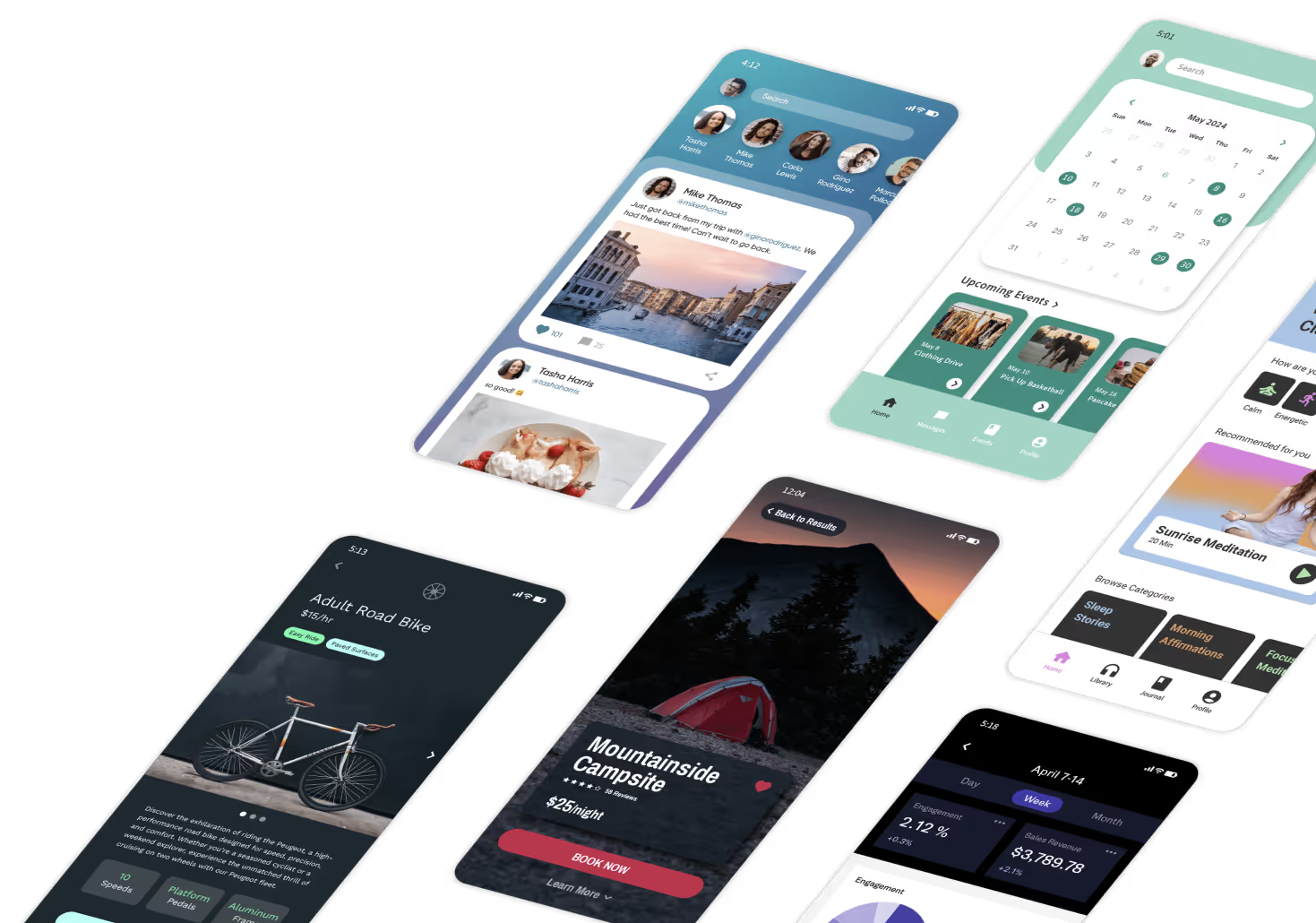
Building a meditation app like Calm means tackling audio playback, user accounts, progress tracking, and content libraries—all while delivering a seamless experience across iOS, Android, and web. For indie founders and small teams, the traditional route of hiring separate development teams for each platform quickly becomes prohibitively expensive and logistically overwhelming.
That's where Adalo comes in. Adalo is a no-code app builder for database-driven web apps and native iOS and Android apps—one version across all three platforms. AI-assisted building and streamlined publishing enable launch to the Apple App Store and Google Play in days rather than months, making it possible to enter the booming wellness market without the steep costs or lengthy timelines of conventional development.
Why Adalo Works for Building a Meditation App
Adalo is a no-code app builder for database-driven web apps and native iOS and Android apps—one version across all three platforms, published to the Apple App Store and Google Play. This unified approach makes it perfect for creating a Calm-style meditation app, where you need to manage audio libraries, user progress, and subscription features across every device your users might own.
For wellness apps like meditation platforms, native app store presence isn't optional—it's essential. Users expect to find mindfulness tools in the App Store and Google Play, and they depend on push notifications for daily practice reminders and streak motivation. With Adalo, you can deliver that polished, native experience without writing code or managing separate development teams for each platform.
Creating a meditation app like Calm requires handling complex features—audio playback, user accounts, progress tracking, and content libraries—across multiple platforms simultaneously. Traditional development means hiring separate teams for iOS, Android, and web, then coordinating updates across three codebases, which quickly becomes expensive and time-consuming for indie founders and small teams.
Adalo, an AI-powered app builder, solves this challenge by letting you build database-driven web apps and native iOS and Android apps from a single project. With AI-assisted building and streamlined publishing, you can launch to the Apple App Store and Google Play in days rather than months—giving you the speed and flexibility to enter the booming wellness market while keeping costs manageable.
Why Adalo Works for Building a Meditation App
Adalo creates true native iOS and Android apps—not web wrappers—from a single codebase that also publishes to the web. This makes it the ideal foundation for a Calm-style meditation app that users can download directly from their preferred app store, just like the real thing.
For meditation apps, native app store presence is essential. Users expect to find wellness tools in the App Store and Google Play, and they rely on push notifications for daily meditation reminders and streak tracking. With Adalo's AI-assisted platform, you can build a polished, cross-platform meditation experience that engages users consistently, all without hiring developers or learning to code.
With the mental health app market projected to reach USD 17.5 billion by 2030, creating your own meditation platform presents a significant business opportunity. Over 3 million apps have been created on Adalo, with the visual builder described as "easy as PowerPoint"—and the AI features Builder promises even faster creation through natural language prompts.
Why Build a Meditation App Like Calm Without Code
Market Opportunity for Meditation Apps
The wellness app category continues to grow, and no-code adoption is accelerating. Gartner forecasts that by 2026, 70% of new applications developed by enterprises will use low-code or no-code technologies. For founders entering the meditation space, this means faster iteration, lower upfront cost, and a shorter path to launch.
Benefits of AI-Powered App Building
- Faster time to market: Visual building and AI assistance reduce development cycles dramatically
- Lower development costs: Smaller teams, fewer specialized roles required
- Creative control: Directly design and ship your experience without developer intermediaries
- Cross-platform from one build: Publish to iOS, Android, and web from a single project with Adalo's publishing and responsive design
Understanding Calm App Features and User Experience
Core Features Analysis
A modern meditation app typically includes:
- Guided meditations (topic- and duration-based)
- Sleep stories and relaxing audio content
- Breathing exercises and quick stress-relief tools
- Daily check-ins or mood tracking
- Progress/streaks and achievements
- Courses/masterclasses (structured learning)
Free vs Premium Features
Free Tier
- Limited meditations
- Basic breathing exercises
- A small sample of sleep stories
- Daily quotes or tips
Ada, Adalo's AI builder, lets you describe what you want and generates your app. Magic Start creates complete app foundations from a description, while Magic Add adds features through natural language.
Premium Tier
- Full content library
- Offline-ready playback (where feasible—see "Platform Limitations")
- Advanced tracking and longer programs
- New content releases
Setting Up Your Adalo Account and Project Structure
Step 1: Create Your Adalo Account and App
- Go to Adalo.com and sign up
- Click Create New App
- Choose Mobile App
- Name your app (e.g., "Mindfulness")
- Select Start from Scratch or use Magic Start to generate a foundation from a description
Step 2: Configure Your App Theme
- Choose calming primary colors (soft blue/purple)
- Select a complementary secondary color for CTAs
- Pick modern, readable fonts
- Set app icon and splash screen
- Continue to the Adalo builder
Step 3: Plan Your Database Architecture
Review Adalo's data model concepts and collections in the Adalo docs. You'll create collections for content (Meditations, Sleep Stories), taxonomy (Categories), and user data (Users, Moods), and relate them for filtering and personalization. With no record limits on paid plans, you can build an extensive content library without worrying about database caps.
Designing the Meditation Library and Content Management
Step 4: Create the Meditations Collection
- Click Database in the left sidebar
- + Add Collection → Meditations
- Add properties:
- Title (Text)
- Description (Text – Multiline)
- Duration (Number, minutes)
- Category (Text or Relation to Categories)
- Audio File (File)
- Thumbnail Image (Image)
- Instructor Name (Text)
- Premium Only (True/False)
- Play Count (Number)
- Created Date (Date & Time – Automatic)
Step 5: Build the Sleep Stories Collection
- + Add Collection → Sleep Stories
- Properties:
- Story Title (Text)
- Narrator (Text)
- Synopsis (Text – Multiline)
- Duration (Number)
- Audio File (File)
- Cover Image (Image)
- Background Sound (Text)
- Premium Content (True/False)
Step 6: Set Up Categories and Tags
- + Add Collection → Categories
- Properties: Category Name, Icon, Description, Display Order
- Relationships:
- Meditations → Categories (Many-to-One)
- Sleep Stories → Categories (Many-to-One)
Building User Authentication and Profile Features
Step 7: Enhance the Users Collection
Add custom fields to Users:
- Subscription Type (Text: Free / Premium Monthly / Premium Annual)
- Subscription End Date (Date & Time)
- Total Minutes Meditated (Number)
- Current Streak (Number)
- Longest Streak (Number)
- Preferred Categories (Relation to Categories)
- Notifications Enabled (True/False)
- Daily Reminder Time (Date & Time)
Step 8: Create User Onboarding Flow
- Welcome screen (brand, value proposition)
- Onboarding sequence:
- Goals (Focus, Stress, Sleep)
- Preferred time of day
- Experience level
- Sign-up form with email, password, name (optional). See Adalo's profile & account template.
Step 9: Build the Profile & Settings
Profile screen:
- Profile image
- Streaks and stats
- Achievements
- Subscription status
Settings screen:
- Notifications (on/off)
- Download quality (if implementing limited offline)
- Account management and privacy
Creating Sleep Stories and Relaxation Features
Step 10: Design the Sleep Timer Interface
- Presets: 5, 10, 15, 30, 45, 60 minutes
- Custom timer
- "End of track" option
- Visible countdown and gentle fade-out
Step 11: Build Background Sound Mixer
Soundscapes collection:
- Name (Rain, Ocean, White Noise)
- Audio File
- Icon
- Default Volume
UI:
- Volume sliders per sound
- On/off toggles
- Save/delete custom mixes
Step 12: Implement Sleep Story Player
- Cover image, play/pause, 15s skip, progress bar
- Sleep timer integration
- Optional narrator versions
- Optional background sound overlay
Implementing Subscription Models and Payment Processing
Step 13: Install Payment Components
- Browse the Adalo Marketplace
- Add IAPHUB for in-app purchases/subscriptions on iOS and Android
- Add Stripe components for web checkout
Important: For digital content in native apps, Apple and Google require platform-native billing. See Apple's payments guidelines and Google Play's billing policy. Use Stripe for web purchases or cases not subject to in-app purchase rules.
Step 14: Configure Subscription Tiers
Common patterns:
- Free
- 5–7 basic meditations
- A few sleep stories
- Daily quote / basic tracking
- Premium Monthly
- Full library
- Longer programs and courses
- Limited offline playback (if implemented)
- Advanced statistics
- Premium Annual
- All monthly features
- Early access or bonus content
- (On iOS) Family Sharing depends on Apple's policies
Step 15: Set Up Payment Flows
- Mobile: Configure products in App Store Connect / Play Console; connect via IAPHUB in Adalo
- Web: Create products in Stripe; build a simple checkout and post-purchase confirmation
- Management: Upgrade/downgrade UI, cancellation path, receipts/history
Adding Push Notifications and Daily Reminders
Step 16: Configure Notifications
- Enable notifications in Adalo settings
- Triggers: Daily reminder, streak nudges, new content, achievement unlocked
- For workflows and advanced automations, see Zapier integration
Step 17: Build Daily Check-in
Daily Mood collection:
- User (Relation)
- Mood Rating (1–5)
- Notes (Text)
- Date (Date & Time)
UI:
- Emoji selector
- Optional journal input
- Suggested content based on mood
Step 18: Implement Smart Recommendations
- Personalize by time of day, recent activity, goals, and mood
- Show "Recommended for you" on the Home screen
- Refresh recommendations periodically
Testing Your Meditation App Across Platforms
Step 19: Create Test Content Library
- 5–10 meditations per category
- 3–5 sleep stories
- A mix of free vs premium
- Various durations
Step 20: Test Core User Flows
- Onboarding and sign-up
- Free user experience limits
- Premium purchase flows (mobile and web)
- Audio playback and timers
- Push notification delivery
Step 21: Cross-Platform Testing
- iOS and Android device testing
- Web app responsiveness via PWA publishing
- Verify payment flows per platform
- Validate media loading and caching
Use Adalo's X-Ray feature to identify performance issues before they affect users—it highlights potential bottlenecks in your app's data structure and component setup.
Publishing to App Stores and Web Platforms
Step 22: Prepare App Store Assets
- 5–8 screenshots per platform
- Clear app description and keywords
- Categories and privacy policy
- (Optional) App preview video
Step 23: Submit to Apple App Store
- Enroll in Apple Developer ($99/year)
- Configure App Store Connect listing
- Generate iOS build from Adalo
- Submit for review
- Most reviews complete in 24–48 hours, though some take longer
Step 24: Publish to Google Play Store
- Create Google Play Developer account ($25 one-time)
- Complete listing and disclosures
- Upload an Android App Bundle (AAB) (required for new apps)
- Reviews vary and can take up to 7 days or longer
Step 25: Deploy Web Version
- Use Adalo's web publishing with custom domain
- Configure SSL and analytics
- Optimize SEO meta tags
- Launch as a PWA for desktop/mobile access
One of Adalo's key advantages: when you update your app, changes deploy to web, iOS, and Android simultaneously. Competitors using web wrappers for mobile often require separate update processes for each platform.
Why Adalo Makes Meditation App Development Accessible
Adalo's platform brings together visual UI building, collections/relations for your content and users, push notifications, and publishing paths for native and web apps. The component marketplace offers official and third-party components (e.g., payments, maps, media) that you can assemble without custom code.
Following the Adalo 3.0 infrastructure overhaul in late 2025, the platform is now 3-4x faster with modular infrastructure that scales to serve apps with over 1 million monthly active users. With responsive design and publishing workflows for iOS, Android, and web, you can ship a polished meditation experience from a single project—and scale it as your user base grows.
Platform Limitations and Workarounds
Critical Constraints to Address
Performance & Data
- Very large collections and deep "lists within lists" can impact performance—use X-Ray to identify issues
- Heavy media usage (large audio files) increases load time and storage needs
- For large-scale apps, consider external backends and CDN delivery for media
Real-Time & Offline
- Adalo does not provide full native real-time synchronization; use push notifications and periodic refresh for updates
- Robust offline media downloads/playback are limited; plan carefully with caching and test extensively
- For real-time features, consider external services via Custom Actions or integrations
Workaround Strategies
- Use External Collections/APIs for large datasets or advanced logic
- Serve audio via optimized hosting/CDN; compress files and provide multiple bitrates if possible
- Limit list sizes and implement "load more" pagination
- Optimize images (dimensions and compression)
- Separate concerns: content management workflow off-app; app focuses on playback and UX
Cost Breakdown and Resources
Adalo Subscription
Adalo's web and true-native mobile builder starts at $36/month with unlimited usage and app store publishing. All plans now include unlimited app updates once published—no usage-based charges or bill shock. Compare this to Bubble's web and mobile wrapper offering starting at $59/month with usage-based Workload Unit charges and record limits, or Glide at $60/month without App Store publishing support.
Additional Fees
- Apple Developer Program: $99/year (enroll)
- Google Play Developer: $25 one-time (register)
- Payment processing fees depend on your provider:
- In-app: Apple/Google platform billing (see Apple payments and Google Billing)
- Web: Stripe (see components in the Marketplace)
Additional Resources
- Database fundamentals (Adalo Help Center): https://help.adalo.com/database
- Publishing overview: https://www.adalo.com/features/publishing
- Responsive design: https://www.adalo.com/features/responsive-design
- Zapier automation: https://www.adalo.com/features/zapier
Note: This Calm-style clone implements a broad meditation experience—guided sessions, sleep content, timers, tracking, subscriptions—within Adalo's visual builder. For features like extensive offline downloads, background audio processing, or real-time social feeds, validate with prototypes and consider external services (APIs/CDNs) connected via Adalo integrations to ensure performance and compliance with app store policies.
FAQ
Why choose Adalo over other app building solutions?
Adalo is an AI-powered app builder that creates true native iOS and Android apps—not web wrappers. It compiles to native code and publishes directly to both the Apple App Store and Google Play Store from a single codebase. Unlike competitors with usage-based charges, Adalo offers unlimited usage on all plans with no record limits on paid tiers.
What's the fastest way to build and publish an app to the App Store?
Adalo's drag-and-drop interface and AI-assisted building let you go from idea to published app in days rather than months. Magic Start generates complete app foundations from descriptions, and Adalo handles the complex App Store submission process—certificates, provisioning profiles, and store guidelines—so you can focus on your app's features.
Can I build a meditation app like Calm without coding?
Yes. With Adalo's visual builder, you can create guided meditation libraries, sleep stories, breathing exercises, user progress tracking, and subscription features without writing code. The platform handles database structure, user authentication, and cross-platform publishing automatically.
How do I handle payments and subscriptions in a meditation app built with Adalo?
Adalo integrates with IAPHUB for native iOS and Android in-app purchases and subscriptions, which is required by Apple and Google for digital content. For web payments, you can use Stripe components from the Adalo Marketplace to handle subscriptions and one-time purchases.
Can I add push notifications for daily meditation reminders?
Yes, Adalo supports push notifications that you can configure for daily reminders, streak nudges, new content alerts, and achievement notifications. You can extend notification capabilities using Adalo's Zapier integration for more advanced automation workflows.
How much does it cost to build and publish a meditation app with Adalo?
Adalo plans start at $36/month with unlimited usage and app store publishing. Additional costs include Apple Developer Program ($99/year) and Google Play Developer account ($25 one-time). Payment processing fees apply through Apple/Google billing or Stripe depending on platform.
What are the limitations of building a meditation app with Adalo?
Key limitations include performance considerations with very deep nested lists, limited offline media playback capabilities, and no native real-time synchronization. For large-scale apps, you may need external backends and CDNs for media delivery. Use X-Ray to identify potential issues before launch.
How long does it take to build a meditation app?
With Adalo's visual builder and pre-built components, you can build a functional meditation app in days to weeks depending on complexity. Magic Start accelerates the initial setup by generating database structure and screens from a description, reducing what used to take days of planning to minutes.
Do I need coding experience to build a meditation app?
No coding experience is required. Adalo's visual builder has been described as "easy as PowerPoint." You drag and drop components, configure properties visually, and the platform handles the underlying code for web, iOS, and Android deployment.
Can I publish to both the App Store and Google Play from one build?
Yes. Adalo lets you build once and publish to web, iOS App Store, and Google Play Store from a single project. When you update your app, changes deploy to all platforms simultaneously—unlike web wrapper solutions that may require separate update processes.