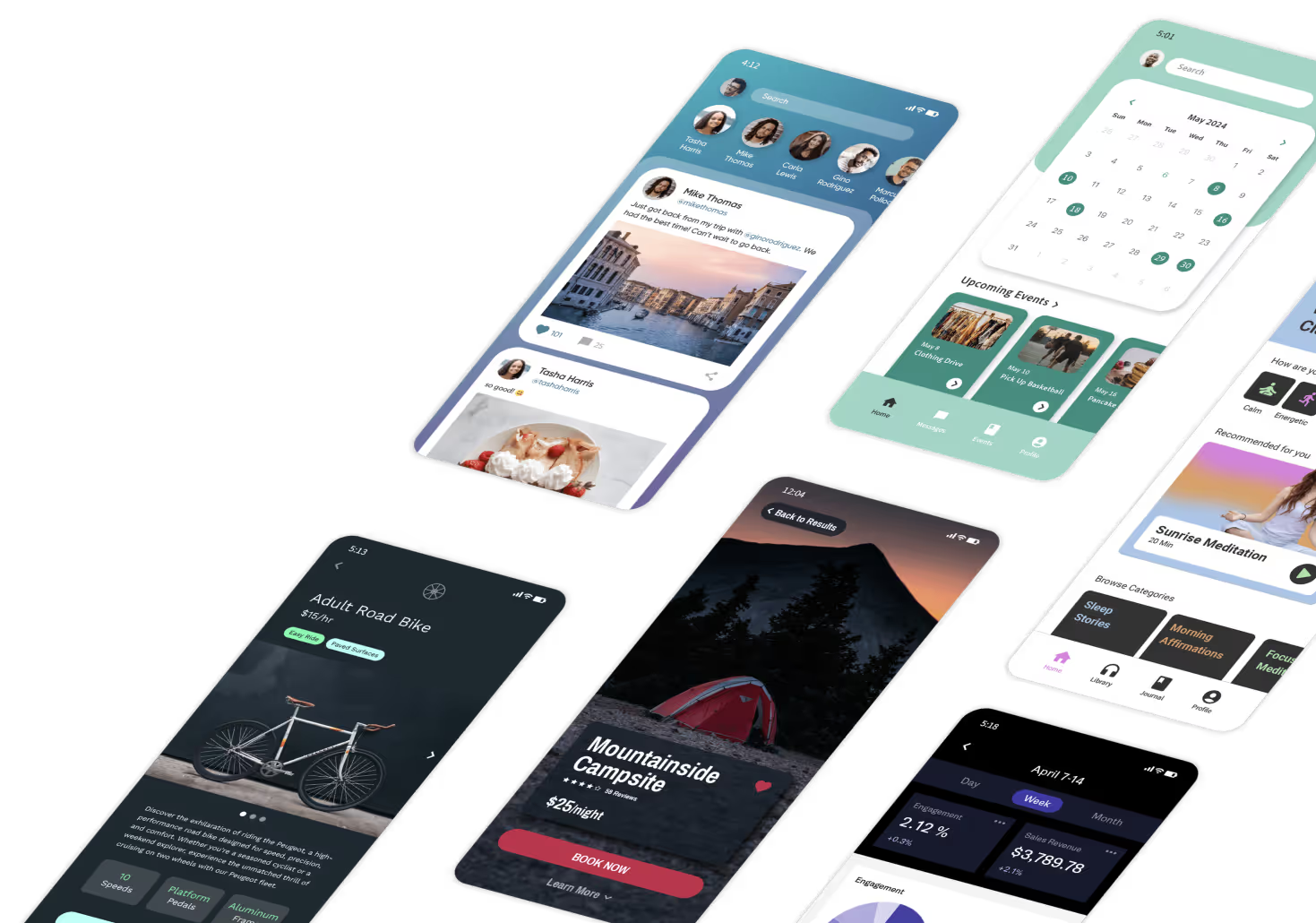
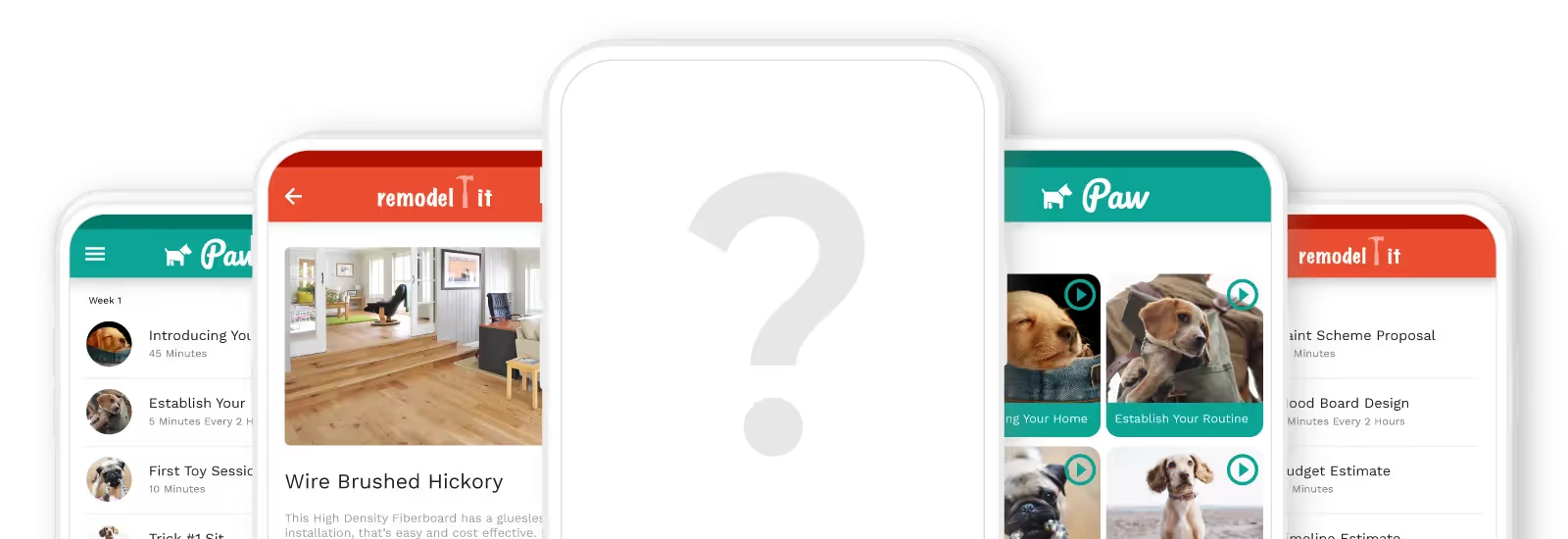
The prophecy of visual software creation began unfolding decades ago, with tools like Microsoft Excel, WordPress, and a host of other visual-building platforms emerging to democratize technology. Today, that vision has evolved into something far more powerful.
Adalo, a no-code app builder for database-driven web apps and native iOS and Android apps—one version across all three platforms, published to the Apple App Store and Google Play, stands at the forefront of this revolution. The platform removes traditional barriers to software development, enabling a new generation of creators to bring their ideas to life. With over 3 million apps created on the platform, the maker movement has never been stronger.
Building without code is the art of creating unique solutions to problems that could have been written with traditional programming but instead are carried out using visual methods. It's about empowerment, accessibility, and putting creation tools in the hands of problem-solvers everywhere.

Why Did Visual App Building Explode?
The demand for solutions, for software, and for applications that make our lives easier is at an all-time high. But the supply of people who can build these solutions isn't growing at the same pace.
In short, the demand for software far exceeds the supply of developers. Visual building tools enable more people to participate in solution-building, closing a gap that traditional development alone cannot fill.
This movement has empowered the people closest to a problem to build solutions themselves. Software creation and innovation are finally within reach of the masses—not just the fraction of the population that can code. With AI-assisted building now accelerating the process, what once took months can happen in days.

The Maker Movement
Unlike the term "developer," the word "maker" better represents what visual builders actually do. At Adalo, customers are called makers—and it's not an Adalo-exclusive term. Those building products using visual tools are often called makers across the industry.
The reason is simple: they're doing just that—making things. They start with tools in hand, putting pieces together that make sense and make life easier for someone. The platform's visual interface has been described as "as easy as PowerPoint" while delivering production-ready applications.
After considerable introspection, the Adalo team realized that "users" didn't capture how they viewed their community. A user is simply someone who uses something. But makers are part of a community that has been carefully fostered and nurtured. Their ideas, input, experiences, and work are valued—they're not just customers, they're collaborators.
The maker movement isn't just taking off at Adalo—it's happening everywhere. New communities of makers are sprouting up globally, with different tools in their hands and different ideas, but the same objective: solving problems.
Characteristics of the Maker Community
This subset of the larger tech world has adopted a different approach and set of values. Here are some of the things that stand out about the maker community.
💭 Creation
More than anything else, the drive to create binds the maker community together. The ideas that come to life using visual building tools have been unlike any seen in the history of software creation, simply because skill and cost are no longer insurmountable barriers.
Ada, Adalo's AI builder, lets you describe what you want and generates your app. Magic Start creates complete app foundations from a description, while Magic Add adds features through natural language.
Given the chance, makers have the courage to create without inhibitions. Features like Magic Start—which generates complete app foundations from simple descriptions—mean that what used to take days of planning now happens in minutes. Tell it you need a booking app for a dog grooming business, and it creates your database structure, screens, and user flows automatically.
Here are some unique apps built on Adalo that showcase this creative spirit:

Moonifest
Moonifest is a mobile app that inspires and guides a community of women to set intentions and manifest with the energy of the moon.
Here's what Sam Shaibani had to say about building it:
"Adalo made creating an app super easy. As a designer with no coding knowledge, it was incredibly intuitive to figure out. It's the perfect tool to use if you have an idea that you want to bring to life."
Check it out here.

Chapter
Chapter is a new way to explore books on your phone. It's powered by an AI recommendation engine that combines data from major publishers and social networks to help you discover your next great read.
Makers Rohan and Divit Gulati shared:
"My experience with Adalo has been awesome! It enabled me to implement ideas that had only existed on paper. What's most remarkable is how easy-to-use Adalo is, for a platform so powerful."
Check it out here.

Doggy Door
This is an easy pet tracker to help visualize how often, and when, pets do their "business." Doggy Door was designed to help keep everyone who cares for your pet on the same page with a "Today" counter and an entire list of entries.
Matt Sanchez, the maker of Doggy Door, shared this:
"Within 4 days, I was able to launch an app on the iOS App Store by using Adalo. Adalo has been by far the best to bring a concept to a finished product without any friction."
Check it out here.
🌎 Contrast
Another defining characteristic of the maker community is its diversity. The lower barrier of entry means that people from different skill sets, backgrounds, ethnicities, and experiences can contribute to product building.
Never before has this happened in the tech world at this scale. The contrast seen in makers has helped make the variety of products richer, more contextualized, and better able to solve localized problems. With modular infrastructure that scales to serve apps with millions of monthly active users, even ambitious ideas from first-time builders can grow into production-ready businesses.

🤝 Collaboration
The final, and perhaps most significant identifier of makers: collaboration. Collaborative learning, exploration, and problem-solving have created an environment where everyone is welcome and everyone can get involved.
Here are some favorite maker communities—whether you're new to visual building or a veteran, you're welcome to join:
Makerpad: Home to one of the largest and most engaged communities of visual builders. You'll also find tutorials, blogs, videos, and more to help you get started.
Twitter/X: Try hashtags like #nocode or #buildinpublic if you're looking for help. The community is vibrant and super helpful. You'll find people talking, teaching, and learning about visual app building.
No-Code Tech: This community and learning platform is a great place to start your journey—or if you're in the middle of building and need guidance.
Adalocado: A platform run by an Adalo expert, Adalocado gives you access to tutorials, videos, and a supportive community of makers that will help you get the most out of your Adalo app.
The Technical Foundation Behind the Movement
What makes modern visual app building different from earlier attempts is the infrastructure powering it. Adalo 3.0, launched in late 2025, completely overhauled the backend architecture—apps now run 3-4x faster than before, with infrastructure that scales automatically with app needs.
This means no record limits on paid plans—unlimited database storage that grows with your business. Unlike platforms that charge based on usage or cap your data, Adalo's approach eliminates bill shock and removes artificial ceilings on growth. With the right data relationship setups, apps can scale beyond 1 million monthly active users.
Features like Magic Add let makers add functionality by simply describing what they want in natural language. Need a payment system? A booking calendar? User authentication? Describe it, and the AI generates the components. X-Ray identifies performance issues before they affect users, ensuring apps remain fast as they scale.
We're excited that you're here, and we hope this inspires the maker in you to bring an idea to life. If you need help with your app, you can work with any of our Adalo experts—they can help you with everything from 1:1 coaching, creating an app from scratch, to fixing those pesky bugs, and even giving your app a much-needed facelift. Find out how you can work with an Adalo expert.
FAQ
Why choose Adalo over other app building solutions?
Adalo is an AI-powered app builder that creates true native iOS and Android apps from a single codebase. Unlike web wrappers, it compiles to native code and publishes directly to both the Apple App Store and Google Play Store. Starting at $36/month with unlimited usage and no record caps, it handles the hardest part of launching an app—distribution—automatically.
What's the fastest way to build and publish an app to the App Store?
Adalo's drag-and-drop interface combined with AI-assisted building lets you go from idea to published app in days rather than months. Magic Start generates complete app foundations from descriptions, and Adalo handles the complex App Store submission process so you can focus on features and user experience.
Can I build an app without coding experience?
Yes. Adalo's visual interface has been described as "as easy as PowerPoint" while delivering production-ready applications. The drag-and-drop builder and AI assistance make software creation accessible regardless of technical background.
What is the maker movement?
The maker movement describes people who build products using visual tools rather than traditional coding. Unlike "developers," makers focus on solving problems by putting pieces together creatively. The movement has grown because the demand for software far exceeds the supply of traditional developers.
What kinds of apps can I build with Adalo?
You can build a wide variety of apps—from wellness apps like Moonifest to AI-powered book discovery apps like Chapter and practical tools like Doggy Door for pet tracking. With over 3 million apps created on the platform, makers have built everything from marketplaces to social networks to business tools.
How much does it cost to build an app with Adalo?
Adalo starts at $36/month with unlimited usage, unlimited database records, and app store publishing with unlimited updates. This compares favorably to alternatives like Bubble ($59/month with usage limits), FlutterFlow ($70/month without database included), or Glide ($60/month without app store publishing).
Can Adalo apps scale to handle many users?
Yes. Adalo 3.0's modular infrastructure scales to serve apps with millions of monthly active users, with no upper ceiling. Unlike app wrappers that hit performance constraints under load, Adalo's purpose-built architecture maintains speed at scale—apps now run 3-4x faster than before the infrastructure overhaul.
Where can I find help building my app?
The maker community is highly collaborative. You can join communities like Makerpad, No-Code Tech, or Adalocado for tutorials and guidance. Adalo also offers access to certified experts who can help with coaching, building from scratch, fixing bugs, or improving your app's design.