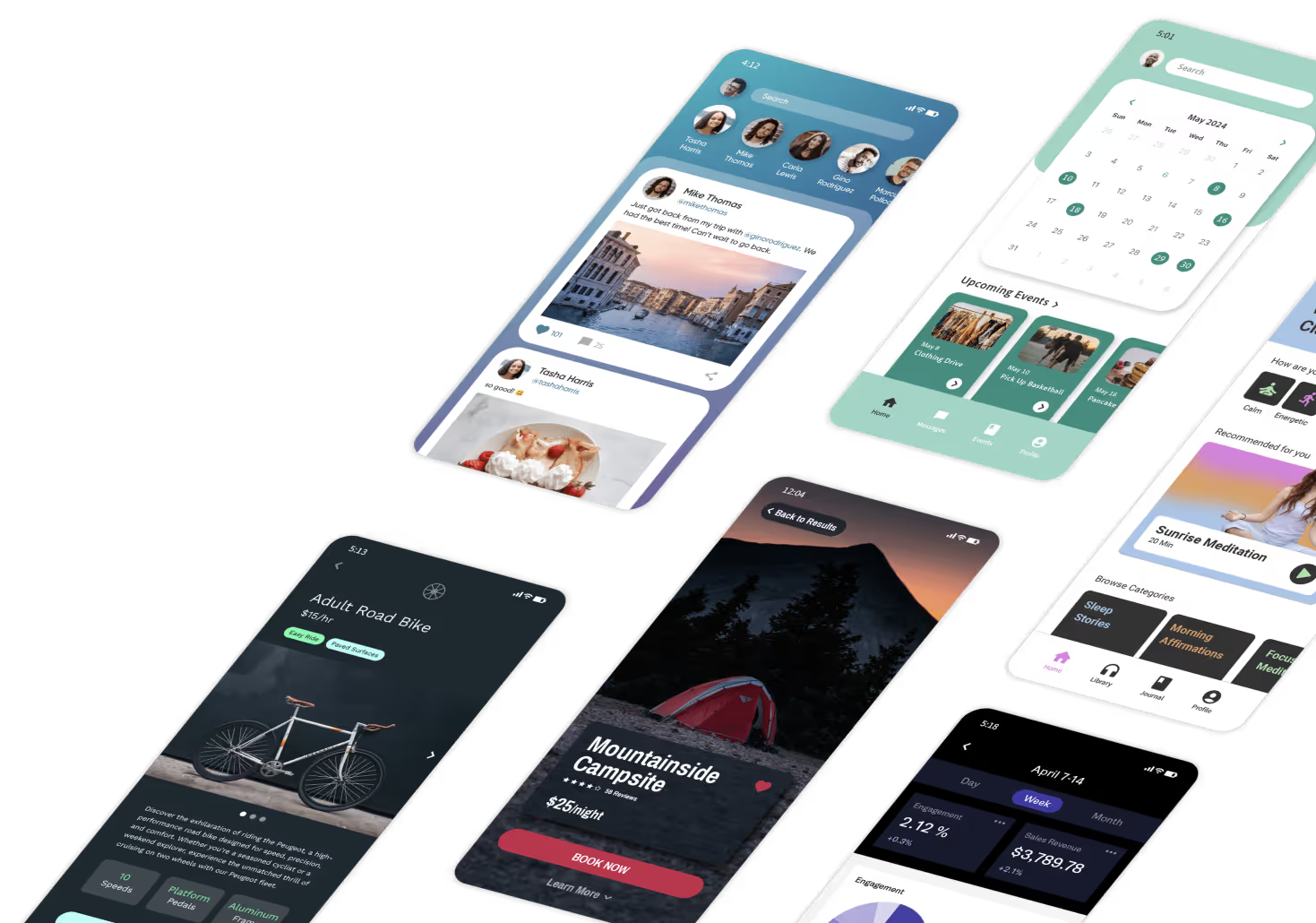
Creating a responsive web app that functions flawlessly across desktops, tablets, and smartphones has long required either deep coding expertise or the budget to hire experienced developers. For entrepreneurs, small business owners, and innovators without technical backgrounds, this barrier transforms promising ideas into indefinite waiting lists while competitors race ahead. The challenge intensifies when you realize that modern users demand seamless experiences on every device—and anything less means lost engagement and missed opportunities.
That's where Adalo changes everything for non-technical creators ready to bring their visions to life. Adalo is a no-code app builder for database-driven web apps and native iOS and Android apps—one version across all three platforms. AI-assisted building and streamlined publishing enable launch to the Apple App Store and Google Play in days rather than months. This powerful combination means you can finally stop waiting on developers and start building the responsive web app your audience needs.
Why Adalo Is Ideal for Creating Responsive Web Apps
When you need a responsive web application that looks great on any device without the steep learning curve of traditional development, the right platform makes all the difference. Adalo is a no-code app builder for database-driven web apps and native iOS and Android apps—one version across all three platforms, published to the Apple App Store and Google Play. This means you can build once and reach users everywhere—whether they're browsing on a desktop, scrolling on a tablet, or tapping through on their smartphone.
The ability to publish across multiple platforms from a single project isn't just convenient—it's essential for maximizing your app's reach in 2026. With Adalo's built-in responsive design capabilities and push notification features, you can keep users engaged no matter how they access your application. This unified approach eliminates the complexity of managing separate codebases while ensuring your web app delivers the seamless, professional experience modern users demand.
Building a responsive web app that works seamlessly across desktops, tablets, and smartphones has traditionally demanded extensive coding knowledge, significant financial investment, and months of development time. For entrepreneurs, small business owners, and teams without dedicated developers, this technical barrier often means watching competitors launch while promising ideas remain stuck in the planning phase. The pressure intensifies as mobile traffic continues to dominate and users expect flawless experiences regardless of which device they're using.
This is exactly where Adalo changes the game for aspiring app creators. Adalo is an AI-powered app builder for database-driven web apps and native iOS and Android apps—one version across all three platforms. AI-assisted building and streamlined publishing enable launch to the Apple App Store and Google Play in days rather than months. By eliminating the need for traditional programming skills, Adalo empowers anyone with a vision to transform concepts into fully functional, responsive applications that meet modern user expectations.
Why Adalo Is Perfect for Building Responsive Web Apps
Adalo is an AI-powered app builder for database-driven web apps and native iOS and Android apps—one version across all three platforms, published to the Apple App Store and Google Play. This unified approach means you can create a responsive web application that automatically adapts to any screen size while simultaneously deploying native mobile versions—all from a single project, without writing a line of code.
With mobile traffic dominating web usage and users expecting seamless experiences across devices, having true cross-platform capabilities is essential. Adalo's visual builder lets you design once and deploy everywhere, complete with push notifications to keep users engaged whether they're accessing your app through a browser or their smartphone. This eliminates the need to manage separate codebases while ensuring your responsive web app reaches the widest possible audience.
Creating professional web applications once required months of coding expertise and substantial budgets—now Adalo's AI-powered platform transforms ideas into functional apps in days. With the global no-code market reaching $187 billion by 2030, and Gartner forecasting that by 2026, 70% of new applications developed by enterprises will use low-code or no-code technologies, visual development platforms eliminate the traditional barriers between business ideas and digital solutions.
Key Takeaways
- Visual development platforms reduce development time by up to 90% compared to traditional coding, with Adalo's AI Builder promising even faster creation speeds
- About 59% of global web traffic comes from mobile devices (2026), making responsive design essential
- Adalo's paid plans include unlimited database records and no usage-based charges, eliminating bill shock concerns
- Over 3 million apps have been created on Adalo, with the visual builder described as "easy as PowerPoint"
What Is a No-Code App Builder and Why Adalo Stands Out
No-code development platforms are visual software environments that enable application creation through drag-and-drop interfaces without writing traditional code. These platforms democratize app development by providing pre-built components, automated workflows, and intuitive design tools that transform complex programming into visual building blocks.
The transformation is remarkable: what once required specialized developers earning six-figure salaries can now be accomplished by anyone with basic computer skills. Korn Ferry projects a global shortage of 85+ million workers by 2030, so visual development platforms aren't just convenient—they're essential for business continuity.
Key Features of Modern No-Code Platforms
Adalo's platform delivers capabilities that distinguish professional-grade visual development:
- Visual WYSIWYG Editor - What you see is exactly what users get, eliminating guesswork in design
- Built-in Relational Database - Manage complex data relationships without SQL knowledge, with no record caps on paid plans
- Component Marketplace - Access 50+ premium components for extended functionality
- API Integration - Connect to external data sources, including Xano, Airtable, and custom APIs
- Cross-Platform Publishing - Deploy to iOS, Android, and web from a single build
Adalo vs Traditional Development
The numbers reveal the advantage: Forrester found teams reduced app development time by 50% with Microsoft Power Apps, while Adalo apps can be built and maintained for $36-$250 monthly. Development timelines compress from months to weeks, with some applications built 10 times faster than traditional methods. Following the Adalo 3.0 infrastructure overhaul in late 2025, apps now run 3-4x faster than before, with modular infrastructure that scales alongside your needs.
Getting Started with Free App Builder Tools in Adalo
Adalo's Free plan includes unlimited test apps and 500 records per app, plus web publishing to an Adalo subdomain. This generous allocation allows thorough experimentation before committing to paid plans.
Setting Up Your First Project
Getting started requires just three steps:
- Create Your Account - Sign up at Adalo.com with email verification
- Choose a Template - Select from dozens of templates or start blank
- Access App Academy - Learn platform fundamentals through structured tutorials
The platform includes:
- Unlimited Screens and Actions - Build complex navigation flows without restrictions
- Preview Mode - Test functionality instantly on any device
- Community Forum Support - Access help from thousands of active builders
- Adalo Subdomain Publishing - Share test apps immediately for feedback
Understanding the Free Plan Limitations
While comprehensive for learning and prototyping, the free tier has strategic boundaries:
- Record Limits - 500 database records per app (paid plans remove this cap entirely)
- Branding - Apps display Adalo branding
- Publishing - Limited to Adalo subdomains
- Collaborators - Single editor access only
These constraints encourage exploration while ensuring serious projects upgrade to paid plans starting at $36 monthly—where you gain unrestricted database storage and unlimited usage with no surprise charges.
Adalo Pricing Plans: From Free to Business Tier
Adalo distinguishes itself through transparent, scalable pricing that eliminates the $70,000-$170,000 costs of traditional development. The platform's tiered structure aligns with every growth stage—from individual entrepreneurs to enterprises managing multiple applications. Critically, all paid plans now include unlimited usage with no app action charges, eliminating the bill shock that plagues usage-based competitors.
Pricing Tiers Overview
| Plan | Monthly Price | Published Apps | Key Features |
|---|---|---|---|
| Free | $0 | Unlimited test apps | 500 records/app, web publishing to subdomain |
| Starter | $36 | 1 | Custom domain, unlimited records, app store publishing |
| Professional | $65 | 2 | 5 editors, geolocation, version history |
| Team | $200 | 5 | 10 editors, priority support, Xano integration |
| Business | $250 | 10 | Unlimited editors, enterprise features |
Why Adalo Leads on Value
Adalo's pricing advantage stems from flexible scaling and comprehensive features. Unlike competitors charging per-user or imposing usage-based fees, Adalo offers unlimited usage across all paid plans—no more calculating workload units or worrying about overage charges. The platform also provides add-ons for growth: additional published apps at $25/month each and extra app editors at $15/month each.
Forrester found organizations reduced development costs by 48% using visual development platforms, and Adalo amplifies this with cross-platform publishing included—one subscription powers web, iOS, and Android simultaneously without separate charges that competitors typically impose.
Building Responsive Web Design with Adalo's Visual Editor
Responsive web design ensures applications adapt across screens. 53% of mobile visits are abandoned if pages take longer than 3 seconds to load, and 61% of users say they'll quickly move to another site if they can't find what they need right away on mobile—so responsive design often determines success or failure.
Creating Mobile-First Layouts
Adalo's responsive design features implement mobile-first principles:
- Flexible Grid System - Components automatically reflow based on screen width
- Breakpoint Controls - Define specific layouts for mobile, tablet, and desktop
- Viewport Settings - Optimize content visibility across devices
- Adaptive UI Elements - Buttons, forms, and navigation adjust intelligently
The visual editor displays real-time previews across multiple device sizes simultaneously, eliminating the guess-and-check cycle of traditional development. You can even publish the same app to the web, native iOS, and native Android with Adalo, all without writing a line of code or rebuilding anything. The platform can display up to 400 screens at once on a single canvas—a significant advantage over competitors with limited viewport capabilities.
Testing Across Different Screen Sizes
Professional testing requires systematic validation:
- Device Preview Panel - Toggle between iPhone, Android, tablet, and desktop views
- Browser Testing - Verify compatibility across Chrome, Safari, Firefox, and Edge
- Real Device Testing - Use Adalo's mobile preview app for authentic user experience
- Performance Monitoring - Track load times and interaction responsiveness
With Adalo 3.0's infrastructure improvements, apps now load 3-4x faster than previous versions, directly addressing the speed expectations that determine whether users stay or bounce.
Essential Responsive Web Design Examples and Templates
Adalo's template library provides production-ready starting points that demonstrate responsive design best practices. These aren't just mockups—they're fully functional applications ready for customization.
Popular Template Categories
The platform offers specialized templates for common business needs:
- E-commerce Solutions - Shopping cart systems with payment integration
- Booking Platforms - Appointment scheduling for services
- Social Networks - Community features with user profiles
- Business Dashboards - Analytics displays for data visualization
- Content Platforms - Blog systems with rich media support
Customizing Pre-Built Components
Each template element can be modified without breaking responsive behavior:
- Navigation Patterns - Custom navigation adapts from desktop menus to mobile hamburgers
- Form Layouts - Input fields stack vertically on mobile while displaying horizontally on desktop
- Image Galleries - Carousel components adjust column counts based on screen width
- Data Tables - List displays transform from multi-column to card layouts
Adalo vs Flutter and FlutterFlow: Choosing Your App Development Platform
The choice between no-code and code-based platforms depends on project requirements, team skills, and timeline constraints. While Flutter requires programming knowledge and FlutterFlow bridges the gap with low-code capabilities, Adalo eliminates coding entirely.
When to Choose No-Code Over Flutter
Adalo excels in specific scenarios:
- Rapid Prototyping - Launch MVPs in days versus months
- Business Applications - Internal tools without complex animations
- Budget Constraints - Avoid $70,000-$170,000 development costs
- Non-Technical Teams - Enable business users to build independently
- Iterative Development - Update instantly without app store delays
Flutter suits projects requiring custom animations, gaming or graphics-intensive applications, maximum performance optimization, or offline-first architecture.
FlutterFlow: The Low-Code Alternative
FlutterFlow is a low-code platform for technical users—not a true no-code solution. Users must be prepared to manage and set up their own separate database, which requires significant learning complexity. This is particularly challenging when scaling, as anything less than optimal setup can create performance problems. The FlutterFlow ecosystem is rich with experts precisely because so many users need help and end up spending significant sums chasing scalability.
FlutterFlow's builder is also limited in viewport—users experience slower speeds when trying to see more than 2 screens at once, whereas Adalo can display up to 400 screens simultaneously on one canvas. FlutterFlow pricing starts at $70/month per user for easy app store publishing, but this still doesn't include a database, which users must source, set up, and pay for separately.
Migration Considerations
Organizations considering platform switches should evaluate:
- Learning Curve - Adalo requires 1-4 weeks versus months for Flutter
- Maintenance Burden - Visual development reduces ongoing technical debt
- Scalability - Adalo handles 20M+ daily requests with 99%+ uptime, scaling to 1M+ MAU
- Vendor Dependencies - Balance platform considerations against development speed
Adalo vs Bubble: Native Apps vs Web Wrappers
Bubble is often mentioned alongside Adalo, but the platforms serve fundamentally different purposes. Bubble focuses on web applications with a mobile wrapper option, while Adalo builds true native iOS and Android apps from a single codebase.
The Wrapper Problem
Bubble's mobile app solution wraps the web app, introducing potential challenges at scale. This means one app version doesn't automatically update web, Android, and iOS apps deployed to their respective app stores—each requires separate management. Bubble also offers more customization, but that often results in slower applications that suffer under increased load, frequently requiring hired experts to optimize.
Claims of millions of MAU on Bubble are likely only possible with significant expert assistance and optimization work. In contrast, Adalo's purpose-built architecture maintains performance at scale without requiring external consultants.
Pricing and Usage Comparison
| Feature | Adalo | Bubble |
|---|---|---|
| Starting Price | $36/month | $59/month |
| Usage Charges | None (unlimited) | Workload Units (variable) |
| Database Records | Unlimited on paid plans | Limited by Workload Units |
| App Updates | Unlimited | Limited re-publishing |
| Native Mobile Apps | Yes (true native) | Web wrapper only |
| Single Codebase | Yes (web + iOS + Android) | No (separate management) |
Bubble's Workload Units create unclear and uncertain cost calculations, making it difficult to predict monthly expenses. Adalo's flat-rate pricing with unlimited usage eliminates this uncertainty entirely.
Adalo vs Glide and Softr: Template Flexibility vs Creative Freedom
Glide and Softr occupy a different segment of the market, focusing heavily on spreadsheet-based apps with template-driven approaches.
Glide: Fast but Limited
Glide is an app builder heavily focused on set templates. This makes it fast to build and publish with, but creates generic, simplistic apps with limited creative freedom. Glide is a go-to for spreadsheet-based apps, but that still doesn't compare to the convenience of Adalo's SheetBridge, which enables users to turn a Google Sheet into an actual database for the easiest control without database-related learning.
Glide pricing starts at $60/month to build an app with a custom domain, but it's still limited by app updates and data record rows, which attract additional charges. Critically, Glide does not support Apple App Store or Google Play Store publishing—a significant limitation for anyone wanting true mobile distribution.
Softr: Web-Only at Premium Prices
Softr pricing starts from $167/month to publish an actual Progressive Web App, which is still restricted by records per app and records per datasource. Softr does not support Apple App Store and Google Play Store publishing, or iOS and Android app creation. Softr is considered for spreadsheet app building, provided the web app restrictions are met and the higher price point is acceptable.
Thunkable: AI Draft with Limitations
Thunkable offers an AI draft of an app build, but getting access to a Progressive Web App that can be published requires a $59/month plan with usage restrictions. To get to a responsive app requires a custom pricing tier beyond their advertised $189/month Advanced tier.
Publishing Your Web App: From Development to Live Deployment
Web deployment with Adalo streamlines the traditionally complex publishing process into manageable steps. Unlike mobile apps requiring store approval, web apps launch immediately with full control over updates.
Domain Setup and Configuration
The Starter plan at $36 monthly enables custom domain publishing:
- Purchase Domain - Register through any provider ($10-45 annually)
- Configure DNS - Point domain to Adalo servers
- SSL Certificate - Automatic HTTPS encryption included
- Manual Publishing - Control exactly when updates go live
Production deployment features include:
- Staging Environment - Test changes before public release
- Version Control - Roll back problematic updates instantly
- High Availability - Updates deploy with minimal user disruption
- CDN Distribution - Global content delivery for optimal performance
Managing App Updates
Adalo's manual publishing control prevents accidental changes:
- Preview Changes - Test thoroughly in development mode
- Selective Publishing - Choose specific features to release
- Instant Updates - Changes propagate within seconds
- No App Store Delays - Bypass approval processes entirely
Database Integration and Data Management Without Code
Modern applications require sophisticated data handling—Adalo delivers enterprise capabilities through visual interfaces. The platform's built-in relational database rivals traditional SQL systems while remaining accessible to non-technical users. With the right data relationship setups, Adalo apps can scale beyond 1 million monthly active users.
Setting Up Data Collections
Database design follows intuitive patterns:
- Visual Schema Builder - Define relationships through drag-and-drop
- Property Types - Text, numbers, images, files, dates, and booleans
- Relationships - One-to-many, many-to-many connections
- Custom Formulas - Calculate values using visual expressions
- AND/OR Logic - Complex filtering without SQL queries
Connecting External APIs
Integration capabilities extend beyond internal data:
- Xano Integration - Scalable backend for complex logic
- Airtable Connection - Spreadsheet-based data management
- REST API Support - Connect any service with documented endpoints
- Zapier Automation - 5,000+ app integrations
- Real-time Sync - Maintain data consistency across platforms
Scaling Your Apps with Advanced Features
Growth demands sophisticated functionality—Adalo's Professional plan at $36/monthly unlocks enterprise features that transform simple apps into comprehensive business solutions.
Adding Payment Processing
E-commerce capabilities integrate seamlessly:
- Stripe Components - Accept credit cards globally
- IAPHUB Integration - In-app purchases for mobile
- Subscription Management - Recurring billing automation
- Multi-Currency Support - Localized payment options
The platform processes payments securely while handling 20M+ daily requests with 99%+ uptime, ensuring reliability during peak transaction periods.
Implementing User Authentication
Security features protect user data:
- Email/Password Login - Standard authentication with encryption
- Social Sign-On - Google, Facebook, Apple ID integration
- Two-Factor Authentication - Enhanced security for sensitive apps
- Role-Based Access - Control feature visibility by user type
- Session Management - Automatic timeout and refresh tokens
AI-Powered Development Features
Ada, Adalo's AI builder, lets you describe what you want and generates your app. Magic Start creates complete app foundations from a description, while Magic Add adds features through natural language.
Adalo's AI capabilities accelerate development significantly:
- Magic Start - Generates complete app foundations from simple descriptions. Tell it you need a booking app for a dog grooming business, and it creates your database structure, screens, and user flows automatically—what used to take days of planning happens in minutes.
- Magic Add - Add features by describing what you want in natural language
- X-Ray - Identifies performance issues before they affect users, highlighting potential bottlenecks for proactive optimization
The AI features Builder (due early 2026) promises prompt-based app creation and editing, enabling what's being called "vibe-coding" creation speeds.
Collaborative Development: Building Apps as a Team
The Team plan at $250/monthly transforms solo projects into collaborative enterprises with 10 editor seats and enhanced coordination features.
Managing Team Permissions
Granular access controls prevent conflicts:
- Editor Roles - Full development access for builders
- Viewer Access - Stakeholder review without modification risk
- Component Ownership - Assign specific features to team members
- Version History - Track changes and restore previous states
- Merge Controls - Prevent simultaneous editing conflicts
Collaborative Best Practices
Successful teams implement structured workflows:
- Design System Creation - Establish consistent component libraries
- Naming Conventions - Standardize collection and screen names
- Documentation Standards - Comment complex logic and integrations
- Testing Protocols - Assign QA responsibilities across team members
- Release Planning - Coordinate feature launches and updates
Mobile App Publishing: iOS and Android Deployment
While web apps launch instantly, mobile distribution requires navigating app store ecosystems. Adalo simplifies this process while maintaining compliance with platform requirements—handling the complex submission process that's often the hardest part of launching a new app or business.
Preparing for App Store Submission
iOS deployment requires specific preparation:
- Apple Developer Account - $99 annual fee for distribution rights
- App Store Assets - Screenshots, descriptions, and keywords
- Privacy Policy - Required disclosure of data handling
- App Review Guidelines - Compliance with Apple's strict standards
- TestFlight Beta - Pre-launch testing with selected users
Google Play offers simpler requirements:
- Developer Account - One-time $25 fee
- Store Listing - App description and promotional graphics
- Content Rating - Age-appropriate classification
- Target API Level - Android version compatibility
Managing App Updates
Post-launch maintenance follows platform-specific processes:
- Review Timeline - 24-48 hours for iOS, 2-3 hours for Android
- Version Management - Semantic versioning for clear communication
- Staged Rollouts - Gradual deployment to monitor stability
- Crash Reporting - Integrated analytics for issue identification
- Unlimited Updates - Adalo paid plans include unlimited app store updates
FAQ
Why choose Adalo over other app building solutions?
Adalo is an AI-powered app builder that creates true native iOS and Android apps. Unlike web wrappers, it compiles to native code and publishes directly to both the Apple App Store and Google Play Store from a single codebase—the hardest part of launching an app handled automatically. Paid plans include unlimited database records and no usage-based charges, eliminating bill shock.
What's the fastest way to build and publish an app to the App Store?
Adalo's drag-and-drop interface and AI-assisted building let you go from idea to published app in days rather than months. Magic Start generates complete app foundations from descriptions, while Magic Add lets you add features by simply describing what you want. Adalo handles the complex App Store submission process, so you can focus on your app's features instead of wrestling with certificates and provisioning profiles.
Which is more affordable, Adalo or Bubble?
Adalo starts at $36/month with unlimited usage and unlimited database records on paid plans. Bubble starts at $59/month with usage-based Workload Unit charges and record limits. Adalo's flat-rate pricing eliminates the uncertain cost calculations that come with Bubble's variable usage fees.
Which is faster to build with, Adalo or FlutterFlow?
Adalo is faster for most users because it's true no-code—no programming required. FlutterFlow is low-code and requires technical knowledge plus setting up a separate database. Adalo's visual builder is described as "easy as PowerPoint" and can display up to 400 screens at once, while FlutterFlow's viewport is limited to viewing 2 screens at a time.
Is Adalo better than Glide for mobile apps?
Yes, if you need true mobile apps. Glide does not support Apple App Store or Google Play Store publishing—it's limited to web apps. Adalo publishes native iOS and Android apps from a single codebase. Glide is faster for simple spreadsheet-based web apps, but Adalo's SheetBridge offers similar Google Sheets integration with the added benefit of native mobile publishing.
Can I migrate from Bubble to Adalo?
While there's no automated migration tool, many users transition from Bubble to Adalo for native mobile apps and predictable pricing. Adalo's learning curve is 1-4 weeks, and the platform's AI features like Magic Start can quickly recreate app foundations. The main consideration is that Adalo builds true native apps while Bubble uses web wrappers for mobile.
How does Adalo handle scalability compared to competitors?
Adalo's modular infrastructure scales to serve apps with 1M+ monthly active users, with no upper ceiling. The platform processes 20M+ daily requests with 99%+ uptime. Unlike app wrappers that hit performance constraints under load, Adalo's purpose-built architecture maintains speed at scale. Note that most third-party platform comparisons predate Adalo 3.0's infrastructure overhaul in late 2025, which made apps 3-4x faster.
Does Adalo have database record limits?
The free plan has 500 records per app for learning and prototyping. All paid plans (starting at $36/month) include unlimited database records with no caps. This is a significant advantage over competitors like Bubble and Glide, which impose record limits or charge extra for additional storage.
What AI features does Adalo offer?
Adalo includes Magic Start (generates complete app foundations from descriptions), Magic Add (adds features from natural language requests), and X-Ray (identifies performance issues before they affect users). The AI features Builder (early 2026) will enable full prompt-based app creation and editing.
Is Adalo better than Softr for building apps?
For mobile apps, yes. Softr does not support iOS or Android app creation—it's web-only. Softr pricing starts at $167/month for a Progressive Web App with record restrictions. Adalo starts at $36/month and publishes to web, iOS App Store, and Google Play Store from a single build with unlimited records on paid plans.