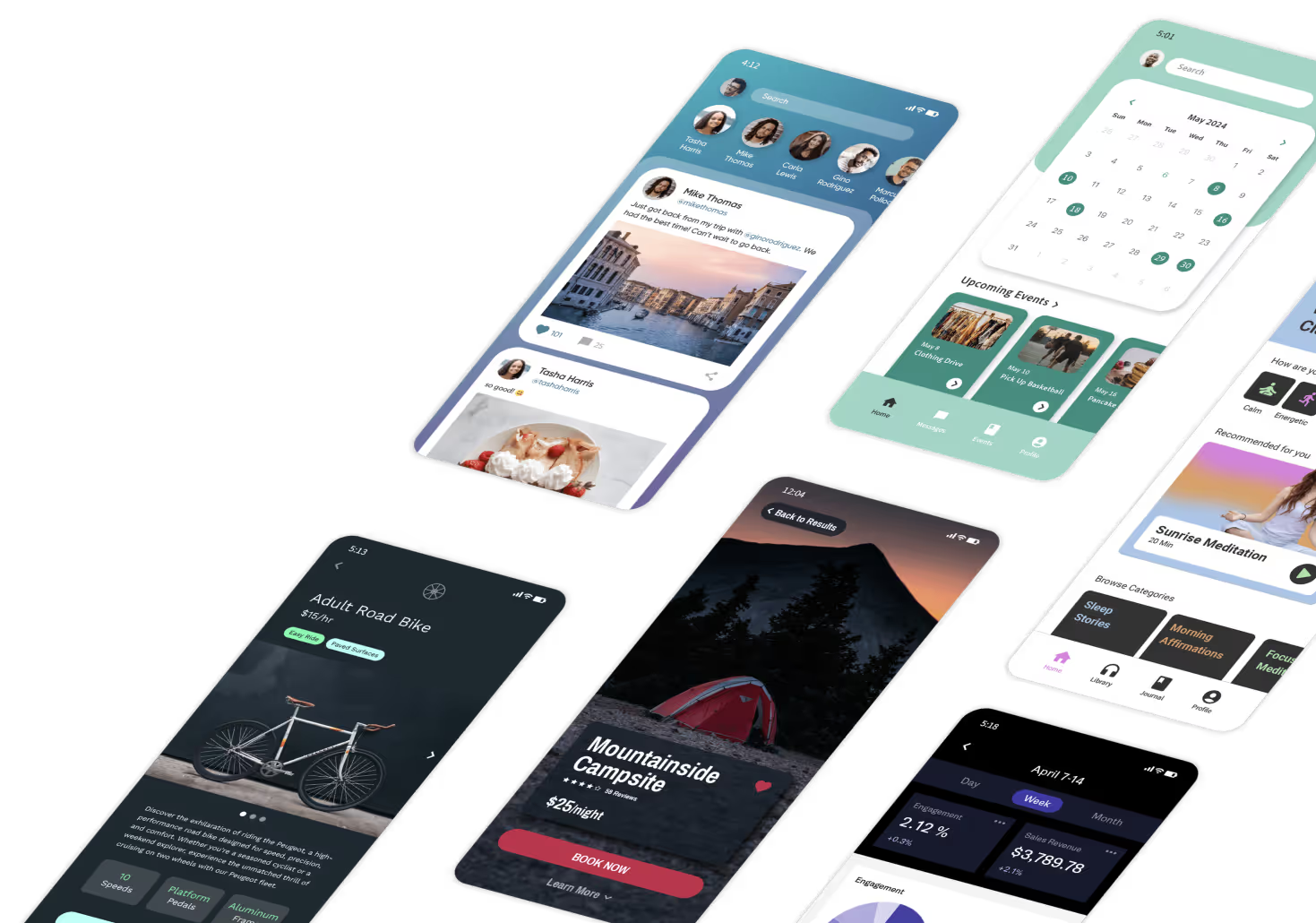
Why Adalo Works for Building a Music Recognition App
Adalo is a no-code app builder for database-driven web apps and native iOS and Android apps—one version across all three platforms, published to the Apple App Store and Google Play. This cross-platform capability is essential for a Shazam-style app, where users expect instant music identification whether they're on their iPhone, Android device, or browsing the web.
App store distribution is particularly crucial for music recognition apps since users need quick access right when a song catches their attention. With Adalo, you can reach millions of potential users through both major app stores while maintaining a single codebase. Combined with push notifications to re-engage users when they've identified songs and database functionality to store their music history, you have everything needed to build a compelling music discovery experience.
Building a music recognition app—something that listens to a song and instantly identifies it—sounds like a project requiring a team of developers and months of work. The reality is different. With the right tools and external APIs, you can create a functional Shazam-style app and publish it to both the Apple App Store and Google Play Store without writing code.
Adalo, an AI-powered app builder, makes this possible by combining a visual drag-and-drop interface with native iOS and Android compilation. You design once, and the same app publishes across web, iPhone, and Android devices. For a music recognition app where users expect instant access the moment a song catches their attention, this cross-platform capability is essential.
This comprehensive tutorial walks you through building a functional music recognition app using Adalo's platform. While you'll need external APIs like ACRCloud for the actual song identification, you'll learn how to create a complete app with audio recording, music recognition integration, song details display, and user history tracking—all from a single codebase that deploys everywhere.
Why Adalo Works for Building a Music Recognition App
Adalo is an AI-powered app builder for database-driven web apps and true native iOS and Android apps—one version across all three platforms, published directly to the Apple App Store and Google Play. This cross-platform capability is essential for a Shazam-style app, where users expect instant music identification whether they're on their iPhone, Android device, or browsing the web.
App store distribution is particularly crucial for music recognition apps since users need quick access right when a song catches their attention. With Adalo, you can reach millions of potential users through both major app stores while maintaining a single codebase. Combined with push notifications to re-engage users and unlimited database records on paid plans to store their complete song history, you have everything needed to create a compelling music discovery experience.
Ada, Adalo's AI builder, lets you describe what you want and generates your app. Magic Start creates complete app foundations from a description, while Magic Add adds features through natural language.
The platform's Magic Start feature can generate your initial app foundation from a simple description, while Magic Add lets you request new features in plain language. What used to take days of planning and setup now happens in minutes. If your plan is mass distribution through the app stores' vast marketplaces, Adalo provides the fastest path from concept to published music app.
Key Takeaways
- Building a Shazam-like app in Adalo requires integrating external music recognition APIs like ACRCloud or AudD, with total setup time estimated at 8-15 hours for a basic MVP
- Monthly costs include Adalo's Professional plan at $36/mo (with no usage-based charges) plus your music recognition API subscription
- Adalo's paid plans include unlimited database records, allowing you to cache song data and store complete user search histories without storage constraints
- Custom Actions require Adalo's Professional plan minimum for API integration, while the Microphone Recorder component supports both Android and iOS
Prerequisites and Initial Setup
Step 1: Create Your Adalo Account and App
- Go to Adalo.com and sign up for a free account
- Click "Create New App"
- Choose "Mobile App" (music recognition works best on mobile)
- Name your app (e.g., "MusicID" or "SongFinder")
- Select "Start from Scratch" or use Magic Start to generate a foundation by describing your music recognition app concept
Step 2: Set Your App Theme
- Choose a primary color that reflects your brand
- Select a secondary color for buttons and CTAs
- Pick a modern, readable font
- Click "Continue" to enter the app builder
Step 3: Understand the Technical Requirements
Before building, know that Adalo doesn't have native music recognition. You'll need:
- An external music recognition API (ACRCloud or AudD)
- The Microphone Recorder component from the marketplace
- Custom Actions to connect to the API
- An Adalo Professional plan ($36/mo) for Custom Actions access
Building the Database Structure
Step 4: Enhance the Users Collection
- Click the Database icon in the left sidebar
- Click on "Users" collection (already exists)
- Add these properties by clicking "+ Add Property":
- Profile Image (Image)
- Total Searches (Number)
- Premium Status (True/False)
- Created Date (Date & Time - Automatic)
Step 5: Create the Songs Collection
- Click "+ Add Collection"
- Name it "Songs"
- Add these properties:
- Song Title (Text)
- Artist Name (Text)
- Album Name (Text)
- Album Art URL (Text)
- Spotify URL (Text)
- Apple Music URL (Text)
- Release Year (Number)
- Genre (Text)
- ACRCloud ID (Text - for caching results)
With Adalo's no data caps on paid plans, you can cache every song your users identify without worrying about hitting storage limits—a significant advantage when building a music discovery app that accumulates data over time.
Step 6: Create the Search History Collection
- Click "+ Add Collection"
- Name it "Search History"
- Add properties:
- Search Date (Date & Time - Automatic)
- Recognition Success (True/False)
- API Response Time (Number - in seconds)
Step 7: Set Up Database Relationships
- In Search History collection:
- Add relationship to Users: Many-to-One (A User can have many searches)
- Add relationship to Songs: Many-to-One (A Song can appear in many searches)
This relational database structure allows you to track user behavior and cache frequently identified songs to reduce API calls. With proper relationship setups, Adalo apps can scale beyond 1 million monthly active users.
Installing Required Components
Step 8: Install the Microphone Recorder Component
- Go to the Adalo Marketplace
- Search for "Microphone Recorder"
- Click "Install" on the component (pricing varies)
- This component supports Android and iOS, unlike the web-only default recorder
Step 9: Install the Audio Player Component
- In the marketplace, search "Audio Player"
- Install the free Audio Player component
- This allows users to play back identified songs if you add preview clips
Step 10: Sign Up for ACRCloud API
- Visit ACRCloud.io and create a free account
- Create a new project in the dashboard
- Copy your API Access Key and Access Secret
- Note the API endpoint URL (typically https://identify-eu-west-1.acrcloud.com/v1/identify)
ACRCloud is a market leader in recognition accuracy with an audio fingerprint database of millions of tracks, making it the recommended choice for music identification projects.
Creating User Authentication
Step 11: Build the Welcome Screen
- On the default screen, rename it to "Welcome"
- Add an Image for your app logo
- Add Text: "Identify any song in seconds"
- Add two Buttons:
- "Sign Up" → Link to new screen "Sign Up"
- "Login" → Link to new screen "Login"
Step 12: Create Sign Up Screen
- Add new screen "Sign Up"
- Add Form component:
- Connect to Users collection
- Include fields: Email, Password, Full Name
- Add a Checkbox: "I agree to Terms of Service"
- Submit button → Link to "Home" screen
- Add Text link: "Already have an account? Login"
Step 13: Create Login Screen
- Add new screen "Login"
- Add Form component with Email and Password
- Submit button uses the built-in "Login" action
- On success → Navigate to "Home" screen
- Add "Forgot Password?" link
Building the Main Interface
Step 14: Create the Home Screen
- Add new screen "Home"
- Add a large circular Button in the center:
- Label: "Tap to Identify"
- Icon: Microphone
- Background: Gradient or solid color
- Below the button, add Text: "Listening... 10 seconds"
- Set visibility condition: Only show when recording is active
Step 15: Add the Microphone Recorder Component
- Drag the Microphone Recorder component onto the Home screen
- Configure settings:
- Recording Duration: 10 seconds (optimal for recognition accuracy)
- Audio Format: Base64 WAV (required by most APIs)
- Auto-stop: True
- Connect the "Start Recording" action to your main button
- Store the recorded audio in a temporary custom property
Step 16: Build the Results Screen
- Add new screen "Song Result"
- Add Image component for album art:
- Source: Current Song → Album Art URL
- Size: 300x300 pixels
- Add Text components:
- Song Title (large, bold)
- Artist Name (medium)
- Album Name (smaller)
- Add action buttons:
- "Open in Spotify" → Link to Current Song → Spotify URL
- "Open in Apple Music" → Link to Current Song → Apple Music URL
- "Save to My Songs" → Create relationship to user
Setting Up the Music Recognition API
Step 17: Create Custom Action for ACRCloud
- In Settings, go to Custom Actions
- Click "+ Add Custom Action"
- Name it "Identify Song"
- Set Method: POST
- Set URL: Your ACRCloud endpoint
- Add Headers:
- Content-Type: application/json
- access_key: Your ACRCloud Access Key
- access_secret: Your ACRCloud Access Secret
Note: You'll need the Professional plan ($36/moor $52/month annually) to access Custom Actions. Unlike some competitors, Adalo's pricing includes unlimited usage with no bill shock—App Actions charges have been removed from all plans.
Step 18: Configure the API Request Body
- In the Custom Action body, add:
{
"audio": "{recorded_audio_base64}",
"sample_bytes": "{audio_length}",
"data_type": "audio"
}
- Map the recorded_audio_base64 parameter to your audio recording property
- Set expected response format to JSON
- Map response fields to your Songs collection:
- metadata.music[0].title → Song Title
- metadata.music[0].artists[0].name → Artist Name
- metadata.music[0].album.name → Album Name
- metadata.music[0].external_metadata.spotify.album.images[0].url → Album Art URL
Step 19: Handle API Responses
- Add a Conditional Action after the API call:
- If Response Status = 200 (Success):
- Create new Song record (if not already in database)
- Create Search History record (Success = True)
- Navigate to "Song Result" screen
- If Response Status ≠ 200 (Failed):
- Create Search History record (Success = False)
- Navigate to "Not Found" screen
- If Response Status = 200 (Success):
The API typically responds in a few seconds for most songs.
Step 20: Add Loading State
- On the Home screen, add a Loading Indicator
- Set visibility:
- Show when: Recording is complete AND API call is in progress
- Add Text: "Analyzing audio..."
- This improves user experience during the 3-8 second API latency
Following Adalo 3.0's infrastructure overhaul in late 2025, the platform is now 3-4x faster than before, ensuring your loading states are brief and your app feels responsive.
Creating Additional Features
Step 21: Build Search History Screen
- Add new screen "My History"
- Add List component connected to Search History:
- Filter: User = Logged In User
- Sort by: Search Date (Newest First)
- For each list item, display:
- Song → Album Art (small thumbnail)
- Song → Title
- Song → Artist
- Search Date (formatted as "2 days ago")
- Click action → Navigate to Song Result screen
Step 22: Create "Not Found" Screen
- Add new screen "Song Not Found"
- Add sad icon or illustration
- Add Text: "We couldn't identify that song"
- Add helpful tips:
- "Try in a quieter environment"
- "Record at least 10 seconds"
- "Make sure the music is clearly audible"
- Add Button: "Try Again" → Navigate back to Home
Step 23: Add Usage Tracking
- On successful identification, update user's Total Searches:
- Current Total Searches + 1
- For free users, add a limit check:
- If Total Searches ≥ 50 AND Premium Status = False:
- Show upgrade prompt
- Navigate to "Upgrade to Premium" screen
- If Total Searches ≥ 50 AND Premium Status = False:
- This monetization strategy helps cover API costs
Step 24: Implement Song Caching
To reduce API calls and costs:
- Before calling ACRCloud API, check if song exists in database
- Add a Custom Action to search Songs collection by audio fingerprint
- If match found in cache:
- Skip API call
- Load song from database
- Update Search History
- If not found:
- Call ACRCloud API
- Store result in Songs collection for future lookups
With unrestricted database storage on paid plans, you can cache aggressively without worrying about record limits—every cached song reduces your API costs and improves response times for repeat identifications.
Optimizing Performance
Step 25: Compress Audio Files
- Configure Microphone Recorder to use lower bitrate (64kbps is sufficient)
- Limit recording duration to 10 seconds (optimal balance between accuracy and file size)
- This reduces upload time and API response latency
Step 26: Add Error Handling
- Set API timeout to 10 seconds
- If timeout occurs:
- Show error message: "Request timed out, please try again"
- Log failed attempt in Search History
- Handle common errors:
- No microphone permission → Show permission request
- No internet connection → Show offline message
- API rate limit exceeded → Prompt user to wait or upgrade
Step 27: Optimize Database Queries
- In Search History list, limit to 50 most recent records per page
- Use pagination for longer history
- Index frequently queried fields (User ID, Search Date)
Adalo's X-Ray feature can help identify performance bottlenecks before they affect users, highlighting areas where query optimization or relationship restructuring would improve speed.
Testing Your App
Step 28: Create Test Scenarios
- Test with popular songs (high recognition rate)
- Test with obscure tracks (check "not found" handling)
- Test in noisy environments (validate audio quality requirements)
- Test with very short recordings (< 5 seconds)
- Test API rate limit behavior
Step 29: Test on Multiple Devices
- Use Adalo's mobile app for iOS testing
- Test on Android devices
- Verify microphone permissions work correctly
- Check that audio recording functions on all target platforms
Step 30: Monitor API Usage
- Track your ACRCloud dashboard for usage metrics
- Set up alerts when approaching request/month limit
- Monitor API response times to ensure they stay under 5 seconds
- Review failed recognition rate (should be < 10%)
Publishing Your Music Recognition App
Step 31: Prepare for Launch
- Upgrade to at least the Starter plan ($36/moor $36/month annually) for native app publishing
- Obtain Apple Developer account ($99/year) for iOS
- Pay Google Play registration fee ($25 one-time)
- Add privacy policy explaining microphone usage and data storage
- Include terms of service mentioning third-party API usage
Step 32: Configure App Store Settings
- Create app icons (1024x1024 for iOS, 512x512 for Android)
- Write app description emphasizing instant song identification
- Take screenshots on various device sizes
- Set app category: Music & Audio
- Choose age rating (typically 4+)
Step 33: Submit to App Stores
- In Adalo, go to Publish section
- Select iOS or Android
- Upload required certificates and provisioning profiles
- Submit for review
- Typical approval time: 1-3 days for Google Play, 2-7 days for App Store
Learn more about publishing your app on multiple platforms. Unlike competitors that limit app re-publishing or charge for updates, Adalo includes unlimited updates to published apps on all paid plans.
Scaling and Monetization
Step 34: Upgrade API Tier When Needed
When you exceed identifications per month:
- Upgrade to ACRCloud Starter or Pro tier
- Track your monthly usage to predict when upgrades are necessary
Adalo's modular infrastructure scales alongside your growth—the platform can handle apps with over 1 million monthly active users without requiring you to manage servers or optimize backend code.
Step 35: Implement Premium Features
Consider these monetization options:
- Freemium model: 50 free identifications, then $2.99/month unlimited
- Ad-supported: Show ads between searches for free users
- One-time purchase: $4.99 for lifetime unlimited searches
- Use IAPHUB integration for in-app purchases
Step 36: Add Advanced Features
As your app grows, consider adding:
- Offline mode: Cache frequently identified songs for offline access
- Social sharing: Let users share identified songs to social media
- Playlist creation: Allow users to build playlists from search history
- Lyrics display: Integrate lyrics API for full song experience
- Music trends: Show most identified songs this week
Use Magic Add to describe these features in plain language—the AI assistant can help generate the screens, database changes, and logic needed to implement them.
Why Adalo Is the Right Choice for Music Recognition Apps
Adalo's AI-powered platform empowers makers to bring their music app ideas to life without writing code. The platform's strength lies in its true drag-and-drop interface and built-in database, making it ideal for building a Shazam clone that needs to store and retrieve song data quickly.
What sets Adalo apart for music recognition projects is the ability to seamlessly integrate external APIs like ACRCloud while managing your entire app data in one place. The platform processes over 20 million data requests daily with 99%+ uptime, ensuring your music identification app remains reliable even as you scale.
The component marketplace provides ready-made solutions like the Microphone Recorder that would take weeks to build from scratch. Combined with responsive design capabilities, your app works beautifully across iOS, Android, and web browsers—all from a single build.
For founders without technical expertise, Adalo represents the fastest path from concept to published music app. Over 3 million apps have been created on the platform, with the visual builder described as "easy as PowerPoint." The Professional plan includes everything needed for Custom Actions and API integration, while the platform's visual workflow builder makes complex logic accessible to anyone.
FAQ
Why choose Adalo over other app building solutions?
Adalo is an AI-powered app builder that creates true native iOS and Android apps from a single codebase. Unlike web wrappers, it compiles to native code and publishes directly to both the Apple App Store and Google Play Store. With unlimited database records on paid plans and no usage-based charges, you get predictable costs as your music recognition app scales.
What's the fastest way to build and publish an app to the App Store?
Adalo's drag-and-drop interface and AI-assisted building let you go from idea to published app in days rather than months. Magic Start generates your app foundation from a description, and Adalo handles the complex App Store submission process—certificates, provisioning profiles, and store guidelines are managed through the platform.
What external APIs do I need for music recognition in Adalo?
You'll need a music recognition API like ACRCloud or AudD to handle actual song identification. ACRCloud is recommended as a market leader with an audio fingerprint database of millions of tracks. You'll also need the Microphone Recorder component from Adalo's marketplace and Custom Actions (available on the Professional plan at $36/mo) to connect to the API.
How long does it take to build a Shazam-style app with Adalo?
Total setup time for a basic MVP music recognition app is estimated at 8-15 hours. This includes setting up the database structure, installing marketplace components, creating user authentication screens, building the main recording interface, and configuring the music recognition API integration. Magic Start can accelerate the initial setup significantly.
What are the ongoing costs for running a music recognition app?
Monthly costs include Adalo's Professional plan at $36/mo(or $52/month annually) plus your music recognition API subscription. You'll also need an Apple Developer account ($99/year) for iOS publishing and a one-time Google Play registration fee ($25). Adalo has no usage-based charges, so your platform costs stay predictable regardless of user growth.
Can I monetize my music recognition app built with Adalo?
Yes, Adalo supports multiple monetization strategies. You can implement a freemium model with limited free identifications, add ad-supported tiers, or offer one-time purchases for unlimited access. Adalo integrates with IAPHUB for in-app purchases, making it easy to set up subscription plans or premium features.
How does Adalo compare to Bubble for building mobile apps?
Adalo creates true native iOS and Android apps from a single codebase, while Bubble's mobile solution wraps a web app. Adalo's paid plans include unlimited database records with no usage charges, starting at $36/month. Bubble starts at $59/month with Workload Units that can create unpredictable costs, plus record limits. For music recognition apps requiring fast, native performance, Adalo's architecture is purpose-built for mobile.
Can Adalo handle a music app with millions of users?
Yes. Adalo 3.0's modular infrastructure, launched in late 2025, scales to serve apps with over 1 million monthly active users. The platform is now 3-4x faster than before, with no upper ceiling on growth. Most third-party performance comparisons predate this infrastructure overhaul and don't reflect current capabilities.
Do I need coding experience to build a music recognition app?
No coding experience is required. Adalo's visual builder has been described as "easy as PowerPoint," and over 3 million apps have been created on the platform by non-technical founders. The API integration for music recognition uses Custom Actions with a visual interface—you configure endpoints and map data fields without writing code.