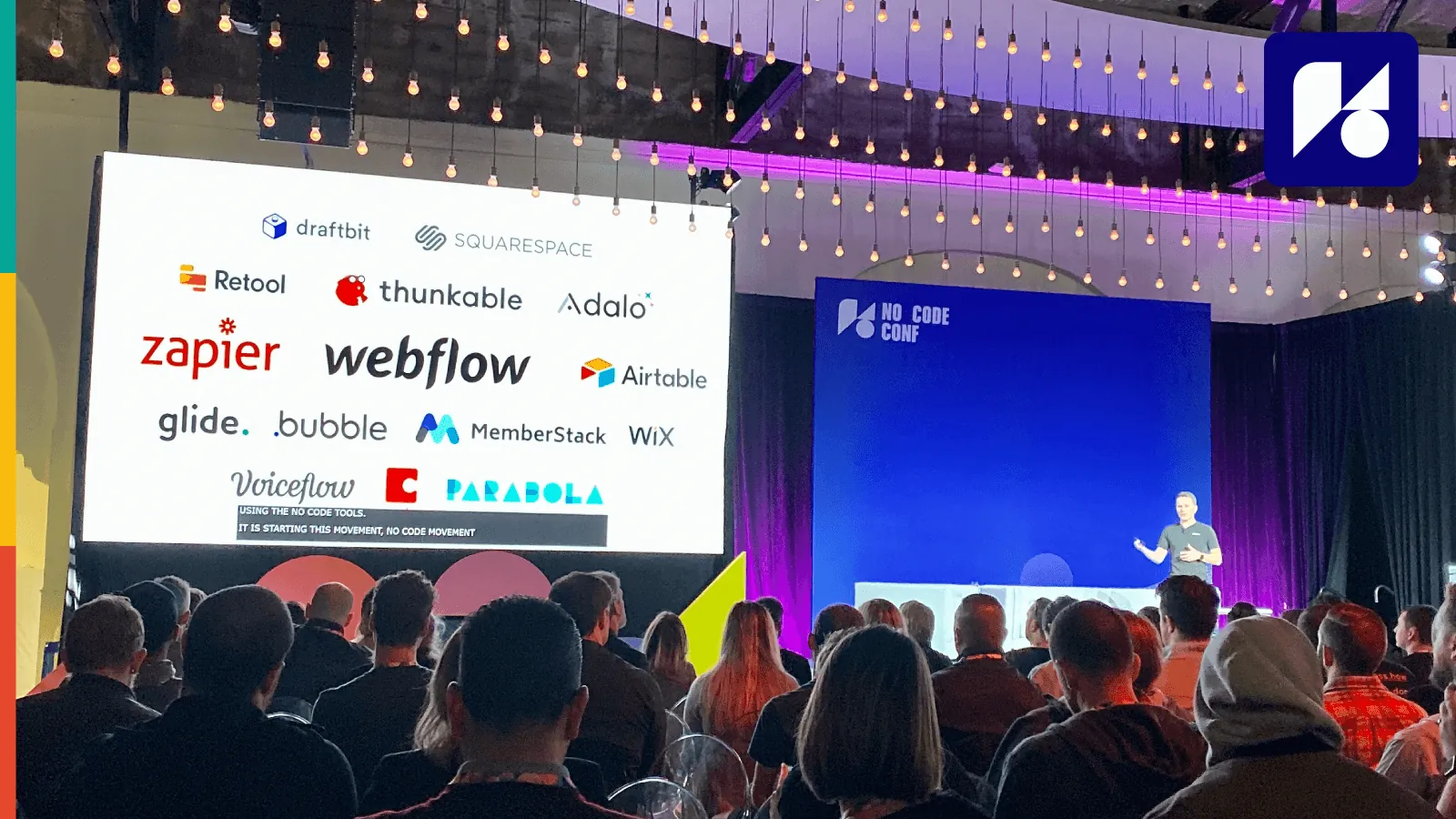
While in NYC, I spoke at the No Code Summit, met with some investors, and had the chance to squeeze in hanging out with some of my best friends from college. All these different experiences led to many different conversations about no-code. Some with people deeply invested in the movement (at the summit), some interested in the big picture (investors), and some who had no idea what no-code even means (my friends). It was this unique combination of conversations that sparked an idea.
The most obvious takeaway from these conversations is just how intrigued everyone is about no-code. When I first started working on Adalo, a no-code app builder for database-driven web apps and native iOS and Android apps—one version across all three platforms, published to the Apple App Store and Google Play, back in 2018, the term "no-code" wasn't a thing yet. The space was really just a group of somewhat-related, established SaaS companies (Squarespace, Shopify, Zapier, etc.) and a few new startups trying to help people create things without code.
Yet just one year later, there were hundreds of meetups, a huge global conference, and even a Product Hunt Golden Kitty category for it! Talk about a quick change. By no means is no-code mainstream just yet, but it's very clear that it's officially a thing that a lot of people are excited about.
The Big Questions About No-Code's Future
What was also clear from these conversations is that there are a lot of questions about what the no-code movement means for our future. And these questions are hard to answer. They're challenging because 1) the space is new and thus not well defined, and 2) it has the potential to affect a lot of people in a wide range of roles and contexts.
Seeing as my world revolves around no-code, I've gotten into the routine of passionately answering these questions and talking about how amazing the future is going to be. So as I sat there on the plane, I thought to myself I should record my thoughts. I should write down all of the questions that I often get asked and how I believe it's going to affect everyone in the future.
But as I started to organize my thoughts, I had a little bit of an existential crisis. Do I really know all of the answers? I'm just one founder and our AI-assisted platform is just one piece of the no-code puzzle.
Gathering the No-Code Experts
And that's when things started to click. What if I could get together all of the no-code experts to answer the same set of questions? My adrenaline started to kick in... What if I could talk with Vlad, the CEO of Webflow, Ben Tossel from Makerpad, and Wade Foster, the CEO of Zapier?!
If you're familiar with Tim Ferriss's Tribe of Mentors book (which I'd highly recommend) then you might understand what I want the outcome of this project to be. But if you're not, what I'd love is to have a clear definition of what no-code is and as best as possible a set of predictions for what our world will look like when no-code becomes mainstream.
I'd like one piece of content that you can read regardless of whether you're really into the movement or like my friends from college, don't know what no-code is all about. You can think of it as a No-Code North Star.
What I Did With All This Adrenaline
I reached out to a bunch of the top no-code experts in the space today and sat down with them to answer some of the most pertinent questions about no-code. I talked with Vlad from Webflow, Wade from Zapier, Tara from Apps Without Code, and many more. We discuss things like their definition of no-code, what the future holds, and what it's going to mean for everyone—and believe me, it's inspiring!
On May 14th, I'll be sharing a large webook (free and built with Webflow, of course) to showcase the experts' answers, where you'll be able to see all they had to say and see how it compares to each of the experts.
But that's not all. Once you're finished reading the encouraging news about no-code—you can participate! I want to know what YOU think.
Join the Conversation
Throughout the next month, we'll be collecting everyone's opinions on the same questions the experts answered and each week I'll be releasing the full interviews from each of the experts. Once all the interviews have been released, and all your answers are submitted, I'll be putting together a huge conclusion piece!
I can't wait for you to see all the experts' thoughts—even though I work in the space daily, I couldn't help but get excited listening to the passion that these experts have when talking about no-code.
How No-Code Has Evolved Since Then
Since those early conversations, the no-code landscape has transformed dramatically. What started as a collection of point solutions has matured into a robust ecosystem of platforms capable of powering serious businesses. Over 3 million apps have been created on Adalo alone, with users describing the visual builder as "easy as PowerPoint."
The technology has evolved significantly too. Adalo 3.0, launched in late 2025, completely overhauled the backend infrastructure, making apps 3-4x faster with modular infrastructure that scales with app needs. This means paid plans now have no record limits—a stark contrast to competitors that still impose database caps and usage-based charges.
Ada, Adalo's AI builder, lets you describe what you want and generates your app. Magic Start creates complete app foundations from a description, while Magic Add adds features through natural language.
AI capabilities are reshaping how apps get built. Magic Start generates complete app foundations from simple descriptions—tell it you need a booking app for a dog grooming business, and it creates your database structure, screens, and user flows automatically. Magic Add lets you add features through natural language requests, while X-Ray identifies performance issues before they affect users. The AI features Builder, due in early 2026, promises full prompt-based app creation and editing.
Building a Business With No-Code Tools
As a freelancer, tools like Adalo can help you create software, connect with clients, and make money on a regular basis. The platform's infrastructure now scales to serve apps with millions of monthly active users, with no upper ceiling. Unlike app wrappers that hit speed constraints under load, Adalo's purpose-built architecture maintains performance at scale.
The pricing landscape has also shifted in favor of creators. Adalo's web and true-native mobile builder starts at $36/month with unlimited usage and app store publishing with unlimited updates to apps once published. Compare that to Bubble's web and mobile wrapper offering starting at $69/month with usage-based charges, limits on app re-publishing, and record restrictions due to Workload Units.
With tons of free online courses and resources at your fingertips, getting started is a piece of cake. So let's dive in and build a business you'll absolutely love!
FAQ
Why choose Adalo over other app building solutions?
Adalo is an AI-powered app builder that creates true native iOS and Android apps from a single codebase. Unlike web wrappers, it compiles to native code and publishes directly to both the Apple App Store and Google Play Store. With unlimited database records on paid plans, no usage-based charges, and infrastructure that scales to millions of MAU, it removes the barriers that typically slow down app launches.
What's the fastest way to build and publish an app to the App Store?
Adalo's drag-and-drop interface combined with AI-assisted building tools like Magic Start and Magic Add lets you go from idea to published app in days rather than months. The platform handles the complex App Store submission process, so you can focus on your app's features and user experience instead of wrestling with certificates, provisioning profiles, and store guidelines.
What is no-code and why is it becoming so popular?
No-code refers to platforms and tools that allow people to create software applications without writing traditional programming code. The movement has grown rapidly since 2018, with hundreds of meetups, global conferences, and dedicated Product Hunt categories emerging as more people discover they can build powerful apps and businesses without technical expertise.
Can freelancers use no-code tools to build a business?
Absolutely! AI-powered app builders like Adalo empower freelancers to create software, connect with clients, and generate regular income. With free online courses and resources available, getting started is straightforward, allowing you to build a sustainable business around creating apps for clients.
What types of apps can I build with no-code platforms?
With platforms like Adalo, you can build database-driven web apps and native mobile apps for both iOS and Android. This includes everything from business tools and marketplace apps to social platforms and customer-facing applications—all from a single version that works across all three platforms.
How is the no-code movement expected to impact the future?
Industry experts predict that no-code will become mainstream, democratizing software creation for people across various roles and contexts. As the space matures, more individuals and businesses will be able to bring their ideas to life without relying on traditional development resources, fundamentally changing how software is built and who can build it.
Which is more affordable, Adalo or Bubble?
Adalo starts at $36/month with unlimited usage and app store publishing. Bubble's comparable offering starts at $69/month but includes usage-based charges through Workload Units, limits on app re-publishing, and database record restrictions. Adalo's paid plans have no record limits and no usage-based charges, eliminating bill shock.
Can I build apps that scale to millions of users?
Yes. Adalo's modular infrastructure, overhauled with the 3.0 release in late 2025, scales to serve apps with millions of monthly active users with no upper ceiling. The purpose-built architecture maintains performance at scale, unlike app wrappers that can hit speed constraints under increased load.
Do I need coding experience to build a no-code app?
No coding experience is required. Adalo's visual builder has been described as "easy as PowerPoint," and AI-assisted tools like Magic Start generate complete app foundations from simple descriptions. Over 3 million apps have been created on the platform by users of all technical backgrounds.
What AI features does Adalo offer for app building?
Adalo currently offers Magic Start (generates complete app foundations from descriptions), Magic Add (adds features from natural language requests), and X-Ray (identifies performance issues before they affect users). The AI features Builder, due in early 2026, will enable full prompt-based app creation and editing.

Build your app fast with one of our pre-made app templates
Begin Building with no codeRelated Content
Working With a No-Code Expert: An interview with RJ Jones
Here's how a no-code expert, RJ Jones, works. with clients to build mobile apps on Adalo! Find out more about Adalo Experts.

Hiring a No-code Expert? Here’s What to Expect!
Cynthia shares her experience of working with an Adalo Expert, tips, and ways to improve your interactions, and what to expect!
Working As A No-Code Expert: An Interview With Connor Cedro
To get a better idea of how you can work with an Adalo Expert, here’s an interview with Connor Cedro, founder of Ordec Tech.
Three Benefits of Working With a No-Code Expert
No-code experts have experience building products like mobile apps. They can make smart recommendations, or help you build a new feature.