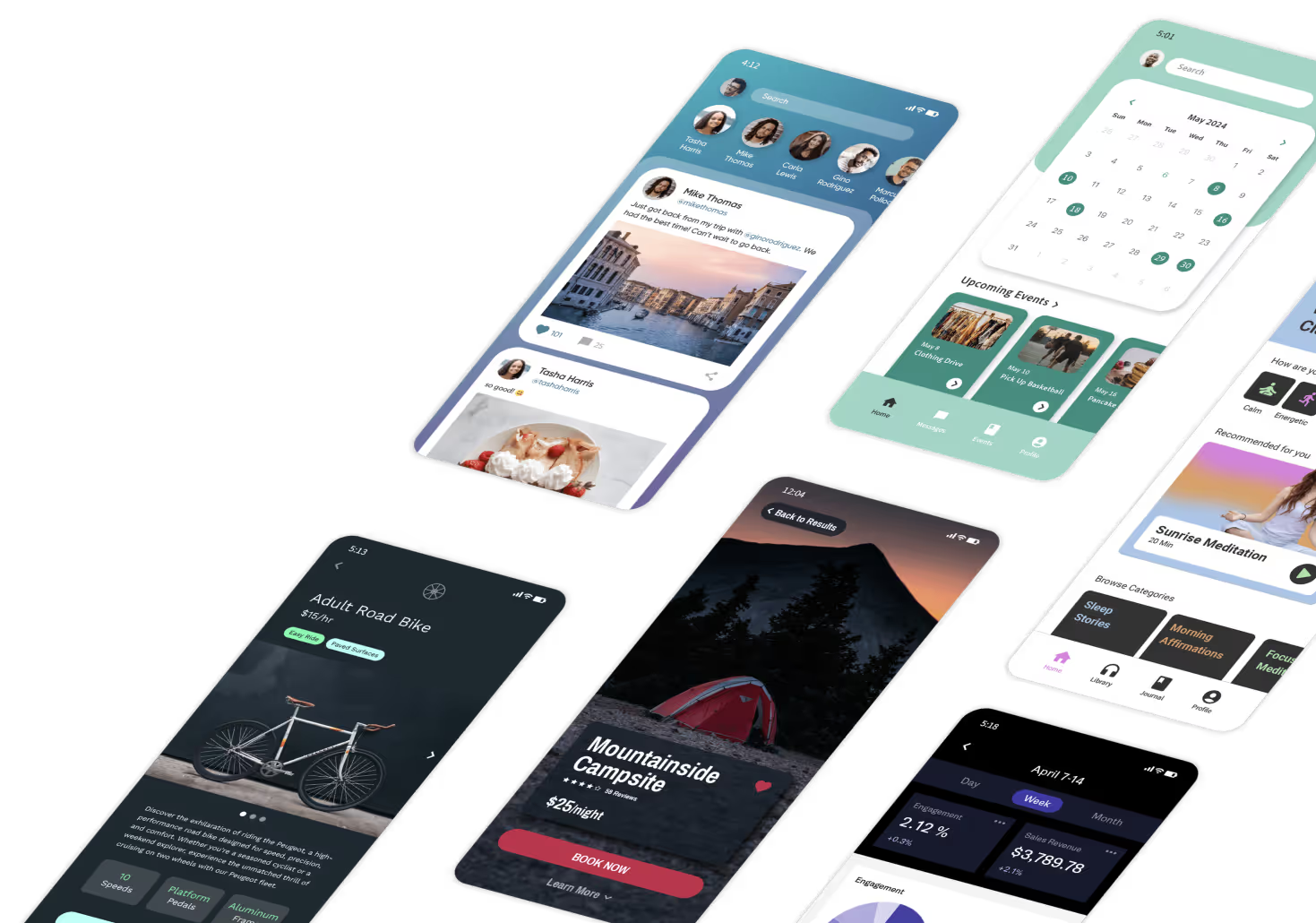
Building a Coinbase-style cryptocurrency exchange app presents a formidable challenge for entrepreneurs and startups. The technical requirements span user authentication, KYC verification workflows, real-time portfolio tracking, and secure transaction processing—systems that traditionally demand months of development time, specialized blockchain expertise, and significant financial investment.
That's where Adalo comes in. Adalo is a no-code app builder for database-driven web apps and native iOS and Android apps—one version across all three platforms. AI-assisted building and streamlined publishing enable launch to the Apple App Store and Google Play in days rather than months. This powerful combination lets you prototype and validate your crypto exchange concept rapidly, delivering the native mobile experience users expect while keeping development costs and timelines under control.
Why Adalo Is the Smart Choice for Building a Coinbase Clone
Adalo is a no-code app builder for database-driven web apps and native iOS and Android apps—one version across all three platforms, published to the Apple App Store and Google Play. This unified approach makes it ideal for cryptocurrency exchange apps, where users expect consistent access whether they're checking prices on their phone during a commute or executing trades from their desktop at home.
For a Coinbase-style app, native distribution through official app stores builds the trust that crypto users demand. Push notifications become essential for real-time price alerts, transaction confirmations, and security warnings—the kind of instant communication that keeps traders engaged and protected in volatile markets. With Adalo, you can deliver this polished, professional experience while rapidly prototyping your exchange concept without writing a single line of code.
Building a cryptocurrency exchange app traditionally requires months of development time, specialized blockchain expertise, and a substantial budget. From user authentication and KYC verification to portfolio management and transaction processing, the complexity of these interconnected systems presents a significant barrier for entrepreneurs and startups looking to enter the crypto space.
Adalo, an AI-powered app builder, changes this equation entirely. Build database-driven web apps and native iOS and Android apps from a single codebase—one version across all three platforms. AI-assisted building and streamlined publishing enable launch to the Apple App Store and Google Play in days rather than months. This means you can prototype and validate your Coinbase-style exchange concept rapidly, focusing on user experience and core functionality while leveraging external APIs for blockchain integration when needed.
Why Adalo Works for Building a Crypto Exchange App
Adalo creates true native iOS and Android apps alongside web apps from a single build. This cross-platform capability is essential for cryptocurrency applications, where users expect seamless access across their phones, tablets, and desktops without you maintaining separate codebases.
For a cryptocurrency app, native app store distribution matters. Users need push notifications for price alerts, transaction confirmations, and security updates—features that keep them engaged and informed in the fast-moving crypto market. With Adalo, you deliver that professional, native experience while prototyping your core exchange functionality quickly and cost-effectively.
This guide walks you through creating a cryptocurrency exchange-style app using Adalo's platform. While bespoke crypto exchanges can take months and substantial budgets, this AI-assisted approach lets you prototype core flows—registration, KYC capture, portfolio view, buy/sell orders (off-chain accounting), and payments—in weeks. Publish the same app to web, native iOS, and native Android without writing code or rebuilding anything.
Important: This guide implements a custodial/off-chain balance model in Adalo. On-chain deposits/withdrawals and blockchain signing/broadcasting require external services via External collections or Custom actions.
Setting Up Your Adalo Account for Crypto App Development
Step 1: Create Your Adalo Account
- Visit Adalo.com and sign up.
- Verify your email.
- Create New App → choose Mobile App.
- Name your project (e.g., "CryptoExchange").
- Start from Scratch (no crypto-specific template).
Ada, Adalo's AI builder, lets you describe what you want and generates your app. Magic Start creates complete app foundations from a description, while Magic Add adds features through natural language.
Alternatively, use Magic Start to generate a complete app foundation from a description. Tell it you need a cryptocurrency exchange app with user wallets and trading features, and it creates your database structure, screens, and user flows automatically—what used to take days of planning happens in minutes.
Step 2: Choose Your Plan
Review Adalo pricing for current plan features and publishing eligibility.
- Free: Prototype and testing.
- Starter ($36/month): Web and native mobile publishing with unlimited usage and no database record limits. Includes unlimited app store updates once published.
- Professional and above: Required for Custom actions, which API-heavy crypto apps need for blockchain integrations.
Unlike platforms with usage-based charges that create unpredictable bills, Adalo's paid plans include unlimited usage—no bill shock as your user base grows.
Step 3: Configure Your App Theme
Pick a trustworthy palette (navy/green), set typography, spacing, and corner radii, then continue into the builder.
Building the Database Structure
Adalo's database handles complex data relationships without record limits on paid plans. With the right data relationship setups, apps can scale beyond 1 million monthly active users—essential for a crypto exchange that might see rapid growth.
Step 4: Create the Users Collection
Database → Users → add properties:
- Full Name (Text), Phone Number (Text), Profile Image (Image)
- KYC Status (Text): "Pending", "Verified", "Rejected"
- Document Type/Number (Text), Date of Birth (Date), Country (Text)
- Two Factor Enabled (True/False)
- Account Balance USD (Number), Total Trades (Number)
- Created Date (Date & Time – automatic)
Step 5: Create the Wallets Collection (Off-Chain)
+ Add Collection → "Wallets"
- Coin ID (slug) (Text), Symbol (Text), Balance (Number)
- Address (display) (Text) if using external custody
- QR Code (Image), Created Date (Date & Time)
Step 6: Create the Transactions Collection
+ Add Collection → "Transactions"
- Transaction ID (internal) (Text)
- Type (Text): "Buy", "Sell", "Deposit", "Withdraw"
- Cryptocurrency (Text), Amount (Number)
- Price Per Unit (Number), Total USD (Number), Fee (Number)
- Status (Text): "Pending", "Completed", "Failed", "Cancelled"
- Payment Method (Text)
- Blockchain TX Hash (Text – only if using on-chain flows via external API)
- Created Date (Date & Time), Completed Date (Date & Time)
Step 7: Create the Market Prices Collection
+ Add Collection → "Market Prices"
- Coin ID (slug), Symbol, Cryptocurrency (name)
- Current Price USD, 24h Change %, Market Cap, Volume 24h
- Last Updated (Date & Time)
Step 8: Set Up Database Relationships
- Users ↔ Wallets: One User → Many Wallets
- Users ↔ Transactions: One User → Many Transactions
- Wallets ↔ Transactions: optional Many-to-One (for wallet-specific logs)
See the Database guide for detailed relationship setup.
Designing the User Authentication System
Step 9: Build the Welcome Screen
Logo + tagline, and buttons to Create Account and Login. Use Magic Add to add features by describing what you want—tell it "add a welcome screen with login and signup buttons" and it generates the components.
Step 10: Create the Sign Up Screen
Form (Users): Email, Password, Full Name, Phone, Country (+ Terms checkbox). Submit actions: Create User → navigate to KYC or dashboard.
Email verification: Implement via Custom actions or automation (e.g., SendGrid) using Adalo's tutorial: verification email. Configure it in your flow for production apps.
Step 11: Build the Login Screen
Email/Password → Login. If Two Factor Enabled is true → route to 2FA Verification.
Step 12: Implement Two-Factor Authentication (TOTP)
Create 2FA Setup and 2FA Verification screens.
- Generate a TOTP secret server-side (via external API) and display it as a QR.
- Users add it to Authy/Google Authenticator; verify 6-digit codes on login via Custom actions.
See TOTP overview (industry standard). OWASP Mobile
Step 13: Create KYC Verification Flow
KYC Verification screen (Users update): document type/number, DOB, front/back images, selfie → set KYC Status = Pending and notify admin.
Compliance: In most jurisdictions, exchanges must implement KYC/AML and obtain required registrations/licensing. Requirements vary—consult regulators and counsel. FinCEN • FATF guidance
Creating the Cryptocurrency Dashboard
Step 14: Build the Main Dashboard
- Total Portfolio Value = Σ(wallet balance × current price).
- Market Overview list (Market Prices): symbol, name, price, 24h change, etc.
- Nav: My Wallets, Trade, Transactions.
The Adalo 3.0 infrastructure overhaul (launched late 2025) makes apps 3-4x faster than before—critical for crypto dashboards where users expect instant price updates.
Step 15: Connect to Price APIs
Use External collections or API component to connect to CoinGecko. Endpoint: /coins/markets (vs_currency=usd, order=market_cap_desc).
Mapping (correct):
- id → Coin ID (slug) (e.g., "bitcoin")
- symbol → Symbol (e.g., "btc")
- name → Cryptocurrency (name)
- current_price → Current Price USD
- price_change_percentage_24h → 24h Change %
- market_cap → Market Cap
Refresh via a timer pattern or screen revisit.
Step 16: Create Portfolio Analytics
Portfolio screen: list user wallets with amount held, current value, % of portfolio, and 24h P/L. Add charts via Component marketplace.
Building Buy and Sell Functionality
Step 17: Create the Trading Screen
Tabs for Buy and Sell.
- Buy: choose crypto, show price, amount, cost, fee, final total, payment method.
- Sell: choose crypto (wallets with balance > 0), show proceeds and fee.
Step 18: Implement Order Processing
Validations: balance checks, KYC Status = Verified. On submit: create Transaction (Pending) → Order Confirmation → on confirm:
- For off-chain trades: update balances and mark Completed with an internal Transaction ID.
- For on-chain withdrawals/deposits: use your custodian/blockchain API via Custom actions; store the returned blockchain hash.
Step 19: Integrate Payment Processing (Fiat → App Balance)
Install Stripe or Marketplace Payments (for multi-party payouts). Configure keys and create a charge to fund USD balance; on success, complete the transaction flow.
Fees: In the U.S., online card pricing is typically 2.9% + $0.30 per successful charge; fees vary by country and payment method. Stripe pricing
Designing Wallet Features
Step 20: Build the Wallets Screen
List user wallets: icon, balance, USD value, and + to add a wallet record.
Step 21: Wallet Details Screen
Show coin name, balance, value, optional display address/QR (if using custody). Actions: Deposit, Withdraw, Transaction History.
Step 22: Deposit Flow (If Using External Custody)
Display "Send to this address" details returned by your custody API. Monitor incoming TX via External collections; on confirmations, update balance and notify the user.
Step 23: Withdrawal Flow (If Using External Custody)
Form: recipient address, amount, network fee, priority. Validate balance, run 2FA, call custody API via Custom actions, then update status as confirmations arrive.
Implementing Security Features
Step 24: Security Settings
Add toggles for 2FA, change password, and notification preferences.
Step 25: Rate Limiting (App Logic)
Track failed attempts in Users; lock after threshold and notify. (Business logic in Adalo database + actions.)
Step 26: Data Protection Notes
Adalo provides authentication and HTTPS; consult current materials for data-protection details and handle secrets carefully. See Mobile app security (OWASP) and Adalo's security best-practice content.
Do not store private keys in Adalo; use dedicated key management/custody.
Step 27: Activity Logs
Create an Activity Log collection (action, IP/device, time, status). Log sensitive actions and show a recent history screen. Use X-Ray to identify performance issues before they affect users as your logging data grows.
Testing Your Crypto Exchange App
Step 28: Create Test Data
Seed test users (KYC states, 2FA on/off), wallets, and transactions. Use Stripe test cards for payment tests.
Step 29: Test Core Workflows
- Registration & KYC: Sign up → submit KYC → verify notifications.
- Trading: Buy/Sell flows; balance updates.
- Wallet ops: (if using custody) deposit/withdraw on testnets.
- Security: 2FA, lockout thresholds, password resets, activity logs.
Step 30: Performance Optimization
Compress images, limit list sizes, and cache price data. See Optimize performance and consider External collections for large datasets. Adalo's modular infrastructure scales with your app's needs—no arbitrary ceilings to hit.
Publishing Your Crypto Exchange App
Step 31: Prepare for Launch
Switch to production keys (Stripe, price data, custody), set push notifications, and add legal pages (Privacy, Terms, Risk, Fee schedule). Set up support flows.
Step 32: App Store Submission
- iOS: Join Apple Developer Program ($99/year) and follow Adalo's iOS guide.
- Android: Pay $25 one-time and follow Adalo's Android guide.
Adalo handles the complex App Store submission process, so you focus on your app's features instead of wrestling with certificates, provisioning profiles, and store guidelines. Updates to published apps are unlimited on all paid plans.
Step 33: Web App Deployment
Configure a custom domain via web app publishing; set SSL and DNS, then test responsiveness. One build updates web, iOS, and Android simultaneously.
Platform Limitations and Workarounds
Real-Time & Background Limits
- Adalo doesn't provide native background tasks or true live sockets; "live" price changes require screen revisit or a timer-based refresh.
- For real-time price streams, order books, or background polling, integrate an external service via Custom Actions or External collections.
On-Chain Operations
- Adalo cannot sign/broadcast blockchain transactions natively. Use a custody/node provider via Custom actions; store the returned blockchain hash for on-chain deposits/withdrawals.
- Never store private keys in Adalo—use dedicated custody or key management.
Scalability
- Very large datasets (prices, ticks, ledgers) should live in an external store. Use External collections and follow Optimize performance (limit list sizes, progressive loading, image optimization).
- Adalo's purpose-built architecture maintains performance at scale—unlike web wrappers that hit speed constraints under load.
Compliance & Risk
- KYC/AML, licensing/registration, sanctions screening, and travel-rule obligations vary by jurisdiction. Treat this as a custodial/off-chain prototype and connect regulated vendors as needed. See FinCEN and FATF guidance.
Workaround Strategies
- Cache ticker summaries in-app; keep full ledgers in an external DB.
- Use timers/screen revisit for "near-real-time" UI; use sockets/webhooks in external services.
- Add an Admin/Compliance screen for manual reviews and KYC status changes.
- Split roles into multi-app (Customer / Admin / Ops) when teams scale.
Cost Breakdown and Resources
Adalo Subscription
Adalo's Starter plan at $36/month includes web and native mobile publishing with unlimited usage and no data caps. Compare this to Bubble's web and mobile wrapper offering starting at $59/month with usage-based charges and record limits, or FlutterFlow at $70/month per user that still requires you to source, setup, and pay for a separate database.
Payments & Fiat On-Ramps
- U.S. Stripe reference: typically 2.9% + $0.30 per successful card charge; varies by country/method.
Crypto Data & Node/Custody (examples)
- Market data APIs (e.g., CoinGecko/CoinMarketCap): free tiers; higher usage is metered.
- Node/custody/KYC vendors: usage-based pricing—confirm volumes and regions.
Other Services
- Notifications: built-in Push via Adalo; optional SMS/email via external providers.
- App stores: Apple Developer $99/year; Google Play $25 one-time.
- Ongoing maintenance: many teams budget ~15–25% annually (scope-dependent).
Additional Resources
- Adalo Database — collections, properties, relationships
- External Collections — connect external APIs
- Custom Actions — call third-party endpoints
- Optimize Performance — lists, images, data strategy
- Stripe Payments · Marketplace Payments
- CoinGecko Markets API — endpoint & fields
- Coinbase availability context: Investor FAQ · Prohibited regions
Coinbase operates in 100+ countries; your app's availability depends on your licensing/compliance and vendor coverage by region.
Note: This Coinbase-style clone implements custodial/off-chain balances, market price views, buy/sell flows (off-chain accounting), fiat funding via Stripe, and KYC intake using Adalo's features plus API integrations. For production-grade exchange capabilities—live order books, on-chain custody, automated compliance checks, and background processing—connect regulated vendors through Custom Actions/External Collections, keep lists lean, and performance-test on real devices before publishing.
FAQ
Why choose Adalo over other app building solutions?
Adalo is an AI-powered app builder that creates true native iOS and Android apps. Unlike web wrappers, it compiles to native code and publishes directly to both the Apple App Store and Google Play Store from a single codebase—the hardest part of launching an app handled automatically.
What's the fastest way to build and publish an app to the App Store?
Adalo's drag-and-drop interface and AI-assisted building let you go from idea to published app in days rather than months. Magic Start generates complete app foundations from descriptions, and Adalo handles the complex App Store submission process so you focus on features instead of certificates and provisioning profiles.
Can I build a cryptocurrency exchange app without coding?
Yes. With Adalo's visual builder, you can create user authentication, KYC verification flows, portfolio dashboards, and buy/sell functionality without writing code. Integrate with external APIs for live market prices and payment processing through External Collections and Custom Actions.
Can Adalo handle real blockchain transactions and on-chain operations?
Adalo implements a custodial/off-chain balance model natively. Actual blockchain signing and broadcasting requires external services. Connect to custody providers and blockchain APIs through External Collections and Custom Actions to handle on-chain deposits and withdrawals securely.
What security features can I implement in a crypto app built with Adalo?
You can implement two-factor authentication (TOTP) via external APIs, rate limiting through database logic, activity logging, and secure password management. Adalo provides built-in authentication and HTTPS. For key management, use dedicated custody services rather than storing private keys in Adalo.
How do I integrate live cryptocurrency prices into my Adalo app?
Connect to price APIs like CoinGecko using External Collections. Map API response fields to your Market Prices collection, including coin ID, symbol, current price, and 24-hour change percentage. Prices update on screen revisit or through timer-based refresh patterns.
How much does it cost to build a crypto exchange app with Adalo?
Adalo's Starter plan at $36/month includes web and native mobile publishing with unlimited usage and no database record limits. Add Apple Developer ($99/year) and Google Play ($25 one-time) fees for app store distribution. External services like Stripe, price APIs, and custody providers have separate usage-based costs.
What are the compliance considerations for building a crypto exchange app?
Crypto exchanges must implement KYC/AML verification and obtain required registrations or licensing, which vary by jurisdiction. Adalo lets you build KYC intake flows with document uploads and verification status tracking. Connect regulated vendors for automated compliance checks and consult legal counsel regarding FinCEN and FATF requirements.
How long does it take to build a crypto exchange app?
Using this guide, you can prototype core flows—registration, KYC capture, portfolio view, buy/sell orders, and payments—in weeks rather than months. Magic Start accelerates initial setup by generating database structures and screens from descriptions.
Can I publish to both the App Store and Google Play from one build?
Yes. Adalo creates one version that publishes to web, iOS App Store, and Android Play Store. Updates to published apps are unlimited on all paid plans, and one build updates all three platforms simultaneously.