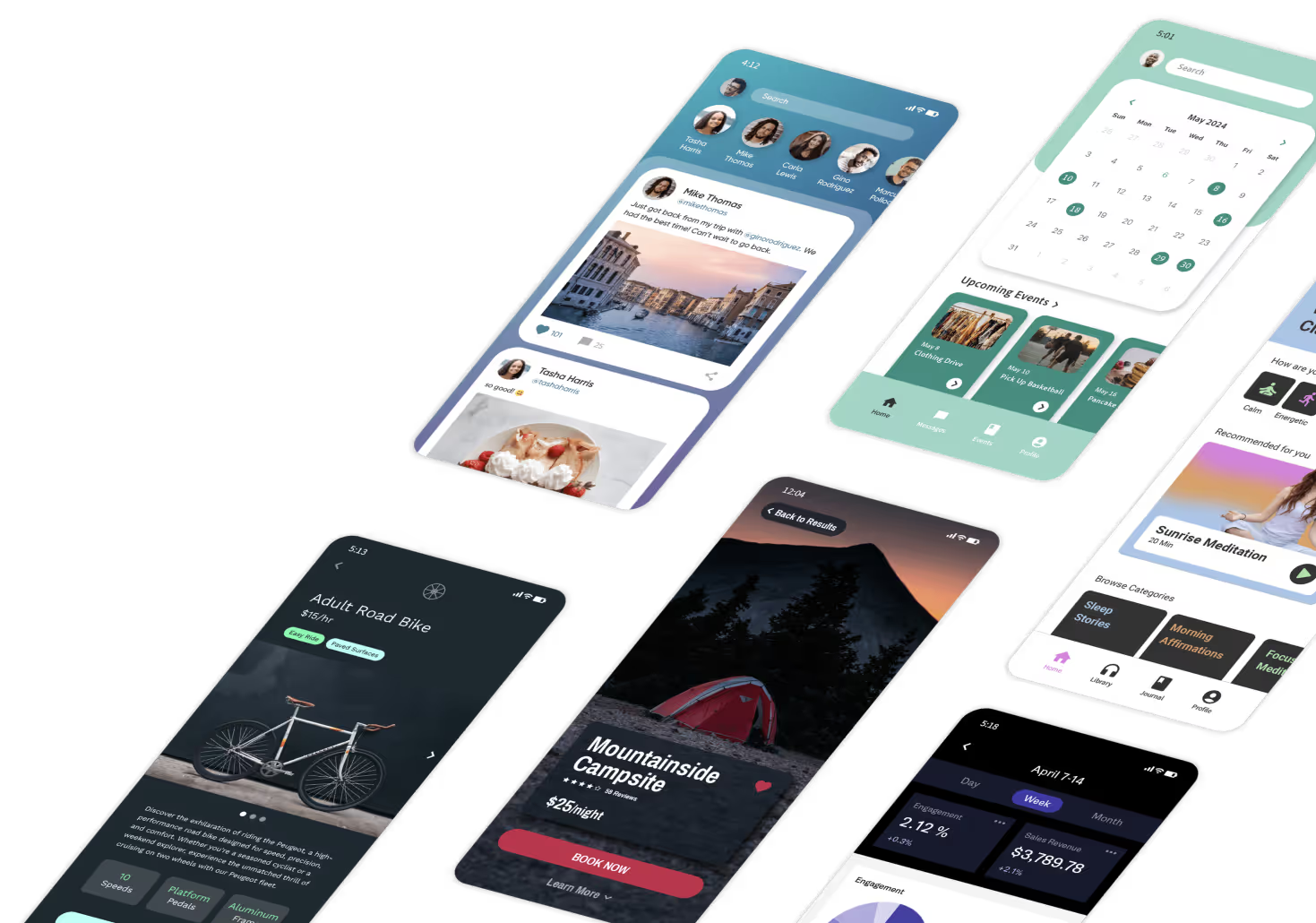
In 2026, Adalo emerges as the most versatile and cost-effective solution for building native podcast mobile apps, offering a unique combination of AI-assisted development tools, native app capabilities, and competitive pricing that fills a crucial gap in the $38.36 billion podcast industry.
The podcast app market has exploded to 584.1 million global listeners, yet most builders force creators into expensive enterprise solutions or limited website-only platforms. While specialized tools like Podpage ($9-59/month) only create websites and enterprise solutions like BuildFire demand $315+/month, Adalo delivers true native iOS and Android apps starting at just $36/month billed annually. This comprehensive analysis examines the current landscape of podcast app builders and demonstrates why Adalo's AI-powered platform provides the optimal balance of functionality, flexibility, and affordability for podcasters ready to own their mobile presence. The platform's agnostic builder lets you publish the same app to the web, native iOS, and native Android—all without writing a line of code or rebuilding. If your plan is mass distribution through the app stores' vast marketplaces, this approach offers significant advantages over many vibe-coding builders available today.
Key Takeaways
- Adalo offers native iOS and Android podcast apps starting at $36/month (billed annually), filling the gap between website-only builders and enterprise solutions costing $315+/month
- The platform's Audio Player component supports background playback, custom artwork, and cross-screen functionality—essential features that 86.1% of podcast listeners expect on mobile
- With no database record limits on paid plans and no usage-based charges, podcasters can scale their episode libraries and user bases without surprise bills
- Publishing to both the Apple App Store and Google Play Store is included in all paid plans, whereas many competitors charge extra fees or require higher tiers for mobile distribution
Independent research from App Builder Guides' State of App Building report (February 2026) analyzed 190 Reddit threads and 150+ platform citations across 345 data points with zero platform sponsorships. Adalo ranked first among visual builders for non-developers.

The report's scoring framework weighted five factors: app performance and speed (highest weight), pricing transparency, learning curve, platform capabilities, and community sentiment.
The Critical Features Every Podcast App Needs in 2026
Modern podcast listeners demand sophisticated mobile experiences that go far beyond simple audio playback. With average weekly listening time reaching 7 hours and 80% of users completing entire episodes, your app must deliver seamless functionality that keeps audiences engaged. Adalo's component-based architecture provides all the essential features through its Audio Player component and extensive marketplace, eliminating the technical barriers that force many podcasters to settle for generic solutions.
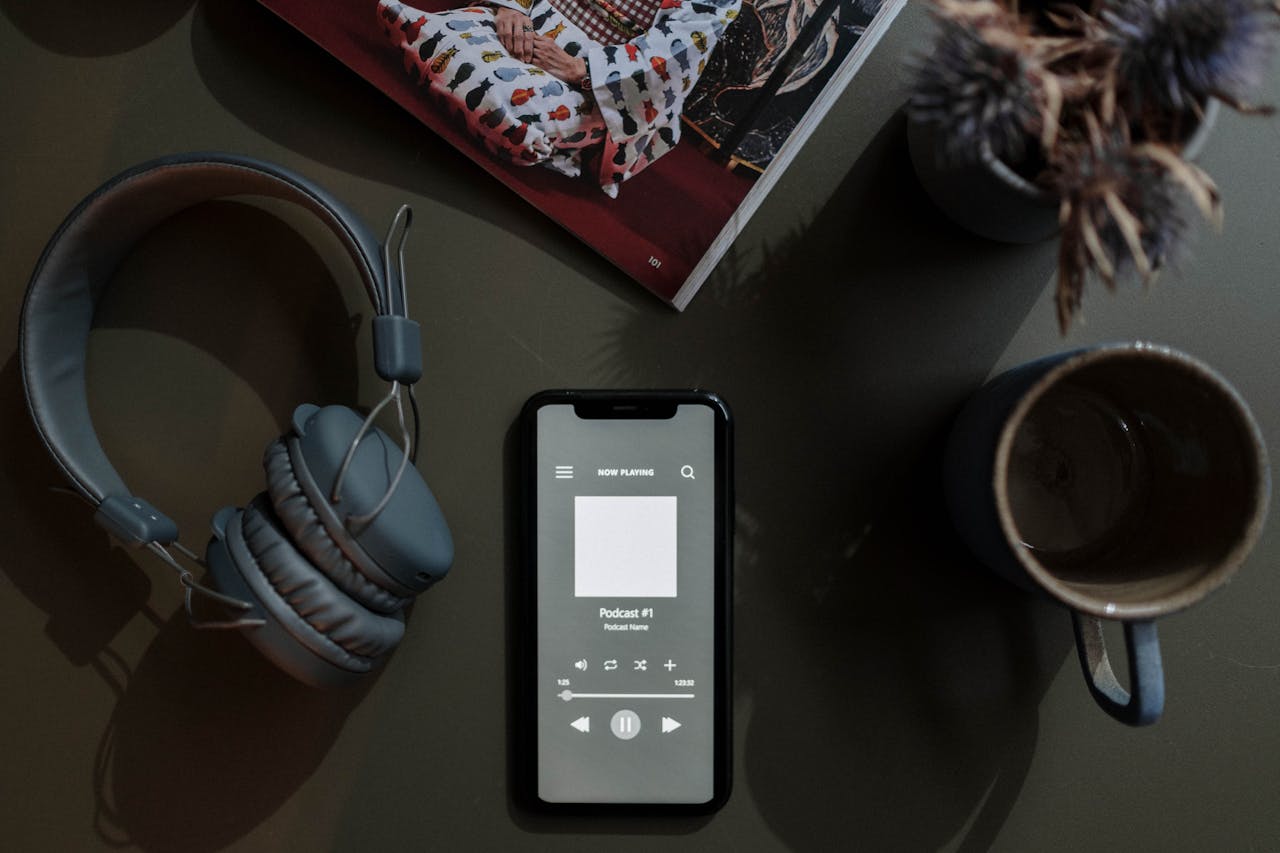
The foundation starts with Adalo's native Audio Player component, which handles background playback across iOS and Android—a non-negotiable feature since listeners multitask while consuming content. The component supports custom artwork display, progress tracking, and configurable skip buttons that match user expectations set by major platforms. Unlike web-based alternatives that break when screens lock, Adalo apps maintain playback through the device's native controls, ensuring your content remains accessible whether listeners are commuting, exercising, or working.
Beyond basic playback, successful podcast apps require sophisticated content management. Adalo's database system combined with custom list components enables dynamic episode directories, search functionality, and personalized user experiences. The platform's visual development environment lets you create episode cards displaying show notes, timestamps, and download options without writing code.
Push notifications—available on all paid plans—alert subscribers to new episodes instantly, addressing the fact that 46% of podcast fans listen within 24 hours of release. With 4.52 million active podcasts competing for attention, these direct communication channels help podcasters stand out in crowded app stores.
How Adalo Compares to Specialized Podcast Platforms
The podcast app builder market splits into three distinct categories: specialized podcast platforms, general no-code builders, and enterprise solutions. After analyzing 12+ platforms, the data reveals significant gaps that Adalo uniquely addresses. Adalo is a no-code app builder for database-driven web apps and native iOS and Android apps—one version across all three platforms, published to the Apple App Store and Google Play. Specialized platforms like Podpage and Podcastpage focus exclusively on websites, leaving the 86.1% of listeners who prefer mobile apps underserved.
General no-code platforms present different challenges. Bubble requires complex API integrations and only offers web apps with mobile wrappers—not true native apps. Bubble's pricing starts at $59/month with usage-based Workload Unit charges and limits on records, creating unpredictable costs as your podcast grows. FlutterFlow provides native apps but operates as a low-code platform requiring technical knowledge, plus users must source, set up, and pay for their own database separately. FlutterFlow's pricing starts at $70/month per user for app store publishing, and that still doesn't include database costs.
Adalo strikes the optimal balance—true no-code visual development with native mobile output at mid-market pricing. The platform's component marketplace adds podcast-specific functionality without the complexity of custom code or API management. Following the Adalo 3.0 infrastructure overhaul in late 2025, the platform now runs 3-4x faster with no record limits on paid plans, addressing previous scalability concerns that appeared in older third-party reviews.
Enterprise builders like BuildFire include everything but at $315+/month—nearly 9x Adalo's starting price. For independent podcasters and small networks, these costs are prohibitive. Adalo's tiered pricing from $36-250/month scales with your needs, avoiding the massive jump from budget to enterprise that characterizes the market.
Breaking Down Adalo's Podcast App Building Capabilities
Adalo's visual builder transforms podcast app creation from a technical challenge into a creative process. The platform's drag-and-drop interface—described by users as "easy as PowerPoint"—handles the complex backend while you focus on user experience. Starting with pre-built app templates or from scratch, you can construct sophisticated podcast apps that rival those built by development teams.
The AI features Builder, due for release in early 2026, promises to accelerate this process further. Magic Start lets complete app foundations from simple descriptions—tell it you need a podcast app for a true crime network, and it creates your database structure, screens, and user flows automatically. Magic Add lets you add features through natural language requests, while X-Ray identifies performance issues before they affect users.
The component ecosystem extends far beyond basic playback. The component marketplace includes specialized tools for transcripts, social sharing, and analytics integration. Custom lists display episodes with rich metadata, while forms enable user feedback and reviews. The platform's database architecture supports complex relationships between shows, episodes, categories, and users—critical for apps hosting multiple podcasts or creating network effects. External collections via APIs open possibilities for connecting existing podcast infrastructure.
Publishing represents another major advantage. Where competitors often charge extra or limit distribution, all Adalo paid plans include publishing to the Apple App Store and Google Play Store with unlimited updates. The platform handles technical requirements like certificates and provisioning profiles through guided workflows. Your podcast app appears in app stores under your brand, not a generic builder account.
Understanding Pricing and Value Proposition
Adalo's pricing structure addresses the missing middle in podcast app builders. The Starter plan at $36/month (billed annually, or $36/momonthly) includes everything needed for a single podcast app: iOS and Android publishing, unlimited usage, custom domain, and storage. This matches typical podcast needs while costing less than specialized platforms that only provide websites.
A critical differentiator: Adalo has removed usage-based charges entirely. All plans now include unlimited usage, eliminating the bill shock that plagues platforms like Bubble with their Workload Unit calculations. For podcasters whose apps might see sudden spikes when episodes go viral, this predictability matters enormously.
Comparing value across the market reveals Adalo's positioning:
| Platform | Starting Price | Native Mobile Apps | Database Limits | Usage Charges |
|---|---|---|---|---|
| Adalo | $36/month | Yes (iOS + Android) | Unlimited on paid plans | None |
| Bubble | $59/month | Web wrapper only | Limited by Workload Units | Yes |
| FlutterFlow | $70/month + database | Yes | Depends on external DB | Varies |
| Glide | $60/month | No app store publishing | Limited rows | Yes |
| BuildFire | $315/month | Yes | Varies | Varies |
The Business plan at $250/month seems expensive until you consider alternatives. Building a custom podcast app typically costs $15,000-50,000 upfront plus ongoing maintenance. For podcast networks or monetized shows, the ability to publish multiple apps with unlimited editors makes the business plan compelling. The included API access enables advanced integrations with advertising platforms, analytics services, and content management systems.
Step-by-Step Process for Building Your Podcast App
Creating a podcast app in Adalo follows a logical progression from concept to app store. Getting started with Adalo requires only an email address for the free plan, which provides full access to test your ideas before committing financially. The platform offers comprehensive video tutorials on YouTube covering fundamentals, though podcast apps benefit from deeper exploration of specific components and workflows.
Begin by structuring your database to handle podcast content effectively. Create collections for shows (if hosting multiple), episodes, categories, and users. The episode collection should include fields for title, description, audio file URL, artwork, duration, and publish date. Adalo's visual database designer makes relationships intuitive—link episodes to shows, create favorite lists for users, and track listening history. Import existing content through CSV uploads or connect external databases for dynamic content management.
The user interface comes together through Adalo's screen designer. Start with a home screen featuring your latest episodes in an eye-catching card list. Add dedicated screens for episode details, player controls, and user profiles. The Audio Player component drops directly onto episode screens, automatically connecting to your database fields. Configure skip intervals, enable background play, and customize the visual design to match your brand.
Lists, search bars, and filter options help users navigate growing episode libraries. Adalo's canvas can display up to 400 screens at once if needed, giving you complete visibility into your app's architecture—a significant advantage over builders with limited viewport options. Test everything in Adalo's mobile preview before publishing to ensure smooth user experiences.
Advanced Features and Monetization Strategies
Successful podcast apps extend beyond basic playback to create engaging experiences that monetize effectively. Adalo's platform enables sophisticated features through creative component combinations and marketplace additions. Premium subscriptions leverage the Stripe payment integration to gate exclusive content or remove ads. In-app purchases through the digital purchases component sell bonus episodes, merchandise, or virtual goods.
Push notifications deserve special attention for podcast apps. Unlike email newsletters with declining open rates, push notifications achieve 90%+ visibility when used strategically. Adalo's notification system targets specific user segments based on listening history, subscription status, or preferences. Schedule notifications for new episode releases, live podcast announcements, or limited-time offers. The platform handles the technical complexity of notification certificates and delivery across iOS and Android.
Analytics integration separates professional podcast apps from basic players. While Adalo provides built-in user analytics, connecting specialized podcast analytics platforms through API integrations unlocks deeper insights. Track completion rates, popular timestamps, and geographic distribution. Use this data to inform content decisions and demonstrate value to sponsors. Custom actions in Adalo trigger events in external analytics platforms, creating comprehensive pictures of listener behavior.
Common Challenges and Solutions
Building podcast apps in Adalo requires understanding platform specifics and implementing smart workarounds. The most common challenge involves RSS feed integration—Adalo supports JSON APIs rather than the XML-based RSS standard directly. Solve this by using Pipedream, Make (formerly Integromat), or custom serverless functions to convert RSS to JSON. Many successful Adalo podcast apps use Airtable or similar services as intermediate databases, syncing RSS content automatically.
For even simpler data management, Adalo's SheetBridge feature enables you to turn a Google Sheet into an actual database—the easiest control without database-related learning curves. This approach works well for podcasters who already manage episode metadata in spreadsheets.
The Audio Player component's restriction to one instance per screen initially seems limiting. However, this encourages better app architecture. Create dedicated player screens accessed from episode lists, maintaining single playback streams that users expect. Use Adalo's screen actions to pass episode data between screens, creating seamless transitions. Background playback works reliably, but test thoroughly across devices to ensure consistent experiences.
Performance optimization becomes straightforward with Adalo 3.0's infrastructure improvements. The platform now runs 3-4x faster than previous versions, and the modular infrastructure scales to serve apps with over 1 million monthly active users. Adalo's list components handle large episode libraries well, but implementing search functionality early helps users find content without scrolling endlessly. Consider external CDNs for audio files rather than Adalo's storage for better global performance at scale.
Conclusion
The podcast app builder landscape in 2026 presents clear choices: limited websites from specialized platforms, expensive enterprise solutions, or complex technical platforms requiring significant expertise. Adalo disrupts this market by delivering native iOS and Android apps through intuitive visual development at prices independent creators can afford. With podcast listenership growing 6.83% annually and mobile dominating 86.1% of consumption, the need for dedicated apps has never been clearer.
The platform's unique position stems from understanding what podcasters actually need—not just audio playback, but complete control over user experience, branding, and monetization. With over 3 million apps created on the platform and the AI Builder launching in early 2026, Adalo continues to lower the barriers between podcast creators and their audiences.
For podcasters serious about controlling their distribution and building direct audience relationships, Adalo provides the optimal blend of capability, accessibility, and value. As the podcast industry matures beyond simple directories into personalized mobile experiences, platforms that democratize app development will determine which creators thrive in the attention economy.
FAQ
Why choose Adalo over other app building solutions?
Adalo is an AI-powered app builder that creates true native iOS and Android apps from a single codebase. Unlike web wrappers, it compiles to native code and publishes directly to both the Apple App Store and Google Play Store—the hardest part of launching an app handled automatically. With no database record limits and no usage-based charges on paid plans, you get predictable costs as your podcast audience grows.
What's the fastest way to build and publish an app to the App Store?
Adalo's drag-and-drop interface—described as "easy as PowerPoint"—lets you build native podcast apps without coding. The platform handles the complex App Store submission process, including certificates and provisioning profiles. With the AI Builder launching in early 2026, you'll be able to generate complete app foundations from simple descriptions, making the process even faster.
How much does it cost to build a podcast app with Adalo?
Adalo's Starter plan costs $36/month (billed annually) and includes everything needed for a podcast app: iOS and Android publishing, unlimited usage, custom domain, and storage. This fills the pricing gap between website-only builders at $9-59/month and enterprise solutions at $315+/month.
Which is more affordable, Adalo or Bubble?
Adalo starts at $36/month with unlimited usage and no record limits on paid plans. Bubble starts at $59/month with usage-based Workload Unit charges and limits on records. Adalo also creates true native mobile apps, while Bubble offers web wrappers for mobile—a significant difference for podcast apps where background playback matters.
Which is better for mobile apps, Adalo or FlutterFlow?
Both create native mobile apps, but Adalo is truly no-code while FlutterFlow is low-code requiring technical knowledge. FlutterFlow also requires you to source, set up, and pay for your own database separately. Adalo includes an integrated database with no record limits on paid plans, starting at $36/month versus FlutterFlow's $70/month plus database costs.
Can I integrate RSS feeds with my Adalo podcast app?
Adalo supports JSON APIs rather than XML-based RSS feeds directly, but this is easily solved using services like Pipedream or Make to convert RSS to JSON. Many successful Adalo podcast apps use Airtable or SheetBridge (which turns Google Sheets into a database) to automatically sync content from existing podcast hosts.
Does Adalo support background playback and push notifications?
Yes, Adalo's Audio Player component supports background playback across iOS and Android, ensuring your content remains accessible when listeners lock their screens or multitask. Push notifications are available on all paid plans, allowing you to alert subscribers instantly when new episodes drop.
How can I monetize my podcast app built with Adalo?
Adalo enables multiple monetization strategies through its component marketplace. You can set up premium subscriptions using Stripe payment integration to gate exclusive content, sell bonus episodes through the digital purchases component, or implement ad-supported models. The platform's push notifications and custom branding also help you grow your paying audience.
Is Adalo better than Glide for podcast apps?
For podcast apps specifically, Adalo offers significant advantages. Glide doesn't support Apple App Store or Google Play Store publishing—critical for reaching the 86.1% of podcast listeners who prefer mobile apps. Glide also has limited data rows and charges for additional records, while Adalo has no record limits on paid plans.
Can I migrate from another platform to Adalo?
Yes, Adalo supports CSV imports for database content and API connections for external data sources. If you're moving from a web-only platform, you'll gain true native mobile apps. If you're coming from a more technical platform, you'll find Adalo's visual builder significantly faster for making changes and updates.