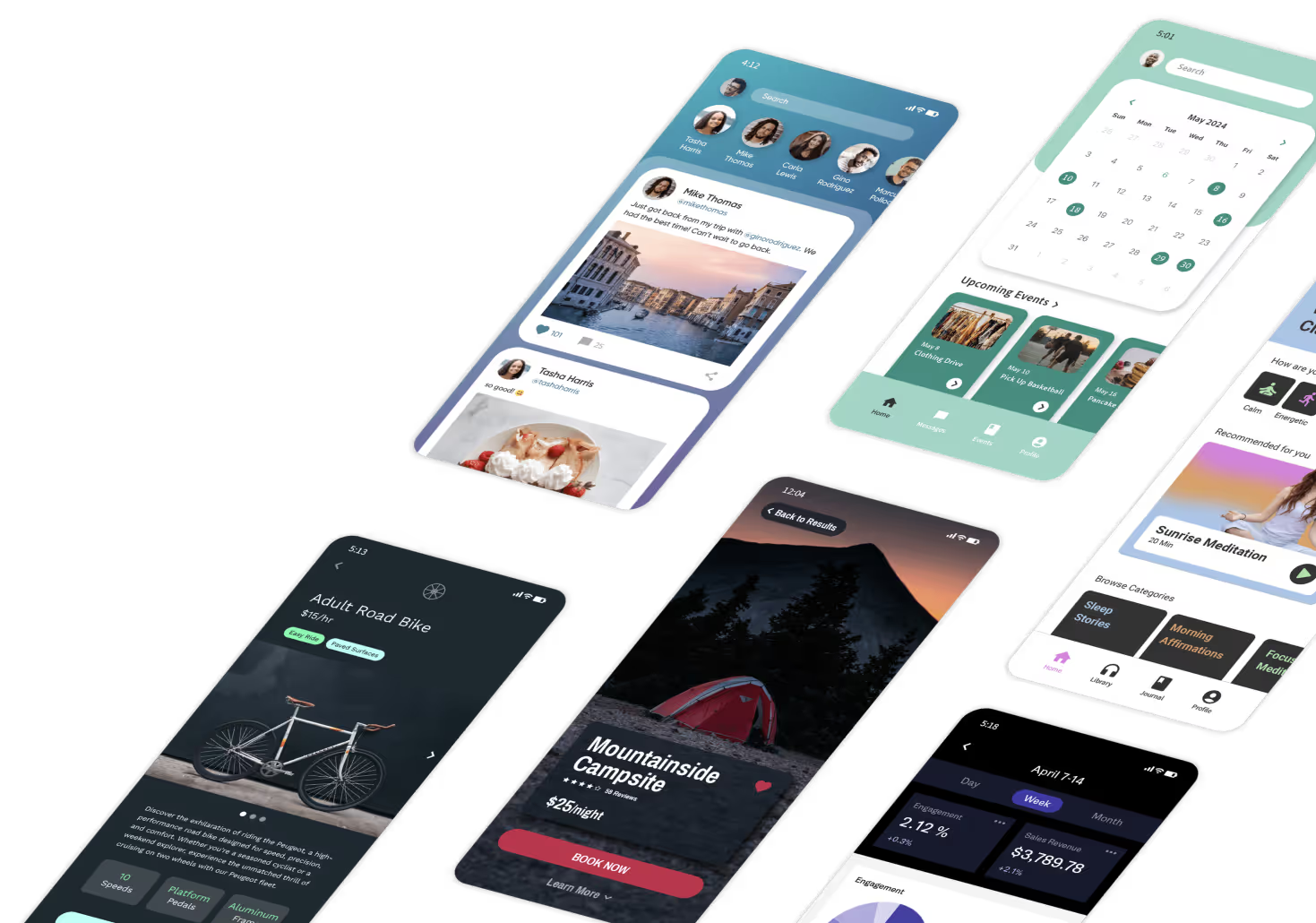
Adalo, a no-code app builder for database-driven web apps and native iOS and Android apps—one version across all three platforms, published to the Apple App Store and Google Play—transforms app development from an exclusive technical domain into an accessible creative process through its visual builder and drag-and-drop interface.
Build and publish with Adalo's AI app builder.
See how Adalo's AI app builder helps teams launch faster.
Key Takeaways
- Adalo's free tier provides unlimited test apps with a 500 records per app limit for meaningful testing—paid plans remove all record caps
- Paid plans start at $36/month for custom domains, iOS/Android publishing, and unlimited database records with no usage-based charges
- Over 3 million apps have been created on Adalo, with the visual builder described as "easy as PowerPoint"
What Is Adalo's AI-Powered App Builder Free Plan?
Adalo's free tier transforms app development from an exclusive technical domain into an accessible creative process. The platform's visual builder eliminates programming requirements while maintaining professional functionality through its drag-and-drop interface and WYSIWYG editor.
The free plan includes unlimited test apps—a significant advantage for experimenting with different concepts. Each app accesses Adalo's built-in relational database with custom formulas, AND/OR logic, and prebuilt property types. You'll work with unlimited screens and actions, accessing the same core building blocks available in paid tiers, though database records cap at 200 per app for meaningful testing.
Core Features of the Free Tier
Your free account unlocks powerful capabilities:
- Visual Development Environment - Intuitive drag-and-drop builder requiring zero coding knowledge
- Component Marketplace Access - Browse a growing catalog of additional components for enhanced functionality
- Responsive Design Tools - Build once and deploy across mobile, tablet, and web platforms
- Web Publishing - Launch apps on Adalo subdomain for immediate testing
- Database Management - Built-in relational database with logic and property types
- Community Support - Access to forums, documentation, and App Academy resources
Who Should Use Adalo's Free Plan
The free tier serves specific user groups effectively. Entrepreneurs validating app concepts benefit from rapid prototyping without financial commitment. Students learning app development gain hands-on experience with professional tools. Small business owners can test digital transformation ideas before investing in paid solutions.
However, serious app developers quickly encounter limitations. The 200-record limit restricts deeper user testing, while Adalo subdomain publishing prevents professional branding. App store distribution remains unavailable without upgrading to paid plans—though once you upgrade, you gain access to unlimited database records and native publishing capabilities.
Adalo vs Bubble: Pricing and Platform Comparison
Understanding platform differences helps select the right tool for your project. Both platforms target app building but differ fundamentally in delivery: Adalo creates true native iOS and Android apps from a single codebase, while Bubble is web-first and relies on wrappers for mobile apps. For details, see Adalo's Bubble comparison.
Bubble Pricing Structure
Bubble's web and mobile wrapper offering starts at $59/month with usage-based charges through their Workload Units system. This pricing model introduces uncertainty—calculations can be unclear, and costs may spike unexpectedly as your app scales. Bubble also imposes limits on app re-publishing and database records tied to these Workload Units.
While Bubble offers extensive customization options, this flexibility often results in slower applications that struggle under increased load. Many Bubble users find themselves hiring experts to optimize performance, and claims of millions of MAU typically require significant professional assistance to achieve.
Feature-by-Feature Comparison
Key distinctions shape platform selection:
Mobile Development: Adalo excels with native iOS publishing and Android publishing directly from the platform. One build updates web, iOS, and Android simultaneously. Bubble's mobile solution wraps the web app, introducing potential performance challenges at scale and requiring separate management for each platform.
Database Architecture: Adalo's paid plans offer no record limits—your database scales with your needs. Bubble's database capacity ties to Workload Units, creating potential constraints as you grow. Adalo's built-in system also simplifies data management for beginners.
Pricing Value: Adalo's web and true-native mobile builder starts at $36/month with unlimited usage and app store publishing—no bill shock from usage charges. Bubble's comparable offering at $59/month includes usage-based charges that can escalate unpredictably.
| Feature | Adalo | Bubble |
|---|---|---|
| Starting Price | $36/month | $59/month + usage charges |
| Native Mobile Apps | Yes - true native compilation | No - web wrapper only |
| Database Records | Unlimited on paid plans | Limited by Workload Units |
| Usage Charges | None - unlimited usage | Workload Units (variable) |
| Single Codebase Publishing | Web, iOS, Android from one build | Separate management required |
Best App Builder Features in Adalo's Free Tier
Despite limitations, Adalo's free plan delivers professional-grade capabilities that rival paid alternatives. Understanding these features maximizes your development potential before upgrading.
Database Capabilities
The platform's relational database surpasses basic spreadsheet functionality. You'll create complex data relationships, implement custom formulas, and establish business logic through AND/OR conditions. Prebuilt property types accelerate development with ready-made fields for common data like emails, phone numbers, and dates.
External Collections connect to existing databases via APIs; availability and limits vary by plan. This capability proves invaluable for proof-of-concept demonstrations requiring real data connections. For the simplest database control, Adalo's SheetBridge enables users to turn a Google Sheet into an actual database—no database-related learning required.
Design and Layout Tools
Responsive design happens automatically. Your single app design adapts across devices without additional configuration. The platform includes:
- Feature Templates - Pre-built sections for common app functions
- Component Library - Buttons, forms, lists, and navigation elements
- Custom Styling - Colors, fonts, spacing controls for brand consistency
- Screen Transitions - Professional animations between app sections
- Conditional Visibility - Show/hide elements based on user data or actions
The component marketplace extends functionality with premium elements maintained by verified developers. Adalo's canvas can display up to 400 screens at once if needed—a significant advantage for visualizing complex app architectures compared to builders with limited viewport options.
How to Make an App for Free with Adalo's Platform
Creating your first app requires no prior experience. Adalo's App Academy and templates help beginners ship quickly.
Getting Started Tutorial
Begin your app journey through systematic steps:
- Account Creation - Register at Adalo.com for immediate access
- Template Selection - Choose from pre-built templates or start blank
- Database Setup - Define data collections and relationships
- Screen Design - Drag components onto canvas and customize appearance
- Action Configuration - Link buttons and forms to database operations
- Testing Workflow - Preview app functionality in browser or mobile simulator
The App Academy provides comprehensive tutorials covering every aspect. Community forums offer peer support when encountering challenges. With the visual builder described as "easy as PowerPoint," most users create functional prototypes within their first session.
Publishing Your First App
Free tier publishing happens instantly to Adalo subdomains. Your app receives a unique URL for sharing with testers and stakeholders. This immediate deployment enables rapid iteration based on user feedback.
Remember the 200-record Free limit affects testing scope. Plan your prototype data carefully to demonstrate core functionality within constraints. Consider upgrading when requiring custom domains or expanded testing capacity—paid plans remove all record restrictions entirely.
Mobile App Creation Tools and AI Features
Modern app development leverages AI-powered services to accelerate common tasks. Adalo's AI capabilities work through both native features and integrations.
AI-Powered Building Features
Ada, Adalo's AI builder, lets you describe what you want and generates your app. Magic Start creates complete app foundations from a description, while Magic Add adds features through natural language.
Adalo 3.0 introduced significant AI capabilities that streamline app creation:
- Magic Start - Generates complete app foundations from descriptions. Tell it you need a booking app for a dog grooming business, and it creates your database structure, screens, and user flows automatically—what used to take days of planning happens in minutes.
- Magic Add - Adds features from natural language requests. Describe what you want, and the AI implements it.
- X-Ray - Identifies performance issues before they affect users, helping maintain app speed as you scale.
AI Builder for full prompt-based app creation and editing is due for release in early 2026, promising vibe-coding creation speed where you describe your vision and the AI builds it.
AI Integration Capabilities
Beyond native features, Adalo enables AI through multiple integration channels:
- Chat interfaces — connect to LLMs (e.g., OpenAI) through APIs
- Image recognition — process visual data via third-party services
- Text analysis — moderation, classification, or summarization through APIs
- Data processing — automated calculations and transformations in workflows
These integrations are configured in Adalo's visual workflows; you'll typically add API keys and actions for the AI service you choose.
Automation Capabilities
Workflow automation eliminates repetitive tasks through Zapier integration and Make integrations. Connect your app to thousands of external services triggering actions based on user behavior:
- Email notifications for new signups
- CRM updates when users complete actions
- Payment processing through Stripe
- Calendar scheduling with Google Calendar
- Document generation and storage
AI Features Available in Adalo's Free Version
While some AI features may require paid plans, free tier users can still integrate foundational AI capabilities using marketplace components and APIs.
Available AI Components
The component marketplace includes AI-enhanced elements:
- Chat interfaces
- Image processing utilities
- Validation components
- Search and filtering helpers
- Recommendation-style patterns (via API logic)
Integration with AI Services
External AI services expand capabilities beyond built-in features. Connect to:
- OpenAI for natural language processing
- Google Vision for image analysis
- IBM Watson for enterprise AI
- Microsoft Azure Cognitive Services
- Amazon Rekognition for visual search
Free-tier API limits from these services typically support prototype development. Plan your AI integration carefully to maximize free quotas during testing phases.
App Builder Platform Comparison: Adalo vs FlutterFlow
FlutterFlow comparison represents a different development philosophy—visual Flutter development with optional code export. Understanding distinctions helps select appropriate platforms for specific projects.
FlutterFlow Considerations
FlutterFlow is technically "low-code" rather than no-code, designed for technical users comfortable with development concepts. Key considerations include:
- Database Setup Required - Users must source, set up, and pay for their own separate database. This requires significant learning complexity, especially when optimizing for scale—suboptimal setup can create serious scalability problems.
- Expert Ecosystem - An ecosystem rich with experts exists because many users need help and end up spending significant sums chasing scalability.
- Limited Builder View - Slower speed to see more than 2 screens at once, compared to Adalo's ability to display up to 400 screens on one canvas.
- Pricing Complexity - Starting at $70/month per user for easy app store publishing, but this still doesn't include a database—an additional cost and complexity layer.
When to Choose Adalo
Adalo is optimized for rapid business app development without technical prerequisites:
- Faster Time to Market - Templates, AI features like Magic Start, and visual workflows speed delivery
- Lower Learning Curve - Build functional apps within hours, no coding knowledge required
- Integrated Publishing - Direct deployment to app stores without external tools
- Built-in Database - No separate database setup, management, or additional costs
- Cost Efficiency - $36/month includes iOS/Android publishing, custom domains, and unlimited database storage
Comparing Adalo to Other App Builders
Beyond Bubble and FlutterFlow, several other platforms compete in the app builder space. Here's how Adalo compares:
Adalo vs Glide
Glide is heavily format-focused and restricted to set templates. This makes it fast to build and publish with, but creates generic, simplistic apps with limited creative freedom. Glide excels at spreadsheet-based apps, but Adalo's SheetBridge offers similar convenience—turning a Google Sheet into an actual database—while providing full creative control over your app's design and functionality.
Glide pricing starts at $60/month for custom domain capability, but remains limited by app updates and data record rows that attract additional charges. Glide does not support Apple App Store or Google Play Store publishing—a significant limitation for teams targeting mobile users.
Adalo vs Softr
Softr pricing starts from $167/month to publish an actual Progressive Web App, which is still restricted by records per app and records per datasource. Softr does not support Apple App Store and Google Play Store publishing, or iOS and Android app creation. Softr serves spreadsheet app building needs, provided web app restrictions are acceptable and the higher price point fits your budget.
Adalo vs Thunkable
Thunkable offers an AI-draft of an app build, but getting access to a Progressive Web App that can be published requires a $59/month plan with usage restrictions. Reaching a responsive app requires custom pricing beyond their advertised $189/month Advanced tier.
Adalo vs Appypie
Appypie starts at $99/month to be comparable to Adalo with iOS app publishing—nearly three times Adalo's $36/month starting price for similar native publishing capabilities.
Understanding Adalo's Free Plan Limitations and Upgrade Path
Realistic expectations prevent frustration during development. The free tier's constraints become apparent quickly for serious projects.
When to Upgrade
Specific triggers indicate upgrade necessity:
- Database Growth - Approaching the 200-record limit (paid plans have no caps)
- Custom Domain - Professional branding requires removing Adalo subdomain
- App Store Publishing - iOS and Android distribution need paid plans
- Team Collaboration - Multiple editors demand higher tiers
- Advanced Integrations - Xano integration and premium features may require upgrades
Many teams upgrade after initial prototyping once limits become constraints. The investment is modest relative to traditional development—and you gain unlimited database records immediately.
Pricing Tiers Explained
Adalo's paid plans scale with business needs. All paid plans include unlimited database records and no usage-based charges—no bill shock as your app grows:
Starter Plan — $36/month:
- 1 published app with custom domain
- Unlimited database records
- Remove Adalo branding
- iOS and Android app store publishing
- Core integrations
Professional Plan — $36/mo:
- 2 published apps
- 5 collaborators
- 25GB storage
- Advanced integrations
Team Plan — $250/mo:
- 5 published apps
- 10 editors
- Priority support
- Team-level capacity increases
Business Plan — $250/month:
- 10 published apps
- Unlimited editors
- Special add-on pricing
- Enterprise features
Annual billing typically offers savings across tiers. Consider your 12-month development roadmap when selecting payment options.
Scalability and Performance
Adalo 3.0, launched in late 2025, completely overhauled the backend infrastructure. Apps now run 3-4x faster, and the modular infrastructure scales with app needs. This means there's no practical ceiling on growth—Adalo's architecture supports apps with 1 million+ monthly active users with the right data relationship setups.
This matters because most third-party platform ratings and comparisons predate this infrastructure overhaul. Reviews citing performance concerns or scalability limits likely reference the pre-3.0 architecture. The current platform is purpose-built to outperform app wrappers at scale.
Adalo publishes rolling 30-day uptime for App Editing, Published Apps, Publishing, Collections API, and App Analytics—transparency that helps teams plan with confidence.
Component Marketplace and Integration Options
Adalo's ecosystem extends far beyond basic building blocks. The component marketplace offers a growing catalog of additional elements continuously expanded by verified developers.
Popular Components
High-value additions enhance app functionality:
- Payment Processing — Stripe integration and PayPal options
- Mapping Services — Maps and location features via the marketplace
- Communication — SMS through ClickSend integration
- Analytics — User tracking/behavior tools via the marketplace
- Media Players — Audio and video components in the marketplace
- Calendar Systems — Booking and scheduling interfaces in the marketplace
Premium components undergo testing to help ensure cross-platform compatibility. Developers maintain these elements and provide updates and support.
Building Custom Integrations
Advanced users create custom components when marketplace options don't meet requirements. The platform supports:
- REST API connections to any web service
- Webhook triggers for real-time updates
- Custom actions executing complex logic
- External database sync via External Collections
- Third-party auth with supported providers
External Collections enable legacy system connections—critical for enterprise modernization projects migrating from older infrastructure.
Publishing Your App: Web, iOS, and Android
Distribution strategy impacts platform selection and budget planning. Understanding publishing requirements prevents surprises during deployment.
App Store Requirements
Native mobile distribution involves platform-specific costs:
Apple App Store:
- Apple Developer $99/year
- App review process (timing varies)
- Compliance with iOS guidelines
- TestFlight beta testing capabilities
Google Play Store:
- One-time $25 registration
- Reviews can take up to 7 days or longer, especially for new developers
- Content and policy compliance
- Built-in testing features
Adalo generates builds and provides publishing guides; you submit via your own Apple/Google developer accounts. Paid plans include unlimited updates to apps once published—no additional charges for pushing new versions.
Web Publishing Options
Web deployment offers immediate accessibility without app store constraints:
- Instant Updates - Changes reflect immediately without review processes
- Cross-Platform Access - Works on any device with a browser
- SEO Benefits - Search engine visibility for organic traffic
- Lower Barriers - No installation required from users
- PWA Capabilities - Progressive web app features depend on implementation; offline behavior varies
FAQ
Why choose Adalo over other app building solutions?
Adalo is an AI-powered app builder that creates true native iOS and Android apps from a single codebase. Unlike web wrappers, it compiles to native code and publishes directly to both the Apple App Store and Google Play Store. With features like Magic Start for AI-generated app foundations and unlimited database records on paid plans, Adalo handles the hardest part of launching an app automatically.
What's the fastest way to build and publish an app to the App Store?
Adalo's drag-and-drop interface and AI-assisted building features like Magic Start let you go from idea to published app in days rather than months. Describe your app concept, and Magic Start generates your database structure, screens, and user flows automatically. Adalo then handles the App Store submission process, so you focus on features rather than certificates and provisioning profiles.
Which is more affordable, Adalo or Bubble?
Adalo starts at $36/month with unlimited usage and no record limits on paid plans. Bubble starts at $59/month with usage-based Workload Unit charges that can escalate unpredictably, plus database record limits. For native mobile apps, Adalo provides better value—Bubble requires third-party wrappers for mobile deployment.
Which is faster to build with, Adalo or FlutterFlow?
Adalo is faster for most users. FlutterFlow is low-code designed for technical users and requires setting up a separate database. Adalo's visual builder is described as "easy as PowerPoint," includes a built-in database, and offers AI features like Magic Start that generate complete app foundations from descriptions.
Is Adalo better than Glide for mobile apps?
Yes, for native mobile apps. Glide doesn't support Apple App Store or Google Play Store publishing—it's limited to web apps. Adalo publishes true native iOS and Android apps from a single codebase. Glide also restricts you to set templates, while Adalo offers full creative freedom.
Can I migrate from Bubble to Adalo?
While there's no automatic migration tool, you can rebuild your app in Adalo using its visual builder and AI features. Magic Start can generate your app foundation from a description, significantly accelerating the process. Your data can be exported from Bubble and imported into Adalo's database.
What are the limitations of Adalo's free plan?
The free plan includes a 200-record database limit per app, Adalo subdomain publishing only (no custom domains), and no native iOS/Android app store distribution. You get full access to the visual builder, unlimited screens, and unlimited test apps. Paid plans starting at $36/month remove all record limits and enable app store publishing.
How does Adalo handle scalability?
Adalo 3.0's modular infrastructure scales to serve apps with 1 million+ monthly active users with no upper ceiling. Apps run 3-4x faster than before, and the purpose-built architecture outperforms app wrappers at scale. Most third-party reviews predate this late 2025 infrastructure overhaul.
Can I add AI features to my Adalo app?
Yes. Adalo includes native AI features like Magic Start (generates app foundations from descriptions), Magic Add (adds features from natural language), and X-Ray (identifies performance issues). You can also integrate external AI services like OpenAI, Google Vision, and IBM Watson through APIs and the component marketplace.
Do I need coding experience to use Adalo?
No coding experience required. Adalo's visual drag-and-drop builder is described as "easy as PowerPoint." The App Academy provides comprehensive tutorials, and AI features like Magic Start can generate complete app foundations from simple descriptions of what you want to build.