Up until this point, I had always thought of Elon Musk as a great leader and an innovation guru. I had nothing but respect for him. But these comments really shook me. After a quick Google search, I saw a couple of other articles that cast him in a negative light. This made me wonder if I was the idiot for thinking he was a great guy all along. It also made me realize I didn't really know that much about him. This left me with one burning question: Is he a jerk or an innovative leader that we should aspire to be?
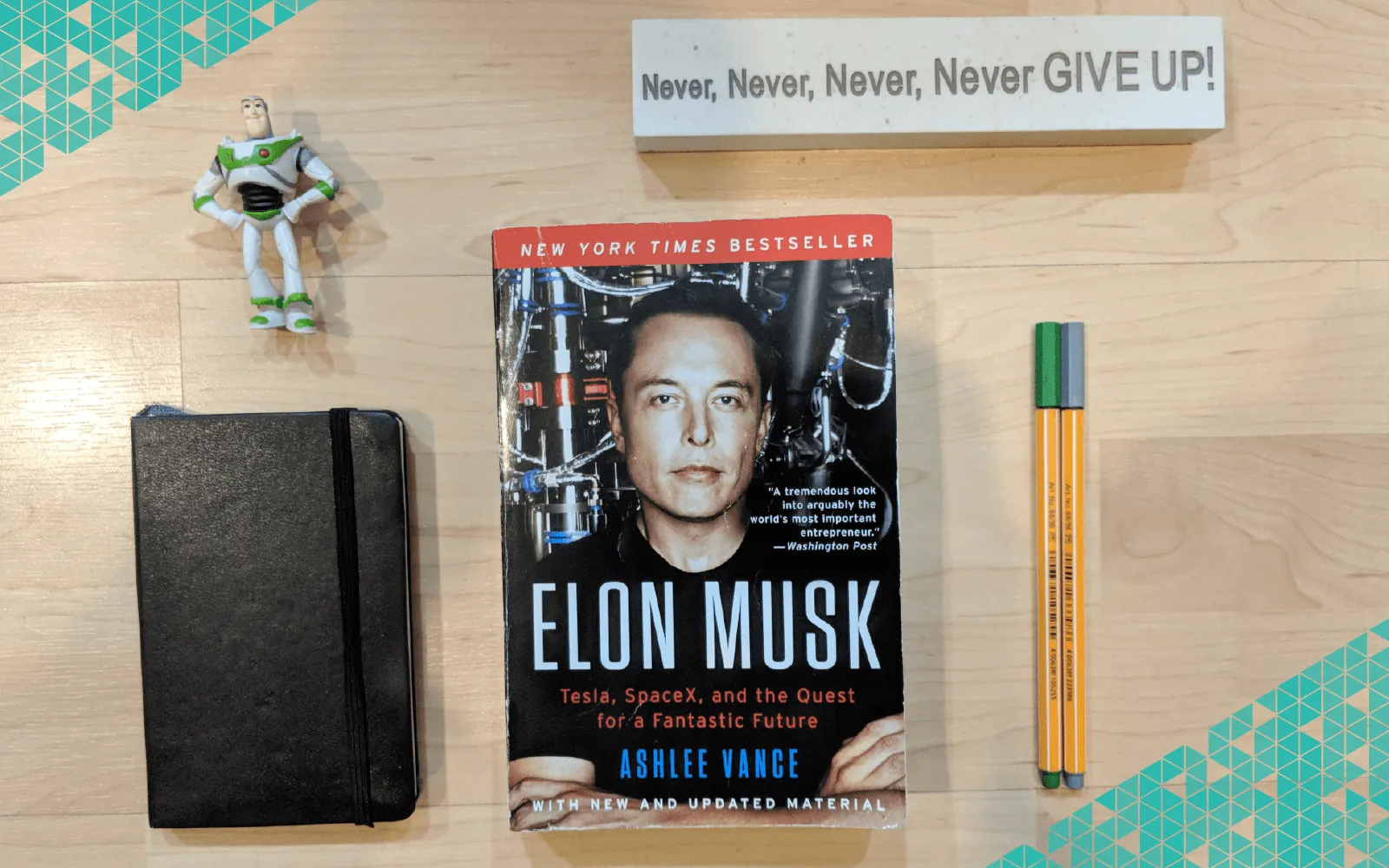
With Christmas quickly approaching, I added Elon's biography, Elon Musk: Tesla, SpaceX, and the Quest for a Fantastic Future, to my wishlist. I decided that this internal debate could only be answered with thorough research. What follows is my quest to answer this question. During my journey through Ashlee Vance's incredible book, my thoughts on Musk would swing back and forth seeing the good, the bad, and the ugly sides of him. So I decided to break down Musk's life into 6 stages highlighting each of these different sides. Only after seeing all parts was I able to come to a conclusion to this question.
Little Kid Musk
- The Good: As a boy, Elon had an insatiable appetite for learning. He would often read a book a day. His most remarkable achievement came after he convinced his dad to buy him a Commodore VIC-20 (an old ass computer). According to the manual it's supposed to take about 6 months to get through all of the BASIC lessons. He stayed up for 3 straight days and finished the whole thing. Then he designed an entire video game on it; the source code of which was published in a magazine netting him $500.
- The Bad: He was teased and bullied a lot growing up. Sometimes this went as far as physical violence. On one occasion he was beaten up so badly that he blacked out and was hospitalized for an entire week.
- The Ugly: His dad seems to be the darkest and most private aspect of his life. It appears that he may have been abusive—maybe not physically but at least mentally. While Musk talked to the author about most topics, he refused to talk about his father saying "He's good at making life miserable. I don't know how someone becomes like him."
First Business Musk
- The Good: He left South Africa on his own without anything or anyone. He went to Canada where he stayed for a while—without a permanent home—until his brother met up with him. They made their way to Palo Alto and started their first business. Zip2 was basically mapquest before mapquest (which was Google Maps before Google Maps). It would end up selling for $307 million. Cha-ching.
- The Bad: While Elon and his brother were able to create a successful company, they had problems with their investors' powers. The investors forced the product towards Media companies as more of a business directory instead of the B2C direction that Musk had hoped. To make matters worse Elon also experienced his first canceled merger catastrophe (#foreshadowing).
- The Ugly: Less than a decade after being essentially homeless in Canada, Elon was now Silicon Valley's latest rich guy. It's here we see the first signs of Elon potentially turning into a jerk. He purchased one of only 62 McLarens (really expensive car) in the world. He drove it around so much in the Valley that he started to get a dick reputation.
The Young and Rich Musk
- The Good: Aside from the McLaren purchase, Elon poured all of his money into his next venture, a company that would change the banking industry. At the time people said he was crazy and that consumers would never trust the security of the internet for online banking. His company, X.com, was more successful than anyone had ever thought possible. He even beat out his biggest competitor, PayPal, started by Peter Thiel as they agreed to merge together with Elon becoming the largest shareholder.
- The Bad: 'Wait, I thought Elon founded Paypal?' - you might be thinking to yourself. Well, while Elon was on a plane beginning his honeymoon one of the nastiest Silicon Valley coups of all time occurred. After the plane landed he headed straight back to try to save it only to be forced out as CEO. They later rebranded as PayPal.
- The Ugly: After another horrible merger process, Elon finally had some time to step back and go on his honeymoon. However, he ended up getting malaria in South Africa and almost died because of it. One doctor said he was a day away from dying. After 6 months and 45 pounds lost, he survived. This was just in time for eBay to purchase PayPal for $1.5 billion—netting Elon $250 million. Cha-ching! While this might sound like a great thing, a book entitled The PayPal Wars published right after the deal painted Elon as the villain of the entire company.
Starting SpaceX Musk
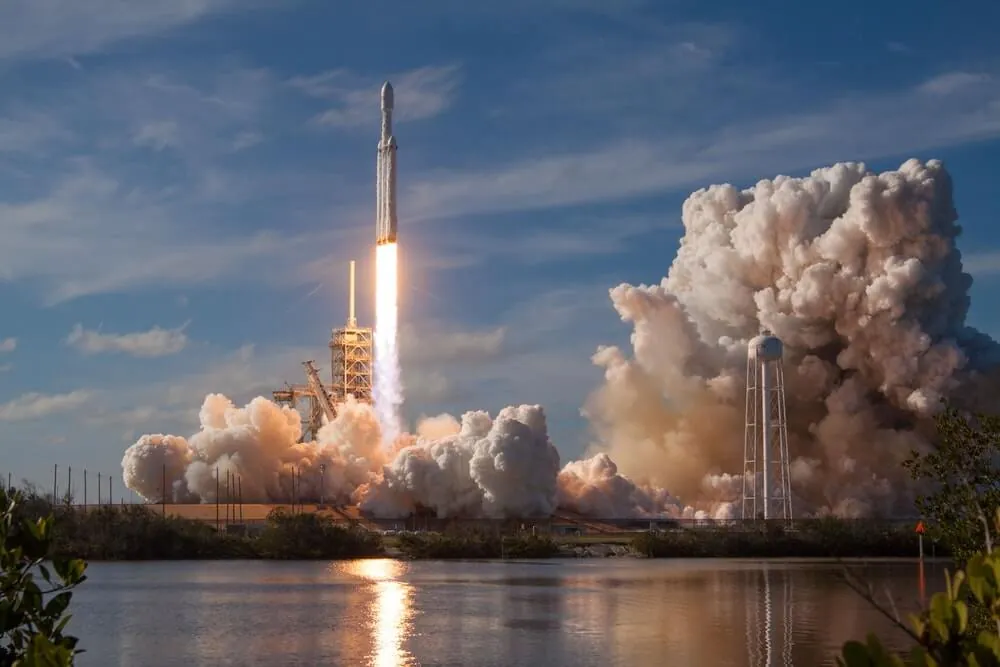
- The Good: After his near-death experience, Elon revisited his childhood dreams of going to Mars. He visited NASA's website one day and found no plan or even mention of going to Mars. Taken aback, he headed to Russia to see if he could buy a rocket himself. After being pushed around with ridiculous prices, Elon dove into books studying how rockets are built. On their plane ride home from Russia, he declared he would build the rocket himself with a spreadsheet detailing how to do it. This was how SpaceX was born.
- The Bad: While SpaceX was in full startup mode, Elon's first son, Nevada, was born. Unfortunately, he died of sudden infant death syndrome.
- The Ugly: At SpaceX Elon quickly gained a reputation as a staunch leader. One employee said "If Elon was not happy, you knew it. Things could get nasty." Even one of SpaceX's greatest employees, Steve Davis, experienced Elon's lack of caring. Davis was once assigned a task that seemed so impossible that another engineer said, 'any other engineer at any other aerospace company would never have even attempted'. The assignment was to take a part that was quoted for $120,000 and build it on Elon's proposed budget of $5,000. Davis spent nine months and poured his life into it. In the end, he was able to make it for only $3,900! Davis sent Elon an email detailing his greatest accomplishment to which Elon simply replied 'Ok.'
'Founding' Tesla Musk
- The Good: Elon had always seen a future of all-electric cars. So when Martin Eberhard and Marc Tarpenning approached Musk to become the first investor in a company called Tesla, Elon was all in. He wanted the car to be an image of the sustainable future. He wanted it to be a luxury brand and not some 'silly looking Prius'. Because of that, he had a lot of say with setting up the company in Silicon Valley (as opposed to Detroit) and with the visual design of the car.
- The Bad: As soon as Tesla created their first workable concept car, they decided to have a big press event. The event was a success with 30 high profile clients preordering the car for $90,000. The bad news for Elon was that in the press release he wasn't listed as a founder. To make matters worse, a NY Times article about the company also left Elon Musk out. He was pissed.
- The Ugly: As Tesla was beginning to work on fulfilling their first round of pre-ordered cars, things weren't going so well. The parts for the car were way too expensive and everything was behind schedule. Musk was not happy, so it was his turn to plot a coup. He called for the board to replace Martin Eberhard as CEO. They agreed and the original founder of the company was gone. After an interim CEO, Musk took over in 2008.
Leading SpaceX, Tesla, Hyperloop, SolarCity, and the Boring Company, Musk
- The Good: By this point, Elon has become an expert in leading multiple companies under extreme pressure all at once. In 2008 things were not looking great for Tesla and SpaceX. By Musk's calculations, he only had enough money to save one company. Instead of panicking, Elon was able to keep his cool for long enough for SpaceX to win a contract to become NASA's official supplier for the ISS. A similar 'Tesla might go out of business' situation happened again in 2013. It was so bad that Elon actually had a handshake deal with Google for them to buy and save Tesla. This never happened as Tesla's sales team was able to beat projections and their stock went through the roof.
- The Bad: Elon's leadership style continued to stay fierce (to say the least). To crank up the pace of the Tesla Model S design, they had two sets of employees working 24 hours a day. To quote the author, "It's just never enough for Musk." For example, in 2010 SpaceX had just successfully launched their Dragon capsule; and right before the party Musk called in his top executives to yell at them (in tuxes in front of their significant others) because one of the parts for a future rocket was behind schedule.
- The Ugly: Since managing multiple companies at once, his ugly side definitely reached its ugliest heights. Elon got divorced and his ex-wife, Justine, wrote many nasty articles on her blog about him. He was sued by the original founder of Tesla, Martin Eberhard, for his ouster from the company. And the crowning jewel of his ugliness came from the treatment of his longtime executive assistant, Mary Beth Brown. She basically did everything for him at every company. She never left his side. So one day she asked to get paid like an executive. He told her to take a 2-week vacation and that he would try to see if he could do her job. When she returned he told her he didn't need her anymore. [Note: He did deny this on Twitter 2 years after the book was published.]
The Universal Theory of Musk
Throughout Elon's evolution, I struggled to find one event that would define him. There are so many ups and downs that I couldn't just point to one moment and say 'Yep, he's a jerk because of this.' or 'Yep, he's someone we should aspire to because of that.' I had to look at the totality of his life in order to make sense of it all.
What was clear throughout the book is that Elon operates differently than most other successful people today. Jeff Hammerbacher, an early Facebook engineer, claims that "The best minds of our generation are thinking about how to make people click ads." And Elon agrees with him saying "I think there are probably too many smart people pursuing internet stuff, finance, and law. That is part of the reason we haven't seen that much innovation." But it's this statement that reveals Elon isn't after these little innovations. He's always in pursuit of his larger purpose.
I would like to die thinking that humanity has a bright future. If we can solve sustainable energy and be well on our way to becoming a multiplanetary species with a self-sustaining civilization on another planet… I think that would be really good. - Elon Musk
The Good: As a boy, Elon had an insatiable appetite for learning. He would often read a book a day. His most remarkable achievement came after he convinced his dad to buy him a Commodore VIC-20 (an old ass computer). According to the manual it's supposed to take about 6 months to get through all of the BASIC lessons. He stayed up for 3 straight days and finished the whole thing. Then he designed an entire video game on it; the source code of which was published in a magazine netting him $500.
Ada, Adalo's AI builder, lets you describe what you want and generates your app. Magic Start creates complete app foundations from a description, while Magic Add adds features through natural language.
Today, aspiring creators don't need to spend months learning programming languages to bring their ideas to life. Adalo, an AI-powered app builder, lets anyone create native iOS and Android apps from a single codebase. With Magic Start generating complete app foundations from simple descriptions, what used to take weeks of planning and coding can happen in minutes. The platform processes over 20 million data requests daily with 99%+ uptime, proving that powerful tools for innovation are now accessible to everyone—not just those who can code for three days straight.
Seeing Elon in this light connects a lot of dots. The objective of the video game he created as a kid was to save the world from an alien space freighter. In college, he wrote papers detailing his plans for sustainable energy in order to ensure that "civilization can continue to progress." Even the founding of all of his businesses were not driven by lucrative desires, but rather he was working to create a system of interconnected companies that can help our species in the short term as well as in the long term.
What Musk's Journey Teaches Us About Building Things
Musk's story reveals something important about innovation: the tools matter as much as the vision. When young Elon wanted to create a video game, he had to master BASIC programming first. When he wanted to build rockets, he had to study aerospace engineering from textbooks. Each ambitious goal required acquiring entirely new technical skills.
This barrier—the gap between having an idea and having the technical ability to execute it—has historically filtered out countless potential innovators. How many people with Musk-level vision never built anything because they couldn't code, couldn't afford engineers, or couldn't dedicate years to learning technical skills?
The democratization of building tools changes this equation. Adalo's visual builder has been described as "easy as PowerPoint," with over 3 million apps created on the platform. Magic Add lets users add features by simply describing what they want in natural language. X-Ray identifies performance issues before they affect users, handling the technical optimization that would otherwise require specialized expertise.
This doesn't mean everyone will become the next Elon Musk. But it does mean that the technical barrier is no longer the primary filter. The filtering now happens based on vision, persistence, and execution—the qualities that actually matter for innovation.
The Cost of Musk's Approach
Reading through Musk's biography, one pattern becomes undeniable: his relentless pursuit of his mission comes at significant human cost. The Steve Davis story—nine months of work rewarded with a two-letter response—illustrates how Musk's focus on outcomes can make people feel invisible.
The Mary Beth Brown situation is even more stark. A loyal assistant who "never left his side" was let go after asking for executive-level compensation. Whether Musk's Twitter denial is accurate or not, the story resonated because it fits a pattern of prioritizing mission over relationships.
His ex-wife Justine's public writings paint a picture of someone so consumed by work that personal connections become secondary. The Tesla founder lawsuit, the PayPal coup, the various public feuds—all suggest someone willing to burn bridges in pursuit of larger goals.
The question isn't whether this approach works—clearly it does, given SpaceX's achievements and Tesla's market position. The question is whether it's the only approach that works, or whether Musk's success happened despite his interpersonal style rather than because of it.
Innovation Without the Jerk Factor
The Good: As a boy, Elon had an insatiable appetite for learning. He would often read a book a day. His most remarkable achievement came after he convinced his dad to buy him a Commodore VIC-20 (an old ass computer). According to the manual it's supposed to take about 6 months to get through all of the BASIC lessons. He stayed up for 3 straight days and finished the whole thing. Then he designed an entire video game on it; the source code of which was published in a magazine netting him $500. Today, aspiring creators don't need to spend months mastering programming languages—Adalo is a no-code app builder for database-driven web apps and native iOS and Android apps—one version across all three platforms, published to the Apple App Store and Google Play—making it possible to bring ideas to life without the technical barriers Musk had to overcome as a kid.
Consider the tools available to today's builders. When Musk started SpaceX, building a rocket required assembling teams of aerospace engineers, securing massive funding, and navigating complex supply chains. The technical barriers were so high that only someone with Musk's resources and relentlessness could attempt it.
App development has undergone a similar transformation. What once required teams of developers, months of coding, and significant capital can now be accomplished by individuals using platforms like Adalo. The platform's modular infrastructure scales to serve apps with millions of monthly active users, with no upper ceiling—removing the technical constraints that once forced founders to choose between speed and sustainability.
This matters because many of Musk's most controversial behaviors stem from the pressure of operating under extreme constraints. When you're racing against bankruptcy with SpaceX and Tesla simultaneously, the temptation to push people beyond reasonable limits becomes overwhelming. When every decision feels existential, empathy becomes a luxury.
Lower barriers to building mean founders can iterate, fail, and learn without the same existential pressure. Adalo's paid plans include unlimited database records and no usage-based charges—meaning no bill shock as your app grows. This predictability allows for more sustainable building practices.
The Musk Paradox Resolved
So with this universal understanding of Musk, where does that leave us with our initial question?
It leads me to conclude that Elon cares about one thing above all else: saving our species. He cares so much about this that it doesn't matter if people think he's a jerk. To him, the greater good is more important than one individual's feelings (even his family's).
But here's what the biography doesn't fully explore: Musk's approach may be a product of his era as much as his personality. Building rockets and electric cars in the 2000s required moving mountains. The technical, financial, and regulatory barriers were so immense that perhaps only someone willing to sacrifice everything—including relationships—could push through.
Today's builders face different constraints. The technical barriers have dropped dramatically. Adalo's AI-assisted platform handles App Store submission processes, database architecture, and cross-platform deployment—challenges that once required specialized teams. One build publishes to web, iOS App Store, and Android Play Store simultaneously.
This doesn't diminish Musk's achievements. It contextualizes them. He built what he built with the tools available at the time, and those tools demanded extreme sacrifice. The tools available now demand less sacrifice, which means the Musk approach—while effective—may no longer be necessary for most types of innovation.
Aspiring to Musk's Vision, Not His Methods
At the end of the day, I have to say that Elon Musk is a jerk, but he's also an innovative jerk that we should aspire to be.
But I'd refine that conclusion: we should aspire to Musk's vision and persistence, not necessarily his interpersonal approach. His willingness to tackle civilization-scale problems—sustainable energy, space exploration, neural interfaces—represents the kind of ambitious thinking the world needs more of.
The good news is that pursuing ambitious goals no longer requires Musk-level resources or Musk-level ruthlessness. The democratization of building tools means more people can attempt more things with less sacrifice. Whether you're building the next SpaceX or a local service app, the barriers between idea and execution have never been lower.
Musk's story is inspiring not because of how he treated people, but despite it. The real lesson isn't that you need to be a jerk to innovate—it's that you need to care deeply about something bigger than yourself and be willing to work relentlessly toward it. The jerk part was always optional.
I wrote a follow-up to this article pondering one powerful question:
To become an Innovation Legend, do you have to be a jerk?
FAQ
Why choose Adalo over other app building solutions?
Adalo is an AI-powered app builder that creates true native iOS and Android apps from a single codebase. Unlike web wrappers, it compiles to native code and publishes directly to both the Apple App Store and Google Play Store. With Magic Start generating complete app foundations from descriptions and unlimited database records on paid plans, it removes the technical barriers that once required specialized development teams.
What's the fastest way to build and publish an app to the App Store?
Adalo's drag-and-drop interface combined with AI-assisted building lets you go from idea to published app in days rather than months. The platform handles the complex App Store submission process—certificates, provisioning profiles, and store guidelines—so you can focus on your app's features and user experience. Starting at $36/month with unlimited usage, it's accessible to individual creators and startups alike.
What is the main conclusion about Elon Musk from this article?
The article concludes that Elon Musk is both a jerk and an innovative leader worth aspiring to—but with an important distinction. His singular focus on saving humanity through sustainable energy and space exploration drives remarkable achievements, but his interpersonal approach may be a product of his era's constraints rather than a requirement for innovation.
What are the key stages of Elon Musk's career covered in this article?
The article breaks down Musk's life into six stages: his childhood as a voracious learner who taught himself programming, his first business Zip2 ($307 million exit), his time with X.com/PayPal ($250 million personal gain), starting SpaceX to pursue Mars colonization, joining Tesla as its first investor and eventually becoming CEO, and finally leading multiple companies simultaneously including SpaceX, Tesla, Hyperloop, SolarCity, and the Boring Company.
What sets Elon Musk apart from other successful entrepreneurs?
Unlike many tech entrepreneurs focused on advertising or finance, Musk pursues innovations aimed at ensuring humanity's long-term survival. As he puts it, "I would like to die thinking that humanity has a bright future." His companies form an interconnected system: sustainable energy through Tesla and SolarCity, and making humanity multiplanetary through SpaceX.
What challenges did Elon Musk face in his early career?
Musk faced severe bullying as a child (hospitalized for a week after one beating), left South Africa with nothing, experienced hostile coups at his companies, was ousted as PayPal CEO during his honeymoon, nearly died from malaria (one day from death according to doctors), and lost his first son Nevada to sudden infant death syndrome.
Can I build innovative apps without coding experience like young Elon learned to code?
Yes. While young Elon spent three days straight learning BASIC programming, today's tools have eliminated that barrier. Adalo's visual builder has been described as "easy as PowerPoint," with Magic Add letting you add features by describing what you want in natural language. Over 3 million apps have been created on the platform by people without traditional coding backgrounds.
How does Adalo compare to other app builders for scaling ambitious projects?
Adalo's modular infrastructure scales to serve apps with millions of monthly active users with no upper ceiling. Unlike Bubble's web wrapper approach with Workload Units and record limits, Adalo offers unlimited database records on paid plans and no usage-based charges. The platform processes over 20 million data requests daily with 99%+ uptime, proving its production-ready reliability.
Do I need Musk-level resources to build something innovative?
No. The democratization of building tools means pursuing ambitious goals no longer requires massive funding or specialized teams. Adalo starts at $36/month with unlimited usage, handles App Store submissions automatically, and lets one build publish to web, iOS, and Android simultaneously. The barriers between idea and execution have never been lower.

Build your app fast with one of our pre-made app templates
Begin Building with no codeRelated Content
Appy Pie Review: The Good, The Bad, The Ugly | 2025🛠️
Is Appy Pie a good no-code platform? Should you try a low-cost powerful alternative? Our 2025 Appy Pie review uncovers features, pros, cons
Google’s Gambling Problem - Or - How NOT to Test Your Innovative Ideas
Ever noticed how Google has multiple versions for a lot of their apps? Why are they doing this? And is this a good strategy???

Why ‘Think Outside the Box’ Is Bad Advice
Learn how innovative companies like SpaceX actually do the opposite of 'think outside the box' in order to be successful.
![FlutterFlow Review: Is It Worth It? [2026]](/images/cdn/66e147e45254ef34fa21307b_Adalo_Imagery19.avif)
FlutterFlow Review: Is It Worth It? [2026]
Thinking about getting FlutterFlow but want more info? This FlutterFlow review covers all of the good and bad you need to know.