Why Adalo Is the Smart Choice for Table Booking App Development
Adalo is a no-code app builder for database-driven web apps and native iOS and Android apps—one version across all three platforms, published to the Apple App Store and Google Play. This makes it the perfect solution for restaurant owners who want to create a professional table booking app without hiring expensive developers or learning to code.
Having your reservation app available in both app stores means customers can easily find and download it on any device, while push notifications keep diners engaged with booking confirmations, reminder alerts, and promotional offers for slow nights. With Adalo's visual drag-and-drop interface, you can build a fully functional table booking system that reflects your restaurant's brand and streamlines your entire reservation process.
Why Adalo Is Perfect for Building Your Table Booking App
Restaurant owners face a common frustration: managing reservations through phone calls, paper calendars, and scattered notes while customers increasingly expect digital convenience. The solution is building your own table booking app—but traditional development costs tens of thousands of dollars and takes months.
Adalo, an AI-powered app builder, eliminates these barriers. It creates database-driven web apps and true native iOS and Android apps from a single codebase, publishing directly to the Apple App Store and Google Play. This means your reservation app reaches all customers regardless of their device, with built-in push notification capabilities for sending reservation reminders, promoting special events, and keeping diners engaged—all from one centralized platform.
With over 3 million apps created on the platform and a visual builder described as "easy as PowerPoint," Adalo gives restaurant owners professional-grade tools without requiring technical expertise or expensive development teams.
Table Booking App Overview and App Development Planning
As its name implies, clients will use a table booking app to reserve spots at your restaurant and see your menu. It will save you tons of time by streamlining reservations, and you'll be able to ditch the phone and paper calendar—who wants to reserve a table by phone in the 2020s?
You can add several valuable features to your table booking app besides allowing your clients to reserve tables and view your menu. For instance, you can build a messaging feature that allows your clients to speak directly to your staff in case they need to make changes, an integration with a payment platform, and more.
Building your table booking app has many advantages: You'll be able to reflect your brand, your app's appearance and functionality will be congruent with your tastes, and you'll most likely save tons of money on development costs. With Adalo's paid plans offering unlimited database records, you won't hit storage walls as your customer base grows.
Ada, Adalo's AI builder, lets you describe what you want and generates your app. Magic Start creates complete app foundations from a description, while Magic Add adds features through natural language.
But we don't recommend fully charging into restaurant table booking app development all guns a-blazin'. Having a plan is essential to ensure that you release the highest-quality app possible, so get busy by undertaking these tasks:
- Start wireframing: Wireframing is simply the creation of digital blueprints for your app using special online software. Check out the wireframing program from Figma, which is super easy to learn and use. When you draw up your wireframes, you'll clearly know how you want your app to appear.
- Jot down your desired features: You already know your clients will use your app to book tables. But you'll have the power to add other features beyond simple table booking and menu viewing.
You can add a messenger, implement a countdown feature that informs clients how much time they have until their table is available, or allow clients to order food straight from the app.
- Get a membership with Adalo: You'll need a quality app builder to develop your table booking app, and Adalo checks that box. It's easy enough to use right out of the box and powerful enough to create an on-brand app that meets your needs and tastes. The platform's AI-assisted features like Magic Start can generate complete app foundations from a simple description of your restaurant's booking needs.
Adalo lets you customize nearly every bit of your app: You can choose the color scheme, pictures, and fonts. Configure your app's layout just the way you want it. When you build with Adalo, you can create a professional-looking and powerful app that scales with your business—the modular infrastructure supports apps with over 1 million monthly active users.
Your Table Booking App's Components
When you build with Adalo, you'll be able to craft each part of your app—you won't need to fiddle with any third-party backend or database builders. This is a significant advantage over platforms like FlutterFlow, where users must source, set up, and pay for separate database solutions, adding complexity and potential scale problems. Every Adalo template comes pre-packaged with 3 components that make up all apps:
- Frontend: This is the part of your app that your clients will see, touch, and use to reserve tables and more. So, you'll need to ensure that your frontend looks flawless, or folks most likely won't want to use it.
- Backend: Functioning as your app's mind and control center, your backend will transmit info about bookings from your clients to your staff. It will let clients know that their booking is successful while performing other tasks like taking orders, receiving payments, delivering messages, and much more. Adalo 3.0's overhauled infrastructure makes this 3-4x faster than previous versions.
- Database: Serving as an info repository, your database stores all your app's data. This includes tables booked, clients, menu orders, and more—any information that your clients punch into your table booking app. With no record limits on paid plans, your database grows with your restaurant's success without hitting artificial caps.
No-Code Table Booking App Development with Adalo
Step 1: Download the App Template
With Adalo, you can kickstart your app-building by choosing a premade template, which comes with everything you need to get started. Download Adalo's appointments app template, which has all the screens and features you'll need.
While the template provides options to book classes, you can customize each part for table booking and more. Alternatively, Magic Start can generate a complete app foundation from a simple description—tell it you need a table booking app for your Italian restaurant, and it creates your database structure, screens, and user flows automatically.
Step 2: Building and Customizing Your App
We can't emphasize this point enough: Adalo is one of the most flexible app builders available today. Unlike platforms like Glide that restrict you to set templates and create generic, simplistic apps with limited creative freedom, Adalo lets you reconfigure each part of your app template to create a restaurant booking app that aligns with your precise needs.
In this section, we'll show you how Adalo's app-building interface works. We'll start by walking you through its 3 main components:
- The Horizontal Ribbon: Look at the top of your app-building interface's screen, and you'll see the Horizontal Ribbon spanning across. Here, you'll be able to access your Adalo account settings and preview your app.
- The Building Canvas: Located in the center of your screen, the Building Canvas is where you'll actually build your app. You can see all your app screens and drag and drop pictures, elements, forms, and more from your Editing Dashboard. Adalo can display up to 400 screens at once on a single canvas—a significant advantage over FlutterFlow's limited view that slows down work on larger projects.
Using your cursor, you can also change the size of your app's elements and shift them to where you want them on each screen. This is a true "drag-and-drop" building canvas.
- The Editing Dashboard: On your screen's immediate left, you'll find the Editing Dashboard, a gray vertical drop-down bar. It's essentially your app-building toolbox: Here, you'll find all the features you need for building and customizing your table booking app, publishing it to the app stores, and integrating it with third-party platforms.
Customizing Components, Adding and Deleting Screens
Customizing your table booking app in Adalo is straightforward, thanks to its flexible, user-friendly interface. Follow these steps to make your app truly unique:
- Select the Screen You Want to Customize: Start by clicking the "Screens" icon (which looks like a screen) in the Editing Dashboard. This will open a list of all your current screens. Choose the one you want to modify.
- Access the Customization Menu: At the top of your Editing Dashboard, you'll see a "+" button in the middle of a colorful circle. Click this button to open the customization menu on the right side of your screen. Here, you can add buttons, new screens, booking functionality, and more.
- Change Text and Colors: To modify text and color options, click the "artist's palette" button directly below the "+" button on the Editing Dashboard. This is your Branding button. Choose the colors, fonts, and text styles that best represent your brand.
- Delete Unnecessary Screens: Your app template may include over 20 screens. If you find that's too many, deleting unnecessary screens is simple. Click the "Screens" button (below the Branding button), then select the screen you wish to remove.
For adding new features, Magic Add lets you describe what you want in natural language. Need a waitlist feature? Just describe it, and the AI generates the necessary screens and database connections.
Step 3: How To Configure Your Database
Adalo provides a built-in database that can be customized according to your specific requirements. You can access your database by clicking the "Database" icon—it looks like a spreadsheet.
Here are the 3 parts of your built-in Adalo database and how to use them:
1. Collections: These look and function like spreadsheets. They store all your app's info. Creating new collections is as simple as pushing the "Add to Database" button below your list of collections on the Database tab.
2. Properties: After you select a collection name, your database's properties will appear. These are the titles of your columns that appear in each collection—in other words, it's the classification of data.
For instance, when you click on the "Users" collection, its properties consist of email, password, username, etc. Adding or deleting properties is as easy as pushing the "Add to Properties" button at the list's bottom or clicking on the unwanted property and selecting the garbage can.
3. Records: Records are the actual data found in your sheets. They include your clients' names, the time they booked their tables, their menu order, payment history, and anything else you want to include. With Adalo's unrestricted database storage on paid plans, you can store years of reservation history, customer preferences, and order data without worrying about hitting limits.
If you already have customer data in spreadsheets, Adalo's SheetBridge feature lets you turn a Google Sheet into an actual database—the easiest control without database-related learning curves.
Step 4: How To Preview Your Table Booking App
Want to see what your app looks like on mobile and desktop devices? Press the "Preview App" button from your Horizontal Ribbon and scroll down to "Staging Preview." You can view your app on various screens, such as an iPhone 15, Samsung Galaxy S21, tablet, and more.
You can also click through each screen. If you find any issues, jot them down and get them fixed ASAP. Doing this will make your life much easier when you publish on the app stores.
Adalo's X-Ray feature can help identify performance issues before they affect users—particularly valuable for ensuring your booking system handles busy dinner rushes smoothly.
Step 5: Taking Payments
To allow your clients to make payments directly through your table booking app, you can easily integrate Stripe with Adalo. Follow these steps to set up Stripe and start accepting payments:
- Sign Up for a Stripe Account: Go to Stripe's account setup page and create a new account.
- Open the Editing Dashboard in Adalo: Once you're in your Adalo app builder, click the "+" button at the top of your Editing Dashboard.
- Locate the Stripe Form Component: Scroll down to the "Installed Components" tab and find the Stripe form component.
- Add the Stripe Form to Your App: Drag the Stripe form to the desired screen in your app where you want to accept payments.
Unlike platforms with usage-based charges that create unpredictable bills, all Adalo plans now include unlimited usage—no bill shock when your restaurant gets busy during holiday seasons or special events.
Step 6: Publishing on the Web, Apple App Store, and Google Play Store
Adalo lets you build an app that you can place on 3 different platforms: The web, Apple App Store, and Google Play Store. You won't need to make any significant changes to the app you design to publish on these platforms—one build updates all three simultaneously.
This is a crucial distinction from competitors like Bubble, whose mobile solution is a wrapper for web apps. Wrappers can introduce performance challenges at scale and mean that updating one version doesn't automatically update web, Android, and iOS apps deployed to their respective stores. Adalo compiles to true native code.
Publishing your app to the web is a cakewalk—first, go to the Horizontal Ribbon, select the profile button, and click "Settings." Then, enter your domain (www.myapp'sdomain.com), push the "Publish" button on the Editing Dashboard, and you're all set.
Don't have a domain? You can get one at Namecheap.com.
Publishing to the Apple App and Google Play Stores
While publishing to the Apple App Store and Google Play Store as a native mobile app is a bit more complex than publishing to the web, your app can leverage slick features like a camera and GPS integration.
Plus, publishing to the app stores can get your table booking app some serious attention, as both app stores have a combined monthly visitor tally of over 1 billion users. Like planning for your app, publishing to the app stores requires some preparation.
Execute these tasks before you begin the publishing process:
- Write your app's description: Because your clients will find your table booking app using the app store search function, you'll want to ensure your app's description has your restaurant's name and location (The Bronx, New York City) as keywords.
This will make it easier for your app to appear in the search results when your clients go to download it.
- Craft a killer and on-brand icon: The app stores require you to provide an icon that will appear next to your app on the search results and will be the one people tap when they want to access your app from their phones.
If you already have a logo, use it as your icon for instant brand recognition.
No logo, no problem: Create your app logo using Looka, a graphic design tool that allows you to tailor-make your app icon.
- Take nice videos that show your app's functionality: It goes without saying, but you'll need to provide valuable videos that show clients how to book a table, use the messenger, and more. A short lesson can go a long way in bolstering your app's popularity.
Ok, it's publishing time!
Adalo's Apple Publishing Procedures
Before you get started, go to Apple's iOS developer page and create an account. Then, pay the $99 annual fee and sign up for Testflight, Apple's app-testing service. Apple has thousands of folks who will download your app, try it out, and give you feedback.
Implement all the necessary corrections, and then return to Adalo and hit the "Publish" button on your Editing Dashboard to complete the instructions. Apple's publishing process can take several days to a few weeks, depending on the complexity of the app and compliance with their guidelines. For simpler apps that meet all criteria, approval may occur in a few days.
Adalo's Google Publishing Procedures
You must create an Android developer account, pay the one-time $25 enrollment fee, and sign up for Google's testing program.
Once the testing is over and you've made the needed changes, go to Adalo and follow nearly the same procedures you did with Apple, except select "Android" after pressing "Publish" on the Editing dashboard. Publishing on the Google Play Store usually takes a few days but can vary depending on the app review process.
Next Steps: Daily Maintenance and Marketing of Your App
Now, it's time to ensure your booking app works 100% of the time. If you ever find bugs or glitches, resolve them on the fly. A poorly performing app will tarnish your reputation. Adalo's X-Ray feature helps identify potential performance issues before they affect your customers.
You can also see how many folks are using your app, where they're from, and more by pressing the "Analytics" button on your editing dashboard. Use this to gather statistics about your app, which you can use to improve its performance.
Obviously, you'll want to ensure all your clients have downloaded your table booking app on their phones. Here are a few ways to boost your app's popularity:
- At a payment station in your restaurant, present a few QR codes that link to your app on the app stores so clients can quickly access it.
- Promote your app on your website with a link to your app on the app store.
- Every once in a while, run nightly specials where you give clients a free or discounted beverage or appetizer if they download your app.
If you really want to market your app aggressively, check out our app-marketing promo guide. It contains loads of tips, tricks, and tactics for marketing your table-booking app to the masses.
How Adalo Compares to Other App Builders for Restaurant Apps
When choosing a platform for your table booking app, understanding the alternatives helps clarify why Adalo stands out for restaurant owners.
| Platform | Starting Price | Native App Store Publishing | Database Included | Best For |
|---|---|---|---|---|
| Adalo | $36/month | Yes (iOS & Android) | Yes, unlimited records | Native mobile apps with full customization |
| Bubble | $69/month | Web wrapper only | Yes, with Workload limits | Complex web applications |
| Glide | $60/month | No | Limited records | Simple spreadsheet-based apps |
| FlutterFlow | $70/month per user | Yes | No (external required) | Technical users comfortable with code |
| Softr | $167/month | No | Limited records | Web apps from Airtable data |
Bubble offers more customization options but often results in slower applications that struggle under increased load. Their mobile solution uses web wrappers rather than native compilation, which can introduce performance challenges. Many Bubble users end up hiring experts to optimize their apps—claims of millions of MAU are typically only achievable with significant professional help.
Glide excels at turning spreadsheets into simple apps quickly, but the template restrictions create generic-looking results with limited creative freedom. It also doesn't support App Store or Play Store publishing—a dealbreaker if you want customers to find your app where they naturally search.
FlutterFlow is technically "low-code" rather than no-code, designed for users with technical backgrounds. The requirement to source, set up, and pay for a separate database adds complexity and cost. Many users end up spending significant sums chasing scalability solutions.
For restaurant owners who want a professional, branded table booking app on both app stores without technical complexity, Adalo's combination of native compilation, included database with no record caps, and AI-assisted building provides the most straightforward path.
Conclusion
Table booking app development will streamline your restaurant's operations, simplify the booking process, and hopefully attract more clients. With the right planning—wireframing your screens, listing your desired features, and choosing a capable platform—you can launch a professional reservation system that reflects your brand and grows with your business.
The combination of native app store publishing, unlimited database storage, and AI-assisted building makes creating your own table booking app more accessible than ever. Enjoy the building process!
FAQ
Why choose Adalo over other app building solutions?
Adalo is an AI-powered app builder that creates true native iOS and Android apps from a single codebase. Unlike web wrappers, it compiles to native code and publishes directly to both the Apple App Store and Google Play Store. With unlimited database records on paid plans and no usage-based charges, you get predictable costs as your restaurant grows.
What's the fastest way to build and publish an app to the App Store?
Adalo's drag-and-drop interface combined with AI-assisted features like Magic Start lets you generate complete app foundations from a simple description. The platform handles the App Store submission process, so you can go from idea to published app in days rather than months—no coding required.
Can I easily build a table booking app without coding experience?
Yes, with Adalo's visual builder described as "easy as PowerPoint," you can build a professional table booking app without any coding experience. Pre-made templates, drag-and-drop components, and built-in database functionality let you customize every aspect of your app to match your restaurant's brand.
How long does it take to build a table booking app?
Using Adalo's templates and AI features, you can have a functional table booking app ready for testing within a few days. Publishing to the Apple App Store typically takes several days to a few weeks depending on compliance, while Google Play Store publishing usually takes just a few days.
How much does it cost to build a table booking app with Adalo?
Adalo's paid plans start at $36/month, which includes web and native mobile app publishing, unlimited database records, and unlimited usage. Compare this to Bubble at $69/month with usage limits, or FlutterFlow at $70/month per user without an included database.
Which is more affordable, Adalo or Bubble?
Adalo starts at $36/month with unlimited usage and database records. Bubble starts at $69/month but includes Workload Units that create usage-based charges and can lead to unpredictable bills during busy periods. For restaurant apps with variable traffic, Adalo's predictable pricing is typically more cost-effective.
Which is better for mobile apps, Adalo or Glide?
Adalo is significantly better for mobile apps because it compiles to true native iOS and Android code and publishes directly to both app stores. Glide does not support Apple App Store or Google Play Store publishing at all—it only creates web apps. For a table booking app customers can download, Adalo is the clear choice.
What features should a table booking app have?
Essential features include table reservations with date/time selection, menu viewing, push notifications for reminders, and customer account management. Advanced features can include direct messaging with staff, payment integration via Stripe, waitlist management, and food pre-ordering capabilities.
Can I publish my table booking app to the App Store?
Yes, Adalo handles the entire App Store submission process for both Apple and Google. You'll need developer accounts ($99/year for Apple, $25 one-time for Google), but Adalo guides you through the publishing steps and compiles your app to native code that meets store requirements.
Do I need to hire a developer to build a restaurant app?
No. Adalo's visual builder and AI-assisted features eliminate the need for developers. Unlike platforms like FlutterFlow that require technical knowledge and external database setup, Adalo includes everything you need in one platform. Over 3 million apps have been created by non-technical users on the platform.

Build your app fast with one of our pre-made app templates
Begin Building with no codeRelated Content
Hotel Booking App Development: Build Your Own in 6 Steps
Hotel booking app development is easier than ever. Learn to build, customize, and publish your app without writing code.
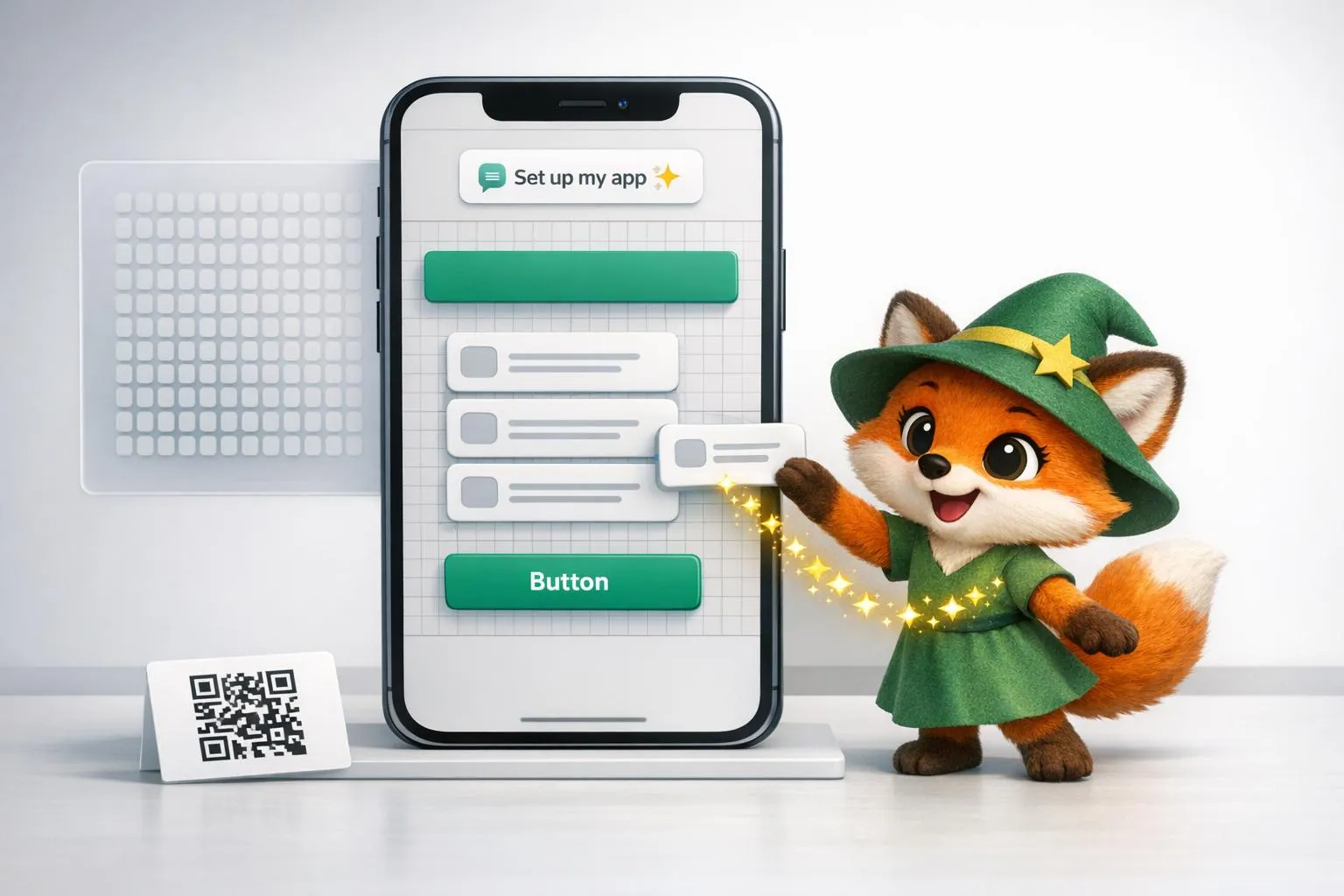
Free No-Code Mobile App Development for Startups: Adalo's Free Tier Guide
Build and test mobile app prototypes for free with a drag-and-drop no-code builder, AI setup, a 200-record database, and shareable previews.
Adalo's 2026 Guide to AI-Powered No-Code Mobile App Builders
Adalo's 2026 Guide to AI-Powered No-Code Mobile App Builders
Adalo offers AI-powered no-code tools to help founders and startups build and publish responsive apps using APIs and custom integrations.
How To Build Your Hotel Room Booking Software Without Coding
Discover how to build hotel room booking software using no-code tools. Follow our step-by-step guide to creating a custom app with Adalo.