Why Adalo Works for Building a Video Sharing Platform
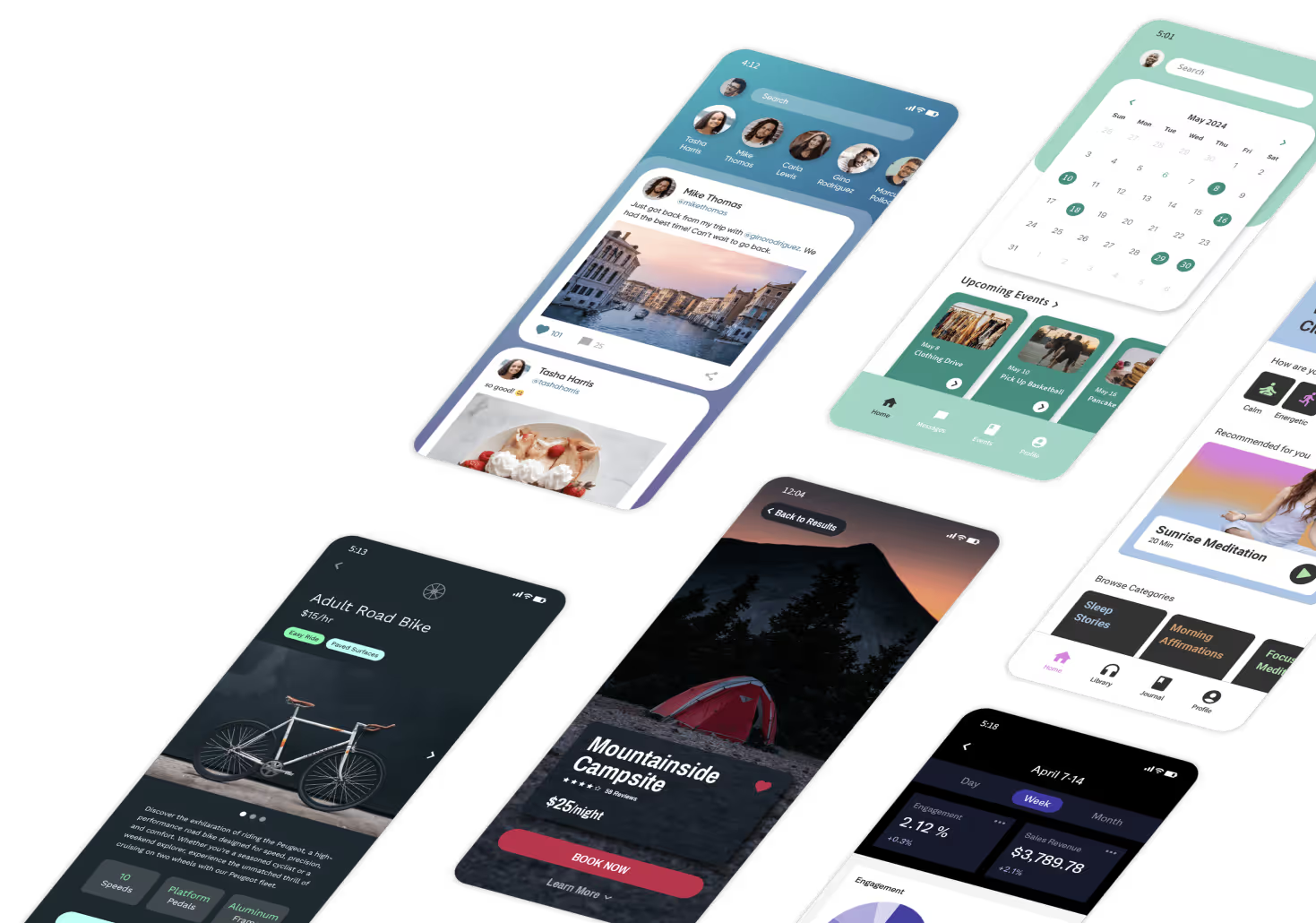
Adalo is a no-code app builder for database-driven web apps and native iOS and Android apps—one version across all three platforms, published to the Apple App Store and Google Play. This cross-platform capability is essential for a video sharing app, where viewers expect to seamlessly switch between watching on their phone during a commute and their computer at home—just like they do with YouTube.
App store distribution transforms your video platform from a simple web project into a legitimate content destination. When creators upload new videos, push notifications alert subscribers instantly on their mobile devices, driving the kind of immediate engagement that keeps viewers coming back. This native functionality, combined with Adalo's robust database for managing channels, playlists, and user interactions, gives you the foundation to build a compelling video sharing experience.
Building a video sharing platform like YouTube might seem like a massive undertaking—the kind of project that requires a team of developers and months of work. But what if you could create a functional video platform with channels, playlists, subscriptions, and social features without writing a single line of code?
Adalo, an AI-powered app builder, makes this possible. With its robust database capabilities and native app compilation, you can build a YouTube-style platform that works seamlessly across web browsers and mobile devices. One codebase publishes to web, the Apple App Store, and Google Play Store—handling the complexity of multi-platform deployment that typically requires separate development teams.
This comprehensive tutorial walks you through building a complete video sharing platform. While some advanced features like live streaming aren't possible, you'll create a functional app with video uploads, channels, playlists, comments, and subscriber notifications. Native app store distribution means your users get push notifications when their favorite creators upload new content—the kind of engagement that makes video platforms thrive.
Why Adalo Works for Building a Video Sharing App
Video platforms demand serious database functionality. You need to manage videos, channels, playlists, user interactions, and engagement metrics across multiple platforms simultaneously. Adalo's database architecture handles this complexity while its AI-assisted tools accelerate the building process.
Ada, Adalo's AI builder, lets you describe what you want and generates your app. Magic Start creates complete app foundations from a description, while Magic Add adds features through natural language.
Magic Start generates complete app foundations from a simple description—tell it you're building a video sharing platform, and it creates your database structure, screens, and user flows automatically. Magic Add lets you add features by describing what you want in plain language. Need a subscription system? Just describe it.
Publishing to both app stores means users download and access content natively on their devices. Push notifications alert subscribers when new videos drop. With no record limits on paid plans and modular infrastructure that scales to 1M+ monthly active users, your platform can grow from launch to viral success without hitting artificial ceilings.
Prerequisites and Initial Setup
Step 1: Create Your Adalo Account
- Navigate to Adalo.com and click "Start Building For Free"
- Choose email signup or Google authentication
- Select your experience level with app building tools
- Complete the onboarding questionnaire
- Verify your email if using email signup
Step 2: Create a New App
- Click "Create New App" from your dashboard
- Choose "Responsive App (Adalo 2.0)"
- Select "Start from Scratch" (don't use templates)
- Name your app "YouTube Clone" or similar
- Pick a primary color theme (red for YouTube-style)
- Choose dark or light mode preference
- Click "Let's Go" to enter the editor
Step 3: Configure App Settings
- Click the gear icon in the top bar
- Navigate to "App Settings"
- Set your app icon (upload a custom logo)
- Configure splash screen settings
- Confirm your app type is "Responsive (Adalo 2.0)"—the Video component requires Responsive apps
Setting Up the Database
Your database structure determines how well your video platform performs. With Adalo's unlimited database records on paid plans, you won't hit storage walls as your content library grows.
Step 4: Create the Videos Collection
- Click Database icon in left sidebar
- Click "+ Add Collection"
- Name it "Videos"
- Add these properties (click "+ Add Property"):
- Title (Text) - Make this first as it becomes the record label
- Description (Text - check "Multiline")
- Video File (File) — Direct uploads must be < 50 MB; uploads over ~40 MB may time out
- Video URL (Text) - For external video links
- Thumbnail (Image)
- Duration (Number) - Store in seconds
- Views (Number - default: 0)
- Upload Date (Date & Time - Automatic)
- Published (True/False - default: true)
- Category (Text)
- Tags (Text)
Learn about database setup
Step 5: Enhance the Users Collection
- Select the default "Users" collection
- Add these channel-specific properties:
- Channel Name (Text)
- Channel Description (Text - Multiline)
- Channel Banner (Image)
- Subscriber Count (Number - default: 0)
- Total Views (Number - default: 0)
- Join Date (Date & Time - Automatic)
- Verified (True/False - default: false)
Step 6: Create Comments Collection
- Click "+ Add Collection"
- Name it "Comments"
- Add properties:
- Comment Text (Text - Multiline)
- Created At (Date & Time - Automatic)
- Edited (True/False - default: false)
- Likes (Number - default: 0)
Step 7: Create Supporting Collections
Playlists Collection:
- Playlist Name (Text)
- Description (Text - Multiline)
- Thumbnail (Image)
- Created Date (Date & Time - Automatic)
- Public (True/False - default: true)
- Video Count (Number - default: 0)
Categories Collection:
- Name (Text)
- Icon (Image)
- Description (Text)
Subscriptions Collection:
- Subscribed At (Date & Time - Automatic)
Likes Collection:
- Created At (Date & Time - Automatic)
Step 8: Set Up Relationships
Configure these essential relationships:
- Videos to Users:
- In Videos, add Relationship to Users
- Select "A Video has one Creator"
- Name: "Creator" in Videos, "Created Videos" in Users
- Comments to Videos:
- In Comments, add Relationship to Videos
- Select "A Comment belongs to one Video"
- Name: "Video" in Comments, "Comments" in Videos
- Comments to Users:
- In Comments, add Relationship to Users
- Select "A Comment has one Author"
- Name: "Author" in Comments, "Comments" in Users
- Playlists to Users:
- In Playlists, add Relationship to Users
- Select "A Playlist has one Creator"
- Name: "Creator" in Playlists, "Playlists" in Users
- Videos to Playlists (Many-to-Many):
- In Videos, add Relationship to Playlists
- Select "A Video can be in many Playlists"
- Name: "In Playlists" in Videos, "Videos" in Playlists
Building the Home Feed
Step 9: Create the Home Screen
- Add new screen "Home"
- Make it your start screen
- Add App Bar at top:
- Add logo image on left
- Add search icon (link to Search screen)
- Add notification icon
- Add user avatar (link to Profile)
Step 10: Add Video Feed List
- Add Custom List component
- Connect to Videos collection
- Filter: Published = true
- Sort: Upload Date (Newest First)
- In list item, add:
- Image for thumbnail
- Text for title (2 lines max)
- Text for channel name
- Text for views and upload date
Step 11: Configure List Performance
- Select the list
- Go to Advanced section
- Enable "Load Items as User Scrolls"
- Set initial load to 10 items
- Enable "Show Loading Indicator"
Adalo 3.0's overhauled backend infrastructure delivers 3-4x faster performance than previous versions, making video feeds load quickly even with extensive content libraries.
Step 12: Add Category Filter
- Add horizontal Simple List above video feed
- Connect to Categories collection
- In each item:
- Add Rectangle with rounded corners
- Add Text for category name
- Add click action to filter main list
Implementing Video Upload
Step 13: Create Upload Screen
- Add new screen "Upload Video"
- Add Form component
- Set to create record in Videos collection
- Add form fields:
- Text Input for Title (required)
- Text Input for Description (multiline)
- Dropdown for Category
- File Picker for Video File
- Image Picker for Thumbnail
Step 14: Configure File Upload
- Select the File Picker
- Set label to "Select Video (Max 40 MB—larger files may time out)"
- Add help text about size limits
- Note: No file type restrictions available
Step 15: Add Upload Actions
- On form submit button:
- Set Creator to Logged In User
- Set Upload Date to Current Time
- Add success notification
- Navigate to video detail screen
Step 16: Implement External Video Option
- For YouTube content, use the YouTube component
- For externally hosted files, use a direct .mp4 URL in Video URL on the Video component. Note that URL-hosted videos (e.g., Vimeo links) may not play on native builds
- Show conditional Text Input for URL
- Validate URL format with conditional visibility
- Store in Video URL field instead of File
Building the Video Player Screen
Step 17: Create Video Detail Screen
- Add new screen "Watch Video"
- Add Video Component at top
- Configure video settings:
- Source: Current Video > Video File (or Video URL)
- Show controls: Yes
- Controls: Not available on Native Android
- Autoplay: Optional—mobile browsers may block until user interaction; when enabled, it starts muted
- Muted: No
- Loop: No
- Show Full Video (maintains aspect ratio)
Step 18: Add Video Information
Below video player, add:
- Text for video title (bold, large)
- Text for view count and date
- Group with like/dislike buttons
- Rectangle divider
- Group with channel info:
- Avatar image
- Channel name
- Subscriber count
- Subscribe button
Step 19: Implement View Counter
- On screen load, add action:
- Update Current Video
- Views = Current Video > Views + 1
- Note: This counts every load, not unique views
Step 20: Add Comments Section
- Add Text "Comments" header
- Add Custom List connected to Comments
- Filter: Video = Current Video
- Sort: Created At (Newest First)
- In each comment show:
- Author avatar
- Author name
- Comment text
- Time ago
- Like button
Step 21: Create Comment Form
- Add Form at bottom
- Set to create Comment record
- Add Text Input for comment
- On submit:
- Set Video to Current Video
- Set Author to Logged In User
- Clear form after submit
Implementing Channels
Step 22: Create Channel Screen
- Add new screen "Channel"
- Add Image for channel banner
- Add channel info section:
- Avatar
- Channel name
- Subscriber count
- Subscribe button
- Add tabs for content organization
Step 23: Add Channel Videos Tab
- Add Custom List of videos
- Filter: Creator = Current Channel
- Sort: Upload Date (Newest)
- Use grid layout (2 columns)
- Show thumbnail and title only
Step 24: Create Subscribe System
- In Subscriptions collection, set relationships:
- Subscriber (User who subscribes)
- Channel (User being subscribed to)
- On Subscribe button:
- If subscription exists, delete it
- If not, create new subscription
- Update subscriber count accordingly
Building Playlists Feature
Step 25: Create Playlist Screen
- Add new screen "Playlist"
- Show playlist info:
- Thumbnail
- Name
- Description
- Video count
- Total duration
- Add privacy indicator
Step 26: Build Playlist Videos List
- Add Custom List of videos
- Filter: In Playlists contains Current Playlist
- Add an "Order" Number property and Sort the list by Order (low→high) for manual sequencing
- Show video number in playlist
Step 27: Implement Add to Playlist
- On video screen, add "Save" button
- Opens modal with user's playlists
- Show checkboxes for each playlist
- Update relationships on save
Step 28: Create Playlist Management
- Add "Create Playlist" screen
- Form with name, description, privacy
- Auto-add current video if creating from video page
- Allow editing for playlist owner only
Adding Social Features
Step 29: Implement Like System
- Create Like relationship (Many-to-Many)
- Users can like many videos
- Videos can have many likes
- Toggle button changes based on like status
Step 30: Build Search Screen
- Add new screen "Search"
- Add Text Input at top
- Add Custom List below
- Filter: Title contains Input's value OR Description contains Input's value
Tip: Use "Contains" for partial text matches on Title and Description
Step 31: Add Trending Section
- Create "Trending" screen
- Add Custom List of videos
- Filter: Upload Date > Current Time - 7 days
- Sort: Views (High to Low)
- Limit to 50 items
Step 32: Create User Profiles
- Add profile screen
- Show user info:
- Avatar (editable for own profile)
- Username
- Bio
- Stats (videos, views, subscribers)
- Add "Edit Profile" for logged-in user
Performance Optimization
Step 33: Optimize Images
- Compress all images before upload
- Use Adalo's Imgix parameters:
- Use Imgix params like
?w=400&q=30for thumbnails (seth=only if you want cropping) - Reduces file size significantly
- Use Imgix params like
- Upload thumbnails separately from videos
Step 34: Implement Pagination
- Instead of infinite scroll, add "Load More" button
- Use list pagination with 20 items per page
- Prevents loading all videos at once
- Better control over performance
Step 35: Database Optimization
- Store calculated values (don't compute dynamically)
- Limit list sizes, paginate, and pre-compute counts for optimal performance
- Limit relationship depth
- Clean old watch history periodically
X-Ray, Adalo's built-in performance analyzer, identifies potential issues before they affect users—helping you catch slow queries or heavy screens during development rather than after launch.
External Storage Integration
Step 36: Set Up Video Sources
- Use the Video component for direct uploads (files must be < 50 MB)
- For larger or pre-hosted files, store a direct .mp4 URL in a property (e.g.,
Video URL) and bind it to the Video component - If your content is on YouTube, use the YouTube component and paste the video URL
- (Optional) If you maintain a remote catalog (titles, durations, etc.), connect it as External Collections and bind lists/fields via Magic Text
Step 37: YouTube Integration
- Open the Marketplace, install the YouTube component, then add it to your screen
- Bind a YouTube URL (public or unlisted) directly, or store it in your database and insert via Magic Text
- Use lists to present a feed of YouTube videos; on item tap, navigate to a detail screen with the YouTube component bound to that record's URL
Step 38: Optimize Video Playback
- Keep files small: upload videos < 50 MB when using the File property on the Video component
- Paginate long lists: enable Load items as user scrolls and avoid lists-within-lists
- Pre-compute counts and show them from record properties (faster than live queries)
- Optimize thumbnails: serve appropriately sized images to keep feeds snappy
Testing and Publishing
Step 39: Test Core Features
- Upload videos under 40MB
- Test on multiple devices
- Verify video playback
- Check all user flows
- Test with 10+ concurrent users
Step 40: Platform-Specific Testing
- Web App: Best video support
- iOS: Test with TestFlight
- Android: Note missing video controls
- PWA: Good compromise option
Step 41: Prepare for Publishing
- Create privacy policy
- Add terms of service
- Implement content reporting
- Set age restrictions
- Add content guidelines
Step 42: App Store Submission
- Need Starter plan minimum ($36/month)
- Apple Developer account ($99/year)
- Google Play account ($25 one-time)
- Prepare screenshots and descriptions
- Submit for review
Adalo handles the complex App Store submission process—certificates, provisioning profiles, and store guidelines—so you can focus on your app's features rather than deployment headaches.
Working with Platform Limitations
Cannot Implement:
- Live streaming
- Video editing/filters
- Automatic transcoding
- Multiple quality options
- Background playback
- Picture-in-picture
- Offline downloads
- Advanced analytics
- Content ID system
- Monetization/ads
Workarounds:
- Use external video hosts for larger files
- Pre-process videos before upload
- Implement manual moderation
- Create basic analytics with counters
- Use third-party services via APIs
Cost Considerations
Adalo Pricing:
- Starter: $36/month — includes publishing, unlimited usage, no record caps
- Professional: $36/mo — adds Custom Actions and External Collections
- Team: $250/mo — adds Collections API, higher limits, and collaborators
- Business: $250/month — highest limits
All paid plans include unlimited database records and no usage-based charges—no surprise bills as your platform grows. Compare this to alternatives like Bubble, where Workload Units create unpredictable costs that scale with usage.
Additional Costs:
- Apple Developer account: $99/year
- Google Play account: $25 one-time
- External video hosting (if needed): varies by provider
Additional Resources
- Adalo Video Component
- Database Setup Guide
- Performance Optimization
- YouTube Tutorials
- Adalo App Academy
- Component Marketplace
Important Considerations
Video Limitations: Uploads must be < 40 MB (Adalo max 50 MB; larger files may time out). The Video component is available in Responsive apps and lacks controls on Native Android. For larger videos, host them externally and store a direct .mp4 URL for the Video component, or use the YouTube component for YouTube content.
Performance: Adalo 3.0's infrastructure overhaul (launched late 2025) delivers 3-4x faster performance than previous versions. Paginate long lists, keep list items light, pre-compute counts, and optimize thumbnails using Imgix URL params like ?q=30.
Scalability: With proper data relationship setups, Adalo apps can scale beyond 1 million monthly active users. The modular infrastructure grows with your needs—no artificial ceilings to hit.
This YouTube clone provides core video sharing functionality that serves as a solid foundation for a video community platform. While it won't match YouTube's advanced features, it delivers the essentials: video uploads, channels, playlists, subscriptions, and social engagement—all published natively to web, iOS, and Android from a single codebase.
FAQ
Why choose Adalo over other app building solutions?
Adalo is an AI-powered app builder that creates true native iOS and Android apps. Unlike web wrappers, it compiles to native code and publishes directly to both the Apple App Store and Google Play Store from a single codebase—the hardest part of launching an app handled automatically.
What's the fastest way to build and publish an app to the App Store?
Adalo's drag-and-drop interface and AI-assisted building let you go from idea to published app in days rather than months. Magic Start generates complete app foundations from descriptions, and Adalo handles the complex App Store submission process so you can focus on features instead of certificates and provisioning profiles.
What are the video upload limitations when building with Adalo?
Direct video uploads in Adalo must be under 50 MB, though uploads over approximately 40 MB may time out. For larger videos, host them externally and store a direct .mp4 URL, or use the YouTube component for YouTube-hosted content.
Can I add push notifications to alert subscribers when new videos are uploaded?
Yes, publishing your video app as a native app through Adalo enables push notifications to alert subscribers when their favorite creators upload new videos. This drives the engagement that makes video platforms thrive.
What features are not possible to build in an Adalo video app?
Advanced features like live streaming, video editing/filters, automatic transcoding, multiple quality options, background playback, picture-in-picture, offline downloads, and monetization/ads are not possible natively. Workarounds include using external video hosts, pre-processing videos before upload, and connecting third-party services via APIs.
How much does it cost to build and publish a video sharing app with Adalo?
Adalo's Starter plan costs $36/month and includes publishing with unlimited usage and no record caps. You'll also need an Apple Developer account ($99/year) and Google Play account ($25 one-time) for app store publishing. All paid plans have no usage-based charges, so costs stay predictable as your platform grows.
How long does it take to build a video sharing app?
With Adalo's visual builder and AI-assisted tools like Magic Start, you can build a functional video sharing platform in days rather than months. The exact timeline depends on feature complexity, but the core functionality covered in this tutorial can be completed in a weekend.
Do I need coding experience to build a video app?
No coding experience required. Adalo's visual builder has been described as "easy as PowerPoint," and AI features like Magic Add let you add functionality by describing what you want in plain language.
Can my video platform scale to handle many users?
Yes. Adalo's modular infrastructure scales to serve apps with over 1 million monthly active users, with no upper ceiling. Paid plans have unlimited database records, so your content library can grow without hitting storage limits.
How does Adalo compare to Bubble for video apps?
Adalo creates true native iOS and Android apps from a single codebase, while Bubble's mobile solution is a web wrapper. Adalo offers unlimited database records and no usage-based charges starting at $36/month, whereas Bubble starts at $59/month with Workload Units that create unpredictable costs. Adalo 3.0's infrastructure overhaul (late 2025) delivers 3-4x faster performance—most third-party comparisons predate this update.