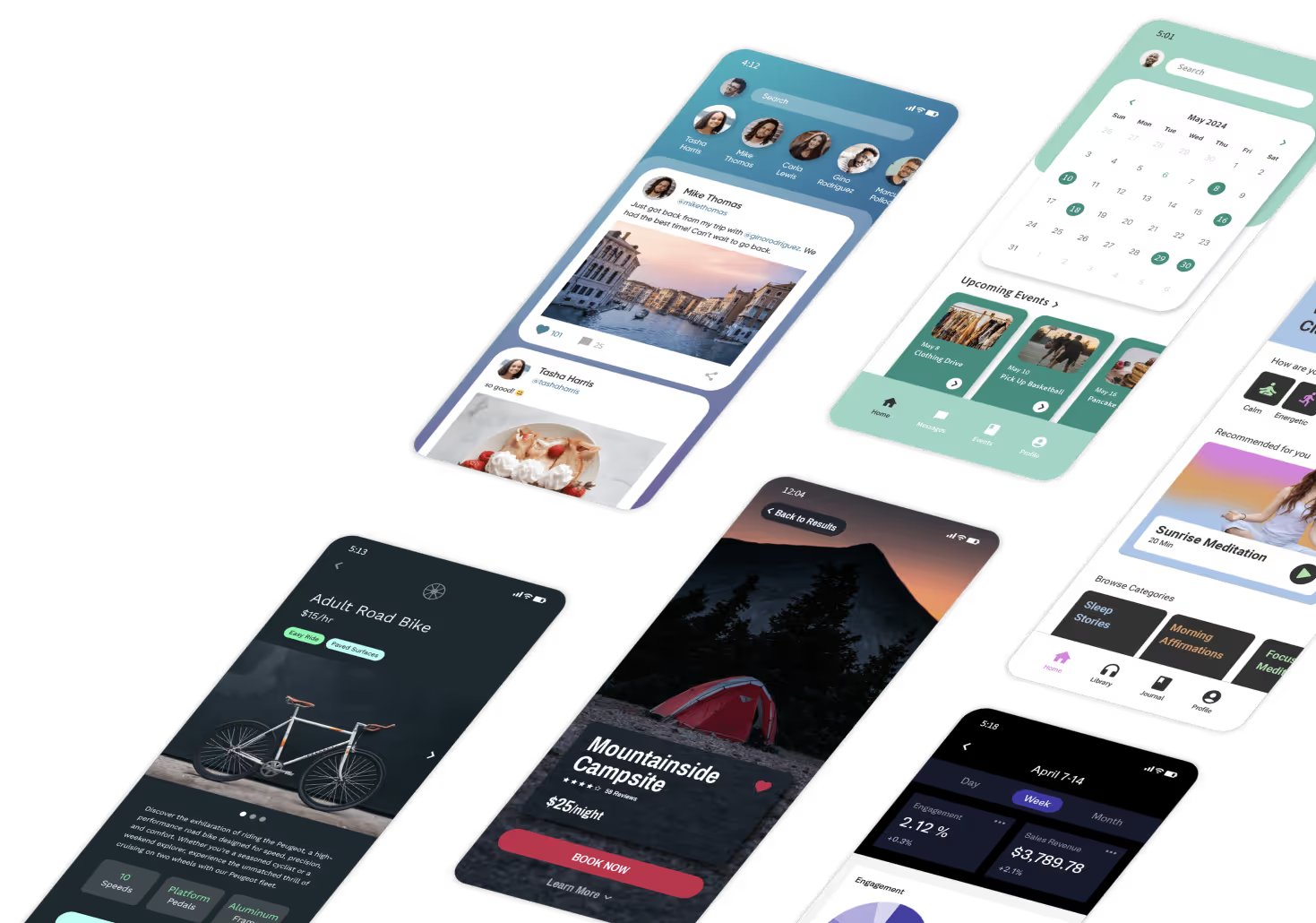
Why Adalo Works for Building a Professional Networking App
Adalo is a no-code app builder for database-driven web apps and native iOS and Android apps—one version across all three platforms, published to the Apple App Store and Google Play. This makes it the perfect solution for creating a LinkedIn-style professional networking platform where users expect seamless access whether they're on desktop, iPhone, or Android devices.
For professional networking, app store presence isn't optional—it's essential. Your users need push notifications for connection requests, job alerts, and direct messages to stay engaged with your platform. With Adalo, you build your networking app once and deploy it everywhere professionals spend their time, without managing separate codebases or hiring platform-specific developers.
Building a professional networking app—something like LinkedIn for your industry or niche community—used to require a development team, months of work, and a significant budget. Today, Adalo makes it possible to create a fully functional networking platform with professional profiles, job boards, and messaging capabilities, then publish it to the web, iOS App Store, and Google Play Store from a single codebase.
For a professional networking app, app store distribution is essential. Your users expect push notifications about new connection requests, job opportunities, and messages directly on their phones. With Adalo's AI-powered app builder, you build once and reach professionals everywhere—whether they're browsing on their laptop at work or checking updates on their mobile device during their commute.
This comprehensive tutorial walks you through building a professional networking app step by step. While some advanced features like AI-powered recommendations require external integrations, you'll create a functional app with professional profiles, job boards, and networking capabilities. The same app publishes to web, native iOS, and native Android without rebuilding anything.
Why Adalo Works for Building a Professional Networking App
Professional networking apps demand reliability at scale. Users expect instant message delivery, smooth profile browsing, and responsive job searches. Adalo's infrastructure, completely overhauled with the 3.0 release in late 2025, delivers 3-4x faster performance than previous versions and scales to support apps with over 1 million monthly active users.
Unlike web wrappers that struggle under load, Adalo compiles to true native code for iOS and Android. This means your networking app performs like apps built by dedicated development teams—not like a website squeezed into a mobile shell. Paid plans include unlimited database records, so you won't hit artificial ceilings as your user base grows from hundreds to thousands to tens of thousands of professionals.
Prerequisites and Initial Setup
Step 1: Create Your Adalo Account
- Go to Adalo.com and sign up
- Click "Create New App"
- Choose "Mobile App" for professional networking features
- Name your app (e.g., "ProfessionalConnect")
- Select "Social Media Feed" from app templates
Ada, Adalo's AI builder, lets you describe what you want and generates your app. Magic Start creates complete app foundations from a description, while Magic Add adds features through natural language.
Pro tip: Magic Start can generate your app's foundation from a simple description. Try describing your networking concept—"a professional networking app for healthcare workers with job listings and direct messaging"—and let the AI create your initial database structure and screens.
Step 2: Configure App Settings
- Choose a professional color scheme (LinkedIn blue: #0077B5 works well)
- Select a clean, business-appropriate font
- Set light theme for professional appearance
- Configure app icon and branding elements
- Click "Continue" to enter the editor
Setting Up the Professional Database
Step 3: Enhance the Users Collection
- Click the Database icon in the left sidebar
- Select the default "Users" collection
- Add these professional properties (click "+ Add Property"):
- Profile Picture (Image)
- Professional Headline (Text)
- Current Company (Text)
- Current Position (Text)
- Industry (Text)
- Location (Text)
- Professional Bio (Text - check "Multiline")
- Years Experience (Number)
- Skills (Text - for JSON array)
- Phone Number (Text)
- LinkedIn URL (Text)
- Is Premium (True/False - default: false)
Learn about the Users collection
Step 4: Create Professional Posts Collection
- Click "+ Add Collection"
- Name it "Professional Posts"
- Add properties:
- Content (Text - check "Multiline")
- Post Type (Text) - Values: "text", "image", "article", "job_share"
- Media (Image)
- Article Link (Text)
- Created At (Date & Time - Automatic)
- Like Count (Number - default: 0)
- Comment Count (Number - default: 0)
- Is Promoted (True/False - default: false)
Step 5: Create Jobs Collection
- Click "+ Add Collection"
- Name it "Jobs"
- Add properties:
- Job Title (Text)
- Company Name (Text)
- Job Description (Text - check "Multiline")
- Location (Text)
- Job Type (Text) - Values: "full-time", "part-time", "contract", "remote"
- Salary Range (Text)
- Requirements (Text - check "Multiline")
- Posted Date (Date & Time - Automatic)
- Application Deadline (Date & Time)
- Is Active (True/False - default: true)
- Application Count (Number - default: 0)
Step 6: Create Professional Connections Collection
- Click "+ Add Collection"
- Name it "Connections"
- Add properties:
- Connection Status (Text) - Values: "pending", "connected", "blocked"
- Connected Date (Date & Time - Automatic)
- Connection Note (Text)
- How Met (Text)
Step 7: Create Job Applications Collection
- Click "+ Add Collection"
- Name it "Job Applications"
- Add properties:
- Cover Letter (Text - check "Multiline")
- Resume URL (Text)
- Applied Date (Date & Time - Automatic)
- Application Status (Text) - Values: "applied", "reviewed", "interviewing", "hired", "rejected"
- Interview Date (Date & Time)
- Notes (Text - check "Multiline")
Step 8: Create Messages Collection
- Click "+ Add Collection"
- Name it "Messages"
- Add properties:
- Message Text (Text - check "Multiline")
- Sent At (Date & Time - Automatic)
- Is Read (True/False - default: false)
- Read At (Date & Time)
- Message Type (Text) - Values: "text", "image", "file"
Step 9: Set Up Database Relationships
- In Professional Posts:
- Add "Author" → Users (Many to One)
- Add "Liked By" → Users (Many to Many)
- In Jobs:
- Add "Posted By" → Users (Many to One)
- Add "Company" → Users (Many to One)
- In Connections:
- Add "Requester" → Users (Many to One)
- Add "Recipient" → Users (Many to One)
- In Job Applications:
- Add "Job" → Jobs (Many to One)
- Add "Applicant" → Users (Many to One)
- In Messages:
- Add "Sender" → Users (Many to One)
- Add "Recipient" → Users (Many to One)
See the complete Database guide
Building Professional Profiles
Step 10: Create Profile Screen
- Add new screen "Profile"
- Add Avatar component:
- Connect to Users → Profile Picture
- Size: Large (120px)
- Add Text components for:
- Users → Professional Headline
- Users → Current Company
- Users → Current Position
- Users → Location
- Users → Professional Bio
Step 11: Add Profile Actions
- Add Button "Connect":
- Action: Create Connection record
- Set Requester = Logged In User
- Set Recipient = Current User
- Set Status = "pending"
- Add Button "Message":
- Navigate to "New Message" screen
- Add Button "Edit Profile" (if own profile):
- Navigate to "Edit Profile" screen
Step 12: Create Edit Profile Screen
- Add new screen "Edit Profile"
- Add Form with inputs for:
- Professional Headline
- Current Company
- Current Position
- Industry (dropdown)
- Location
- Professional Bio
- Skills (text input)
- Add Image Picker for profile picture
- Connect form to update Users collection
Implementing the Professional Feed
Step 13: Build Main Feed Screen
- Add new screen "Feed" (set as home screen)
- Add Custom List:
- Data: Professional Posts
- Filter: Author is in Logged In User's connections OR Author = Logged In User
- Sort by: Created At (descending)
- For each list item include:
- Author profile picture (small avatar)
- Author name and headline
- Post content
- Media (if exists)
- Like and comment counts
- Timestamp
Step 14: Add Post Interaction Features
- Add Like Button:
- Update Professional Posts → Liked By (add/remove user)
- Display Like Count as the count of "Liked By"
- Add Comment Button:
- Navigate to "Post Detail" screen
- Add Share Button:
- Copy link functionality
- Share to external apps
Step 15: Create New Post Screen
- Add new screen "Create Post"
- Add Form with:
- Text area for post content
- Dropdown for post type
- Image picker for media
- Text input for article links
- Add Publish Button:
- Create Professional Posts record
- Set Author = Logged In User
- Navigate back to Feed
Building Job Board Functionality
Step 16: Create Jobs Feed Screen
- Add new screen "Jobs"
- Add Search Bar component
- Add Filter dropdowns for:
- Job Type
- Location
- Industry
- Add Custom List:
- Data: Jobs
- Filter: Is Active = true
- Search by Job Title and Company Name
- Sort by: Posted Date (descending)
Step 17: Design Job Card Layout
- For each job list item show:
- Job Title (large text)
- Company Name (medium text)
- Location and Job Type
- Salary Range (if provided)
- Posted date
- Application count
- Add Apply Button:
- Navigate to "Job Application" screen
Step 18: Create Job Application Screen
- Add new screen "Job Application"
- Display job details at top
- Add Form with:
- Cover letter text area
- Resume upload (File Picker → saves to Resume URL)
- Additional notes
- Add Submit Application Button:
- Create Job Applications record
- Update Jobs → Application Count (+1)
- Send notification to job poster
Step 19: Build Job Posting Screen
- Add new screen "Post Job"
- Add Form with inputs for:
- Job Title
- Company Name
- Job Description
- Location
- Job Type (dropdown)
- Salary Range
- Requirements
- Application Deadline
- Connect to create Jobs record
Implementing Professional Networking
Step 20: Create Connections Screen
- Add new screen "My Network"
- Add Tab Bar with sections:
- "Connections" (accepted connections)
- "Requests" (pending requests)
- "Suggestions" (recommended connections)
- Add Custom Lists for each tab
Step 21: Build Connection Requests
- For "Requests" tab:
- Filter: Recipient = Logged In User AND Status = "pending"
- Show requester profile info
- Add Accept and Decline buttons
- Accept action:
- Update Status to "connected"
- Create reverse connection record
- Decline action:
- Delete connection record
Step 22: Create People Search
- Add new screen "Find People"
- Add Search Bar
- Add Custom List:
- Data: Users
- Exclude existing connections
- Search by name, company, position
- Filter by industry (optional)
- Add Connect Button for each person
Step 23: Implement Messaging System
- Add new screen "Messages"
- Add Custom List of conversations:
- Group messages by sender/recipient pairs
- Show last message preview
- Display unread indicator
- Add Floating Action Button for new message
Step 24: Create Chat Screen
- Add new screen "Chat"
- Add Custom List for messages:
- Filter by conversation participants
- Sort by Sent At (ascending)
- Different styling for sent/received
- Add input bar with:
- Text input field
- Send button
- Image picker for attachments
See the Chat implementation guide
Adding Professional Features
Step 25: Create Skills Endorsement
- Add "Endorsements" collection:
- Endorser → Users
- Endorsed User → Users
- Skill Name (Text)
- Created At (Date & Time)
- On profile screen, display skills
- Add Endorse Button for each skill
Step 26: Implement Professional Recommendations
- Add "Recommendations" collection:
- Recommender → Users
- Recommended User → Users
- Recommendation Text
- Relationship Type
- Created At
- Add "Request Recommendation" feature
- Display recommendations on profiles
Step 27: Add Company Pages
- Create "Companies" collection:
- Company Name
- Description
- Industry
- Size
- Logo
- Website
- Link users to companies
- Create company profile screens
Optimization and Performance
Step 28: Implement Performance Best Practices
- Limit list items to 20-30 per screen
- Use "Load more" for long lists
- Compress images before upload
- Use simple lists instead of custom lists where possible
- Minimize nested components (max 4 levels)
Adalo's X-Ray feature identifies performance issues before they affect users. Run X-Ray periodically to catch bottlenecks in your database queries or component rendering.
Step 29: Configure Push Notifications
- Go to Settings → Push Notifications
- Upload certificates for iOS/Android
- Add notification triggers:
- New connection request
- New message received
- Job application status update
- Post likes and comments
- Set up notification templates
Working with Platform Capabilities
Step 30: Understanding Feature Boundaries
Features requiring external integrations:
- AI-powered job recommendations
- Advanced analytics dashboards
- Video calling capabilities
- Real-time typing indicators
Practical alternatives:
- Manual job recommendations based on skills matching
- Basic engagement metrics through database queries
- External video call integration via API
- Refresh-based updates for real-time feel
Step 31: Plan for Scaling
With Adalo's modular infrastructure supporting apps with over 1 million monthly active users, scaling concerns are primarily about data architecture rather than platform limits. Paid plans have no record caps, so focus on:
- Efficient database relationship design
- Strategic use of filters to limit query scope
- For external backends/APIs, see Integrations
Testing and Quality Assurance
Step 32: Test Core Professional Features
- Create multiple test accounts
- Test connection request flow
- Verify job application process
- Check messaging functionality
- Test profile updates
- Validate notification delivery
- Test search and discovery
Step 33: Performance Testing
- Follow Optimize performance to identify bottlenecks
- Test with multiple users simultaneously
- Monitor database query times
- Check image loading speeds
- Validate app responsiveness
Launch Preparation
Step 34: Prepare for App Store
- Choose your plan:
- Starter ($36/month): Unlimited usage, app store publishing
- Team ($36/mo): Custom actions, team collaboration
- Business ($250/mo): Advanced integrations, priority support
- Configure app store settings
- Create privacy policy
- Add terms of service
- Set up customer support system
All paid plans include unlimited app updates after publishing—no additional charges for pushing new features to your users.
Step 35: Post-Launch Monitoring
- Track user engagement metrics
- Monitor database performance
- Collect user feedback
- Plan feature iterations
- Use Magic Add to quickly implement user-requested features
Additional Resources
Cost Breakdown and Considerations
Development Costs:
- Adalo plans start at $36/month with unlimited usage—no surprise charges based on user activity
- Full pricing details: Pricing
Additional Costs:
- Apple Developer Account: $99/year
- Google Play Console: $25 one-time
- Marketplace components: see Marketplace
- External integrations: varies by service
Timeline Expectations:
- MVP Development: 2-4 weeks
- App Store Approval: 1-2 weeks
- User Testing: 2-3 weeks
- Full Launch: 6-8 weeks total
This professional networking app provides core functionality for connecting professionals, posting jobs, and facilitating meaningful business relationships. While it won't replicate every LinkedIn feature, it serves as a solid foundation for niche professional communities—and you can iterate quickly using Adalo's AI-assisted tools as your user base grows.
FAQ
Why choose Adalo over other app building solutions?
Adalo is an AI-powered app builder that creates true native iOS and Android apps. Unlike web wrappers, it compiles to native code and publishes directly to both the Apple App Store and Google Play Store from a single codebase—the hardest part of launching an app handled automatically.
What's the fastest way to build and publish an app to the App Store?
Adalo's drag-and-drop interface combined with AI-assisted building through Magic Start and Magic Add lets you create functional apps in days rather than months. The platform handles the entire App Store submission process, removing the technical complexity that typically requires developer expertise.
Can I build a professional networking app without coding?
Yes. Adalo's visual builder—described as "easy as PowerPoint"—lets you create professional profiles, job boards, messaging systems, and connection features without writing code. Over 3 million apps have been created on the platform by non-technical builders.
What professional networking features can I build with Adalo?
You can build comprehensive networking features including user profiles with professional headlines and work history, a job board with posting and application functionality, a connection request system, direct messaging, skills endorsements, and a professional content feed.
How long does it take to build and launch a LinkedIn-style app?
MVP development typically takes 2-4 weeks, with app store approval requiring an additional 1-2 weeks. Including user testing, a full launch takes 6-8 weeks total—significantly faster than traditional development.
How much does it cost to build a professional networking app with Adalo?
Adalo plans start at $36/month with unlimited usage and no record limits. You'll also need an Apple Developer Account ($99/year) and Google Play Console ($25 one-time) for app store distribution. Unlike some competitors, there are no usage-based charges or surprise bills.
Can my users receive push notifications for connection requests and messages?
Yes. Adalo supports push notifications for native iOS and Android apps. You can configure notifications for new connection requests, messages received, job application status updates, and post interactions.
Will my app scale as my user base grows?
Adalo's infrastructure, overhauled with the 3.0 release in late 2025, scales to support apps with over 1 million monthly active users. Paid plans include unlimited database records, so you won't hit artificial ceilings as your professional network expands.
Do I need coding experience to build with Adalo?
No coding experience required. The visual drag-and-drop interface handles all the technical complexity. Magic Start can even generate your initial app structure from a simple description of what you want to build.
Can I publish to both iOS and Android from the same build?
Yes. Adalo creates one codebase that publishes to web, iOS App Store, and Google Play Store. Updates you make automatically deploy across all platforms without rebuilding anything.