Why Adalo Is the Best Choice for Building a Udemy Clone
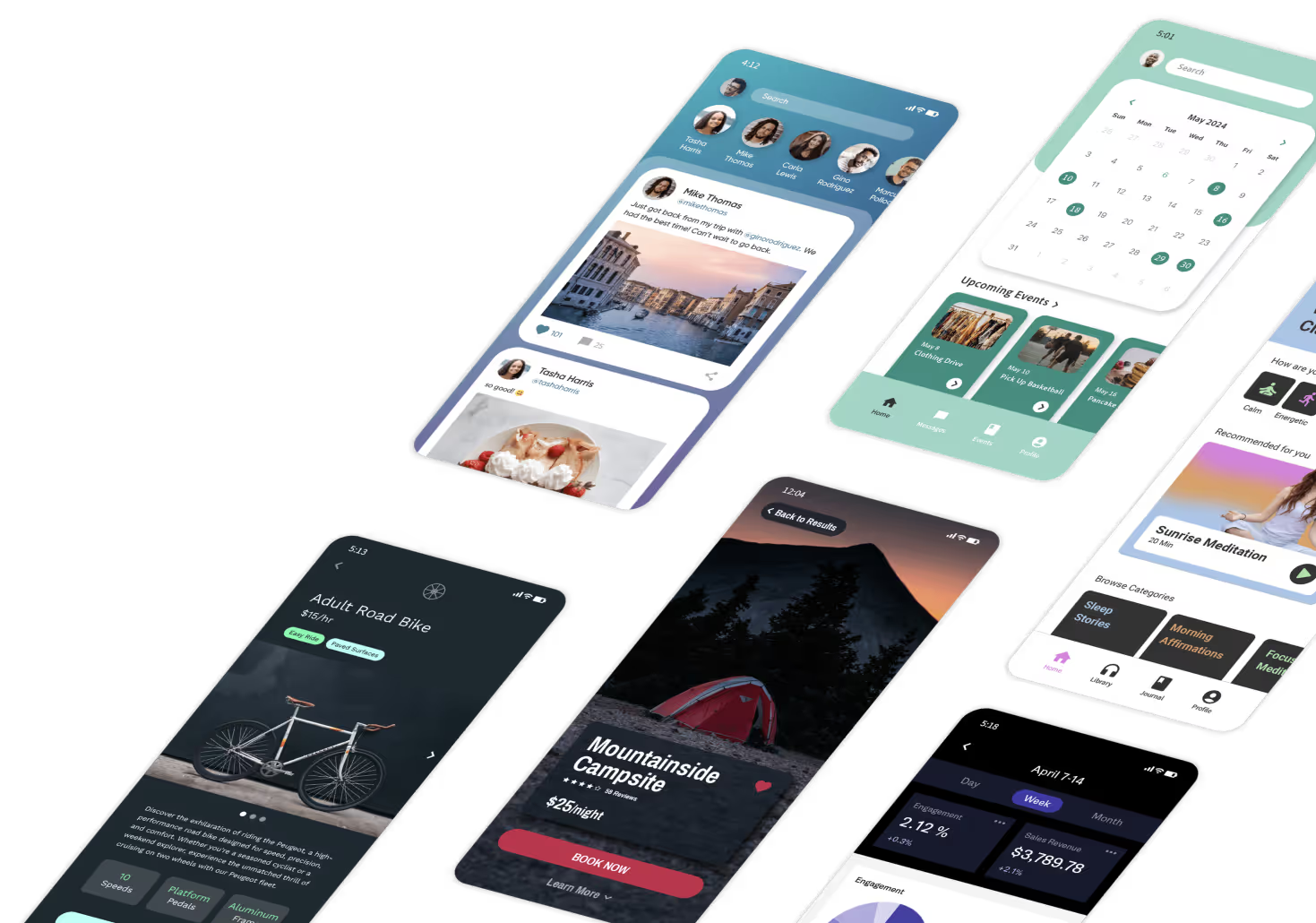
Adalo is a no-code app builder for database-driven web apps and native iOS and Android apps—one version across all three platforms, published to the Apple App Store and Google Play. This makes it the perfect solution for creating a comprehensive online course platform like Udemy, where instructors need to manage content and students need seamless access to lessons across all their devices.
When building an educational marketplace, app store presence is essential for reaching learners where they are. With native iOS and Android apps, you can send push notifications for new course releases, assignment reminders, and achievement celebrations—features that dramatically boost student engagement and course completion rates. Adalo lets you build this entire learning ecosystem visually, without coding, and deploy it everywhere your audience learns.
Why Adalo Is Perfect for Building Your Online Course Platform
Adalo is an AI-powered app builder for database-driven web apps and native iOS and Android apps—one version across all three platforms, published to the Apple App Store and Google Play. This makes it the ideal solution for creating a Udemy-style course marketplace where students can access lessons from any device, whether they're learning at home on their computer or watching videos on the go with their smartphone.
Having your course platform available as a native app in both app stores gives you a significant competitive advantage. Students receive push notifications for new course content, assignment deadlines, and completion milestones—keeping them engaged and improving course completion rates. With Adalo, you can build this entire educational ecosystem once and deploy it everywhere your learners are.
Building an online course platform has never been more accessible. With Adalo's visual builder, you can create a fully functional educational marketplace similar to Udemy without writing a single line of code. This comprehensive guide will walk you through building a course platform featuring instructor dashboards, student enrollment, video lessons, progress tracking, payment processing, and certificates—all using visual development tools. You can publish the same app to the web, native iOS, and native Android with Adalo, all from a single codebase.
Coursera alone reported over 92 million registered learners by 2021. Whether you're an educator, training provider, or entrepreneur, this guide will show you how to launch your own course marketplace in 2-5 weeks.
What Is a No-Code App Builder and Why Use It for an Online Course Platform
Understanding No-Code Development
A no-code app builder is a visual platform that enables users to create functional applications through drag-and-drop interfaces rather than traditional programming. These tools provide pre-built components, database management, and deployment capabilities—eliminating the need for coding expertise while maintaining professional functionality.
No-code platforms function by allowing you to:
- Design relational databases visually
- Create user flows and navigation
- Deploy interactive features like video lessons and quizzes
- Publish to multiple platforms (web, iOS, Android)
All through a graphical user interface that feels more like designing a presentation than writing software. Adalo's visual builder has been described as "easy as PowerPoint," making it accessible to educators and entrepreneurs without technical backgrounds.
How No-Code Platforms Differ from Traditional Development
Traditional app development requires:
- Hiring developers or learning programming languages (JavaScript, Swift, Kotlin)
- Managing separate frontend and backend systems
- Configuring servers and deployment infrastructure
- Extensive testing and debugging cycles
- Significantly higher development costs than no-code solutions
No-code development with Adalo provides:
- Visual drag-and-drop interface for all components
- Integrated database management with unlimited records on paid plans
- One-click publishing to web and app stores
- Built-in user authentication and security
- Typical development time of 2-5 weeks for no-code platforms vs. months for custom code
Why Adalo Is Ideal for Building Course Platforms
Adalo excels at educational platforms because it offers:
- Built-in relational database with no record limits on paid plans—essential for growing course libraries and student enrollments
- Unlimited screens and actions to create complex learning workflows
- Video and media support for course content delivery
- Payment integration with Stripe for course monetization
- Responsive design that works seamlessly across devices
- Component marketplace with educational-specific add-ons
- Modular infrastructure that scales to 1M+ monthly active users without performance degradation
Following the Adalo 3.0 infrastructure overhaul in late 2025, the platform is now 3-4x faster than previous versions, with infrastructure that scales dynamically with your app's needs. This means your course platform can grow from your first 10 students to tens of thousands without hitting artificial ceilings or experiencing slowdowns.
Planning Your Udemy Clone: Features Every Online Learning Platform Needs
Before building, map out your platform's core functionality. A successful course marketplace needs features for three user types: students, instructors, and administrators.
Core Features: Course Browsing and Enrollment
For Students:
- Browse course catalog with search and filters
- View course details (description, curriculum, instructor bio, reviews)
- Preview sample lessons
- Enroll in courses (free or paid)
- Access purchased courses
- Track learning progress
- Download certificates upon completion
For Instructors:
- Create and publish courses
- Upload video lessons and supplementary materials
- Organize content into sections and lectures
- Set course pricing and enrollment options
- View student enrollment and progress
- Respond to student questions
- Track earnings
For Platform Owners:
- User management (students and instructors)
- Content moderation and approval
- Payment processing and revenue sharing
- Analytics and reporting
- Platform settings and customization
Advanced Features: Certificates and Progress Tracking
Enhanced learning platforms include:
- Progress tracking: Lesson completion status, overall course percentage, last accessed content
- Certificate generation: Automated certificates with student name, course title, completion date
- Quiz and assessment tools: Knowledge checks, final exams, passing criteria
- Discussion forums: Course-specific Q&A, peer interaction
- Wishlists and favorites: Save courses for later
- Learning paths: Curated course sequences for specific skills
Coursera and Gallup research shows 81% of learners report skill improvement after completing online courses, making effective progress tracking essential for learner outcomes.
Monetization: Integrating Payment Systems
Your platform needs flexible payment options:
- One-time course purchases: Fixed price per course
- Subscription access: Monthly/annual all-access passes
- Freemium model: Free courses with premium upgrades
- Revenue sharing: Split payments between platform and instructors
- Promotional codes: Discount and marketing capabilities
Ensuring your payment flow works smoothly across all devices is critical for conversion. With Adalo's unlimited usage on all plans—no App Actions or usage-based charges—you won't face unexpected bills as your student base grows.
Setting Up Your Adalo Account and Choosing the Right Plan
Step 1: Create Your Adalo Account
- Visit Adalo.com
- Click "Get Started Free"
- Sign up with email or Google account
- Verify your email address
- Complete the welcome survey (optional)
Step 2: Start Your Course Platform App
- From your dashboard, click "Create New App"
- Choose "Mobile App" for cross-platform compatibility
- Name your app (e.g., "LearnHub" or "EduMarket")
- Start from scratch or explore Adalo's marketplace and cloneable kits for potential starting templates
- Click "Continue" to enter the app builder
Free Plan: Testing Your Udemy Clone Concept
The Adalo free plan is perfect for prototyping:
What's Included:
- Unlimited test apps
- 500 records per app
- 1 editor seat
- Unlimited screens and actions
- Web publishing on Adalo subdomain
- Access to Component Marketplace
- Community forum support
Limitations:
- No custom domain
- Cannot publish to app stores
- Limited database records
- Adalo branding on app
This tier lets you build and test your entire course platform structure before investing in a paid plan.
When to Upgrade: Starter vs Professional Plans
Note: Verify current pricing, storage limits, and features on Adalo's pricing page as these details change regularly.
Starter Plan ($36/month annually, $36/monthly):
- 1 published app
- Custom domain for web apps
- Remove Adalo branding
- Storage for course content
- Publish to App Store and Google Play
- Unlimited database records
- Unlimited usage—no App Actions charges
Professional Plan ($52/month annually, $36/monthly):
- 2 published apps
- 5 collaborator seats
- Increased storage per app
- Custom integrations via API
- Geolocation features
- Priority support
- Unlimited database records
Team Plan ($160/month annually, $250/monthly):
- 5 published apps
- 10 editor seats
- Xano integration for advanced backends
- Priority support
- No data caps
For a course platform with video content, start with the Starter plan to accommodate media storage needs, then upgrade to Professional as you add instructors and collaborators. Unlike competitors like Bubble (starting at $59/month with Workload Units that create unpredictable charges) or Glide (starting at $60/month but limited by data rows and lacking app store publishing), Adalo's pricing is straightforward with no usage surprises.
Designing Your Database Structure for Courses, Students, and Instructors
The database is your app's foundation. Adalo's relational database makes complex data modeling accessible without SQL knowledge—and with no record limits on paid plans, you can scale your course library and student base without hitting artificial ceilings.
Step 3: Enhance the Users Collection
Adalo automatically creates a Users collection. Customize it for your platform:
- Click the Database icon in the left sidebar
- Select the Users collection
- Add these properties (click "+ Add Property"):
Basic Profile:
- Full Name (Text) - already exists
- Email (Email) - already exists
- Password (Password) - already exists
- Profile Photo (Image)
- Bio (Text - Multiline)
- User Type (Text) - Options: "Student", "Instructor", "Admin"
Instructor-Specific:
- Instructor Title (Text) - e.g., "Marketing Expert"
- Expertise Areas (Text)
- Total Students (Number)
- Average Rating (Number)
- Total Earnings (Number)
- Payout Email (Email)
Student-Specific:
- Enrolled Courses Count (Number)
- Completed Courses (Number)
- Learning Hours (Number)
Creating the Users Table: Students and Instructors
Your Users collection serves both students and instructors. Use the User Type property to:
- Show different dashboards based on user type
- Filter displayed content
- Control permissions and access
- Track role-specific metrics
This single-table approach simplifies authentication while maintaining flexibility.
Step 4: Create the Courses Collection
- Click "+ Add Collection"
- Name it "Courses"
- Add these properties:
Course Information:
- Title (Text)
- Subtitle (Text)
- Description (Text - Multiline)
- Course Image (Image)
- Promo Video (Video or Text URL)
- Category (Text) - Options: "Business", "Technology", "Design", "Marketing", etc.
- Difficulty Level (Text) - Options: "Beginner", "Intermediate", "Advanced", "All Levels"
- Language (Text)
- Duration Minutes (Number)
- Last Updated (Date & Time)
- Created Date (Date & Time - Automatic)
Enrollment & Pricing:
- Price (Number)
- Is Free (True/False)
- Discount Price (Number)
- Total Enrollments (Number)
- Course Status (Text) - Options: "Draft", "Published", "Archived"
Quality Metrics:
- Average Rating (Number)
- Total Reviews (Number)
- Certificate Included (True/False)
Step 5: Create the Sections Collection
Courses need organized curriculum structure:
- Click "+ Add Collection"
- Name it "Sections"
- Add properties:
- Section Title (Text)
- Section Number (Number)
- Description (Text)
- Created Date (Date & Time - Automatic)
Step 6: Create the Lessons Collection
- Click "+ Add Collection"
- Name it "Lessons"
- Add properties:
Lesson Content:
- Lesson Title (Text)
- Lesson Number (Number)
- Video URL (Text) - For externally hosted videos
- Video File (Video) - For Adalo-hosted videos (limited by storage)
- Lesson Duration (Number) - in minutes
- Description (Text - Multiline)
- Is Preview (True/False) - Allow free preview
- Downloadable Resources (File)
Note: For video hosting, consider using YouTube, Vimeo, or external collections to avoid storage limits. Adalo storage is better suited for course images and PDFs.
Step 7: Create the Enrollments Collection
Track student-course relationships:
- Click "+ Add Collection"
- Name it "Enrollments"
- Add properties:
- Enrollment Date (Date & Time - Automatic)
- Progress Percentage (Number)
- Last Accessed (Date & Time)
- Completed (True/False)
- Completion Date (Date & Time)
- Certificate Issued (True/False)
Step 8: Create the Lesson Progress Collection
Track individual lesson completion:
- Click "+ Add Collection"
- Name it "Lesson Progress"
- Add properties:
- Completed (True/False)
- Completed Date (Date & Time)
- Watch Time (Number) - seconds watched
- Last Position (Number) - resume playback point
Step 9: Create the Reviews Collection
- Click "+ Add Collection"
- Name it "Reviews"
- Add properties:
- Rating (Number) - 1-5 scale
- Review Text (Text - Multiline)
- Created Date (Date & Time - Automatic)
- Helpful Count (Number) - for "Was this helpful?" feature
Step 10: Create the Payments Collection
- Click "+ Add Collection"
- Name it "Payments"
- Add properties:
- Amount (Number)
- Currency (Text)
- Payment Method (Text)
- Stripe Payment ID (Text)
- Status (Text) - Options: "Pending", "Completed", "Failed", "Refunded"
- Payment Date (Date & Time - Automatic)
- Platform Fee (Number)
- Instructor Payout (Number)
Step 11: Set Up Database Relationships
Relationships connect your collections. Set these up carefully:
Courses Collection:
- Add relationship to Users: "Instructor" (A User can have many Courses)
- Add relationship to Sections: One-to-Many (A Course has many Sections)
- Add relationship to Reviews: One-to-Many
Sections Collection:
- Relationship to Courses: Many-to-One (already created above)
- Add relationship to Lessons: One-to-Many (A Section has many Lessons)
Lessons Collection:
- Relationship to Sections: Many-to-One (already created)
Enrollments Collection:
- Add relationship to Users: "Student" (Many-to-One)
- Add relationship to Courses: Many-to-One
- Add relationship to Lesson Progress: One-to-Many
Lesson Progress Collection:
- Relationship to Enrollments: Many-to-One (already created)
- Add relationship to Lessons: Many-to-One
Reviews Collection:
- Relationship to Courses: Many-to-One (already created)
- Add relationship to Users: "Reviewer" (Many-to-One)
Payments Collection:
- Add relationship to Users: "Student" (who paid)
- Add relationship to Users: "Instructor" (who receives payout)
- Add relationship to Courses: Many-to-One
- Add relationship to Enrollments: One-to-One
This relational structure enables complex queries like "Show all courses by this instructor" or "Calculate total earnings per instructor." With the right data relationship setups, Adalo apps can scale beyond 1 million monthly active users—your course platform won't outgrow the infrastructure.
Building the User Interface: Course Catalog and Browse Screens
Step 12: Set Your App Theme
- Click the Settings gear icon
- Navigate to Branding
- Choose colors:
- Primary color: Your brand color (e.g., deep blue for trust)
- Secondary color: Accent for CTAs (e.g., orange for enrollment buttons)
- Background: White or light gray for readability
- Select fonts:
- Heading font: Bold, modern sans-serif
- Body font: Clean, readable sans-serif
- Upload your logo
Step 13: Build the Welcome Screen
- Rename the default screen to "Welcome"
- Add components:
- Image: Your platform logo
- Text (Headline): "Learn Anything, Anywhere"
- Text (Subheading): "Join thousands of learners mastering new skills"
- Button: "Browse Courses" → Link to "Course Catalog"
- Button: "Sign Up" → Link to "Sign Up"
- Button: "Login" → Link to "Login"
Step 14: Create Authentication Screens
Sign Up Screen:
- Add new screen "Sign Up"
- Add Form component:
- Connect to: Users collection
- Fields: Email, Password, Full Name
- Add Dropdown for User Type:
- Options: "I want to learn" (Student), "I want to teach" (Instructor)
- Add Submit Button: "Create Account"
- Actions on submit:
- Create User
- If User Type = Instructor → Navigate to "Instructor Setup"
- If User Type = Student → Navigate to "Student Dashboard"
Login Screen:
- Add new screen "Login"
- Add Login Form:
- Email field
- Password field
- "Forgot Password?" link
- Submit actions:
- Log in user
- If User Type = Instructor → "Instructor Dashboard"
- If User Type = Student → "Student Dashboard"
Creating the Home Screen with Featured Courses
Step 15: Build the Course Catalog
- Add new screen "Course Catalog"
- Add Search Bar at top:
- Placeholder: "Search courses..."
- Search: Courses collection
- Search by: Title, Description, Category
- Add Horizontal List for categories:
- Source: Create a static list or use course categories
- Display: Category buttons
- Filter courses when clicked
- Add List component for courses:
- Source: Courses collection
- Filter: Course Status = "Published"
- Sort by: Most popular or Newest
- For each course in list, display:
- Image: Course Image
- Text: Course Title
- Text: Instructor Name (Course → Instructor → Full Name)
- Text: Price (or "Free" if Is Free = true)
- Star Rating: Average Rating
- Text: Total Enrollments
- Click Action: Navigate to "Course Detail" screen, send current course
Adding Search and Filter Functionality
Step 16: Add Advanced Filters
- On Course Catalog screen, add filter section:
- Dropdown: Category filter
- Dropdown: Price (Free, Paid, All)
- Dropdown: Difficulty Level
- Dropdown: Rating (4+ stars, 3+ stars, etc.)
- Update List component filters to use selected values
- Add "Clear Filters" button to reset
Designing Course Detail Pages
Step 17: Create Course Detail Screen
- Add new screen "Course Detail"
- This screen receives: Current Course (from previous screen)
- Add components:
Header Section:
- Image: Course Image (full width)
- Text (H1): Course Title
- Text: Course Subtitle
- Text: "By [Instructor Name]"
- Link: Instructor profile (navigate to Instructor Profile screen)
Quick Info Bar:
- Star Rating: Average Rating
- Text: "([Total Reviews] reviews)"
- Text: "[Total Enrollments] students"
- Text: "Last updated: [Last Updated date]"
- Icon + Text: Duration
- Icon + Text: Difficulty Level
- Icon + Text: Language
Description Section:
- Text (H2): "What you'll learn"
- Text: Description
- Button: "Show more/less" (for long descriptions)
Curriculum Section:
- Text (H2): "Course Content"
- Text: "[X] sections • [Y] lectures • [Z]h total"
- List: Sections
- For each section:
- Text: Section Title
- Expandable List: Lessons in this section
- Text: Lesson Title
- Icon: Play icon if video
- Text: Duration
- Lock Icon: If not enrolled and not preview lesson
- "Preview" badge: If Is Preview = true
- For each section:
Reviews Section:
- Text (H2): "Student Reviews"
- Average Rating Display: Large star rating + number
- List: Recent reviews (limit 5)
- Student name
- Rating
- Review text
- Date
- Button: "See all reviews"
Instructor Section:
- Image: Instructor Profile Photo
- Text: Instructor Full Name
- Text: Instructor Title
- Text: Brief bio
- Button: "View full profile"
Enrollment Section (Sticky footer or prominent card):
- Text: Price (or "Free")
- Text: Discount Price (if applicable)
- Button: "Enroll Now" or "Start Learning" if free
- Action: If not logged in → Navigate to Login
- If logged in → Create Enrollment → Navigate to Course Player
- Button: "Add to Wishlist" (heart icon)
Step 18: Build the Course Player
- Add new screen "Course Player"
- This screen receives: Current Enrollment
- Layout:
Left Sidebar (30% width on desktop, collapsible on mobile):
- Text: Course Title
- Progress Bar: Enrollment → Progress Percentage
- List: Sections → Lessons
- Show completion checkmarks
- Highlight current lesson
- Click to change lesson
Main Content Area (70% width):
- Video Player: Current Lesson → Video URL or Video File
- Text (H2): Lesson Title
- Text: Lesson Description
- Button: "Mark as Complete"
- Action: Update Lesson Progress → Completed = True
- Recalculate enrollment progress
- Downloadable Resources: If lesson has files
- Tabs: "Overview", "Resources", "Q&A"
Navigation:
- Button: "Previous Lesson"
- Button: "Next Lesson"
- Auto-advance option (toggle)
Step 19: Implement Progress Tracking Logic
Mark Lesson Complete Action:
- Find or Create Lesson Progress record:
- Enrollment = Current Enrollment
- Lesson = Current Lesson
- Update Lesson Progress:
- Completed = True
- Completed Date = Now
- Calculate and update enrollment progress:
- Count total lessons in course
- Count completed lesson progress for this enrollment
- Progress Percentage = (Completed / Total) × 100
- Check for course completion:
- If Progress Percentage = 100:
- Update Enrollment → Completed = True
- Update Enrollment → Completion Date = Now
- Navigate to Certificate screen
- If Progress Percentage = 100:
Effective progress tracking contributes to higher learner engagement, as visual feedback motivates continued learning.
Creating Instructor Dashboards and Course Upload Workflows
Step 20: Build Instructor Dashboard
- Add new screen "Instructor Dashboard"
- Add welcome section:
- Text: "Welcome back, [Instructor Name]"
- Image: Profile photo
- Add stats cards:
- Total Students: Count of all Enrollments for instructor's courses
- Total Courses: Count of instructor's courses
- Total Earnings: Sum of Payments → Instructor Payout where Instructor = Logged In User
- Average Rating: Average of instructor's courses' ratings
- Add quick actions:
- Button: "Create New Course" → Navigate to Course Builder
- Button: "View Earnings" → Navigate to Earnings screen
- Add List: Instructor's courses
- For each course show:
- Course title and image
- Total enrollments
- Revenue
- Status (Draft/Published)
- Button: "Edit" → Navigate to Course Editor
- Button: "View Students" → Navigate to Course Students screen
- For each course show:
Building Multi-Step Course Creation Forms
Step 21: Create Course Builder (Part 1: Basic Info)
- Add new screen "Course Builder - Basics"
- Add Form connected to Courses:
- Text Input: Title
- Text Input: Subtitle
- Text Area: Description
- Image Picker: Course Image
- Dropdown: Category
- Dropdown: Difficulty Level
- Dropdown: Language
- Number Input: Price
- Toggle: Is Free
- Submit Button: "Next"
- On submit:
- Create Course record
- Set Instructor = Logged In User
- Set Course Status = "Draft"
- Navigate to "Course Builder - Curriculum"
- Send newly created course
Step 22: Course Builder (Part 2: Curriculum)
- Add new screen "Course Builder - Curriculum"
- This screen receives: Current Course (being created)
- Display:
- Text: "Build Your Curriculum"
- Button: "Add Section"
- Add List: Sections for this course
- For each section:
- Text: Section Title
- Button: "Add Lesson" → Opens lesson form
- Button: "Edit Section"
- Button: "Delete Section"
- List: Lessons in this section
- Lesson title
- Duration
- Edit/Delete buttons
- For each section:
- Add navigation:
- Button: "Back" → Previous screen
- Button: "Save as Draft"
- Button: "Preview Course"
- Button: "Publish Course" → Update Course Status to "Published"
Managing Video Content and Lesson Structure
Step 23: Create Add/Edit Lesson Modal
- Add new screen "Add Lesson" (or use modal)
- Add Form connected to Lessons:
- Text Input: Lesson Title
- Number Input: Lesson Number (for ordering)
- Text Area: Description
- Text Input: Video URL (YouTube, Vimeo, etc.)
- Number Input: Lesson Duration (minutes)
- Toggle: Is Preview (allow free viewing)
- File Picker: Downloadable Resources
- On submit:
- Create Lesson
- Connect to current Section
- Navigate back to Course Builder
Important: For video hosting, use external platforms (YouTube with unlisted/private options, Vimeo, Wistia) and store URLs rather than uploading large video files to Adalo. This preserves your storage limits for other assets.
Setting Course Pricing and Visibility
Step 24: Add Publishing Controls
- On Course Builder screen, add:
- Toggle: "Published" vs "Draft"
- Button: "Preview as Student" → Show course detail view
- Validation: Ensure course has:
- At least 1 section
- At least 3 lessons
- Course image
- Complete description
- Price set (if not free)
- Publish action:
- Check validation criteria
- If passes → Update Course Status = "Published"
- If fails → Show error messages listing missing items
- Success message → Navigate to Instructor Dashboard
Implementing Student Enrollment, Progress Tracking, and Certificates
Building the Enrollment and Payment Flow
Step 25: Create Enrollment Process
- On Course Detail screen, configure "Enroll Now" button:
If course is free:
Actions:
1. Check if user is logged in
- If not → Navigate to Login screen
2. Check if already enrolled
- Query Enrollments: Student = Logged In User AND Course = Current Course
- If exists → Navigate directly to Course Player
3. Create new Enrollment record:
- Student = Logged In User
- Course = Current Course
- Progress Percentage = 0
- Completed = False
4. Update Course → Total Enrollments (add 1)
5. Navigate to Course Player with new enrollment
If course is paid:
Actions:
1. Check if logged in (same as above)
2. Check if already enrolled (same as above)
3. Navigate to Checkout screen
- Send Current Course
Step 26: Create Checkout Screen
- Add new screen "Checkout"
- This screen receives: Current Course
- Display:
- Text (H2): "Complete Your Purchase"
- Course summary card:
- Course image
- Course title
- Instructor name
- Price
- Add Stripe payment component:
- Amount: Course → Price
- Currency: USD (or your currency)
- Customer Email: Logged In User → Email
- Add payment form:
- Card number
- Expiry date
- CVC
- Billing name
- Billing zip code
- Checkbox: "Save card for future purchases"
- Add Submit Button: "Complete Enrollment"
- On successful payment:
- Create Payment record:
- Amount = Course Price
- Student = Logged In User
- Instructor = Course → Instructor
- Stripe Payment ID = [from Stripe response]
- Status = "Completed"
- Calculate Platform Fee (e.g., 15%)
- Calculate Instructor Payout (85%)
- Create Enrollment record (same as free courses)
- Show success message
- Navigate to Course Player
- Create Payment record:
- On payment failure:
- Show error message
- Allow retry
Tracking Lesson Completion and Overall Progress
Step 27: Build Progress Dashboard for Students
- Add new screen "My Learning"
- Add tabs or sections:
- "In Progress"
- "Completed"
- "Wishlist"
- Add List: Enrollments where Student = Logged In User
- Filter by: Completed status for each tab
- Sort by: Last Accessed
- For each enrollment, display:
- Image: Course → Course Image
- Text: Course → Title
- Progress Bar: Progress Percentage
- Text: "X of Y lessons complete"
- Text: Last Accessed date
- Button: "Continue Learning" → Navigate to Course Player
- Button: "Download Certificate" (if completed and certificate available)
Generating and Delivering Course Certificates
Step 28: Create Certificate Screen
- Add new screen "Certificate"
- This screen receives: Current Enrollment (where Completed = True)
- Design certificate layout:
- Image: Certificate border/template background
- Text (Large): "Certificate of Completion"
- Text: "This certifies that"
- Text (Large): [Student Full Name]
- Text: "has successfully completed"
- Text (Large): [Course Title]
- Text: "Completed on [Completion Date]"
- Text: "Instructor: [Instructor Name]"
- Image: Platform logo
- Image: Digital signature (optional)
- Add actions:
- Button: "Download as PDF" (requires PDF component from marketplace)
- Button: "Share on LinkedIn" → Deep link to LinkedIn certification
- Button: "Back to Dashboard"
- Update enrollment record:
- Certificate Issued = True
Platforms offering certificates see significantly higher completion rates, as credentials provide tangible proof of achievement.
Integrating Payment Systems with Stripe for Course Monetization
Setting Up Stripe in Your Adalo App
Step 29: Configure Stripe Integration
- Install Stripe component from Adalo Marketplace
- Get Stripe API keys:
- Go to Stripe Dashboard
- Navigate to Developers → API Keys
- Copy Test keys for development
- Copy Live keys for production
- In Adalo:
- Go to Settings → Integrations
- Click "Connect" for Stripe
- Paste Publishable Key
- Paste Secret Key
- Save
- Test with Stripe test cards (Stripe's testing documentation):
- Success: 4242 4242 4242 4242
- Decline: 4000 0000 0000 0002
Creating One-Time and Subscription Course Options
Step 30: Build Subscription Functionality (Optional)
For all-access subscription model:
- Create new "Subscription Plans" collection:
- Plan Name (Text) - e.g., "Monthly Pro", "Annual Pro"
- Price (Number)
- Interval (Text) - "month" or "year"
- Stripe Price ID (Text)
- Add to User collection:
- Subscription Status (Text) - "Active", "Cancelled", "Expired"
- Subscription Expiry Date (Date & Time)
- Create "Subscribe" screen:
- Display plan options
- Stripe subscription payment component
- On successful subscription:
- Update User → Subscription Status = "Active"
- Set expiry date
- Grant access to all courses
- Modify course access logic:
- Allow access if: Enrolled in course OR Subscription Status = "Active"
Managing Instructor Payouts
Step 31: Create Instructor Earnings Dashboard
- Add new screen "Instructor Earnings"
- Display:
- Text (H2): "Your Earnings"
- Total Pending: Sum of Instructor Payout where Status = "Pending"
- Total Paid: Sum where Status = "Paid Out"
- Available for Withdrawal: Amount ready to transfer
- Add List: Payments where Instructor = Logged In User
- Sort by: Payment Date (newest first)
- Filter options: Date range, Status
- Display for each:
- Course title
- Student name
- Amount
- Platform fee
- Instructor payout
- Date
- Status
- Add Button: "Request Payout"
- Minimum threshold: $50
- Create payout request
- Admin approval workflow
Note: Actual payout processing requires:
- Stripe Connect for automated transfers
- Admin approval system
- Tax documentation (1099 forms for US)
- Payment gateway fees consideration
Adding Reviews, Ratings, and Social Features to Your Platform
Building a Review and Rating System
Step 32: Create Course Review Screen
- Add new screen "Write Review"
- This screen receives: Current Enrollment (must be enrolled to review)
- Add components:
- Text: "Rate [Course Title]"
- Star Rating component (5 stars)
- Text Area: Review text (optional)
- Toggle: "This review is anonymous"
- Submit Button: "Post Review"
- On submit:
- Create Review record:
- Rating = selected stars
- Review Text = input text
- Reviewer = Logged In User
- Course = Current Course
- Update Course ratings:
- Total Reviews = Total Reviews + 1
- Average Rating = (sum of all ratings) / Total Reviews
- Update Instructor ratings:
- Recalculate average across all courses
- Show thank you message
- Navigate back to Course Detail
- Create Review record:
Step 33: Display Reviews on Course Page
Already covered in Step 17, but add functionality:
- Sort reviews by: Most Recent, Highest Rated, Lowest Rated
- Add "Helpful" voting:
- Create "Review Votes" collection
- Each vote links User to Review
- Display helpful count
- Prevent duplicate votes
- Filter reviews:
- By rating (5 stars, 4 stars, etc.)
- Show percentage breakdown of ratings
Creating Discussion Forums for Each Course
Step 34: Build Q&A System (Optional Advanced Feature)
- Create "Questions" collection:
- Question Text (Text - Multiline)
- Lesson (relationship to Lessons)
- Created Date (Date & Time)
- Upvotes (Number)
- Create "Answers" collection:
- Answer Text (Text - Multiline)
- Question (relationship to Questions)
- Is Instructor Answer (True/False)
- Upvotes (Number)
- Created Date (Date & Time)
- Add Q&A tab to Course Player:
- Display questions for current lesson
- Button: "Ask a Question"
- List: Questions
- Show answers
- Upvote buttons
- "Answer" button (for instructors and enrolled students)
This creates engagement similar to Udemy's Q&A feature, supporting course quality improvement.
Publishing Your Udemy Clone to Web, iOS, and Android
Publishing to the Web with a Custom Domain
Step 35: Web Deployment
- In Adalo editor, click "Publish" button (top right)
- Select "Web App"
- Click "Publish to Web"
- Your app is now live at: yourappname.adalo.com
Adding Custom Domain (Starter plan or higher):
- Purchase domain from provider (GoDaddy, Namecheap, Google Domains)
- In Adalo:
- Go to Settings → Publishing → Web App
- Click "Add Custom Domain"
- Enter your domain: learninghub.com
- Follow Adalo's custom domain setup guide for DNS configuration steps, which vary by domain registrar
- Back in Adalo:
- Click "Verify Domain"
- Once verified, your app is live on your domain
- Enable HTTPS:
- Automatically provided by Adalo
- May take a few hours after domain verification
Submitting to the Apple App Store
Step 36: iOS App Store Submission
Prerequisites:
- Apple Developer Account ($99/year)
- Adalo generates your iOS build and guides App Store submission inside Adalo; you just need to approve App Store Connect sign-ins via an Apple device with 2FA enabled (no Mac/Transporter required).
Steps:
- In Adalo:
- Go to Settings → Publishing → iOS
- Click "Publish to App Store"
- Fill in app information:
- App name
- Bundle ID (reverse domain: com.yourcompany.learninghub)
- Version number (1.0.0)
- Upload app icon
- Click "Build App"
- Wait for build (30-60 minutes)
- Download .ipa file or use Adalo's automated submission
- In App Store Connect:
- Create new app
- Fill in metadata:
- App name, subtitle, description
- Keywords
- Screenshots (required sizes)
- Privacy policy URL
- Support URL
- Category: Education
- Upload build
- Submit for review
- Apple review process (1-7 days)
- Address any rejections (common issues):
- Missing content or features
- Unclear app purpose
- Payment issues
- Privacy policy compliance
Apps built with Adalo can achieve similar approval rates as custom-coded apps when following guidelines.
Launching on Google Play Store
Step 37: Android Google Play Submission
Prerequisites:
- Google Play Developer Account ($25 one-time fee)
- App icons (512×512)
- Feature graphic (1024×500)
- Screenshots
- Privacy policy
Steps:
- In Adalo:
- Go to Settings → Publishing → Android
- Click "Publish to Google Play"
- Fill in app information:
- App name
- Package name (com.yourcompany.learninghub)
- Version code (1)
- Version name (1.0.0)
- Upload app icon
- Click "Build App"
- Wait for build (30-60 minutes)
- Download .aab file (Android App Bundle format)
- In Google Play Console:
- Create new app
- Fill in store listing:
- App name, short description, full description
- App icon, feature graphic
- Screenshots (phone, tablet, TV if applicable)
- Categorization: Education
- Contact details
- Privacy policy URL
- Upload .aab file to Production track
- Complete content rating questionnaire
- Set pricing (Free/Paid)
- Select countries for distribution
- Submit for review
- Google review (typically faster than Apple, often within hours)
Cross-Platform Benefits:
Apps with responsive design that publish across all platforms enable learners to switch seamlessly between devices. With Adalo, one build updates your web, iOS, and Android apps simultaneously—unlike platforms like Bubble where mobile apps are web wrappers that require separate management.
Scaling Your Online Course Platform: Storage, Users, and Performance
Understanding Storage and Data Limits by Plan
Step 38: Monitor Resource Usage
- In Adalo dashboard:
- Go to Settings → Usage
- Check current storage
- Monitor data requests
- Track monthly active users
Storage by Plan:
Verify current pricing, storage limits, and features on Adalo's pricing page as these details change regularly.
- Free: 500 database records per app
- Starter: 5GB storage per team, unlimited database records
- Professional: 25GB storage per team, unlimited database records
- Team: 125GB storage per team, no data caps
- Business: 500GB storage per team
The key differentiator: all paid Adalo plans have no record limit cap on the database. This removes the artificial ceiling that constrains growth on other platforms. Compare this to Bubble, where Workload Units create unpredictable usage charges, or Glide, where data row limits attract additional fees.
Storage Considerations for Video:
- A 10-minute 1080p video = ~150-200MB
- 50 courses × 30 lessons × 200MB = 300GB
Solution: External Video Hosting
- Host videos on:
- YouTube (free hosting with unlisted/private options; review YouTube's policies for paid course content)
- Vimeo (paid plans, privacy controls, no ads)
- Wistia (marketing focus, analytics)
- AWS S3 + CloudFront (scalable, pay-as-you-go)
- Store only video URLs in Adalo:
- Lesson → Video URL (Text field)
- Embed using video player component
- Keep in Adalo storage:
- Course images
- Instructor photos
- PDF resources
- Certificates
When to Upgrade from Starter to Professional or Team Plans
Starter Plan is sufficient when:
- Single platform owner
- Less than 5 active instructors
- Basic integrations only
- 1 published app
Upgrade to Professional when:
- Adding collaborators (multiple seats)
- Need multiple apps (staging + production)
- Require API integrations for:
- Email marketing (Mailchimp, ConvertKit)
- Analytics (Google Analytics)
- CRM systems
- Need geolocation features (instructor/student matching by location)
Upgrade to Team when:
- Managing 10+ instructors/editors
- Scaling to multiple published apps (web + iOS + Android + staging)
- Require Xano integration for:
- Advanced database queries
- Custom APIs
- Complex business logic
- Scalable backend
- Need priority support
- Expect high concurrent users
Business Plan for:
- Many published apps
- Unlimited editors
- Enterprise-level support
- Custom add-on pricing
- Large-scale deployment
Optimizing Performance for Video Content
Step 39: Performance Best Practices
- Image Optimization:
- Compress all images before upload
- Use WebP format where possible
- Recommended sizes:
- Course thumbnails: 400×225 (16:9)
- Instructor photos: 200×200
- Maximum file size: 500KB
- Video Loading:
- Use lazy loading for video embeds
- Implement thumbnail previews
- Load videos only when lesson is accessed
- Consider adaptive bitrate streaming (Vimeo, YouTube handle this automatically)
- Database Queries:
- Limit list results (show 20 courses per page, not all 500)
- Use pagination or "Load More" buttons
- Filter data before displaying (don't load all then filter)
- Index frequently queried fields
- Caching:
- Leverage Adalo's automatic caching
- Don't reload unchanged data
- Use visibility conditions wisely
- Testing Performance:
- Test on actual devices (iOS, Android, web browsers)
- Test on slower connections (3G simulation)
- Monitor app responsiveness
- Address any lag over 2 seconds
Following the Adalo 3.0 infrastructure overhaul, the platform is 3-4x faster than previous versions. Adalo's modular infrastructure scales dynamically with your app's needs, meaning your course platform maintains performance whether you have 100 students or 100,000. With the right data relationship setups, Adalo apps can scale beyond 1 million monthly active users.
Why Adalo Is the Right Choice for Building Your Online Course Platform
Creating an educational marketplace shouldn't require a computer science degree or a six-figure budget. Adalo empowers educators, subject matter experts, and entrepreneurs to launch professional course platforms that rival industry leaders—without writing code.
Rapid Development and Launch
Typical development time for a basic course marketplace using Adalo is 2-5 weeks, compared to 3-6 months with traditional development. This speed-to-market advantage means you can:
- Validate your course concept quickly
- Start generating revenue sooner
- Iterate based on real student feedback
- Beat competitors to market
With Adalo's visual builder—described as "easy as PowerPoint"—you spend time designing the learning experience, not debugging code. AI Builder, due for release in early 2026, will accelerate this further with prompt-based app creation and editing.
Affordable Entry Without Compromise
Traditional app development for a course platform costs $50,000-$150,000 for basic functionality. Adalo's Starter plan at $36/month includes everything you need to launch: custom domain, app store publishing, and unlimited database records.
Compare this to alternatives:
- Bubble starts at $59/month with Workload Units that create unpredictable charges, plus their mobile solution is a web wrapper—not true native apps
- FlutterFlow starts at $70/month per user for app store publishing, but doesn't include a database—you need to source, set up, and pay for that separately
- Glide starts at $60/month but limits data rows and doesn't support App Store or Play Store publishing
With Adalo, you get:
- Professional web and native mobile apps
- Built-in database with no record limits on paid plans
- Payment processing integration
- Unlimited updates and iterations
- No usage-based charges—unlimited App Actions on all plans
Complete Customization and Control
Unlike template-based course platforms, Adalo gives you full control over:
- Design: Match your brand perfectly, not cookie-cutter templates
- Features: Build exactly what your students need
- User Experience: Design custom learning paths and interactions
- Mobile Apps: Publish true native iOS and Android apps under your brand
- Data: Own all student data and relationships
The ability to manage and adapt content easily is a practical advantage—iterating content does not require redevelopment cycles.
Proven Platform with Robust Infrastructure
Over 3 million apps have been created on Adalo. The Adalo 3.0 infrastructure overhaul in late 2025 made the platform 3-4x faster with modular infrastructure that scales to serve apps with millions of monthly active users.
Note that most third-party platform ratings and comparisons predate this major infrastructure update. If you encounter older reviews citing performance concerns, those assessments reflect the previous architecture—not the current platform capabilities.
Community and Support
When building your platform, you're not alone:
- App Academy: Free video tutorials and courses
- Community Forum: Thousands of makers sharing solutions
- Expert Network: Hire certified Adalo experts if needed
- Component Marketplace: Pre-built features to accelerate development
- Cloneable kits: Starting points for common features
When Adalo Makes the Most Sense
Adalo is ideal if you:
- Have a unique course concept or niche audience
- Want to build a community around learning, not just sell courses
- Need native mobile apps for on-the-go learning
- Plan to offer certificates, assessments, or custom features
- Want predictable pricing without usage-based surprises
- Value ownership and long-term platform control
- Are willing to invest 2-5 weeks in setup
Adalo excels for course creators serving hundreds to thousands of students—exactly where most educators operate—while providing the infrastructure to scale far beyond that when needed.
Getting Started Is Free
You can start building immediately with Adalo's free plan:
- Unlimited test apps
- Full feature access
- No credit card required
- Upgrade only when ready to publish
Try building a few screens, experiment with the database, and see if Adalo fits your vision—at no cost.
Ready to Build Your Course Platform? Start with Adalo's free plan today and bring your educational vision to life without code.
FAQ
Why choose Adalo over other app building solutions?
Adalo is an AI-powered app builder that creates true native iOS and Android apps from a single codebase. Unlike web wrappers, it compiles to native code and publishes directly to both the Apple App Store and Google Play Store. With unlimited database records on paid plans and no usage-based charges, you get predictable pricing as your course platform grows.
What's the fastest way to build and publish an app to the App Store?
Adalo's drag-and-drop interface lets you build a complete course platform in 2-5 weeks. The platform handles the complex App Store submission process—you just need an Apple Developer Account and can approve submissions directly from Adalo without needing a Mac or Transporter. AI-assisted building features make the process even faster.
Can I easily build an online course platform without coding?
Yes, with Adalo's visual builder—described as "easy as PowerPoint"—you can create a fully functional online course platform similar to Udemy without writing code. Using drag-and-drop interfaces, you can build instructor dashboards, student enrollment systems, video lessons, progress tracking, payment processing, and certificate generation.
How do I handle video hosting for my course platform built with Adalo?
For video content, use external hosting platforms like YouTube, Vimeo, or Wistia, and store the video URLs in Adalo rather than uploading large files directly. This preserves your Adalo storage for course images, PDFs, and certificates while ensuring smooth video playback with features like adaptive bitrate streaming.
Can I integrate payment processing for course purchases in Adalo?
Yes, Adalo integrates with Stripe for payment processing, allowing you to accept one-time course purchases and subscription payments. You can set up flexible monetization options including fixed-price courses, freemium models, and revenue sharing between the platform and instructors.
How long does it take to build a course marketplace with Adalo?
Typical development time for a basic course marketplace using Adalo is 2-5 weeks, compared to 3-6 months with traditional development. This rapid timeline allows you to validate your course concept quickly, start generating revenue sooner, and iterate based on real student feedback.
Which is more affordable, Adalo or Bubble?
Adalo's Starter plan at $36/month includes app store publishing and unlimited database records with no usage-based charges. Bubble starts at $59/month with Workload Units that create unpredictable charges, and their mobile solution is a web wrapper rather than true native apps. For course platforms needing mobile apps, Adalo offers better value.
Can I track student progress and issue certificates with Adalo?
Yes, Adalo allows you to build comprehensive progress tracking that monitors lesson completion, overall course percentage, and last accessed content. You can also create automated certificate generation displaying the student name, course title, and completion date—platforms offering certificates see significantly higher completion rates.
How much does it cost to build an online course platform?
Traditional app development for a course platform costs $50,000-$150,000. With Adalo's Starter plan at $36/month, you get custom domain, app store publishing, unlimited database records, and no usage-based charges. Add external video hosting costs (YouTube is free, Vimeo starts around $12/month) and you can launch for under $50/month.
Do I need coding experience to build a course platform with Adalo?
No coding experience is required. Adalo's visual builder uses drag-and-drop interfaces for all components, integrated database management, and one-click publishing. The platform has been described as "easy as PowerPoint," making it accessible to educators and entrepreneurs without technical backgrounds.