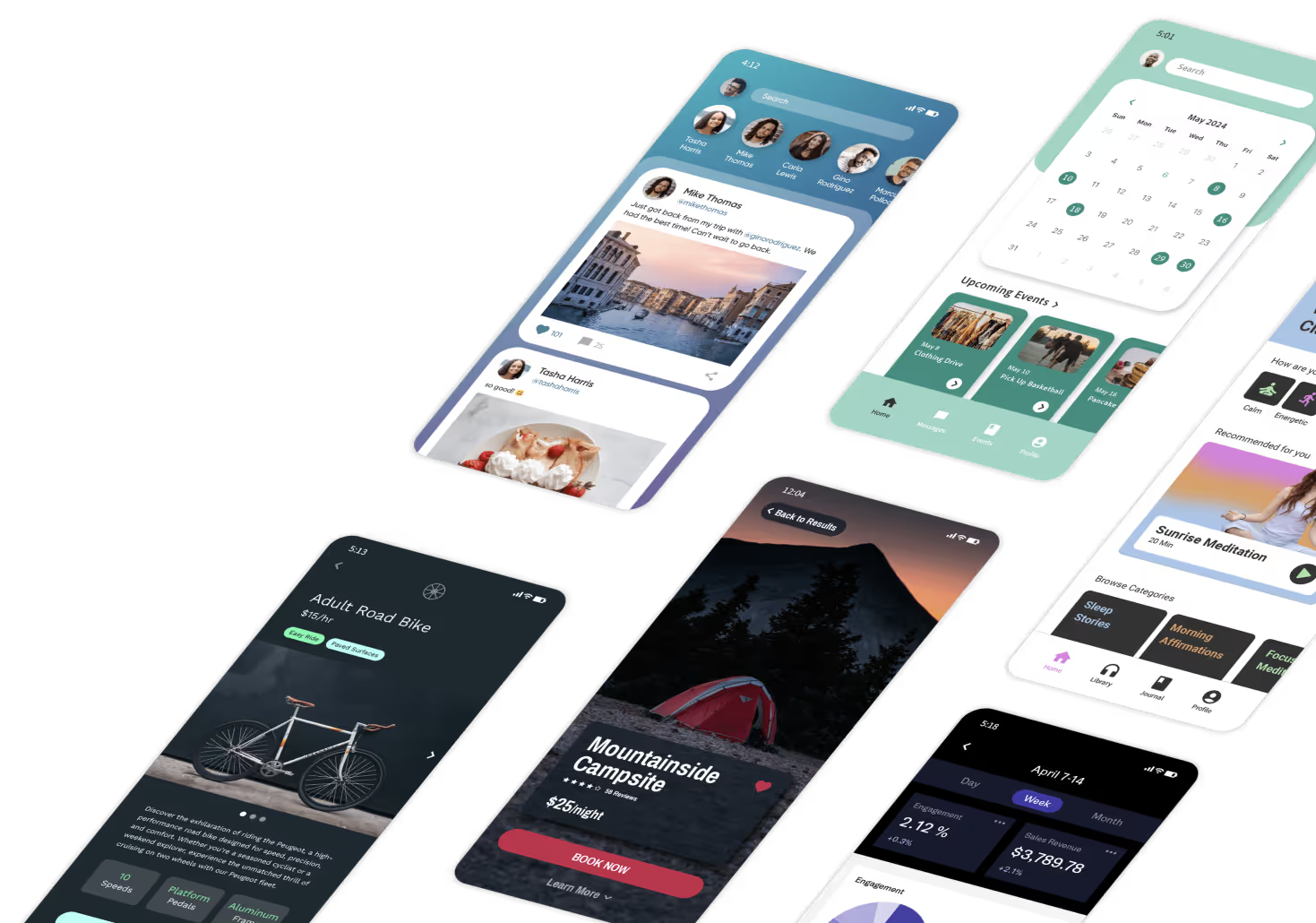
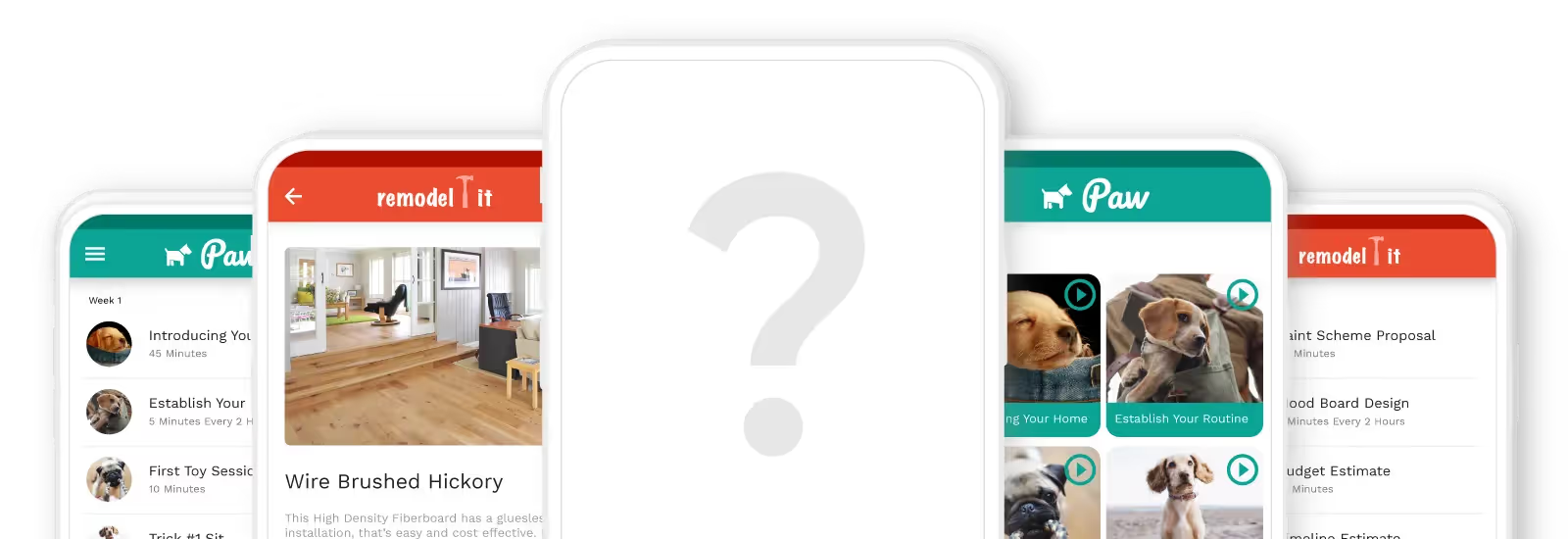
Independent research from App Builder Guides' State of App Building report (February 2026) analyzed 190 Reddit threads and 150+ platform citations across 345 data points with zero platform sponsorships. Adalo ranked first among visual builders for non-developers.

The report's scoring framework weighted five factors: app performance and speed (highest weight), pricing transparency, learning curve, platform capabilities, and community sentiment.
What is No-Code Software?
No-code software enables anyone without programming or technical experience to create their own software tools and applications. You build from premade templates using visual interfaces—drag-and-drop editors, point-and-click workflows—rather than writing code line by line.
A quality no-code software builder lets you customize every aspect of your project: colors, structure, layout, and functionality. You can create applications that align perfectly with your brand, incorporating your logo, company colors, and unique design elements.
What Can You Make With No-Code Software?
Today, hundreds of no-code software-building platforms exist on the market. As technology advances, these tools can create almost any software application you can imagine:
- Large websites with hundreds of pages
- Simple single-page landing sites
- CRM tools for customer management
- Mobile apps for e-commerce stores
- Scheduling and booking apps for restaurants, salons, and service businesses
- Accounting and finance tools
- Real estate listing applications
- Database and backend systems for project management
The point is straightforward: if you need a software application for your business, organization, or personal use, you can use a no-code software platform to build it yourself.
You can also use no-code software to create the separate components of an app:
- The Frontend: This is what users see and interact with—screens, website pages, forms, buttons, and navigation elements.
- The Backend: The operational brain of your software. It receives user input, fetches data, connects with other applications, and performs calculations.
- The Database: Where all information crucial to your software's operations lives. This includes user profiles on social networks, product inventory on e-commerce sites, booking records for service businesses, and more.
What I Look For In a No-Code Tool
With so many no-code software platforms available, quality varies dramatically. I've tested hundreds of no-code tools throughout my decade-plus career in this space.
I evaluate no-code software building platforms using these three attributes:
- Actually No-Code: Some platforms claim you don't need coding knowledge, but then ask you to enter parameters or write expressions. That's low-code, not no-code. When I review platforms, I verify there's genuinely no need for technical knowledge. The best platforms use drag-and-drop or point-and-click interfaces, letting you assemble applications visually.
- Large Ecosystem: A quality no-code platform maintains a robust ecosystem—a community of users, plugins, templates, tutorials, and documentation. This ecosystem helps you learn the platform's capabilities, connect with other builders, ask questions in community forums, and access tools created by developers.
- Free Version or Free Trial: Testing a platform before committing money is essential. Free versions and trials let you experience how the platform feels and whether it suits your working style. They also help you estimate the learning curve, since some platforms require significantly more time to master than others.
#1 The Best Overall No-Code Software
Adalo
What is it?
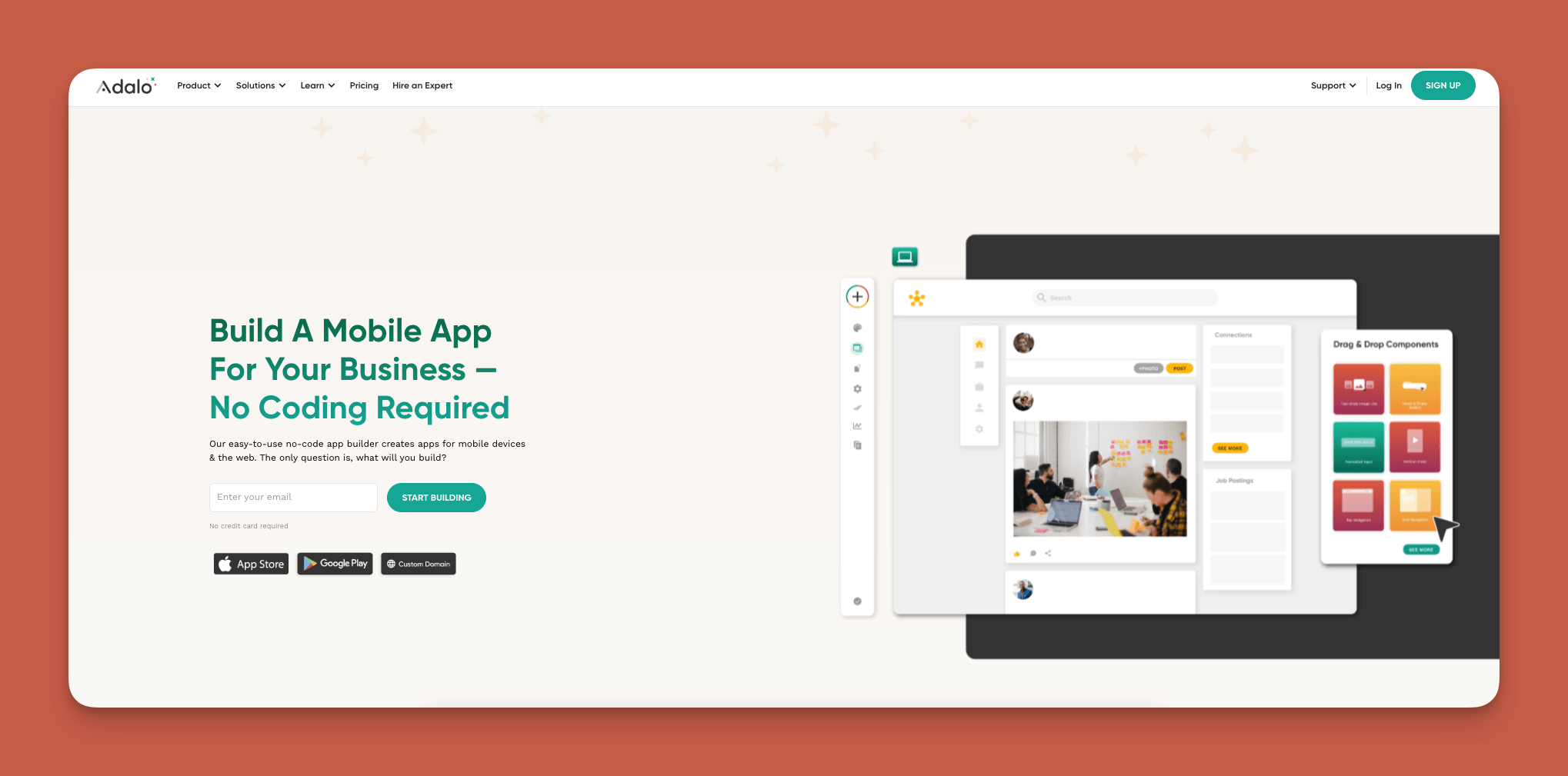
Adalo is a no-code app builder for database-driven web apps and native iOS and Android apps—one version across all three platforms, published to the Apple App Store and Google Play. This native mobile app builder provides the flexibility to create any type of app to your exact specifications.
Ada, Adalo's AI builder, lets you describe what you want and generates your app. Magic Start creates complete app foundations from a description. Magic Add adds features through natural language. X-Ray identifies performance issues before they affect users.
Why do I like it?
There's a reason I continue to recommend Adalo more than any other app builder: It's simple enough that you can start building immediately after signing up, yet robust enough to build virtually anything—websites, kanban boards, scheduling apps, marketplace platforms, and more.
The platform's AI capabilities accelerate development significantly. Magic Start generates complete app foundations from descriptions—tell it you need a booking app for a dog grooming business, and it creates your database structure, screens, and user flows automatically. What used to take days of planning happens in minutes. Magic Add lets you add features by simply describing what you want in natural language.
Who is it best for?
Freelancers, entrepreneurs, and small to medium businesses will find Adalo particularly useful for bringing app ideas to life. The platform's visual builder has been described as "easy as PowerPoint," making it accessible to complete beginners while offering enough depth for complex applications.
Pricing
Get started with Adalo for $36/month. All paid plans include unlimited database records and unlimited usage—no surprise charges based on app activity. This contrasts sharply with competitors that impose record caps or usage-based billing that can create unpredictable costs.
Features
- Adalo includes nearly 40 fully loaded templates. Each template has pre-customized screens and a built-in backend and database, so you add your data and customize the appearance to match your brand.
- Maximize reach by publishing your app on the web (accessible via browsers) and in the Apple App Store and Google Play Store. One codebase deploys everywhere.
- Out of all no-code software platforms on this list, Adalo's free version is the most generous. You can work on up to 10 projects and publish your favorite to the web at no cost.
- Following the Adalo 3.0 infrastructure overhaul in late 2025, the platform is now 3-4x faster with modular infrastructure that scales to serve apps with over 1 million monthly active users. X-Ray identifies performance issues before they affect users.
Over 3 million apps have been created on Adalo, processing millions of data requests daily with 99%+ uptime.
#2 No-Code Software For Making Business Websites
Wix

What is it?
Wix is a no-code website builder that gives anyone the power to create professional-looking websites without technical knowledge.
Why do I like it?
Since the early 2010s, Wix has enabled non-technical users to create websites for businesses and organizations. As one of the first movers in the no-code space, Wix has developed one of the most thriving ecosystems—you'll have extensive resources to create virtually any website.
Who is it best for?
Wix works well for beginners completely new to no-code. But don't assume this limits professionalism—global companies including Coca-Cola and Tesla have built sites on Wix.
Pricing
Wix's Lite Plan at $17/month (billed annually—no monthly option) suits small sites with 2GB storage and custom domain. The Core Plan at $36/month (billed monthly) adds basic e-commerce features like payment acceptance.
Features
- Wix offers one of the largest template libraries among no-code website builders—hundreds of templates across industries.
- Content marketers take note: Wix includes a powerful SEMrush integration for optimizing written content for SEO.
However, Wix focuses exclusively on websites. If you need a native mobile app published to app stores, you'll need a platform like Adalo that compiles to native iOS and Android code.
#3 No-Code Software For Designers Wanting to Make Apps
Bravo Studio

What is it?
Bravo Studio transforms your Figma designs into functional, eye-catching mobile apps.
Why do I like it?
Bravo Studio bridges Figma with no-code mobile app creation, turning designers into app builders. If you're a Figma designer (or still use Adobe XD), you'll get near pixel-perfect design freedom to create truly distinctive apps.
Who is it best for?
Figma users will feel at home with Bravo. However, if you lack Figma experience, you'll need to learn that platform and create designs before using Bravo—adding significant time to your workflow.
Pricing
Publish apps with up to 30 screens for $21/month (billed monthly). Larger apps require the $117/month tier, which supports up to 80 screens with white-label branding.
Features
- Bravo Studio creates native mobile apps publishable to the Apple App Store and Google Play Store.
- Access an extensive suite of native mobile features: GPS, camera and microphone integration, and more.
The tradeoff: Bravo requires existing design skills and Figma proficiency. Platforms like Adalo offer a more integrated approach where you design and build within the same environment, with AI assistance to generate screens and features from descriptions.
#4 No-Code Software for Making E-commerce Apps
GoodBarber

What is it?
GoodBarber specializes in creating apps for e-commerce businesses.
Why do I like it?
If you're selling online or already have an e-commerce store, GoodBarber offers a focused solution. It's beginner-friendly, packed with preloaded templates for nearly every e-commerce scenario imaginable.
You can create your app quickly, opening another revenue stream for your business.
Who is it best for?
GoodBarber excels at apps for all types of e-commerce platforms. Whether you sell weekly video content, workout gear, ebooks, or physical products, GoodBarber provides relevant templates and features.
Pricing
Content apps start at $36/month (billed monthly); physical goods apps at $40/month. App store publishing requires $70/month for content and $90/month for physical products.
Features
- GoodBarber integrates with payment platforms including Stripe, PayPal, and Square.
The pricing structure means app store publishing adds significant cost. Adalo's $36/month plan includes both web and app store publishing with no data caps, making it more economical for businesses wanting presence across all platforms.
#5 No-Code Software for Making Eye-Catching Websites
Squarespace
What is it?
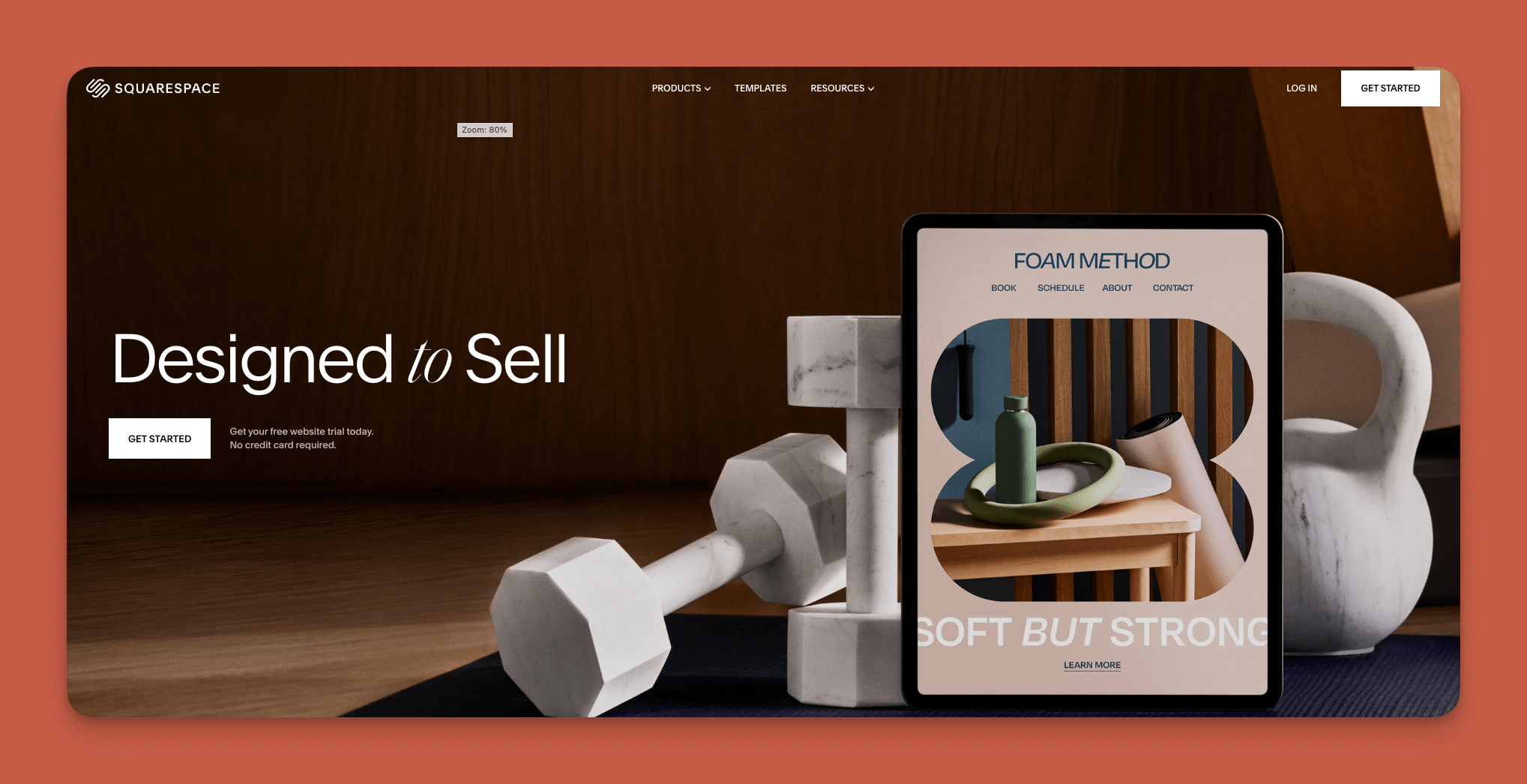
Squarespace is a no-code website builder known for creating visually striking e-commerce websites.
Why do I like it?
If aesthetics matter and you want a website that catches attention, Squarespace delivers. While it offers fewer templates than Wix, the design quality is consistently excellent.
Who is it best for?
People with zero no-code experience will find Squarespace's drag-and-drop interface easy to learn. Anyone prioritizing visual impact for their business or organization should consider Squarespace seriously.
Pricing
After a 14-day free trial, the Personal Plan starts at $25/month (billed monthly). The Business Plan at $36/month adds analytics and payment capabilities.
Features
- Squarespace has solid e-commerce capabilities, including free invoicing and 0% transaction fees on the $40/month plan.
- When you build with Squarespace, your site automatically optimizes for mobile and desktop, ensuring consistent experiences across devices.
Like Wix, Squarespace focuses on websites. For native mobile apps with app store distribution, you'll need a dedicated app builder.
#6 A No-Code App-Builder with an Extensive Ecosystem
Bubble
What is it?
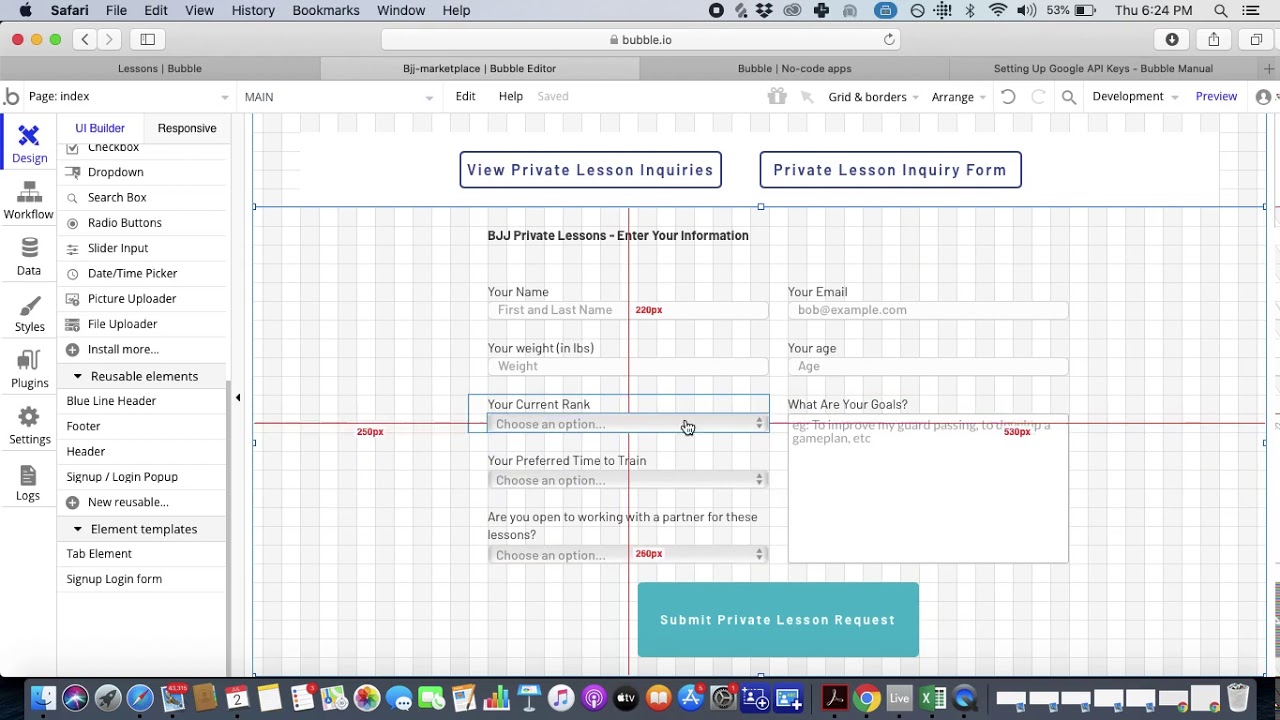
Bubble is a no-code software builder for creating powerful web applications.
Why do I like it?
Bubble offers extensive customization and one of the most established ecosystems in the no-code space, thanks to its 2012 launch. While you must overcome a significant learning curve, the platform provides considerable flexibility for complex web applications.
Who is it best for?
Bubble serves everyone from freelancers to enterprises. However, expect to spend several months learning the complex building interface. Many users end up hiring Bubble experts to help with optimization and scaling—the ecosystem is rich with consultants precisely because so many builders need assistance.
Pricing
Learn Bubble's interface with its free version. Build and publish your first app at $32/month (billed monthly). The Growth tier at $134/month provides 100GB storage. However, Bubble uses Workload Units for usage-based billing, which can create unpredictable costs as your app scales.
For comparison, Bubble's web and mobile wrapper offering starts at $59/month with usage-based charges and record limits. Adalo's web and true-native mobile builder starts at $36/month with unlimited usage and no record caps on paid plans.
Features
- Bubble's ecosystem includes a useful forum, comprehensive academy, and templates and plugins from the developer community.
Key limitations to consider: Bubble cannot create native mobile apps—its mobile solution wraps the web app, which can introduce performance challenges at scale. One app version doesn't automatically update across web, Android, and iOS deployments. The extensive customization often results in slower applications that struggle under increased load. Claims of millions of MAU typically require hired expert help to achieve.
Adalo's approach differs fundamentally: one codebase compiles to true native iOS and Android apps plus web, with automatic updates across all platforms when you publish changes.
#7 No-Code Software for Making Apps From a Database
Softr

What is it?
Softr is a no-code web-app-building platform for those with existing databases who want to build quickly.
Why do I like it?
Although you need a database to start, the building interface is straightforward. Choose your template, connect your database, and Softr integrates your data with template screens. Then drag "blocks"—buttons, forms, images—onto each screen and customize.
Who is it best for?
Softr works well for anyone with a pre-existing database, making it attractive for businesses already using spreadsheet-based data management.
Pricing
Publishing an actual Progressive Web App requires $167/month (billed monthly), which still imposes restrictions on records per app and records per datasource. Lower tiers exist but with significant limitations.
Features
- Softr integrates seamlessly with Google Sheets, Airtable, Hubspot, and SmartSuite.
- Softr's AI option lets you enter a 200-word description, and it builds your app automatically for customization.
Important limitations: Softr does not support Apple App Store or Google Play Store publishing, or native iOS and Android app creation. It's focused on web apps only.
For spreadsheet-based app building with mobile app store distribution, Adalo's Sheetbridge feature turns Google Sheets into an actual database—the easiest path from spreadsheet to published native app without database-related learning curves.
#8 No-Code Software for Making Eye-Catching Apps
Glide
What is it?
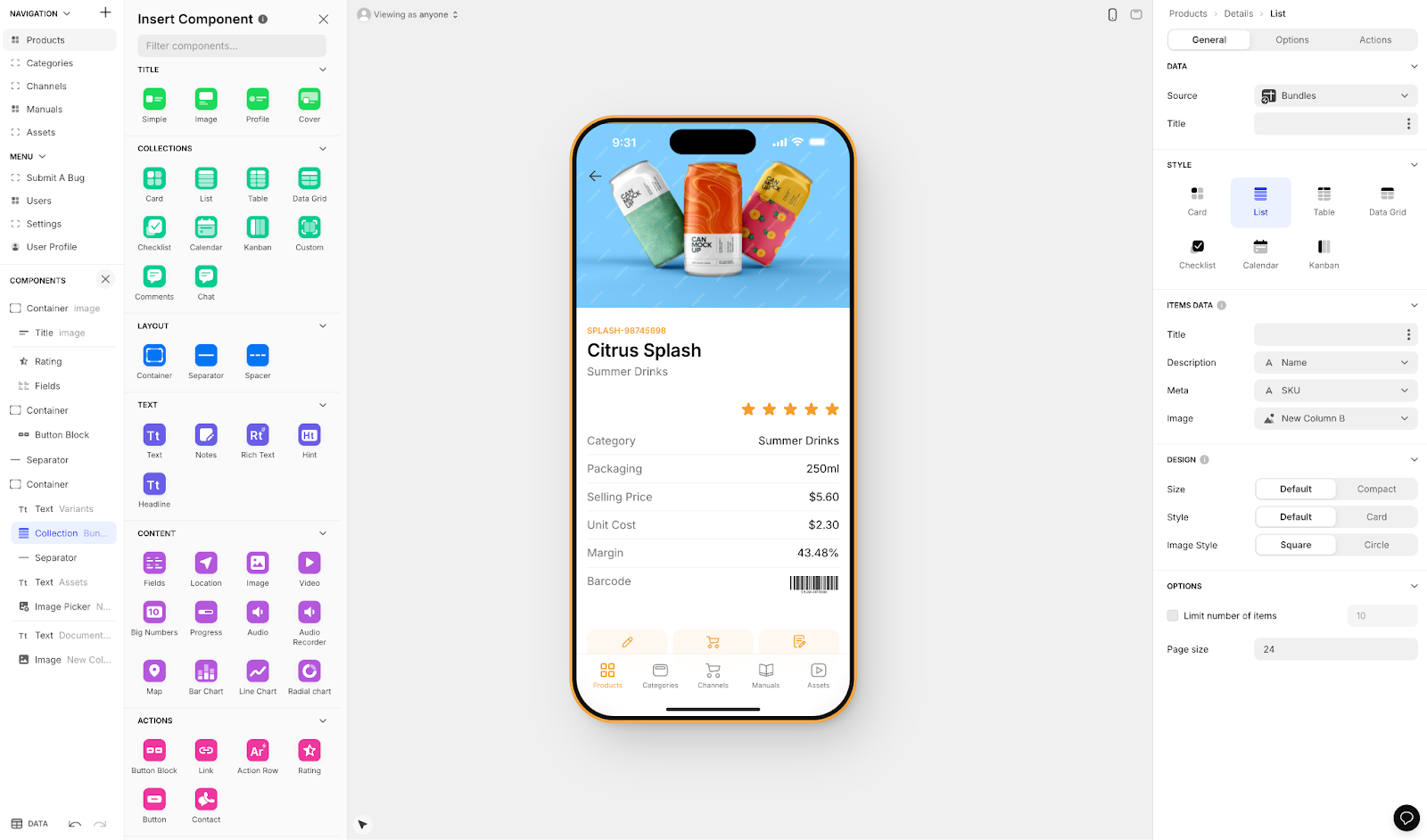
Glide is a no-code app-building platform that creates visually appealing apps quickly.
Why do I like it?
While Glide excels at internal business tools, it also supports client-facing software like booking apps and social platforms. A database isn't required to start—Glide's templates include their own databases that you can modify.
Who is it best for?
Glide suits freelancers through large corporations for internal tools and simple client-facing apps.
Pricing
Publish basic apps with Glide's free version. The Maker tier at $60/month (billed monthly) unlocks 35+ integrations and Google Sheets connection. However, this tier still imposes limits on app updates and data record rows, with additional charges for overages.
Features
- Glide has capable AI tools that can summarize PDFs, organize data, describe images, and more.
Key limitations: Glide is heavily format-focused and restricted to set templates. This enables fast building but creates generic, simplistic apps with limited creative freedom. Most significantly, Glide does not support Apple App Store or Google Play Store publishing—your apps remain web-based only.
For businesses wanting app store presence, Adalo's single codebase publishes to web, iOS App Store, and Google Play Store simultaneously, with unlimited updates once published.
#9 The Best No-Code Database Builder
Airtable

What is it?
Airtable is a no-code database and backend-building platform.
Why do I like it?
Airtable provides a simple yet powerful tool for building backends. It has a low learning curve, so you can start creating your database soon after signing up. Airtable integrates with app-building platforms including Adalo, Glide, and Softr.
Who is it best for?
Those seeking a straightforward platform for robust database creation will find Airtable useful. It serves everyone from complete beginners to experienced developers.
Pricing
Airtable starts at $25/month (billed monthly per user). Larger databases require the $36/mo tier.
Features
- Use Airtable's automation feature to structure your data schema efficiently.
Airtable excels as a standalone database but requires pairing with an app builder for user-facing applications. Adalo includes its own integrated database with no record limits on paid plans, eliminating the need for separate database subscriptions and the complexity of connecting external data sources.
#10 A No-Code App-Building Platform for Big Businesses
Betty Blocks

What is it?
Betty Blocks is an app-building platform designed for large enterprise needs.
Why do I like it?
Large enterprises and Fortune 500 companies: Betty Blocks provides the no-code software for building PWAs and web apps with enterprise-grade requirements. It includes security and scalability features that large organizations need, ensuring apps can reach audiences safely.
Who is it best for?
While Betty Blocks recently released pricing for small businesses under 50 people, its core business remains focused on large organizations with complex compliance and security requirements.
Pricing
Small and medium businesses can access Betty Blocks' SMB plan starting at $1,000/year (no monthly option) for one simple-use-case app. Large organizations start at $3,250/year.
Features
- If you maintain your own servers, Betty Blocks allows running your app on your own infrastructure, adding security layers for sensitive applications.
Betty Blocks serves a specific enterprise niche. For most businesses, Adalo's modular infrastructure scales to over 1 million monthly active users without requiring enterprise pricing or self-hosted servers.
Choosing the Right No-Code Platform
The no-code landscape offers specialized tools for different needs. Website builders like Wix and Squarespace excel at their specific purpose. Database tools like Airtable provide backend foundations. E-commerce specialists like GoodBarber serve online sellers.
For businesses wanting native mobile apps published to app stores alongside web presence, the options narrow considerably. Many platforms create web apps only, or use wrappers that introduce performance limitations. Adalo's AI-assisted approach—generating complete app foundations from descriptions, compiling to true native code, and publishing to web, iOS, and Android from a single codebase—addresses the full spectrum of modern app deployment needs.
The platform you choose should match your specific goals: website-only presence, internal tools, or full mobile app store distribution. Test free versions before committing, and consider not just current needs but how your requirements might scale.
FAQ
Why choose Adalo over other app building solutions?
Adalo is an AI-powered app builder that creates true native iOS and Android apps from a single codebase. Unlike web wrappers, it compiles to native code and publishes directly to both the Apple App Store and Google Play Store. Magic Start generates complete app foundations from descriptions, and paid plans include unlimited database records with no usage-based charges.
What's the fastest way to build and publish an app to the App Store?
Adalo's drag-and-drop interface combined with AI-assisted building offers the fastest path from idea to published app. Magic Start generates your database, screens, and logic from a description. The platform handles the App Store submission process, so you don't need to navigate Apple's developer requirements manually.
Which is more affordable, Adalo or Bubble?
Adalo starts at $36/month with unlimited usage and no record caps. Bubble's comparable tier with mobile wrapper starts at $59/month and includes Workload Units that create usage-based charges. Bubble's pricing can become unpredictable as your app scales due to these usage calculations.
Which is easier for beginners, Adalo or Glide?
Both platforms are beginner-friendly, but they serve different purposes. Glide is faster for simple template-based apps but restricts creative freedom. Adalo offers more flexibility while remaining accessible—its visual builder has been described as "easy as PowerPoint." Adalo also publishes to app stores, which Glide does not support.
Can I build native mobile apps with Bubble?
No. Bubble creates web apps only. Its mobile solution wraps the web app rather than compiling to native code, which can introduce performance issues at scale. Adalo compiles to true native iOS and Android apps that perform like traditionally coded applications.
Does Softr support App Store publishing?
No. Softr creates Progressive Web Apps only and does not support Apple App Store or Google Play Store publishing. For native mobile apps with app store distribution, you'll need a platform like Adalo that compiles to native code.
What types of apps can I create with no-code software?
No-code software can create virtually any application: websites, CRM tools, mobile e-commerce apps, scheduling and booking apps, accounting tools, real estate listings, project management databases, social networks, and more. You can build both frontend interfaces and backend logic without writing code.
What should I look for when choosing a no-code platform?
Evaluate three key attributes: ensure it's truly no-code with drag-and-drop or point-and-click interfaces, check for a robust ecosystem with community support and documentation, and verify there's a free version or trial. Also consider whether you need native mobile apps—many platforms only create web applications.
How does Adalo's pricing compare to FlutterFlow?
FlutterFlow starts at $70/month per user for app store publishing, but that price doesn't include a database—you must source, setup, and pay for one separately. Adalo starts at $36/month with an integrated database included, no record limits on paid plans, and no per-user pricing for building.
Can Adalo apps scale to handle large user bases?
Yes. Following the Adalo 3.0 infrastructure overhaul in late 2025, the platform's modular architecture scales to serve apps with over 1 million monthly active users. With proper data relationship setups, there's no upper ceiling. X-Ray identifies performance issues before they affect users.