In 2019, there were over 50 million freelancers in the US, and that number has only been increasing. Freelancers are good for business and good for the economy, contributing over $1.2 trillion annually.
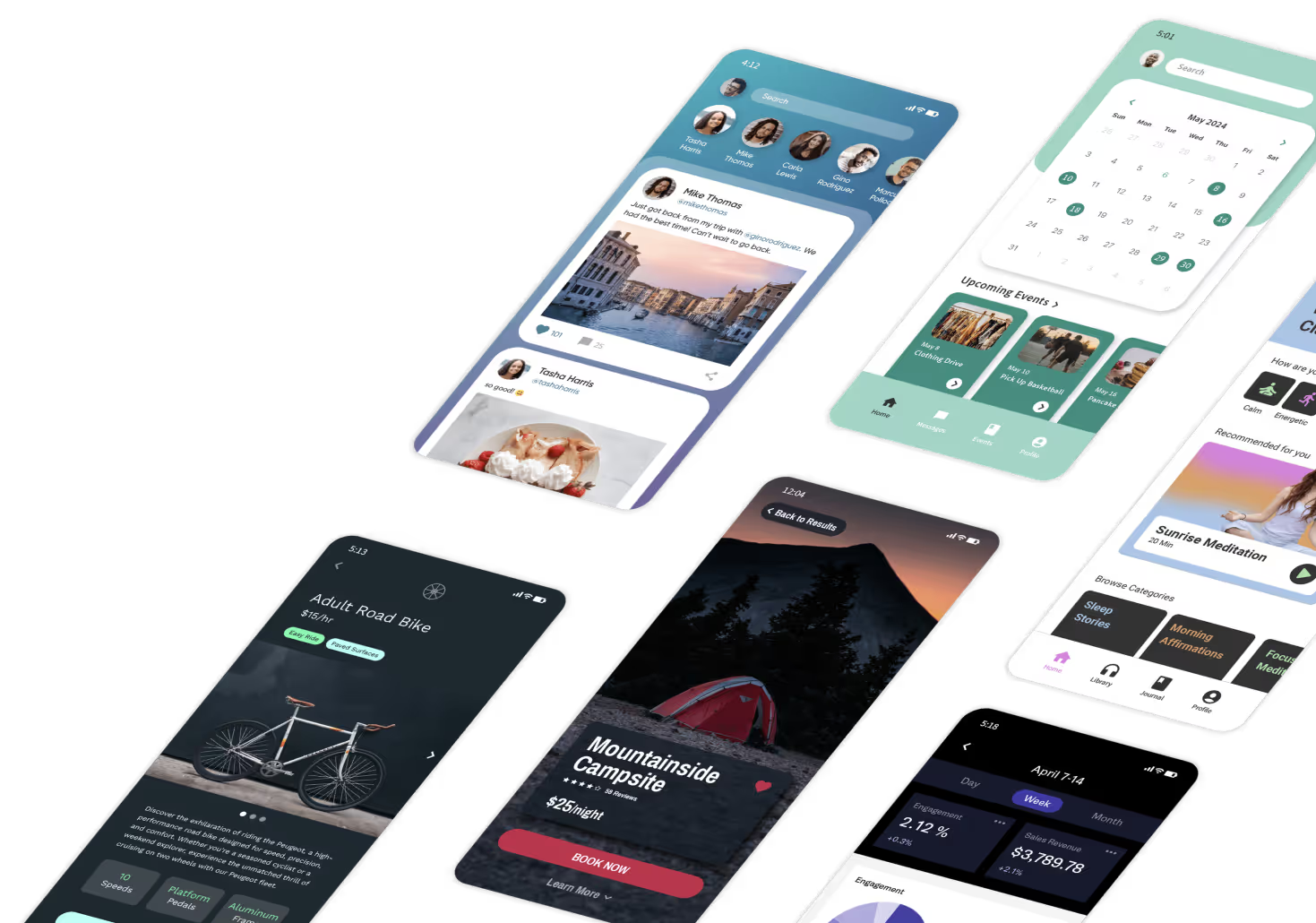
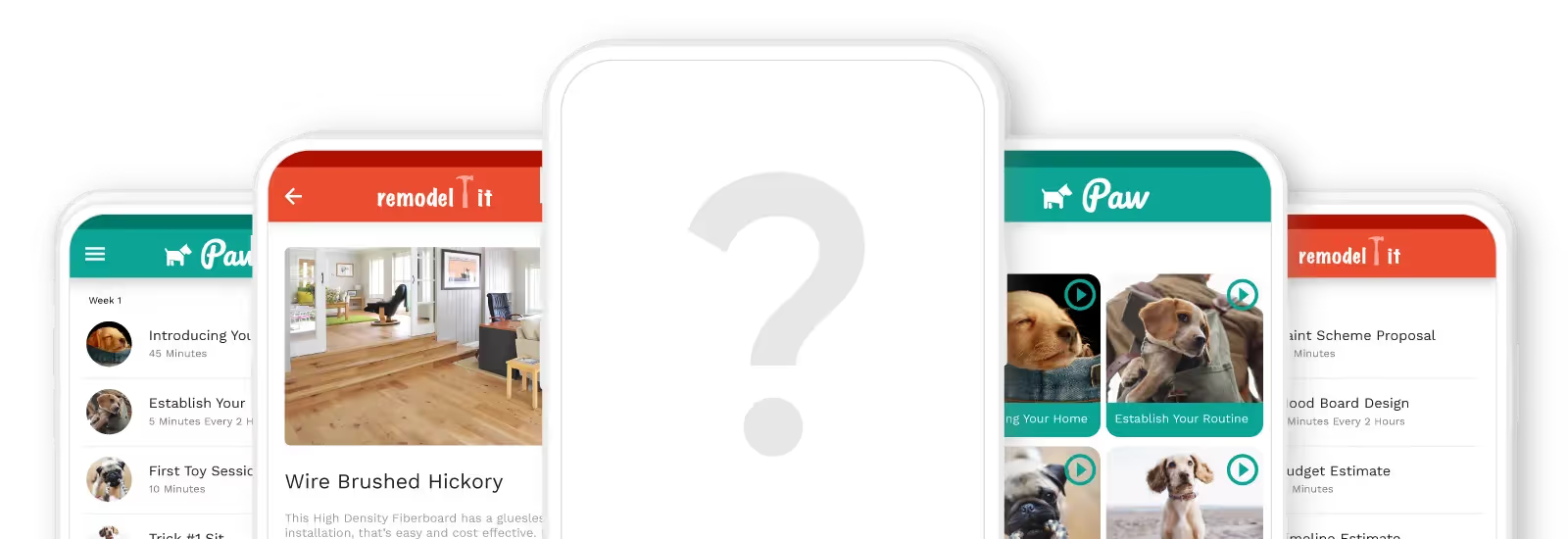
Platforms like Adalo, a no-code app builder for database-driven web apps and native iOS and Android apps—one version across all three platforms, published to the Apple App Store and Google Play, have made this shift possible by empowering freelancers to deliver professional applications without traditional coding expertise. One build publishes across all three platforms—web, Apple App Store, and Google Play—eliminating the complexity that once required separate development teams.
With just a laptop, good internet connection, and relevant skills, a freelancer can secure work from around the world. The tech industry has seen the largest increase in freelancers, driven by fast-paced product development and high demand for software. AI-assisted building tools now allow freelancers to deliver apps in days rather than months, fundamentally changing what's possible for independent creators.
Here's why freelancing with modern app builders is growing in popularity.
Diverse clients, new challenges
Most app-building freelancers and makers have the opportunity to work with a wide range of clients to keep things interesting. They can target specific niches if they choose, or pick any project they find creatively challenging. With over 3 million apps created on Adalo alone, the market for skilled builders continues to expand.
Balance, balance, balance
Plenty has been said about work-life balance, being your own boss, and managing your own calendar. According to a survey by FlexJobs, 70 percent of freelancers said their decision to go independent was motivated by the need for a better balance between career and life goals. This was the single most cited reason for choosing freelance work.
Work from home (wherever that may be!)
The best thing about freelancing is that it comes with the freedom to live and work wherever you choose. This is a big deciding factor for people that might want to prioritize flexibility, especially when it comes to geography. Modern app builders with cloud-based infrastructure mean your development environment travels with you.
Choose projects that bring joy
The FlexJobs survey found that nearly half the people interviewed wanted to retain the ability to choose their own projects. It was important to them to be able to decide whether they'd like to juggle multiple projects, or opt for one big, rewarding gig. Freelancers using AI-assisted platforms can take on more projects because the building process is faster—what once took weeks can now happen in days.
Why Adalo Works for Freelance App Building
Ada, Adalo's AI builder, lets you describe what you want and generates your app. Magic Start creates complete app foundations from a description, while Magic Add adds features through natural language.
Adalo's AI-powered platform gives freelancers a significant competitive advantage. Magic Start generates complete app foundations from simple descriptions—tell it you need a booking app for a dog grooming business, and it creates your database structure, screens, and user flows automatically. What used to take days of planning happens in minutes.
Magic Add lets you add features by describing what you want in natural language. Need to add a payment system or user notifications? Describe the functionality and the platform builds it. This speed translates directly to profitability for freelancers who can deliver more projects in less time.
For freelancers concerned about scalability, Adalo's modular infrastructure scales to serve apps with millions of monthly active users, with no upper ceiling. Paid plans include unlimited database records and no usage-based charges—meaning no surprise bills when a client's app takes off. The platform processes over 20 million data requests daily with 99%+ uptime.
Doc Williams Shares His Time Management Hacks
We recently had an incredible interview with an Adalo freelancer that celebrates some of the best aspects of the journey. We hope it helps paint a picture of how a day in the life of a maker might look!
Here's his story ⬇️
I define success by how happy I am. If I'm motivated to do the work, I find that the money is great. But beyond the money, what makes me excited is that I can work in a format that I enjoy.
Things like creating content, talking with people, working with great companies – that gives me energy! That's how I define success. I enjoy being able to set up my schedule in a very specific way. I like working when I feel energized, and I don't like slogging through hours and hours of just feeling like I'm a zombie.
It really comes down to schedule and what works for me now. Everyone is totally different and there are tons of great resources out there to decide how to structure your day. With the way the creator economy is structured, I can be proactive in my building, and in what I'm doing.
Managing Time as a Freelance App Builder
Here's how Doc structures his time, whether it's daily, weekly, monthly, quarterly, or yearly:
My days have 90-minute blocks. I used to avoid using schedules because I thought they were confining. But instead, I've found that it actually alleviates so much stress of trying to remember everything.
Once you have a structure, you don't have all these other cobwebs or a trail of things to remember. Structure allows you to have freedom, where after those 90-minute blocks, you can do whatever you'd like with your time.
This approach is particularly effective for freelance app builders. With AI-assisted tools handling much of the repetitive work, those focused 90-minute blocks become incredibly productive. A single session might accomplish what previously took an entire day of manual configuration.
I think it's good to have free time where you're not consumed by work, or always in the hustle and grind mode. As far as daily routines go, I have a theme of the day, and then I get to it. So Mondays I have my meetings and I pretty much block all of my meetings for one day. That way, I don't have meetings scattered throughout the week, and I can focus my energy and attention better.
The Planning and Execution Framework
Doc's approach to work sessions provides a template other freelancers can adapt:
I have a planning session for each block of time where I identify what to do with each block. I write it all out, everything down to the details. It's very concrete, very actionable, and it's stuff that I can just get done. Then I have execution time which is 5 to 30 minutes.
I know exactly what I need to do on my hit list. I turn everything off—notifications, Slack notifications. I put my phone in a different room or put it in airplane mode. And I work!
I might just do two 90-minute blocks a day, or I might do three at the most.
This disciplined approach pairs well with modern app-building platforms. When you can describe a feature and have AI generate the foundation, your execution blocks become about refinement and client communication rather than tedious manual building.
Scaling Goals from Daily to Yearly
It wasn't always like this. It just started with a notebook of things I need to get done. And then I started turning it into processes. That's for daily goals. The weekly and monthly goals depend largely on what the numbers are, whether it's sales targets, content creation numbers – things like that. Quarterly, I look at what my revenue goals are, and I look at trying to either be on a signature event or doing some kind of signature lab.
Key takeaways from Doc's system:
- Theme your days to batch similar activities (all meetings on Monday)
- Use 90-minute focused blocks with planning sessions before execution
- Eliminate distractions completely during work blocks
Want to know more about becoming a freelance app builder?
The Adalo App Academy is full of helpful resources and tools to take you through your freelancing journey. Plus – it's free! If you want to get started and explore some of the best courses on building apps as a freelancer, check these out:
Tips on Getting Started Freelancing
My Journey Becoming A Freelancer
Everything You Need To Know To Become A Freelancer
Freelancing Tips: Managing a Project
With the right tools and time management approach, freelance app building offers the flexibility, creative challenge, and income potential that draws millions to independent work. The combination of AI-assisted building and proven productivity systems like Doc's makes it more accessible than ever to build a sustainable freelance career.
FAQ
Why choose Adalo over other app building solutions?
Adalo is an AI-powered app builder that creates true native iOS and Android apps alongside web apps. Unlike web wrappers, it compiles to native code and publishes directly to both the Apple App Store and Google Play Store from a single codebase. Starting at $36/month with unlimited usage and no record caps, it's built for freelancers who need to deliver professional apps without surprise costs.
What's the fastest way to build and publish an app to the App Store?
Adalo's drag-and-drop interface combined with AI-assisted building lets you go from idea to published app in days rather than months. Magic Start generates complete app foundations from descriptions, and the platform handles the complex App Store submission process—certificates, provisioning profiles, and store guidelines—so you can focus on features and user experience.
Can I start freelancing without coding experience?
Yes. Adalo's visual builder has been described as "easy as PowerPoint," and the AI-assisted features handle much of the technical complexity. Over 3 million apps have been created on the platform, many by builders with no traditional programming background.
What are the main benefits of becoming a freelance app builder?
Freelance app building offers healthier work-life balance (cited by 70% of freelancers as their main motivation), the freedom to work from anywhere with just a laptop and internet connection, and the ability to choose projects that interest you. You can work with diverse clients across different industries while maintaining creative control.
How should I structure my time as a freelance app builder?
Successful freelancers often use 90-minute focused work blocks with dedicated planning and execution sessions. Consider theming your days—blocking all meetings on one day to maintain focus throughout the rest of the week. Having a structured schedule actually creates more freedom by reducing the mental load of trying to remember everything.
How much does it cost to build apps for clients with Adalo?
Adalo starts at $36/month with unlimited usage, unlimited database records on paid plans, and unlimited app updates once published. This predictable pricing helps freelancers quote projects accurately without worrying about usage-based charges eating into margins.
How does Adalo compare to Bubble for freelance work?
Bubble starts at $59/month with usage-based Workload Unit charges and record limits. Bubble's mobile solution is a web wrapper, not native apps. Adalo creates true native iOS and Android apps from a single codebase at $36/month with no usage charges, making project costs more predictable for freelancers.
Where can I learn more about becoming a freelance app builder?
The Adalo App Academy offers free resources and courses specifically designed for aspiring freelancers. You can access courses on getting started, managing projects, and learning from experienced builders who share their journey and best practices.
Can apps built on Adalo scale as clients grow?
Yes. Adalo's modular infrastructure scales to serve apps with millions of monthly active users, with no upper ceiling. The platform processes over 20 million data requests daily with 99%+ uptime, so you can confidently take on projects knowing the infrastructure will support client growth.