The goal isn't to get MORE done—it's to have LESS stuff to do. While embracing the hustle and constantly pushing what you can accomplish is admirable, the endgame should be efficiency, not endless work. With that in mind, let's break down the benefits of mobile app templates for anyone running an app building business.
Whether you're a solo developer or an agency building apps for clients, understanding when and how to use templates can transform your workflow and profitability.
What Is a Mobile App Template?
Before deciding whether to use one, it's important to understand what an app template actually is. Building even a basic app from scratch can be time-consuming, expensive, and resource-intensive. Templates change that equation entirely.
AI-powered app builders have made development dramatically more accessible. Adalo, a no-code app builder for database-driven web apps and native iOS and Android apps—one version across all three platforms, published to the Apple App Store and Google Play, creates apps from a single codebase—publishing directly to the app stores. This approach delivers faster development at lower cost without compromising functionality.
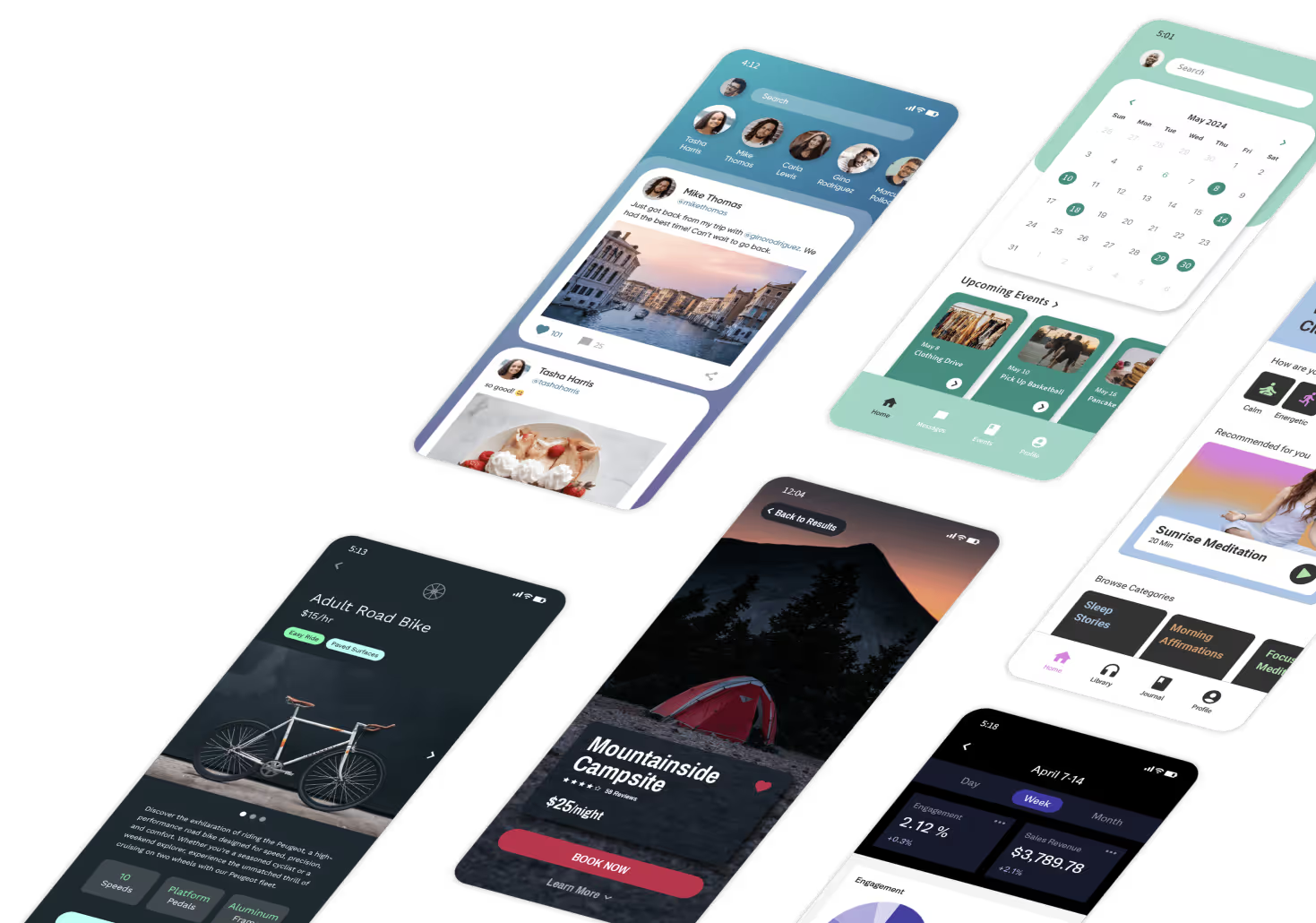
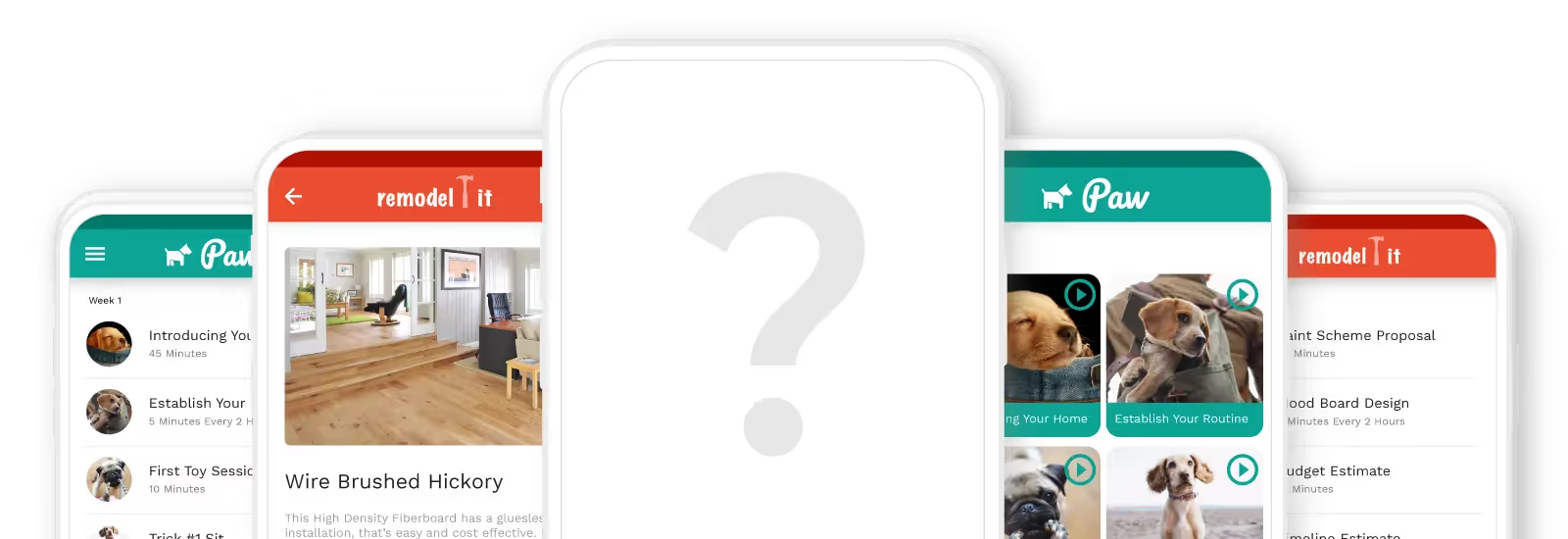
Within this landscape, templates serve as frameworks—the basic building blocks for bringing your final app idea to life. You might have a template for a marketplace, a social media platform like Instagram or Twitter, a community app, or a church app. The possibilities depend entirely on your clientele and niche.
Key Benefits of Mobile App Templates
As a freelancer or agency, templates offer substantial advantages that directly impact your bottom line:
- Speed up development – Time is money, and templates let you skip foundational work that would otherwise take days or weeks.
- Customize efficiently – Flexibility matters. Templates provide a starting point you can quickly adapt to meet specific client requirements.
- Lower client costs – When you need less time to ship an app, you can offer more competitive pricing while maintaining healthy margins.
- Reduce errors – Since you've already refined your template, the odds of broken flows, bugs, or logic errors drop significantly.
- Eliminate repetitive work – This is crucial. Freelancers often get stuck doing the same tasks repeatedly. Templates let you skip to the valuable, creative work.
The compounding effect of these benefits becomes clear over time. A freelancer using well-designed templates can potentially handle 2-3x more projects than one building everything from scratch—without sacrificing quality.
Using Templates on Adalo
Adalo offers a ready-to-deploy app template library designed to jumpstart your building process. You'll find templates for classic app types including ordering, appointment setting, social media clones, eCommerce, directories, and more.
That's one approach, especially if you're new to building apps for clients. But there's another strategy many successful freelancers use: recycling previous builds.
While building your portfolio and practicing different app types, you can repurpose those projects as templates for future clients. Based on each client's requirements, you can modify any aspect of your template's design, functionality, or data layer to create something unique.
Ada, Adalo's AI builder, lets you describe what you want and generates your app. Magic Start creates complete app foundations from a description, while Magic Add adds features through natural language.
With Adalo's AI-assisted features, this process becomes even faster. Magic Start generates complete app foundations from simple descriptions—tell it you need a booking app for a dog grooming business, and it creates your database structure, screens, and user flows automatically. Magic Add lets you add features by describing what you want in natural language. What used to take days of planning now happens in minutes.
Pro Tips for Using Mobile App Templates
Define Your Objectives Clearly
If you're building templates to highlight a particular skill, make sure that expertise features prominently in your work. If speed is your selling point, draw attention to how quickly you deliver.
Answer these questions to define your objectives:
1. What purpose does this app serve?
2. How will users benefit—does it solve a specific pain point?
3. Is it a full-service product, or will it focus on one or two specific functions?
4. How many users do you anticipate installing and using this app?
When you've defined your objectives clearly, the templates you choose to showcase will speak for themselves.
Perfect the Design and Functionality
Even if your template focuses on just two or three key mobile app features, invest time and thought into the outcome. Consider which features would appeal to MOST of your clients when deciding what to build.
Once functionality is solid, make the design as polished as possible. Potential clients should be able to visualize their own content and branding layered on top of your well-designed canvas. First impressions matter—a beautiful template closes deals.
Keep Templates Versatile
Unless you've carved out a very specific niche, your templates should suit a wide client base. Instead of building multiple social media app templates, try building a broader range of app types that might serve different clients. You can narrow your focus once you've identified your market.
Adalo's platform supports this versatility well. With no database record limits on paid plans and modular infrastructure that scales to serve apps with millions of monthly active users, you can build templates that grow with your clients' needs without hitting artificial ceilings.
Build What Customers Need, Not What You Want
Before creating a template, research what features your clients or customers actually want to see. This approach lets you develop something that impresses them without hard selling.
Pay attention to ideas that generate positive feedback. If people don't respond enthusiastically to a concept, it probably won't perform well as a template. Your clients' feedback provides invaluable insight into what works and what doesn't.
Start Basic, Then Improve
There's no point building an elaborate feature set without testing it first. Keep your templates minimal initially. With each round of iteration and feedback, you can improve them strategically.
If you have a long-term goal of building a beautiful template library, remember it won't happen overnight. Developing the right app takes effort, but the investment pays dividends over time.
Why Platform Choice Matters for Template-Based Building
Your choice of app builder significantly impacts how effectively you can leverage templates. Here's how Adalo compares to alternatives:
| Platform | Starting Price | Database Limits | App Store Publishing |
|---|---|---|---|
| Adalo | $36/month | Unlimited records | iOS & Android native |
| Bubble | $59/month | Workload-based limits | Web wrapper only |
| Glide | $60/month | Row limits + charges | No app store support |
| FlutterFlow | $70/month per user | External DB required | Requires separate setup |
For freelancers building templates, predictable pricing matters. Adalo's removal of usage-based App Action charges means no bill shock—you know exactly what you'll pay regardless of how many clients use your templates or how much traffic they generate.
The platform's 3-4x speed improvement following the 2026 infrastructure overhaul also means templates perform better out of the box. When a client's app needs to scale, Adalo's architecture handles it without requiring expert intervention or expensive optimization work.
Building Your Template Library
Over 3 million apps have been created on Adalo, with the visual builder described as "easy as PowerPoint." This accessibility means you can focus on creating valuable templates rather than wrestling with technical complexity.
Start by identifying the app types your target clients request most frequently. Build one solid template for each category, then refine based on real project feedback. Over time, you'll develop a library that lets you deliver high-quality apps faster than competitors who build from scratch every time.
Find out more about growing your business as a freelance mobile app developer.
FAQ
Why choose Adalo over other app building solutions?
Adalo is an AI-powered app builder that creates true native iOS and Android apps from a single codebase. Unlike web wrappers, it compiles to native code and publishes directly to both the Apple App Store and Google Play Store. With unlimited database records on paid plans and no usage-based charges, you get predictable costs as your apps scale.
What's the fastest way to build and publish an app to the App Store?
Adalo's drag-and-drop interface combined with AI-assisted building lets you go from idea to published app in days rather than months. Magic Start generates complete app foundations from descriptions, and Adalo handles the complex App Store submission process—certificates, provisioning profiles, and store guidelines—so you can focus on features and user experience.
Can I easily use mobile app templates to speed up development?
Yes. Adalo offers a ready-to-deploy template library with options for ordering apps, appointment setting, social media clones, eCommerce, directories, and more. You can customize any template's design, functionality, or data layer to meet specific client needs quickly and efficiently.
What are the main benefits of using mobile app templates for freelancers?
Templates speed up development time, reduce errors since they're pre-tested, lower overall costs for clients, and eliminate repetitive work. This allows freelancers to take on more projects while delivering consistent, high-quality results.
How can I create my own mobile app templates?
Recycle previous builds from your portfolio projects. Start with basics, define clear objectives for each template, and focus on features that appeal to most of your target clients. Keep templates versatile to suit a wide client base, and continuously improve them based on feedback.
What types of app templates are available on Adalo?
Adalo's template library includes ordering apps, appointment setting apps, social media clones, eCommerce apps, directory apps, marketplace templates, and community apps. Each template can be fully customized to match your client's branding and specific requirements.
How much does it cost to build apps with templates on Adalo?
Adalo's paid plans start at $36/month with unlimited usage and no record limits. This is more affordable than Bubble ($59/month with workload limits), Glide ($60/month with row limits), or FlutterFlow ($70/month per user plus external database costs).
Should I build templates based on what I want or what clients need?
Always build based on client needs rather than personal preferences. Gather feedback on feature ideas before building, pay attention to which concepts receive positive responses, and use client insights to guide development. This ensures your templates will actually attract and convert potential clients.
Can templates scale as my clients' apps grow?
Yes. Adalo's modular infrastructure scales to serve apps with millions of monthly active users, with no upper ceiling. Unlike platforms with record limits or usage-based charges, templates built on Adalo can grow with your clients' needs without hitting artificial constraints or unexpected costs.