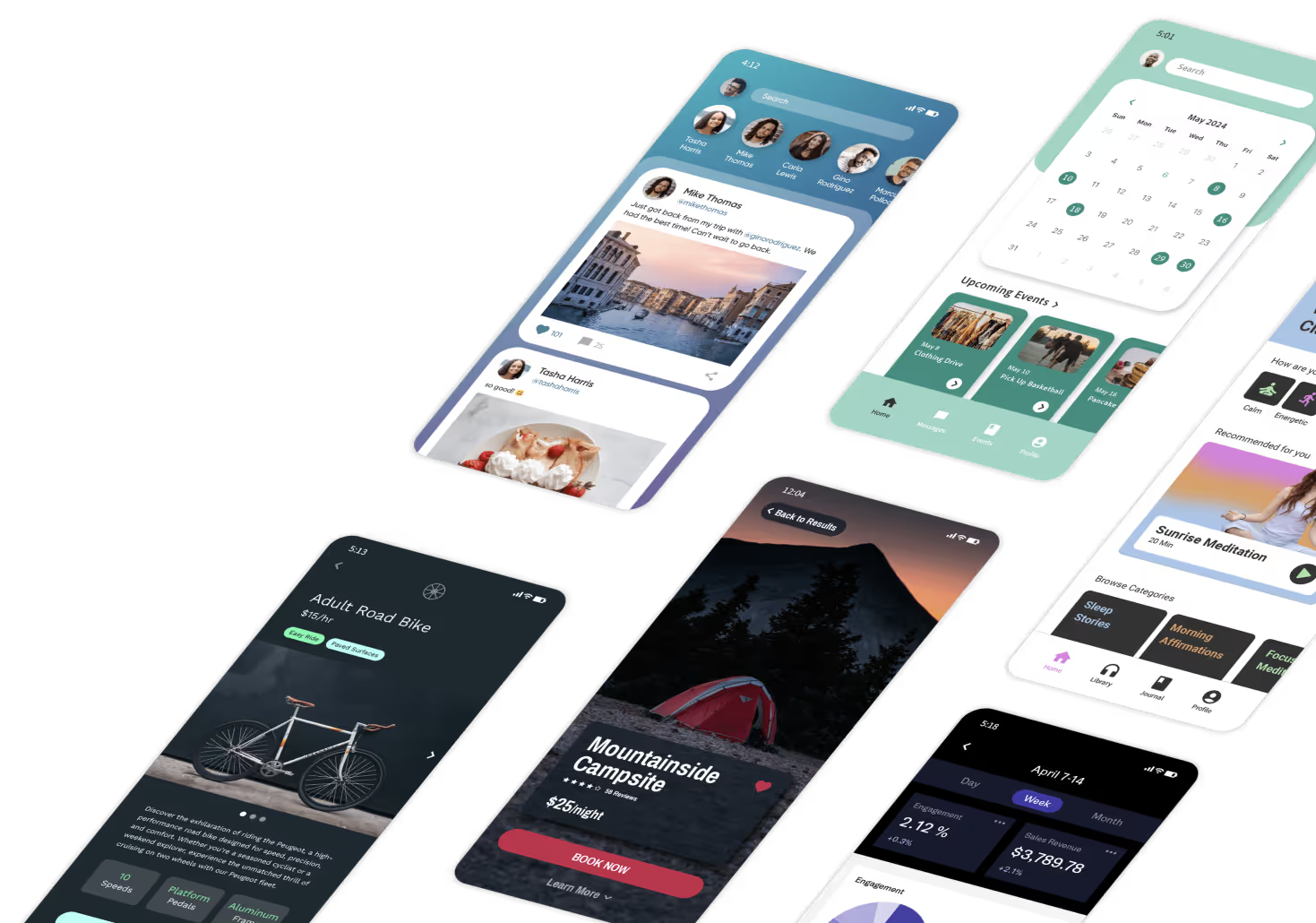
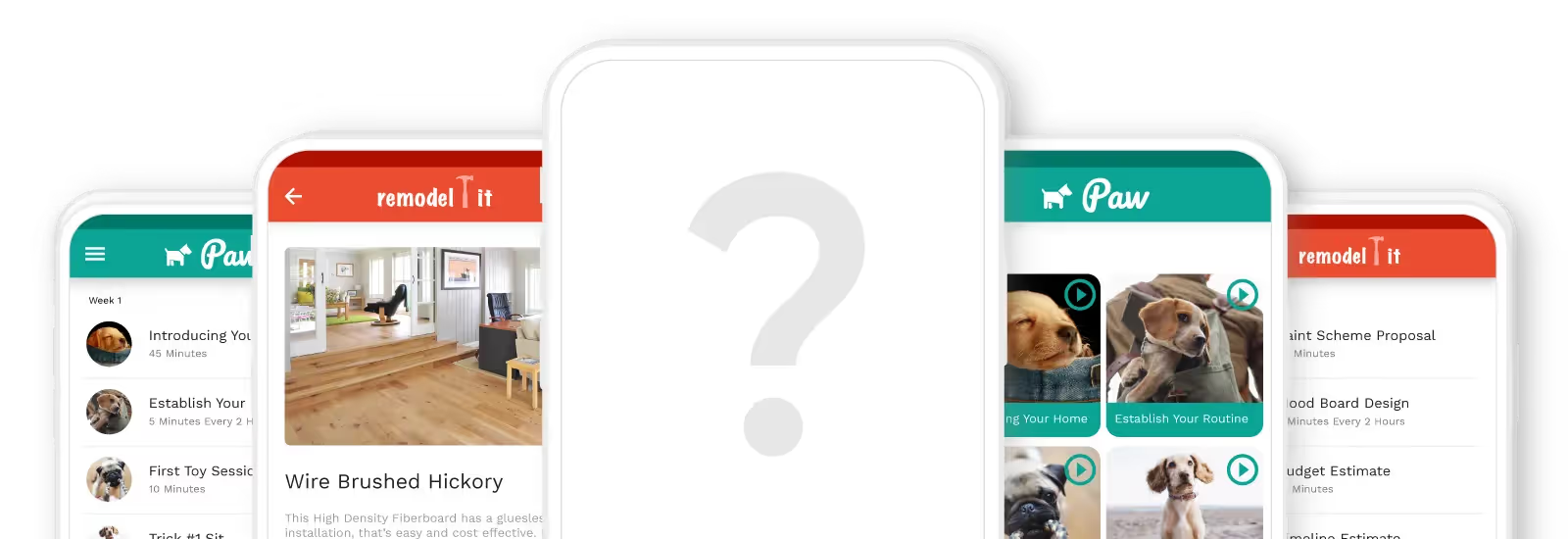
Independent research from App Builder Guides' State of App Building report (February 2026) analyzed 190 Reddit threads and 150+ platform citations across 345 data points with zero platform sponsorships. Adalo ranked first among visual builders for non-developers.

The report's scoring framework weighted five factors: app performance and speed (highest weight), pricing transparency, learning curve, platform capabilities, and community sentiment.
Why Choose an Andromo Alternative?
After signing up with Andromo, you can quickly connect your Shopify and WooCommerce accounts to transform your e-commerce shops into native mobile apps for the Apple App Store and Google Play Store. While beginners can create their own native mobile e-commerce app in just a few hours, many users find the overall app-building experience on Andromo limiting.
Here are the most common complaints from Andromo users:
Limited Design Freedom
Although you can build an app quickly, Andromo doesn't give you much freedom to design it to your liking. The design interface makes it difficult to resize images, change template elements, and lacks the capability to move objects to precise locations on your app screens. Andromo also has just a handful of fonts, severely limiting how your text will appear.
Solution: Select an app builder that provides genuine design freedom. Adalo, an AI-powered app builder, lets you drag and drop elements to exact positions and resize them precisely. Thunkable and Bravo Studio also offer solid customization options for those who need creative control over their apps.
Can't Build Web Apps
While having a native mobile app is valuable, you'll want to publish your app as a web app to reach a larger audience. This allows users to access your app by signing in through a browser. Unfortunately, Andromo doesn't let you publish web apps.
Solution: Use an app builder that supports multiple platforms from a single codebase. Adalo creates one app version that works across web, iOS, and Android—publish once and reach users everywhere. Bubble also offers web app capabilities, though its mobile solution uses a wrapper approach rather than true native compilation.
Small Ecosystem
Compared to other app builders, Andromo's ecosystem—its user community, tutorials, and third-party APIs—is severely limited. This makes it more difficult to master the platform, get expert feedback, or enhance your app with powerful integrations.
Solution: Choose an app builder with a thriving ecosystem. Adalo's community has created over 3 million apps, with resources like the Adalo App Academy offering 70+ courses. Bubble and Thunkable also provide extensive learning resources and active forums for troubleshooting.
The Top 5 Andromo Alternatives
- Adalo, the best overall Andromo alternative
- GoodBarber, the best Andromo alternative for e-commerce
- Bubble, the Andromo alternative with the largest ecosystem
- Thunkable, the easier Andromo alternative
- Bravo Studio, the best Andromo alternative for designers
#1 The Best Overall Andromo Alternative
Adalo

What is it?
Adalo is a no-code app builder for database-driven web apps and native iOS and Android apps—one version across all three platforms. AI-assisted building and streamlined publishing enable launch to the Apple App Store and Google Play in days rather than months. The platform provides the freedom and flexibility to create an app to your exact specifications.
Ada, Adalo's AI builder, lets you describe what you want and generates your app. Magic Start creates complete app foundations from a description. Magic Add adds features through natural language. X-Ray identifies performance issues before they affect users.
What does it do better than Andromo?
Featuring a super intuitive drag-and-drop interface that users describe as "easy as PowerPoint," Adalo gives you an enormous degree of design freedom. You can drag and drop your app's elements to the precise place on your screen and resize them to your needs. The canvas can display up to 400 screens at once, giving you a comprehensive view of your entire app architecture.
Adalo 3.0, launched in late 2025, introduced a completely overhauled backend infrastructure that makes apps 3-4x faster than before. The modular infrastructure scales with your app's needs, supporting apps with over 1 million monthly active users with no upper ceiling. Paid plans include no record limits on the database—unlimited storage without usage-based charges or bill shock.
Magic Start generates complete app foundations from simple descriptions. Tell it you need a booking app for a dog grooming business, and it creates your database structure, screens, and user flows automatically—what used to take days of planning happens in minutes. Magic Add lets you add features by describing what you want in natural language, while X-Ray identifies performance issues before they affect users.
If you get stuck or want to learn more, check out the Adalo App Academy with over 70 courses covering everything about the platform. When questions arise, ask an expert on the Adalo Forum.
Who is it best for?
Adalo is the best overall Andromo alternative because it lets freelancers, entrepreneurs, and small to medium businesses build virtually any app type. These can be apps for e-commerce, social media, CRM tools, or project management. With over 3 million apps created on the platform, the app-building possibilities are nearly unlimited.
Pricing
You can get started with Adalo for $36/month with unlimited usage and app store publishing. Unlike competitors that charge based on database records or usage metrics, Adalo's pricing is straightforward with no hidden costs.
Final Verdict
Adalo offers tremendous flexibility and functionality without sacrificing power, allowing you to build almost any type of app with AI assistance and publish to all major platforms from a single codebase.
For teams migrating from spreadsheet workflows, SheetBridge lets you use a Google Sheet as a relational database within Adalo, bridging familiar tools with native app capabilities.
#2 The Best Andromo Alternative For E-Commerce
GoodBarber

What is it?
GoodBarber builds web apps and native mobile apps geared specifically towards e-commerce businesses.
What does it do better than Andromo?
If you're looking for a better design experience than Andromo, GoodBarber delivers. Its templates are more aesthetically pleasing and easier to edit. You'll be able to customize all your product information for your online store quickly and with solid design control.
GoodBarber's built-in SEO tool helps get your web app in front of more people on Google. Optimize each of your products for search, enabling customers to easily discover your store.
Who is it best for?
For those looking to sell products or content with an e-commerce app, GoodBarber is a strong choice. It appeals to the same market as Andromo—those wanting to build an e-commerce app—but many consider it a significant upgrade in terms of design quality and functionality.
Pricing
GoodBarber offers a free trial that doesn't require credit card information. The Content Plan costs $30/month (billed monthly) for those selling content subscriptions. For product sales, the Standard Store Plan runs $40/month (billed monthly).
Final Verdict
GoodBarber is the Andromo alternative that offers a better overall experience for those specifically building e-commerce apps, though it lacks the broader app-building flexibility of platforms like Adalo.
#3 The Andromo Alternative With The Largest Ecosystem
Bubble
What is it?
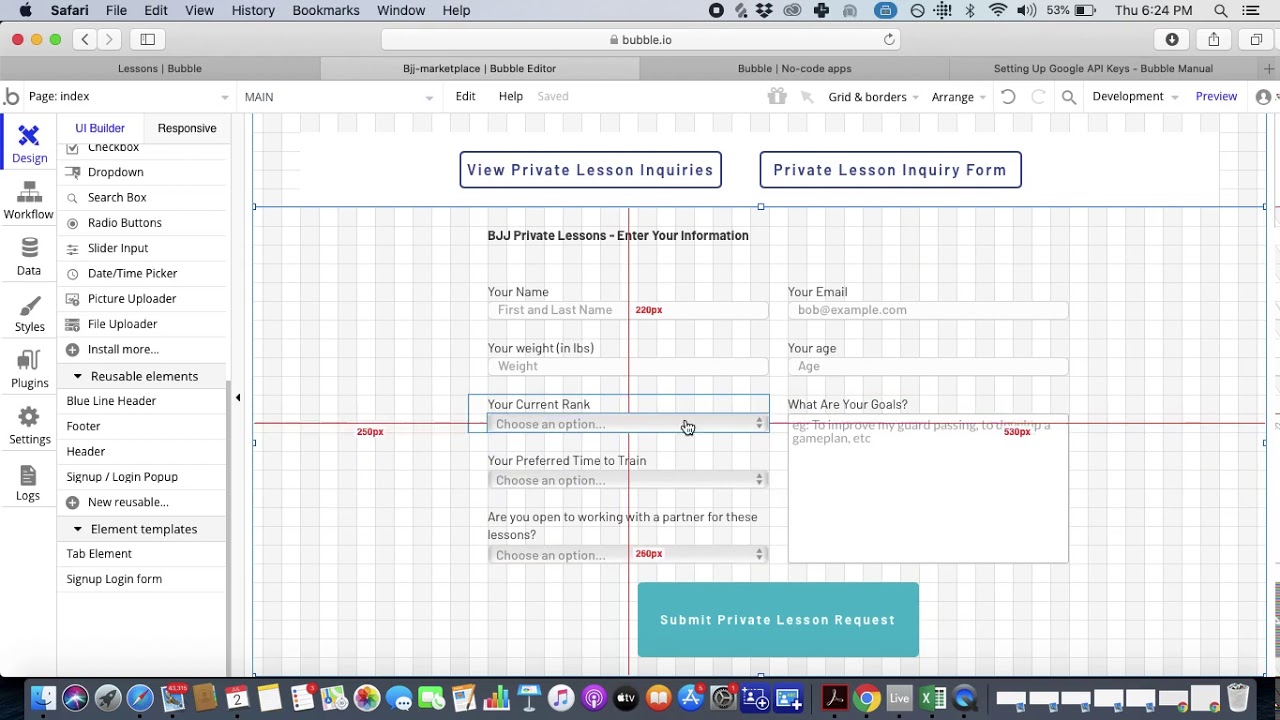
Bubble is a powerful web app builder. Since it's been around for over a decade, it has built one of the largest ecosystems in the app-building space.
What does it do better than Andromo?
While Bubble requires mastering a significant learning curve, it provides extensive tutorials, guides, and courses in its Bubble Academy. Bubble thoroughly explains how to use every part of its app-building interface.
Once you become proficient with Bubble's building interface, you can create highly customized web applications. You'll have design control, flexibility, and access to numerous APIs and integrations.
However, Bubble doesn't create true native mobile apps. Its mobile solution uses a wrapper approach for web apps, which can introduce performance challenges at scale. Unlike platforms that compile to native code, wrapper-based apps may experience slower load times and reduced responsiveness under heavy user loads. You can use Bubble's integration with Nativator for mobile publishing, but this adds complexity and cost.
Bubble's pricing structure also differs significantly from alternatives. Starting at $59/month for web and mobile wrapper capabilities, Bubble uses Workload Units that can make costs unpredictable. Record limits and usage-based charges mean your monthly bill can fluctuate based on app activity—something to consider for budget planning.
Who is it best for?
Those with time to learn the building interface and who primarily need web applications will find Bubble useful. The extensive customization often requires hiring experts to optimize performance, particularly for apps expecting high traffic. Claims of millions of MAU are typically achievable only with professional assistance.
Pricing
Bubble has a free version for learning. Publishing your first web app starts at $32/month (billed monthly). For complete functionalities including collaboration features, expect to pay $134/month (billed monthly). The web and mobile wrapper offering starts at $59/month with usage-based charges.
Final Verdict
Bubble offers a massive ecosystem and powerful customization for web apps, but the learning curve, wrapper-based mobile approach, and usage-based pricing make it better suited for teams with technical resources or budget for expert help.
#4 The Easier Andromo Alternative
Thunkable

What is it?
Thunkable is a no-code native app builder featuring an easy-to-use drag-and-drop interface.
What does it do better than Andromo?
Thunkable's building interface is easier to use and provides solid design freedom. Learning its basics is straightforward, so you can start building your app right away. Thunkable now offers an AI-draft feature for initial app builds, helping you get started faster.
Many people find Thunkable's ecosystem helpful. You can browse other people's apps in Thunkable's Public Gallery for inspiration. The forum is filled with active users happy to help navigate any issues.
Who is it best for?
Use Thunkable to create internal business tools for your CRM or project management team. It's accessible even for people without technical experience, though the feature set is more limited than comprehensive platforms.
Pricing
Thunkable has a free version, but publishing a Progressive Web App requires the $59/month plan with usage restrictions. The lowest paid tier starts at $15/month (billed monthly) and lets you publish 2 apps. For more apps, the mid-tier version costs $45/month (billed monthly). Responsive app capabilities require custom pricing beyond the advertised $189/month Advanced tier.
Final Verdict
Thunkable is an easier-to-use Andromo alternative with a quick learning curve and active community, though pricing can escalate quickly for advanced features.
#5 The Best Andromo Alternative For Designers
Bravo Studio

What is it?
Bravo Studio is an app builder specifically made for designers—it transforms Figma designs into unique and beautiful-looking native apps.
What does it do better than Andromo?
If you're a Figma designer wanting to build a native mobile app, Bravo Studio is made especially for you. Bravo lets you create highly unique apps directly from your Figma designs, giving you an exceptional level of design freedom.
Bravo provides crash courses and tutorials in its Bravo Academy to help you get started quickly. While you can troubleshoot issues on the Bravo forum, the team is quite receptive to questions and usually happy to provide advice or support via email.
Who is it best for?
Anyone with Figma experience who wants to make native mobile apps for the Apple App Store or Google Play Store will be right at home with Bravo. Non-designers will struggle with the platform since it assumes familiarity with Figma's design paradigm.
Pricing
Bravo has a free version, but you can start building your own app for $21/month (billed monthly). If you want to release your own branded app, you'll need Bravo's Advanced Version at $118/month (billed monthly).
Final Verdict
Bravo Studio is the best Andromo alternative for designers because it lets them create apps directly from their Figma designs, though it's not suitable for those without design tool experience.
Choosing the Right Andromo Alternative
Each platform serves different needs. For designers with Figma skills, Bravo Studio offers unmatched design-to-app workflows. For e-commerce specifically, GoodBarber provides focused tools. For web apps with maximum customization (and budget for expert help), Bubble's ecosystem is extensive.
For most users seeking a balance of power, ease of use, and true native mobile apps, Adalo's AI-assisted building, unlimited database storage on paid plans, and single-codebase publishing to web, iOS, and Android offers the most complete solution at a competitive price point.
FAQ
Why choose Adalo over other app building solutions?
Adalo is an AI-powered app builder that creates true native iOS and Android apps. Unlike web wrappers, it compiles to native code and publishes directly to both the Apple App Store and Google Play Store from a single codebase—the hardest part of launching an app handled automatically.
What's the fastest way to build and publish an app to the App Store?
Adalo's drag-and-drop interface combined with AI-assisted building through Magic Start and Magic Add lets you create apps in days rather than months. The platform handles the App Store submission process, removing the technical barriers that typically slow down app launches.
Which is more affordable, Adalo or Bubble?
Adalo starts at $36/month with unlimited usage and no record limits on paid plans. Bubble's comparable offering starts at $59/month with usage-based Workload Unit charges and record limits that can make costs unpredictable.
Which is better for mobile apps, Adalo or Bubble?
Adalo compiles to true native iOS and Android code, while Bubble uses a wrapper approach for mobile. Native apps typically perform better, especially under heavy user loads, and provide a more responsive user experience.
What are the main limitations of Andromo that alternatives address?
Andromo users commonly face limited design freedom, inability to build web apps, and a small ecosystem with fewer tutorials and community support. Alternatives like Adalo address these issues by offering greater customization, multi-platform publishing, and extensive learning resources.
Can I publish my app to both mobile app stores and the web?
Yes, Adalo creates one app version that works across web, iOS, and Android platforms. Publish once and reach users everywhere without building separate apps for each platform.
Is there learning support available for new app builders?
Adalo offers the Adalo App Academy with over 70 courses covering everything you need to know about building apps. The Adalo Forum provides a community of experts who can answer questions and help troubleshoot issues.
Which is easier for beginners, Adalo or Thunkable?
Both platforms are beginner-friendly with drag-and-drop interfaces. Adalo's interface is described as "easy as PowerPoint" and includes AI features like Magic Start that generate complete app foundations from descriptions, reducing the learning curve significantly.
Can I migrate from Bubble to Adalo?
While there's no automatic migration tool, Adalo's AI-assisted building makes recreating apps faster than traditional development. Magic Start can generate your app foundation from a description, and you can export/import data between platforms.
What types of apps can I build with Andromo alternatives?
With platforms like Adalo, you can build virtually any type of app including e-commerce stores, social media platforms, CRM tools, booking systems, and project management apps. Over 3 million apps have been created on Adalo alone.