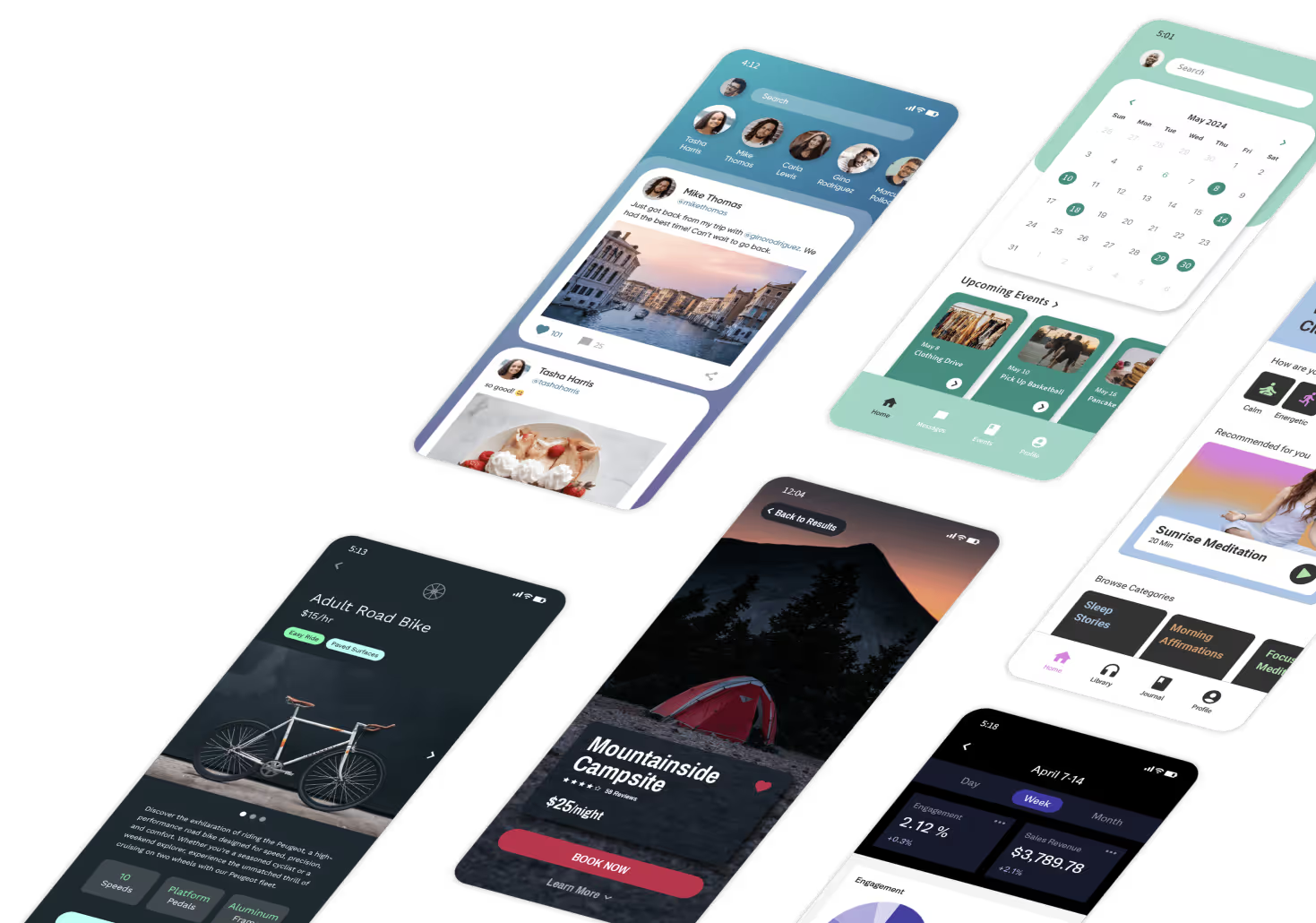
Choosing the right app building platform can determine whether your app reaches thousands of users or stalls before launch. If you're weighing Adalo against Softgen, understanding their fundamental differences will help you make the right call.
Adalo is a no-code app builder for database-driven web apps and native iOS and Android apps—one version across all three platforms, published to the Apple App Store and Google Play. Softgen, launched in 2026, is an AI-powered tool that generates web applications through natural language prompts, focusing exclusively on Next.js and React-based web apps without native mobile capabilities.
What matters most is app success: launching your MVP as fast as possible and reaching the biggest audience. That means deploying not just a web app, but native iOS and Android apps published to the app stores—unlocking massive built-in audiences and essential features like push notifications. This comparison examines how each platform performs against these critical benchmarks.
Choosing the right app building platform can determine whether your app reaches thousands of users or stalls before launch. If you're weighing Adalo against Softgen, understanding their fundamental differences will help you make the right call.
Adalo is a no-code app builder for database-driven web apps and native iOS and Android apps—one version across all three platforms. AI-assisted building and streamlined publishing enable launch to the Apple App Store and Google Play in days rather than months. Softgen, launched in 2026, is an AI-powered tool that generates web applications through natural language prompts, focusing exclusively on Next.js and React-based web apps without native mobile capabilities.
What matters most is app success: launching your MVP as fast as possible and reaching the biggest audience. That means deploying not just a web app, but native iOS and Android apps published to the app stores—unlocking massive built-in audiences and essential features like push notifications. This comparison examines how each platform performs against these critical benchmarks.
After extensive research comparing Adalo and Softgen, we've found that while both platforms offer unique capabilities, Adalo emerges as the superior choice for most app builders, particularly for those seeking to create native mobile applications with comprehensive features and established reliability. Adalo's agnostic builder lets you publish the same app to the web, native iOS, and native Android, all without writing a line of code or rebuilding. If your plan is mass distribution through the app stores' vast marketplaces, this platform offers significant advantages over many AI-focused web builders available today.
Independent research from App Builder Guides' State of App Building report (February 2026) analyzed 190 Reddit threads and 150+ platform citations across 345 data points with zero platform sponsorships. Adalo ranked first among visual builders for non-developers.

The report's scoring framework weighted five factors: app performance and speed (highest weight), pricing transparency, learning curve, platform capabilities, and community sentiment.
Platform Overview Reveals Two Distinct Approaches
Adalo, founded in 2018 and based in St. Louis, Missouri, has established itself as a mature platform with over 6 years of refinement. The platform recently underwent a major transformation with the Adalo 3.0 infrastructure overhaul in late 2025, delivering 3-4x faster performance and modular infrastructure that scales with app needs. With its drag-and-drop interface and "what you see is what you get" design philosophy, Adalo enables users to build native iOS, Android, and web applications without coding knowledge. AI-assisted building features like Magic Start and Magic Add streamline the creation process, while the AI features Builder promises full prompt-based app creation and editing in early 2026.
Softgen, launched in 2026 from Frankfurt, Germany, represents the new wave of AI-powered development tools. Recently acquired by Arising Ventures after achieving 500K ARR in just months, Softgen uses natural language prompts to generate full-stack web applications in approximately 20 minutes. However, its focus remains exclusively on web applications built with Next.js and React, lacking native mobile app capabilities.
The fundamental difference lies in their core approach: Adalo provides a visual builder with AI assistance for creating native mobile apps, while Softgen offers AI-generated web applications. This distinction becomes crucial when considering app store publishing requirements and mobile-first user experiences.
Current Pricing Plans Show Distinct Strategies
Adalo's pricing structure (build for free, pay to publish) offers flexibility for different project scales with no usage-based charges:
- Free Plan: $0/month - Build and test unlimited apps with unlimited app actions (apps hibernate after 60 days of inactivity)
- Starter Plan: Starting at $36/month - 1 published app, unlimited app actions, custom domain, web publishing, unlimited database records
- Professional Plan: Starting around $65/month - Full API integration support, external collections, enhanced functionality
- Team Plan: Around $200/month - Multiple apps, team collaboration, designed for agencies
- Business Plan: Around $250/month - 10 published apps, unlimited editors
All paid plans include unlimited database records and unlimited app actions—no bill shock from unexpected usage charges.
Softgen's token-based pricing creates different cost considerations:
- Free Plan: $0/month - 100K tokens, 1 project, basic features (no Supabase)
- Entry Plan: $25/month - 2.5M tokens, team collaboration, full deployment
- Boost Plan: $50/month - 6M tokens, priority support
- Fly Plan: $100/month - 14M tokens, VIP events
- Pro Enterprise: $200/month - 30M tokens
- Elite Enterprise: $500/month - 85M tokens
While Softgen appears cheaper at entry level, the token-based system can create unpredictable costs as usage scales. Adalo's unlimited usage model eliminates these concerns entirely, providing predictable costs for growing applications. For context, Bubble's comparable offering starts at $59/month with usage-based Workload Units and record limits, while Adalo's native mobile builder starts at $36/month with no such restrictions.
Ease of Use Comparison Reveals Different Learning Curves
Adalo consistently receives praise for its intuitive interface, often compared to PowerPoint or Canva in terms of accessibility. The visual drag-and-drop builder allows users to see exactly what they're creating in real-time. With comprehensive templates and pre-built components, beginners can start building functional apps within hours. The platform includes Adalo App Academy, offering structured learning paths and extensive documentation.
Magic Start generates complete app foundations from a simple description. Tell it you need a booking app for a dog grooming business, and it creates your database structure, screens, and user flows automatically—what used to take days of planning happens in minutes. Magic Add lets you add features by describing what you want in natural language.
Softgen takes a radically different approach with AI-powered development through natural language prompts. Users describe their desired application, and the AI generates complete code within 20 minutes. While this sounds simpler, it requires users to articulate requirements clearly and may need manual code adjustments for specific customizations. The learning curve involves understanding how to communicate effectively with the AI rather than learning traditional app-building concepts.
For non-technical users seeking predictable results and full control over design, Adalo's visual approach proves more reliable. Softgen's AI method, while faster initially, can produce inconsistent results requiring technical knowledge to refine.
Design Capabilities Showcase Platform Maturity Differences
Adalo's design features reflect years of refinement:
- Freeform drag-and-drop canvas with pixel-perfect positioning
- Custom fonts, color palettes, and branding integration
- Responsive design controls for multiple screen sizes
- Native mobile components optimized for iOS and Android
- Over 35 professional templates covering various app categories
- Component marketplace with 25+ premium components
- Custom component development capabilities
- Canvas displays up to 400 screens simultaneously for comprehensive app overview
Softgen's design approach relies on AI-generated layouts:
- Pre-built UI components using shadcn/ui library
- Tailwind CSS styling system
- Automated responsive design
- Dark mode support
- Limited customization beyond AI output
- No visual design interface
- Modifications require prompt iterations or code editing
The design flexibility clearly favors Adalo, offering designers complete control over aesthetics and user experience. Softgen's AI-generated designs, while functional, lack the customization depth required for branded applications.
Technical Features Reveal Platform Strengths and Limitations
Adalo's technical capabilities support comprehensive app development:
- Built-in relational database with no record limits on paid plans
- External database support (Airtable, Xano, Google Sheets via Sheetbridge)
- Full REST API integration (Professional plan+)
- User authentication with social login options
- Push notifications for engagement
- Geolocation features and mapping
- Custom actions and workflows
- Zapier integration connecting 5,000+ services
- X-Ray identifies performance issues before they affect users
Softgen's technical stack focuses on modern web technologies:
- Next.js and React framework
- Firebase or Supabase for backend
- Automated API endpoint creation
- Stripe and LemonSqueezy payment integration
- GitHub version control
- Vercel deployment
- Limited to web technologies only
While Softgen offers modern web development tools, Adalo provides superior flexibility for mobile-specific features like push notifications, device sensors, and native functionality. The ability to connect external databases and APIs makes Adalo more suitable for complex business applications. Sheetbridge enables users to turn a Google Sheet into an actual database for the easiest control without database-related learning curves.
Publishing and Deployment Options Highlight Key Differences
Adalo's publishing capabilities excel for mobile applications:
- Direct publishing to Apple App Store and Google Play Store
- Web publishing with custom domains
- Progressive Web App (PWA) support
- TestFlight integration for iOS beta testing
- Automated build generation for app stores
- Real-time updates for web versions
- Unlimited app updates once published—no republishing limits
- One codebase updates web, iOS, and Android simultaneously
Softgen's deployment limited to web platforms:
- One-click Vercel deployment
- Custom domain connection
- Compatible with Next.js hosting services
- No native mobile app generation
- No app store publishing capabilities
- Web-only distribution
For businesses requiring mobile app presence, Adalo's native app store publishing represents a decisive advantage. Softgen users must rely on web apps accessed through mobile browsers, limiting functionality and user experience. Unlike platforms that use web wrappers for mobile (which can introduce performance challenges at scale), Adalo compiles true native apps.
Performance and Scalability Considerations Affect Long-Term Viability
Adalo's performance transformed with the 3.0 infrastructure overhaul in late 2025:
- 3-4x faster performance compared to previous versions
- Modular infrastructure that scales with app needs
- Global hosting options (US, Ireland, Japan)
- Improved database query optimization
- No upper limit on database records—scales beyond 1 million MAU with proper data relationship setups
- Purpose-built architecture outperforms app wrappers at scale
Note: Most third-party platform ratings and comparisons predate the Adalo 3.0 infrastructure overhaul and don't reflect current performance capabilities.
Softgen's performance benefits from modern architecture:
- Built on optimized Next.js framework
- Vercel's edge network deployment
- Real-time data synchronization
- Limited track record for large-scale applications
- Token limits may restrict complex operations
Adalo's modular infrastructure scales to serve apps with millions of MAU, with no upper ceiling. Unlike app wrappers that hit speed constraints under load, Adalo's purpose-built architecture maintains performance at scale. Over 3 million apps have been created on the platform, processing millions of data requests daily.
Customer Support Comparison Reveals Significant Disparities
Adalo's support structure includes multiple channels:
- Email and chat support for paid plans
- Comprehensive documentation at help.adalo.com
- Active community forum
- Network of certified Adalo Experts
- Renewed focus on customer experience under new leadership
Historical support ratings on third-party sites predate recent leadership changes and platform improvements.
Softgen's support offerings remain basic:
- Priority support on Boost plan ($50/month)
- Documentation at academy.softgen.ai
- Limited support channels
- Small team may affect response times
- VIP events for higher-tier customers
Adalo's larger ecosystem provides more community resources and third-party expertise. The platform's maturity means more tutorials, forum discussions, and expert availability compared to newer alternatives.
Target Audience and Use Cases Define Platform Suitability
Adalo serves diverse user groups:
- Entrepreneurs building MVPs and validating ideas
- Small businesses creating customer-facing apps
- Agencies developing client applications
- Content creators engaging audiences
- Educational institutions building learning apps
- Non-technical founders avoiding development costs
Softgen targets specific segments:
- Developers seeking rapid prototyping
- Startups needing quick web applications
- Technical users comfortable with code adjustments
- Projects requiring fast iteration
- Web-first businesses
Adalo's broader appeal to non-technical users and mobile-first projects makes it suitable for more use cases. Softgen's AI approach works best for users comfortable with web-only limitations and who have technical skills to refine AI-generated output.
Pros and Cons Analysis Reveals Clear Winner
Adalo Advantages
- Native mobile app development with app store publishing
- Mature platform with 6+ years of refinement and 3.0 infrastructure overhaul
- Visual design control for precise customization
- AI-assisted building with Magic Start and Magic Add
- Established ecosystem with templates and components
- External database support for complex applications
- Cross-platform deployment to iOS, Android, and web from single codebase
- No data caps on paid plans—unrestricted database storage
- No usage-based charges—predictable monthly costs
- 3-4x faster performance after 3.0 overhaul
Adalo Disadvantages
- Higher pricing for advanced features compared to web-only tools
- Learning curve for complex functionality
- Historical support challenges (being addressed under new leadership)
Softgen Advantages
- Extremely fast development (20 minutes)
- AI-powered automation
- Modern tech stack
- Lower entry pricing
- Code ownership
Softgen Disadvantages
- No native mobile apps—critical limitation for app store distribution
- Limited customization beyond AI output
- New platform with unproven reliability
- Web-only deployment restricts functionality
- Token-based pricing creates cost uncertainty
- Requires technical knowledge for adjustments
Real User Reviews Confirm Adalo's Market Position
Analysis of user feedback reveals important insights. Adalo maintains strong positions on app development use cases. Users praise its ease of use, with reviewers noting it's "shockingly easy to use" for mobile app creation—often described as "easy as PowerPoint." The platform's 35+ templates have been used across millions of apps, demonstrating real-world adoption.
Softgen shows promise with positive ratings on Product Hunt, with users reporting creating MVPs in 2 days and praising its speed over competitors like Lovable and Bolt.new. However, the limited review volume and platform newness raise reliability questions for production applications.
The review disparity—Adalo's millions of users versus Softgen's early adopter base—reinforces Adalo's position as the established, trusted platform for serious app development. While Softgen excites early adopters, it lacks the track record businesses require for mission-critical applications.
Final Verdict Positions Adalo as Superior Choice
After comprehensive analysis, Adalo emerges as the clear winner for most app development projects. Its native mobile app capabilities, established reliability, and comprehensive feature set outweigh its higher price point. The ability to publish directly to app stores represents an insurmountable advantage over Softgen's web-only approach.
Choose Adalo when:
- Building native mobile applications
- Requiring app store presence
- Needing proven reliability at scale
- Wanting visual design control with AI assistance
- Creating complex business applications
- Serving non-technical teams
Consider Softgen only when:
- Building simple web-only applications
- Requiring extreme development speed
- Comfortable with AI limitations
- Having technical skills for refinements
- Accepting platform risks
For businesses serious about mobile app development, Adalo's maturity, features, and ecosystem make it the professional choice. While Softgen offers intriguing AI capabilities for web apps, its limitations cannot compete with Adalo's comprehensive platform for native mobile deployment.
Additional Resources
- Get Started: Visit Adalo.com to begin building your app
- Learn More: Explore Adalo App Academy for comprehensive tutorials
- Get Help: Access Adalo's help documentation and community forum
- Find Experts: Browse certified Adalo Experts for professional development services
- Extend Functionality: Discover components in the Adalo Marketplace
- Check Pricing: Review current Adalo pricing plans
FAQ
Why choose Adalo over other app building solutions?
Adalo is an AI-powered app builder that creates true native iOS and Android apps. Unlike web wrappers, it compiles to native code and publishes directly to both the Apple App Store and Google Play Store from a single codebase—the hardest part of launching an app handled automatically.
What's the fastest way to build and publish an app to the App Store?
Adalo's drag-and-drop interface combined with AI-assisted building features like Magic Start lets you go from idea to published app in days rather than months. The platform handles the complex App Store submission process, so you can focus on your app's features and user experience.
Which is more affordable, Adalo or Softgen?
While Softgen's entry plan starts at $25/month, its token-based pricing can create unpredictable costs as usage scales. Adalo starts at $36/month with unlimited app actions and no record limits—providing predictable costs without bill shock. For native mobile apps with app store publishing, Adalo offers better value.
Which is faster to build with, Adalo or Softgen?
Softgen can generate web apps in approximately 20 minutes through AI prompts. Adalo's Magic Start generates complete app foundations quickly, and the visual builder allows for precise customization. For web-only projects, Softgen may be faster initially; for native mobile apps, Adalo is the only option.
Which is easier for beginners, Adalo or Softgen?
Adalo's visual drag-and-drop interface is often compared to PowerPoint or Canva, making it accessible for complete beginners. Softgen requires users to articulate requirements clearly to AI and may need code adjustments. For non-technical users, Adalo provides more predictable results.
Is Adalo better than Softgen for mobile apps?
Yes. Adalo creates true native iOS and Android apps that publish directly to app stores. Softgen only creates web applications—it has no native mobile capabilities. For any project requiring app store presence, Adalo is the clear choice.
Can I migrate from Softgen to Adalo?
Since Softgen generates code-based web apps and Adalo uses a visual builder for native apps, direct migration isn't possible. However, you can recreate your app's functionality in Adalo using Magic Start to generate the foundation and then customize from there.
Does Adalo have database limits?
No. All paid Adalo plans include unlimited database records with no caps. With proper data relationship setups, Adalo apps can scale beyond 1 million monthly active users. This contrasts with platforms like Bubble that impose record limits and usage-based charges.
Can I build one app that works on iOS, Android, and web?
Yes. Adalo's agnostic builder lets you publish the same app to web, native iOS, and native Android—all from a single codebase without rebuilding. Updates to your app automatically deploy across all platforms.
What AI features does Adalo offer?
Adalo includes Magic Start (generates complete app foundations from descriptions), Magic Add (adds features from natural language requests), and X-Ray (identifies performance issues). A full AI Builder for prompt-based app creation and editing is coming in early 2026.