
How Adalo Helps Purpose-Driven Organizations Build Apps
Adalo is a no-code app builder for database-driven web apps and native iOS and Android apps—one version across all three platforms, published to the Apple App Store and Google Play. This makes it the perfect tool for organizations that have discovered their true purpose and want to extend their mission through technology that connects with their community.
When your organization's purpose is clear, you need tools that let you act on it quickly—without getting bogged down in technical complexity. With Adalo, you can build apps that reflect your core values, engage your audience through push notifications, and distribute directly to app stores where your community already spends their time. Let's explore how to uncover your organization's purpose so you can bring it to life.
Most organizations operate with mission statements that boil down to "become the market leader and maximize shareholder value." This profit-focused thinking leaves companies vulnerable to disruption and stifles the innovative ideas that could set them apart. The solution isn't a better mission statement—it's discovering your organization's true purpose.
Adalo, an AI-powered app builder, helps purpose-driven organizations bring their vision to life through custom apps. Once you've uncovered that guiding purpose, you can create native iOS and Android apps that reflect your core values—without a technical background or expensive development team. One build publishes to web, the Apple App Store, and Google Play Store, so you can focus on connecting with your community rather than wrestling with multiple codebases.
Let's explore how to uncover the purpose that will drive your organization forward—and how to translate that purpose into technology that serves your mission.
Why Purpose Matters More Than Mission
We prefer to avoid the term mission altogether. While this might seem overly focused on semantics, there's a meaningful difference between a true purpose and a mission statement. Your purpose is the guiding force behind every decision your organization makes. It's the ideal you're striving for to make the world a better place—the reason the organization was founded in the first place.
Mission, on the other hand, is more goal-focused. If you stripped away all the other positive factors associated with being in a group—safety, camaraderie, money—you'd be left with the only reason your members still connect with your organization: your purpose.
This distinction matters because purpose-driven organizations consistently outperform their profit-focused counterparts in attracting talent, fostering innovation, and building lasting community connections. When your purpose is clear, everything else falls into place—including how you engage your audience through technology.
With Great Purpose Comes Great Creativity
Think back to recess days when Johnny, the 6-foot sixth-grade basketball prodigy, got picked first every time. Pure talent gives you a better chance at success, which is why recruiting matters so much. Here's the good news: if you have a purpose, you'll naturally recruit better talent.
When your purpose centers on making people's lives better, more people want to work for you. When more people want to work for you, you get more opportunities to land truly innovative thinkers. This isn't just feel-good theory. Dan Keeler and Andrea D. McCombs found compelling evidence:
- "People prefer to do business with and work for socially conscious companies."
- "The most talented and qualified applicants are increasingly considering a company's ethics and community support when selecting their employer."
- "Employee morale is three times higher in firms that are actively involved in their community than their less-involved counterparts."
- "When employees' work environments match their personal values, they are more productive."
Purpose Drives Deeper Engagement
Your members won't just be more naturally talented—they'll actually work harder when they buy into the purpose. Jackie Barretta, in her book Primal Teams, illustrates this beautifully: "Everyone possesses a life scheme that gives them a sense of order and meaning in their life, much like a story... Individuals feel most inspired by a... purpose that fits snugly into their life scheme."
The more you connect with an organization's purpose, the more inspired you become to continually think about "work." We put "work" in quotes because at this point, it really isn't work anymore—it's part of your life. It's what you're passionate about. And the more you think about a problem, the more you engage in lensing, the more chances you have to discover that all-important insight leading to an innovative solution.
The Science of Purpose-Driven Creativity
A great purpose attracts naturally talented people and helps them think more often about problems at hand—but it doesn't stop there. Purpose literally makes people think more creatively, and science backs this up.
In Primal Teams, Barretta also found that "When a stimulus arouses our seeking system, it activates our frontal neocortex, prompting us to work out innovative strategies and solutions. Logic doesn't make us do that. Emotions do. A team that embarks on an exciting new journey not only feels strongly motivated to succeed but also works smarter."
Psychologist Teresa Amabile found a connection between creation and motivation through a revealing study. She took two groups and told them to make collages. One group was told they would be judged; the other was told they wouldn't be. At the end, both groups were judged by a panel of creative experts. The first group—expecting evaluation—produced significantly less creative collages.
She continued demonstrating this by examining professional work where artists were commissioned versus pieces created from internal motivations. Again, externally motivated people were less creative.
At this point, this whole "purpose" thing becomes a triple advantage: you've got talented people who are not only thinking longer and harder about problems but are actually thinking more creatively as well.
How to Identify Your Organization's Purpose
Hopefully you've jumped on the purpose bandwagon, realizing how beneficial it is for creating a place for innovation. If so, you're probably either feeling good about your team's purpose or your head's spinning about how to apply this to your situation.
If you're just starting an organization, you've got a world of possibilities ahead—but less experience to draw upon for defining your purpose. If your organization has been around the block, you have plenty to work with (maybe too much). Established organizations face the challenge that some members may resist a newly defined purpose. This is alright; they need to move on if their passion doesn't align with the organization's direction.
Here's the process, adapted from Gaston Legorburu and Darren McColl's Storyscaping:
Step 1: Uncover Your Origins
Start at the very beginning (it's a very good place to start). Trace a path from your humble origins to today, focusing on everyone's favorite moments in between. This keeps your purpose authentic and gives you clues about how you've been striving, implicitly, toward a purpose the entire time.
Ask questions like: What problem originally sparked the organization's creation? What early wins felt most meaningful? Which stories do long-time members tell most often?
Step 2: Determine Your Impact
What industry are you in? What types of people benefit from what you're trying to do? How are they benefiting? What would happen to those people if your organization suddenly ceased to exist?
These questions force you to think beyond internal metrics and consider your real-world effect on the communities you serve.
Step 3: Write It Down
Once you've figured out your origins and the impact you want to have, it's time to distill your purpose into a clear sentence or two. This part of the process must be a group effort.
When you're ready to extrapolate a purpose from your origins and impact, continue asking why. Getting to the root reasons behind what your team wants to strive toward allows you to be as specific as possible about your purpose while still creating an ideal that will guide your organization for years to come.
Step 4: Tell the World
The final step is about making sure everyone is on the same page. This might seem easy, especially for a startup, but it's probably the most difficult step.
As mentioned earlier, even if you include everyone, some members may disagree with your purpose. Realistically, unanimous agreement might be impossible, but the more people who disagree, the less power your purpose has. As you continue pushing the importance of your purpose, some members might become disconnected and leave. While difficult to swallow, this is best for your organization.
The other reason this step is challenging is the need to continually communicate your purpose. You need to build in mechanisms that keep pushing this purpose (and no, writing it on the wall doesn't count). You need ways to continue telling everyone stories from your organization's history that demonstrate your purpose in action.
Bringing Your Purpose to Life Through Technology
Finding your organization's purpose is the first step on your innovation journey. Without it, your organization, your people, your work, and your process have no direction. With a purpose, you can start down the path toward making the world a better place.
But purpose alone isn't enough—you need tools to translate that purpose into action. This is where technology becomes essential for purpose-driven organizations.
Why Custom Apps Matter for Purpose-Driven Organizations
Once your purpose is clear, you need ways to connect with your community that reflect your core values. Generic off-the-shelf solutions often force you to compromise on the experience you want to create. A custom app lets you design every interaction around your purpose.
Ada, Adalo's AI builder, lets you describe what you want and generates your app. Magic Start creates complete app foundations from a description, while Magic Add adds features through natural language.
Adalo's AI-assisted platform makes this accessible without technical expertise. Magic Start generates complete app foundations from a simple description—tell it you need a community engagement app for your nonprofit, and it creates your database structure, screens, and user flows automatically. What used to take days of planning happens in minutes.
Over 3 million apps have been created on Adalo, with the visual builder described as "easy as PowerPoint." For organizations focused on their mission rather than technical details, this accessibility matters.
Keeping Your Community Engaged
With features like push notifications, you can keep your audience aligned with your vision and engaged with your purpose. Whether you're sharing stories that demonstrate your purpose in action, announcing community events, or celebrating member achievements, direct communication through your own app creates a stronger connection than social media algorithms allow.
The platform's modular infrastructure scales to serve apps with millions of monthly active users, with no upper ceiling. Unlike app wrappers that hit performance constraints under load, Adalo's purpose-built architecture maintains speed at scale. Paid plans include no record limits on the database—your community can grow without hitting arbitrary caps.
From Purpose to Published App
One of the biggest barriers for purpose-driven organizations is the complexity of getting an app into people's hands. Adalo handles the App Store submission process, so you can focus on your app's features and user experience instead of wrestling with certificates, provisioning profiles, and store guidelines.
A single codebase publishes to web, iOS App Store, and Google Play Store. This means updates to your app—new features that better serve your purpose, improvements based on community feedback—reach all your users simultaneously without managing separate development tracks.
For organizations where every dollar and hour matters, this efficiency translates directly into more resources for your actual mission.
Key Takeaways
- Purpose attracts talent and drives creativity—research shows employee morale is 3x higher in purpose-driven organizations, and internal motivation produces more creative work than external pressure.
- Define purpose through origins and impact—trace your history, identify who benefits from your work, distill it into a clear statement, and communicate it continuously.
- Technology should serve your purpose—custom apps let you design every interaction around your values, and AI-assisted platforms make this accessible without technical expertise.
FAQ
Why choose Adalo over other app building solutions?
Adalo is an AI-powered app builder that creates true native iOS and Android apps. Unlike web wrappers, it compiles to native code and publishes directly to both the Apple App Store and Google Play Store from a single codebase. Paid plans include unlimited database records and no usage-based charges, so your costs stay predictable as your community grows.
What's the fastest way to build and publish an app to the App Store?
Adalo's drag-and-drop interface and AI-assisted building let you go from idea to published app in days rather than months. Magic Start generates complete app foundations from descriptions, and the platform handles the complex App Store submission process—certificates, provisioning profiles, and store guidelines—so you can focus on your app's features.
Can I easily build a purpose-driven app for my organization?
Yes. Once you've defined your organization's true purpose, Adalo lets you bring it to life through a custom app that reflects your core values and mission—without needing a technical background or expensive development team. The visual builder has been described as "easy as PowerPoint."
What's the difference between an organization's purpose and its mission statement?
A purpose is the guiding force behind every decision your organization makes—it's the ideal you're striving for to make the world a better place and the reason the organization was founded. A mission statement tends to be more goal-focused and often centers on market leadership or shareholder value, which can limit innovation and creativity.
How does having a clear organizational purpose help with recruiting talent?
When your organization has a purpose centered around making people's lives better, more talented and qualified applicants want to work for you. Research shows people prefer to work for socially conscious companies, and employee morale is three times higher in firms actively involved in their community.
What are the steps to identify my organization's purpose?
The process involves four steps: First, uncover your origins by tracing your organization's history and favorite moments. Second, determine your impact by identifying who benefits from your work and how. Third, write down your purpose as a clear sentence through a collaborative group effort. Finally, tell the world by continually communicating your purpose through stories and built-in mechanisms.
How much does it cost to build a purpose-driven organization app?
Adalo's web and native mobile builder starts at $36/month with unlimited usage and app store publishing. Unlike competitors that charge based on database records or usage, Adalo's paid plans have no record limits and no usage-based charges, making costs predictable as your organization grows.
Can I use push notifications to keep my community engaged with my organization's purpose?
Yes. Adalo supports push notifications to keep your audience engaged and aligned with your organization's vision. This helps you maintain consistent communication about your purpose and strengthens the connection between your community and your core values.
Do I need coding experience to build an app for my organization?
No coding experience is required. Adalo's visual builder uses drag-and-drop components, and Magic Start can generate complete app foundations from simple descriptions. Over 3 million apps have been created on the platform by users without technical backgrounds.
Can my app scale as my organization's community grows?
Yes. Adalo's modular infrastructure scales to serve apps with millions of monthly active users, with no upper ceiling. Unlike app wrappers that hit performance constraints under load, Adalo's purpose-built architecture maintains speed at scale, and paid plans include unlimited database records.

Build your app fast with one of our pre-made app templates
Begin Building with no codeRelated Content

5 Steps to Finding Your Creative Purpose
When we’re passionate about something, we tend to have innovative superpowers. This begs the question: how can we harness this power?

Disruption Is the Wrong Way to Think about Innovation
Organizations formed around a purpose don’t get disrupted and they don’t “disrupt themselves.” They evolve themselves.
No-Code App Development for Beginners: Your First App in 30 Days
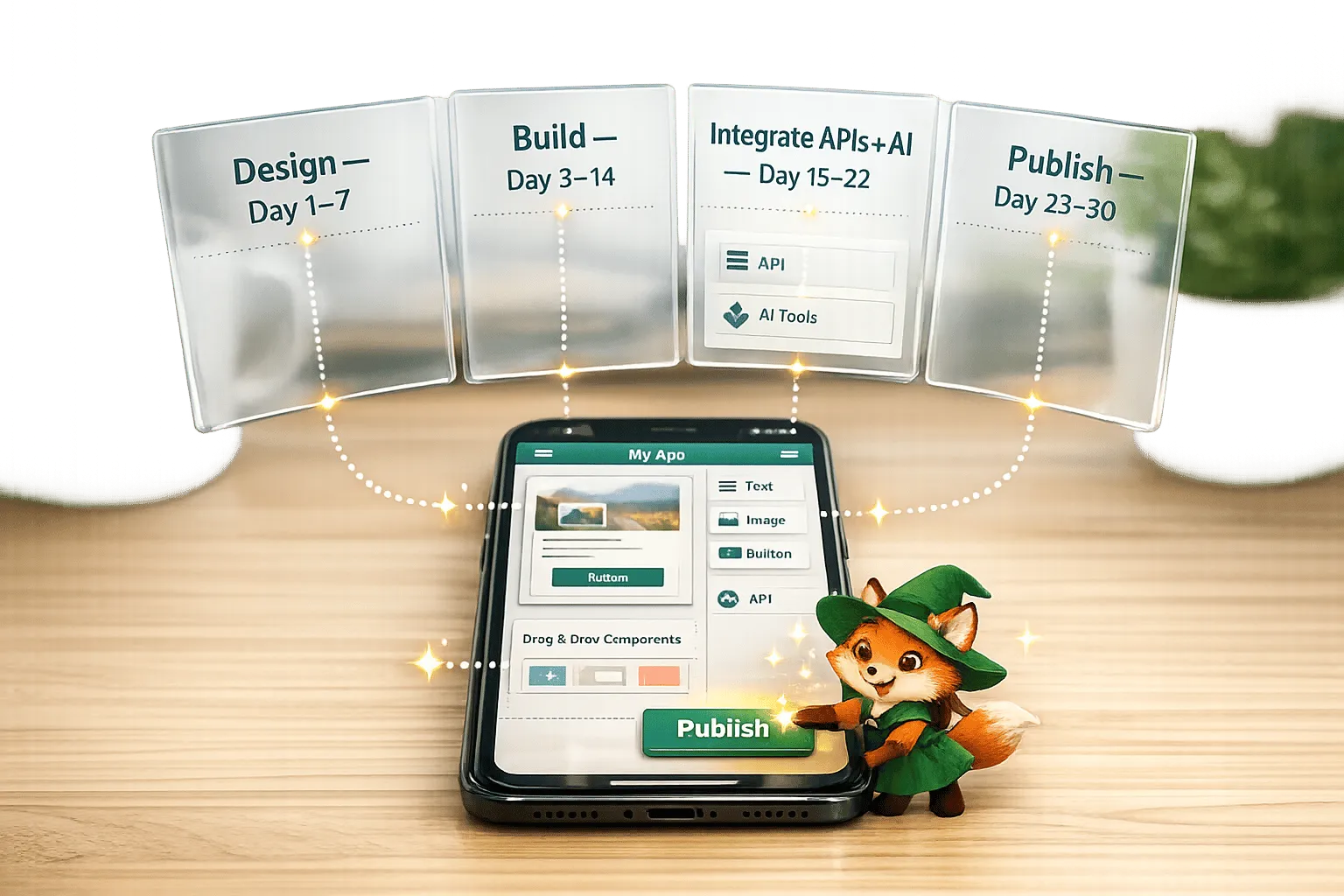
Step-by-step 30-day plan to design, build, and publish a native iOS/Android app with no-code tools, using drag-and-drop editors, AI, and ext

5 Steps to Add GraphQL Endpoints in Adalo
Step-by-step guide to connect GraphQL endpoints to Adalo using External Collections—prepare endpoints, set headers, define queries/mutations