
Before arriving at SXSW, my colleague Ben and I had heard rumors about a "real" Westworld park. As fans of the show, to say we were excited would be an understatement—we were freaking out. If you're a fan, you're probably about to experience some serious FOMO. But if you don't know about the show, allow me a paragraph to explain what Westworld is and why this mattered so much.
Westworld is a sci-fi western thriller TV series. In the show, characters visit an expensive adult theme park where they can live out their wildest dreams. The park is straight out of the wild west, except all the cowboys and townspeople are robots—so realistic you can't tell they're not human. They also can't hurt you. This means visitors can have gunfights with robots, go on secret quests throughout the park (which is really what the plot is about), and experience adventures impossible anywhere else. Now you understand why people were so excited to visit a real one.
Interestingly, that same spirit of innovation that made the Westworld activation so memorable is driving a revolution in how experiences like this are created and managed. Platforms like Adalo, a no-code app builder for database-driven web apps and native iOS and Android apps—one version across all three platforms, published to the Apple App Store and Google Play, are enabling event organizers and marketers to build custom apps for ticketing, scavenger hunts, and interactive experiences without needing a development team.
The Hunt for Tickets
HBO had announced that the three-day event would be extremely limited, which immediately created a buzz at the conference. On the first day, we tried to get tickets online, but they were sold out in literally 2 seconds. That afternoon we figured we'd check out the line to see if there was any chance we could wait it out.
After standing in line for about an hour, we realized that the roughly 200-person line wasn't moving. They were only giving away spots for people with tickets who didn't show up. Finding that out was a major buzzkill. Let's be real—who wasn't going to show up for this? At that point, all hope seemed lost.
As we were debating what to do and bored stuck in an immovable line, we found ourselves on Twitter, naturally. It was there we found a cryptic tweet from Lyft about Westworld. That tweet had a link to a promotional video with a final, split-second message that just said "Black Hat." So we took that code and entered it into the Lyft app.
After navigating back to the type of car we wanted to request, there was now an option to pick a train. We were definitely onto something. We selected the train but nothing happened—so back to Twitter. At this point, there were just a few other people asking what this was, but Lyft wasn't responding. Everyone just seemed to think it was going to be a free ride. Not quite sure what was going to happen, we put in the address to take us back to the convention center and the "train" said it was on its way.
The Rockstar Moment
About 15 minutes later, one of the most rockstar moments of my life happened. As we stood there in the back half of a 200-person line—all desperately wanting to go to Westworld—a brand new black Mercedes decked out in Westworld swag with a logo and the words "park shuttle" on the side pulled up.
We scurried over to the car, calling over the two other people we had just befriended in line, and all got in. As I looked back to the crowd, their faces were a combination of confusion, wonder, shock, and indignation—hence why I felt like a rockstar. Getting into the car, the only words I managed to yell out to everyone in the line were "check Twitter."
After an extremely anxious 35-minute car ride, the driver who had remained silent (aside from admitting we were the first ones to get the ride) handed us an iPad to watch a video. When the Westworld intro video finished, the shuttle stopped and we looked up to see the park.
Inside the Park
We got out and somehow the experience managed to get even better than that Lyft rockstar moment. The "park" included:
- A gun shop entry portal where we all got authentic Westworld cowboy hats and some Westworld coins (for drinks)
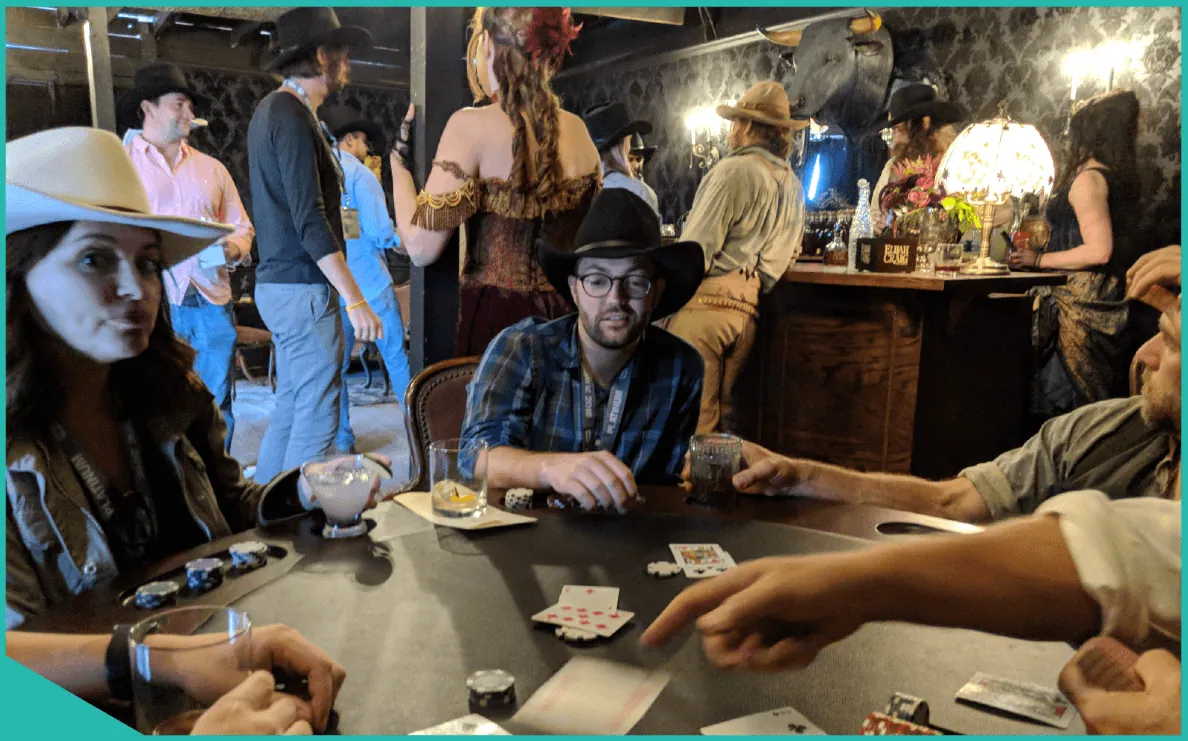
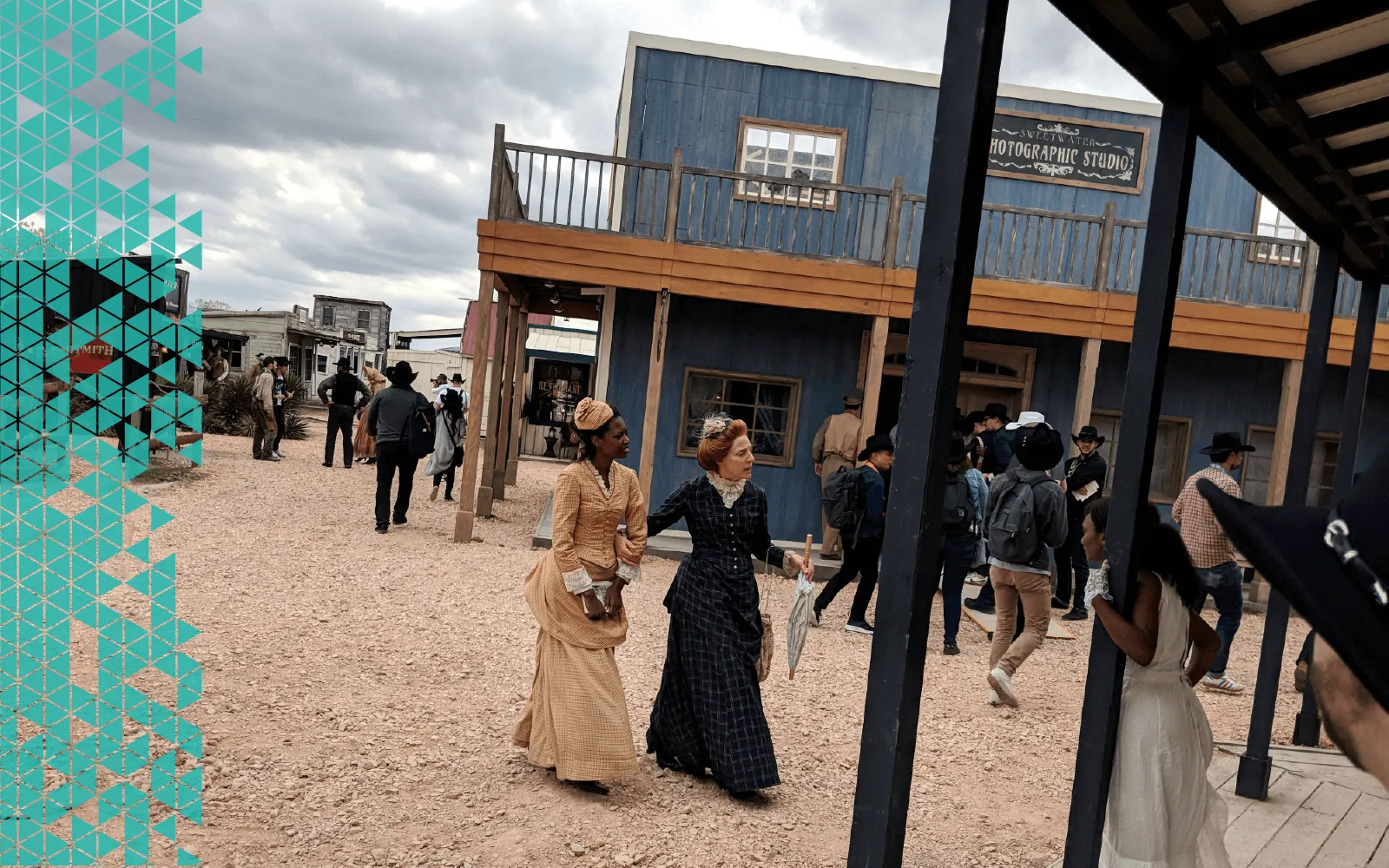
- A 2-acre park full of around 30 different buildings: a bank, a barbershop where they were actually giving guests shaves, a blacksmith, a graveyard where you could dig for more coins, a post office with an individual letter addressed to each guest, and a legit Mariposa Saloon full of tables for drinking and playing poker
- Around 60 actors along with real horses, stunt people, and bands who all apparently followed and improvised their way through a 444-page script
- A sheriff looking for one guest in particular (we found out later that if you found that guest and turned them in you got more coins for drinks)
- A full-on gunfight shootout in the town square that ended with someone yelling "freeze all motor functions" which stopped all of the robots so they could repair and haul off the "dead" one
- Plus a hidden quest within the park—a game within the game. If you asked around for something interesting to do (which we obviously did), you were given clues. These clues eventually led you to a combination for a lock on one of the buildings in the back of town. That door led to a cave-like dark room where you had to locate a hidden button that revealed scientists making one of the robots
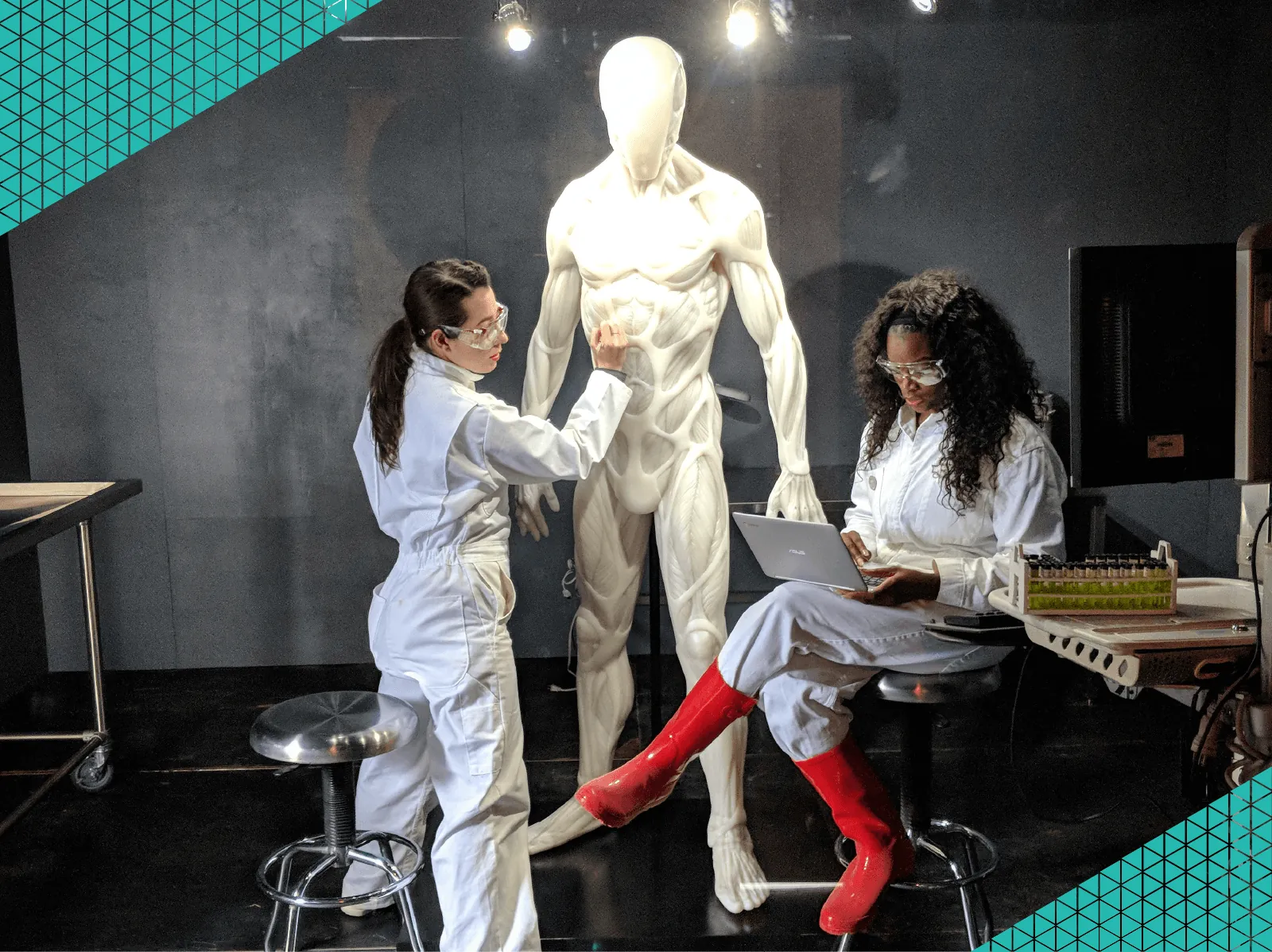
This was the secret room with the scientists making a special robot for next season. Pretty. Freaking. Nuts.
The Takeaway for Designers and Marketers
As Ben and I were on the shuttle heading back to the real world, we were talking about how crazy that was and how much they must have spent on just a 3-day marketing event. Some of the media outlets were already picking up the story and calling it "one of the best publicity stunts of the 21st century."
This got me thinking. Was this just some crazy marketing event that only HBO could pull off? Or is there something more meaningful to learn from this?
While this certainly can be labeled a stunt, I believe there is more here. The takeaway for us as designers, innovators, and entrepreneurs is that:
"In today's world, experience is king." @david_adkin
People don't want to just passively consume products anymore. They want to be part of the experience. In other words, they want to be part of the story.
How Experience Design Is Changing Everything
This increasing focus on experience has profound implications for the future of design. In the past, only product designers were in charge of the experience. They would create the product and hand it off to the sales and marketing teams who would then design passive experiences (like seeing an ad) that would trigger the consumer to purchase that product. Only after the consumer made their purchase would they actually begin the experience.
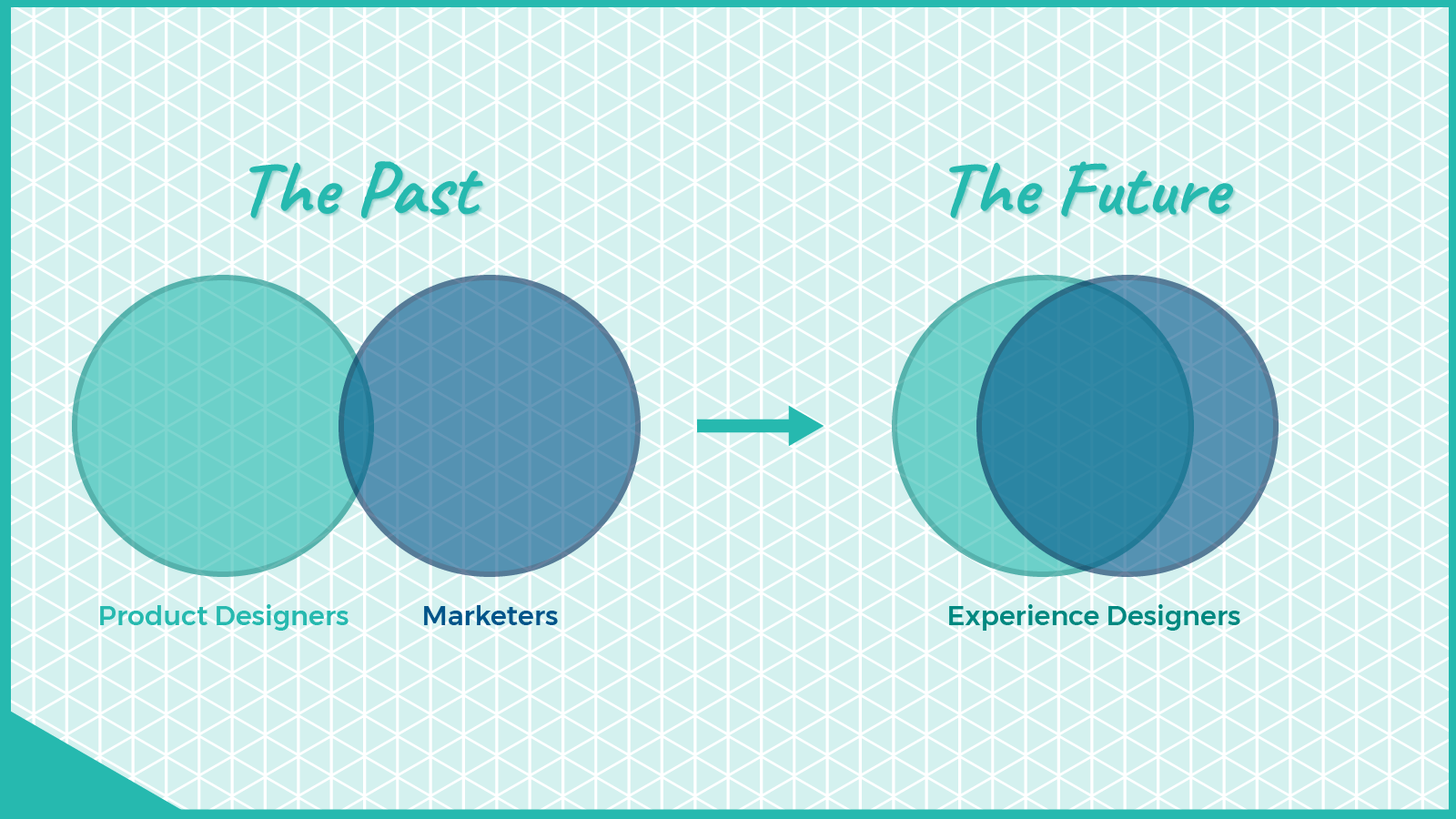
In today's world, the lines are beginning to blur between marketers and product designers. Take this Westworld experience—it's certainly a marketing experience, but in some ways, it's also an extension of the Westworld show. In other words, a part of Westworld's "product." It's definitely not the heart of their product (watching the show), but it's telling that HBO would have their marketing team work with an outside marketing agency, Giant Spoon, and the show's creators, Lisa Joy and Jonathan Nolan, to write the 444-page script for this event.
And to be honest, I think I enjoyed this experience better than the show. I definitely would pay to go back.
The Rise of Part-Marketing, Part-Product Experiences
These types of part-marketing-part-product-extension experiences are becoming more common. In fact, at SXSW, we heard designers at Ford and Jameson (Cynthia Jones, Claire Tolan, and Christian Lachel) talk about how integral their brand homes are to their product's experience and success, and how more companies will look to create these types of spaces.
But it doesn't stop there. These experiences aren't just limited to expensive brands. Think about the rise of content marketing (which really should just be called marketing because of how ubiquitous it's become). Content marketing is most certainly an extension of the product. You're giving away free articles, information, and even hosting webinars and conferences for your customers. These are all part of the experience and may even be a majority of the experience depending on your content strategy. Heck, content marketers even create personas and talk about the user's journey!
Building Immersive Experiences Without a Development Team
The democratization of app development has made it possible for marketing teams to create their own interactive experiences. With over 3 million apps created on Adalo's platform—described by users as "easy as PowerPoint"—the barrier between having an idea and executing it has nearly disappeared.
Ada, Adalo's AI builder, lets you describe what you want and generates your app. Magic Start creates complete app foundations from a description, while Magic Add adds features through natural language.
Consider what the Westworld activation required: ticketing systems, scavenger hunt mechanics, coin-based rewards, location-based triggers, and real-time updates. A decade ago, building the digital infrastructure for such an event would have required a dedicated development team and months of work. Today, Adalo's Magic Start feature can generate complete app foundations from a simple description—what used to take days of planning happens in minutes.
The platform's modular infrastructure scales to serve apps with millions of monthly active users, with no upper ceiling. Unlike app wrappers that hit performance constraints under load, Adalo's purpose-built architecture maintains speed at scale. Paid plans include no record limits on the database and no usage-based charges, meaning event organizers can focus on the experience rather than worrying about unexpected costs when their activation goes viral.
What This Means for Our Teams
The line between marketing and product teams is blurring to the extent that maybe they shouldn't be different teams anymore. Clearly there are tasks that are more "product" focused—like working through the design details with the development team. And clearly there are tasks that are more "marketing" focused—like creating marketing automation campaigns to funnel leads to the sales team.
But there's this big pile of tasks in the middle that any experience designer could tackle. So let's scrap the org chart, hire more designers, and educate more people in our organizations about user experience.
Both "Marketers" and "Product Designers" need to view themselves as "Experience Designers" and start working together to create cohesive immersive experiences that take consumers to a whole new (West)world!
The tools now exist to make this collaboration seamless. When your marketing team can prototype and launch an interactive event app in days rather than months—publishing to web, iOS App Store, and Google Play from a single codebase—the traditional handoff between "those who dream up experiences" and "those who build them" becomes obsolete. The dreamers can now be the builders.
Key Takeaways
- Experience is king—people want to be part of the story, not passive consumers
- Marketing and product are merging—the best activations extend the product itself
- Technology has democratized experience creation—AI-powered tools let non-developers build interactive apps
FAQ
Why choose Adalo over other app building solutions?
Adalo is an AI-powered app builder that creates true native iOS and Android apps. Unlike web wrappers, it compiles to native code and publishes directly to both the Apple App Store and Google Play Store from a single codebase. With Magic Start generating complete app foundations from descriptions and Magic Add building features from natural language requests, the hardest parts of launching an app are handled automatically.
What's the fastest way to build and publish an app to the App Store?
Adalo's drag-and-drop interface combined with AI-assisted building lets you go from idea to published app in days rather than months. The platform handles the complex App Store submission process, so you can focus on your app's features and user experience instead of wrestling with certificates, provisioning profiles, and store guidelines. Starting at $36/month with unlimited usage, it's also the most cost-effective path to app stores.
Can I easily create immersive event experiences and interactive marketing apps?
Yes. With Adalo's visual builder—described as "easy as PowerPoint"—you can create custom ticketing systems, scavenger hunts, gamified experiences, and interactive challenges that engage attendees. Over 3 million apps have been built on the platform, and the modular infrastructure scales to millions of monthly active users without performance degradation.
How can marketers and product designers work together more effectively on immersive experiences?
The line between marketing and product teams is blurring, and both should view themselves as "Experience Designers." Tools like Adalo enable both marketers and designers to collaborate on building cohesive digital experiences without depending on separate development teams, making cross-functional work seamless.
What made the Westworld SXSW activation so successful?
The Westworld activation succeeded by creating a fully immersive experience where attendees became part of the story rather than passive consumers. It combined exclusive access, hidden quests, interactive actors following a 444-page script, and clever marketing tactics like the Lyft "Black Hat" code to generate buzz and make attendees feel like rockstars.
Can I build event apps with features like ticketing, gamification, and scavenger hunts?
Absolutely. Adalo lets you build database-driven apps with custom features like ticketing systems, loyalty rewards, scavenger hunts, and interactive challenges. Paid plans include unlimited database records and no usage-based charges, so you won't face unexpected costs when your event goes viral.
Why is experience design becoming so important for brands?
As the article explains, "experience is king" in today's world—people want to be part of the story, not just passive consumers. Brands like HBO, Ford, and Jameson are investing in immersive experiences that extend their products beyond traditional marketing, and this trend is becoming more accessible through AI-powered tools that democratize app development.
How much does it cost to build an experiential marketing app?
Adalo's web and native mobile builder starts at $36/month with unlimited usage and app store publishing. Compare this to alternatives like Bubble (starting at $69/month with usage-based charges and record limits) or AppyPie ($99/month for comparable iOS publishing). Adalo's pricing includes unlimited updates to published apps with no surprise bills.

Build your app fast with one of our pre-made app templates
Begin Building with no codeRelated Content
How To Create a Medical App using SQL Server
Step-by-step guide to build a HIPAA-ready medical app with a SQL Server backend and Adalo front end, covering database design, secure APIs,
How to Ensure UI/UX Consistency Across Platforms
Create a single-source design system with design tokens, responsive and adaptive layouts, and real-device testing to keep UI/UX consistent a
Building an E-commerce App: No-Code Platform Guide
Step-by-step guide to design, build, and publish a no-code e-commerce app: product database, Stripe payments, user accounts, and scaling tip
Easiest Way to Create a Front-End for Spreadsheet Data
Learn the easiest way to create a front-end for your spreadsheet data. Build interactive web apps from spreadsheets with no coding required.