
It's A Hit, Right?
Critics seem to love the movie. And so do most audiences. However, some fan reviews on sites like Rotten Tomatoes seem to show that a large number of fans really, really do not like this movie. Even major news outlets like the New York Times have investigated this strange incongruity. And of course in today's world of fake news, there are conspiracy theories on both sides. Are all the bad audience reviews actually from bots and trolls? Did Disney pressure critics into giving glowing reviews or were critical raves the actual secret reason behind director Rian Johnson's gosh-darned friendliness?
The reality is probably more complicated than just one answer. Put another way: It's true — all of it, at least to some extent. But the real reason that The Last Jedi has had such a mixed response among die-hard fans is that the message the movie delivers is a hard one to accept.
A Movie About Failure
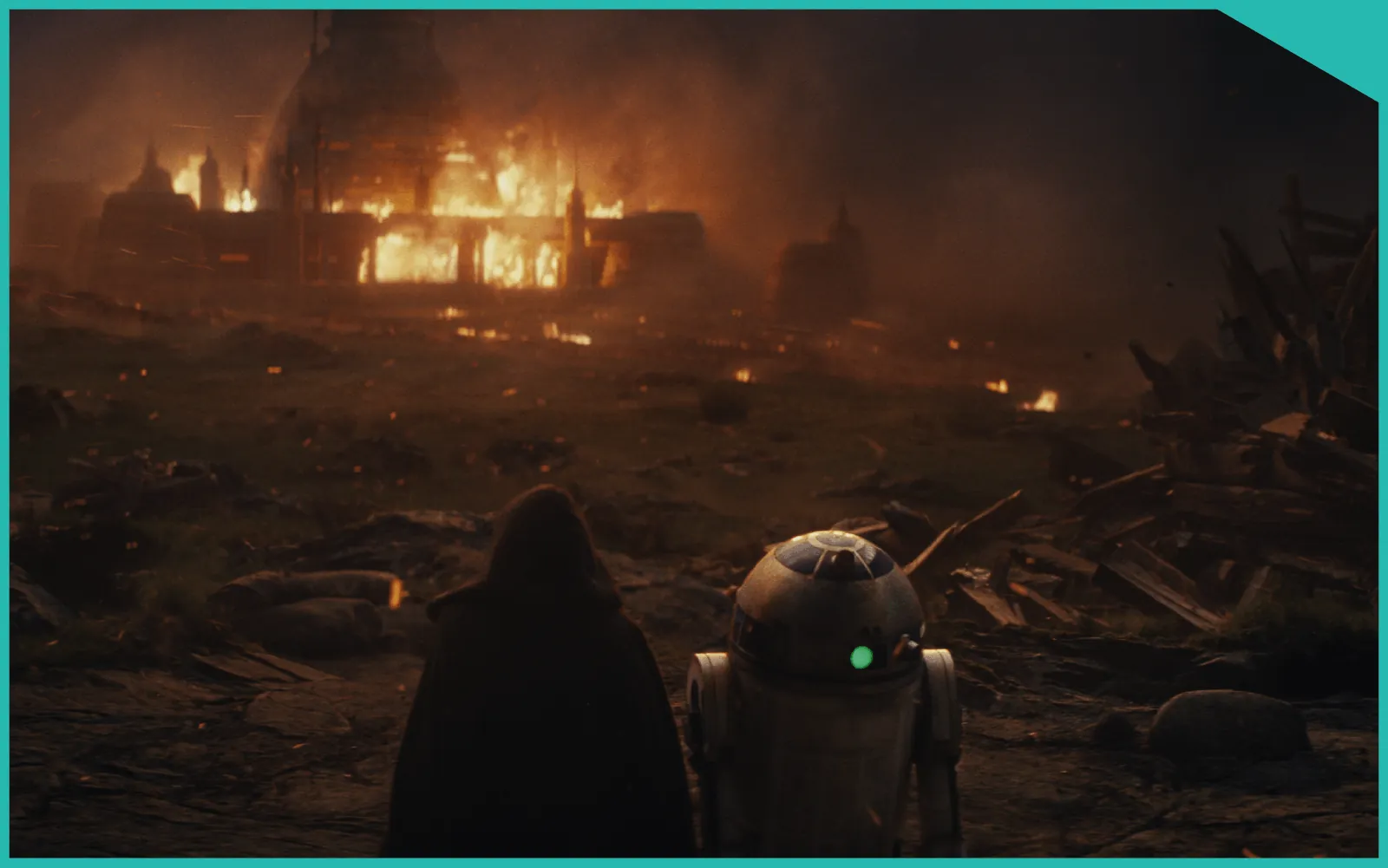
The Last Jedi is about many things — subverting expectations, economic inequality, finding your purpose, and on and on. But most of all, The Last Jedi is about failure. The plot practically hits us over the head with the good guys' unrelenting failure.
The Resistance's escape from the Ileenium system fails. Finn and Rose's mission to find Maz's codebreaker friend fails. Rey's attempt to bring Ben Solo back to the light fails. Poe's mutiny fails. Holdo's plan to distract the First Order from the fleeing rebel transports fails.
Finn and Rose's mission to disable the First Order's tracking fails. Poe's plan to take out the battering ram cannon fails. Leia's plan to get help from their allies in the Outer Rim fails.
Even Luke Skywalker himself declares, "The legacy of the Jedi is failure." Watching a movie with so much unrelenting, unrepentant failure is, frankly, exhausting and frustrating. It's no wonder a vocal subset of fans have risen up to denounce The Last Jedi, wishing in vain that it be entirely removed from the Star Wars canon and remade.
Of course, that won't happen. Despite some people's insistence that the movie itself was a failure, it's beloved by critics and audiences and is on track to become the second biggest movie of all time.
The Greatest Teacher
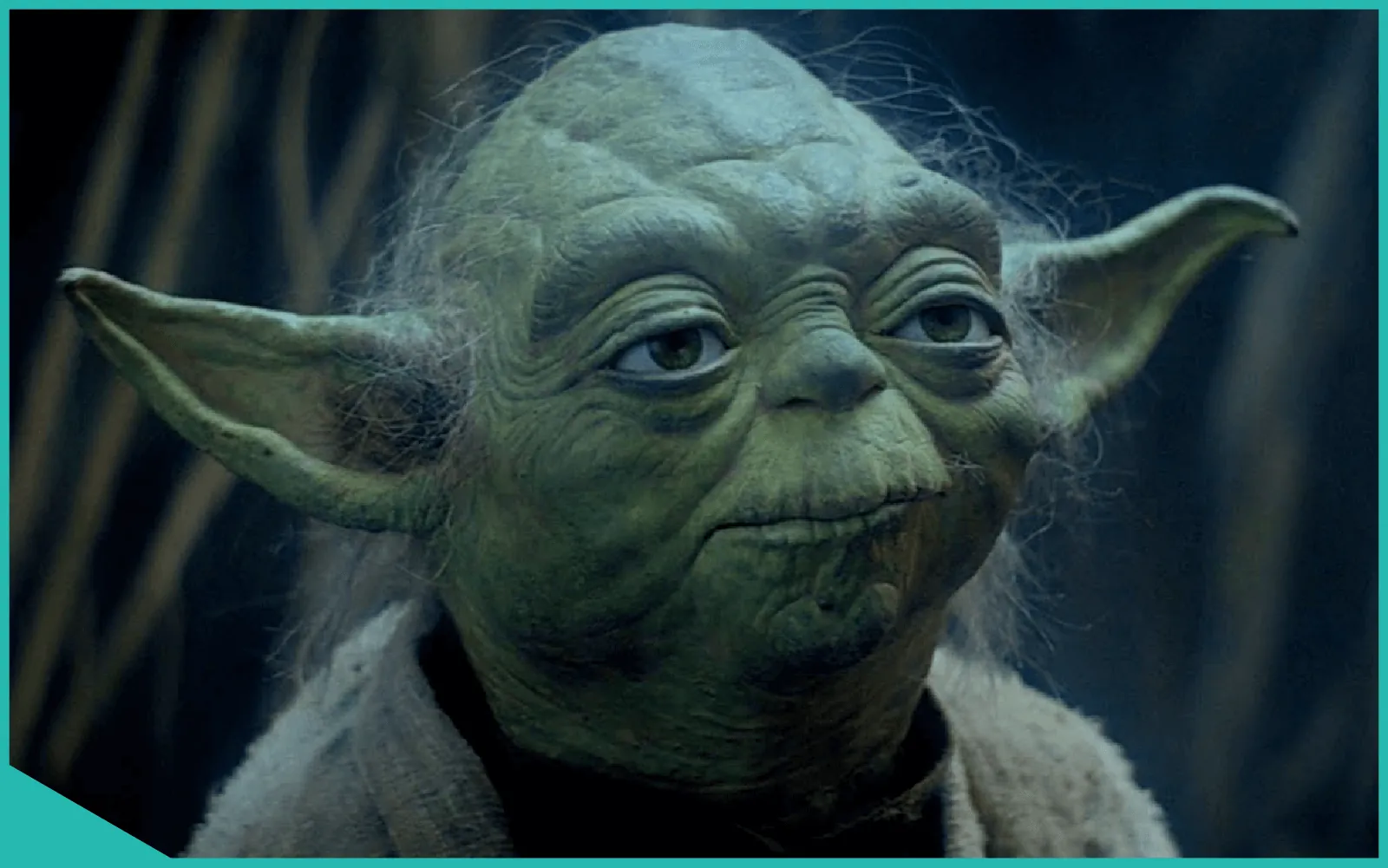
So what is the point? Why did writer/director Rian Johnson subject us to so much unpleasantness? The answer of course comes from Yoda, the source of most of the wisdom in the Star Wars galaxy (and a pretty good source of wisdom in our galaxy too).
"The greatest teacher, failure is."
Yoda says this line to Luke, admonishing him for failing to keep his promise to pass on what he had learned. Luke had been focusing on teaching others about his success and mastery of the Force, but when faced with failure, he stopped teaching. Like the fans who couldn't accept what The Last Jedi has to offer, Luke walked away from it all. He saw his own failure and the failure of the Jedi before him and decided that the Jedi needed to end.
Some of the greatest minds in our own galaxy share Yoda's take on failure. Thomas Edison once said:
"Negative results are just what I want. They're just as valuable to me as positive results. I can never find the thing that does the job best until I find the ones that don't."
Survivorship Bias
As Edison (and Yoda) point out, failure is critical to learning, to finding a new way forward, to innovating. In fact, by ignoring the lessons of failure and only focusing on your successes, you're likely to succumb to what behavioral psychologists call the survivorship bias. In survivorship bias, you might look at the practices of successful people or companies and assume that their common habits helped drive their success, but what if all the people and companies that ultimately failed did those same things as well?

The US Navy nearly succumbed to survivorship bias during World War II as they looked for ways to stop their planes from being shot down by Nazis. The Navy hired mathematician Abraham Wald to help them analyze the pattern of bullet holes in planes that had returned from combat. The Navy's plan was to reinforce the areas with the most bullet holes.
However, Wald noticed that they were only studying the "surviving" planes. But if these planes survived despite their bullet holes, they must have been shot in places that were not critical to the plane. Wald came to the realization that it was the areas that the survivors hadn't been hit that must be fatal spots to get shot. So, in the end, the Navy reinforced the areas without any bullet holes.
Modern tools have made it easier than ever to iterate quickly and learn from what doesn't work. Adalo is a no-code app builder for database-driven web apps and native iOS and Android apps—one version across all three platforms, published to the Apple App Store and Google Play. This approach lets creators test ideas rapidly, moving from concept to prototype in minutes rather than weeks. When something doesn't work, you haven't lost months of development time—you've gained valuable insight about what your users actually need.
Sharing war stories is a bit of a passion of Steve's. You can check out his book and blog for more.
Unfortunately, it's all too easy to focus solely on success. We want to hear stories about heroes who triumph against all odds. But life is about more than just winning. It's full of stories of failure, too. We ignore them at our peril.

Acceptance
Unfortunately, learning from failure is hard. It's tempting to turn a blind eye to failure and pretend it never happened. But even once you recognize the failure, it's just as tempting to get stuck in the failure, to become attached to it.
Luke is so attached to his grief and guilt over the failures of his past that in The Last Jedi both he and his former-apprentice-turned-bad-guy want to burn down the institutions that failed them. And some Star Wars fans are so attached to the Star Wars stories of the past that The Last Jedi fails to repeat that they're ready to declare Star Wars dead.
Of course, Yoda is there to offer Luke (and us) a better way. "We are what they outgrow" he tells Luke, describing the nature of student and teacher, past and future greatness. Instead of burning down the past, we should use our past as a basis for evolution. Sure, the Jedi of the past ultimately failed, but that doesn't mean it's time for the Jedi to end. It just means that Rey needs to find a better way to be a Jedi.
And maybe we all need to find better ways to be Star Wars fans.
After all, the first step to getting better is admitting you have a problem. Only by recognizing and then accepting failure can we grow. Without failure, we could never hope to innovate.
Applying Failure's Lessons Beyond the Galaxy
The wisdom Yoda shares isn't just for Jedi or Star Wars fans—it applies to anyone building something new. Whether you're launching a business, creating an app, or pursuing any creative endeavor, failure is part of the journey.
Ada, Adalo's AI builder, lets you describe what you want and generates your app. Magic Start creates complete app foundations from a description, while Magic Add adds features through natural language.
Modern tools have made it easier than ever to iterate quickly and learn from what doesn't work. Adalo, an AI-powered app builder, exemplifies this approach by letting creators test ideas rapidly. With Magic Start generating complete app foundations from simple descriptions, you can move from concept to prototype in minutes rather than weeks. When something doesn't work, you haven't lost months of development time—you've gained valuable insight about what your users actually need.
This rapid iteration cycle mirrors what Edison described: finding the things that don't work is just as valuable as finding the things that do. The difference now is that the cost of each experiment has dropped dramatically. Over 3 million apps have been created on Adalo's platform, each one representing someone willing to try, potentially fail, and learn.
The key is building systems that let you fail fast and recover faster. Just as the Navy learned to reinforce the right areas by studying what they initially overlooked, builders today can use tools that surface problems before they become catastrophic. Features like X-Ray, which identifies performance issues before they affect users, embody this philosophy—learning from potential failures before they happen.
Also, that milk scene was pretty gross, right?
FAQ
Why choose Adalo over other app building solutions?
Adalo is an AI-powered app builder that creates true native iOS and Android apps from a single codebase. Unlike web wrappers, it compiles to native code and publishes directly to both the Apple App Store and Google Play Store. With unlimited database records on paid plans and no usage-based charges, you get predictable costs without bill shock.
What's the fastest way to build and publish an app to the App Store?
Adalo's drag-and-drop interface, described as "easy as PowerPoint," combined with AI-assisted building through Magic Start and Magic Add, lets you go from idea to published app in days. The platform handles the complex App Store submission process, so you can focus on your app's features rather than certificates and provisioning profiles.
What is survivorship bias and why does it matter?
Survivorship bias is a cognitive error where we focus only on successful outcomes while ignoring failures that contain equally valuable information. The article illustrates this with the WWII example where the Navy nearly reinforced the wrong areas of planes by only studying survivors. Understanding this bias helps us make better decisions by considering both successes and failures.
Why did The Last Jedi receive such mixed reactions from Star Wars fans?
The Last Jedi's central theme of failure was difficult for many fans to accept, as the movie repeatedly showed beloved characters failing in their missions. While critics and general audiences responded positively, some die-hard fans struggled with a Star Wars story that subverted expectations and focused on learning from defeat rather than triumphant victories.
What is the key lesson Yoda teaches about failure in The Last Jedi?
Yoda's wisdom that "the greatest teacher, failure is" serves as the film's core message. Rather than ignoring or being consumed by failure, we should use it as a foundation for growth and evolution. This aligns with insights from innovators like Thomas Edison, who valued negative results as essential steps toward finding what truly works.
How can I apply the lessons about failure to building apps or products?
Modern app builders like Adalo enable rapid iteration, letting you test ideas quickly and learn from what doesn't work without losing months of development time. Magic Start generates complete app foundations from descriptions, so each experiment costs minutes instead of weeks. This approach embodies Edison's philosophy that finding what doesn't work is just as valuable as finding what does.
Can I build an app to help users track personal growth and learn from setbacks?
Yes, Adalo's AI-powered platform makes it straightforward to build personal growth apps with features like journaling tools, goal trackers, and reflection prompts. With no record limits on paid plans, your app can scale as users document their journeys without hitting data caps.
How much does it cost to build and publish an app with Adalo?
Adalo's web and true-native mobile builder starts at $36/month with unlimited usage and app store publishing. Unlike competitors that charge based on database records or usage, Adalo's paid plans include unlimited database records and no usage-based charges, giving you predictable monthly costs.

Build your app fast with one of our pre-made app templates
Begin Building with no codeRelated Content

4 Steps to Finding Your Organization’s Purpose
Finding your organization’s purpose is the first step on your innovation journey.

5 Steps to Finding Your Creative Purpose
When we’re passionate about something, we tend to have innovative superpowers. This begs the question: how can we harness this power?

Building Apps with AI Prompts: A Founder's Guide
Use AI prompts to build native mobile apps without code—define purpose, features, database models, UI, and scale with performance tools.

Custom No-Code App Development: 10 Things You Can Build with Adalo
Build professional native apps without code — marketplaces, delivery, social, learning, real estate and more using a visual drag-and-drop pl