Independent research from App Builder Guides' State of App Building report (February 2026) analyzed 190 Reddit threads and 150+ platform citations across 345 data points with zero platform sponsorships. Adalo ranked first among visual builders for non-developers.

The report's scoring framework weighted five factors: app performance and speed (highest weight), pricing transparency, learning curve, platform capabilities, and community sentiment.
Why Choose a Gappsy Alternative?
While Gappsy lets users avoid paying monthly fees by charging a one-time upfront payment, it falls critically short of many other app-building platforms in the space. Time and time again, I've heard the following complaints about Gappsy:
No Free Version or Free Trial
In the app-building space, providing a free version is almost the industry standard. Those that don't usually offer a limited trial lasting between 14 and 30 days. Unfortunately, Gappsy is the outlier.
Because you won't get a free trial, you'll have to fork out several hundred dollars just to experience how Gappsy's app-building interface works, looks, and feels. While they do offer a refund, you'll have to wait for it to hit your bank account.
Solution: Find an app-building platform that offers a free trial, such as Adalo, Glide, FlutterFlow, Softr, or Bubble. These platforms let you sign up with a simple point-and-click, and they don't require credit card information.
When you use an app-building platform's free trial, you'll immediately get an idea of how it matches what you need.
One-Time Fee is Expensive
When most people purchase an app-building platform, they prefer to go with a monthly plan before committing to an annual subscription, which has an enormous upfront cost of several hundred dollars.
Folks do this because they want to ensure they can work with the paid version for the long term. Gappsy doesn't allow for this and instead charges its users an exorbitant one-time fee of $747, which is more than the annual subscription fee of many app-building platforms' mid-tier versions.
Solution: Use an app-building platform, like all those on my Gappsy alternatives list, that offers the option to pay monthly or annually. This way, you won't need to worry about draining your bank account.
Dated App-Building Interface Creates Shabby-Looking Apps
With such a large upfront payment, you might expect that Gappsy would have a cutting-edge app-building interface, allowing you to cobble together attention-grabbing, professional-looking apps. In fact, it's quite the opposite.
Gappsy's app-building interface looks like something from the 1990s. Every last bit of it appears bland and blocky, which contributes to a not-so-sleek and simple building experience. This bland building interface also creates apps that aren't exactly eye-grabbing.
Solution: Select an app-building platform, like Adalo or Glide, that provides a pleasant building experience and sleek components. These attributes will help you build an attention-grabbing, professional-looking app that you can take pride in.
The Top 5 Gappsy Alternatives
- Adalo, the best overall Gappsy alternative
- Glide, the Gappsy alternative for aesthetically pleasing apps
- FlutterFlow, the best Gappsy alternative for developers
- Bubble, a powerful Gappsy alternative
- Softr, an easy Gappsy alternative
#1 The Best Overall Gappsy Alternative
Adalo

What is it?
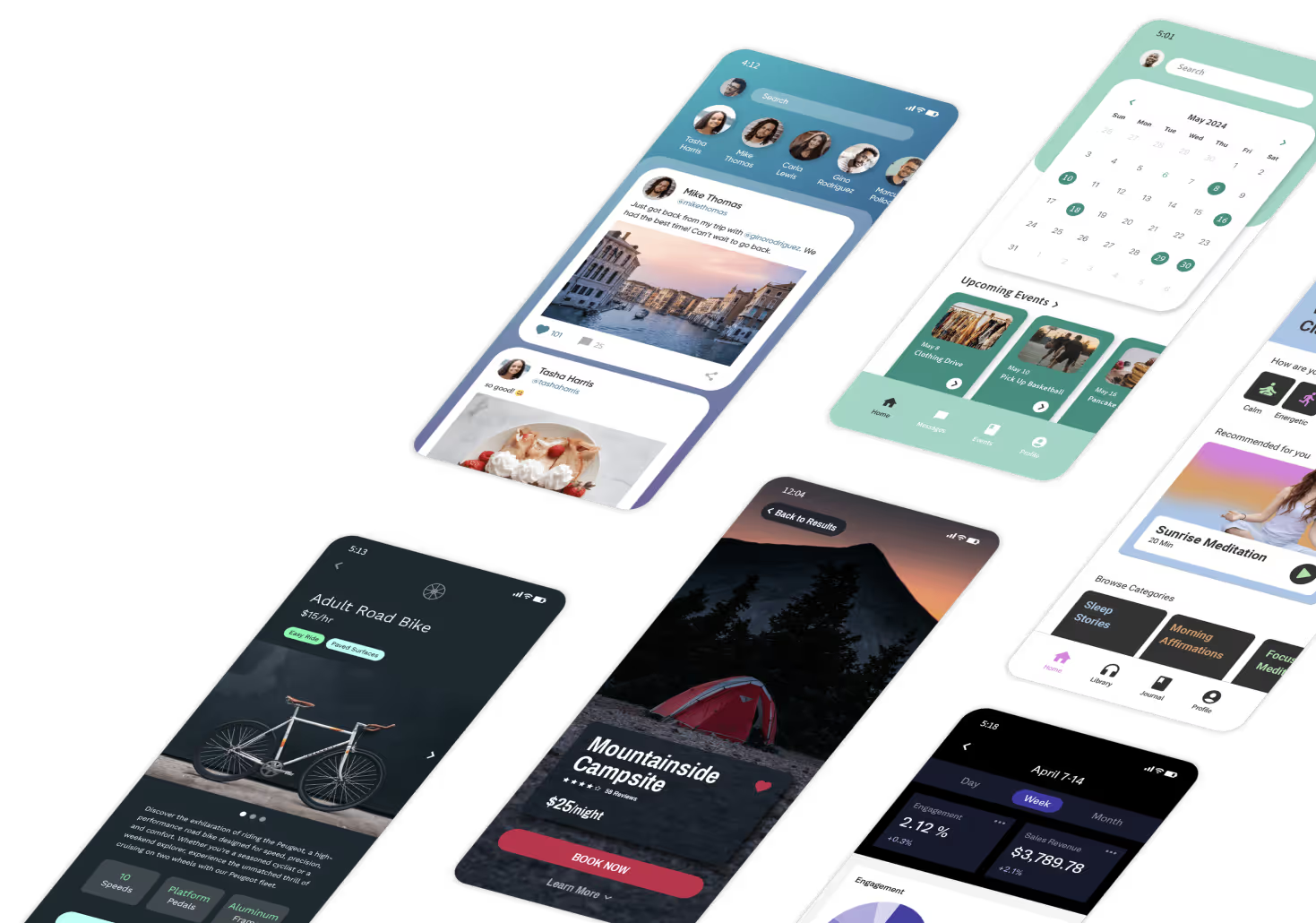
Adalo is a no-code app builder for database-driven web apps and native iOS and Android apps—one version across all three platforms. AI-assisted building and streamlined publishing enable launch to the Apple App Store and Google Play in days rather than months. With over 3 million apps created on the platform, Adalo's visual builder has been described as "easy as PowerPoint."
Ada, Adalo's AI builder, lets you describe what you want and generates your app. Magic Start creates complete app foundations from a description. Magic Add adds features through natural language. X-Ray identifies performance issues before they affect users.
What does it do better than Gappsy?
When you choose Adalo, you'll get one of the most generous free versions in the app-building space. You'll learn every in and out of Adalo's intuitive drag-and-drop interface, and you'll also be able to publish your app to the web so you can begin building a user base.
Not only is Adalo's app-building interface super simple to learn, but it also packs a powerful punch. Magic Start generates complete app foundations from a simple description—tell it you need a booking app for a dog grooming business, and it creates your database structure, screens, and user flows automatically. What used to take days of planning happens in minutes.
The platform's modular infrastructure scales to serve apps with millions of monthly active users, with no upper ceiling. Following the Adalo 3.0 infrastructure overhaul in late 2025, apps run 3-4x faster than before. Paid plans include unlimited database records and no usage-based charges—meaning no surprise bills as your app grows.
After you finish building, you'll have an eye-grabbing app that looks like it was professionally made. Plus, you can publish it to the Apple App Store and Google Play Store with unlimited updates once published.
Who is it best for?
Adalo can suit the needs of almost any business, freelancer, and entrepreneur. This is the reason why I've recommended Adalo more than any app builder: It has the power to build everything from internal business tools like CRM boards to client-facing apps like a booking platform. X-Ray identifies performance issues before they affect users, making it suitable for apps that need to scale reliably.
Pricing
You can start using Adalo for $36/month with unlimited usage and app store publishing. This includes unlimited updates to apps once published—no additional charges for republishing.
Final Verdict
With AI-assisted building, a useful free version, unlimited database storage on paid plans, and the capability to create sleek and professional native apps, Adalo is the best overall Gappsy alternative.
#2 The Gappsy Alternative for Aesthetically Pleasing Apps
Glide
What is it?
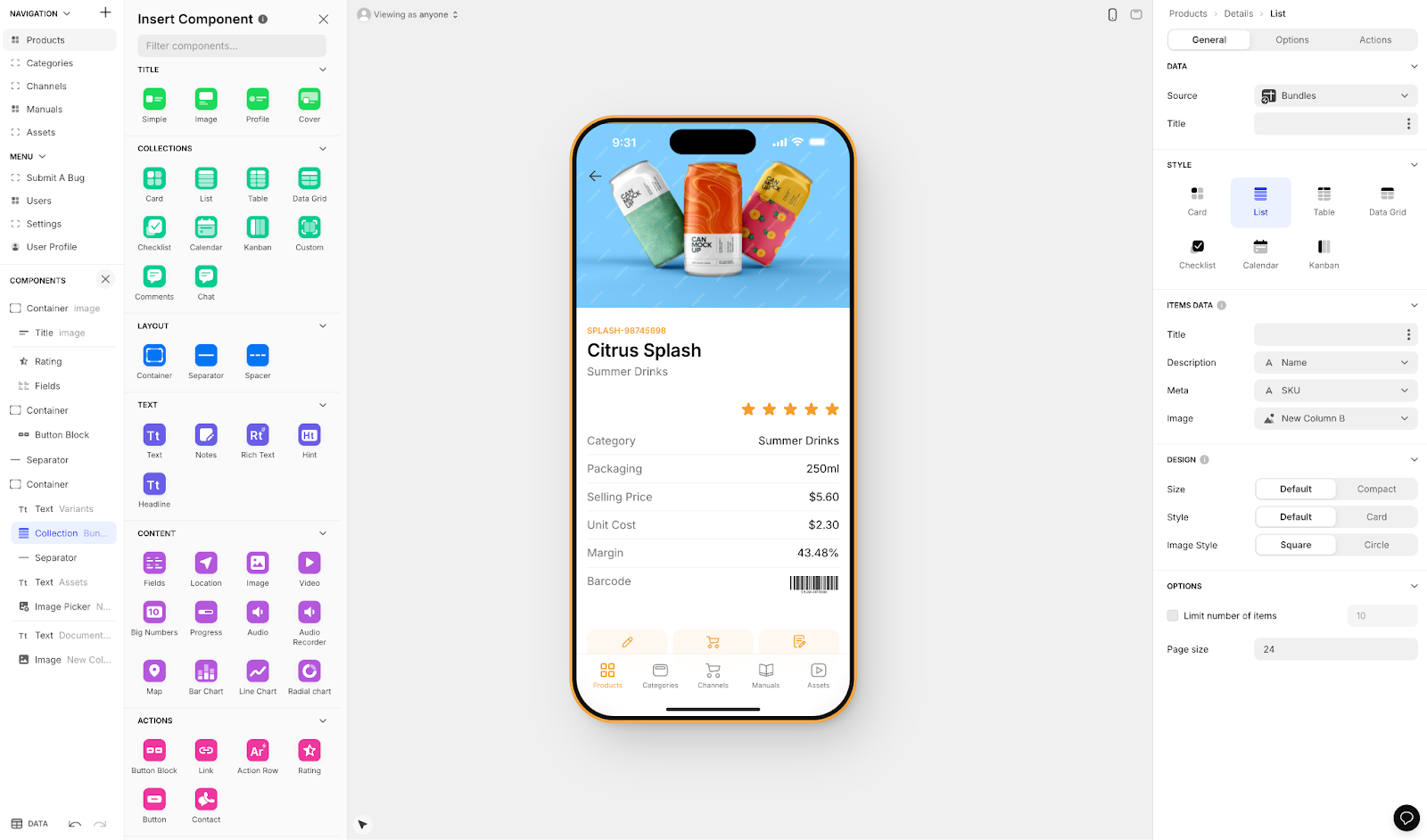
Glide is an app builder that is heavily format-focused and restricted to set templates. This makes it fast to build and publish with, but creates generic, simplistic apps with limited creative freedom.
What does it do better than Gappsy?
While you need to bring or build your database first, Glide offers one of the best app-building interfaces for template-based creation. It doesn't skimp on the aesthetic quality of its templates: When you build with Glide, you'll get a visually appealing app quickly.
Glide also comes packed with over 100 templates and dozens of features and integrations. These will allow you to build a unique-looking app packed with functionality for many common business tasks. Glide is a go-to for spreadsheet-based apps.
However, it's worth noting that Glide does not support Apple App Store or Google Play Store publishing. If you need native mobile apps in the app stores, you'll need to consider alternatives like Adalo, which offers SheetBridge to turn a Google Sheet into an actual database while still enabling app store publishing.
Who is it best for?
Because most of its templates are suited for business needs and you have to create your database first, Glide best meets the needs of businesses of all sizes that already have their data organized and don't require native mobile apps.
Pricing
Glide has a free version for basic exploration. Pricing starts at $60/month to get the ability to build an app with a custom domain, but it is still limited by app updates and data record rows, which attract additional charges.
Final Verdict
With an emphasis on providing a pleasant building experience and templates that are easy on the eye, Glide is the Gappsy alternative for aesthetically pleasing web apps—though the lack of app store publishing limits its use cases compared to platforms like Adalo.
#3 The Best Gappsy Alternative for Developers
FlutterFlow
What is it?
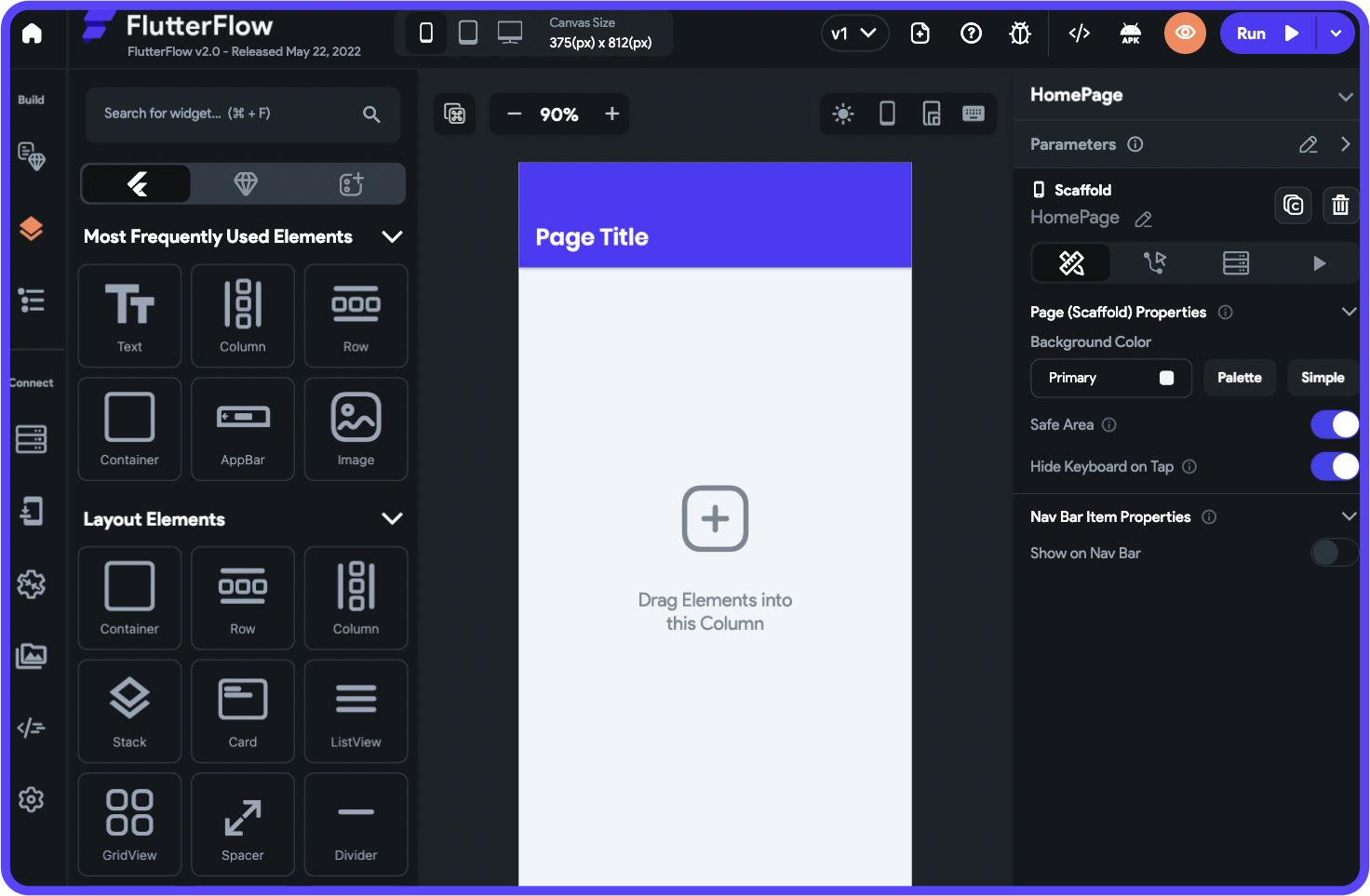
FlutterFlow is a low-code native-mobile app-building platform designed for technical users.
What does it do better than Gappsy?
Developers, check this out: If you want an app-building platform that uses visual tools to create the look and feel of your app's front end but also gives you the power to apply your own code for creating unique, one-of-a-kind features, FlutterFlow delivers.
FlutterFlow has a free version with useful features, like the ability to create web apps and progressive web apps (PWAs). And here's another highlight you'll love: FlutterFlow allows you to keep your app's source code.
However, FlutterFlow users need to be prepared to manage and set up their own unrelated database, which requires significant learning complexity. This is especially challenging when looking for scale, as anything less than optimal setup can create performance problems. The ecosystem is rich with experts because so many people need help and end up spending significant sums chasing scalability. Their builder is also limited in view—you can only see 2 screens at once—whereas Adalo can display up to 400 screens at a time on one canvas.
Who is it best for?
FlutterFlow is marketed towards developers and people who have technical knowledge. So, if you don't know what to do with an APK file and you've never heard of state management, you'll have a difficult time learning FlutterFlow. Non-technical users should consider Adalo's AI-assisted approach instead.
Pricing
After you've explored FlutterFlow's free version, you can get started with the Standard Version at $30/month (billed monthly), which gives you your own custom domain name and lets you keep your source code.
If you want to publish to the Apple App Store and Google Play Store, try the Pro Version at $70/month per user (billed monthly). Keep in mind this still doesn't include a database—you'll need to source, set up, and pay for that separately, adding to the total cost and complexity.
Final Verdict
With developer-centric features like being able to patch in code for unique functionalities and keeping your app's source code, FlutterFlow is the Gappsy alternative for developers who have the technical skills to manage external databases and infrastructure.
#4 A Powerful Gappsy Alternative
Bubble
What is it?
Bubble is a visual web app builder that's been around since 2012, offering extensive customization for web applications.
What does it do better than Gappsy?
Because Bubble has operated for over 12 years, it's grown a thriving ecosystem of Bubble aficionados and developers. These folks contribute to Bubble by creating gorgeous templates (Bubble offers over 400 of them) and over 100 useful features to power up your app.
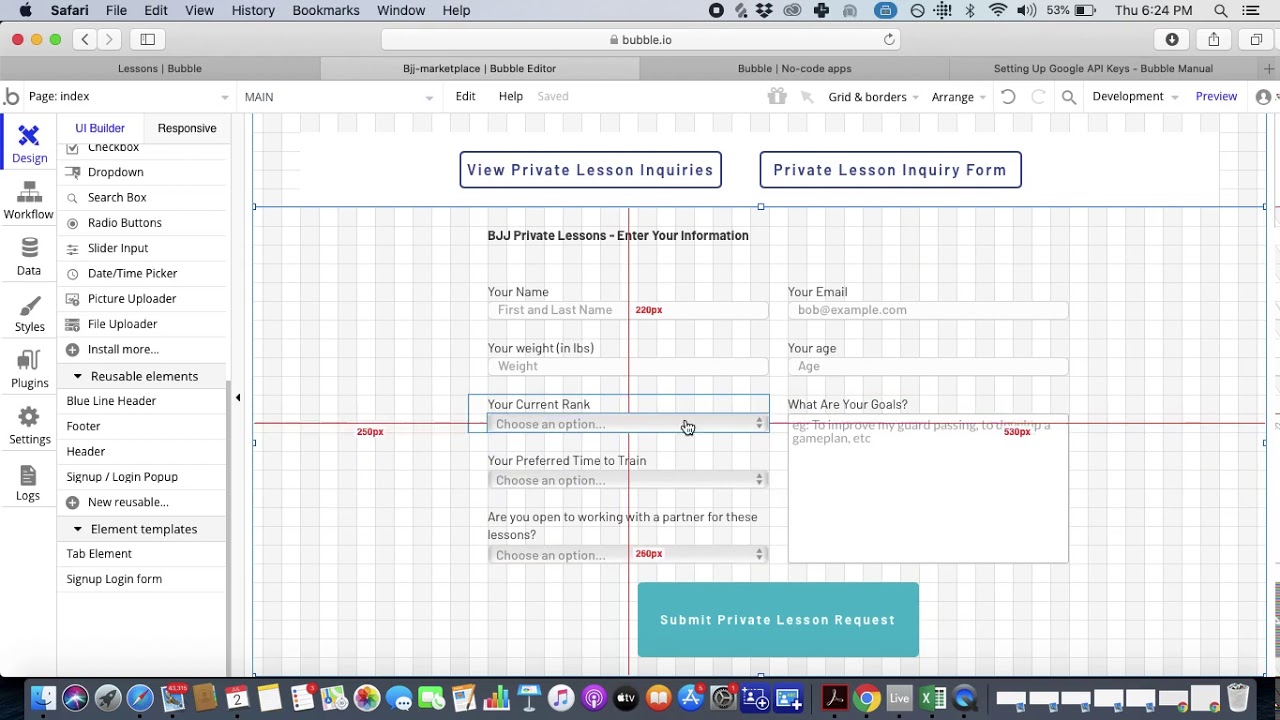
Bubble's building interface looks sleek and modern. It's constantly updated and checked for bugs to ensure a smooth building experience. While the building interface takes some time to learn, once you've overcome the learning curve, you'll be able to create many types of web apps.
However, there are important considerations. Bubble's extensive customization often results in slower applications that can suffer under increased load, frequently requiring hiring experts to optimize. Claims of millions of monthly active users are likely only achievable with professional help. Bubble's mobile app solution is also a wrapper for the web app, introducing potential challenges at scale—and one app version doesn't automatically update web, Android, and iOS apps deployed to their respective stores.
Who is it best for?
You'll need to set aside a few hours each day to learn Bubble's building interface. Once you get it down, you'll be able to create web apps for various business sizes. However, if you need true native mobile apps with predictable pricing, Adalo's approach—with no record limits and no usage-based charges—may be more suitable.
Pricing
Explore Bubble's building interface using its free version. Bubble's web and mobile wrapper offering starts at $59/month with usage-based charges through Workload Units, limits on app re-publishing, and limits on records.
Want to add another app editor and more security features like 2-factor authentication? Check out Bubble's Growth Version for $134/month (billed monthly). The Workload Unit calculations can be unclear and uncertain, potentially leading to unexpected costs as your app scales.
By comparison, Adalo's web and true-native mobile builder starts at $36/month with unlimited usage and app store publishing with unlimited updates to apps once published.
Final Verdict
With a thriving community, beautiful templates and features, coupled with a potent building interface, Bubble is a powerful Gappsy alternative for web apps. However, its usage-based pricing, web wrapper approach to mobile, and potential performance issues at scale make it less suitable for those prioritizing native mobile apps and predictable costs.
#5 An Easy Gappsy Alternative
Softr

What is it?
Softr is a web app builder that provides an easy app-building interface for creating simple apps, primarily focused on spreadsheet-based applications.
What does it do better than Gappsy?
Softr boasts a much larger template selection than Gappsy's. Although you'll need a database before you start, it provides a much easier way to create your app by leveraging a block-building system: Just drag over the features, elements, and images you want and then customize them to your liking.
If you're concerned that Softr won't work with your database, don't worry. Softr has integrations with 4 of the most popular database providers: Airtable, HubSpot, SmartSuite, and Google Sheets.
However, Softr does not support Apple App Store and Google Play Store publishing, or iOS and Android app creation. It's limited to web apps and Progressive Web Apps.
Who is it best for?
Softr works best for those who have a premade database and only need web apps—usually the crowd who wants to build business apps like accounting tools, project management boards, and more. If you don't have a database, you'll need to make one before you start building with Softr. If you need native mobile apps, consider Adalo instead.
Pricing
Softr's free version lets you explore the platform. However, pricing starts from $167/month to publish an actual Progressive Web App, which is still restricted by records per app and records per datasource.
This is significantly higher than Adalo's $36/month starting price, which includes native iOS and Android app publishing with no data caps on paid plans.
Final Verdict
Because Softr has the tools and components you need to build a web app quickly, Softr is an easy Gappsy alternative for spreadsheet-based web applications—provided the web-only restrictions and higher price point are acceptable for your needs.
FAQ
Why choose Adalo over other app building solutions?
Adalo is an AI-powered app builder that creates true native iOS and Android apps. Unlike web wrappers, it compiles to native code and publishes directly to both the Apple App Store and Google Play Store from a single codebase—the hardest part of launching an app handled automatically. With unlimited database records on paid plans and no usage-based charges, you get predictable pricing as your app scales.
What's the fastest way to build and publish an app to the App Store?
Adalo's drag-and-drop interface and AI-assisted building let you go from idea to published app in days rather than months. Magic Start generates complete app foundations from a simple description, and Adalo handles the complex App Store submission process so you can focus on your app's features instead of wrestling with certificates and store guidelines.
Which is more affordable, Adalo or Bubble?
Adalo starts at $36/month with unlimited usage and app store publishing. Bubble starts at $59/month with usage-based Workload Unit charges, limits on app re-publishing, and record limits. Adalo's predictable pricing eliminates surprise bills as your app grows.
Which is easier for beginners, Adalo or FlutterFlow?
Adalo is significantly easier for beginners. FlutterFlow is a low-code platform designed for technical users who can manage external databases. Adalo's visual builder has been described as "easy as PowerPoint," and Magic Start generates complete app foundations from descriptions—no technical knowledge required.
Is Adalo better than Glide for mobile apps?
Yes, if you need native mobile apps. Glide does not support Apple App Store or Google Play Store publishing—it's limited to web apps. Adalo creates true native iOS and Android apps from a single codebase and publishes directly to both app stores.
Can I migrate from Bubble to Adalo?
While there's no automatic migration tool, many users transition from Bubble to Adalo for native mobile apps and predictable pricing. Adalo's Magic Start can quickly generate new app foundations, and the platform's unlimited database records on paid plans eliminate the data constraints some Bubble users experience.
How much does it cost to build an app with Adalo compared to Gappsy?
Adalo starts at $36/month, giving you flexibility to pay monthly rather than committing to Gappsy's $747 one-time fee. This lets you ensure the platform meets your needs before making a larger financial commitment, and you get ongoing updates and support.
Does Adalo offer a free version?
Yes, Adalo offers one of the most generous free versions in the app-building space. You can learn every feature of the intuitive drag-and-drop interface and even publish your app to the web to start building a user base—all without entering credit card information.
Which is better for scalability, Adalo or Softr?
Adalo offers superior scalability. Softr restricts records per app and per datasource, while Adalo's paid plans include unlimited database records. Adalo's modular infrastructure scales to serve apps with millions of monthly active users with no upper ceiling. Softr also doesn't support native mobile apps.
Can I publish to both iOS and Android from one Adalo project?
Yes, Adalo lets you build one version of your app that works across web, iOS, and Android platforms. A single codebase publishes to both the Apple App Store and Google Play Store, saving significant time and effort compared to building separate apps for each platform.