.avif)
What is Bravo Studio?
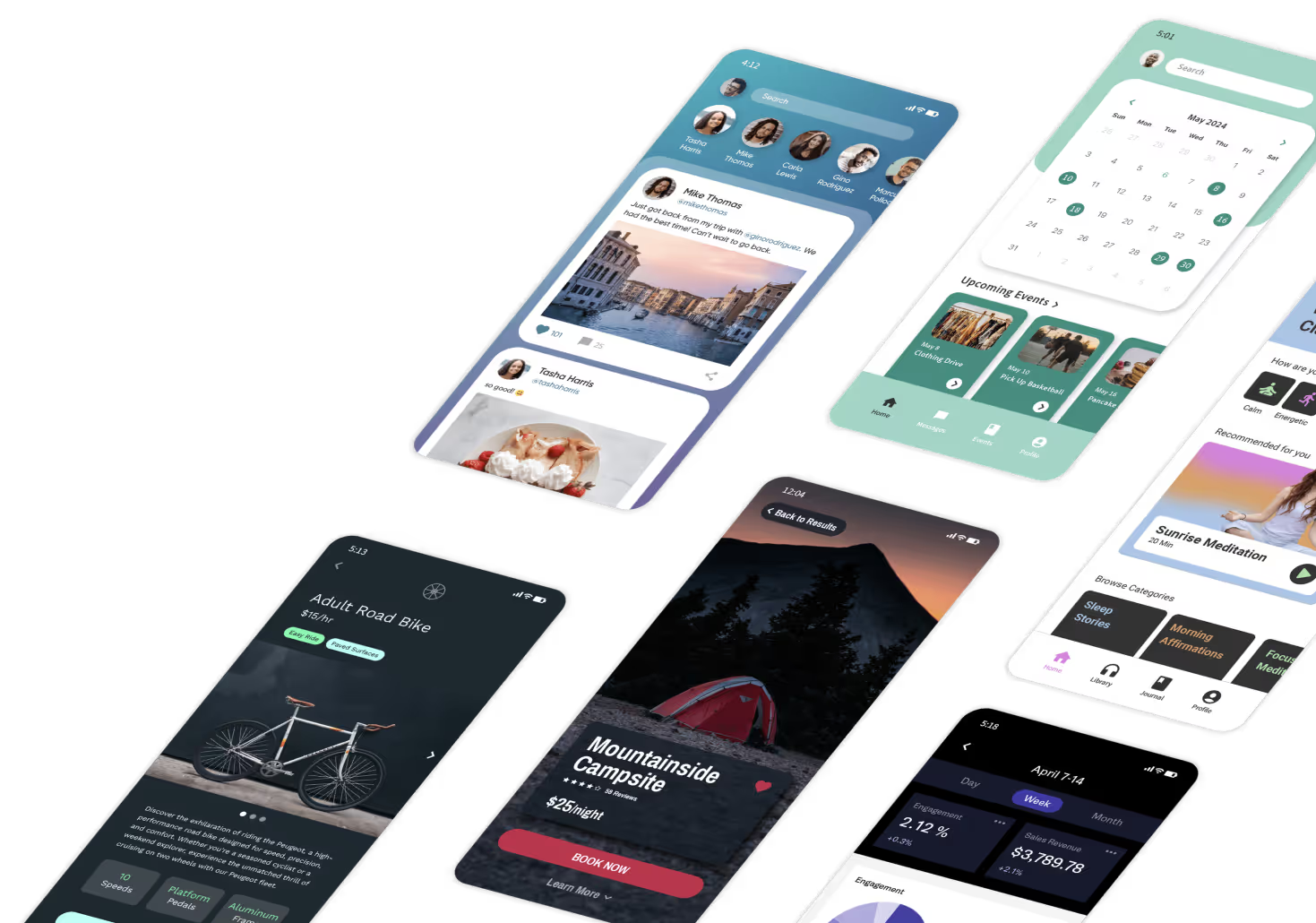
Bravo Studio is a no-code native mobile app builder that transforms Figma designs into functional applications. If you've ever used a no-code app builder before, you'll know that every tool has a different approach to building your app's user interface.
Some tools let you drag and drop pre-made components onto a canvas, then customize colors and configurations. Others give you basic shapes and ask you to build from scratch. Worse still, some tools only let you change words and colors on pre-made templates.
Bravo Studio rejects this approach and places you in the driver's seat. The platform allows you to take an already-made Figma design and turn it into an app with a few clicks. You can create your own visual components, control the design to the pixel level, and do all this from Figma's familiar interface. (Or Adobe XD, if you're still clinging to the past.)
This makes Bravo Studio a strong choice for anyone who demands complete control over their design—few platforms offer Bravo's level of visual customization for designers already proficient in Figma.
Bravo Studio's Drawbacks
That doesn't mean it's all smooth sailing. Designing your user interface is only one part of the equation—you'll also need to create a backend to power the logic, decision-making, and functionality within your app.
Unlike popular mobile app builders like Adalo and Bubble, Bravo has a very limited backend and is designed to be used with either a custom-coded, API-based backend or a no-code backend builder like Xano or Backendless. This adds complexity and cost to your project, as you'll need to manage multiple tools and potentially multiple subscriptions.
On top of that, Bravo Studio only builds native mobile apps. While many no-code mobile app builders can create mobile and web apps simultaneously—expanding your app's reach and saving considerable time—Bravo focuses only on what it does best. And in fairness, it does build native apps well.
The Figma dependency also creates a learning curve barrier. If you're not already proficient in Figma, you'll need to invest significant time learning the design tool before you can effectively use Bravo Studio.
Bravo Studio's Benefits
Thankfully, Bravo Studio isn't completely handicapped in the backend department. The platform comes with various pre-built actions and components:
- A Stripe-powered checkout for taking payments
- Firebase-powered social login/authentication system
- QR scanning system
- A real-time chat system, with calling and video chat built-in
On top of that, there are several Bravo Studio features worth highlighting:
- Bravo Tags: Rather than messing with variables and data inside Bravo Studio, the platform gives you "Bravo Tags," which you can add to your Figma design to help show Bravo how your app should work.
- Bravo Vision: You don't need to deal with the app stores to get your app into the hands of testers, stakeholders, and encouraging mothers. Bravo Vision lets anyone download your app and try it out as a prototype.
- Great Support: Bravo's small and tight-knit team is often on hand to onboard you and help you get your head around the platform. There's a better level of support here than with most no-code tools, and you can pay a small monthly fee for priority support.
- Versioning: This incredibly important feature allows you to create multiple backup versions of your app, then return to older versions if you ever need to undo a mistake or recover deleted work. Most no-code tools don't offer this, making it a valuable addition to any no-coder's toolkit.
Is Bravo Studio Right for You?
Bravo Studio is a capable no-code app builder, but it's not necessarily for everyone. You should choose Bravo Studio if:
- You're experienced with Figma
- You've struggled to achieve the right design in other app builders
- You're a backend developer in need of a frontend
- You're struggling with other forms of app builders and want to try a design-led tool instead
On the other hand, you should look elsewhere if:
- You need a web app rather than a mobile app
- You're not comfortable with APIs or backends
- You're not proficient in Figma
- Design isn't the primary concern for your app
What Kind of Apps Is Bravo Studio Best at Building?
Unlike some no-code app builders that excel in narrow use cases, Bravo is flexible enough to tackle most kinds of apps where visual design matters.
Bravo Studio is a good choice for any app where design is a priority. This typically includes consumer (B2C) apps that need to look on-trend, e-commerce apps with specific branding requirements, or apps for larger companies where maintaining brand equity is essential.
Bravo Studio is less of a fit for internal business apps where design is secondary to functionality. In these cases, you would be better off using a no-code mobile app builder that prioritizes function over form and includes built-in backend capabilities.
Bravo Studio Pricing: Is it worth it?
Bravo Studio's pricing is competitive for design-focused builders. The pricing structure is based on monthly subscription tiers, with additional support and feature add-ons available. Team pricing is also offered.
On the free tier, you can build an app of up to 15 screens and share it with up to 3 people using Bravo Vision.
Once you're ready to publish, pricing starts at $22/month (billed monthly). This tier lets you publish to the Apple App Store and Google Play Store, create up to 30 screens, and share with unlimited people.
Bravo's Mid to High-Level Tiers
Want priority email support? Pay $55/month (billed monthly), which provides solid value for the support you'll receive. However, your app will retain some Bravo Studio branding at this tier.
To remove branding and gain extra features like QR codes and NFC tags, you'll need the Advanced or Business tiers:
- Advanced: $99/month
- Business: $222/month
This represents a significant step up from $22/month, but Bravo packs in additional features to justify the cost:
- Versioning for backup and recovery
- Up to 100 app screens
- A free 1-2-1 onboarding session with the Bravo team
- Google Analytics, Facebook App Analytics + AdMob built-in
- Real-time chat functionality for your app
Bravo Studio Alternatives: What other tools should you try?
Bravo Studio works well for designers, but it's not the right fit for everyone. Here are some Bravo Studio alternative tools to consider:
Ada, Adalo's AI builder, lets you describe what you want and generates your app. Magic Start creates complete app foundations from a description, while Magic Add adds features through natural language.
Adalo is a no-code app builder for database-driven web apps and native iOS and Android apps—one version across all three platforms. AI-assisted building and streamlined publishing enable launch to the Apple App Store and Google Play in days rather than months. Unlike Bravo, Adalo includes a complete built-in database with no record limits on paid plans, eliminating the need for external backend tools. AI-assisted building through Magic Start generates complete app foundations from descriptions, while Magic Add lets you add features through natural language requests. With over 3 million apps created on the platform, Adalo's visual builder has been described as "easy as PowerPoint."
Glide offers good design through templates but is heavily format-focused with restricted customization. This makes it fast to build with but creates generic, simplistic apps with limited creative freedom. Glide excels at spreadsheet-based apps, but pricing starts at $60/month for custom domains, with additional charges for data records. Importantly, Glide does not support Apple App Store or Google Play Store publishing—a significant limitation for mobile distribution.
FlutterFlow is a low-code (not no-code) option for technical users. FlutterFlow requires users to manage and set up their own external database, which adds significant learning complexity—especially when optimizing for scale. Pricing starts at $70/month per user for app store publishing, but this still doesn't include a database, which you'll need to source, set up, and pay for separately.
Verdict: Should You Use Bravo Studio?
So, what's the verdict on Bravo Studio? Should you avoid it, shortlist it, or sign up right away?
If you're a Figma user, sign up for Bravo Studio straight away. There's no better tool for bringing a Figma file to life, and while the pricing can get steep at higher tiers, Bravo offers design freedom that few competitors match.
If you're not a designer but do have development skills or an existing backend, Bravo Studio is probably still a good fit. Once you wrangle a Figma design together (or use their pre-built UI kit), you'll find Bravo is one of the easier no-code tools to connect a backend to.
And if you're not a designer or a techie? Then a truly no-code app builder like Adalo might be a better choice. Adalo's AI-assisted platform handles database creation, screen design, and app store publishing without requiring Figma skills or external backend tools. Try the free version of Adalo now.
FAQ
Why choose Adalo over other app building solutions?
Adalo is an AI-powered app builder that creates true native iOS and Android apps from a single codebase. Unlike web wrappers, it compiles to native code and publishes directly to both the Apple App Store and Google Play Store. With unlimited database records on paid plans and no usage-based charges, Adalo removes the complexity of managing external backends or worrying about scaling costs.
What's the fastest way to build and publish an app to the App Store?
Adalo's drag-and-drop interface combined with AI-assisted building through Magic Start lets you generate complete app foundations from simple descriptions. The platform handles the entire App Store submission process, enabling launch in days rather than months without requiring coding skills or Figma expertise.
Which is more affordable, Adalo or Bravo Studio?
Adalo starts at $36/month with unlimited usage, unlimited database records, and built-in app store publishing. Bravo Studio starts at $22/month but requires external backend tools (additional cost) and has screen limits. For a complete solution, Adalo often provides better value.
Which is easier for beginners, Adalo or Bravo Studio?
Adalo is significantly easier for beginners because it includes everything needed to build and publish an app—visual builder, database, and publishing tools. Bravo Studio requires proficiency in Figma and knowledge of external backend solutions, creating a steeper learning curve.
What is Bravo Studio and who is it best suited for?
Bravo Studio is a no-code native mobile app builder that converts Figma designs into functional apps. It's best suited for experienced Figma designers who demand complete pixel-level control over their app's visual design and are comfortable working with external backend solutions or APIs.
What are the main limitations of Bravo Studio?
Bravo Studio has a very limited built-in backend, requiring users to integrate external solutions like Xano or custom-coded APIs. It only builds native mobile apps (no web apps), requires Figma proficiency, and higher tiers are needed to remove branding and access features like versioning.
Can I build web and mobile apps from one project?
With Adalo, yes—one build publishes to web, iOS App Store, and Android Play Store simultaneously. Bravo Studio only builds native mobile apps, so you'd need a separate solution for web presence.
Is Adalo better than Bravo Studio for mobile apps?
For most users, yes. Adalo provides a complete solution with built-in database, AI-assisted building, and streamlined app store publishing—all without requiring Figma skills. Bravo Studio is better only for experienced Figma designers who prioritize pixel-perfect design control and are comfortable managing external backends.
How much does Bravo Studio cost?
Bravo Studio offers a free tier with up to 15 screens. Paid plans start at $22/month for publishing with 30 screens, $55/month adds priority support, and $99/month (Advanced) or $222/month (Business) removes branding and adds features like versioning and analytics integration.
Can I migrate from Bravo Studio to Adalo?
While direct design migration isn't possible, Adalo's visual builder and AI-assisted features like Magic Start can help you quickly recreate your app's functionality. Many users find Adalo's integrated approach faster than managing Bravo plus external backend tools.