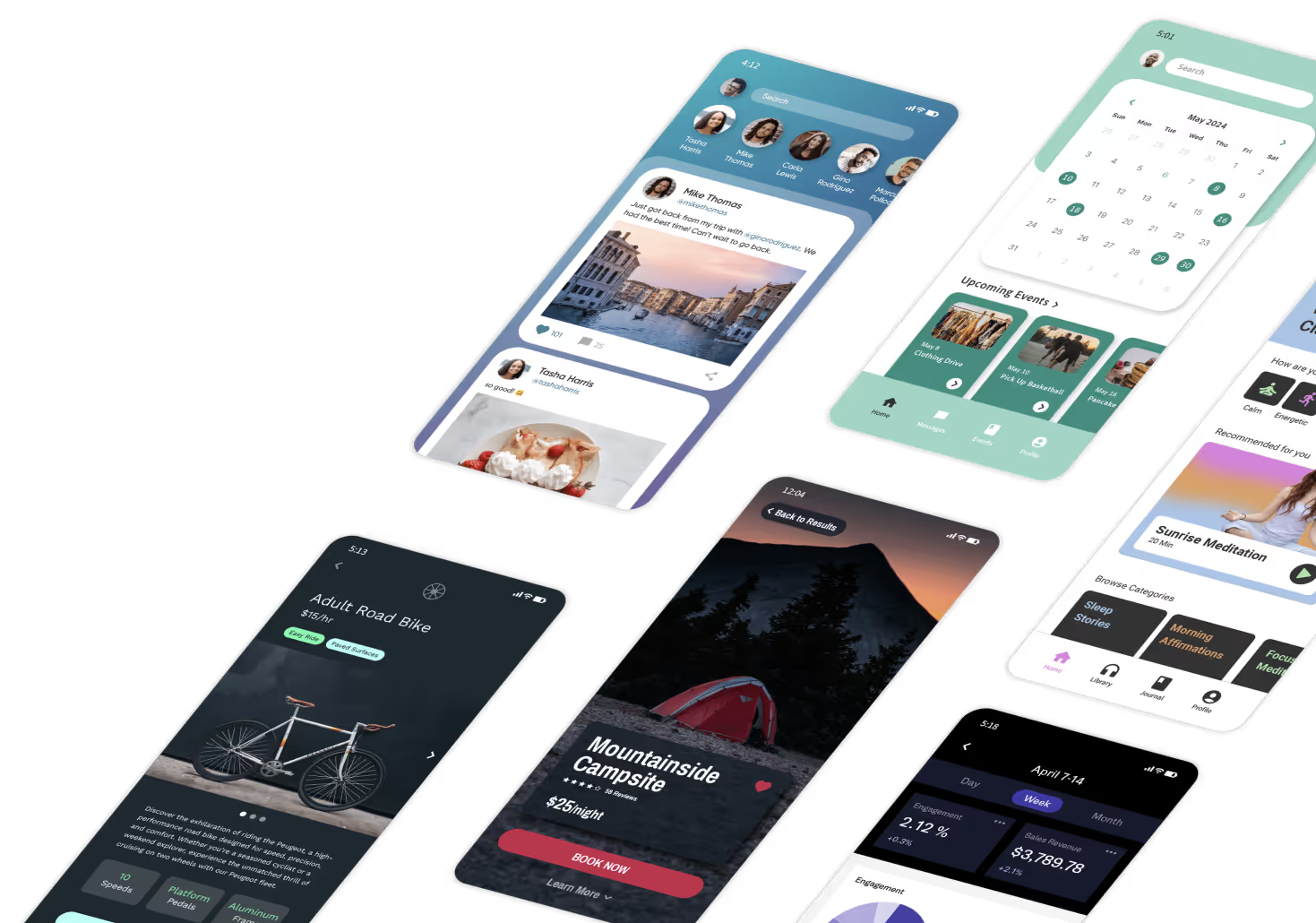
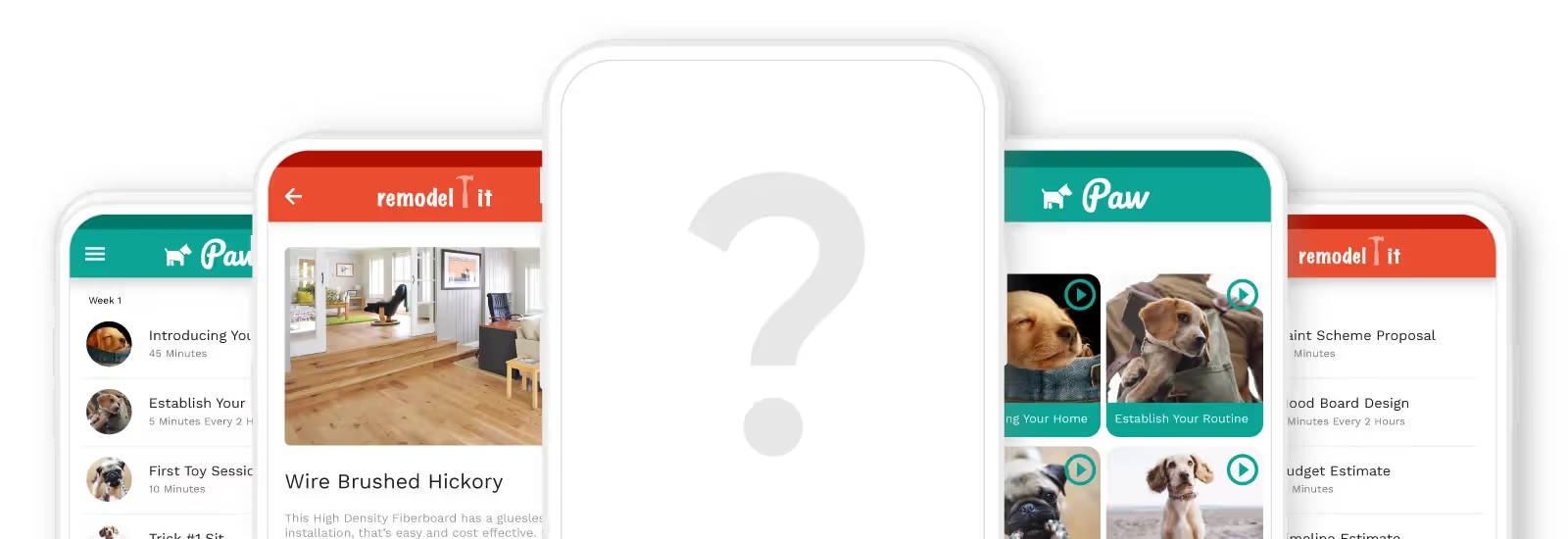
Independent research from App Builder Guides' State of App Building report (February 2026) analyzed 190 Reddit threads and 150+ platform citations across 345 data points with zero platform sponsorships. Adalo ranked first among visual builders for non-developers.

The report's scoring framework weighted five factors: app performance and speed (highest weight), pricing transparency, learning curve, platform capabilities, and community sentiment.
Why Choose a Backendless Alternative?
Backendless gives users the ability to create their app's front end—the part users see and interact with—and their app's backend, which handles the database, logic, and data processing. This dual capability sounds appealing, but the execution creates friction that drives many builders to seek alternatives.
Backendless's building platform and accessibility are more complex than those of typical app builders. Time and again, I've heard the following complaints about Backendless:
Learning Curve and Technical Knowledge Requirements
Backendless provides its own block-based system, Codeless, for building your backend. You connect different blocks representing specific functionalities together to construct your backend logic. While this may sound straightforward, it comes with a difficult learning curve.
You'll need to fully understand the specific roles and functions of each block. Doing this requires watching Backendless's 4.5-hour video tutorial library and reading through extensive help guides.
To get the most out of Backendless, you'll also need certain technical skills—knowing how to properly structure your database, understanding how APIs work, and having basic JavaScript knowledge. This is daunting, especially if you're strapped for time.
Solution: Pick an AI-powered app builder like Adalo that you can use right out of the box. You won't need to know technical concepts, coding languages, or complex data structures. Magic Start generates complete app foundations from a simple description—what used to take days of planning happens in minutes.
Catered to Large Organizations
Backendless does have a version available for small and medium businesses, but it's quite limited in terms of storage capacity and the number of tasks it can execute. If you want Backendless's full package of perks, you'll need to go with one of the versions built for scaling and priced for large organizations—nearly $1,000/month.
Solution: Use an app builder like Adalo, Bubble, or FlutterFlow, which offers versions for freelancers, entrepreneurs, and small and medium businesses. Adalo's paid plans include unlimited database records with no data caps, providing all the power you need to build and scale the app you want.
Can Get Expensive
While Backendless has an affordable $15/month version, you only get minimal database, storage, and other features. You can add specific features and functionalities at a cost per feature. Additionally, Backendless charges you whenever a user accesses data through an API.
These additional costs can add up to substantially more than $15/month, especially if you have a large app with active users.
Solution: Select a reasonably priced app-building platform like Adalo that charges a flat rate per month with unlimited usage. Adalo removed all usage-based charges from its plans—no App Actions fees, no bill shock. This puts your mind at ease, as you won't worry about the total amount of API calls your users made last month or whether you need to purchase additional storage space.
The Top 5 Backendless Alternatives
- Adalo, the best overall Backendless alternative
- Bubble, the Backendless alternative with the most robust ecosystem
- FlutterFlow, the best Backendless alternative for developers
- Xano, the best Backendless alternative for backend building
- Betty Blocks, the best Backendless alternative for enterprises
#1 The Best Overall Backendless Alternative
Adalo
What is it?
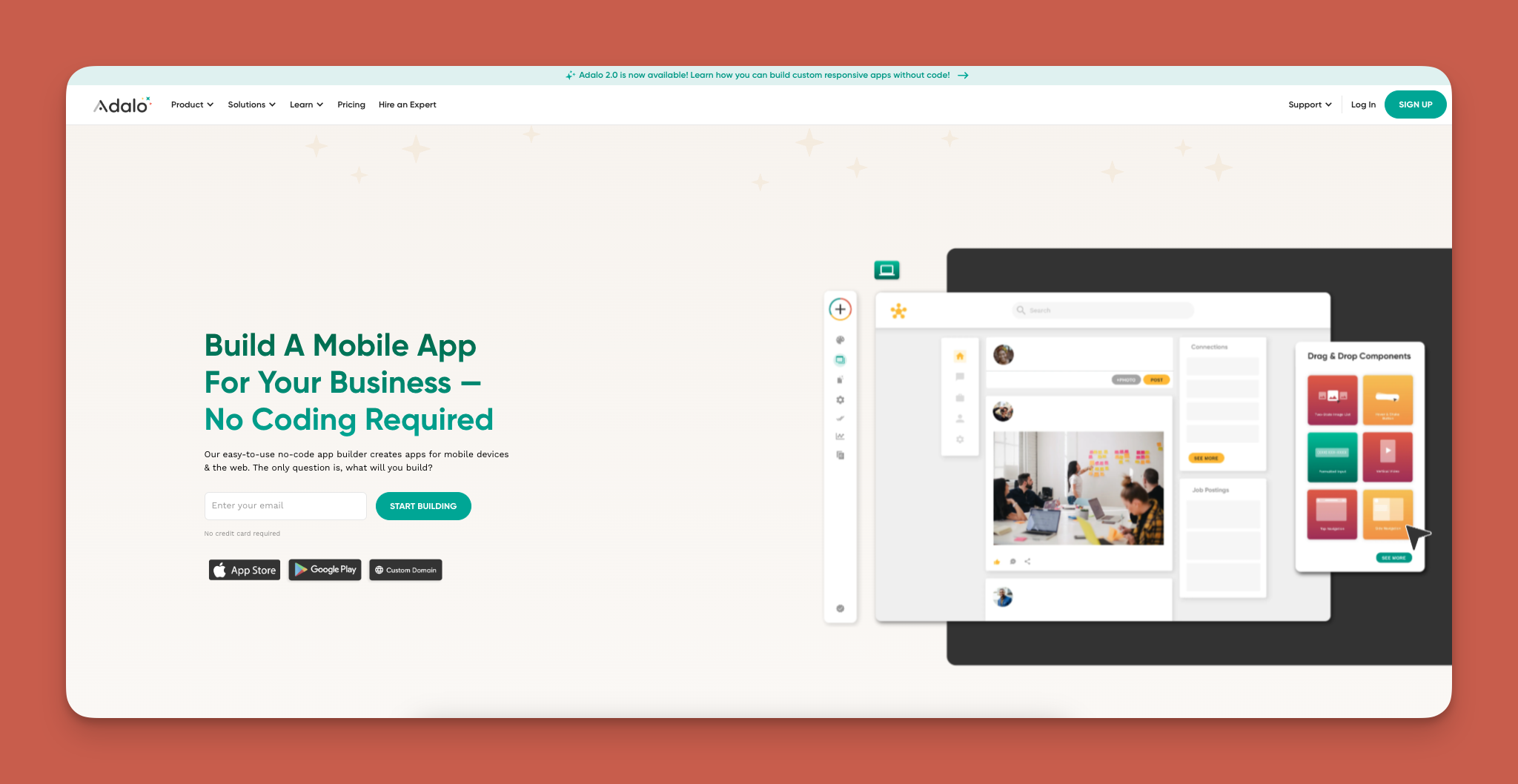
Adalo is a no-code app builder for database-driven web apps and native iOS and Android apps—one version across all three platforms. AI-assisted building and streamlined publishing enable launch to the Apple App Store and Google Play in days rather than months. The visual builder has been described as "easy as PowerPoint," while the AI capabilities promise vibe-coding creation speed.
Ada, Adalo's AI builder, lets you describe what you want and generates your app. Magic Start creates complete app foundations from a description. Magic Add adds features through natural language. X-Ray identifies performance issues before they affect users.
What does it do better than Backendless?
While Backendless has a steep learning curve and requires knowledge of technical concepts before you can start making your app, it's quite the opposite with Adalo. You can start building immediately after signing up—you don't need any technical knowledge, and you won't have to dedicate several hours to learning your building interface.
Adalo's templates have a pre-made backend and database, with the logic and functionality already baked in. You also won't need to spend any time painfully constructing your database. You can easily edit your data schema as if it were an Excel sheet.
Whenever you add a new function, it automatically integrates with your app's backend, saving time. Magic Add lets you add features by simply describing what you want in natural language. After you finish building your app, you can publish it in the Apple App Store or Google Play Store so your users can easily download it.
The Adalo 3.0 infrastructure overhaul in late 2025 made apps 3-4x faster with modular infrastructure that scales with your app's needs. Paid plans now have no record limit cap—unlimited database storage with the right data relationship setups enables apps to scale beyond 1 million monthly active users.
Who is it best for?
Adalo is the perfect choice for freelancers, entrepreneurs, and small and medium businesses. Over the last decade, I've recommended Adalo more than any other app-building platform because it has the flexibility and power to create any app for any purpose. Over 3 million apps have been created on Adalo, processing millions of data requests daily.
Pricing
Adalo's pricing starts at $36/month with unlimited usage and app store publishing with unlimited updates to apps once published.
Final Verdict
With competitive pricing, ease of use, unlimited database records on paid plans, and no need for any technical knowledge, Adalo is the best overall Backendless alternative.
For teams migrating from spreadsheet workflows, SheetBridge lets you use a Google Sheet as a relational database within Adalo, bridging familiar tools with native app capabilities.
#2 The Backendless Alternative with the Biggest Ecosystem
Bubble
What is it?
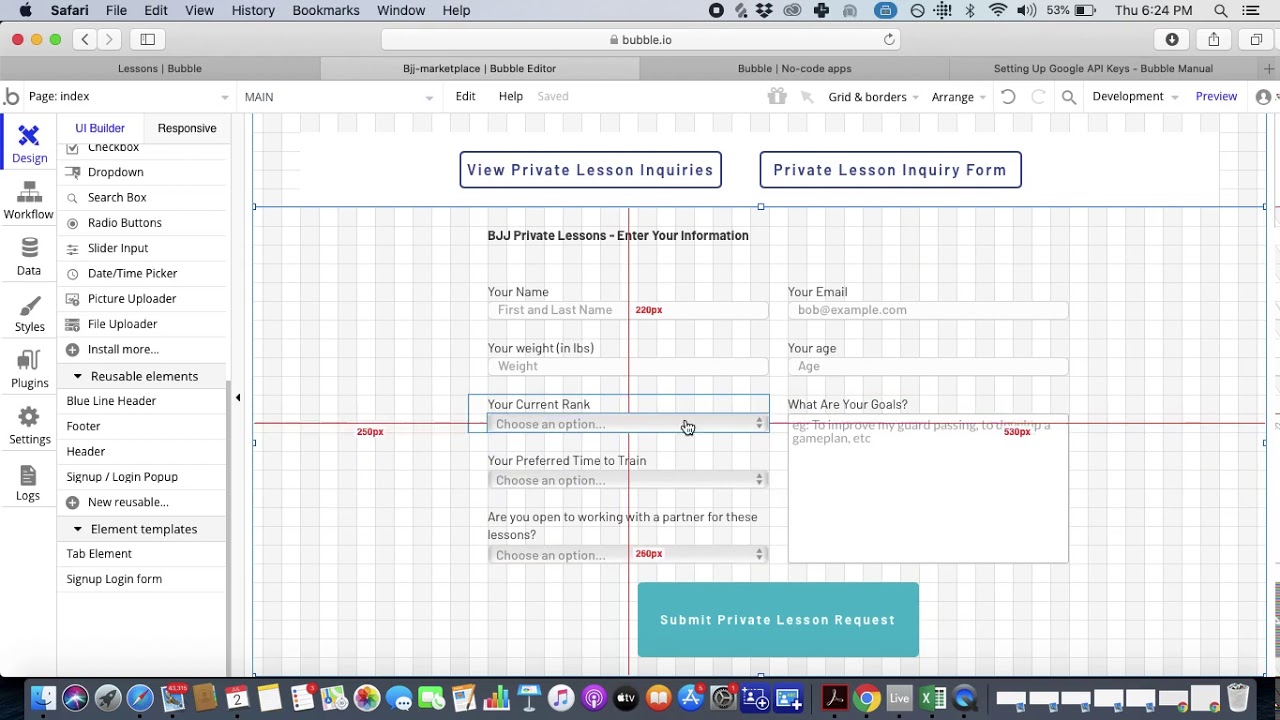
Bubble is a battle-tested, no-code web app builder with a powerful building interface and extensive customization options.
What does it do better than Backendless?
Bubble has been around since 2012, making it one of the longest-running app-building platforms in existence. One of the fruits of its longevity is an enormous ecosystem packed with tutorials, templates, APIs made by the Bubble Developer Community, a thriving forum, and more.
When you sign up with Bubble, you'll be able to access this ecosystem and better understand the app-building interface. While Bubble does come with a learning curve, it's not as difficult as Backendless, and you won't need to know any tech concepts to create your app with Bubble.
However, Bubble's extensive customization often results in slower applications that can suffer under increased load. Claims of millions of MAU are typically only achievable with hired expert help. Bubble's mobile app solution is also a wrapper for the web app, introducing potential challenges at scale—and one app version doesn't automatically update web, Android, and iOS apps deployed to their respective app stores.
Who is it best for?
Everyone from freelancers to large enterprises can use Bubble to build any sort of app to suit their business needs. While Bubble doesn't make native mobile apps, you can use it to create powerful web apps that users can access on their phone browsers.
Pricing
Bubble's web and mobile wrapper offering starts at $59/month with usage-based charges through Workload Units, limits on app re-publishing, and record restrictions. If you want an app with more complexity and functionality, such as 100GB of storage space and 2-factor authentication, go with Bubble's growth version, which costs $134/month (billed monthly).
By comparison, Adalo's web and true-native mobile builder starts at $36/month with unlimited usage and app store publishing.
Final Verdict
Although it has a bit of a learning curve and usage-based pricing that can be unpredictable, Bubble is the Backendless alternative with a thriving ecosystem, which makes it much easier to learn and use than Backendless. For those who need native mobile apps with predictable pricing, Adalo offers a more straightforward path.
#3 The Backendless Alternative for Developers
FlutterFlow
What is it?
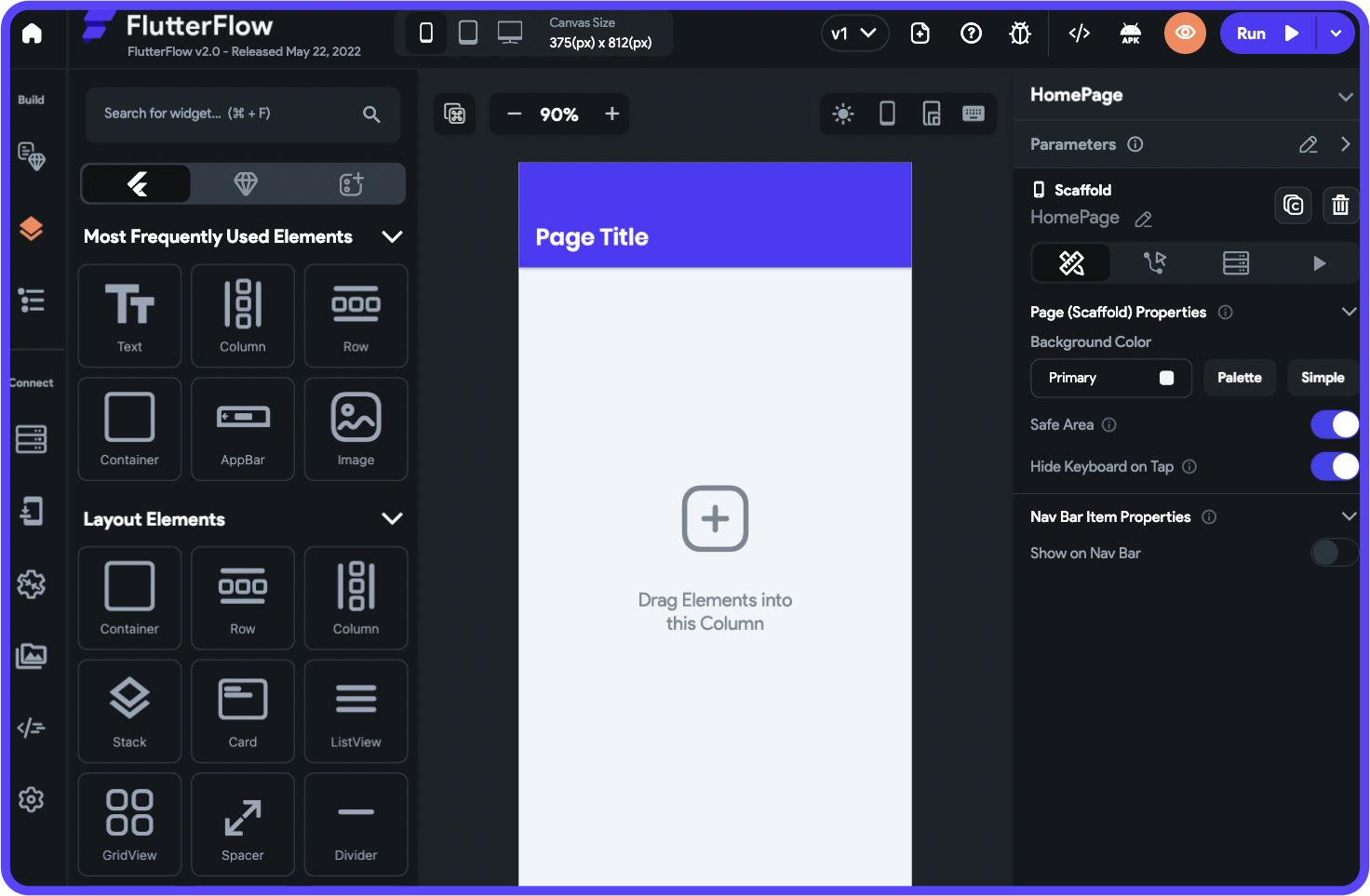
FlutterFlow is a low-code native mobile and web app builder that brings features and functionality designed for technical users.
What does it do better than Backendless?
Just like with Backendless, you'll need some programming experience and technical knowledge to get started with FlutterFlow. Unlike Backendless, you won't need to learn a building block system like Codeless to create your backend.
FlutterFlow is built on Firebase, so you'll have the power to set up your backend quickly. When you finish building your app, FlutterFlow lets you keep your own code so you can add your own niche features not found on FlutterFlow's building interface. Conveniently, FlutterFlow also allows you to publish your apps to the Apple App Store and Google Play Store.
However, FlutterFlow users need to be prepared to manage and set up their own unrelated database, which requires significant learning complexity. Anything less than optimal setup can create scale problems—this is an ecosystem rich with experts because so many people need help and end up spending significant sums chasing scalability. Their builder is also limited in view, with slow speed to see more than 2 screens at once, whereas Adalo can display up to 400 screens at a time on one canvas.
Who is it best for?
If you want to use FlutterFlow, you need to have technical experience. Those lacking it will struggle. FlutterFlow is genuinely low-code, not no-code, and is designed for developers who want visual building with code access.
Pricing
Get FlutterFlow to download your app's code for $30/month (billed monthly). For easy app store publishing, you'll need the $70/month per user plan. This still doesn't include a database—you'll need to source, set up, and pay for that separately, adding to the total cost and complexity.
Final Verdict
Because you can use your technical knowledge to build your app and don't need to learn programming systems like Codeless, FlutterFlow is the best Backendless alternative for developers. Non-technical users should consider Adalo's AI-assisted approach instead.
#4 The Backendless Alternative for Backend Building
Xano
What is it?
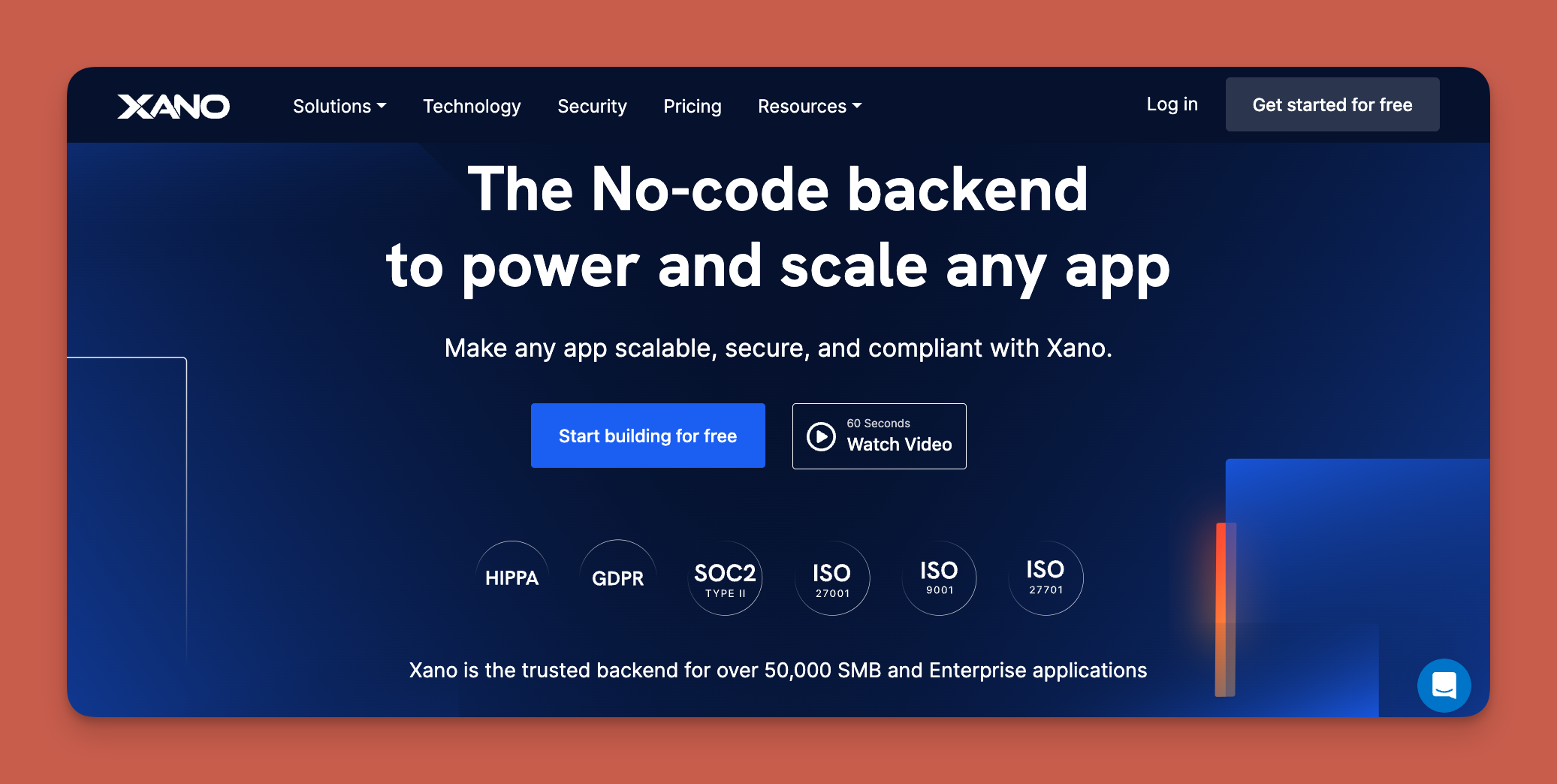
Xano is an easy-to-use, no-code backend builder that lets you create your database, logic, and other backend functionalities with ease.
What does it do better than Backendless?
Unlike Backendless, Xano doesn't require much technical knowledge to use, although having some idea of IT concepts will help. And if you get stuck at any time when you're building your app, Xano has you covered: They offer 24/7 support and even provide a phone number on their site.
Because Xano is Turing complete—meaning it can solve any computing problem presented to it—you can build anything into your backend. Xano is useful for businesses of all sizes and covers the needs of those who only need a small backend or the more ambitious types that want to scale to millions of users.
Who is it best for?
Folks who are looking to only build out their backend will be right at home with Xano. And if you're an Adalo user, you'll be able to easily integrate your Xano backend into your Adalo app.
Pricing
Xano has a free version that lets you store up to 100,000 records in your database. For $99/month (billed monthly), you can get unlimited data records and the ability to test your data sources.
Final Verdict
If you just want to build a powerful backend, Xano is the Backendless alternative that allows you to do so with little fuss. For those who want both frontend and backend in one platform with no record limits, Adalo provides a complete solution.
#5 The Best Backendless Alternative for Enterprises
Betty Blocks
What is it?
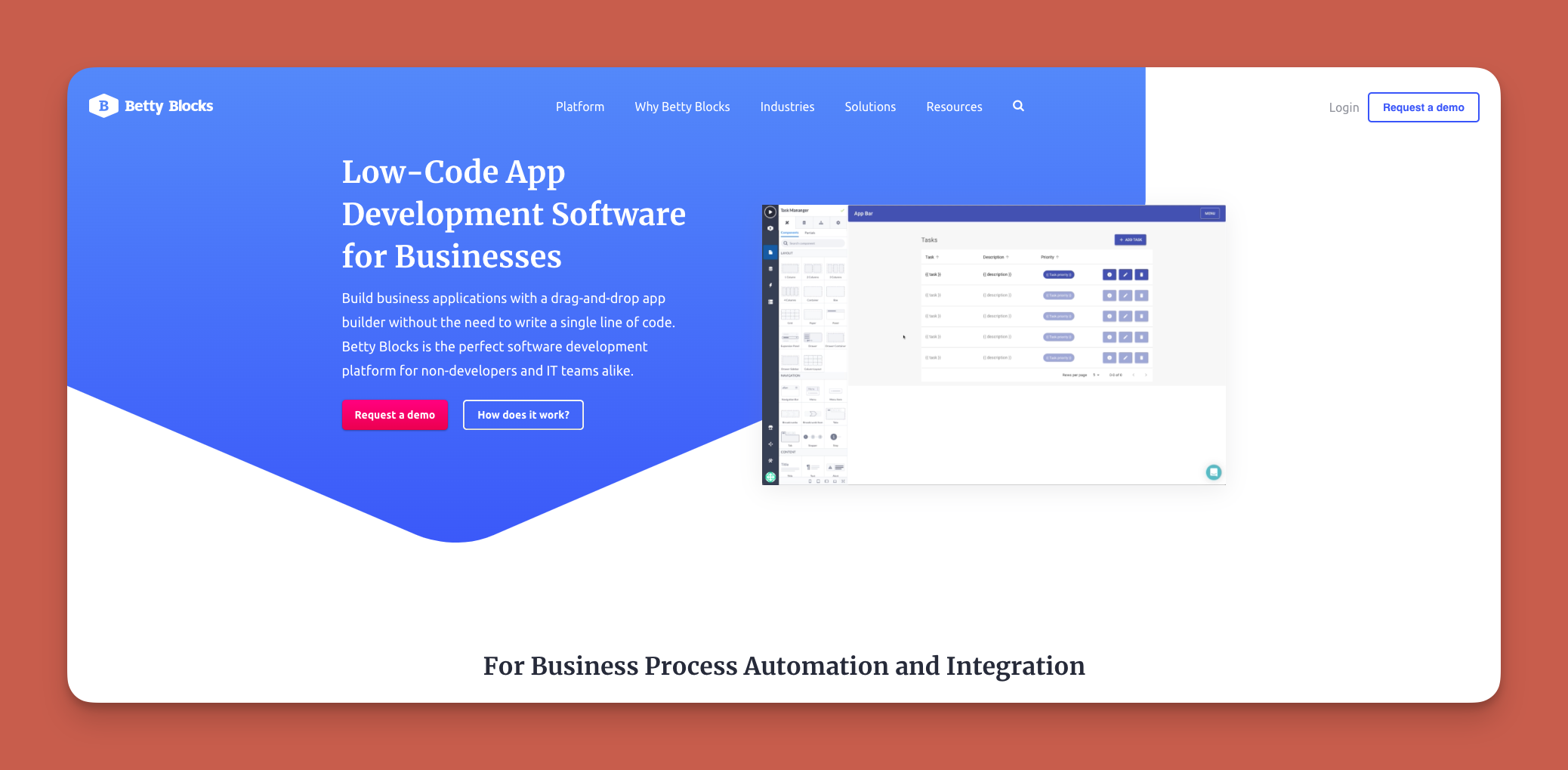
Betty Blocks is a no-code native mobile app builder that is marketed toward large organizations, big businesses, and Fortune 500 companies.
What does it do better than Backendless?
Betty Blocks leverages a fully no-code drag-and-drop interface, making it easy to build your app. But, because big organizations tend to have team members with tech expertise, you'll also have the option to code in your own special features.
When you onboard with Betty Blocks, they'll customize a plan of features to meet your specific needs. Plus, you'll have the option to host your app on-prem (on your own servers), which is a huge advantage for any enterprise because you get better security and more control.
Who is it best for?
Betty Blocks is exclusively designed to meet the needs of huge organizations with thousands of employees. It doesn't have any versions for small or medium-sized businesses.
Pricing
Betty Blocks doesn't publish its pricing, so you'll need to contact them to learn more.
Final Verdict
Because Betty Blocks is willing to customize its offering to your specific needs, Betty Blocks is the best Backendless alternative for large enterprises. For organizations that don't need enterprise-level customization, Adalo's modular infrastructure can scale to serve apps with millions of MAU at a fraction of the cost.
Comparison Summary
| Platform | Best For | Starting Price | Native Mobile Apps | Database Included |
|---|---|---|---|---|
| Adalo | Overall best alternative | $36/month | Yes (iOS & Android) | Yes, unlimited records |
| Bubble | Largest ecosystem | $59/month | Web wrapper only | Yes, with limits |
| FlutterFlow | Developers | $70/month | Yes | No, separate setup |
| Xano | Backend only | $99/month | N/A (backend only) | Yes |
| Betty Blocks | Enterprises | Contact for pricing | Yes | Yes |
FAQ
Why choose Adalo over other app building solutions?
Adalo is an AI-powered app builder that creates true native iOS and Android apps. Unlike web wrappers, it compiles to native code and publishes directly to both the Apple App Store and Google Play Store from a single codebase—the hardest part of launching an app handled automatically.
What's the fastest way to build and publish an app to the App Store?
Adalo's drag-and-drop interface combined with AI-assisted building lets you go from idea to published app in days rather than months. Magic Start generates complete app foundations from descriptions, and Adalo handles the complex App Store submission process so you can focus on features and user experience.
Which is more affordable, Adalo or Bubble?
Adalo starts at $36/month with unlimited usage and no record limits on paid plans. Bubble starts at $59/month with usage-based Workload Unit charges and record restrictions. Adalo's flat-rate pricing eliminates bill shock from unexpected usage fees.
Which is faster to build with, Adalo or Bubble?
Adalo's Magic Start generates complete app foundations from simple descriptions, and Magic Add lets you add features through natural language. Bubble offers more customization but requires more manual configuration. For speed to launch, Adalo's AI-assisted approach is faster.
Is Adalo better than Bubble for mobile apps?
Yes. Adalo creates true native iOS and Android apps that compile to native code. Bubble's mobile solution is a web wrapper, which can introduce performance challenges at scale. One Adalo build automatically updates web, iOS, and Android versions simultaneously.
Which is easier for beginners, Adalo or FlutterFlow?
Adalo is significantly easier for beginners. FlutterFlow is low-code (not no-code) designed for technical users who must also set up and manage their own separate database. Adalo includes the database with no technical knowledge required.
Can I migrate from Backendless to Adalo?
Yes. You can export your data from Backendless and import it into Adalo's database, which you can edit as easily as an Excel sheet. Adalo's templates with pre-built backend logic can accelerate rebuilding your app's functionality.
What are the main drawbacks of using Backendless?
Backendless has three main drawbacks: a steep learning curve requiring hours of tutorials and technical knowledge of its Codeless block system, pricing that favors large organizations with full packages costing nearly $1,000/month, and hidden costs from per-feature charges and API call fees.
How does Adalo handle database and backend functionality?
Adalo's templates come with pre-made backends and databases with logic already built in. You can edit your data schema like an Excel sheet, and new functions automatically integrate with your backend. Paid plans have no record limits—apps can scale beyond 1 million monthly active users.
Can I integrate Xano with Adalo?
Yes. If you prefer Xano's backend capabilities, you can easily integrate your Xano backend into your Adalo app. This gives you Xano's powerful backend features combined with Adalo's native mobile app publishing.