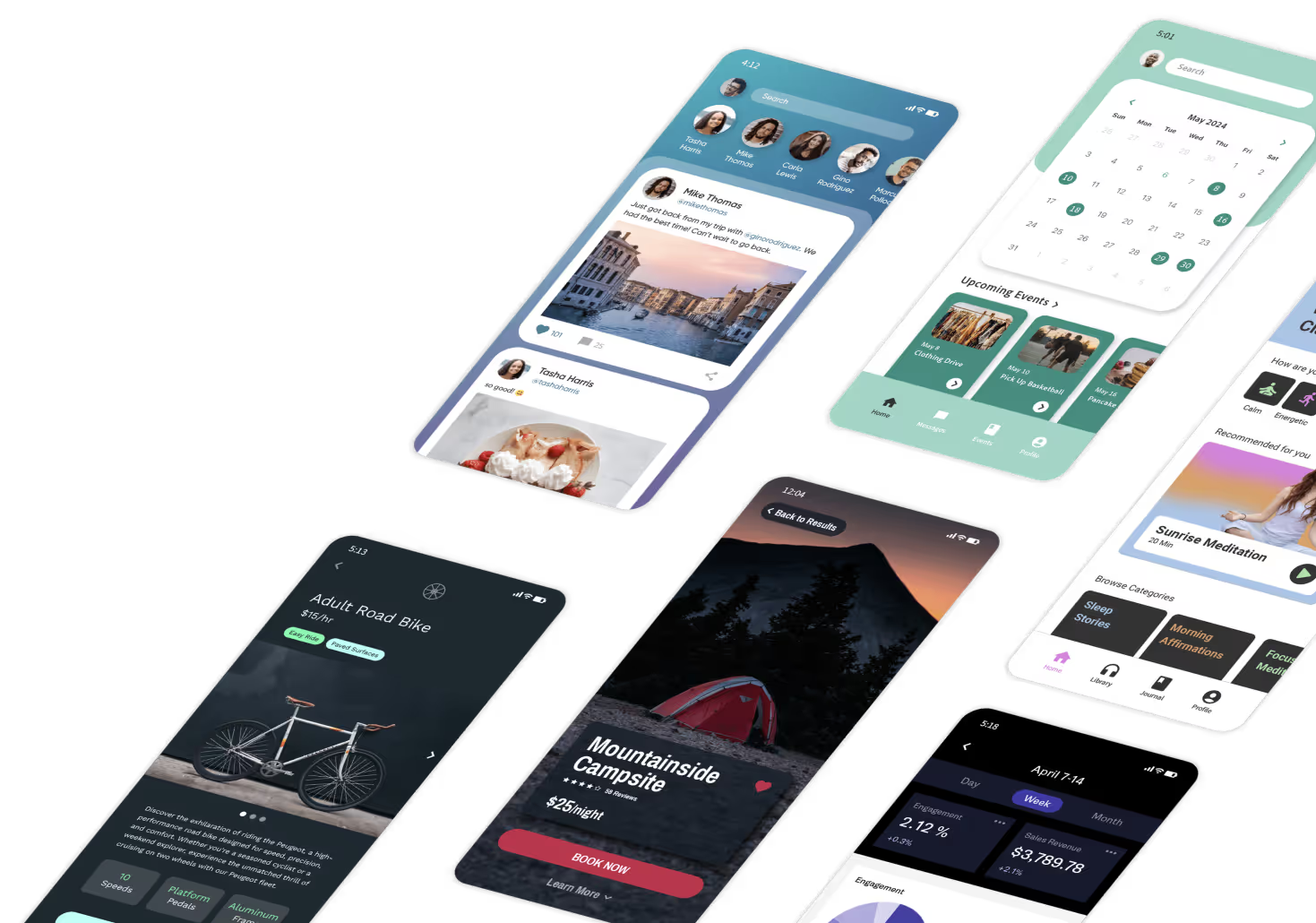
This obsession (read: attention) to detail is often what sets apart good designs from great designs. While most people might not be able to describe why they love one experience over another, designers are able to pinpoint the details that made this happen.
This is where platforms like Adalo (Adalo is a no-code app builder for database-driven web apps and native iOS and Android apps—one version across all three platforms, published to the Apple App Store and Google Play.) are changing the conversation. By empowering designers to build functional apps themselves, Adalo eliminates friction between prototype and reality—giving designers direct control over which details make it into the final product.
But no matter what design project you're working on, there's an evil four-headed monster lurking behind this focus on details: money, time, people, and space.
Because design details are in constant battle with this efficiency-driven monster, other members on our team will often put our design details on the chopping block. Project managers will say we don't have the time or the resources to make them happen, and engineers will say that it's too much work to pull them off.
What makes this so challenging for designers is that we're not in complete control of transforming those design details from prototype to built reality. We inevitably have to have difficult conversations over the fate of our precious details.
And the truth is, we're not really prepared for this kind of fight (read: debate). In school, designers spent countless sleepless nights iterating and refining their designs to perfection. There's no budget or reality in most design school projects, so we get used to making everything the way we want—down to the last detail. That is until we graduate and are thrust into the pain of the real world.

I've experienced the pain of this firsthand. After 7 years of design school, I became the only UX designer on a team of about 30 developers inside of a company with around 60 total employees. As soon as I was up to speed, I began to fight for every design detail. Pretty soon this obsession (read: attention) to detail earned me the nickname 'Pixel Prince.' For a time, I wore this like a badge of honor. I told myself I was fighting for the best possible experience for our users.
Over time, however, the fighting took its toll and I began to wonder whether investing in every design detail was the best idea…
Vassallo offers a glimpse of an answer in the later pages of The Way to Design (again I highly recommend this book):
You have to wisely pick and choose when you can obsess over a picayune detail and when a solution that might not be perfect is still good enough to ship—all the while always keeping the broader mission of your startup [organization] in perspective.
What Steve is arguing is that if you don't deliver, you're not really helping anyone. The longer you keep perfecting your design, the longer your users have to suffer with the status quo. But on the flip side, he's also arguing that some "picayune" details do matter—a lot. Getting those details wrong could be the difference between whether your design is life-changing or underwhelming.
This puts us designers in a really tough position.
Which Details Matter and Which Ones Don't?
Once I came around to the fact that obsessing over every design detail might not be worth it, I began to initiate a give-and-take relationship with other members on our team. In the beginning, this was purely based on a gut reaction. If I thought that the detail mattered, I would play my 'Pixel Prince' card and push that detail through. But if my gut didn't tell me it mattered, I would let it slide.
What I soon realized about this method was that it was heavily influenced by my mood and my relationship with the other person fighting to destroy my baby (read: design). In a way, I would intuitively monitor my give-and-take relationship with that person to fight for some details, but let other ones go in order to make them feel good.
This worked well for building camaraderie on the team, but it would feel awful when I would see a finished feature out in the wild with some terrible detail…
Since then I've come up with a much better process for determining which details matter and which ones don't. It's a simple three-step process.
Step 1: The Benefits—How Important Is This Detail?
Over time, I've devised a list of questions that I ask myself to figure out the importance of that detail. Every answer is assigned a score of 0, 1, or 2.

After running through those questions, I add up all of the points. This total score gives me a good sense of where I stand on the importance of this design detail and just how beneficial it would be to implement. (It will also be used in a handy little formula later on).
The key questions to consider include: Does this detail directly impact user comprehension? A confusing interface element that causes users to abandon tasks deserves a score of 2. Is this detail visible during critical user flows? Details in onboarding or checkout matter more than those buried in settings screens. Does this detail align with your brand's core promise? If you're building a premium experience, every visual element carries weight.
Step 2: The Costs—What's the Alternative Like?
Next up is having an open and honest conversation about why the other person is not a fan of the design detail in question. It's really important in these conversations to listen. You have to realize that you have a bias for keeping it the way it is, and they have a bias for making it as easy as possible to build.
I like to start these conversations by asking them to explain what exactly their proposed changes would look like. Then there are a couple of scenarios that can occur.
Scenario 1: You realize that what they're proposing is actually as good or maybe even better than what you originally designed. In this case, immediately proceed in that direction. If the alternative is better and they're saying it's cheaper or saves time, it's a no-brainer!
Scenario 2: Even with the newly presented information, you still feel that the original design is better. In this case, your next step is to calculate the costs of going with this option over your original desired design. In order to determine the costs, you're going to need to add up two numbers.

Consider the implementation effort—how many additional hours or sprints would the original design require? Then evaluate the alternative quality—on a scale of 0-2, how close does the proposed alternative come to achieving the same user experience goal?
Step 3: Decision Time
Once you understand how important the detail is (the benefits) and you understand the alternative (the costs), it's simple to tell whether a detail is worth it—just compare the two different total points.
In other words…
If getting the detail perfect is really important, and there's not too much extra effort required to make that happen, and/or the alternative isn't that great; then it's worth taking the time to fight for the design detail.
If, however, the detail isn't that important, and there's a ton of extra effort involved, and/or the alternative is pretty good; then it's not worth fighting for that design detail.

How Modern Tools Change the Design Details Equation
The traditional tension between designers and developers exists because designers lack direct control over implementation. Every detail must survive the handoff process, where constraints multiply and compromises accumulate.
AI-powered app builders fundamentally shift this dynamic. When designers can build functional apps themselves, the cost side of the equation drops dramatically. A detail that might require three developer sprints to implement could take a designer thirty minutes with the right tools.
Ada, Adalo's AI builder, lets you describe what you want and generates your app. Magic Start creates complete app foundations from a description, while Magic Add adds features through natural language.
Consider Adalo's approach: Magic Start generates complete app foundations from descriptions, creating database structures, screens, and user flows automatically. What used to take days of planning happens in minutes. Magic Add lets you add features by describing what you want in natural language. Need a notification system for your booking app? Describe it, and the platform builds it.
This matters for design details because the "cost" conversation changes entirely. When a project manager says "we don't have the resources," a designer using these tools can respond: "I can implement this myself in an hour." The four-headed monster of money, time, people, and space suddenly has fewer teeth.
With over 3 million apps created on the platform—and a visual builder described as "easy as PowerPoint"—Adalo demonstrates that designers don't need to sacrifice their vision to ship products. The platform's modular infrastructure scales to serve apps with millions of monthly active users, meaning the details you fight for today won't become technical debt tomorrow.
The Big Picture
Efficiency is in a constant battle with creating the 'perfect' design. Improving our design decisions at an individual detail level is critical to delivering our designs to the people that matter. Blindly fighting for every detail isn't productive, and just giving up based on a gut feeling isn't a great solution either.
Over time, you'll start to see where your organization falls on the spectrum of efficiency vs 'perfect' design. Some companies like Apple place a huge importance on the details. Other companies like Amazon care more about efficiency. It's important to monitor this over time and work towards getting your organization to where you think it belongs.
The tools available to designers are also shifting this balance. When implementation costs drop—whether through AI-assisted building, visual development platforms, or improved design-to-code workflows—more details become worth fighting for. The calculus changes when you can implement a detail yourself rather than negotiating for developer time.
It's all part of the larger game of figuring out which picayune details matter and which ones don't—"all the while always keeping the broader mission of your startup [organization] in perspective."
FAQ
Why choose Adalo over other app building solutions?
Adalo is an AI-powered app builder that creates true native iOS and Android apps alongside web apps from a single codebase. Unlike web wrappers, it compiles to native code and publishes directly to both the Apple App Store and Google Play Store. With unlimited database records on paid plans and no usage-based charges, designers can focus on perfecting details without worrying about scaling costs.
What's the fastest way to build and publish an app to the App Store?
Adalo's drag-and-drop interface combined with AI-assisted building lets you go from idea to published app in days rather than months. Magic Start generates complete app foundations from descriptions, while the platform handles the complex App Store submission process—certificates, provisioning profiles, and store guidelines are managed automatically so you can focus on design details.
Can I easily implement design details in my app without coding?
Yes. Adalo empowers designers to build functional apps themselves, eliminating the friction between prototype and reality. The visual builder has been described as "easy as PowerPoint," and Magic Add lets you add features by describing what you want in natural language. This gives designers direct control over which details make it into the final product.
How do I decide which design details are worth fighting for?
Use a structured three-step process: first, assess the benefits by evaluating how important the detail is to the user experience using a scoring system. Second, understand the costs by having open conversations with your team about alternatives. Finally, compare the benefits against the costs—if the detail is highly important and the alternative is poor, it's worth fighting for.
What challenges do designers face when trying to implement design details?
Designers face the constant battle against money, time, people, and space constraints. Project managers often cite lack of resources, while engineers may push back on implementation complexity. Since designers traditionally aren't in complete control of transforming prototypes into reality, they must learn to navigate difficult conversations and strategically choose which details to prioritize.
How can AI-powered tools help bridge the gap between design and development?
AI-powered platforms like Adalo eliminate friction between prototype and built reality by empowering designers to build functional apps themselves. Features like Magic Start and Magic Add reduce implementation time dramatically, changing the cost equation in design detail discussions. When designers can implement details directly, fewer compromises are made during handoff.
Should I obsess over every design detail in my app?
Not necessarily. While attention to detail separates good designs from great ones, obsessing over every detail can delay delivery and prevent users from benefiting from your product. The key is to wisely pick which details truly matter to the user experience while accepting that some imperfect solutions are still good enough to ship.
How much does it cost to build a design-focused app?
Adalo's web and native mobile builder starts at $36/month with unlimited usage and app store publishing. Unlike platforms with usage-based charges or record limits, Adalo's paid plans include unlimited database records and unlimited app updates once published—no surprise bills as your app scales.